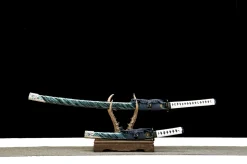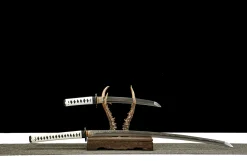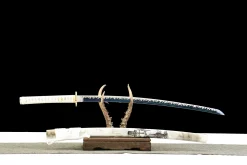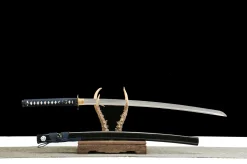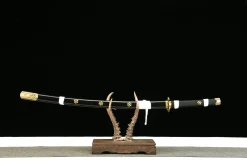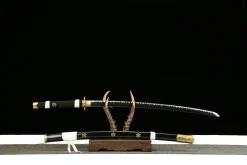
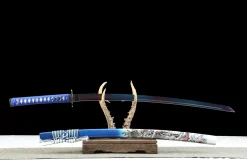
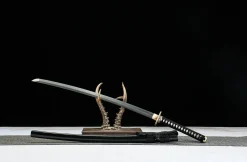

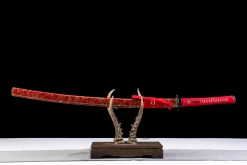
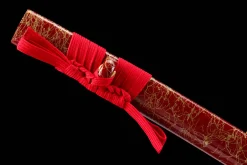

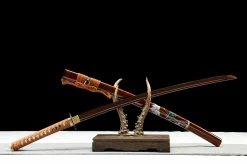
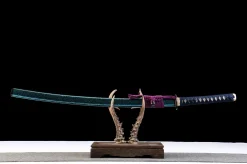



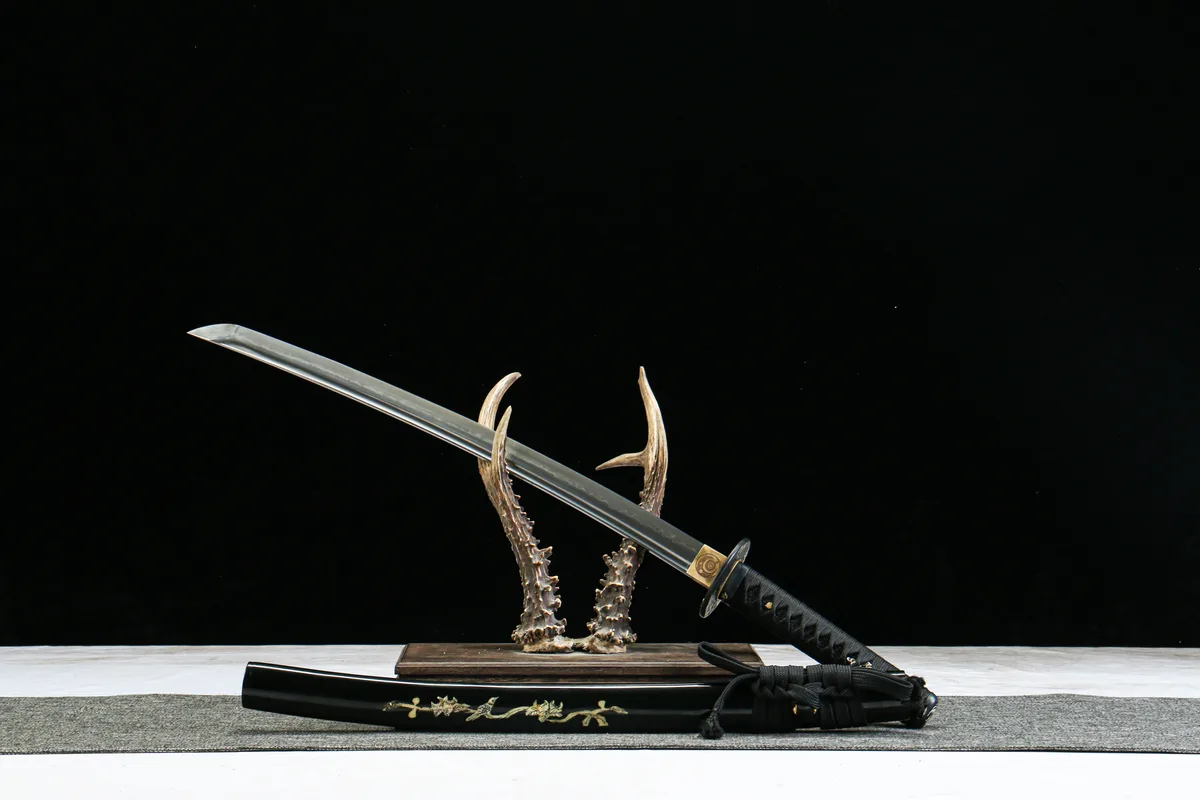

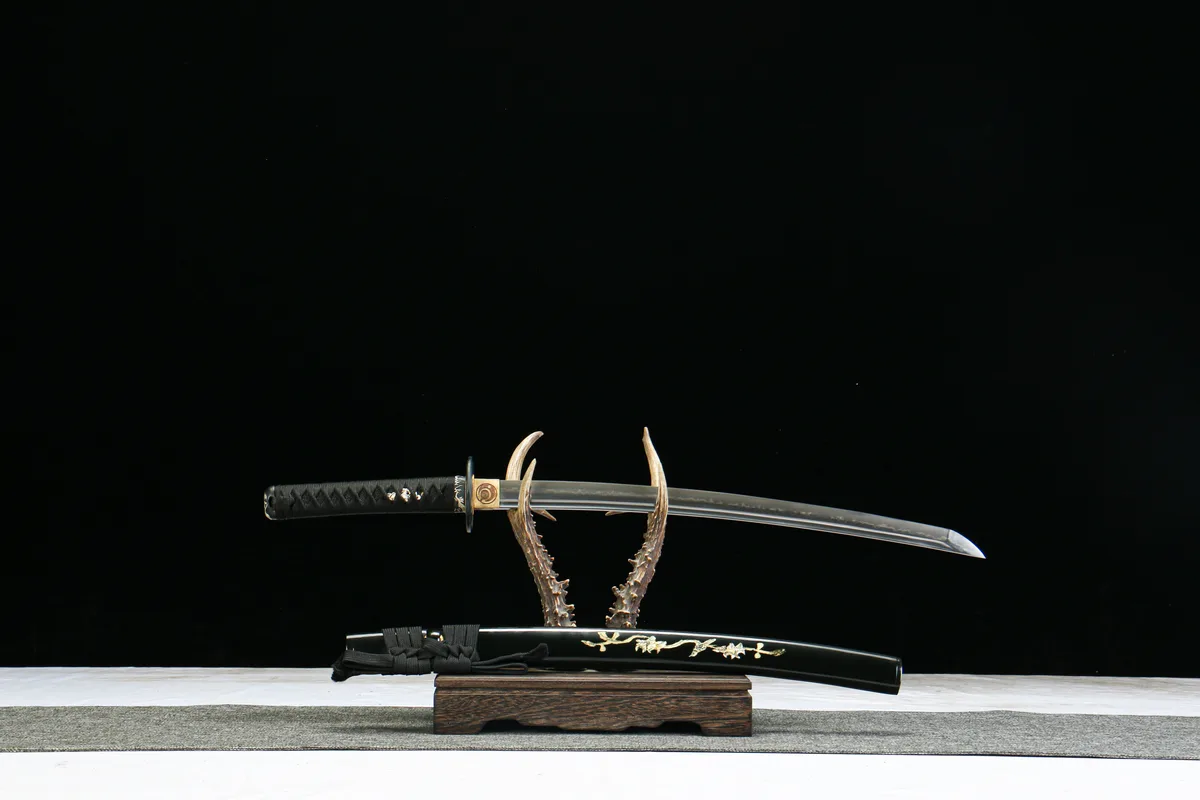


Golden Kirin – Hand Forged Artisan Hand-Forged Steel Wakizashi Sword
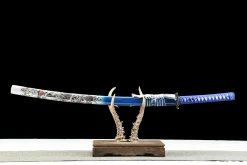
Hand-forged Artisan Hand-Forged Steel wakizashi (80cm total / 56cm blade), crafted in Longquan. Clay-tempered blade with a genuine hamon line — visible contrast between hardened edge and soft spine.
$3,749.99
Golden Kirin – Hand Forged Artisan Hand-Forged Steel Wakizashi Sword
There are wakizashi, and then there is the Golden Kirin (金麟). This blade comes from a process that cannot be automated, cannot be rushed, and cannot be faked under close inspection: clay tempering applied to hand-forged steel, then finished to polishing standards – 自炼钢 上研 – that reveal what the metal actually became in the fire. The hamon on this blade is not an acid-etched cosmetic line. It is a topographic record of differential hardness, and it runs the full length of a 56 cm blade that has been ground and polished to let you read it clearly.
Specifications
| Blade Steel | Clay-Tempered Hand-Forged Steel (自炼钢 上研) |
| Total Length | 80.0 cm / 31.5 in |
| Blade Length | 56.0 cm / 22.0 in |
| Blade Width | 3.2 cm |
| Blade Thickness | 0.7 cm |
| Weight | 500 g / 17.6 oz |
| Heat Treatment | Clay Tempering – Differential Hardening, Oil Quench |
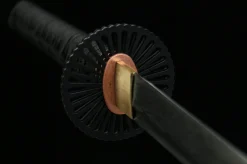
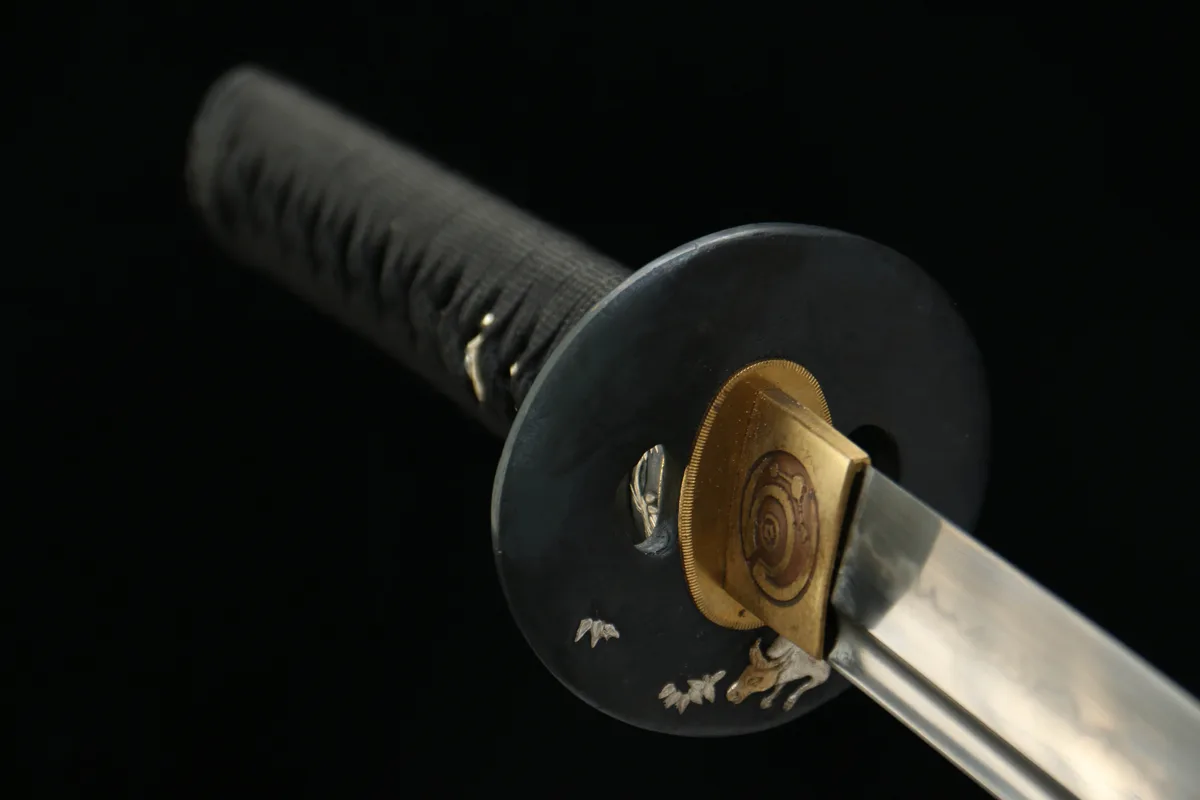
| Fittings | Gold & Silver Gilded, Copper |
| Handle | Cotton Ito Wrap |
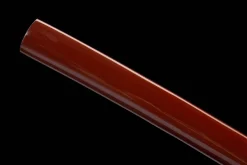
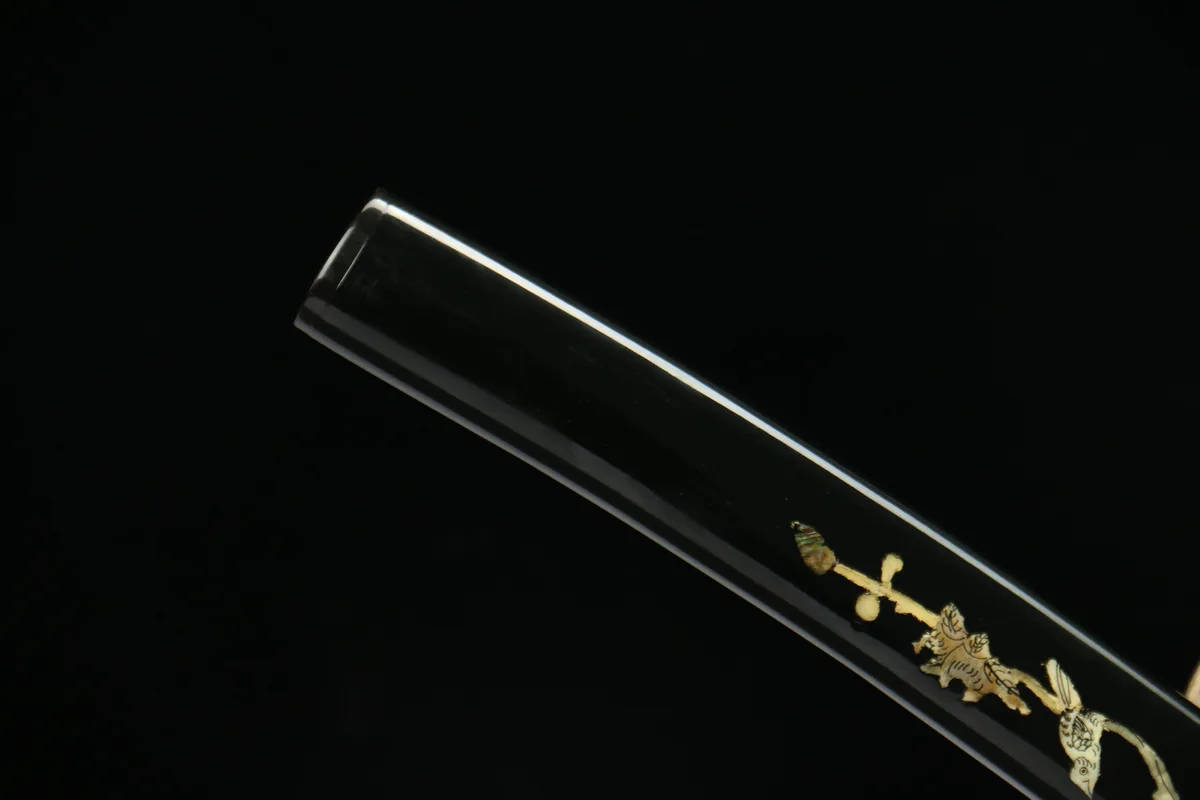
| Sheath | Shell Inlay Saya (贝壳鞘) |
Steel & Construction
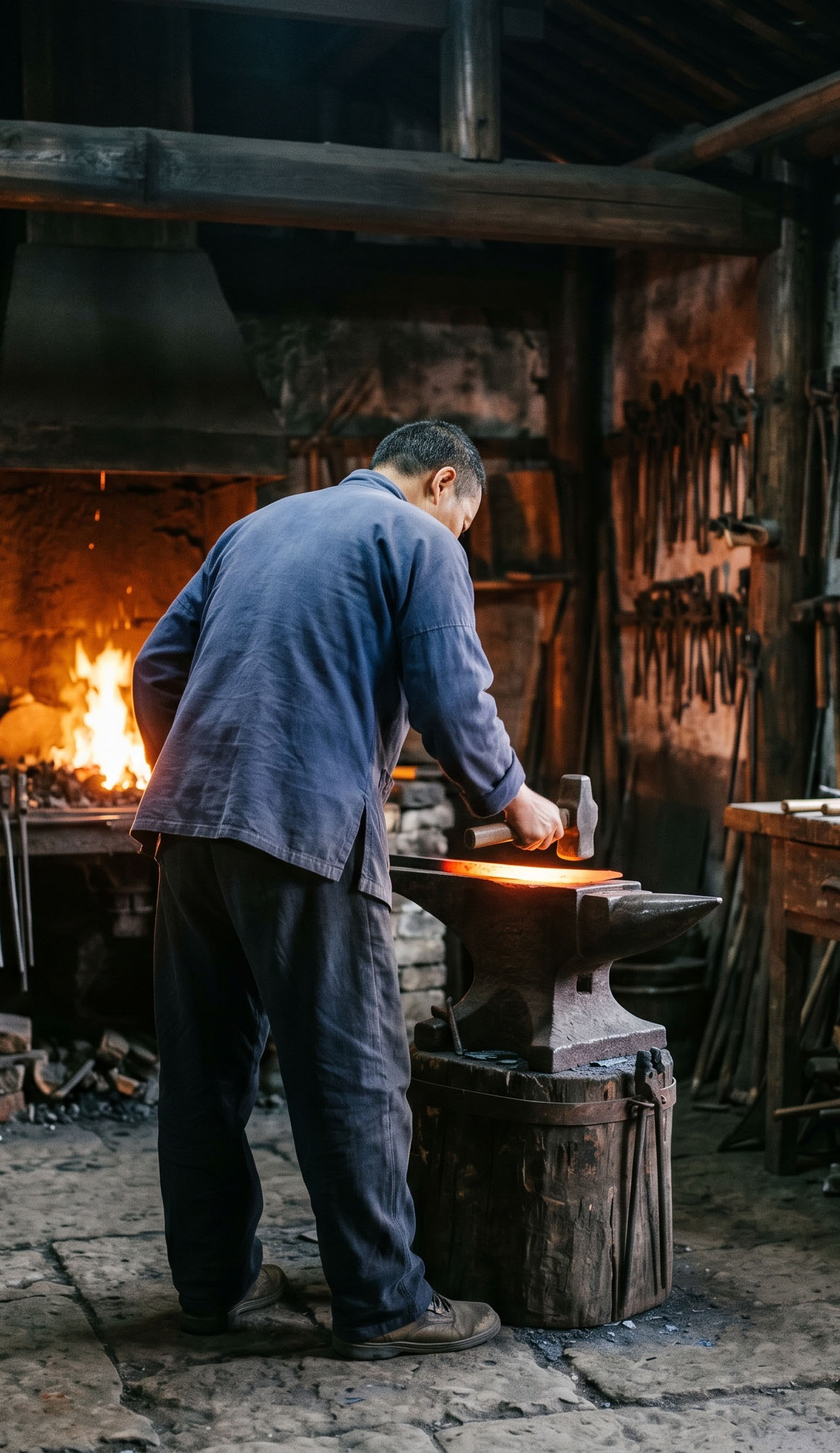
Clay tempering – known in Japanese sword tradition as tsuchioki – is the process of applying a refractory clay mixture unevenly across the blade before the quench: thick along the spine, thin or absent along the edge. When the blade is pulled from the fire and quenched, the exposed edge cools rapidly and converts to martensite, achieving hardness in the range suited for edge retention and cutting performance. The insulated spine cools slowly, retaining a pearlitic or bainitic structure that is tougher and more flexible – resistant to the shock loads that would snap a uniformly hard blade. The boundary where these two zones meet is the hamon, and on this blade, that boundary has been polished to full visibility.
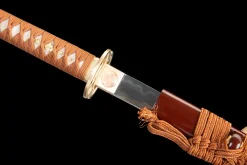
The hamon character here – produced on hand-forged steel that the smith worked and controlled personally – will show nie (individual martensitic crystals visible under light as a bright, granular texture at the hamon edge) and a defined habuchi (the hamon boundary line itself). The nie catches raking light and gives the hamon a depth that printed images cannot fully convey. The transition from the hard ha (edge zone) to the softer ji (body) is not a simple line but a dimensional landscape, and the polishing to 上研 (high polish) grade ensures none of that character is buried under surface haze.
Handling
The wakizashi format – 80 cm total, 56 cm blade, 24 cm handle – produces a blade that moves with a quickness a full katana cannot match. The draw from the shell-inlay saya (贝壳鞘) is a short, controlled arc, and the cotton ito wrap on the 24 cm tsuka gives two-handed grip with the rear hand placed close to the pommel for maximum leverage. In one-hand use, the handle fills the palm without excess, the wrap texture engaging the fingers precisely. The gilded fittings – gold, silver, and copper – are not decorative afterthoughts; the menuki (handle ornaments) sitting beneath the ito create pressure points that locate the grip consistently, every draw identical to the last.
Care Instructions
A clay-tempered blade requires attentive maintenance. After handling, remove all fingerprints with a soft cloth immediately – skin oils are acidic and will begin attacking the polish within hours. Apply choji oil (clove-infused mineral oil, traditional Japanese blade preservative) in a thin, even coat using a soft cloth or nuguigami (tissue paper), working from base to tip. The shell-inlay saya is a delicate piece – store the blade sheathed but inspect the fit periodically, as any looseness in the throat can allow the blade to shift and contact the interior.
| Weight | 0.7 lbs |
|---|---|
| Dimensions | 80.0 × 3.2 × 0.7 in |
| Hamon | Real Hamon (Clay Tempered) |
| Blade Steel | Artisan Hand-Forged Steel |
| Total Length | 80.0 cm |
| Blade Length | 56.0 cm |
| Heat Treatment | Oil Quench & Temper |
| Handle Wrap | Cotton Ito Wrap |
| Sheath Material | 贝壳鞘 |
| Fittings | Gold & Silver Gilded Fittings, Copper |
| Forging Style | Differential Hardening (Clay Tempered) |
Related products