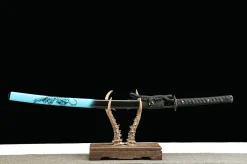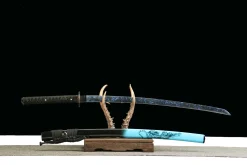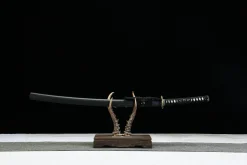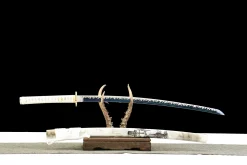
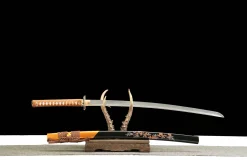
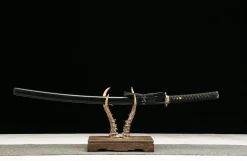
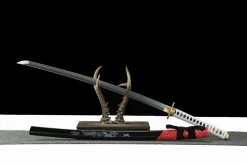




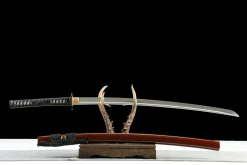

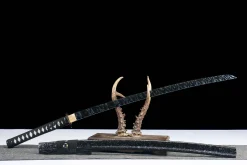





Golden Scale – Hand Forged T10 Tool Steel Katana Sword
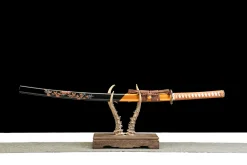
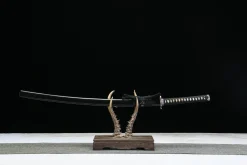
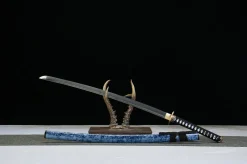
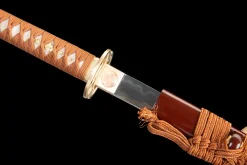
Hand-forged T10 Tool Steel katana (102cm total / 72cm blade), crafted in Longquan. Clay-tempered blade with a genuine hamon line — visible contrast between hardened edge and soft spine.
$409.99
Golden Scale – Hand Forged T10 Tool Steel Katana Sword
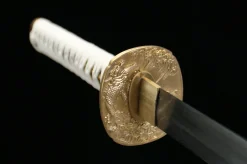
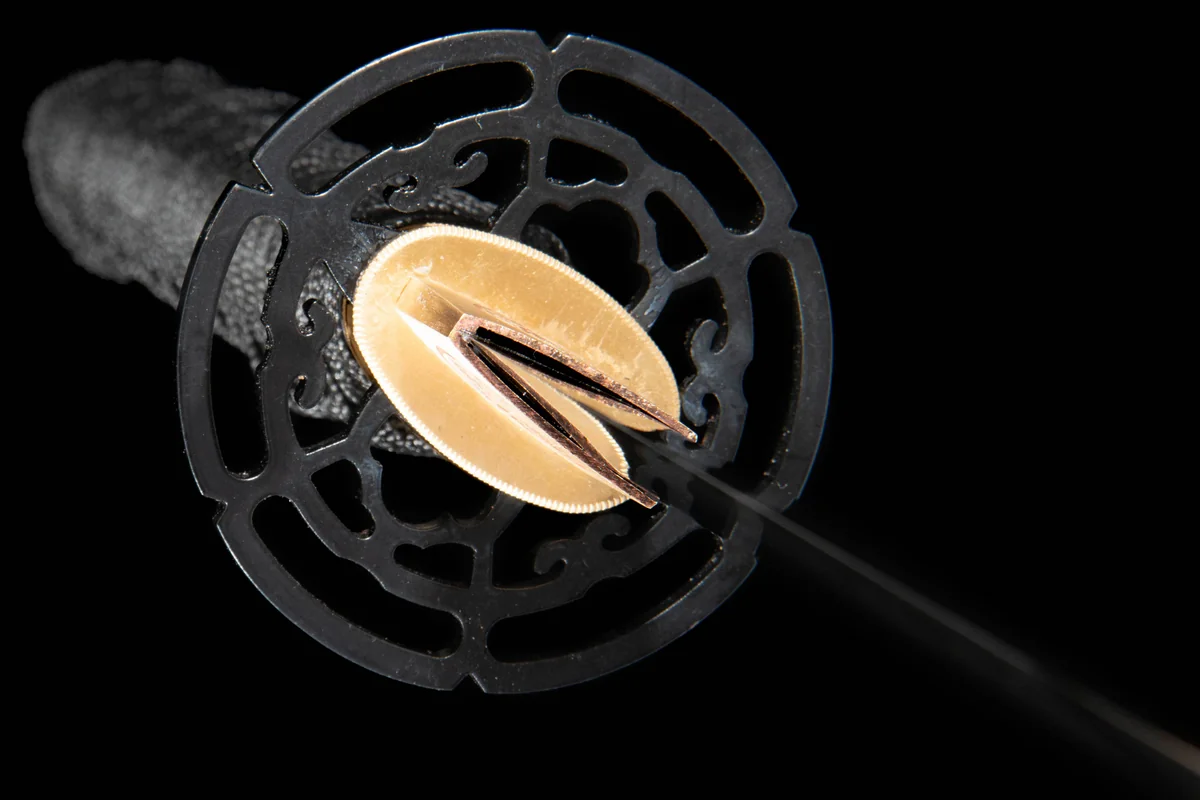
Golden Scale (金鳞御刀) describes the imperial blade: 金鳞 is the gold scales of the dragon or great fish, a symbol of power and divine protection; 御刀 is the honorable blade, the one carried in service to something higher than personal ambition. Hand-forged in Longquan from T10 tool steel with clay tempering (覆土烧刃), with an iron tsuba and phoenix (凤凰) motif.
Specifications
| Blade Steel | T10 High-Speed Tool Steel, Clay Tempered |
| Total Length | 102.0 cm / 40.2 in |
| Blade Length | 72.0 cm / 28.3 in |
| Handle Length | 27.0 cm / 10.6 in |
| Blade Width | 3.2 cm |
| Blade Thickness | 0.7 cm |
| Net Weight | 1100 g / 38.8 oz |
| Gross Weight | 1300 g / 45.9 oz |
| Heat Treatment | Clay Tempering — Differential Hardening, Oil Quench |
| Blade Profile | Shinogi-Zukuri (Ridged Profile) |
| Tang Construction | Full Tang (Nakago) |
| Fittings | Iron Fittings |
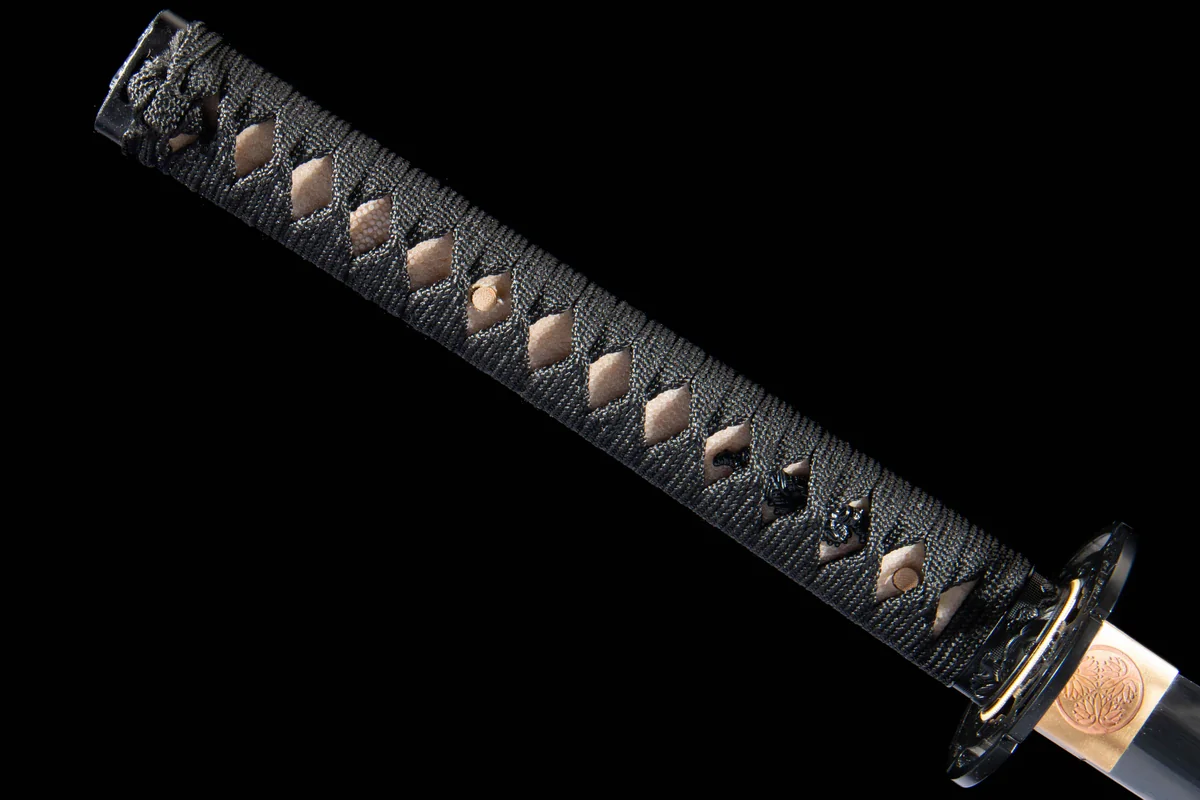
| Handle Wrap | Cotton Ito over Ray Skin (Same) |
Steel & Construction
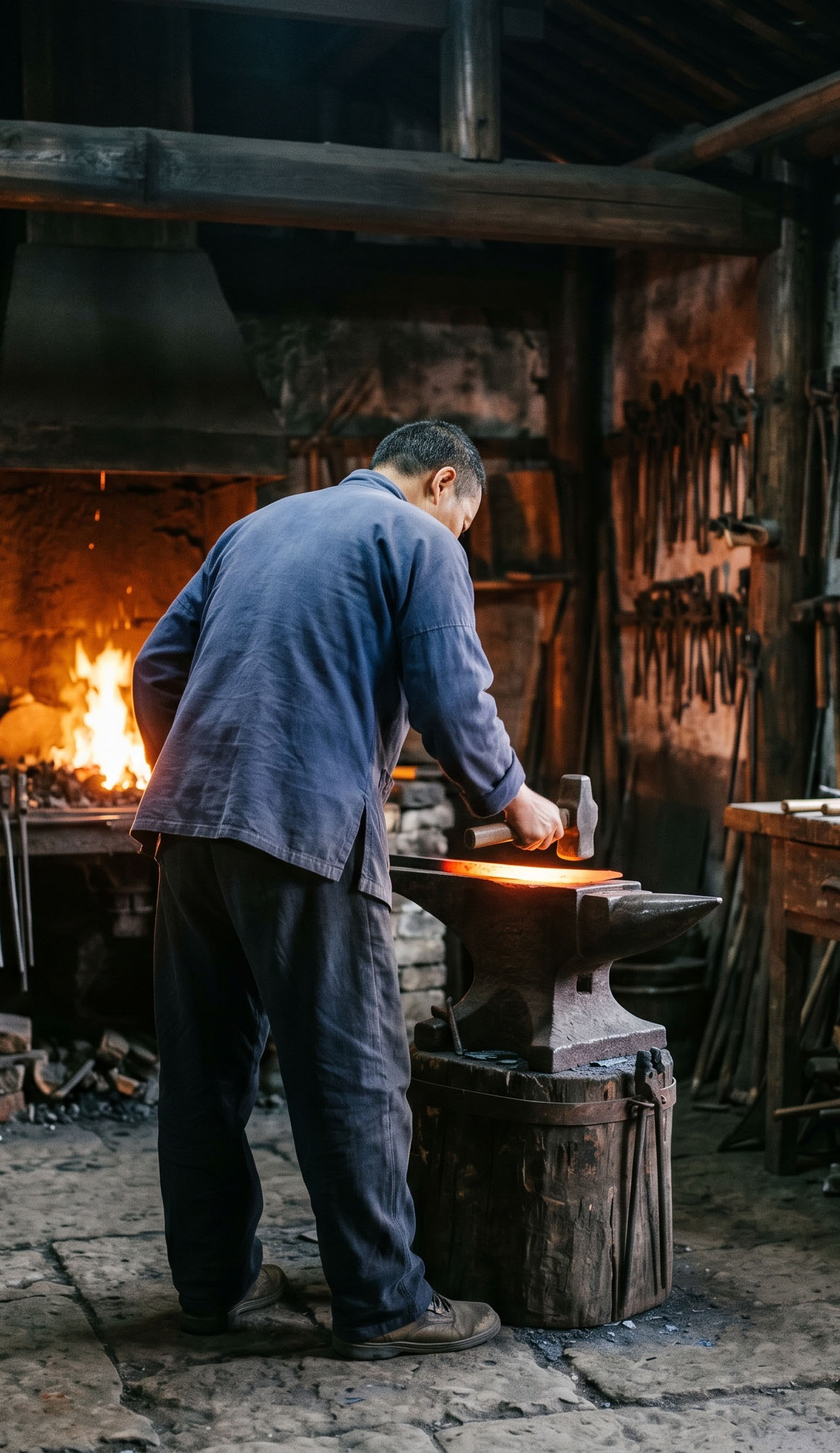
T10 high-speed tool steel carries a tungsten addition that raises its hardness ceiling and wear resistance beyond what conventional high-carbon grades can achieve. When the smith applies a clay resist layer to the spine before the quench — leaving the edge exposed to rapid cooling while the body transitions more slowly — the result is a blade with two distinct hardness zones: a hard edge capable of holding a genuinely fine working edge, and a softer, tougher spine that absorbs impact without transmitting it as fracture. The hamon (the visible temper line between these two zones) on this blade is not applied or etched — it is the physical record of the quench, readable along the full blade length.
Under raking light, the hamon boundary shows the character of real differential hardening: nie (crystalline martensite granules visible in the habuchi), ashi (activity lines extending toward the edge), and the natural variation that separates a genuine clay-tempered blade from an imitation. The oil quench following clay application controls cooling more gently than water, reducing the fracture risk that T10’s hardness potential would otherwise introduce. The result is a T10 blade that earns its edge retention through the heat treatment process, not through brittleness — a blade that holds a finer, sharper edge than comparable 1065 blades for longer, and survives the use that demands it.
The Feel of It
The 27 cm handle gives genuine room for two-hand control — both hands on the tsuka with separation between them, which is the mechanical basis for leverage, power transmission, and direction changes in two-handed technique. The cotton ito wrap over the ray skin creates a surface that stays consistent under grip pressure and directional changes; there is no slipping, no micro-adjustment required during a cutting sequence. The weight — approximately 1,100g net — is in the range where the sword drives cuts rather than requiring the hands to supply force on the edge’s behalf.
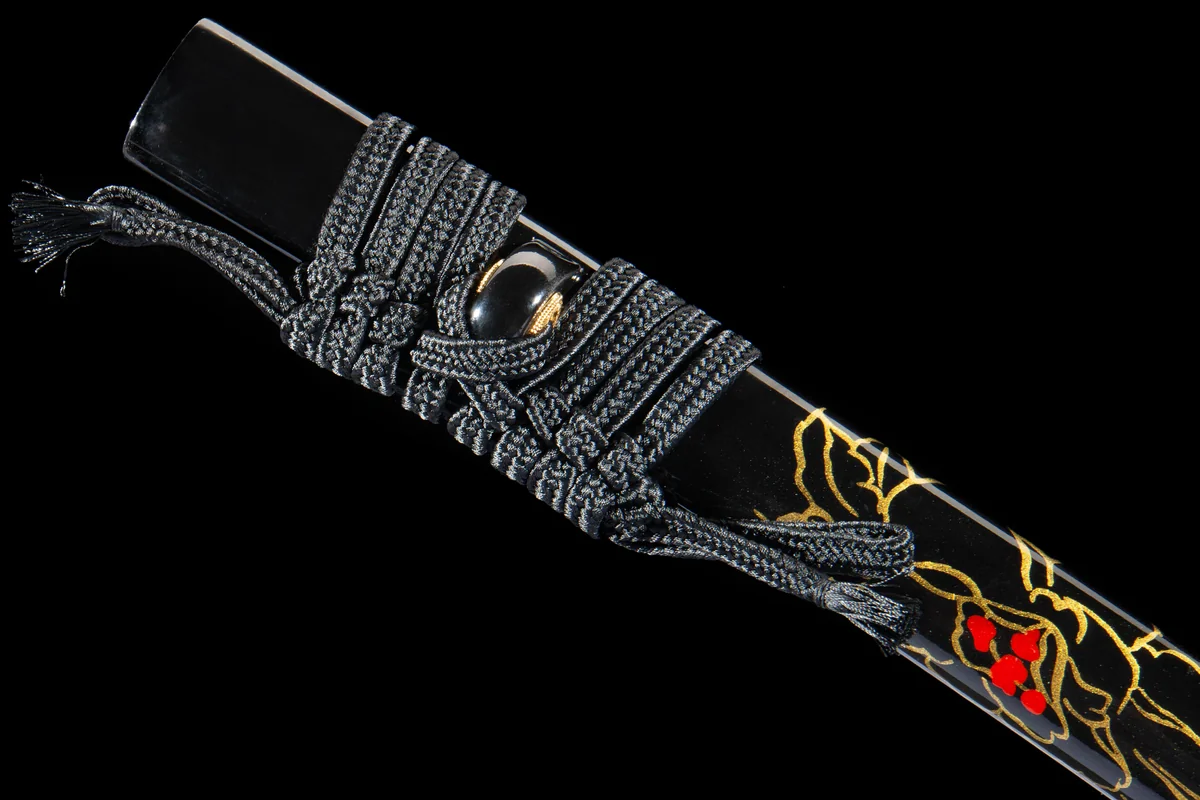
The saya draw is clean and indexed: the koiguchi holds the blade without looseness, but releases on a controlled movement without requiring significant force. At 102 cm total and 72 cm blade, you have the full reach and arc of a classical daito. Iai practitioners will find the geometry correct for standard draw-and-cut sequences; martial artists practicing two-hand katas will find the handle length adequate for full rear-hand placement. The balance does not run nose-heavy — a common fault in production blades at lower price points — and does not fight the hand during transitions between angles.
Maintenance Notes
T10 high carbon steel requires the same active oil maintenance as all carbon steel blades — it will oxidize in humid conditions without consistent oil protection. After every handling session, wipe the blade from habaki to kissaki with a clean, dry cloth to remove fingerprint oils and moisture, then apply a thin coat of choji oil (traditional clove-infused mineral oil) or neutral camellia oil. The hamon line area — where the hard edge zone meets the softer spine — warrants particular attention, as the differential hardness creates a subtle texture difference that can trap moisture. Wipe to a thin, even film rather than leaving pooled oil.
Store horizontally in the saya in a stable, low-humidity environment. Check the blade surface monthly and inspect the habaki (blade collar) area where moisture tends to collect. Early surface oxidation caught at this stage removes cleanly with an oiled cloth; oxidation left unaddressed progresses to pitting that requires professional polishing to correct. The cotton ito handle wrap and the fittings should be kept dry. For the visible hamon: inspect it under a strong raking light periodically — fine rust in the nie activity area can be subtle against the active boundary texture.
| Weight | 1.3 lbs |
|---|---|
| Dimensions | 102.0 × 3.2 × 0.7 in |
| Hamon | Real Hamon (Clay Tempered) |
| Blade Steel | T10 Tool Steel |
| Total Length | 102.0 cm |
| Blade Length | 72.0 cm |
| Heat Treatment | Clay Tempering (Differential Hardening) |
| Handle Wrap | Cotton Ito Wrap 真鱼皮 |
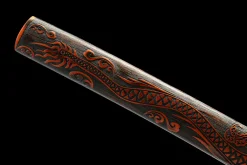
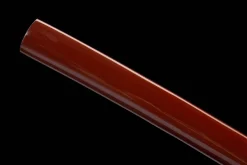
| Sheath Material | 实木钢琴烤漆 |
| Fittings | Iron |
| Forging Style | 鎬造 |
Related products