


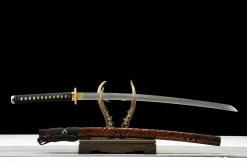

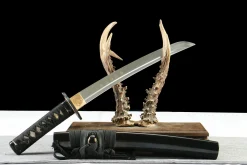


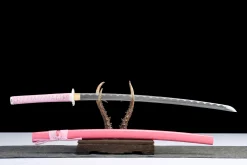







Golden Thread – Hand Forged T10 Tool Steel Katana Sword
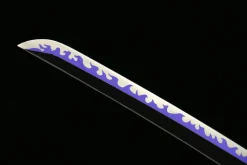
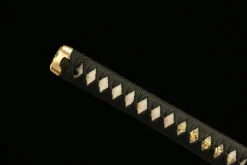
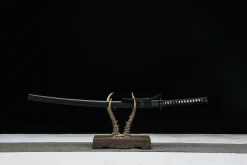
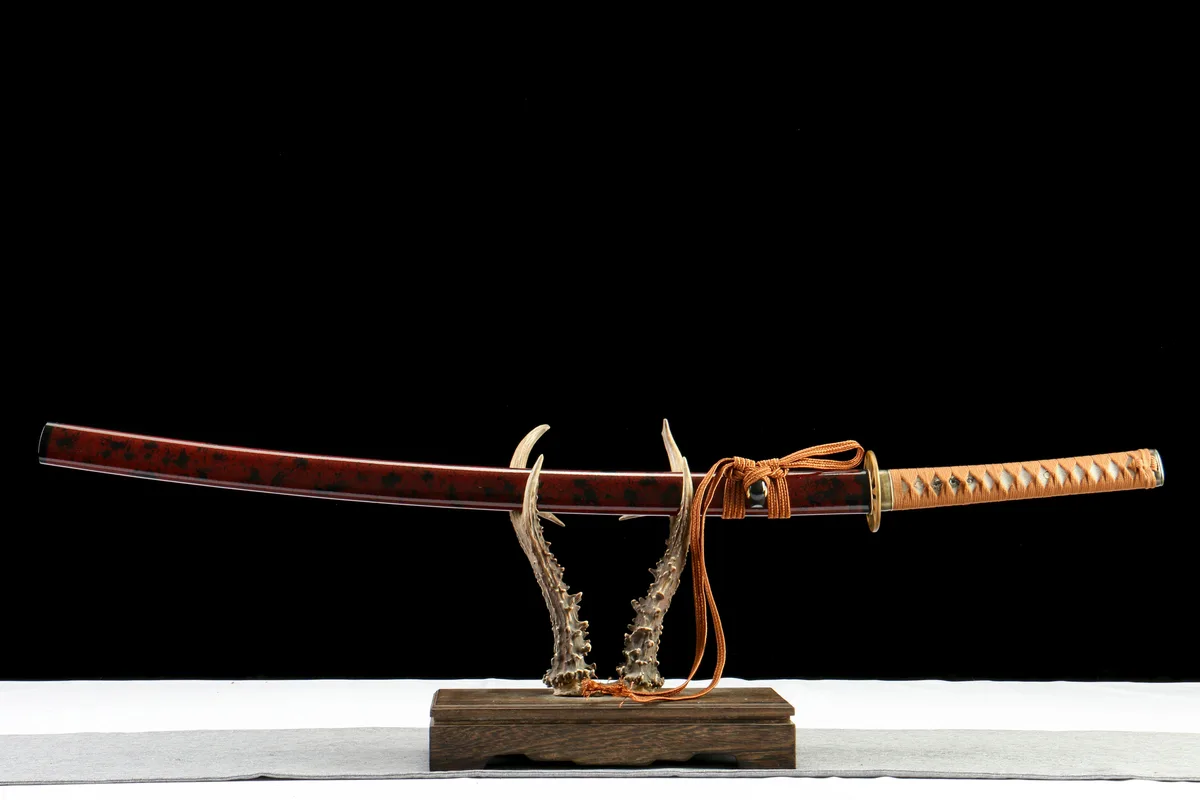
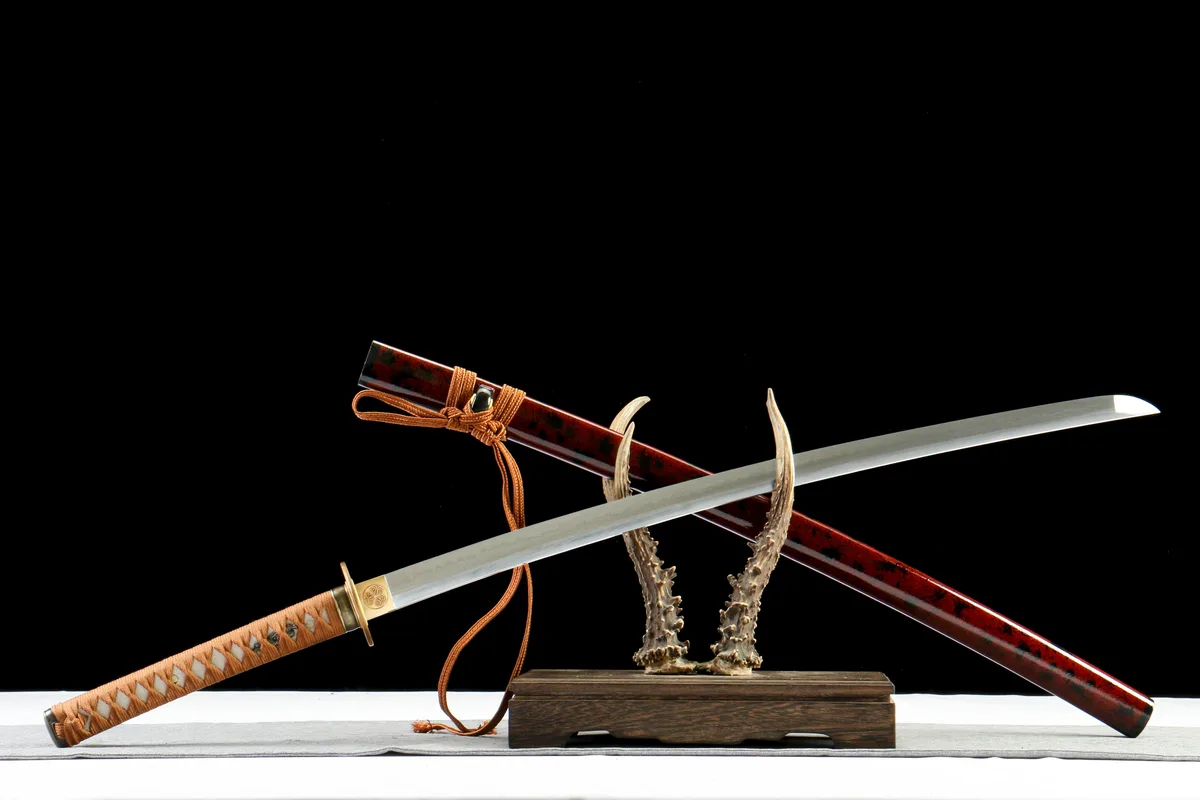
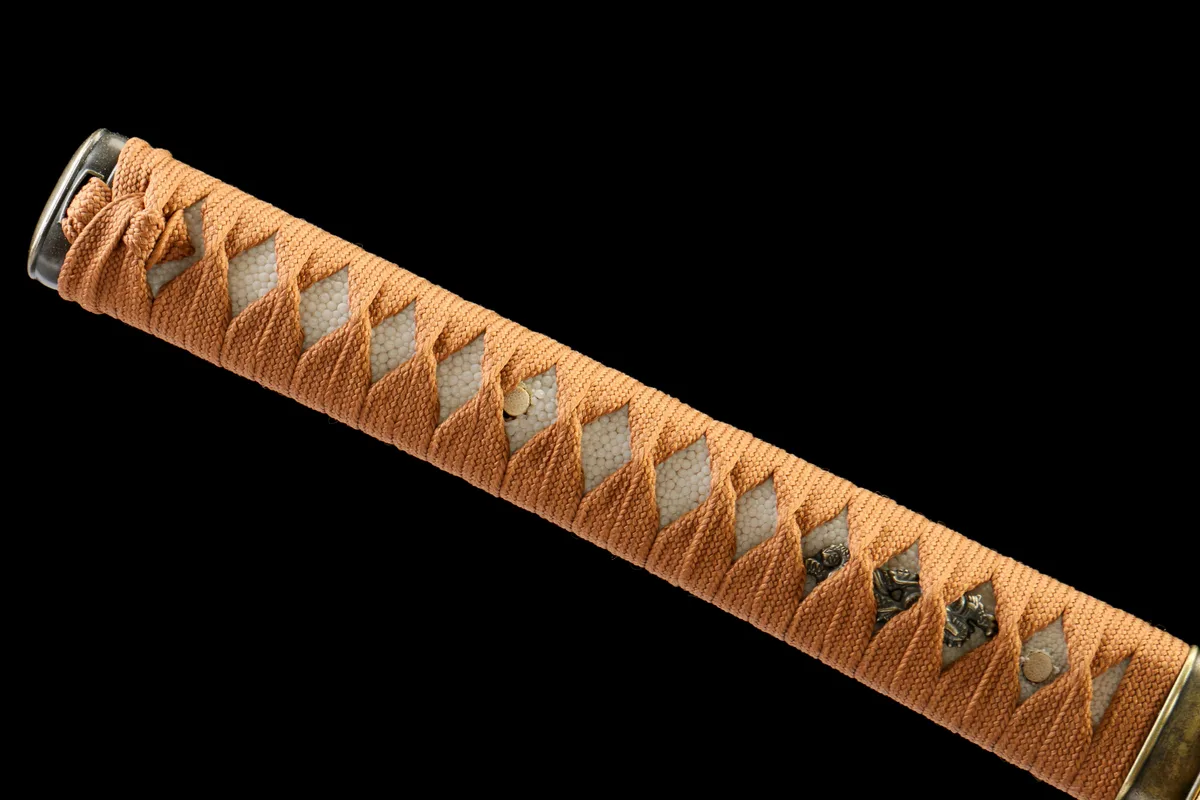
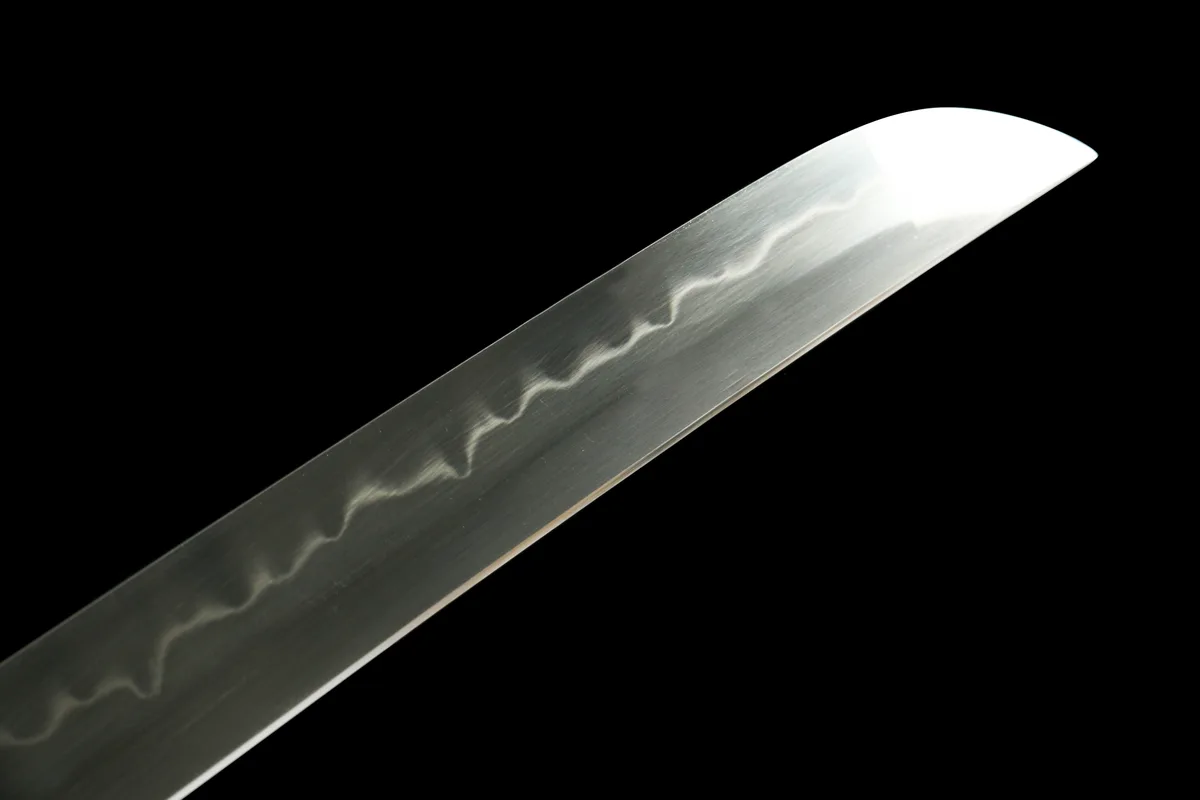
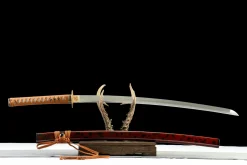
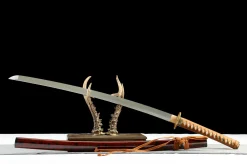
The Golden Thread is a full-sized T10 tool steel katana forged in the classic shinogi-zukuri (ridgeline) style, distinguished by its bold iron fittings and the mesmerizing hamon that emerges from traditional clay tempering. At $280, this iron-mounted katana delivers genuine Longquan craftsmanship — a functional, battle-ready blade wrapped in cotton ito over authentic rayskin, housed in a mirror-polished lacquer saya. For collectors and martial artists seeking an honest, no-compromise entry into premium Japanese swordsmithing, the Golden Thread is a benchmark piece.
Specifications
| Blade Steel | T10 High Speed Tool Steel |
| Total Length | 102.0 cm / 40.2 inches |
| Blade Length | 72.0 cm / 28.3 inches |
| Blade Width | 3.2 cm |
| Weight | 1040 g / 36.7 oz (net) |
| Heat Treatment | Clay Tempering (Differential Hardening) |
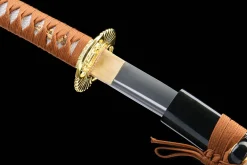
| Fittings | Iron |
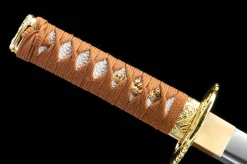
| Handle | Cotton Ito + Genuine Rayskin |
| Sheath | Hardwood (High-Gloss Lacquer) |
Craftsmanship & Materials
T10 tool steel earns its reputation through the addition of tungsten to a high-carbon matrix — a combination that produces exceptional edge retention and wear resistance far beyond standard carbon steels. On the Golden Thread, this steel is forged in the shinogi-zukuri profile, the same geometry perfected by Japanese smiths over centuries: a pronounced ridgeline (shinogi) that balances cutting geometry with structural rigidity. The result is a blade that slices cleanly and holds its edge through repeated tameshigiri practice.
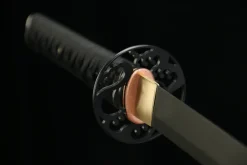
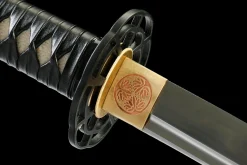
The defining character of the Golden Thread is its iron tsuba and matching iron furniture — a choice that gives the sword a raw, unadorned martial gravitas entirely unlike gilded or ornate mounts. Iron fittings age with personality, developing a subtle patina that tells the story of use and time. Against the jet-black high-gloss lacquer of the hardwood saya, the dark iron hardware creates a monochromatic, warrior-minimalist aesthetic that is both striking and deeply traditional.
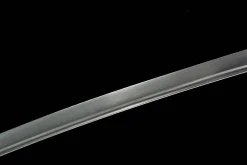
The clay tempering process — where a precise slurry of clay is painted along the spine (mune) before quenching — is what truly elevates this blade. The exposed edge cools rapidly, hardening to cutting sharpness, while the clay-insulated spine retains toughness and flex. The boundary between these two zones crystallizes into the hamon, the undulating temper line that is the signature of authentic differential hardening. On T10 steel, this hamon is notably active and bright, visible in natural light as a luminous mist rising from the ha.
Perfect For
- Tameshigiri practitioners who need a durable, sharp T10 blade capable of regular cutting sessions on tatami and bamboo targets.
- First-time premium katana buyers seeking genuine clay-tempering and rayskin same without the complexity of ornate fittings.
- Minimalist collectors drawn to the austere beauty of iron-mounted swords and the timeless shinogi-zukuri silhouette.
Care & Maintenance
T10 tool steel, while exceptionally hard, contains no stainless elements and will oxidize if neglected — wipe the blade dry after every handling and apply a thin coat of choji oil (or food-grade mineral oil) every two to four weeks. The iron fittings should similarly be kept dry and lightly oiled to prevent rust bloom. Never store the blade in its saya for extended periods without periodic airing, as trapped humidity accelerates corrosion at the habaki collar.
Frequently Asked Questions
What is T10 tool steel and why is it used in the Golden Thread katana?
T10 tool steel is a high-carbon steel alloyed with tungsten, which increases hardness, wear resistance, and edge retention beyond standard high-carbon steels. In the Golden Thread katana, T10 provides a razor-sharp, durable cutting edge capable of handling serious tameshigiri practice. Its tungsten content also contributes to a more active, visually striking hamon when clay tempered, making it prized by both martial artists and serious collectors.
What does clay tempering mean on the Golden Thread katana?
Clay tempering is a traditional Japanese differential hardening technique where a layer of clay is applied to the blade’s spine before quenching. On the Golden Thread, this process creates a hard cutting edge (ha) for sharpness and a tough, flexible spine (mune) to resist breaking under stress. The process also produces the authentic hamon — the wavy temper line visible along the blade — which is a hallmark of genuine craftsmanship rather than an acid-etched imitation.
Is the Golden Thread katana battle ready and suitable for cutting?
Yes. The Golden Thread is a fully functional, battle-ready katana. Its clay-tempered T10 tool steel blade, shinogi-zukuri (ridgeline) geometry, and 72 cm blade length make it well-suited for tameshigiri (test cutting) and martial arts practice. The genuine rayskin (same) handle with tight cotton ito wrap ensures a secure grip under repeated cutting strokes. It is not a wall-hanger — it is built to perform.
Why does the Golden Thread use iron fittings instead of brass or copper?
Iron fittings on the Golden Thread give the sword a austere, traditional aesthetic rooted in classical Japanese sword culture. Iron tsuba and fittings were historically common among samurai who valued function and understated elegance. Iron fittings are durable and corrosion-resistant with proper care. They offer a darker, more martial look compared to brass or copper alternatives, complementing the Golden Thread’s clean, high-gloss lacquered hardwood sheath beautifully.
Is the Golden Thread good value at $280 compared to other clay-tempered katanas?
At $280, the Golden Thread offers exceptional value in the premium katana tier. Many clay-tempered T10 katanas at this price use inferior zinc alloy fittings or synthetic handle wrap. The Golden Thread includes genuine rayskin (same), cotton ito wrap, iron fittings, and a high-gloss lacquered hardwood sheath — materials typically found on swords costing $350–$500+. For buyers ready to move beyond beginner-grade 1060/1065 steel, this is a compelling entry into serious functional katanas.
| Weight | 1.32 lbs |
|---|---|
| Dimensions | 102.0 × 3.2 × 0.7 in |
| Sword Type | Katana |
| Blade Steel | T10 Tool Steel |
| Total Length | 102.0 cm |
| Blade Length | 72.0 cm |
| Heat Treatment | Clay Tempering (Differential Hardening) |
| Handle Wrap | Cotton Ito + Genuine Rayskin |
| Sheath Material | Hardwood (High-Gloss Lacquer) |
| Fittings | Iron |
| Forging Style | 鎬造 |
Related products

Anime & Pop Culture
Ghost of Tsushima – Hand Forged T10 Tool Steel Wakizashi Sword
1045 Carbon Steel


1065 Carbon Steel


Damascus Steel
Crimson Flame (之烽) – Hand Forged Damascus Steel Katana Sword

1045 Carbon Steel
1065 Carbon Steel
1065 Carbon Steel