














Hunter’s Edge – Hand Forged Damascus Steel Katana Sword
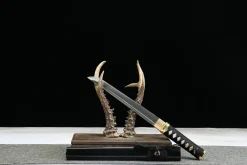
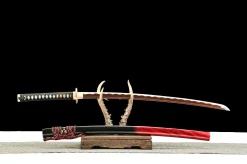
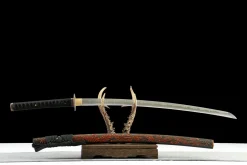
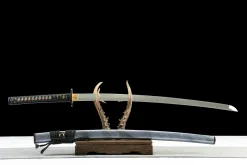
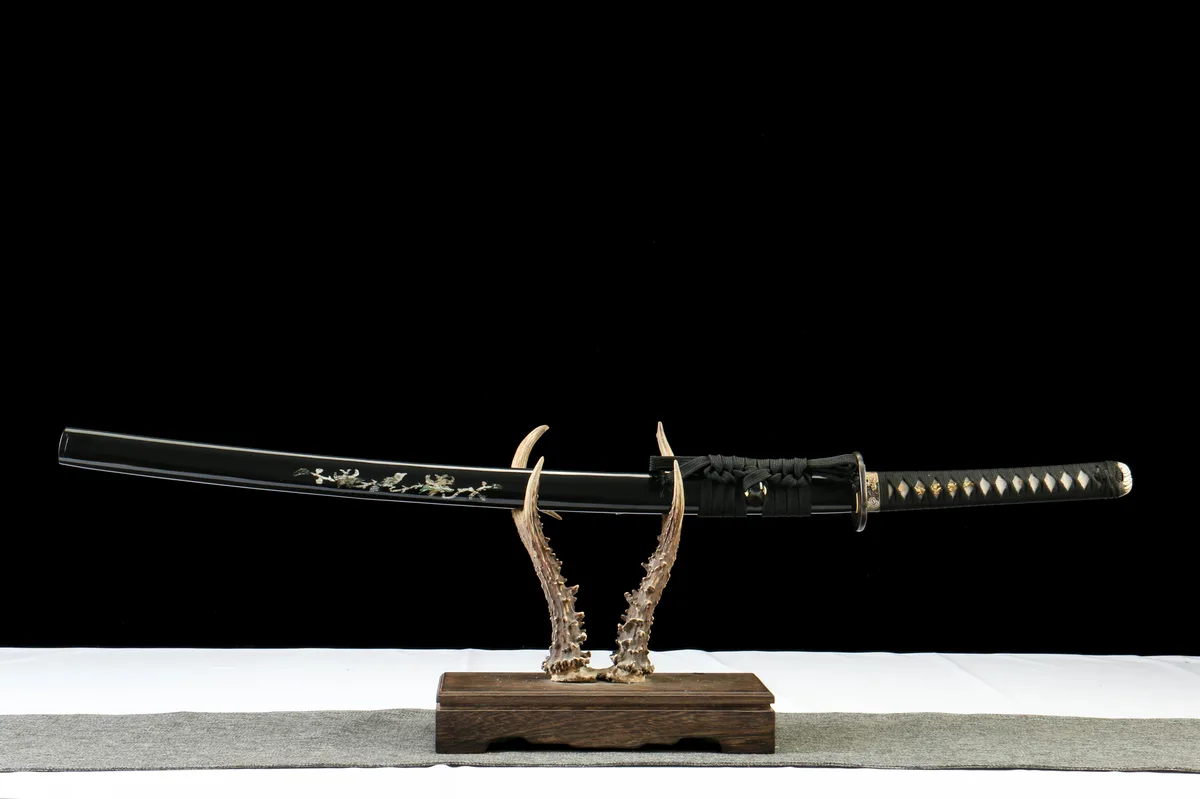
The Hunter’s Edge katana (猎剑) is a high-end Damascus steel blade distinguished by a rare four-leaf clover pattern weld (四叶草纹) — a technically demanding folded-steel construction that produces a blade as visually arresting as it is lethally functional. Housed in a premium buffalo horn and shell composite saya and dressed with gold & silver gilded copper fittings, this is a katana designed to command attention in any collection. At $575, the Hunter’s Edge represents the apex of pattern-welded artistry available from Longquan’s master forges.
Specifications
| Blade Steel | Damascus Steel — Four-Leaf Clover Pattern Weld (四叶草纹) |
| Total Length | 103.0 cm / 40.6 inches |
| Blade Length | 72.0 cm / 28.3 inches |
| Blade Width | 3.2 cm |
| Weight | 950 g / 33.5 oz (net) |
| Heat Treatment | Oil Quench & Temper |
| Fittings | Gold & Silver Gilded Fittings, Copper |
| Handle | Cotton Ito Wrap |
| Sheath | Buffalo Horn & Shell Composite (牛角贝壳鞘) |
Craftsmanship & Materials
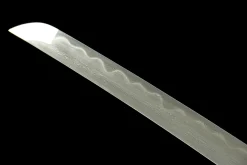
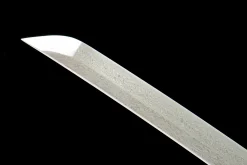
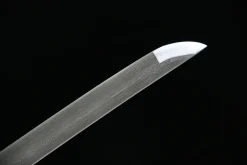
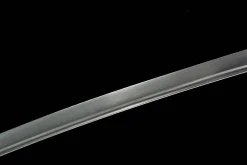
Pattern-welded Damascus is the most labor-intensive steel discipline practiced in Longquan’s forges. The Hunter’s Edge takes this further with the four-leaf clover pattern (四叶草纹) — a manipulation technique in which the smith precisely twists, cuts, and re-welds the billet to generate a repeating organic motif across the blade’s surface. The pattern emerges fully only after acid etching reveals the contrasting high- and low-carbon layers beneath. No two Damascus billets produce an identical result; the swirling, four-fold geometry on your Hunter’s Edge is sui generis. The multilayer steel also provides genuine functional benefits: alternating hard and tough layers create a blade that resists both chipping and catastrophic fracture under lateral stress.
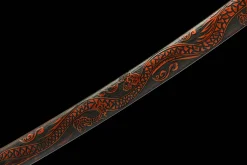
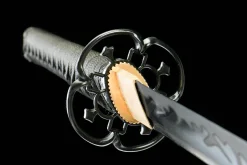
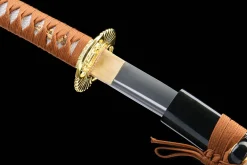
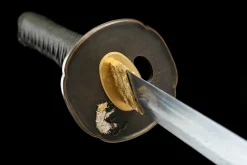
The saya (sheath) is one of the most distinguished features of the Hunter’s Edge. Constructed from buffalo horn inlaid with natural shell panels (牛角贝壳鞘), it offers an iridescent, shifting surface that catches light differently from every angle — a perfect visual counterpart to the Damascus blade’s own living surface. This is not lacquered wood; it is a sheath built from dense, water-resistant natural materials that will outlast generations of display. The tsuba and fittings are copper-based and finished with gold and silver gilding, elevating the sword’s overall presentation to a level appropriate for a centerpiece collection piece.
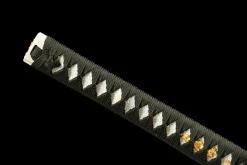
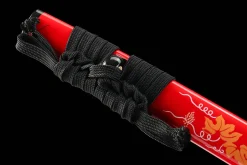
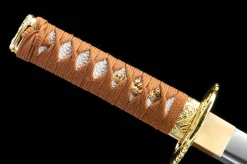
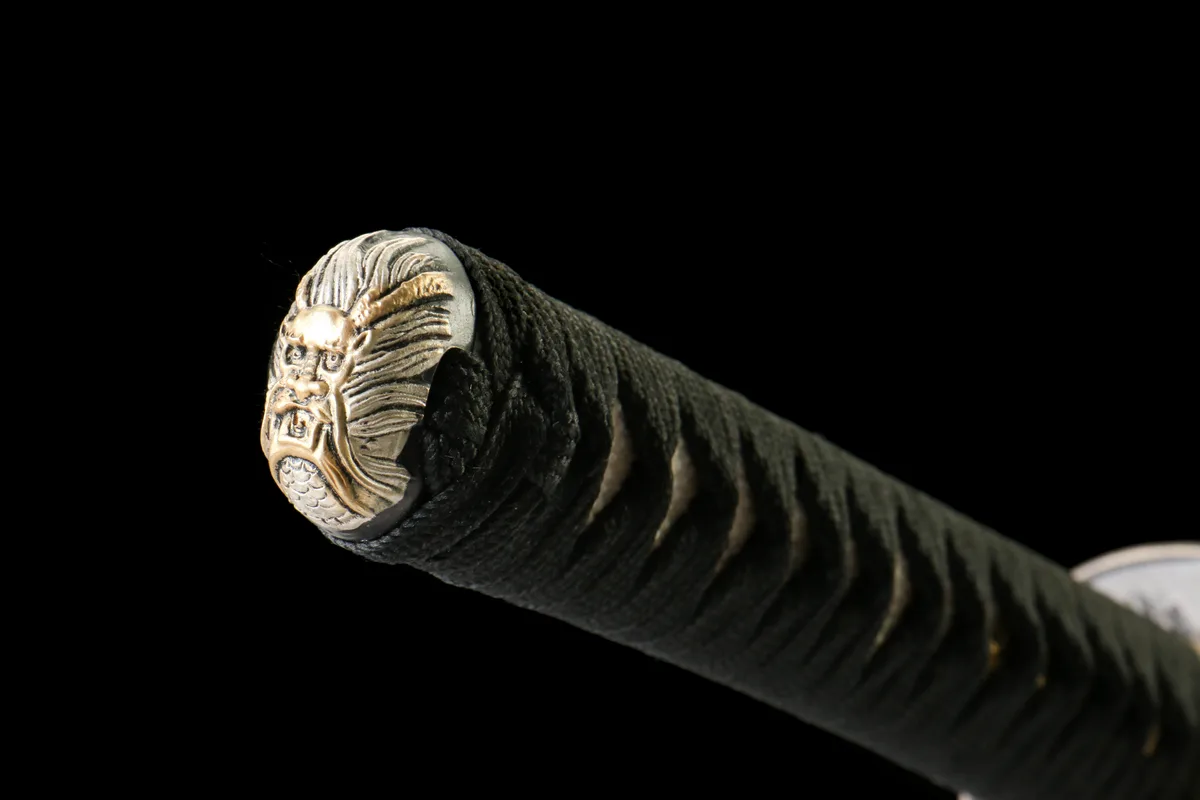
The cotton ito wrap on the tsuka is tightly applied over same (rayskin), ensuring the grip is as secure during a cutting session as it is beautiful during display. From the gilded menuki accents to the flared horn koiguchi of the saya, every component of the Hunter’s Edge has been selected to reinforce a singular identity: a hunter’s weapon dressed for a warlord’s court.
Perfect For
- Serious collectors seeking a technically distinguished Damascus blade with a rare four-leaf clover pattern weld as a centerpiece acquisition
- Martial artists and advanced practitioners who want a high-performance pattern-welded cutter with premium gilded copper fittings worthy of display between sessions
- Gift buyers looking for an heirloom-quality katana in the high-end tier with unmatched visual drama from blade to sheath
Care & Maintenance
Damascus steel requires diligent moisture control — the acid-etched surface that reveals the pattern is microscopically textured and will trap humidity, accelerating oxidation if neglected. After every use or handling, wipe the blade thoroughly with a soft, lint-free cloth and apply a thin, even coat of choji oil to the entire blade surface, including the fuller. The buffalo horn and shell saya should be stored away from extreme heat or direct sunlight, which can cause the horn panels to check or the shell inlay to loosen over time; a light application of natural wax or conditioning oil to the sheath exterior twice yearly will preserve its luster.
Frequently Asked Questions
What type of Damascus steel is used in the Hunter’s Edge katana?
The Hunter’s Edge features pattern-welded Damascus steel with a four-leaf clover pattern (四叶草纹), created by folding and forge-welding multiple steel layers together. This produces the signature flowing surface patterns unique to each blade. Beyond aesthetics, the folded construction refines the grain structure of the steel, contributing to both toughness and a distinctive visual character that no two blades replicate exactly.
What are the fittings on the Hunter’s Edge and why do they matter?
The Hunter’s Edge is fitted with gold and silver gilded copper fittings — a significant upgrade over the zinc alloy hardware found on entry-level katanas. Copper-based fittings are denser, more corrosion-resistant, and hold detail more crisply than zinc alloy. Combined with the horn and shell scabbard (牛角贝壳鞘), these fittings give the Hunter’s Edge a cohesive, high-end aesthetic appropriate for its $575 price point.
Is the Hunter’s Edge katana functional or primarily a collector’s piece?
The Hunter’s Edge is both. Its Damascus steel blade is oil quenched and tempered, making it a fully functional cutter capable of tameshigiri and training use. However, at $575 with a rare horn-and-shell scabbard and gilded copper fittings, it is equally compelling as a premium collector’s display piece. Buyers who want a sword that performs and commands attention in a display setting will find it excels in both roles.
Is Damascus steel stronger than T10 tool steel for a katana?
Not necessarily stronger — they serve different priorities. T10 tool steel offers more predictable, consistent hardness and excellent edge retention, making it preferred by martial artists focused on cutting performance. Damascus (pattern-welded) steel prioritizes visual beauty and the craftsmanship of the forging process. The Hunter’s Edge Damascus blade is fully functional, but buyers choosing between it and a T10 sword like Obsidian Roar should weigh aesthetics versus raw cutting performance.
| Weight | 1.2 lbs |
|---|---|
| Dimensions | 103.0 × 3.2 × 0.7 in |
| Sword Type | Katana |
| Blade Steel | Damascus Steel |
| Total Length | 103.0 cm |
| Blade Length | 72.0 cm |
| Heat Treatment | Oil Quench & Temper |
| Handle Wrap | Cotton Ito Wrap |
| Sheath Material | 牛角贝壳鞘 |
| Fittings | Gold & Silver Gilded Fittings, Copper |
| Forging Style | Folded Steel (Pattern Welded) |
Related products
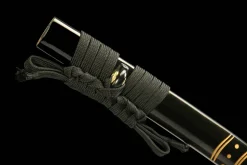
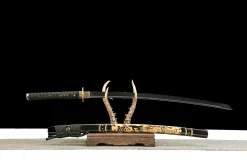
1065 Carbon Steel
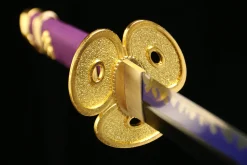
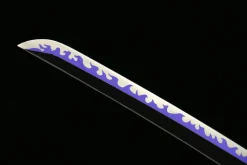
1045 Carbon Steel
Damascus Steel

Anime & Pop Culture
Ghost of Tsushima – Hand Forged T10 Tool Steel Wakizashi Sword
1065 Carbon Steel


1065 Carbon Steel

1065 Carbon Steel


Damascus Steel