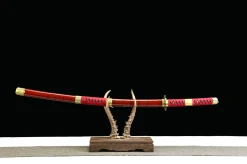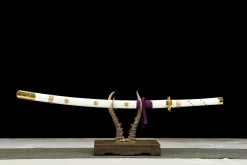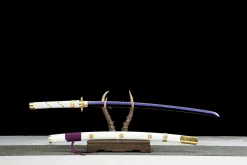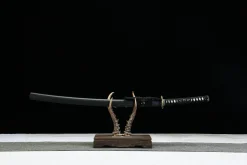











Ice Soul – Hand Forged Damascus Steel Katana Sword
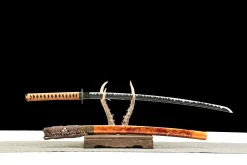
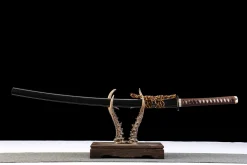
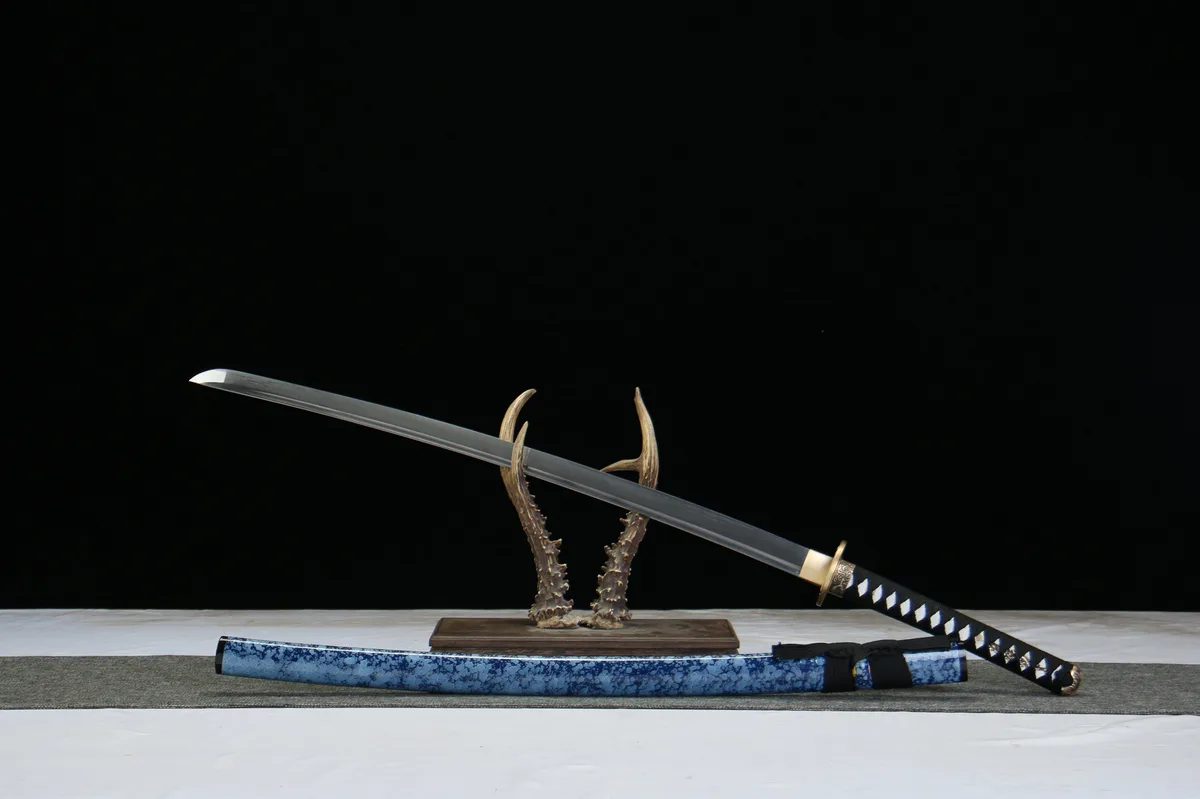
Hand-forged Damascus Steel katana (103cm total / 72cm blade), crafted in Longquan. Hand-folded Damascus pattern steel — each blade carries a unique layered grain from forge to tip.
$369.99
Ice Soul – Hand Forged Damascus Steel Katana Sword
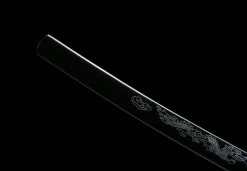
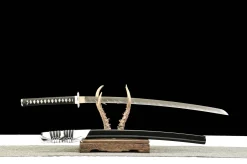
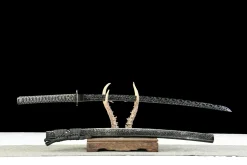
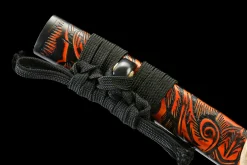
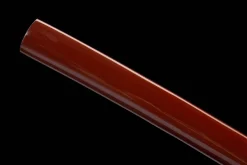
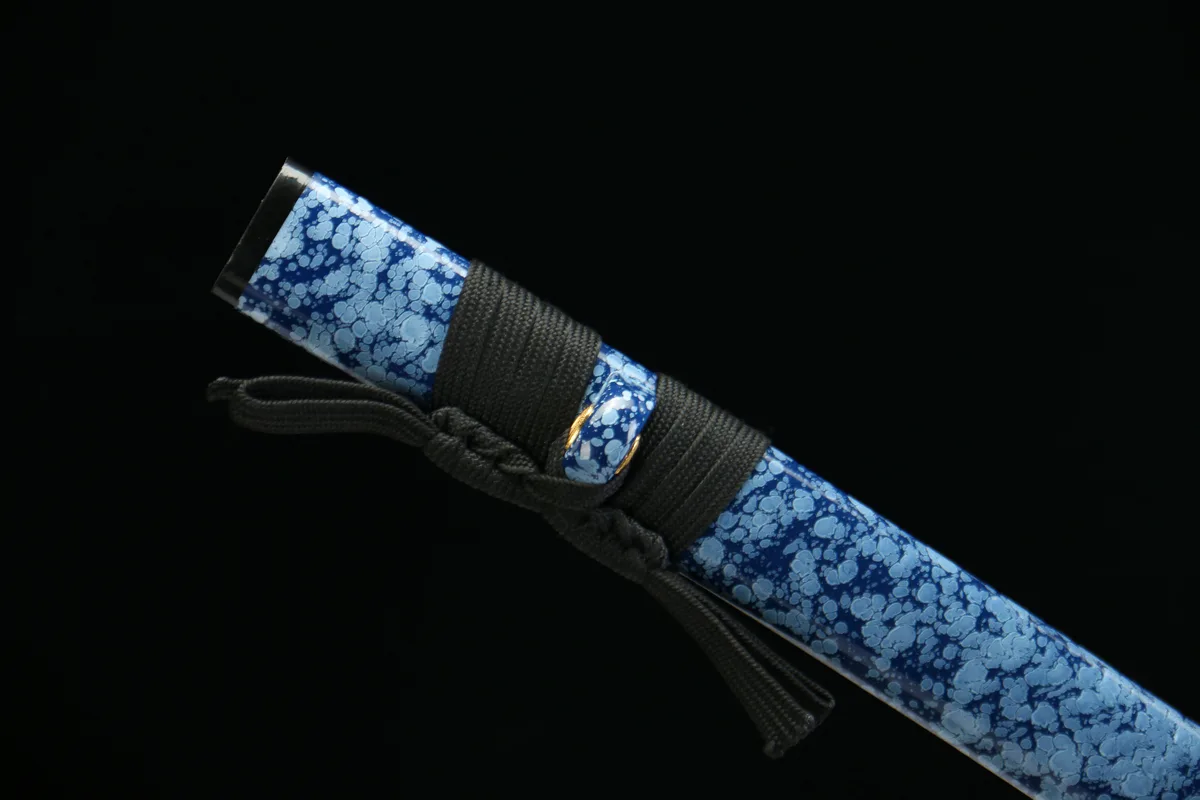
The pattern on this blade does not repeat. It never will. Pattern-welded Damascus – steel folded and forge-welded until distinct layers emerge as visible grain – produces a surface that shifts under light in ways no two blades share. The Ice Soul (冰魄) carries a flowing fold pattern through a 72 cm blade, and the green aohada (bark-textured wood) saya grounds the whole composition in something organic and considered.
Specifications
| Blade Steel | Damascus / Pattern-Welded Steel |
| Total Length | 103.0 cm / 40.6 in |
| Blade Length | 72.0 cm / 28.3 in |
| Blade Width | 3.2 cm |
| Weight | 950 g / 33.5 oz |
| Heat Treatment | Oil Quench & Temper |
| Fittings | Copper |
| Handle | Cotton Ito Wrap |
| Sheath | Green Bark Wood (Aohada) |
The Steel
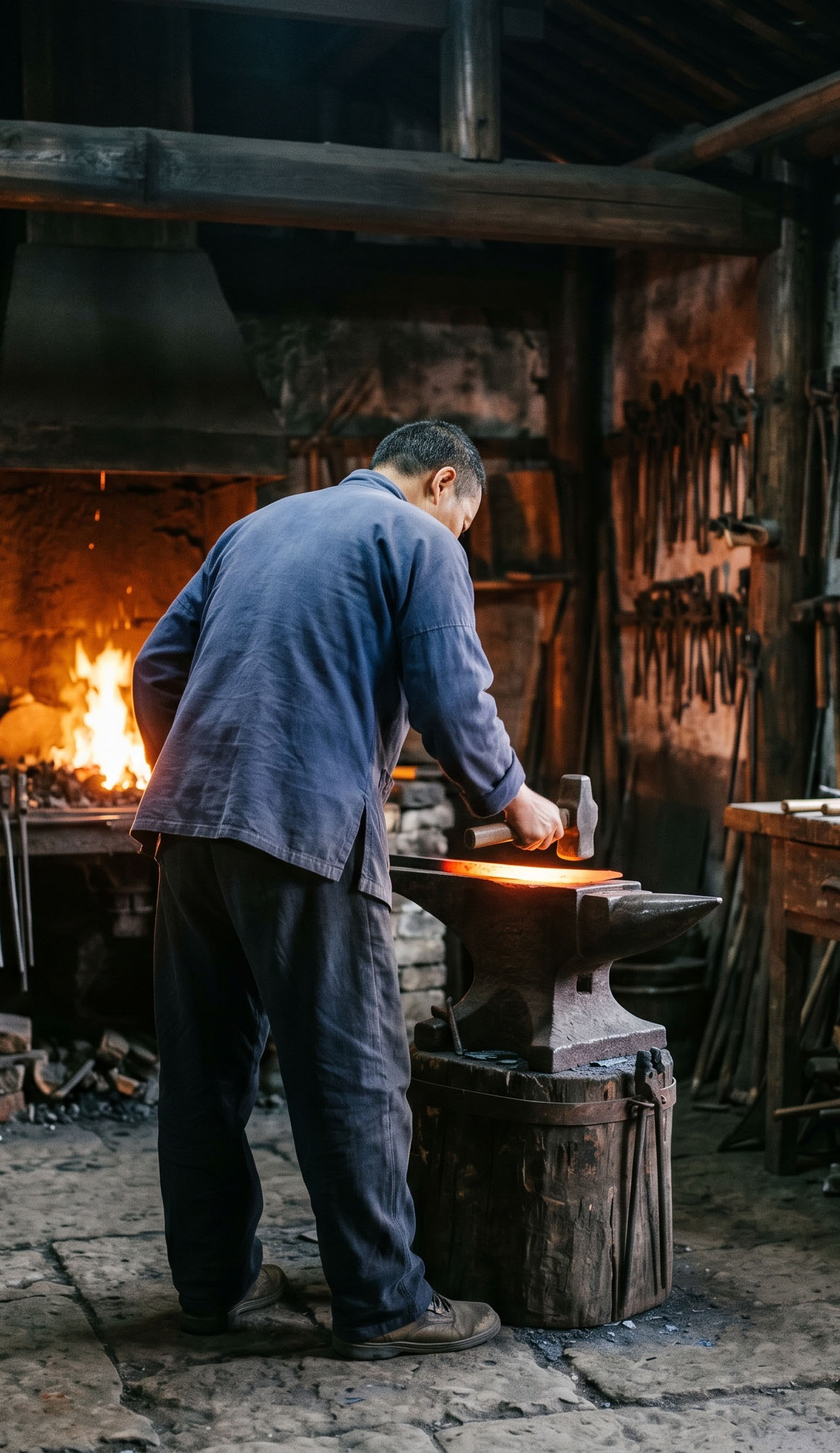
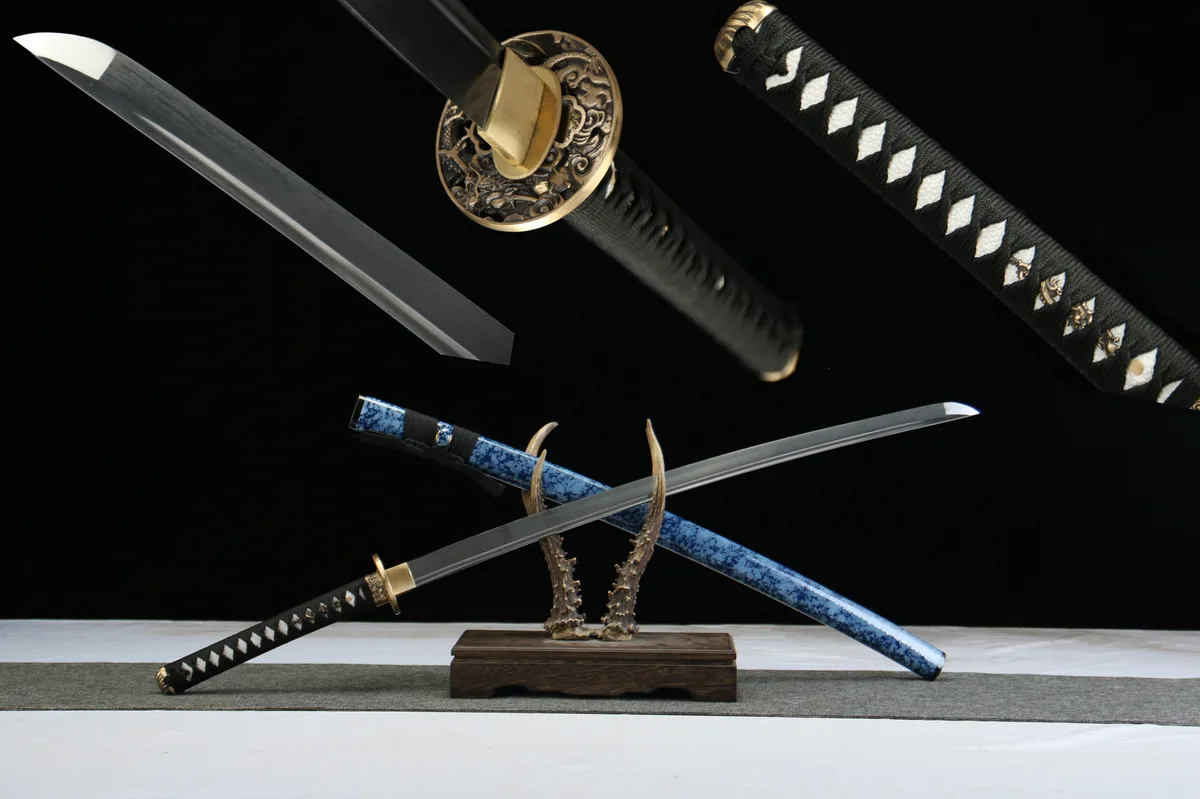
Pattern-welded Damascus is built through repetition – layers of steel folded and hammered, folded again, until the billet holds a grain structure that no single-steel blade can replicate. When the blade is ground and polished, that internal architecture becomes the surface. What you are looking at when you read the pattern is the literal cross-section of hundreds of folds, revealed by the smith’s hands and the abrasive’s edge. The Ice Soul wears this grain across a mirror-finished blade that catches and breaks light in motion. At rest on a wall, the pattern reads as a still image. Turn it, and it animates.
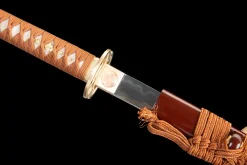
The oil quench and temper process stabilizes the multi-steel billet, bringing hardness and flexibility into alignment. The copper fittings – tsuba (handguard), fuchi (handle collar), and kashira (pommel cap) – were chosen for their warm tone, which reads against the cool Damascus grain the way a frame reads against a photograph. Neither competes. Both define the other.
In Your Hands
The cotton ito wrap runs the full 27 cm handle in a tight diamond pattern – the texture is firm under the fingers, with consistent spacing across the length of the tsuka. The aohada saya opens cleanly, the blade seating and releasing without resistance. This is a blade you will handle, examine, and return to the saya with care – and it will look exactly as composed the hundredth time as it did the first.
Care
Wipe the blade down with a lightly oiled cloth after any handling – skin contact leaves moisture and salt that will work into the pattern over time. Store the blade seated in its saya in a stable environment, away from humidity extremes. The aohada sheath is natural wood and benefits from occasional light waxing to maintain its finish.
| Weight | 1.2 lbs |
|---|---|
| Dimensions | 103.0 × 3.2 × 0.7 in |
| Hamon | Damascus Pattern (No Hamon) |
| Blade Steel | Damascus Steel |
| Total Length | 103.0 cm |
| Blade Length | 72.0 cm |
| Heat Treatment | Oil Quench & Temper |
| Handle Wrap | Cotton Ito Wrap |
| Sheath Material | Green Bark Wood (Aohada) |
| Fittings | Copper, (装) |
| Forging Style | Folded Steel (Pattern Welded) |
Related products