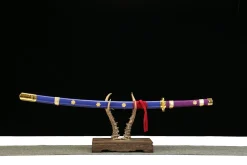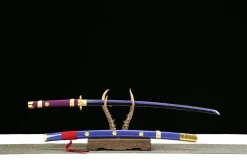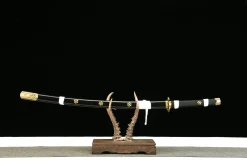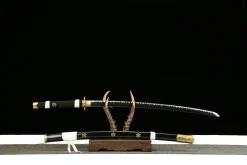


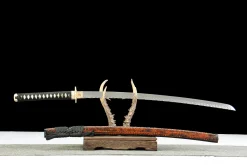












Ink Dragon – Hand Forged Damascus Steel Katana Sword
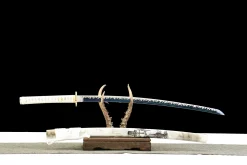
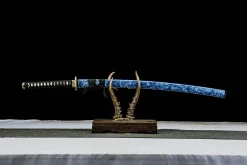
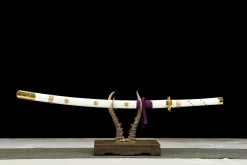
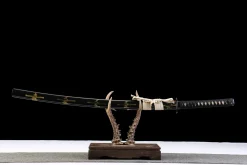
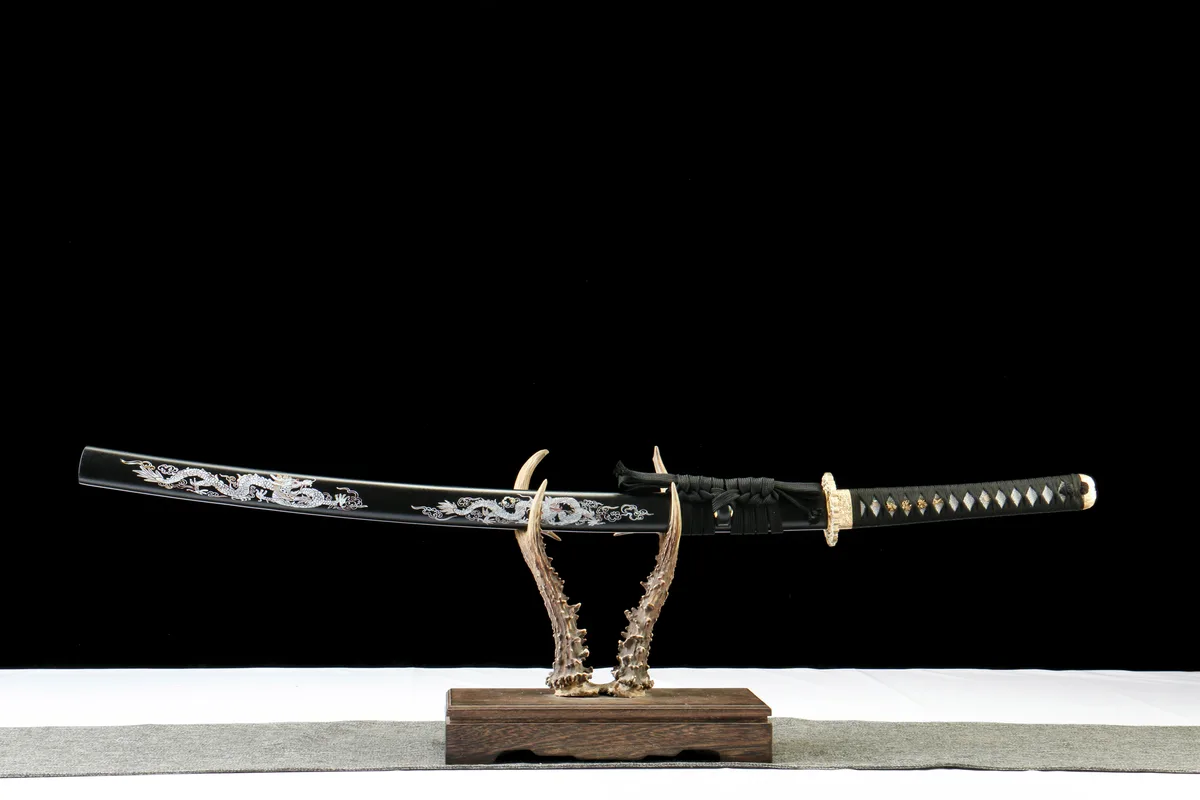
Hand-forged Damascus Steel katana (103cm total / 72cm blade), crafted in Longquan. Hand-folded Damascus pattern steel — each blade carries a unique layered grain from forge to tip.
$524.99
Ink Dragon – Hand Forged Damascus Steel Katana Sword
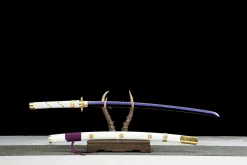
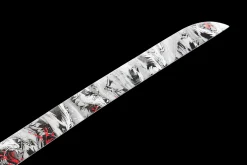
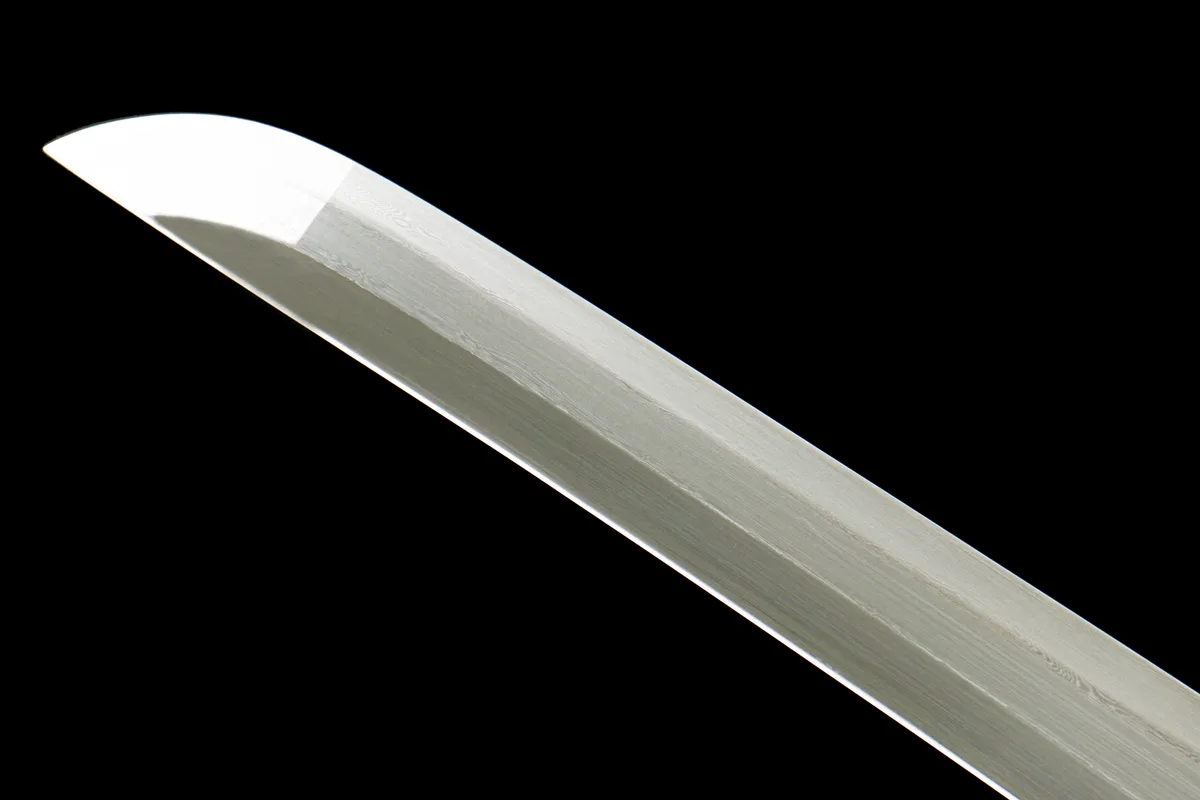
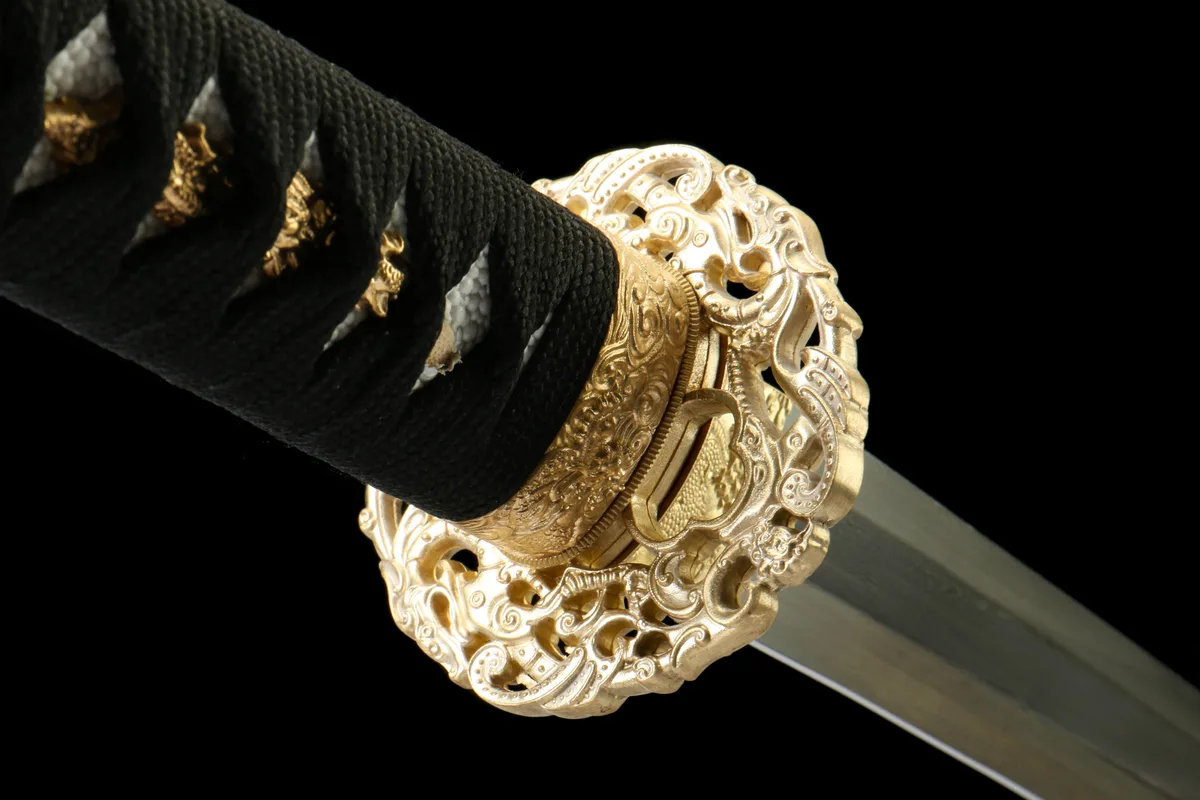
Three-color polish on a Damascus blade is not a common specification, and that distinction matters immediately when you hold Ink Dragon up to light. The 三色研 – san-shoku-togi, or three-color polish – is a finishing process in which the blade surface is worked through multiple stages of abrasive and stone to bring out contrasting visual registers within the Damascus grain: bright mirror zones at the shinogi (the raised ridgeline dividing the flat of the blade from the bevel), a mid-tone satin transition, and a darker, more textured finish in the ji (the body of the blade below the ridge). The result is a single piece of steel that appears to be three different materials simultaneously.
Specifications
| Blade Steel | Damascus / Pattern-Welded Steel (三色研 – Three-Color Polish) |
| Total Length | 103.0 cm / 40.6 in |
| Blade Length | 72.0 cm / 28.3 in |
| Blade Width | 3.2 cm |
| Weight | 950 g / 33.5 oz |
| Heat Treatment | Oil Quench & Temper |
| Fittings | Copper (装) |
| Handle | Cotton Ito Wrap |
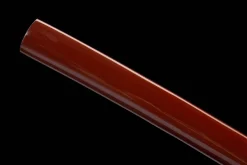
| Sheath | Green Bark Wood – Aohada (青肌) |
Forged in Longquan
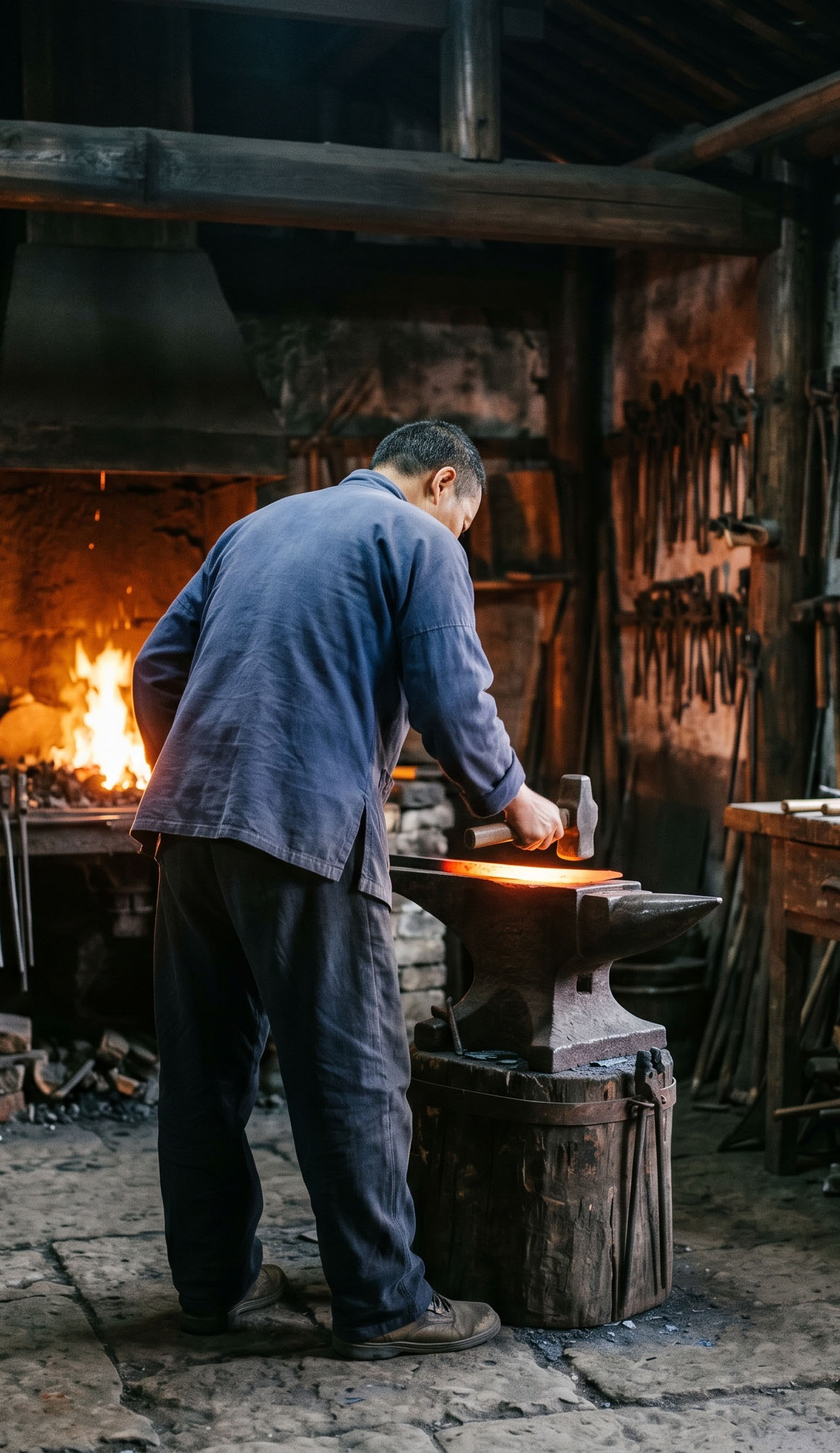
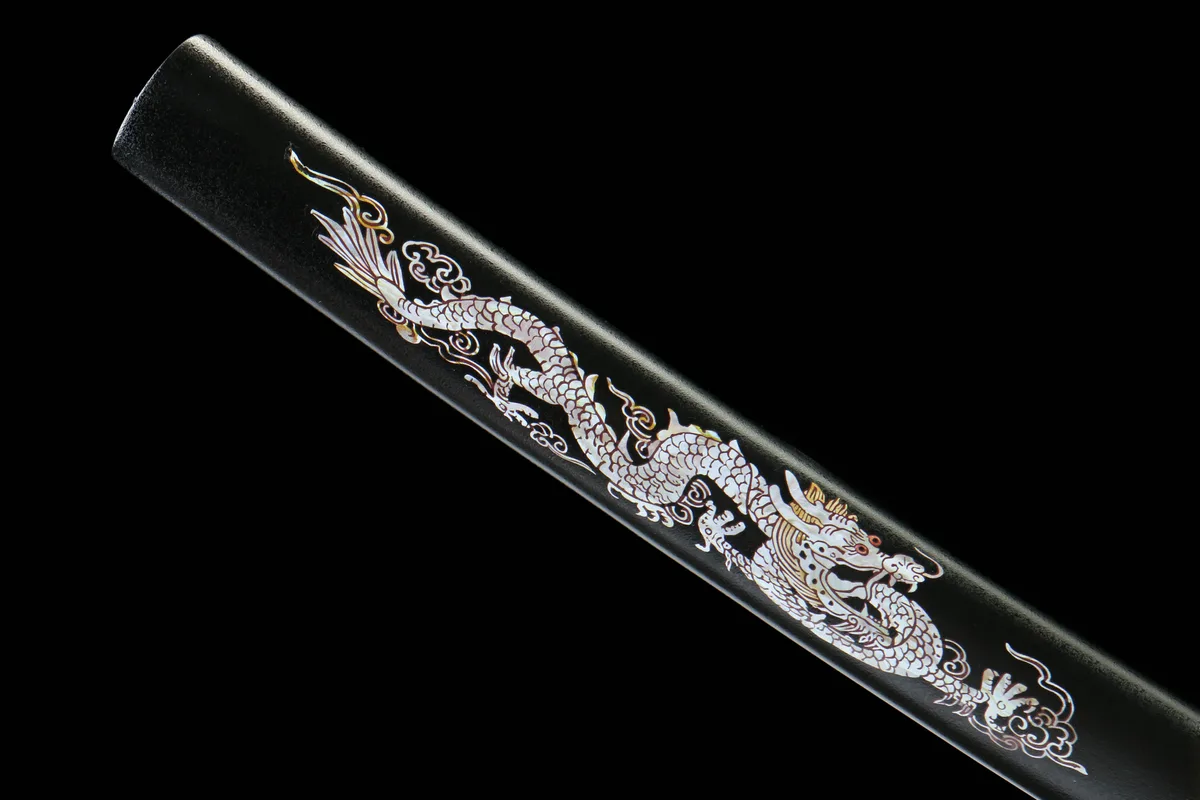
The Longquan workshops that produce these Damascus blades work from a tradition of pattern-welded construction that predates the modern revival of the technique in the West by centuries. The steel in Ink Dragon is forge-welded from multiple high-carbon compositions, drawn and folded to create a layered billet, then ground and polished to the three-color specification. The 墨影翔龙 – Ink Dragon – name refers specifically to the way the grain moves at the upper register of the blade: under strong light, the darker layers in the Damascus surface shift and seem to extend through the steel in forms that are irregular, directional, and unmistakably alive. No two blanks from the same billet will yield the same pattern. This blade will not look exactly like any image we have published of it, because the image was taken of a different blade.
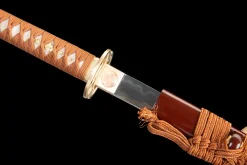
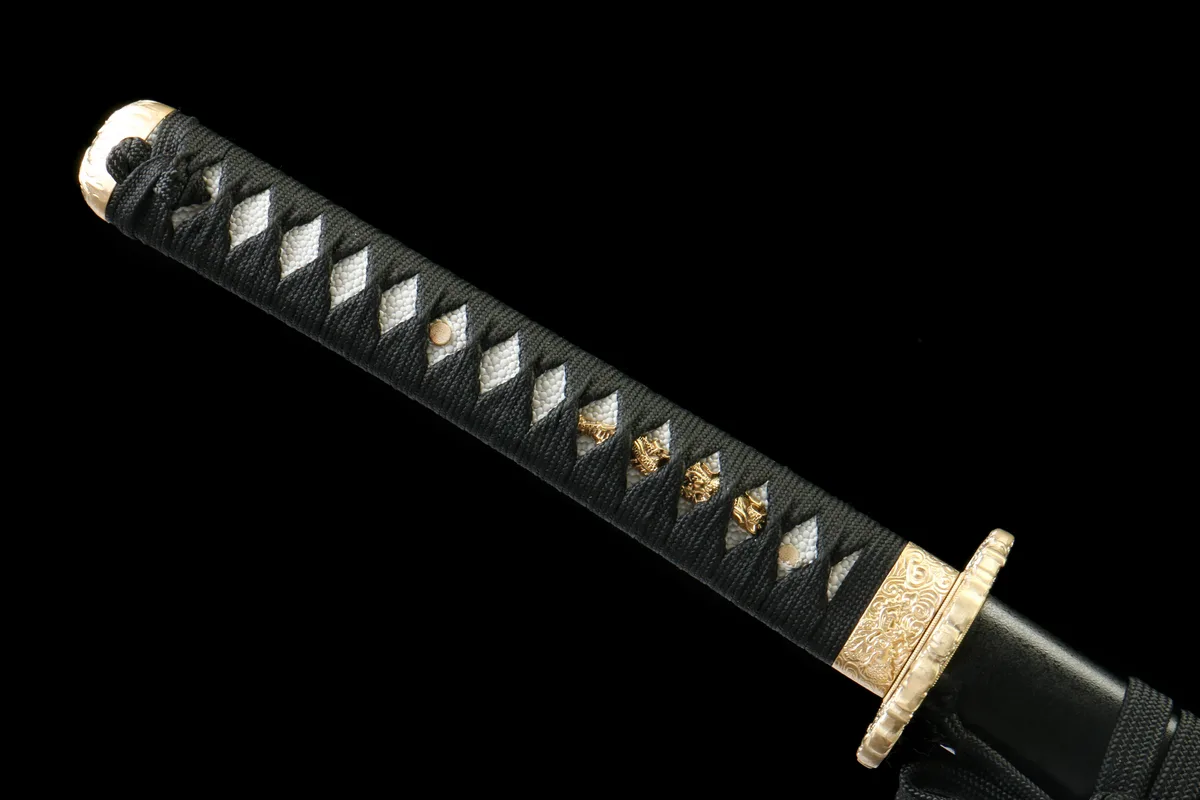
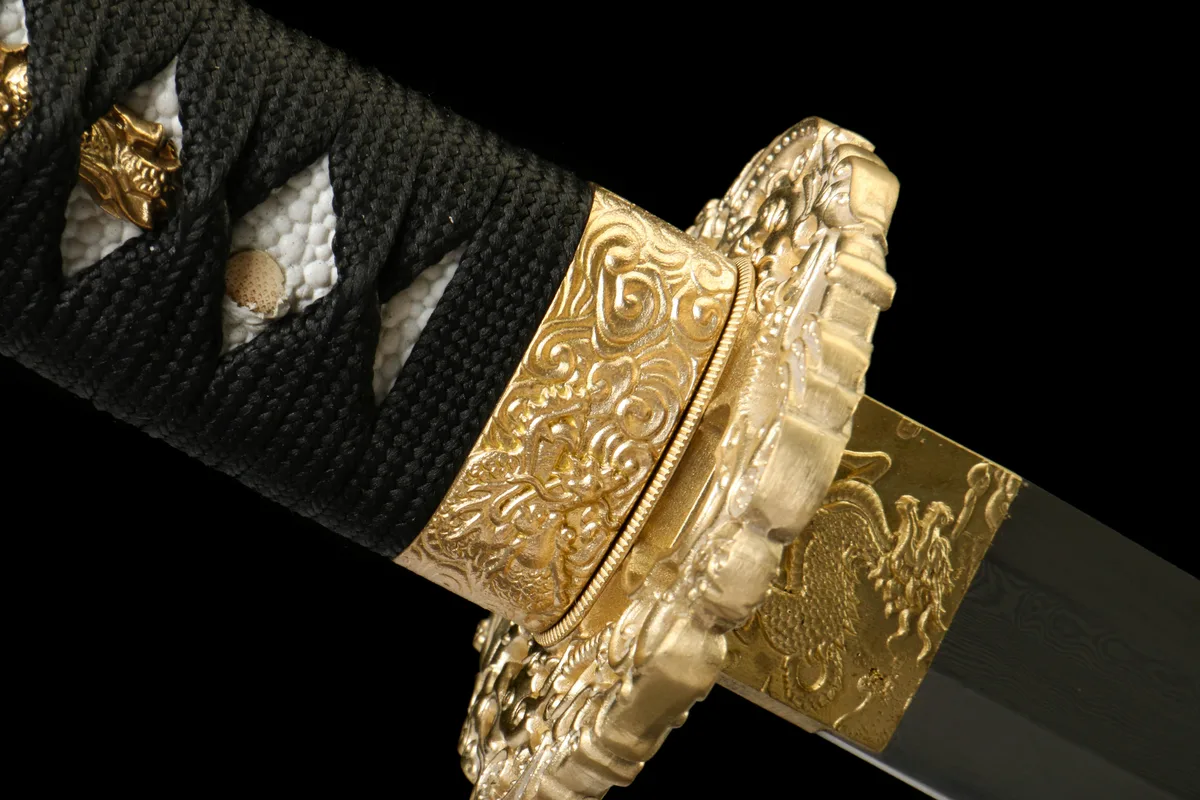
The copper fittings at the habaki (blade collar), tsuba (hand guard), and menuki (handle ornaments) are chosen here specifically to complement the warm mid-tones that emerge in the Damascus pattern after the three-color polish. Copper does not fight the steel for visual attention the way bright brass would. It grounds the ensemble.
Weight, Balance, Draw
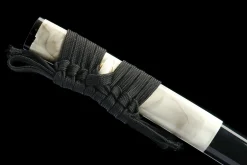
The 27.0 cm handle on Ink Dragon provides a substantial two-handed grip – the cotton ito wrapped over the same (rayskin undergrip) builds a surface that is slightly rough to the touch, which translates to confident contact even without a tight squeeze. At 72.0 cm of blade, the draw from the aohada saya has a clean, single-motion quality: the green bark wood sheath is fitted close, and the sword comes out of it with precision rather than looseness. Mounted on a horizontal display rack, the three-color polish catches every shift in ambient light differently throughout the day.
Keeping It Sharp
The three-color polish is sensitive to abrasion and fingerprint acid – handle with clean, dry hands or cotton gloves and wipe with a soft cloth immediately after contact. Apply a light coat of choji oil (traditional clove-mineral oil blend) monthly or after any extended handling. The aohada saya should be kept in stable humidity conditions to prevent the wood from warping and affecting the fit of the blade.
| Weight | 1.2 lbs |
|---|---|
| Dimensions | 103.0 × 3.2 × 0.7 in |
| Hamon | Damascus Pattern (No Hamon) |
| Blade Steel | Damascus Steel |
| Total Length | 103.0 cm |
| Blade Length | 72.0 cm |
| Heat Treatment | Oil Quench & Temper |
| Handle Wrap | Cotton Ito Wrap |
| Sheath Material | Green Bark Wood (Aohada) |
| Fittings | Copper, (装) |
| Forging Style | Folded Steel (Pattern Welded) |
Related products