












Ink Scale Flowing Light – Hand Forged T10 Tool Steel Katana Sword
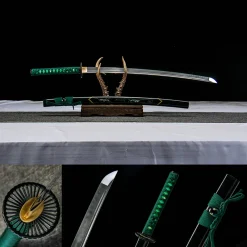
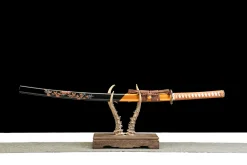
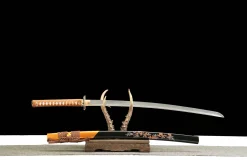
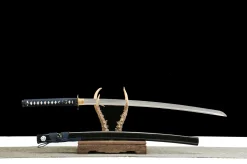
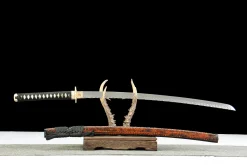
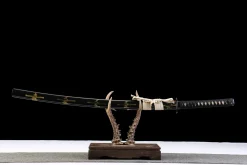
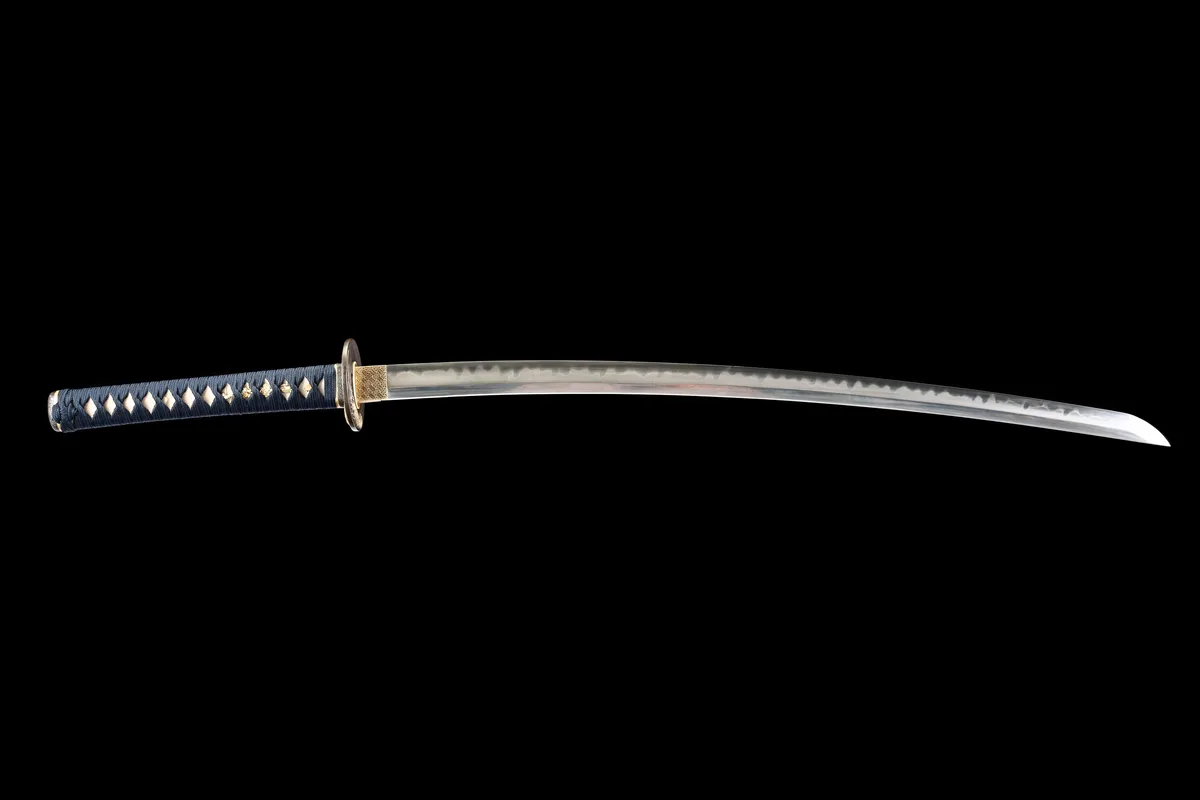
Hand-forged T10 Tool Steel katana (102cm total / 72cm blade), crafted in Longquan. Clay-tempered blade with a genuine hamon line — visible contrast between hardened edge and soft spine.
$1,949.99
Ink Scale Flowing Light – Hand Forged T10 Tool Steel Katana Sword
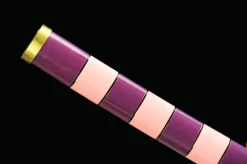
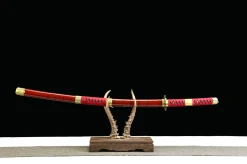
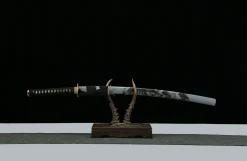
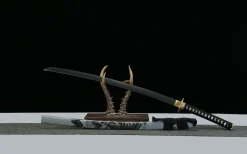
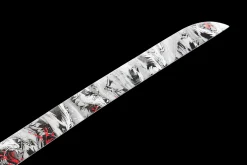
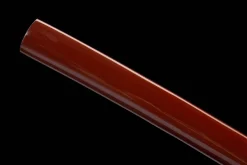
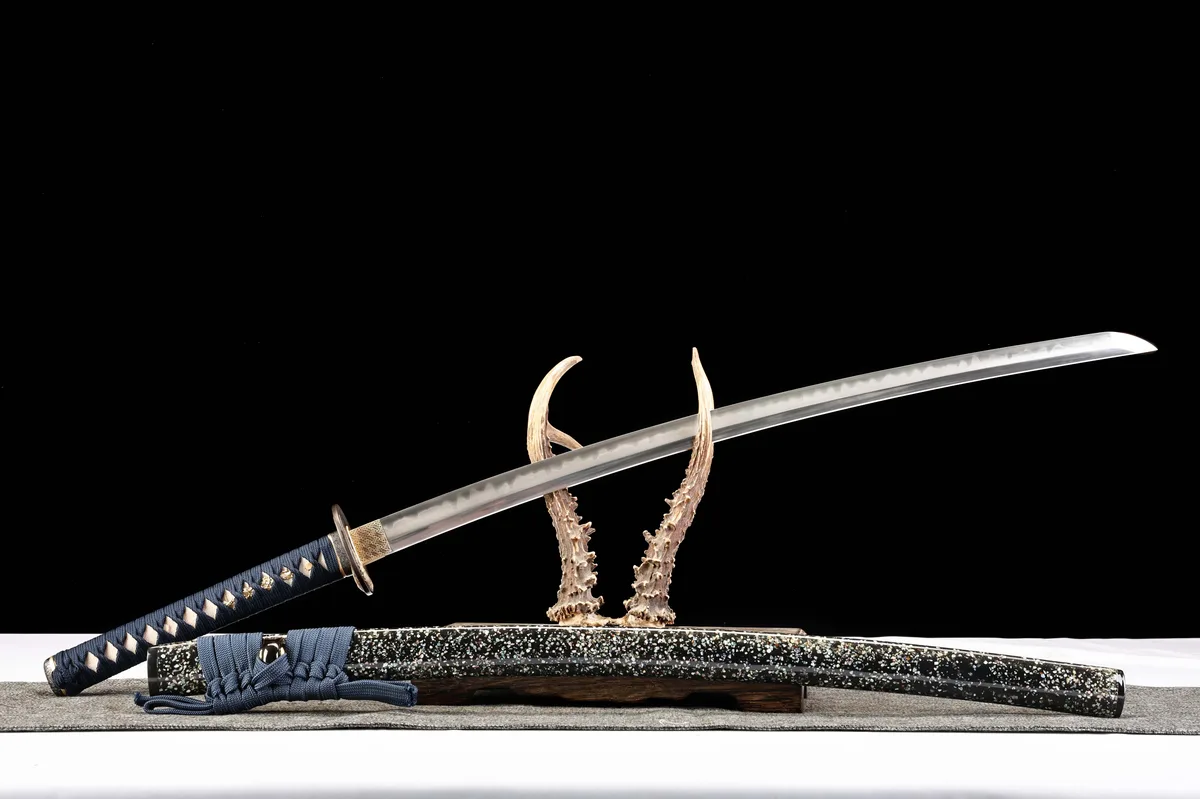
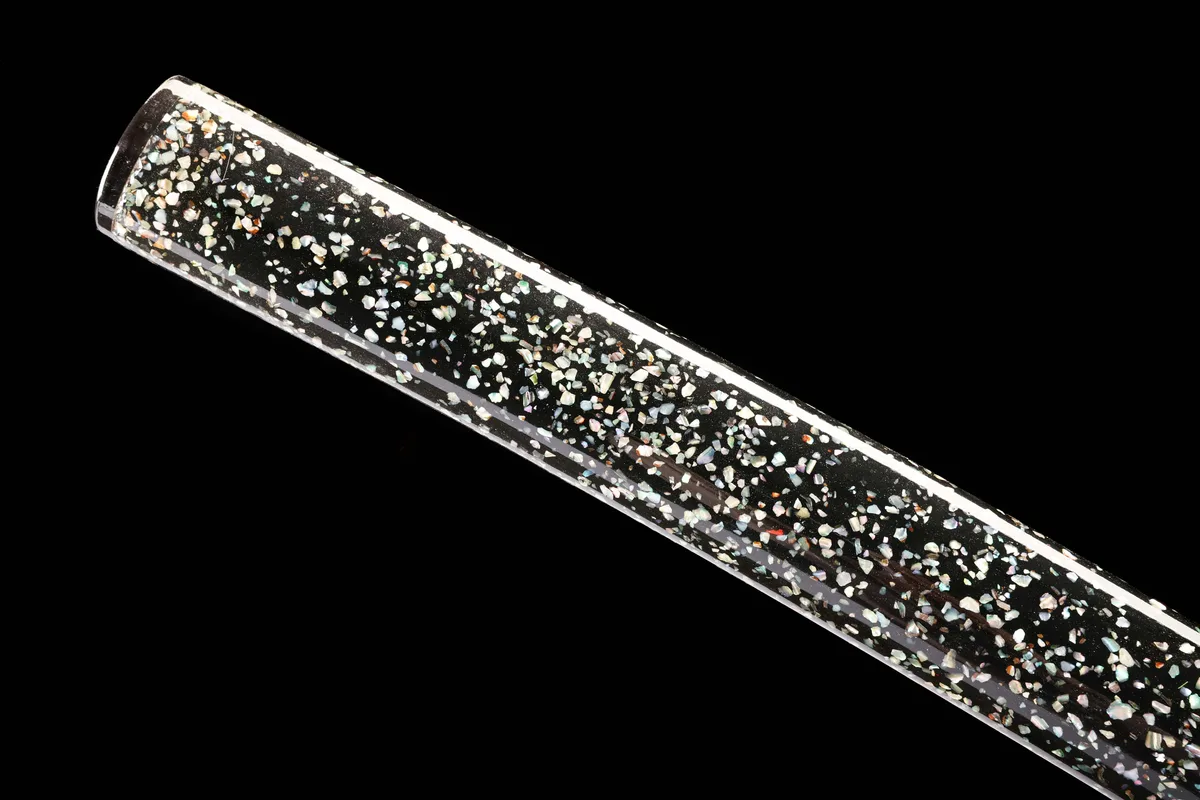
The name on this katana – Ink Scale Flowing Light – describes exactly what happens when the blade moves. The T10 steel has been clay-tempered in the traditional differential hardening method, and the resulting hamon runs the full length of the 72.0 cm blade in a pattern that the ash-grey polished surface (灰 finish) renders in high contrast – a bright habuchi against a smoky flat. The saya is 大漆螺钿: a deep lacquer ground carrying raden shell inlay worked into the composition of a 富贵虾 (prosperity shrimp) motif, the shell fragments catching light as shifting, iridescent scales. It is a specific image, and it is executed in materials that justify it.
Specifications
| Blade Steel | T10 High Speed Tool Steel, Clay Tempered, Ash-Grey Polish (灰) |
| Total Length | 102.0 cm / 40.2 in |
| Blade Length | 72.0 cm / 28.3 in |
| Blade Width | 3.2 cm |
| Blade Thickness | 0.7 cm |
| Weight | 1040 g / 36.7 oz |
| Heat Treatment | Clay Tempering (Differential Hardening) |
| Fittings | Copper, Gold and Silver Gilded (铜装鎏金银) |
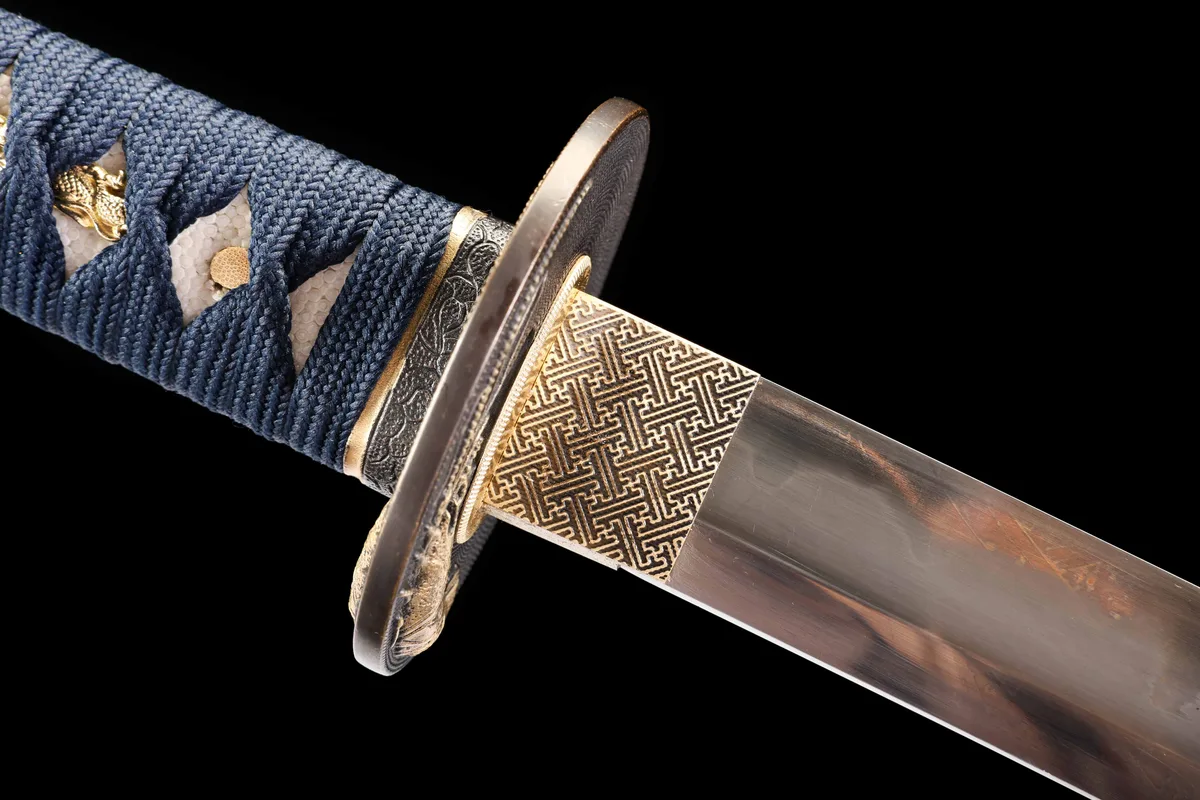
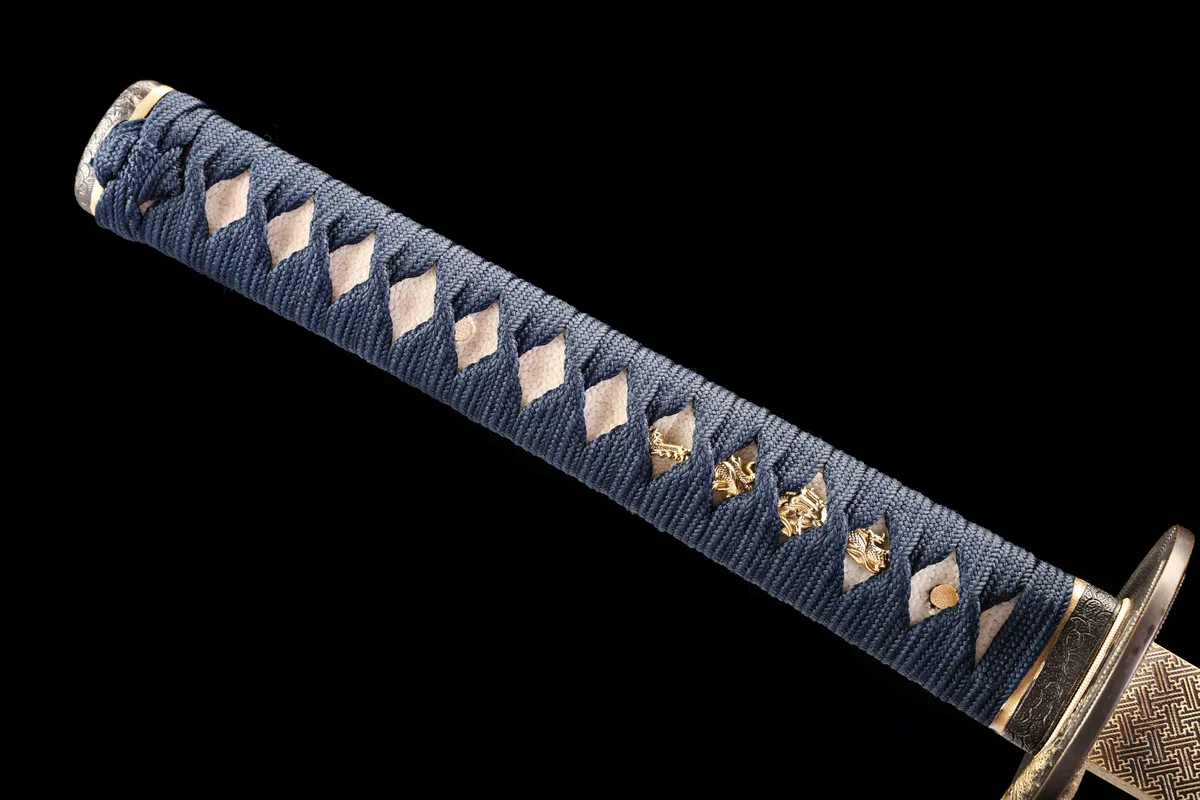
| Handle | Cotton Ito Wrap over Genuine Rayskin (Same) |
| Sheath | Lacquered Raden Shell Inlay Saya, Prosperity Shrimp Motif (大漆 螺钿鞘) |
Steel & Construction
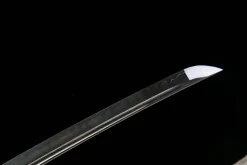
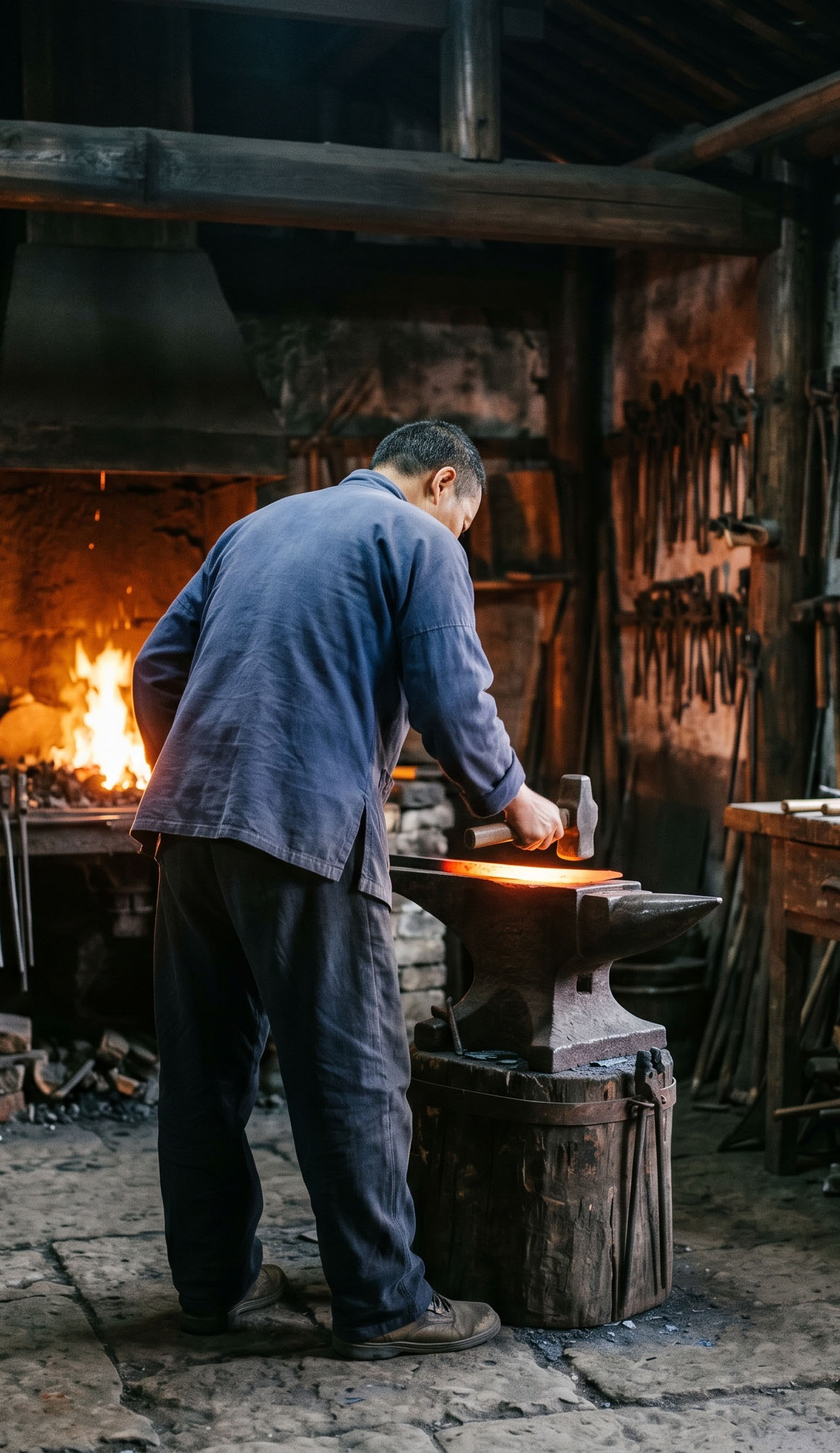
T10 tool steel is differentiated from standard high-carbon grades by its tungsten content, which refines the carbide grain structure and produces a harder, more wear-resistant edge at equivalent carbon levels. Clay tempering drives that edge further: clay applied to the spine before quenching insulates it during the cooling process, leaving the spine in a tougher pearlitic state while the unprotected edge transforms into hard martensite. The boundary between those two zones is the hamon – the temper line – and on T10 it is characteristically active. The nie (bright crystalline granules visible along and within the temper line) on T10 tends to be dense and visible to the naked eye in good light. The habuchi (the hamon’s defined upper boundary) on this blade reads sharply against the ash-grey polished flat, the grey finish suppressing the reflectivity of the ji (body of the blade above the hamon) enough that the hamon’s brightness reads as genuine luminosity rather than surface reflection.
The yokote line – the crisp linear boundary defining the kissaki (tip section) from the main blade surface – is cleanly formed, confirming that the tip geometry received the same finishing attention as the rest of the blade. The shinogi-zukuri (ridgeline) forging style creates the primary geometry: a raised longitudinal ridge running most of the blade’s length, dividing the surface into the upper flat and the lower bevel, concentrating strength along the structural centerline while maintaining the cutting geometry below.
Handling
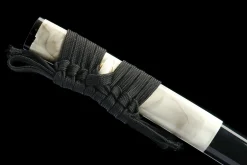
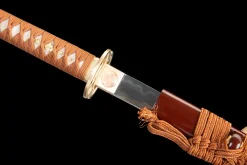
The 27.0 cm handle is wrapped in cotton ito over genuine rayskin, the rayskin nodes pressing through the ito diamonds in a tactile pattern that registers immediately under the palm. The gilded copper fittings – tsuba (handguard), fuchi (collar), and kashira (pommel cap) – are warm against the lacquered raden saya, which draws smooth and consistent from its precisely fitted koiguchi. The grey-polished blade emerges from the dark lacquer ground of the saya in a transition that is worth experiencing deliberately: the iridescent shell work of the scabbard giving way to the quieter, more complex light of the hamon on the blade itself.
Care Instructions
Apply a light coat of choji or food-grade mineral oil to the blade after handling – T10’s elevated carbon content makes it responsive to humidity, and the grey polish finish, while beautiful, does not provide oxidation resistance beyond the oil layer. The raden lacquer saya should be stored away from prolonged direct sunlight and extreme temperature changes, which can cause the lacquer ground to crack and loosen the shell inlay over time. Check the mekugi (bamboo retention pin) periodically and replace at the first sign of stress cracking.
| Weight | 1.32 lbs |
|---|---|
| Dimensions | 102.0 × 3.2 × 0.7 in |
| Hamon | Real Hamon (Clay Tempered) |
| Blade Steel | T10 Tool Steel |
| Total Length | 102.0 cm |
| Blade Length | 72.0 cm |
| Heat Treatment | Clay Tempering (Differential Hardening) |
| Handle Wrap | Cotton Ito Wrap 真鱼皮 |
| Sheath Material | 大漆 螺钿鞘 |
| Fittings | 铜装鎏金银 |
| Forging Style | 鎬造 |
Related products