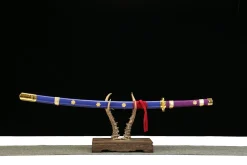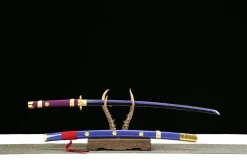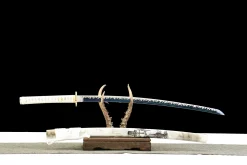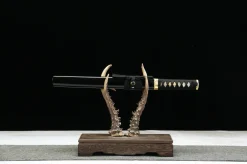
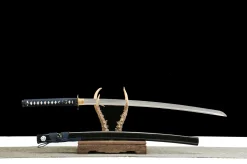


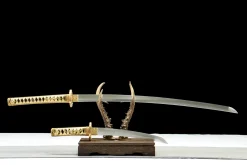
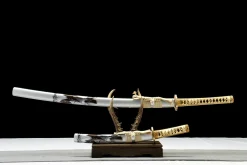
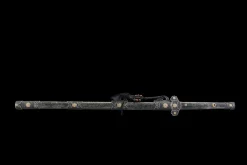






Kitetsu III – Hand Forged 1045 Carbon Steel Katana Sword
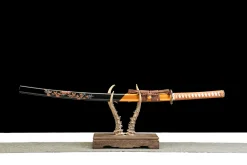
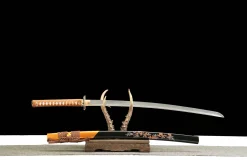
Hand-forged 1045 Carbon Steel katana (103cm total / 72cm blade), crafted in Longquan. Full-tang 1045 carbon steel, hand-fitted koshirae, ready for practice cutting or display.
$179.99
Kitetsu III – Hand Forged 1045 Carbon Steel Katana Sword
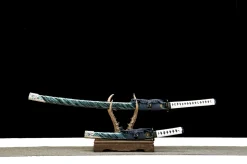
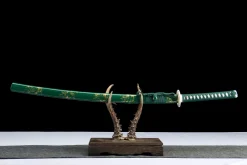
What separates the Kitetsu III from its sibling on the wall is not the steel or the geometry – those are matched – but the reading of the piece as a standalone display object. The green aohada saya (a lacquered bark-textured wood sheath in a distinctive forest green) anchors the color story, and the shinogi-zukuri blade profile gives the upper wall mount a sharp, confident silhouette that holds its own in any display context.
Specifications
| Blade Steel | 1045 Carbon Steel, Special Process |
| Total Length | 103.0 cm / 40.6 in |
| Blade Length | 72.0 cm / 28.3 in |
| Blade Width | 3.2 cm |
| Weight | 950 g / 33.5 oz |
| Heat Treatment | Oil Quench and Temper |
| Fittings | Alloy |
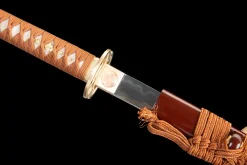
| Handle | Cotton Ito Wrap |
| Sheath | Green Bark Wood (Aohada) |
What the Steel Does
1045 carbon steel occupies a well-understood position in the blade material hierarchy. At this carbon content level, the steel heat-treats to a consistent hardness sufficient for clean edge geometry and long-term dimensional stability. The special-process designation on this blade reflects the additional finishing attention applied during production – the surface polish is more considered than standard production output, and the edge bevel geometry is laid in cleanly. For a piece that lives on a wall rather than in active use, that surface quality is exactly where the production attention should go.
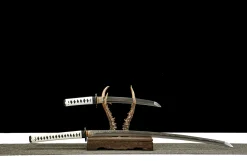
The shinogi-zukuri profile – the ridgeline cross-section that defines the classic katana silhouette – runs the full 72.0 cm of blade length, creating the characteristic three-plane geometry: the shinogi (ridge line), the ji (the flat below the ridge), and the ha (the edge bevel). In direct light, the shinogi catches a bright line across the blade’s upper third. In softer ambient light, the ji reads as a matte field that makes the polished edge appear to lift off the surface. It photographs well from both above and side angles.
The Feel of It
The 27.0 cm tsuka (handle) is wrapped in cotton ito in the traditional diamond lozenge pattern, wound tightly enough that no lateral movement is detectable. The texture is immediate under the fingertips – each diamond segment a distinct tactile unit. Drawn from the green aohada saya, the blade clears with a clean whisper and the full 103.0 cm of the piece comes to rest in the hand before going to the mount. Hanging horizontally, the color relationship between the green saya and the polished blade is composed and intentional.
Maintenance Notes
Remove fingerprints from the blade surface with a soft cloth after each handling session – skin oils accelerate oxidation on carbon steel and will leave visible marks on a polished finish within days if left untreated. A light pass of choji oil every few months will protect the surface and maintain the polish. Store the blade sheathed and away from sustained humidity.
| Weight | 1.2 lbs |
|---|---|
| Dimensions | 103.0 × 3.2 × 0.7 in |
| Hamon | Decorative / Acid-Etched |
| Blade Steel | 1045 Carbon Steel |
| Total Length | 103.0 cm |
| Blade Length | 72.0 cm |
| Heat Treatment | Oil Quench & Temper |
| Handle Wrap | Cotton Ito Wrap |
| Sheath Material | Green Bark Wood (Aohada) |
| Fittings | Alloy |
| Forging Style | Shinogi-Zukuri (Ridgeline) |
Related products