













Night Steel – Hand Forged Premium Damascus Steel Katana Sword
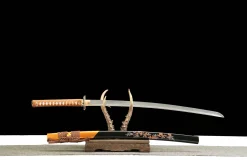
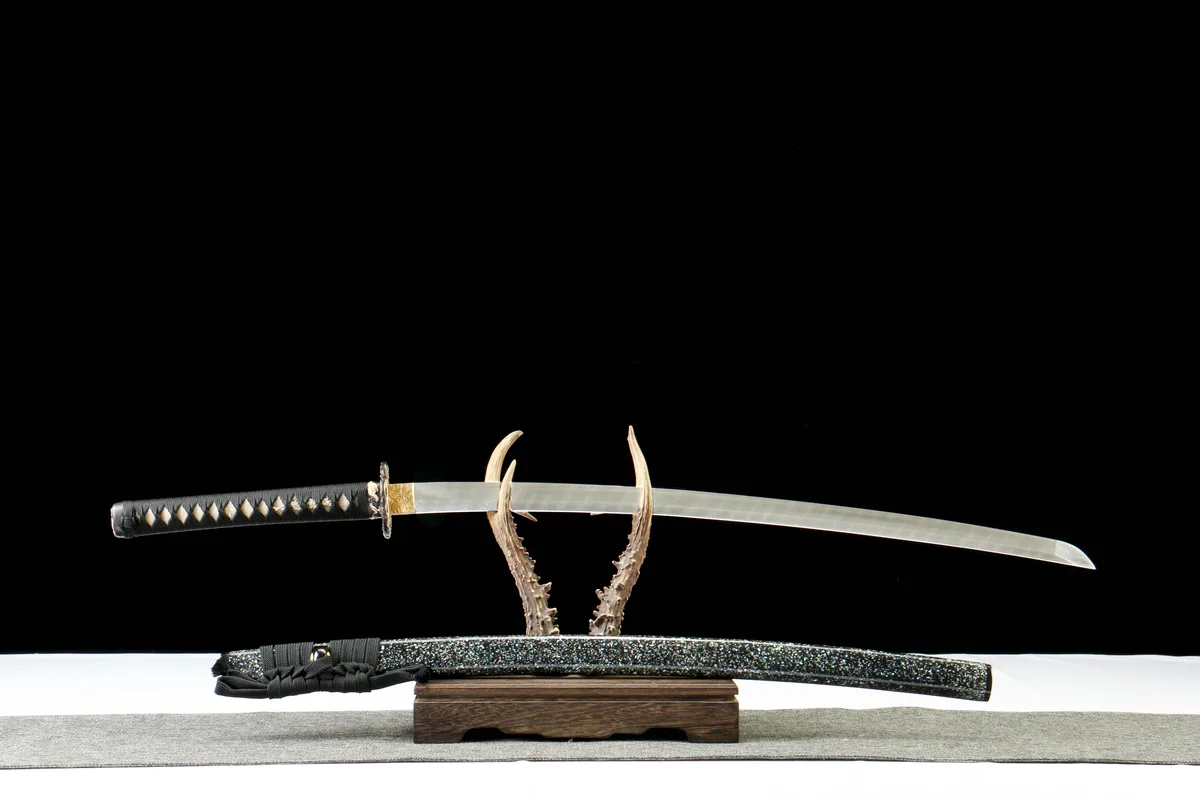
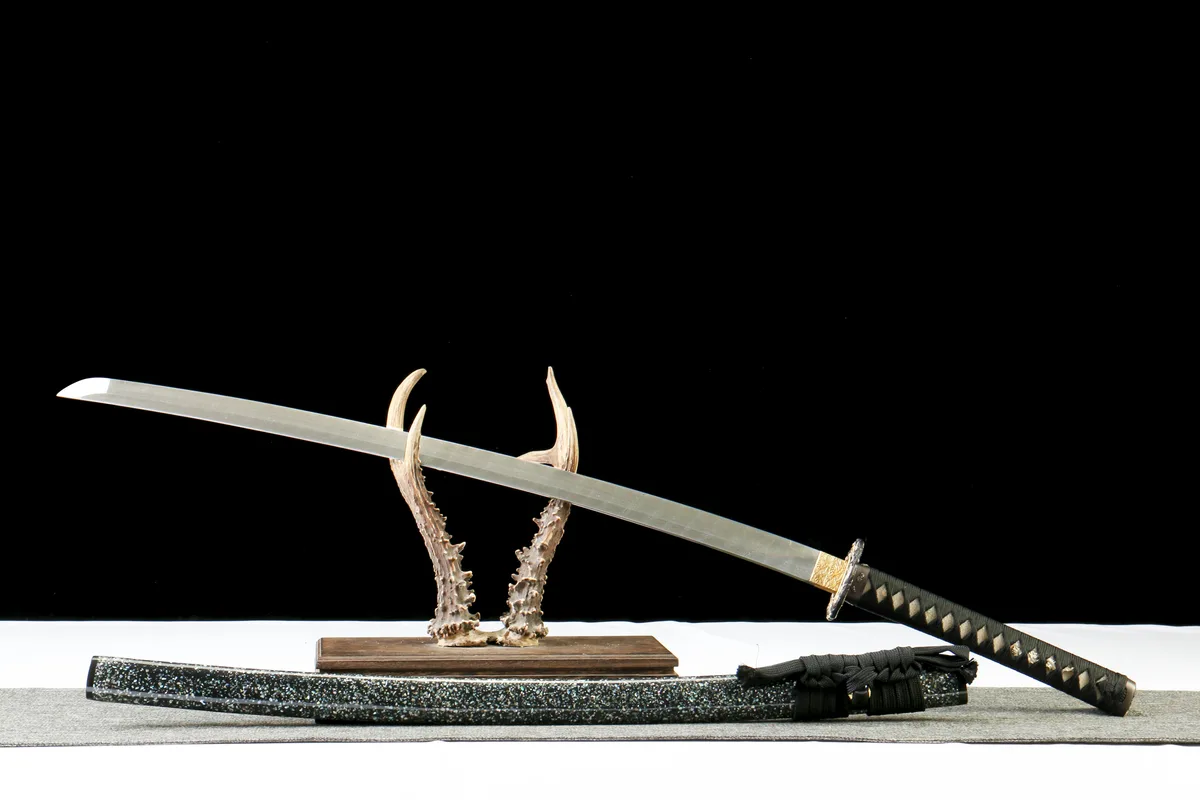
Hand-forged Premium Damascus Steel katana (103cm total / 72cm blade), crafted in Longquan. Hand-folded Damascus pattern steel — each blade carries a unique layered grain from forge to tip.
$1,699.99
Night Steel – Hand Forged Premium Damascus Steel Katana Sword
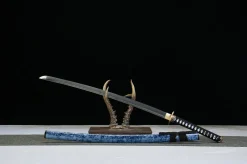
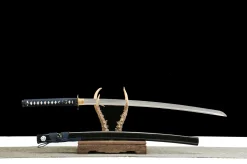
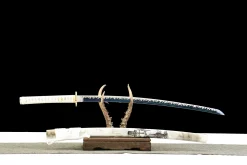
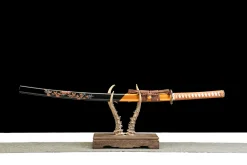
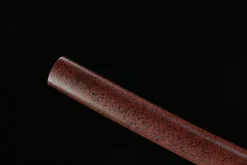
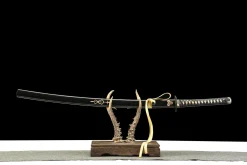
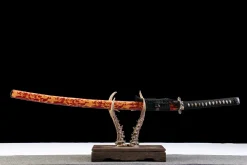
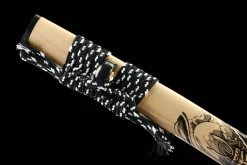
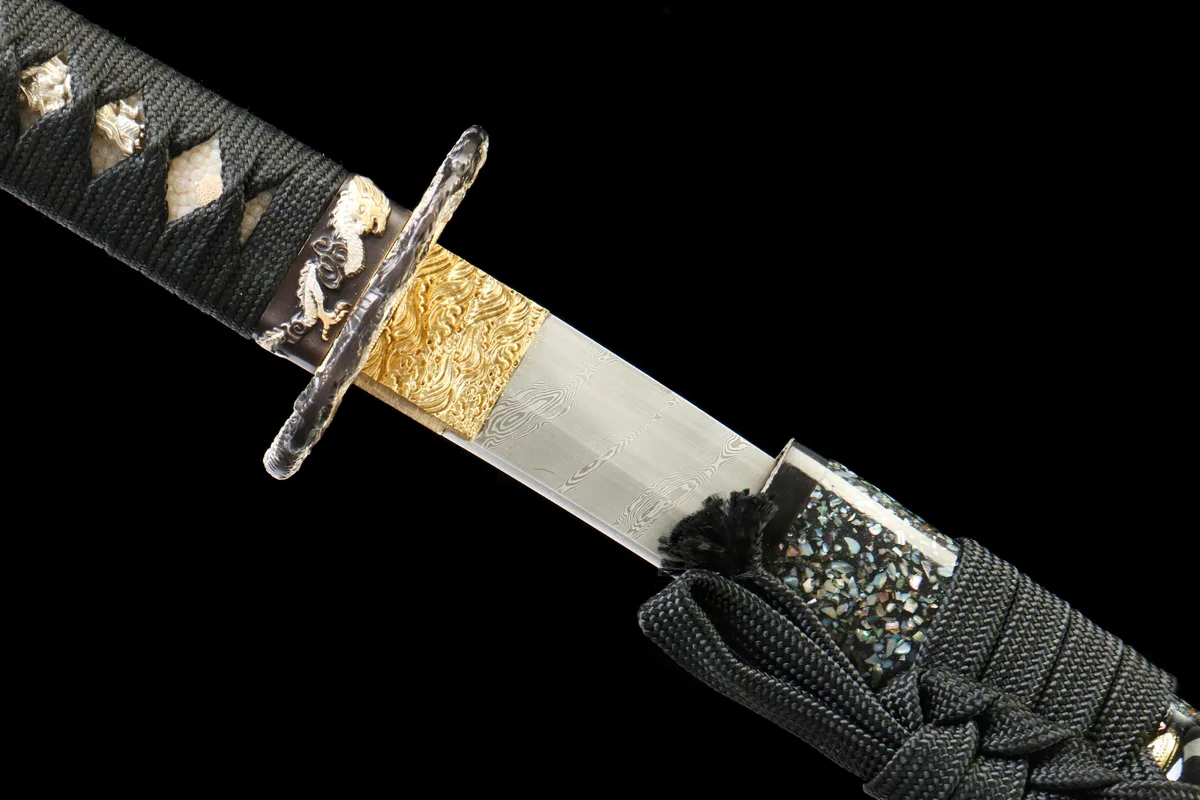
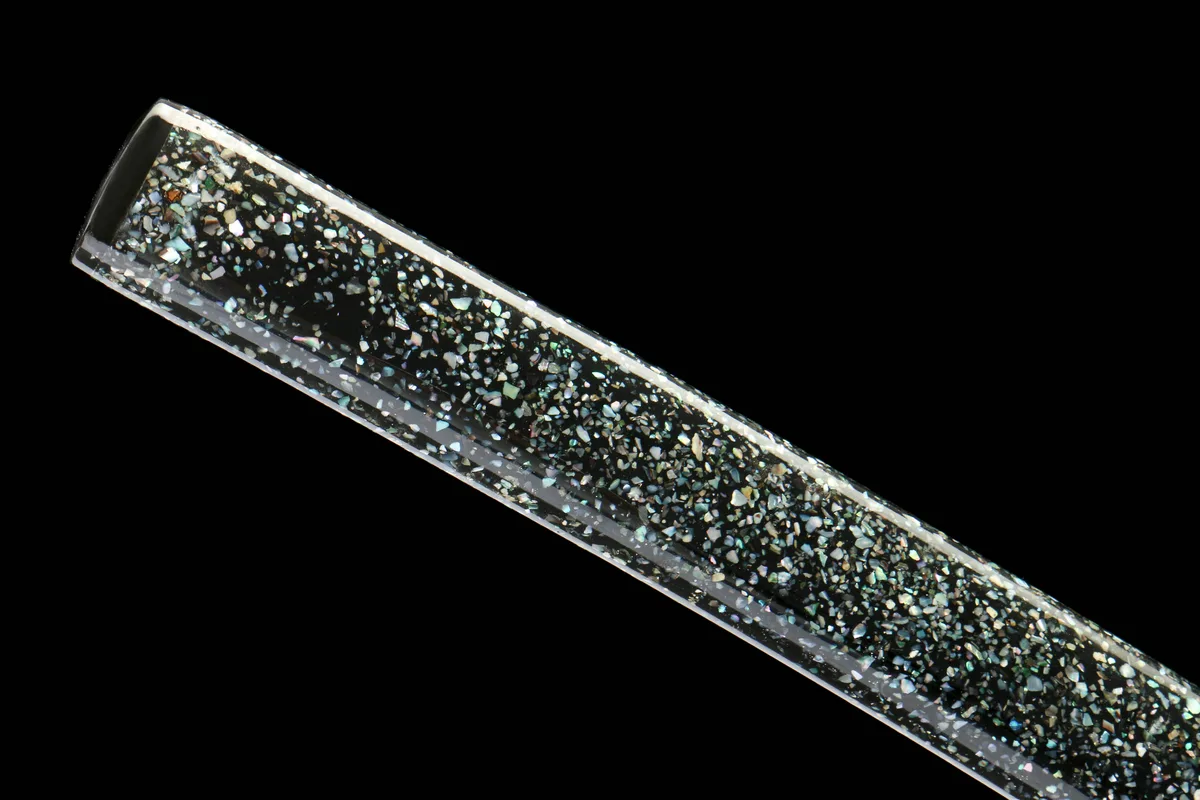
The sheath on Night Steel tells you what this blade is before you draw it. The 牛角螺钿鞘 – ox horn and mother-of-pearl inlay saya – is not a standard production component. It is a separately crafted object: ox horn panels set into a wood core, with 螺钿 (raden) inlay work – mother-of-pearl shell cut and pressed into the horn surface in a pattern that catches light fractally, each fragment reflecting at a slightly different angle from its neighbors. Against that surface, the twist-pattern Damascus of the blade itself reads as the other half of a conversation about layered material and depth. This is a piece built with a specific visual argument, and it holds it throughout.
Specifications
| Blade Steel | Damascus Steel – Twist Pattern |
| Total Length | 103.0 cm / 40.6 in |
| Blade Length | 72.0 cm / 28.3 in |
| Blade Width | 3.2 cm |
| Weight | 950 g / 33.5 oz |
| Heat Treatment | Oil Quench & Temper |
| Fittings | Gold & Silver Gilded Fittings, Copper |
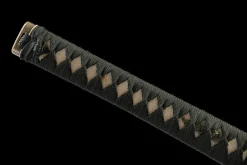
| Handle | Cotton Ito Wrap |
| Sheath | Ox Horn & Mother-of-Pearl Inlay (牛角螺钿鞘) |
Steel & Construction
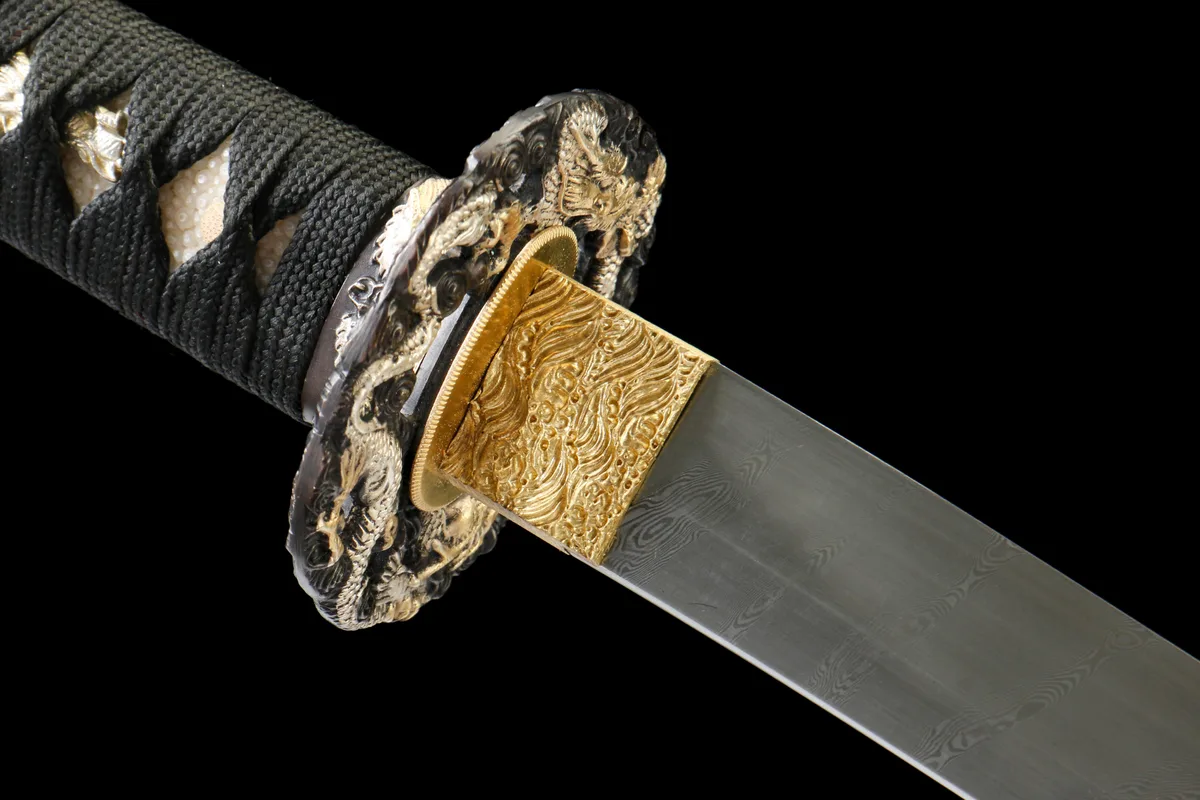
Twist-pattern Damascus is one of the more demanding Damascus constructions to execute with visual consistency. The billet is assembled from alternating high and low-carbon steel bars, forge-welded into a composite rod, and then physically twisted along its axis under heat before being drawn out flat. The result is a pattern in which the layer lines do not run parallel to the blade’s length as they do in standard ladder or random-grain Damascus – they rotate through the steel in tight helical increments, producing a surface grain that appears to spiral when the blade is tilted along its length. Under direct overhead light, the twist pattern on Night Steel compresses into a tight, dark weave. Under raking side light, it opens into clearly defined helical tracks that travel the full length of the blade. The acid etch that reveals this pattern was done after final grinding, making the visible grain a precise map of the actual internal twist geometry.
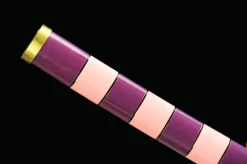
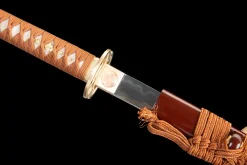
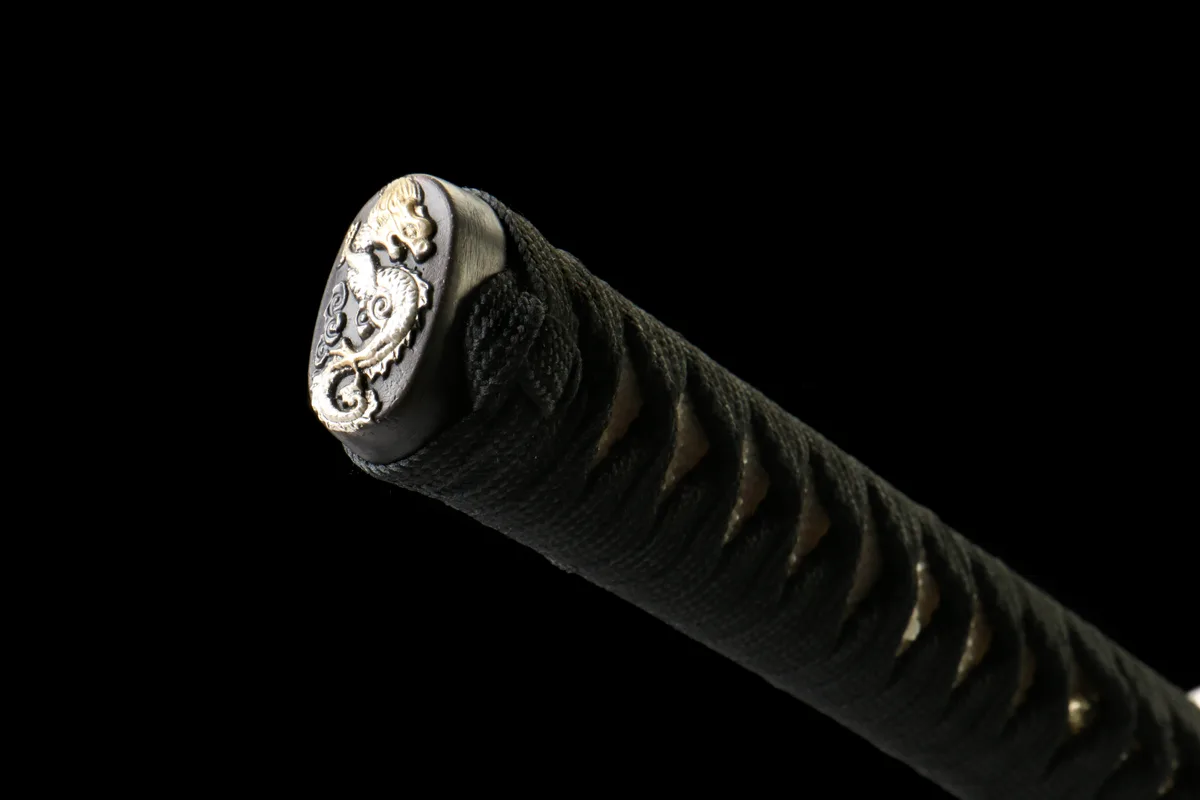
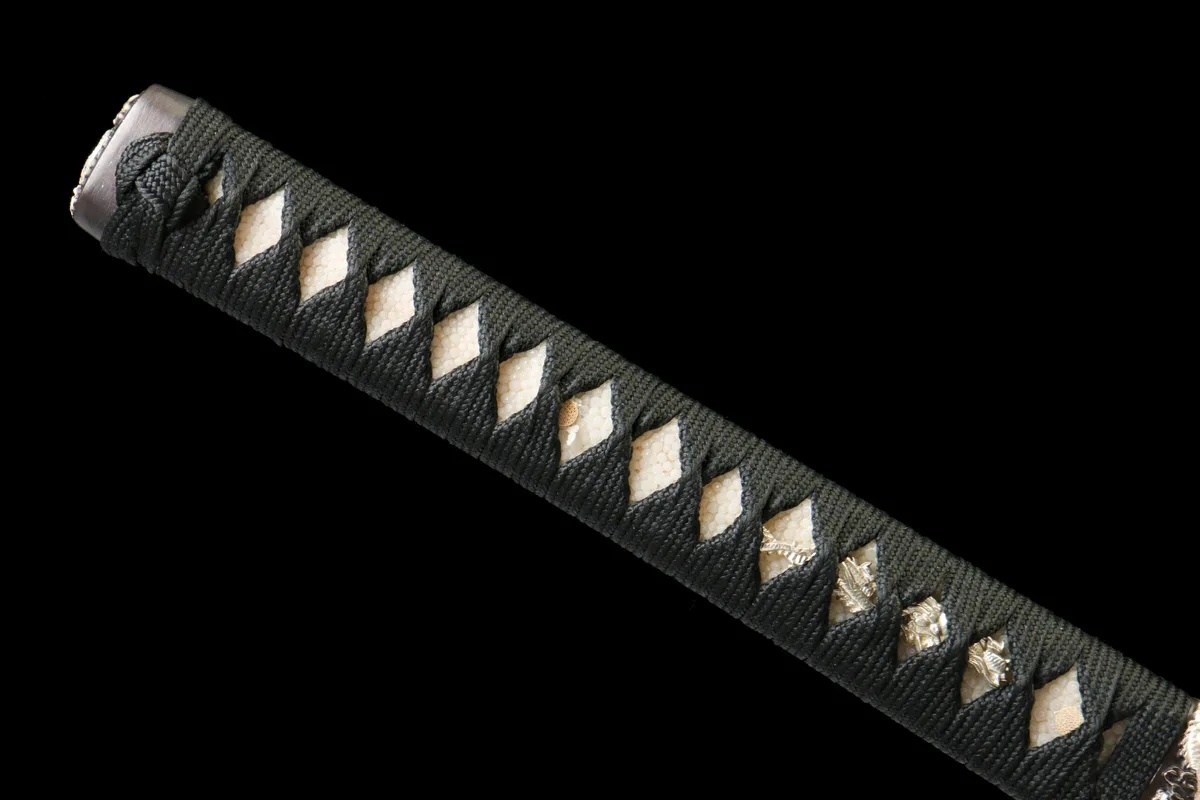
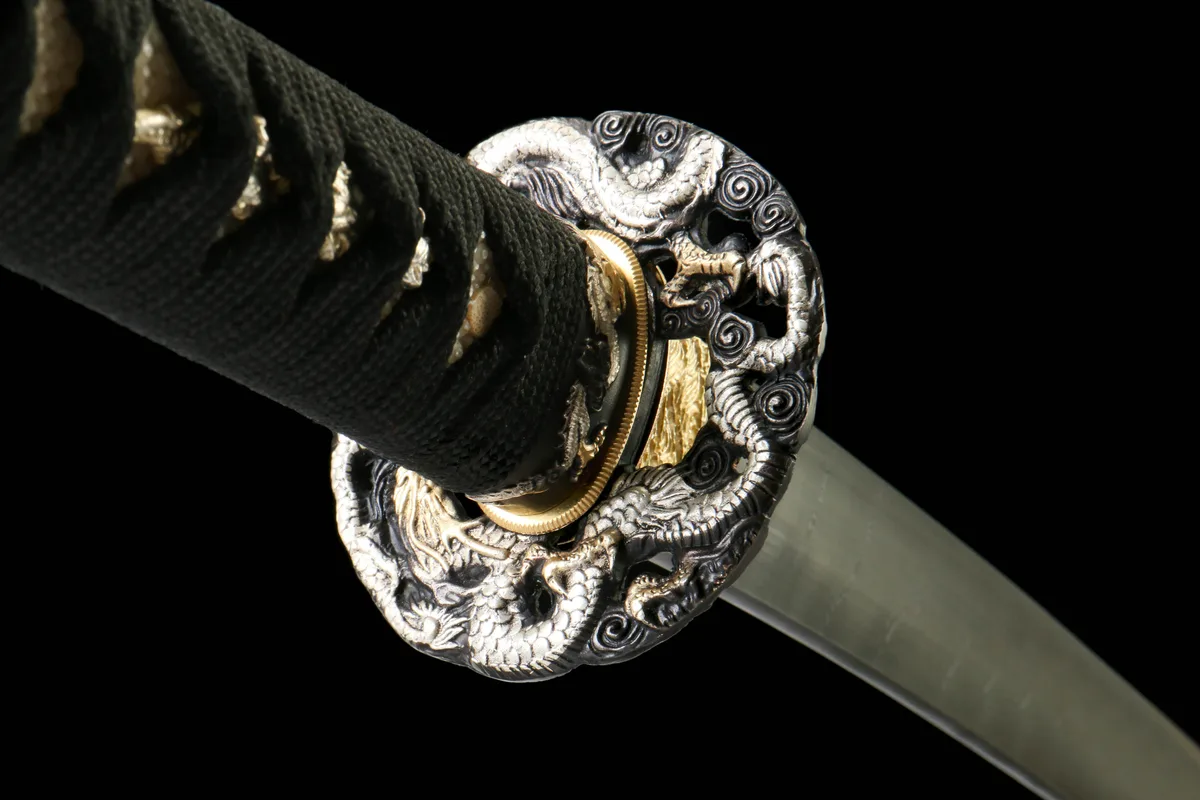
The fittings assembly on this blade is gilt over copper – gold and silver gilding on the tsuba (hand guard), fuchi (handle collar), and kashira (pommel cap), with copper at the habaki (blade collar). The gilt work is not an afterthought applied to basic castings. The forms are worked, and the gilding is applied with enough coverage to hold warmth rather than appearing thin or streaked. Against the dark twist-pattern Damascus, the gold and silver register as deliberate contrasts rather than decorative excess. The cotton ito wrap is wound over the handle in the standard diamond pattern, but here it serves as a visual bridge between the dark grain of the blade and the brilliance of the fittings – a neutral interval between two competing light registers.
Handling
The 27.0 cm handle on Night Steel is long for this blade length – 72.0 cm of blade on a handle that extends well past the palm on the trailing hand. This proportion is intentional and traditional, providing leverage and the ability to shift grip position without losing contact with the same (rayskin undergrip) nodes that telegraph through the cotton wrap. The draw from the 牛角螺钿鞘 saya is particular: ox horn sits differently in the hand than lacquered wood, with a slightly denser, cooler surface that does not compress under grip pressure the way wood does. The blade seat within the sheath is precise – the koiguchi (sheath mouth) fits the habaki with zero lateral movement, and the draw has a single clean resistance at that point before releasing the blade fully.
Care Instructions
The blade requires regular oiling with choji oil – a thin, even coat applied with a soft cloth after handling, before sheathing. The ox horn saya should not be stored in direct sunlight or extreme dry heat, as horn is susceptible to cracking under dehydration stress; a stable indoor environment is adequate for long-term preservation. The raden (mother-of-pearl) inlay is set mechanically rather than adhesively, but the panels should not be subjected to impact or immersion – wipe the saya exterior with a dry cloth only, and handle the sheath by its body rather than by the inlaid sections when drawing or presenting the blade.
| Weight | 1.2 lbs |
|---|---|
| Dimensions | 103.0 × 3.2 × 0.7 in |
| Hamon | Damascus Pattern (No Hamon) |
| Blade Steel | Premium Damascus Steel |
| Total Length | 103.0 cm |
| Blade Length | 72.0 cm |
| Heat Treatment | Oil Quench & Temper |
| Handle Wrap | Cotton Ito Wrap |
| Sheath Material | 牛角螺钿鞘 |
| Fittings | Gold & Silver Gilded Fittings, Copper |
| Forging Style | Folded Steel (Pattern Welded) |
Related products