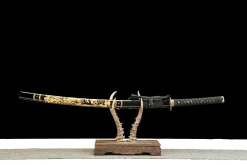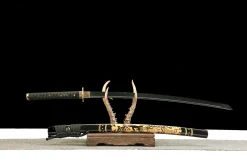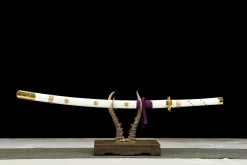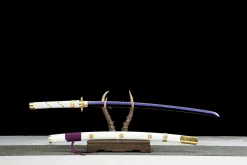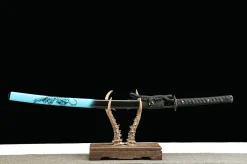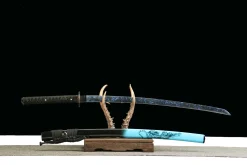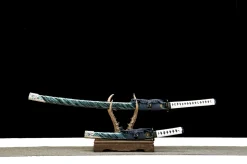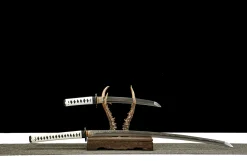

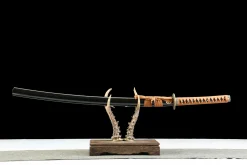


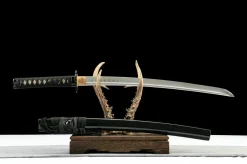
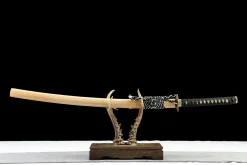


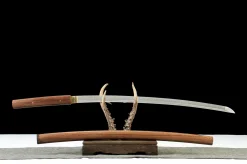
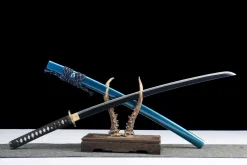
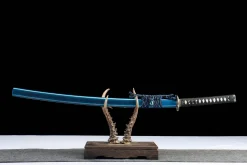



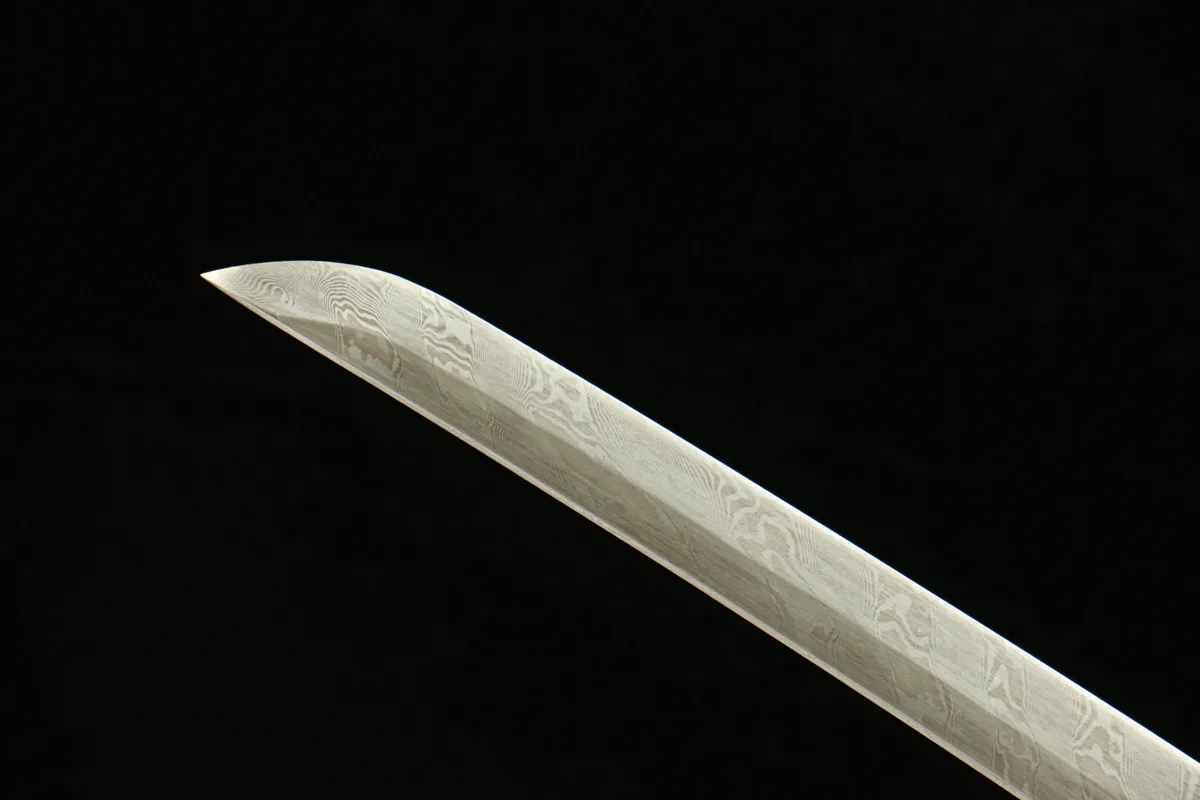

Obsidian Dragon Soul – Hand Forged Premium Damascus Steel Katana Sword
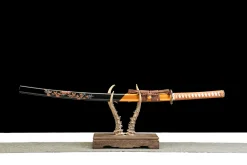
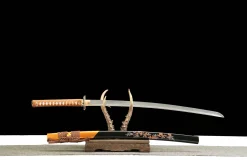
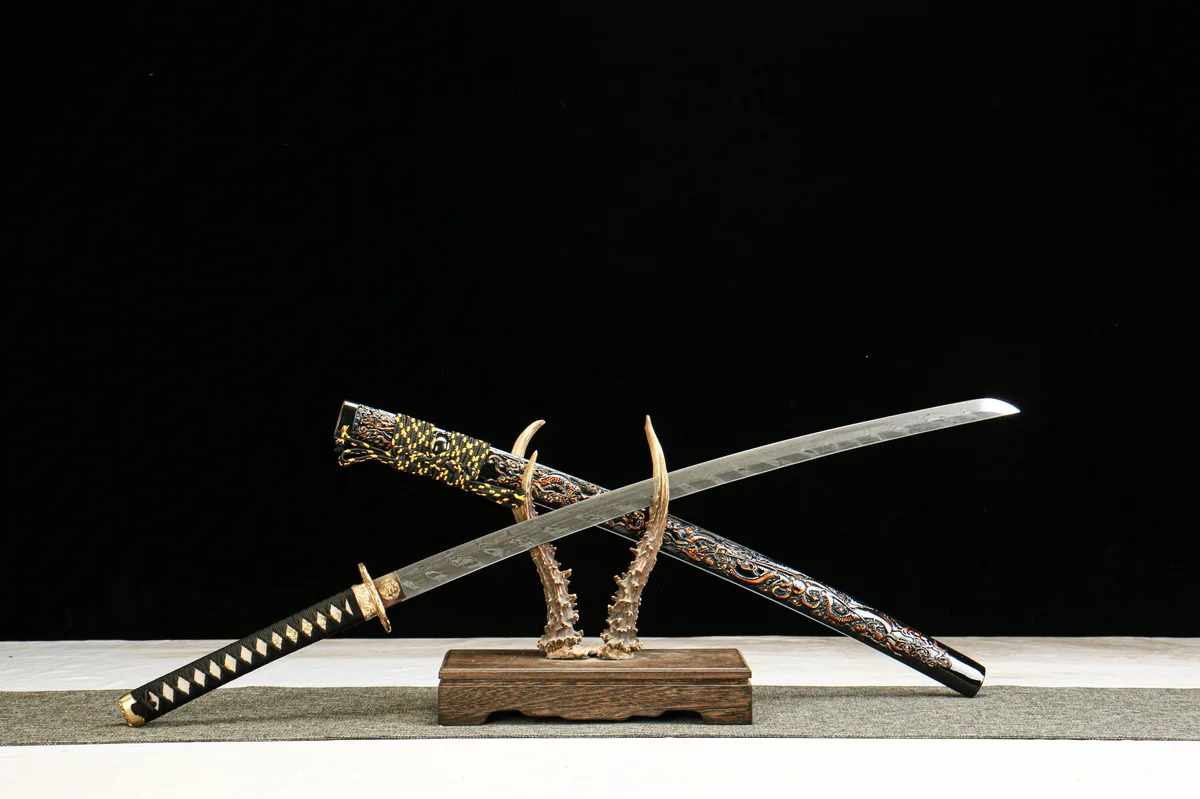
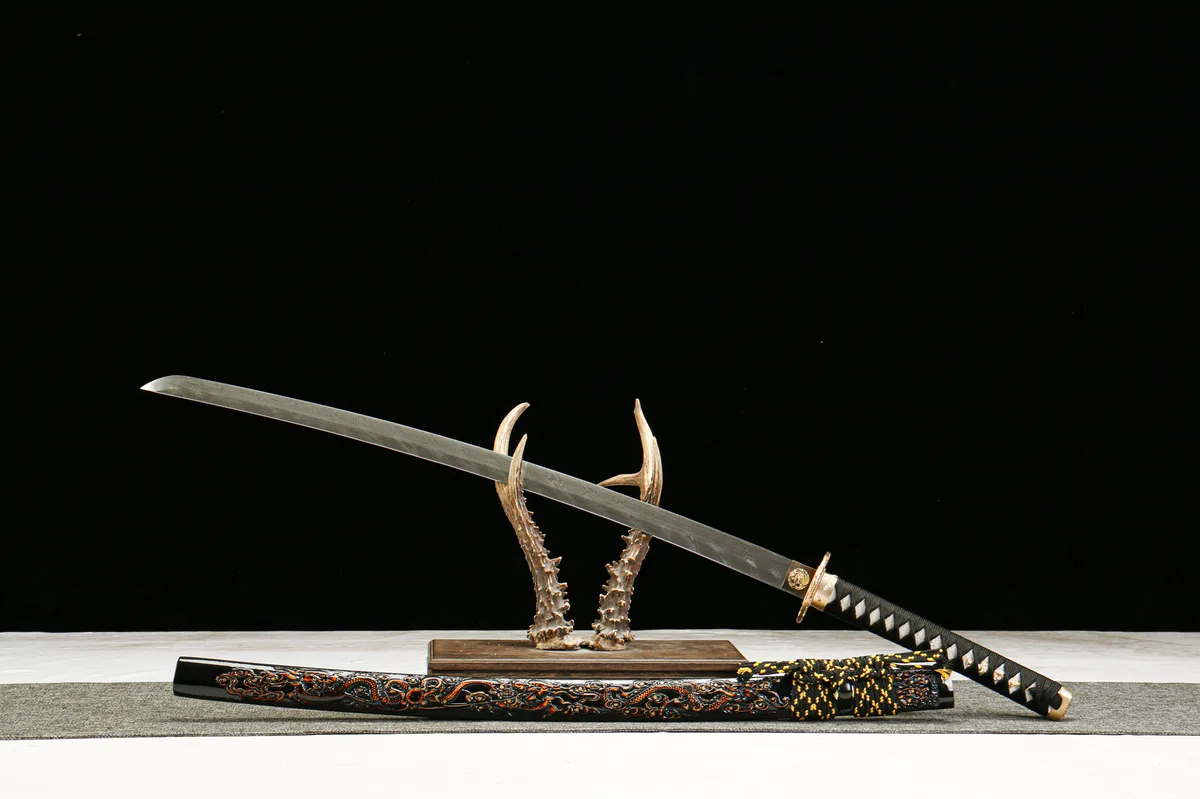
Hand-forged Premium Damascus Steel katana (103cm total / 72cm blade), crafted in Longquan. Hand-folded Damascus pattern steel — each blade carries a unique layered grain from forge to tip.
$1,024.99
Obsidian Dragon Soul – Hand Forged Premium Damascus Steel Katana Sword
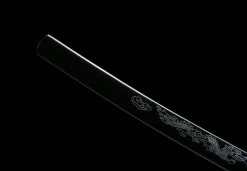
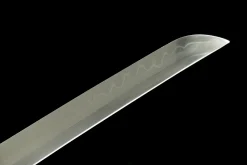
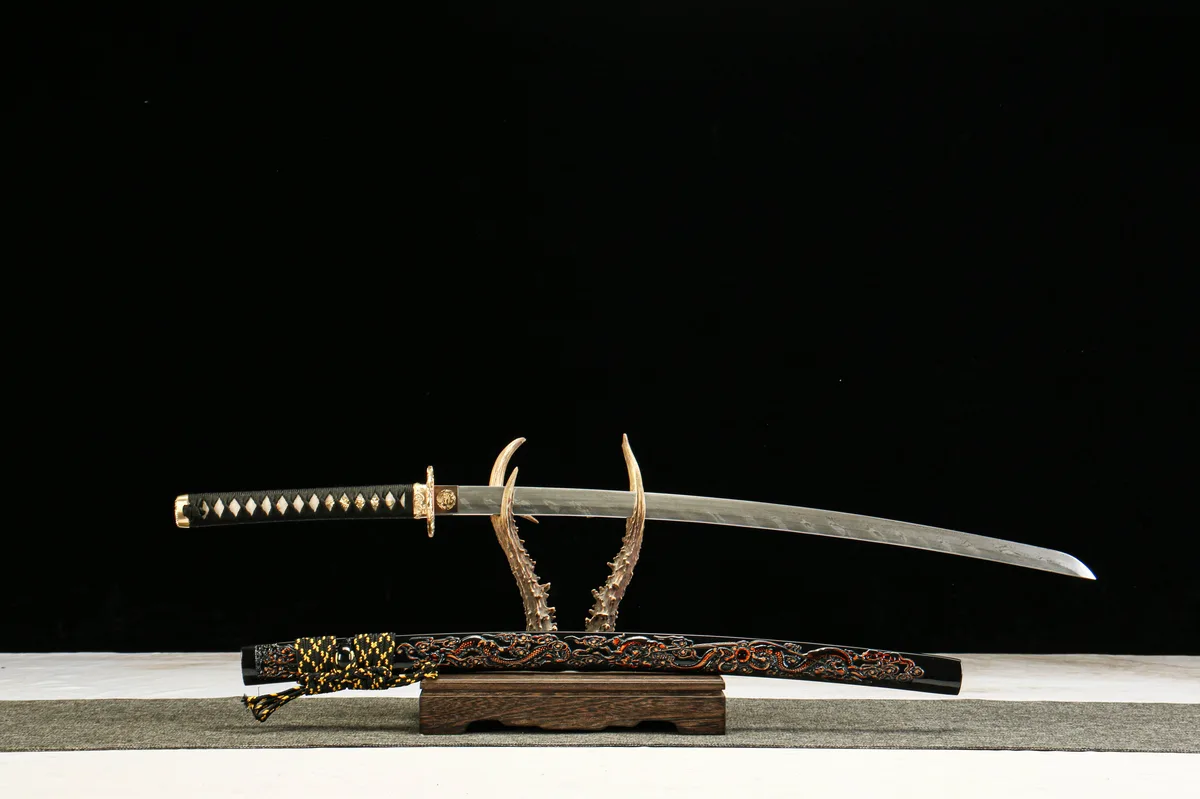
A twist-pattern Damascus blade does not simply look like it is moving – it actually reads differently at every angle of rotation, because the grain structure underneath the etch is three-dimensional, helical, and physically present in the steel itself. The Obsidian Dragon Soul (黑曜龙魂) is built on that principle. The twist pattern – produced by taking a billet of layered, folded steel and rotating it under controlled heat before final forge – generates a grain that spirals through the blade’s cross-section, so that the figure you see on the flat and the figure you see on the bevel are related but not identical. This is not surface treatment. It is structure.
Specifications
| Blade Steel | Damascus Steel, Twist Pattern (Pattern-Welded) |
| Total Length | 103.0 cm / 40.6 in |
| Blade Length | 72.0 cm / 28.3 in |
| Blade Width | 3.2 cm |
| Blade Thickness | 0.7 cm |
| Weight | 950 g / 33.5 oz |
| Heat Treatment | Oil Quench & Temper |
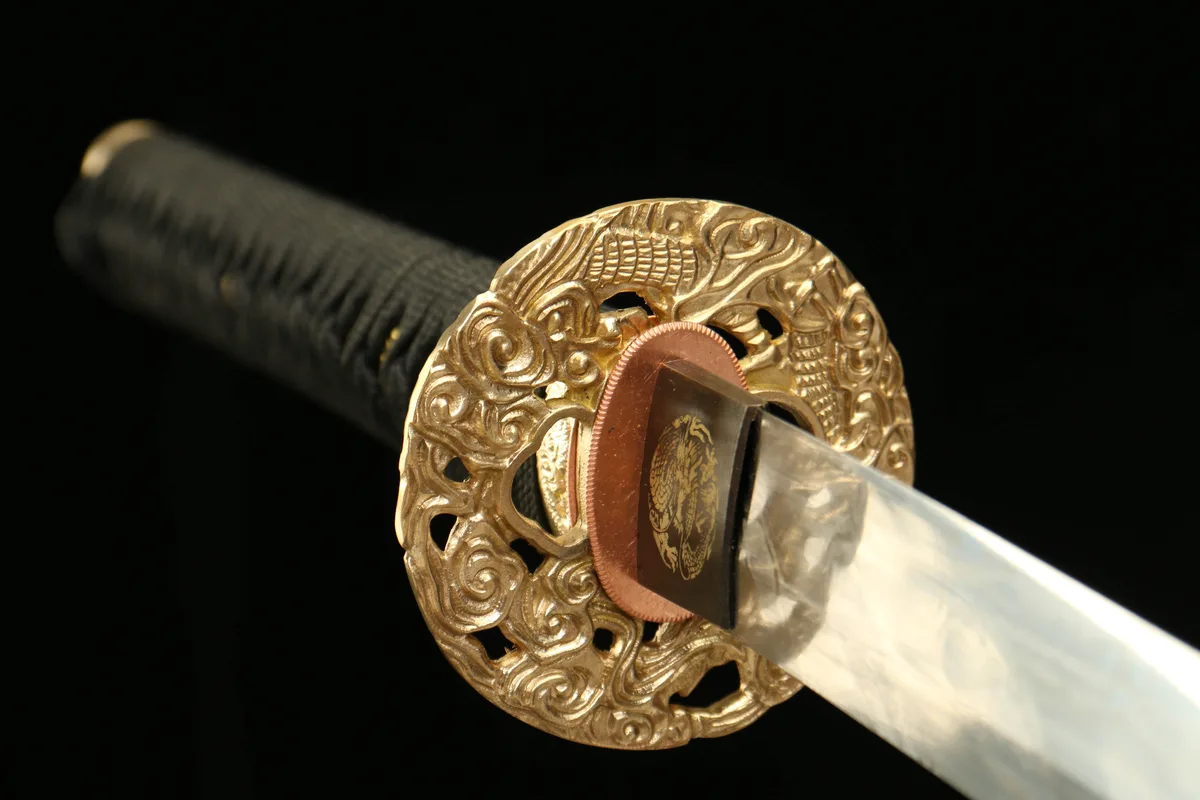
| Fittings | Copper |
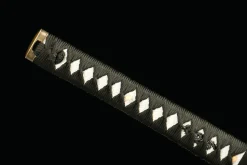
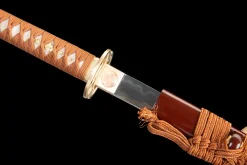
| Handle | Cotton Ito Wrap |
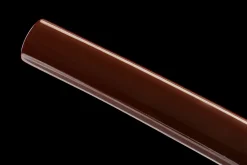
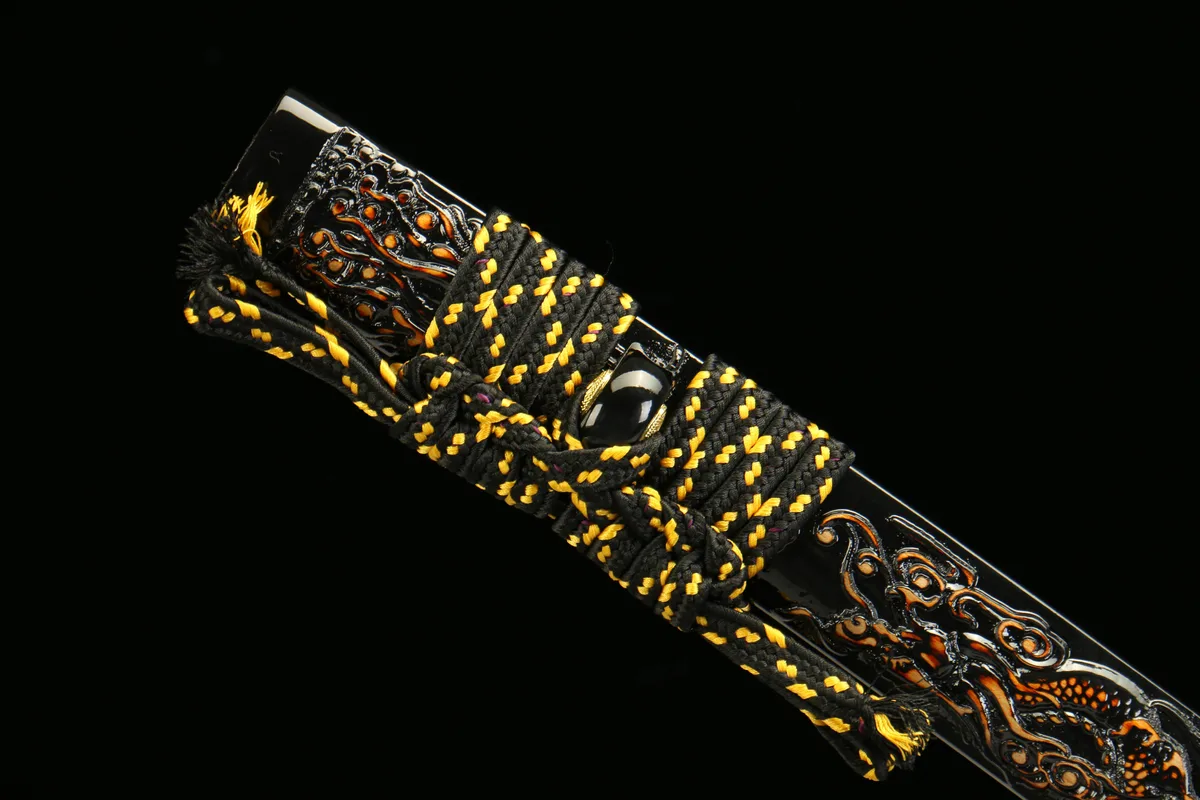
| Sheath | Green Bark Wood (Aohada) |
Forged in Longquan
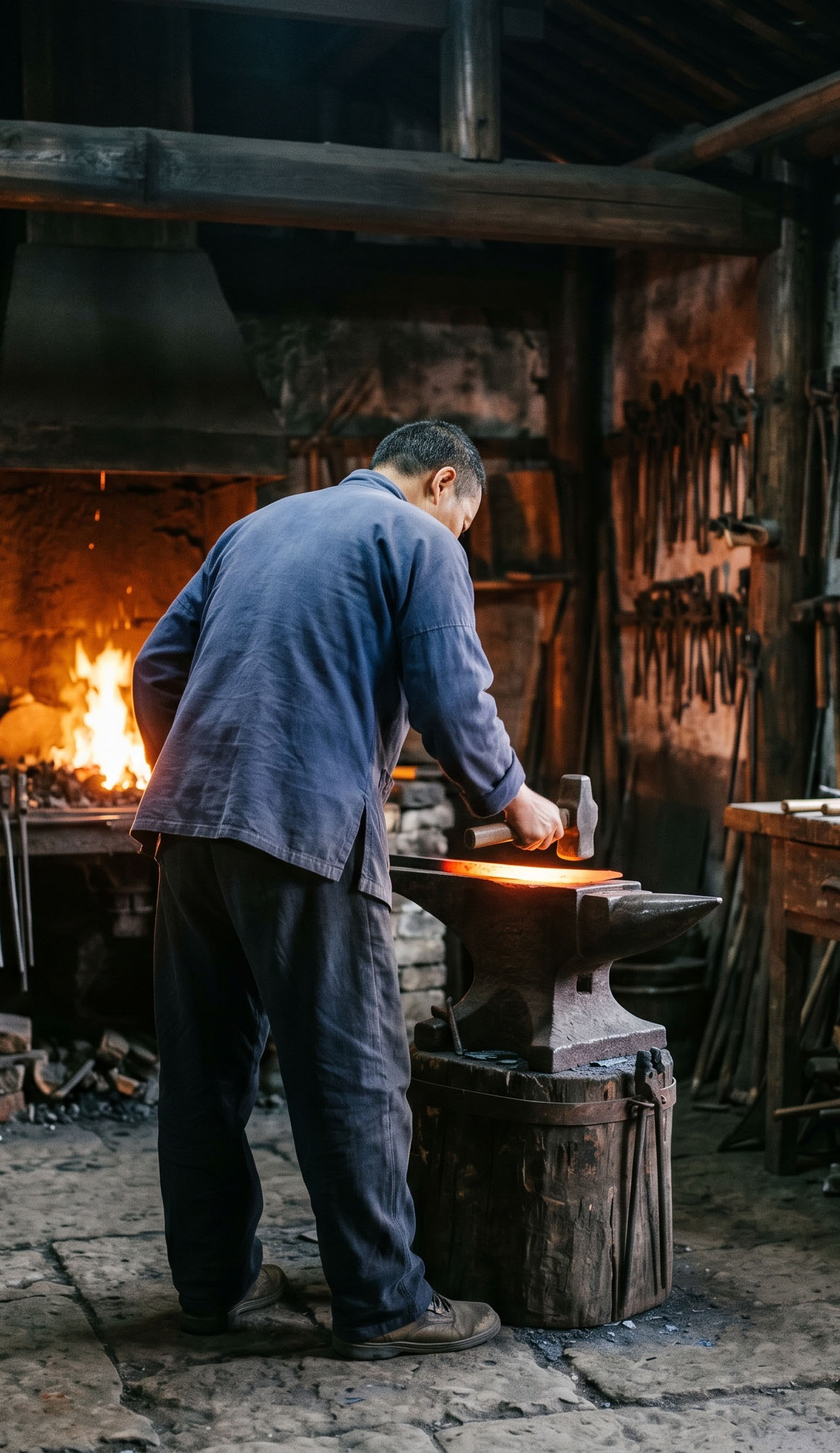
Pattern-welded Damascus – what the Japanese tradition calls oroshi-gane in its closest analogue – requires the smith to manage two or more steel alloys through repeated folding, drawing, and welding cycles. The alternating layers develop different carbon profiles; when the billet is acid-etched after grinding, those layers respond at different rates, raising the figure to the surface. In a twist pattern, the billet is additionally rotated during the forging process, reorganizing those layers into a spiral. The result is a grain that runs diagonally across the blade face, producing a pattern that tightens toward the edge and opens toward the spine.
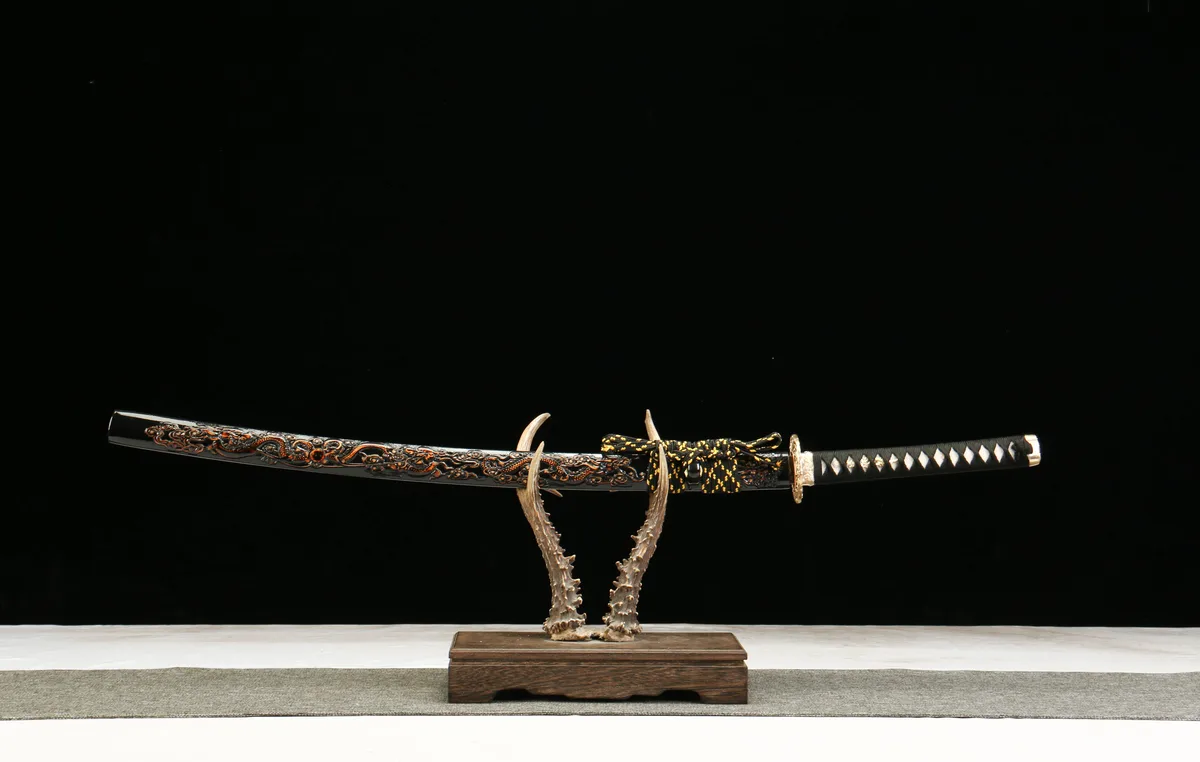
What this means at the collector’s level is specificity. The twist rate, the layer count, the etch depth – all of these were fixed by the smith’s decisions on this particular billet, on this particular day. The Obsidian Dragon Soul carries a copper fitting suite (装) that picks up the warmer tones in the etched steel without overwhelming the dark ground of the pattern. The aohada saya – green bark wood, smooth-finished – reads as a deliberate chromatic choice against the gray-black depth of the blade surface. These things were considered. You will notice them.
Weight, Balance, Draw
The handle runs 27.0 cm, which is substantial – it gives a two-handed grip real purchase, and the cotton ito wrap is laid tightly enough that individual diamond intersections are crisp underhand. There is no give in the wrap. The 72.0 cm blade draws cleanly from the aohada saya, the interior of which is fitted to the blade’s geometry rather than left loose; you feel the kissaguchi (the mouth of the scabbard) release the blade at a consistent pressure point, not variable friction. At 3.2 cm wide and 0.7 cm at the spine, this is a blade that carries itself with authority through the draw arc.
Keeping It Sharp
Damascus steel requires the same care as any high-carbon blade, with one addition: keep the etched surface dry and lightly oiled at all times, as the acid-opened grain is more surface-area-exposed than a polished monosteel blade. Wipe down after any handling – skin oils are acidic enough to accelerate surface oxidation on pattern-welded steel. A light application of choji oil or food-grade mineral oil after each session will preserve both the edge and the figure.
| Weight | 1.2 lbs |
|---|---|
| Dimensions | 103.0 × 3.2 × 0.7 in |
| Hamon | Damascus Pattern (No Hamon) |
| Blade Steel | Premium Damascus Steel |
| Total Length | 103.0 cm |
| Blade Length | 72.0 cm |
| Heat Treatment | Oil Quench & Temper |
| Handle Wrap | Cotton Ito Wrap |
| Sheath Material | Green Bark Wood (Aohada) |
| Fittings | Copper, (装) |
| Forging Style | Folded Steel (Pattern Welded) |
Related products