

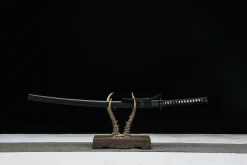
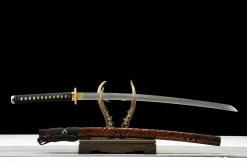

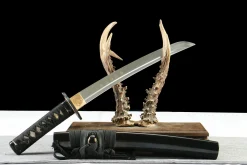













Obsidian Roar – Hand Forged T10 Tool Steel Katana Sword
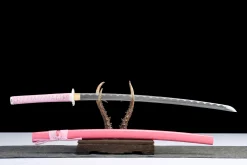
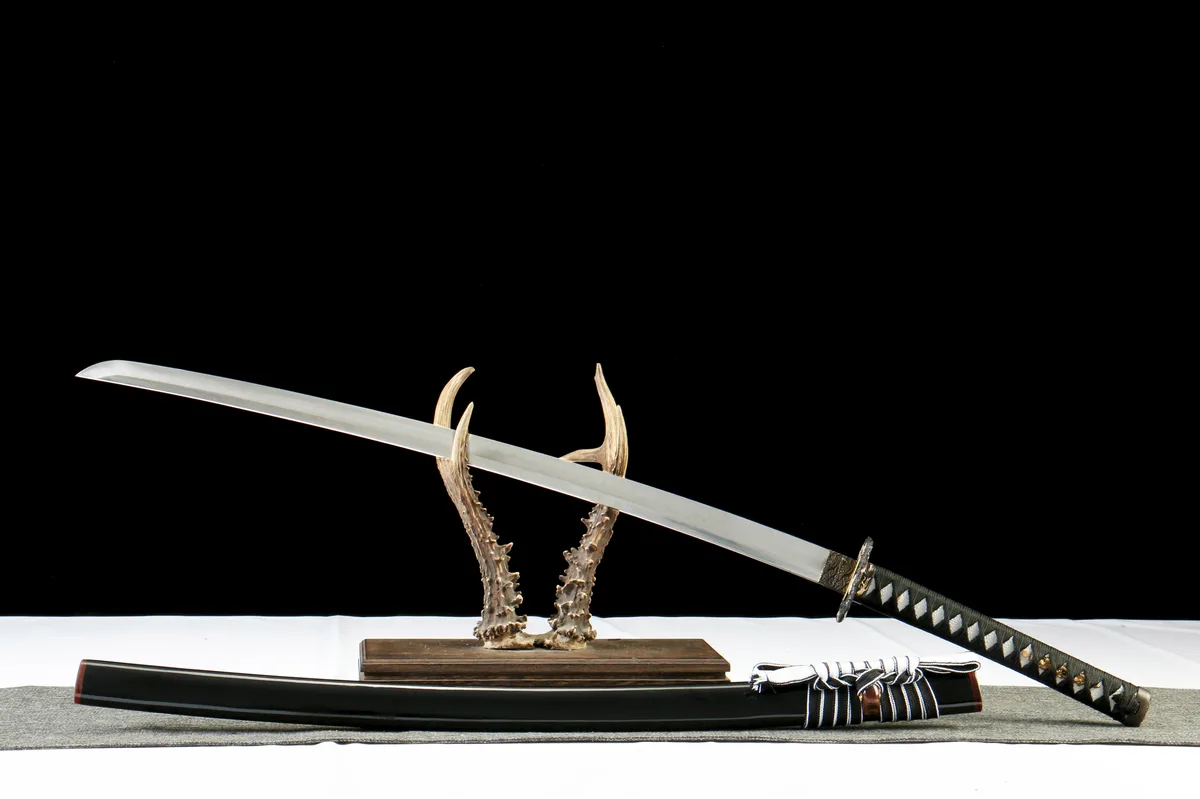
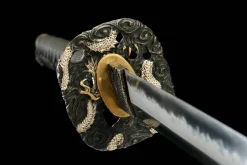
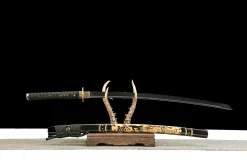
The Obsidian Roar katana (黑曜咆哮) is a masterwork-tier clay-tempered T10 tool steel blade finished to a mirror polish, featuring the prestigious Ding Zi (丁字烧) — a rare clove-pattern hamon temper graded at Level 1 — making it one of the most technically accomplished katanas in our entire catalog. Sheathed in a buffalo horn saya (牛角鞘) and dressed with gold and silver gilded copper fittings, this $525 katana commands every room it enters. The Obsidian Roar is not merely a sword; it is a declaration.
Specifications
| Blade Steel | T10 High Speed Tool Steel, Clay Tempered (Differential Hardening), Mirror Polished — Ding Zi Burn, Grade 1 (丁字烧+1级) |
| Total Length | 103.0 cm / 40.6 inches |
| Blade Length | 72.0 cm / 28.3 inches |
| Blade Width | 3.2 cm |
| Weight | 950 g / 33.5 oz (net) |
| Heat Treatment | Oil Quench & Temper |
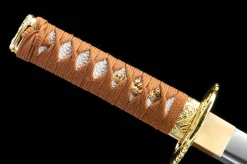
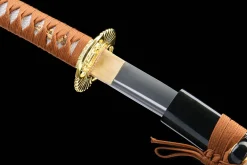
| Fittings | Gold & Silver Gilded Fittings, Copper |
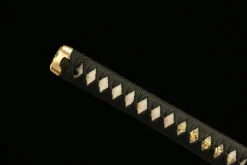
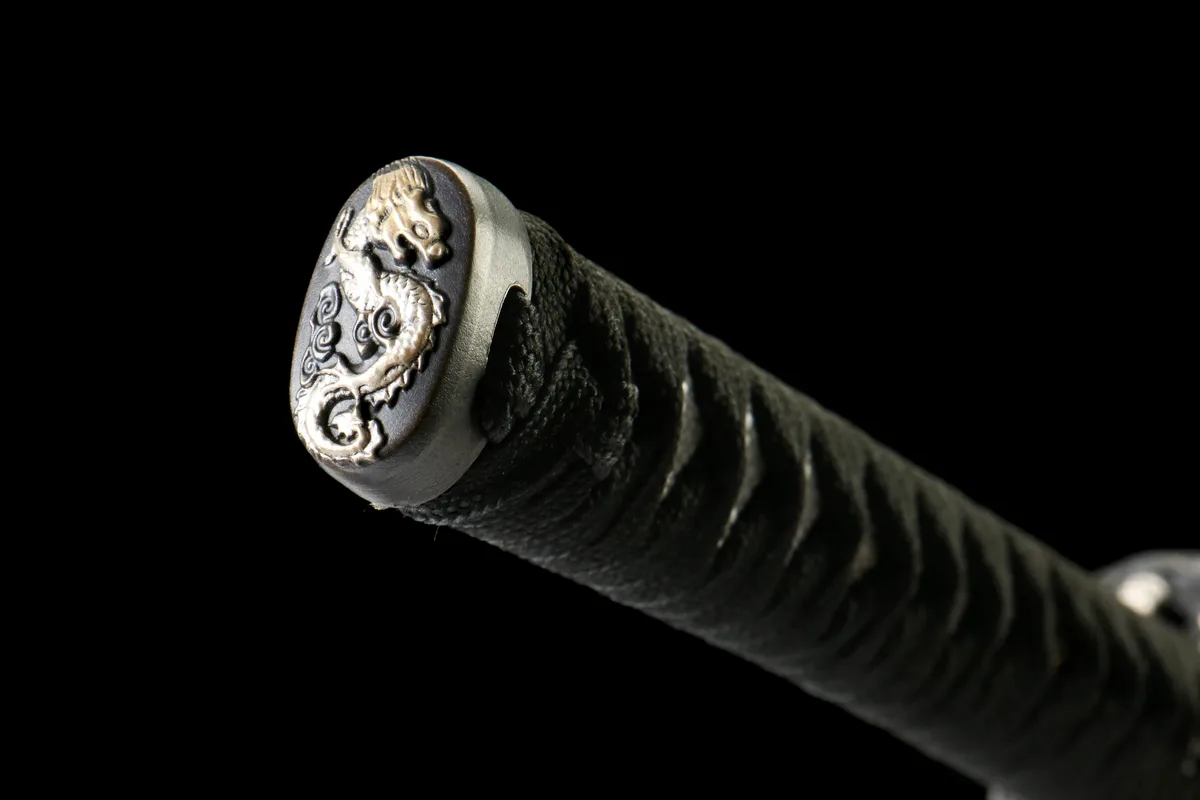
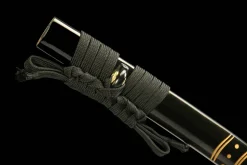
| Handle | Cotton Ito Wrap |
| Sheath | Buffalo Horn (牛角鞘) |
Craftsmanship & Materials
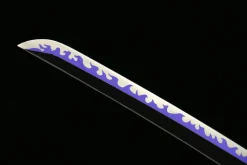
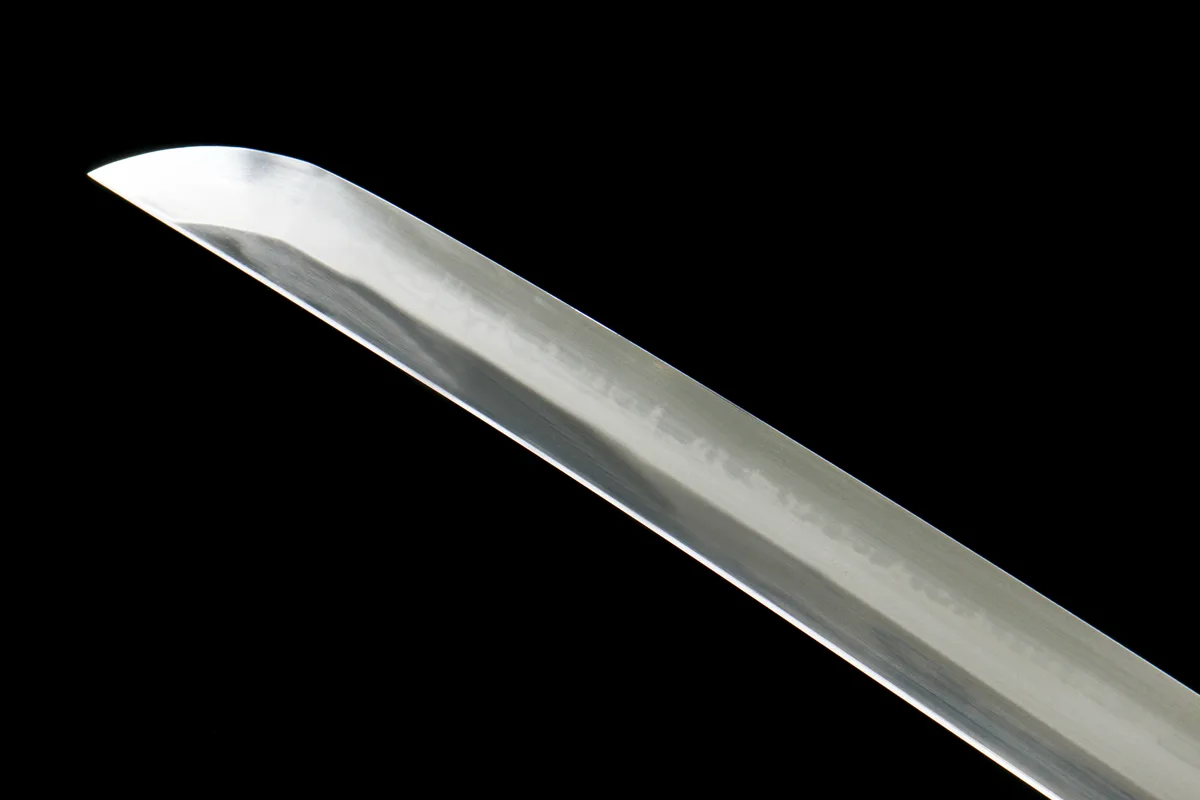
Among all the variables that define a great katana — steel, geometry, heat treatment, polish — few are as technically demanding or as visually spectacular as the hamon. The Obsidian Roar achieves the Ding Zi hamon (丁字烧), named for the Chinese character 丁, whose clove or nail-head shaped nie (martensite crystals) repeat in a controlled, rhythmic pattern along the boundary between the hardened ha and the softer spine. This Grade 1 classification indicates that the hamon has been evaluated and certified at the highest level of clarity, definition, and consistency achievable through the clay tempering process. It takes a master’s hand to control where and how the martensite crystallizes — the Ding Zi hamon is not a happy accident but the product of deliberate, refined technique.
The T10 tool steel substrate is ideal for showcasing this hamon. Tungsten-alloyed and oil quenched, T10 produces a blade that is both exceptionally hard at the edge and resilient at the spine — the fundamental virtue of differential hardening. The mirror polish (镜面研磨) applied after hardening does not merely make the blade beautiful; it reveals every detail of the hamon in sharp relief, creating a boundary line between the reflective ha and the subtly frosted hira (flat) that appears almost to glow from within.
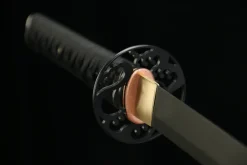
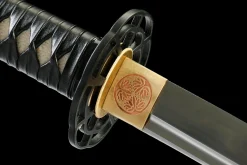
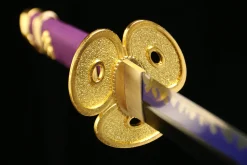
The buffalo horn saya (牛角鞘) is dense, naturally water-resistant, and develops a deep, obsidian-dark patina with age — perfectly matched to this sword’s name. Gold and silver gilded copper fittings (tsuba, fuchi, kashira) complete an ensemble of uncompromising quality. The cotton ito wrap over genuine same rayskin on the tsuka provides a grip that is both traditional and entirely functional. The Obsidian Roar is equally at home in a martial artist’s hands or a connoisseur’s display cabinet.
Perfect For
- Advanced collectors and connoisseurs who understand the rarity and technical achievement of a certified Grade 1 Ding Zi hamon on clay-tempered T10 steel
- Serious martial artists and cutting practitioners who refuse to compromise on blade performance and want a mirror-polished T10 cutter dressed in premium fittings
- Gift buyers and heirloom seekers looking for the highest-impact katana in the $400–$600 range with documented, prestigious heat treatment credentials
Care & Maintenance
A mirror-polished T10 blade demands attentive care to preserve its surface — even fingerprint oils will etch the finish over time, so always handle the blade with clean cotton gloves or a soft cloth, and apply a thin coat of choji oil after every session. The Ding Zi hamon area is best inspected periodically under raking light to verify no corrosion is forming along the crystalline boundary; if detected early, light uchiko powder application followed by fresh oil resolves it without damage. The buffalo horn saya requires no lacquer maintenance but benefits from an occasional wipe-down with a natural conditioning wax to preserve its deep luster and prevent surface micro-cracking in very dry climates.
Frequently Asked Questions
What does the Ding-Zi (丁字烧) clay tempering on the Obsidian Roar mean?
丁字烧 (Ding-Zi Yaki) refers to a specific clay tempering pattern applied before quenching, where clay is shaped in a 丁 (T-shape or nail-head) formation along the blade. This technique produces a distinctive, structured hamon with a repeating pattern rather than a purely natural wave. On the Obsidian Roar’s T10 steel blade, this Grade 1 (1级) clay application results in an exceptionally clear, visually dramatic temper line that sets it apart from standard clay-tempered katanas.
Is the Obsidian Roar blade polished and what difference does that make?
Yes, the Obsidian Roar features a hand-polished T10 blade finish. Polishing is not merely cosmetic — a properly polished blade reveals the full detail of the hamon, removes surface scratches that can become stress points, and produces the mirror-like or satin sheen associated with high-end Japanese swords. At $525, the polished finish on the Obsidian Roar significantly elevates its display quality and reflects the additional labor involved in finishing the blade to this standard.
Is the Obsidian Roar katana battle ready for serious cutting practice?
Yes. The Obsidian Roar is built for serious use. T10 tool steel clay tempered with a Grade 1 Ding-Zi pattern delivers a blade with a hard, wear-resistant edge and tough spine — ideal for tameshigiri. The copper gilded fittings add structural integrity compared to zinc alloy alternatives. At 950 g with a 72 cm blade, it has the mass and balance for powerful cutting while remaining controllable for trained martial artists.
How does the Obsidian Roar compare to the Wood Spirit — both are T10 clay tempered?
Both use T10 clay-tempered steel, but the Obsidian Roar ($525) is a significant step up from the Wood Spirit ($260). Key differences include a Grade 1 Ding-Zi tempering pattern, a hand-polished blade finish, gold and silver gilded copper fittings (vs. zinc alloy), and a premium horn scabbard (牛角鞘). The Obsidian Roar is for collectors and martial artists who want maximum visual refinement and hardware quality alongside cutting performance.
| Weight | 1.2 lbs |
|---|---|
| Dimensions | 103.0 × 3.2 × 0.7 in |
| Sword Type | Katana |
| Blade Steel | T10 Tool Steel |
| Total Length | 103.0 cm |
| Blade Length | 72.0 cm |
| Heat Treatment | Oil Quench & Temper |
| Handle Wrap | Cotton Ito Wrap |
| Sheath Material | 牛角鞘 |
| Fittings | Gold & Silver Gilded Fittings, Copper |
| Forging Style | Differential Hardening (Clay Tempered) |
Related products
1065 Carbon Steel
Damascus Steel

1045 Carbon Steel


1065 Carbon Steel

1065 Carbon Steel

Damascus Steel


Damascus Steel
Crimson Flame (之烽) – Hand Forged Damascus Steel Katana Sword