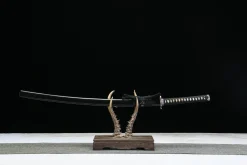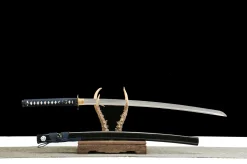










Pure Gold – Hand Forged 1065 Carbon Steel Katana Sword
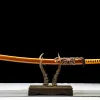
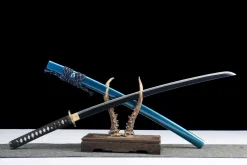
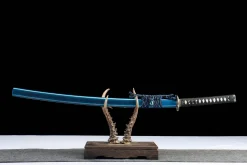
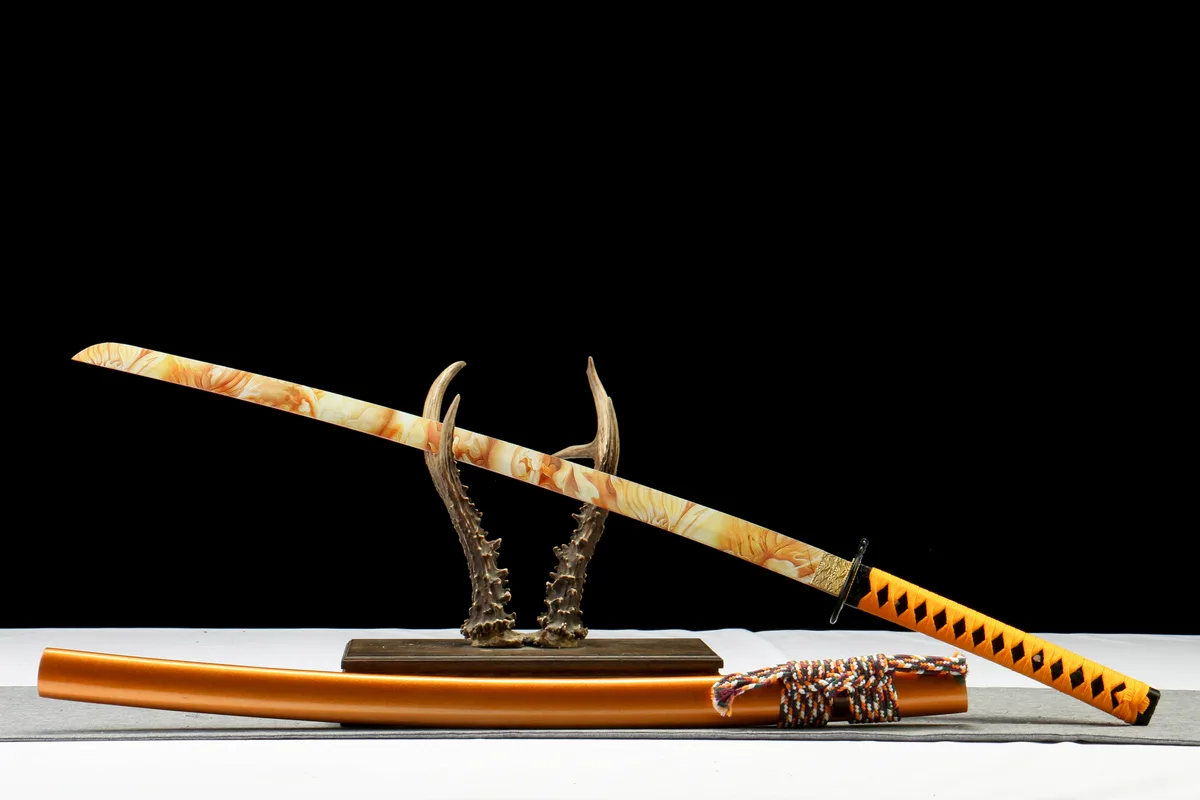
Hand-forged 1065 Carbon Steel katana (102cm total / 72cm blade), crafted in Longquan. Full-tang construction with traditional fittings and hand-lacquered saya.
$209.99
Pure Gold – Hand Forged 1065 Carbon Steel Katana Sword
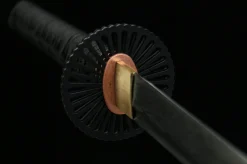
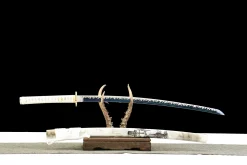
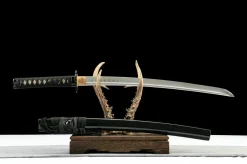
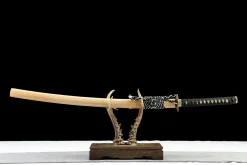
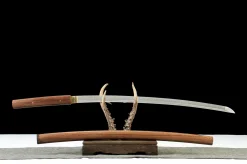
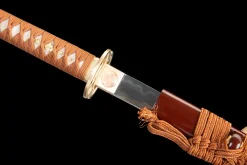
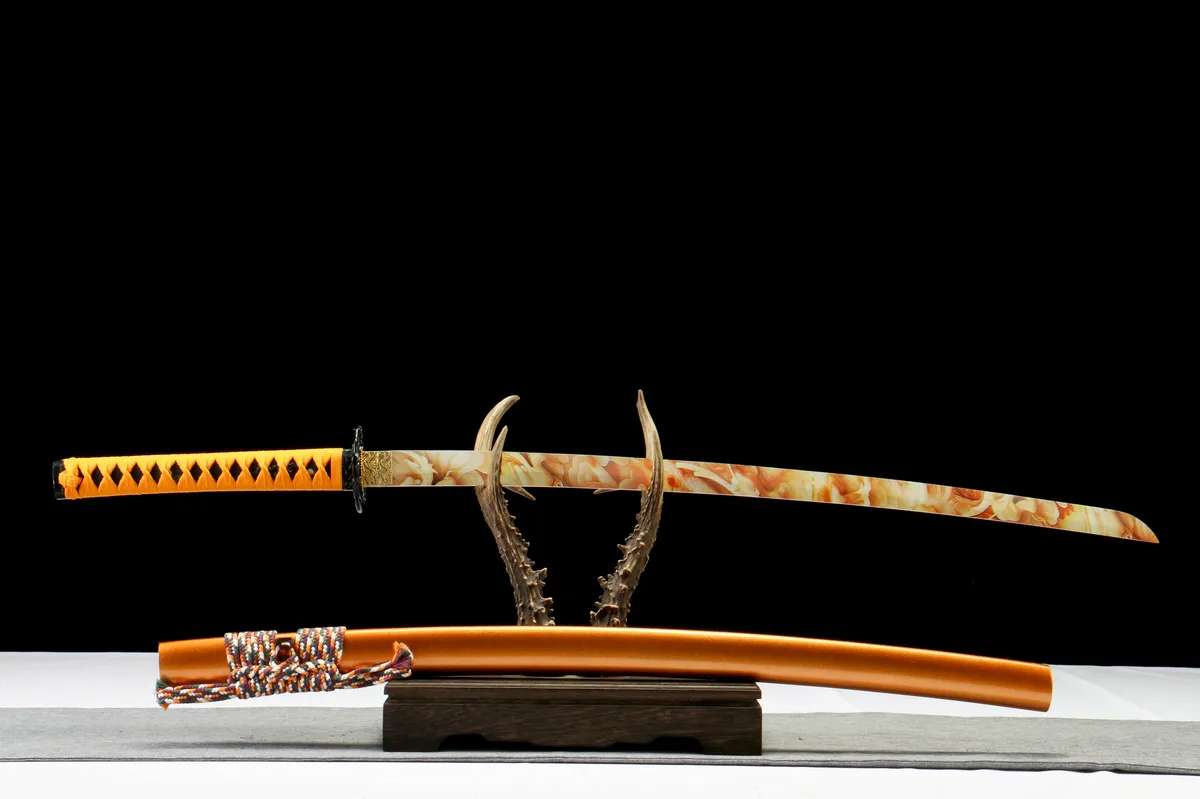
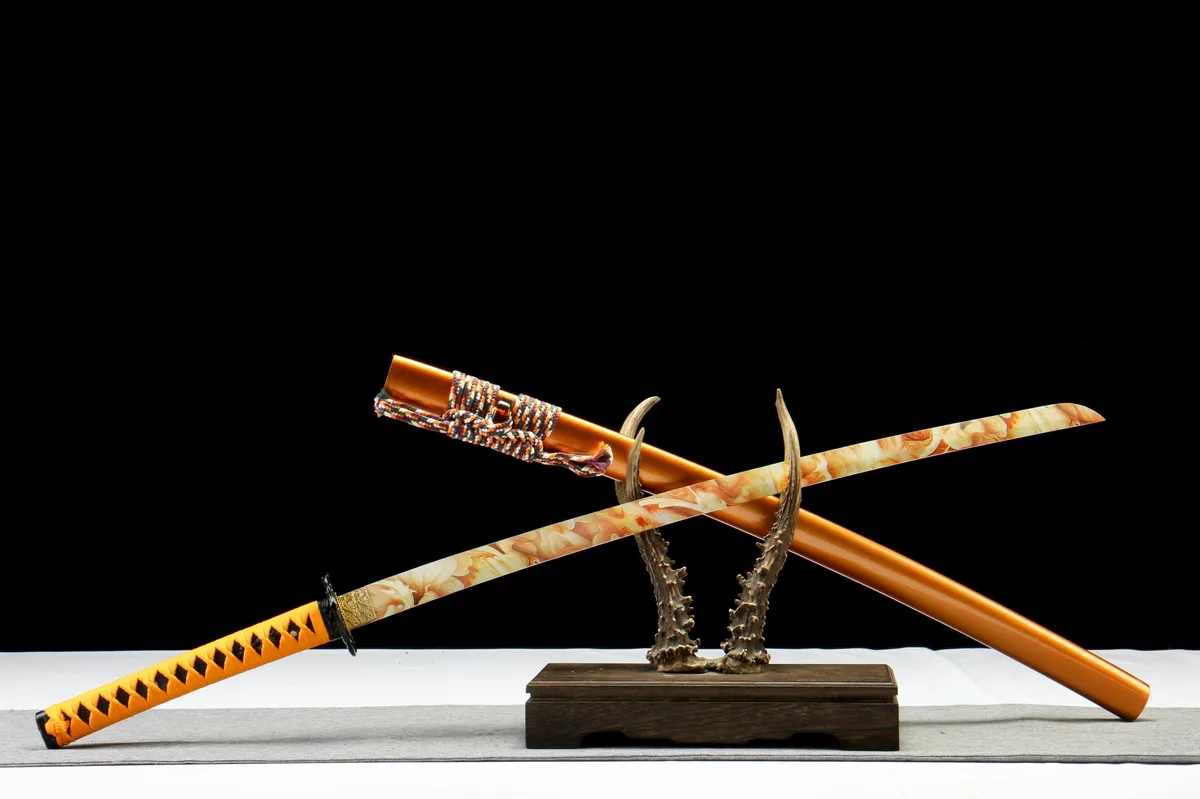
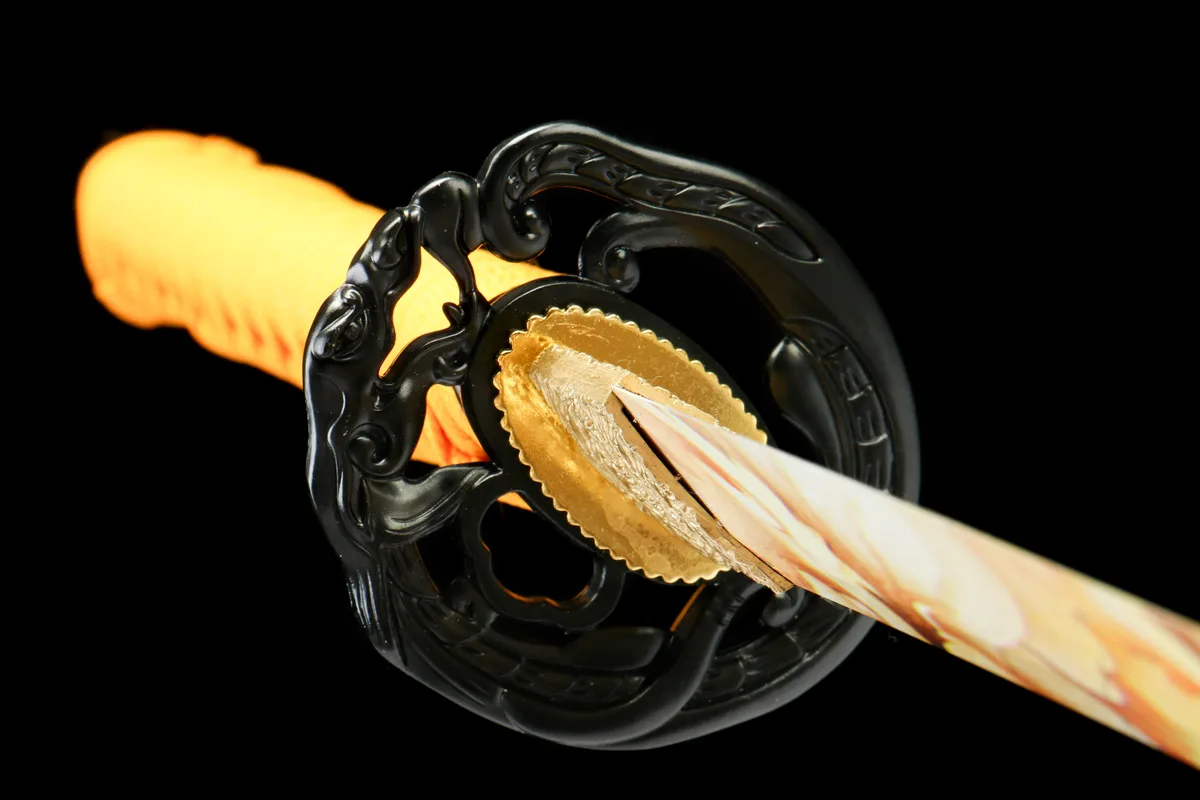
The dragon tsuba (handguard) in zinc alloy catches the eye first – cast detail, gold-tone finish against the yellow ito wrap, the whole assembly making a statement before the blade leaves the saya (scabbard). But the Pure Gold is a functional katana, and the 1065 high carbon steel underneath that presentation is there to perform. The 72 cm shinogi-zukuri (ridgeline) blade and controlled furnace heat treatment mean this is a working tool that happens to be dressed for attention.
Specifications
| Blade Steel | 1065 High Carbon Steel |
| Total Length | 102.0 cm / 40.2 in |
| Blade Length | 72.0 cm / 28.3 in |
| Blade Width | 3.2 cm |
| Blade Thickness | 0.7 cm |
| Weight | 1040 g / 36.7 oz |
| Heat Treatment | Controlled-temperature furnace hardening (马沸炉 恒温热处理) |
| Fittings | Zinc Alloy |
| Handle | Cotton Ito wrap over genuine rayskin (same) |
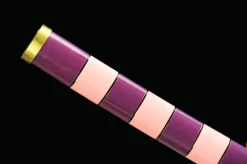
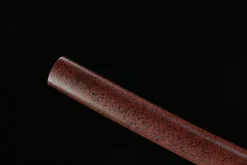
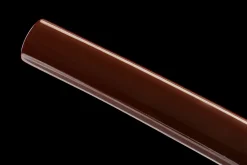
| Sheath | Hardwood with high-gloss lacquer |
Steel & Construction
1065 high carbon steel is chosen here for the same reason it is chosen across the working tier of any serious production: it sits at a carbon percentage where the steel can be hardened to hold a reliable cutting edge while retaining the core ductility that prevents catastrophic failure under impact. The 马沸炉 恒温热处理 – controlled-temperature furnace hardening – brings the blade to a consistent temperature throughout the cycle, producing even hardness from one end of the 72 cm edge to the other. That consistency is not an aesthetic concern. It is a performance concern.
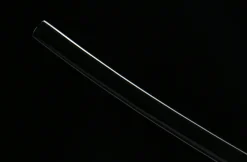
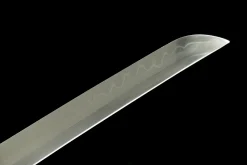
Shinogi-zukuri (ridgeline) geometry at 3.2 cm wide and 0.7 cm at the spine gives this blade the structural cross-section to transmit force cleanly through a cut without flexing laterally. The raised shinogi (ridgeline) running the length of the blade stiffens the flat without adding unnecessary mass to the edge side. This is sound blade geometry, unchanged for good reason.
Handling
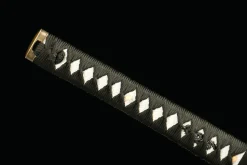
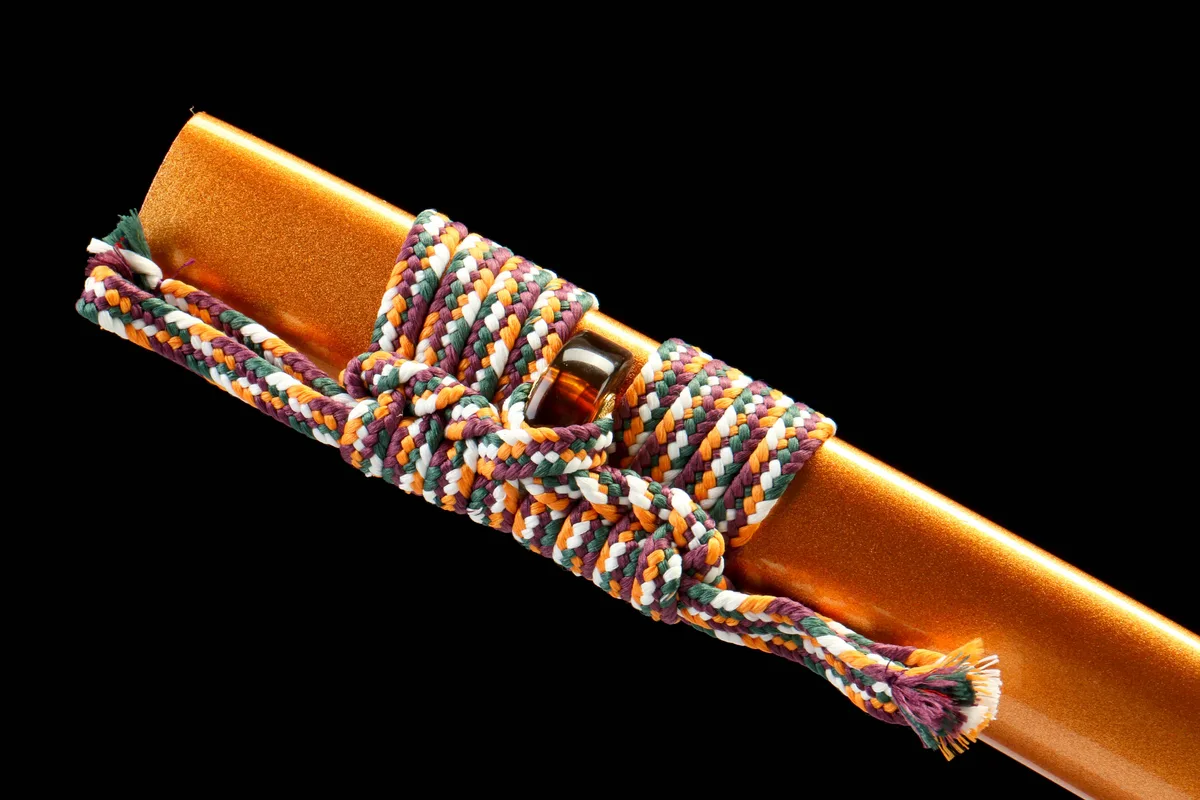
The 26 cm tsuka (handle) accommodates both hands with authority – yellow cotton ito wrapped over genuine same (rayskin) in the traditional diamond pattern, the rayskin’s nodular surface pressing through the wrap to anchor both palms positively against rotation. The dragon tsuba sits solid at the habaki (blade collar), no lateral movement, no play. The high-gloss lacquered saya draws with a single defined resistance at the koiguchi (scabbard mouth) – the kind of draw that is the same every time, which matters when the draw itself is part of what you are training.
Care Instructions
Dry the blade completely after each session and apply a light coat of choji oil (clove-infused mineral oil) before sheathing for storage – 1065 carbon steel will surface-rust without it in anything but the driest environments. The zinc alloy fittings do not require oiling but should be kept dry and wiped clean after handling. Store horizontally or edge-up in the saya, away from sustained humidity.
| Weight | 1.32 lbs |
|---|---|
| Dimensions | 102.0 × 3.2 × 0.7 in |
| Hamon | Decorative / Acid-Etched |
| Blade Steel | 1065 Carbon Steel |
| Total Length | 102.0 cm |
| Blade Length | 72.0 cm |
| Heat Treatment | 马沸炉 恒温热处理 |
| Handle Wrap | Cotton Ito + Genuine Rayskin |
| Sheath Material | Hardwood (High-Gloss Lacquer) |
| Fittings | Zinc Alloy |
| Forging Style | Shinogi-Zukuri (Ridgeline) |
Related products