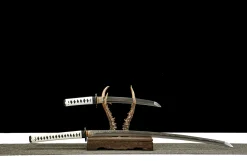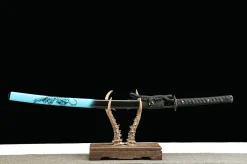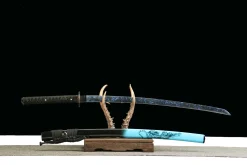
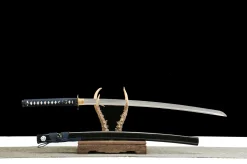









Raven Wing – Hand Forged 1065 Carbon Steel Katana Sword
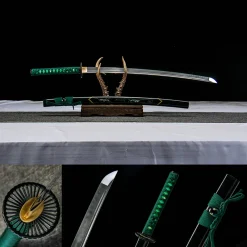
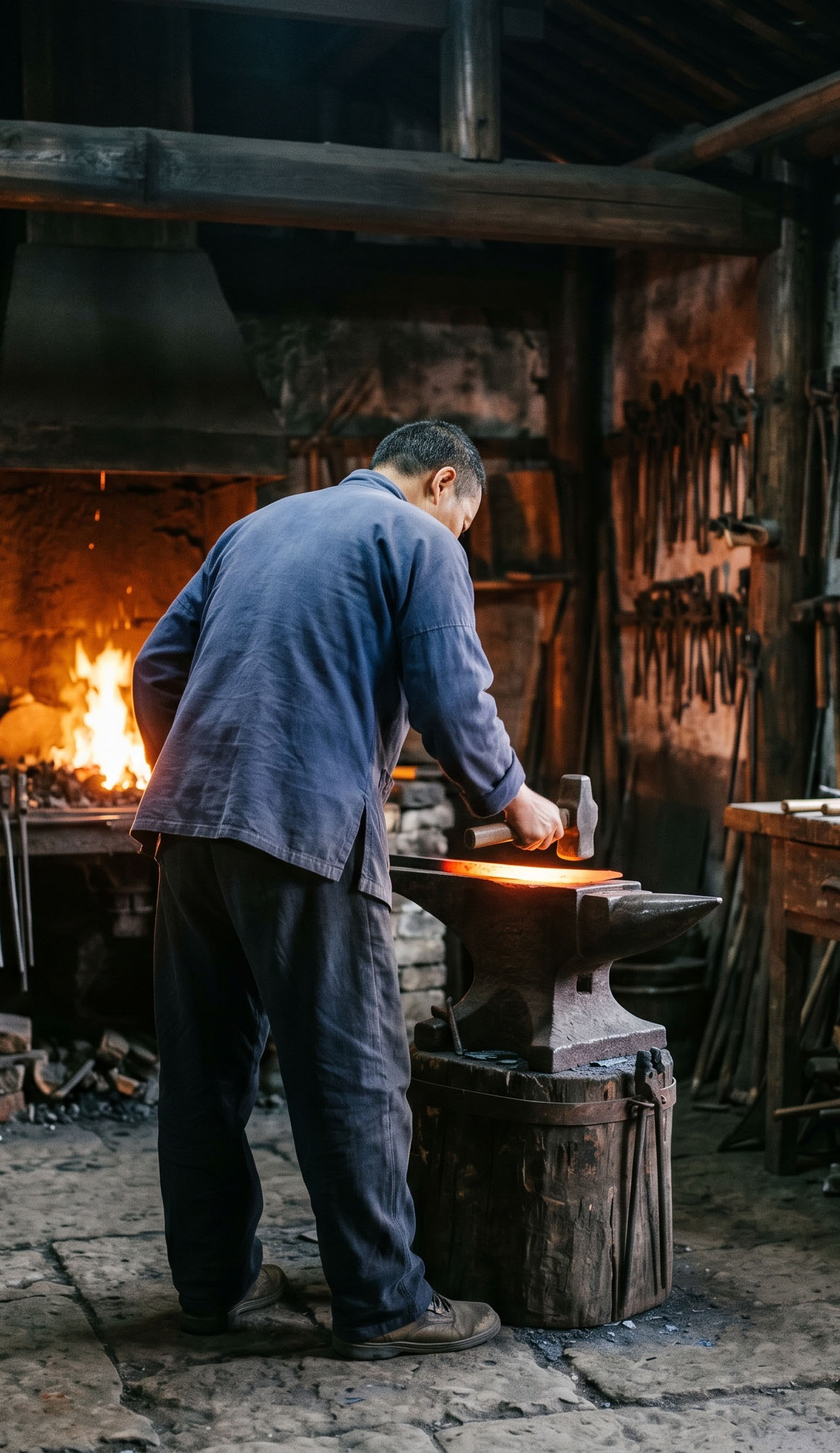
Hand-forged 1065 Carbon Steel katana (102cm total / 72cm blade), crafted in Longquan. Full-tang construction with traditional fittings and hand-lacquered saya.
$209.99
Raven Wing – Hand Forged 1065 Carbon Steel Katana Sword
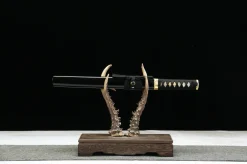
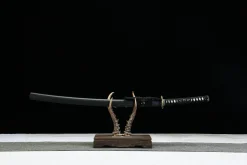
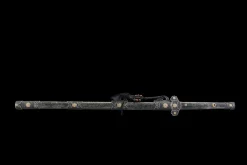
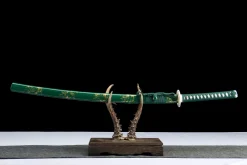
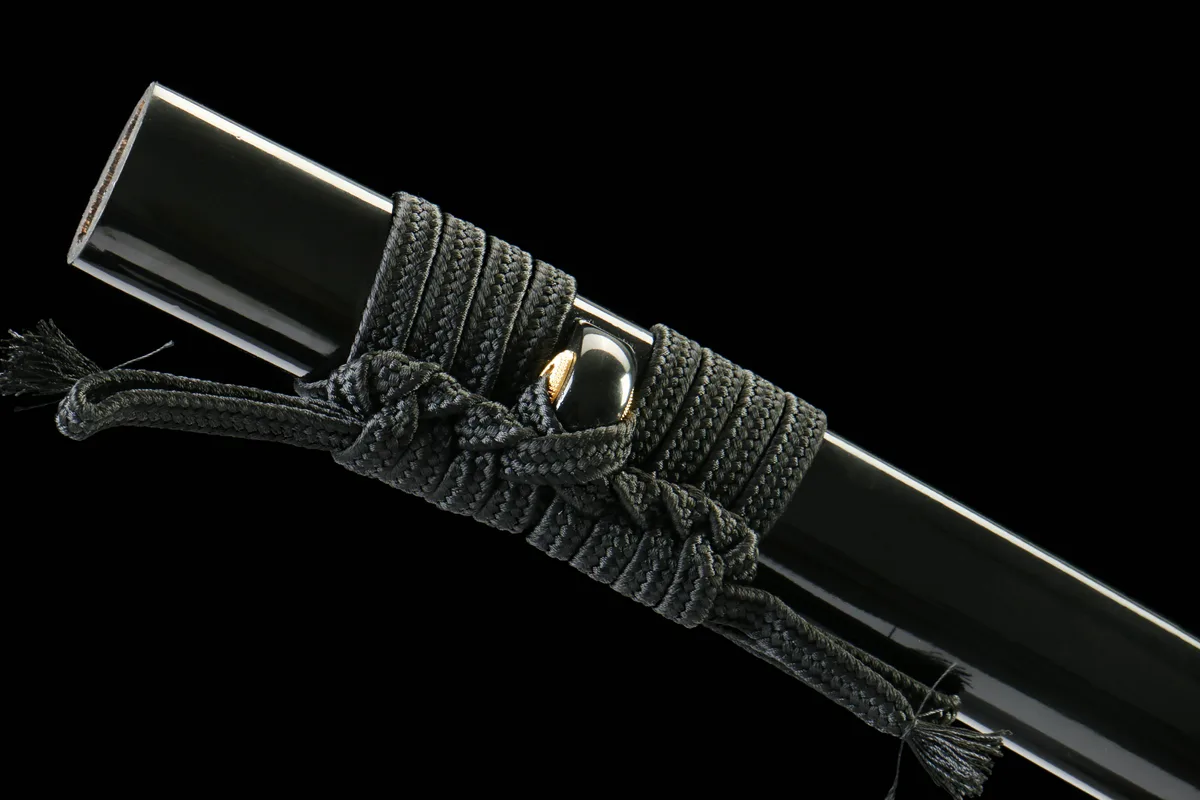
The Raven Wing is built around a single, uncompromising idea: a working 1065 high carbon blade wrapped entirely in black. Every component – blade finish, ito wrap, lacquered saya – holds to that same discipline. Nothing breaks the line. Nothing distracts from the cut.
Specifications
| Blade Steel | 1065 High Carbon Steel |
| Total Length | 102.0 cm / 40.2 in |
| Blade Length | 72.0 cm / 28.3 in |
| Blade Width | 3.2 cm |
| Blade Thickness | 0.7 cm |
| Weight | 1040 g / 36.7 oz |
| Heat Treatment | Controlled furnace normalization (uniform hardening) |
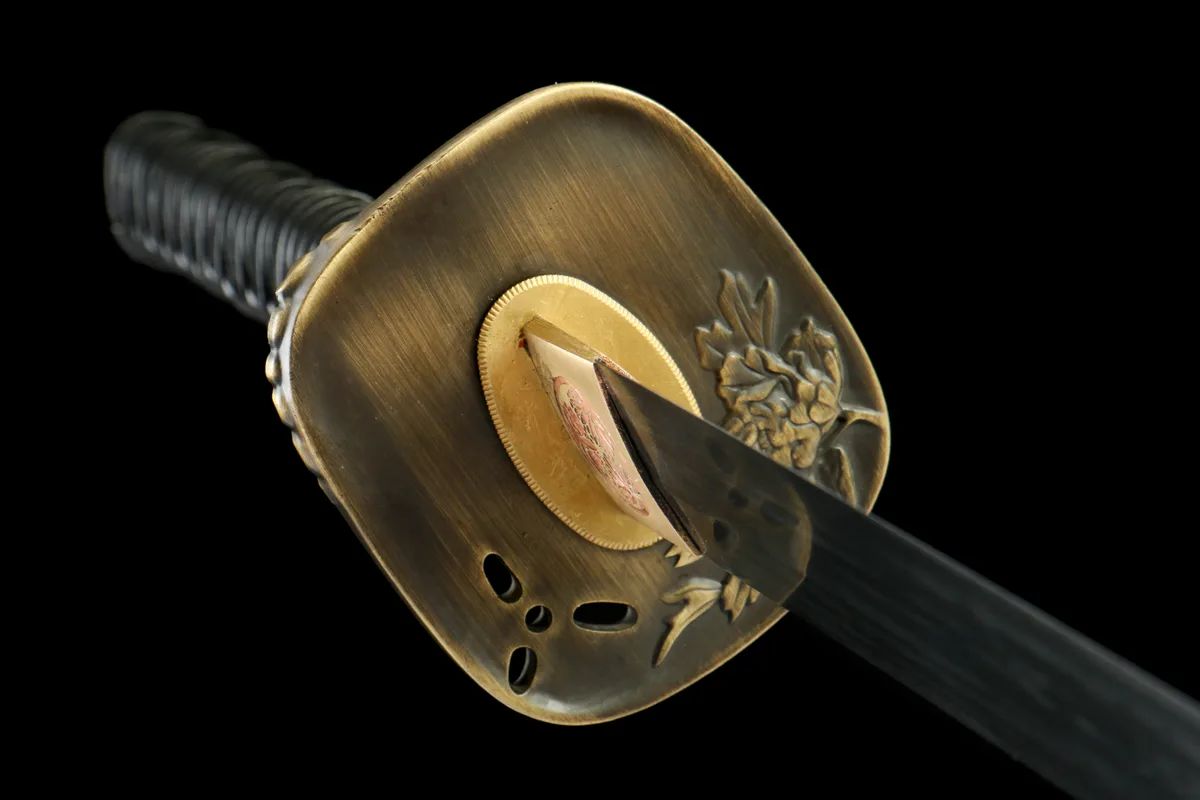
| Fittings | Zinc Alloy |
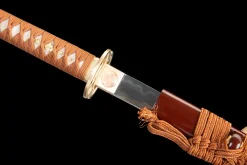
| Handle | Cotton Ito + Genuine Rayskin |
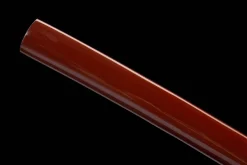
| Sheath | Hardwood, High-Gloss Black Lacquer |
What the Steel Does
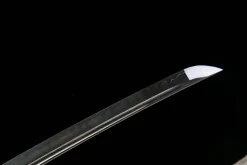
1065 high carbon steel sits at a practical sweet spot for a working blade. The carbon content is high enough to hold a keen, repeatable edge through sustained use, but the steel retains enough ductility that it resists the brittle fracture you risk with harder, higher-carbon alloys. It bends before it snaps. That matters under load. The heat treatment here is a controlled furnace process – uniform hardening across the full blade geometry – which means consistent hardness from tip to base without the localized stress points that sloppy quenching introduces. The shinogi-zukuri (ridgeline) profile adds structural integrity through the cross-section, reinforcing the spine while keeping the edge geometry aggressive enough for clean entry.
The 0.7 cm thickness at the spine is deliberate. That spine dimension keeps the blade rigid under lateral force while the 3.2 cm width gives the geometry room to taper properly toward the edge. This is not a decorative grind. The geometry does work.
The Feel of It
At 72.0 cm of blade length, the Raven Wing sits at a full katana draw – this is not a shortened or compromised nagasa (blade length). The 26.0 cm handle gives a two-handed grip with real control authority at the rear hand. The genuine rayskin (same) underneath the black cotton ito creates a surface that bites back against the palm without abrading it, and the diamond wrap pattern locks the hands into position across session after session. The saya draws cleanly against the high-gloss lacquered hardwood, and the all-black presentation means there is no visual noise when you bring it out – just the blade.
Maintenance Notes
Wipe the blade down with a lightly oiled cloth after every use – 1065 steel will develop surface oxidation quickly if moisture is left on the edge or flat. A fine uchiko powder ball is the traditional option for the flat faces, but a clean microfiber cloth and a drop of choji oil achieves the same result. Store the blade in the saya in a low-humidity environment to protect both the steel and the lacquered wood.
| Weight | 1.32 lbs |
|---|---|
| Dimensions | 102.0 × 3.2 × 0.7 in |
| Hamon | Decorative / Acid-Etched |
| Blade Steel | 1065 Carbon Steel |
| Total Length | 102.0 cm |
| Blade Length | 72.0 cm |
| Heat Treatment | 马沸炉 恒温热处理 |
| Handle Wrap | Cotton Ito + Genuine Rayskin |
| Sheath Material | Hardwood (High-Gloss Lacquer) |
| Fittings | Zinc Alloy |
| Forging Style | Shinogi-Zukuri (Ridgeline) |
Related products