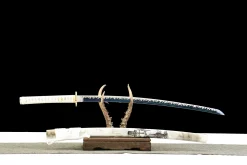
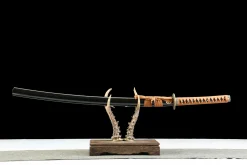


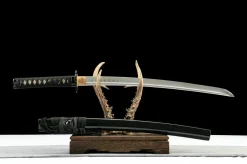
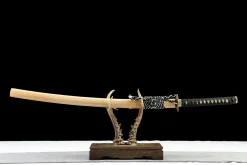


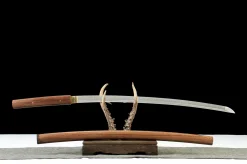
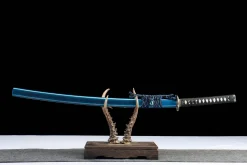
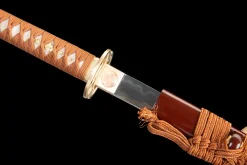
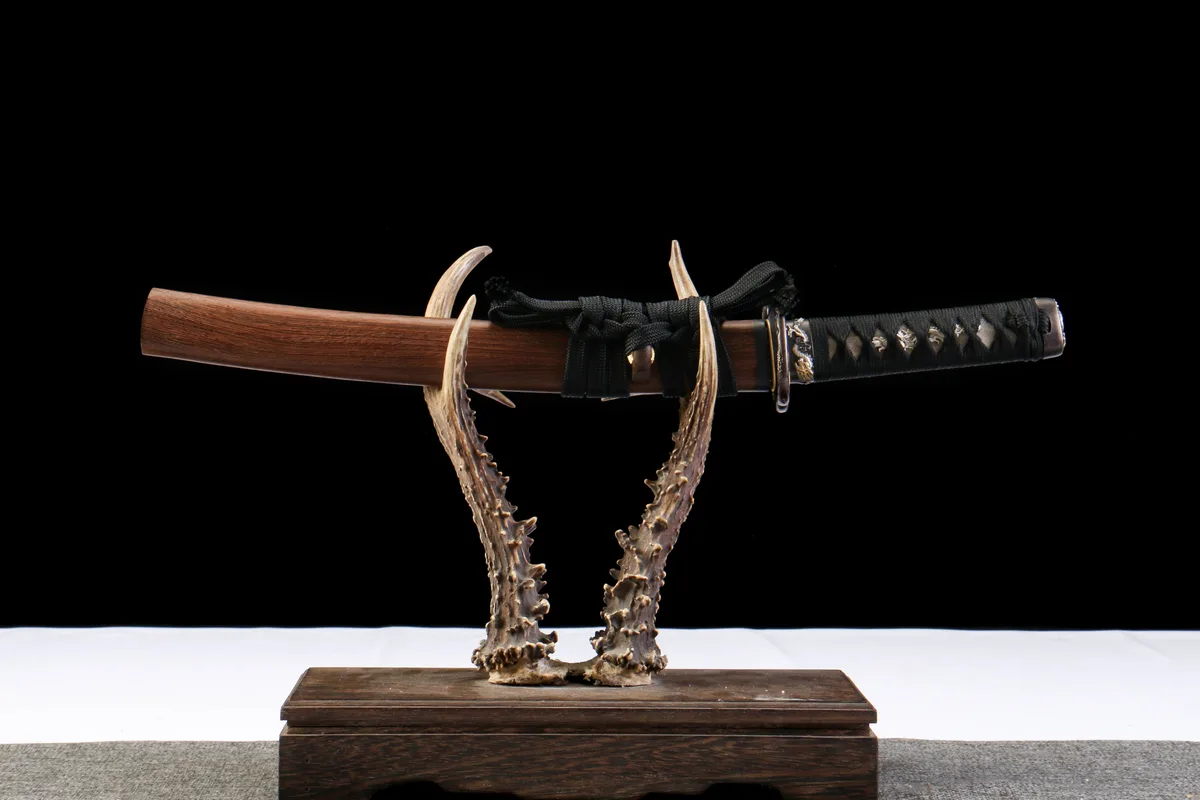




Sandalwood Gold – Hand Forged T10 Tool Steel Tanto Sword
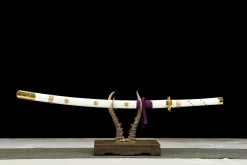
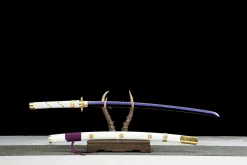
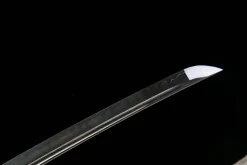
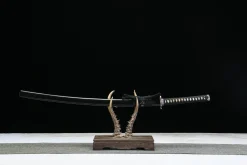
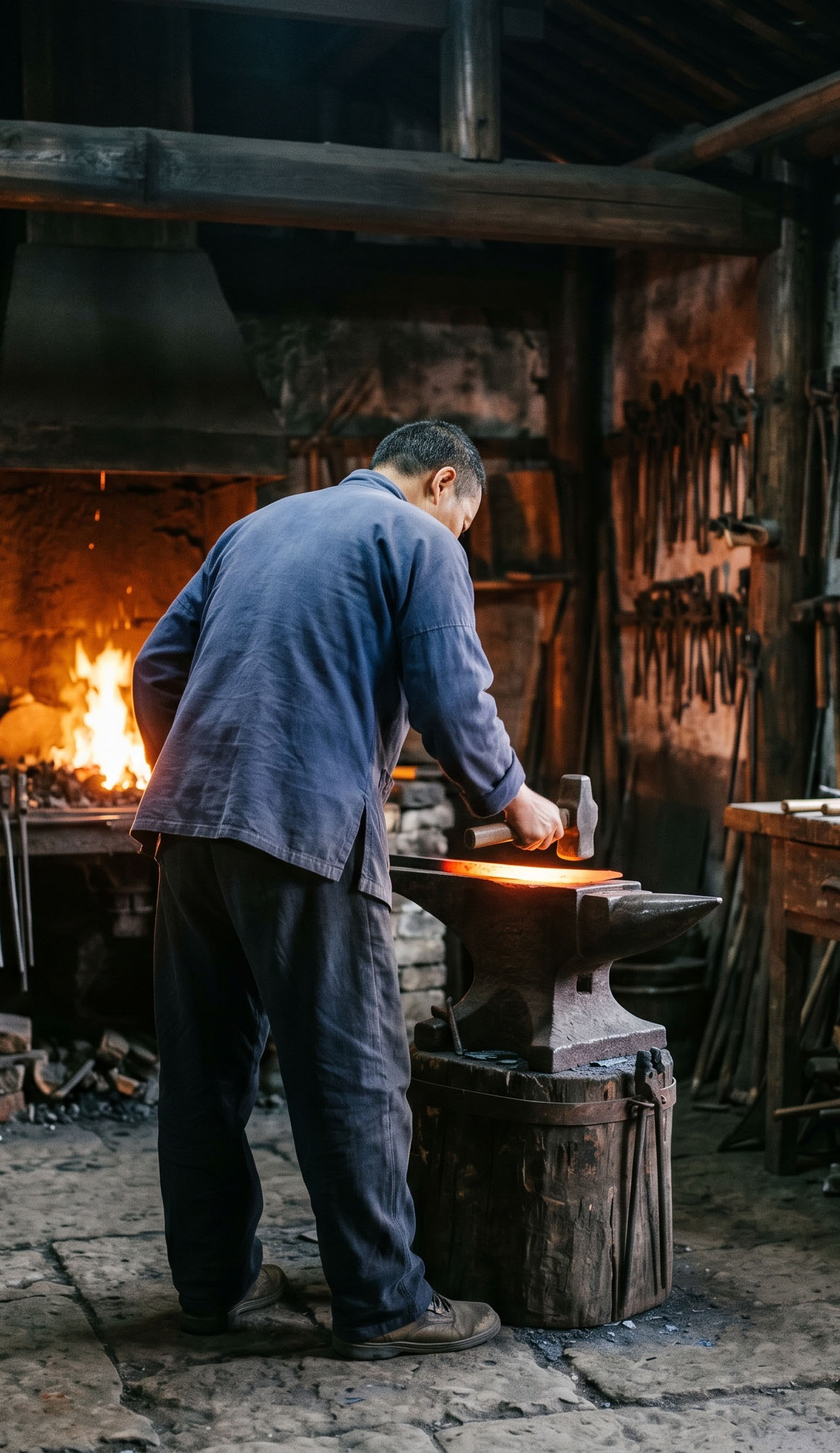
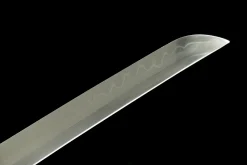
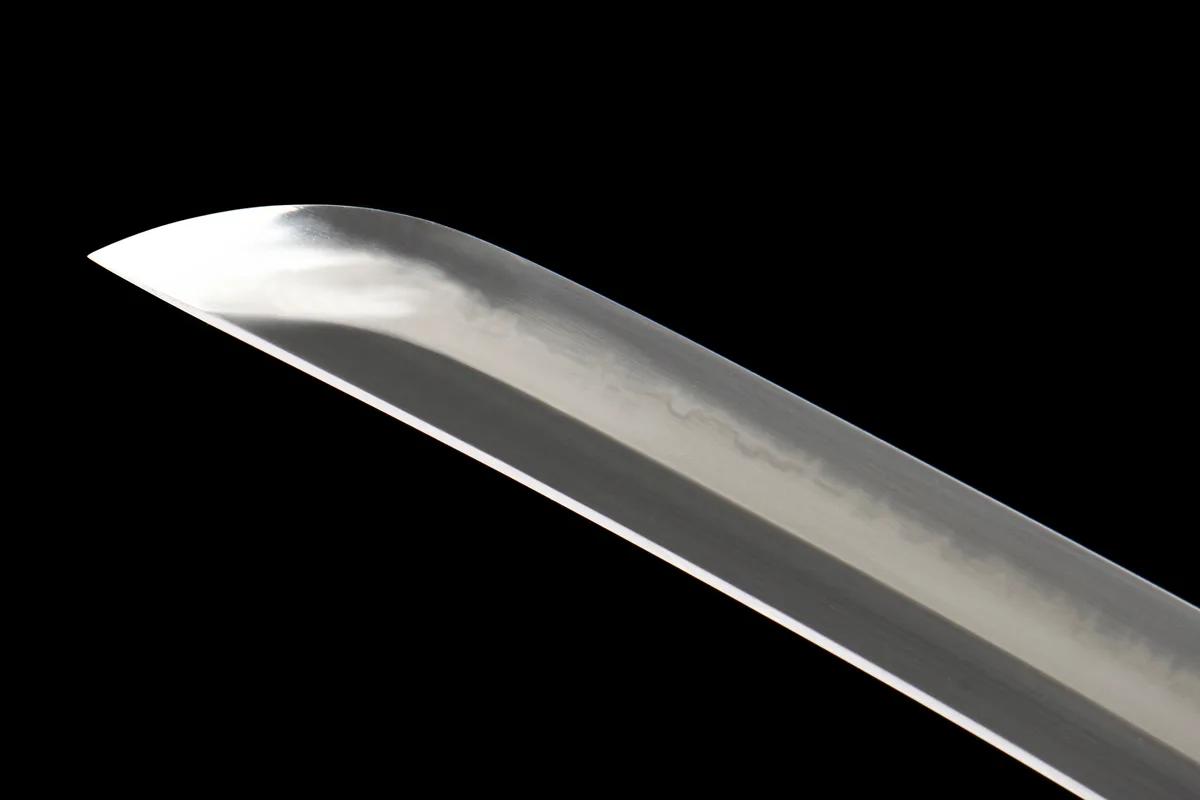
Hand-forged T10 Tool Steel tanto (52cm total / 30cm blade), crafted in Longquan. Clay-tempered blade with a genuine hamon line — visible contrast between hardened edge and soft spine.
$1,124.99
Sandalwood Gold – Hand Forged T10 Tool Steel Tanto Sword
The hamon on this tanto (a short-bladed Japanese sword, here at 30 centimeters of blade) runs in a choji pattern – a repeating clove-blossom wave that is one of the most demanding hamon forms to produce consistently. Getting it right requires precise clay application, an experienced hand reading the temperature of the steel, and a quench timed to the second. This blade has it.
Specifications
| Blade Steel | T10 High Speed Tool Steel |
| Total Length | 52.0 cm / 20.5 in |
| Blade Length | 30.0 cm / 11.8 in |
| Blade Width | 3.2 cm |
| Blade Thickness | 0.7 cm |
| Heat Treatment | Clay Tempering (Differential Hardening) |
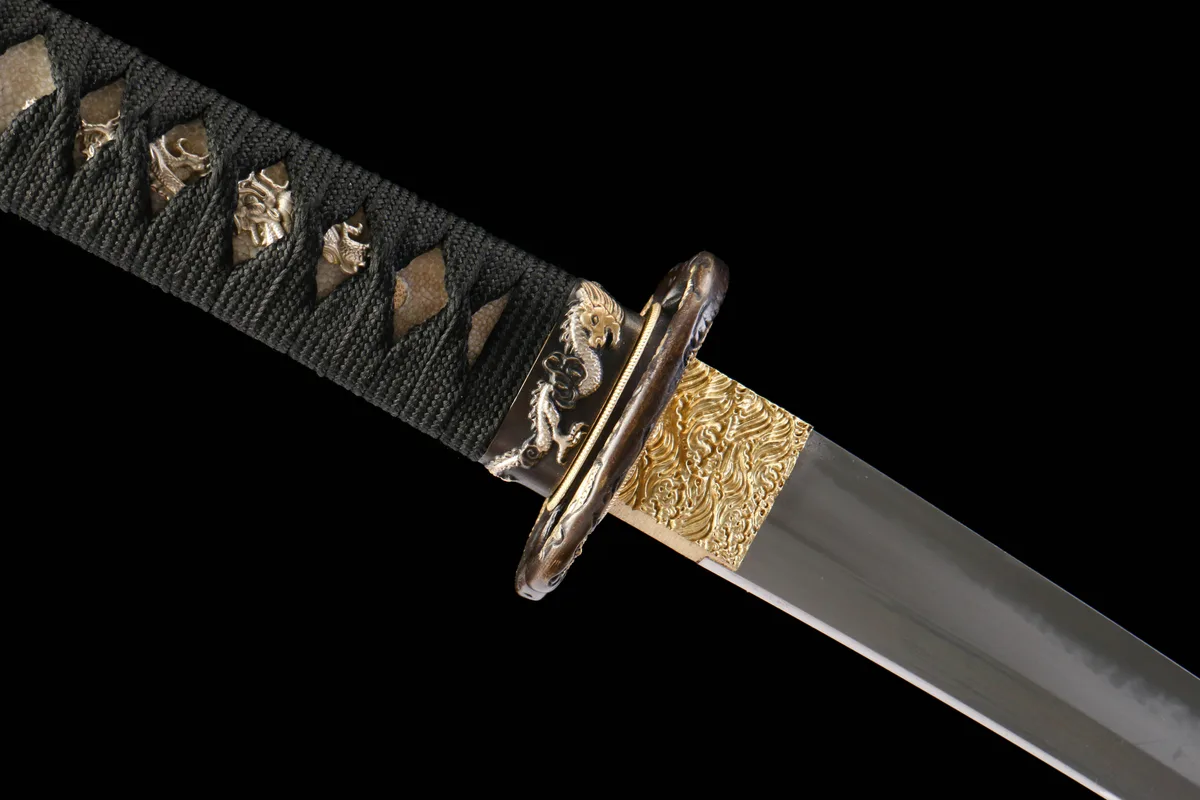
| Fittings | Copper with Gold Gilding (Doji Gilded) |
| Handle | Cotton Ito + Genuine Rayskin |
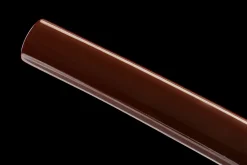
| Sheath | Hualiwood (Rosewood) |
Forged in Longquan
T10 is a tungsten-alloyed high carbon tool steel. The tungsten content – typically around 0.8 to 1.2 percent – forms fine carbide particles distributed through the matrix that resist wear and hold a finer, more durable edge than plain high carbon steel at equivalent hardness. It is also less forgiving than 1065: T10 rewards the smith who treats it precisely and punishes the one who does not. The clay tempering process applied here – tsuchioki in Japanese, covering the spine in insulating clay before the quench – produces a blade with a hard, wear-resistant edge (typically reaching HRC 60 or above in the ha, or edge zone) and a tougher, more shock-absorbent spine. The transition between these two zones is where the hamon lives.
The choji hamon on the Sandalwood Gold is not a painted or etched line. It is a genuine metallurgical boundary – the visible edge of where the crystalline structure of the steel changes from fine pearlite (hard, bright) to larger-grained structure (tougher, darker). Viewed under raking light or a loupe, this hamon shows nie (tiny martensite crystals visible at the boundary that appear as a fine constellation of bright points) and a habuchi – the boundary line between the hardened and unhardened zones – that is irregular in the way only hand-clay-work produces. No two choji hamon are identical. The one on this blade is the one on this blade.
Weight, Balance, Draw
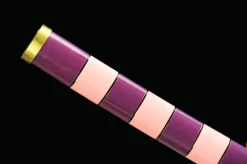
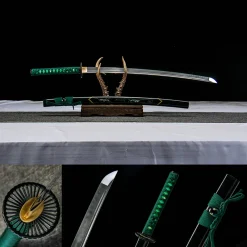
The 17-centimeter handle is wrapped in cotton ito over genuine same (ray skin – the traditional Japanese handle grip material, with its raised granular surface that locks the hand against rotation under impact). At 52 centimeters total, this tanto sits completely within the hand when drawn, the 30-centimeter blade appearing without preamble. The hualiwood (rosewood) saya is dense, close-grained, and warm to the touch – the copper fittings with their gold gilding sit flush against it without rattle. The gilded doji (a copper-and-gold alloy treatment applied to the fittings) catches light differently than polished copper alone, shifting between warm gold and deep amber depending on the angle. It matches the wood’s own warm register exactly.
Keeping It Sharp
T10 is more reactive to moisture than lower-alloy steels. Wipe and oil after every handling session with a clean cloth and high-quality choji or camellia oil. Store with the edge up and the blade lightly coated. The rosewood saya should be kept away from sustained humidity – the wood is stable but responds to extreme moisture swings over time.
| Weight | 0.0 lbs |
|---|---|
| Dimensions | 52.0 × 3.2 × 0.7 in |
| Hamon | Real Hamon (Clay Tempered) |
| Blade Steel | T10 Tool Steel |
| Total Length | 52.0 cm |
| Blade Length | 30.0 cm |
| Heat Treatment | Clay Tempering (Differential Hardening) |
| Handle Wrap | Cotton Ito + Genuine Rayskin |
| Sheath Material | 花梨Hardwood |
| Fittings | 铜装鎏金 |
| Forging Style | 鎬造 |
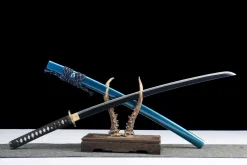
Related products