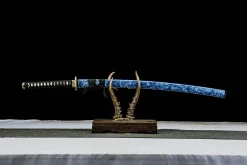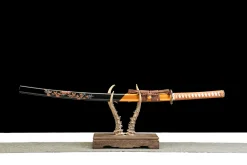








Scarlet Cherry Moon – Hand Forged T10 Tool Steel Katana Sword
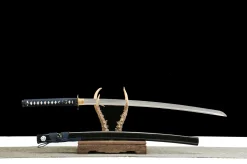
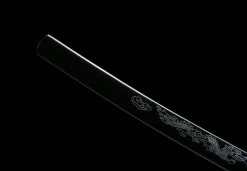
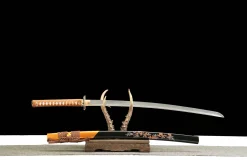
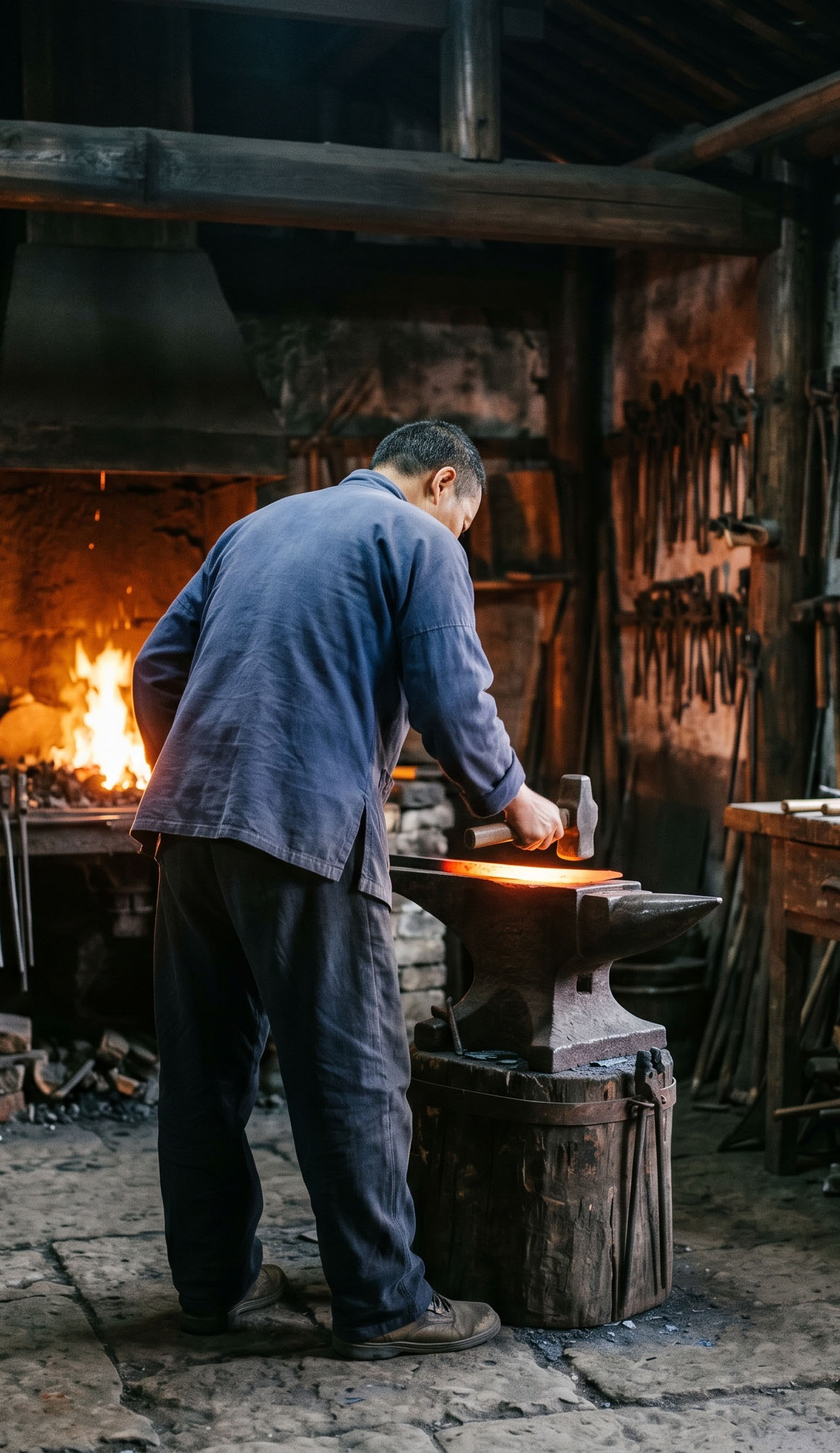
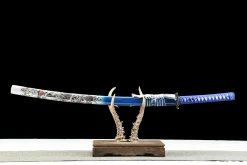
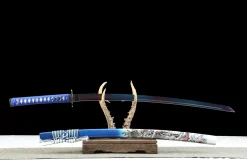
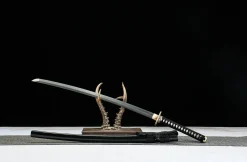
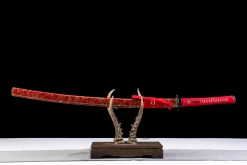
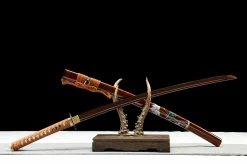
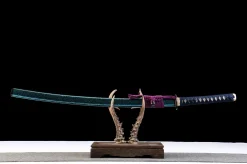
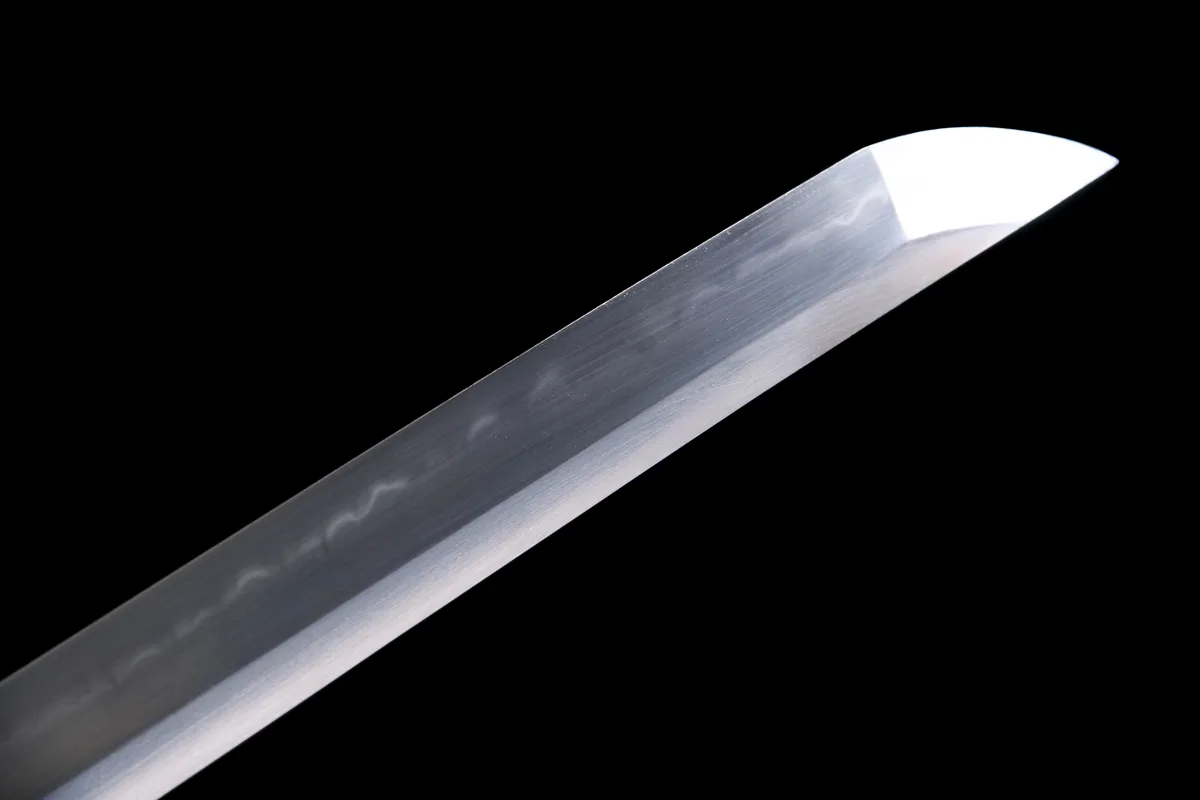
Hand-forged T10 Tool Steel katana (102cm total / 72cm blade), crafted in Longquan. Clay-tempered blade with a genuine hamon line — visible contrast between hardened edge and soft spine.
$524.99
Scarlet Cherry Moon – Hand Forged T10 Tool Steel Katana Sword
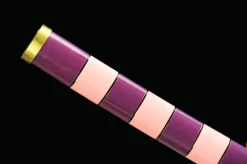
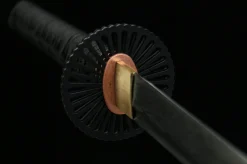
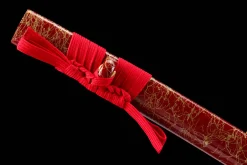
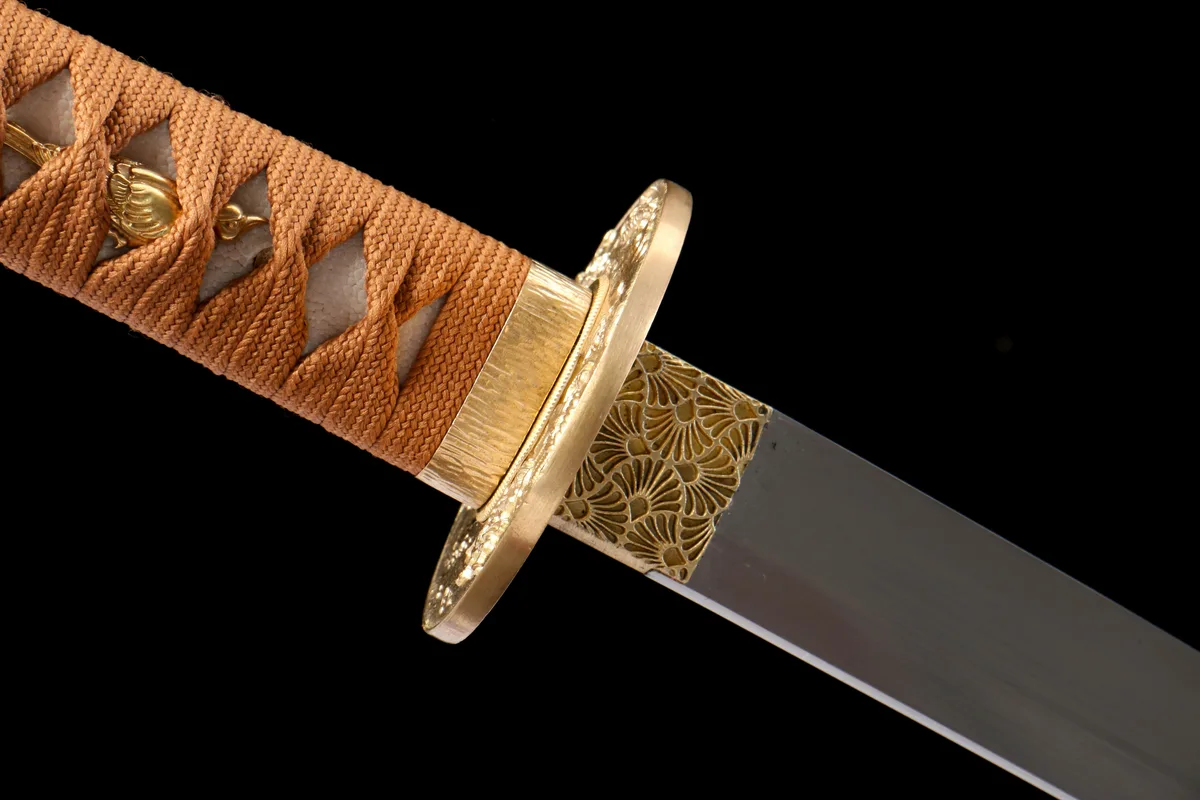
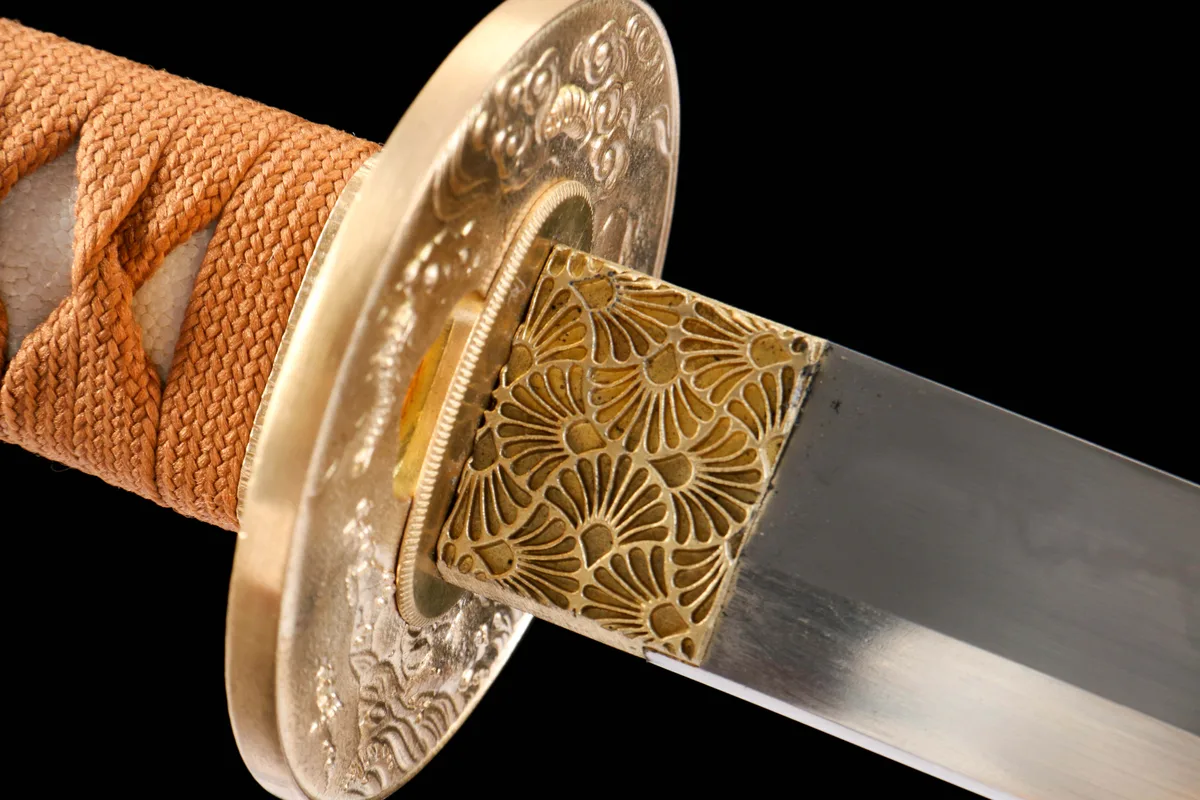
Copper fittings on a clay-tempered T10 blade is a deliberate aesthetic argument. Where iron fittings recede and let the hamon take the room, copper commands its own presence – warm-toned, slightly reddish in direct light, aging into deeper amber over time. The Scarlet Cherry Moon is built around that tension: a live hamon in cold bright steel, framed by fittings that burn.
Specifications
| Blade Steel | T10 High Speed Tool Steel |
| Total Length | 102.0 cm / 40.2 in |
| Blade Length | 72.0 cm / 28.3 in |
| Blade Width | 3.2 cm |
| Blade Thickness | 0.7 cm |
| Weight | 1040 g / 36.7 oz |
| Heat Treatment | Clay Tempering (Differential Hardening) |
| Fittings | Copper |
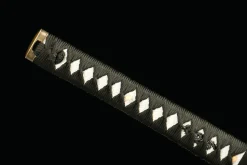
| Handle | Cotton Ito + Genuine Rayskin |
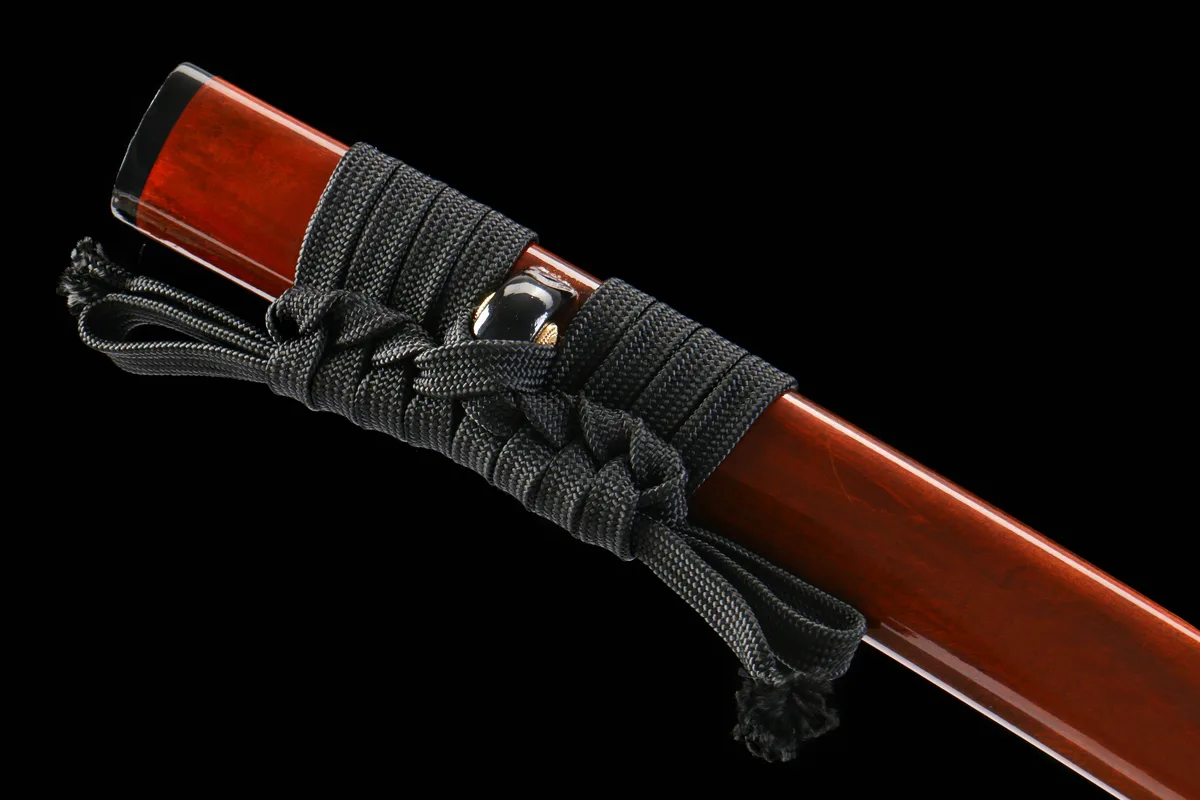
| Sheath | Hardwood, High-Gloss Lacquer |
What the Steel Does
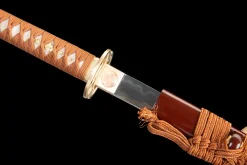
T10 tool steel begins with a carbon content in the 0.95-1.05% range, which alone would make it a capable blade material. What separates it from standard 1095 or 1075 is the tungsten addition – a microalloying element that refines the carbide distribution and resists grain growth during the high-temperature forging and heat treatment cycles. The result is a steel that holds a finer, more durable edge than plain high-carbon equivalents, and one that responds to clay tempering with exceptional clarity in the hamon. The habuchi (hamon border) on a well-executed T10 blade shows nie – visible martensitic crystals in the transition zone – and often complex activity such as ashi (short lines extending from the hamon toward the edge) or yo (isolated islands of activity within the ha). Each of these features forms during quenching and cannot be controlled with exact precision, which is why no two hamon are identical.
The differential hardness means the ha (edge) and the mune (spine) serve different mechanical roles. The hard edge resists deformation and holds geometry under stress; the tougher spine absorbs impact and flexes rather than fracturing. This is not theoretical – it is the functional logic that made differential hardening the standard for serious Japanese swords and the reason it is still used on blades meant to perform.
The Feel of It
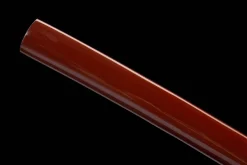
The tsuka (handle) is 26 cm of genuine rayskin (same) under tightly wrapped cotton ito – the same wrap geometry that has been used on Japanese swords for centuries because it works. The diamond pattern distributes grip pressure evenly and lets you adjust your hand position without losing control of the sword. At 72 cm of blade in shinogi-zukuri (ridge-line) profile, the kissaki (tip) sits at a distance that rewards deliberate movement – nothing about this sword’s length encourages careless handling. The high-gloss lacquer saya presents the sword cleanly; draw is smooth and consistent, the koiguchi (sheath mouth) fitted to hold without binding, release without slapping.
Maintenance Notes
The copper fittings will develop a natural patina over time – this is normal and considered part of the piece’s character; if you prefer a brighter copper finish, clean occasionally with a soft cloth and a minimal application of metal polish formulated for copper. For the blade, a light wipe with a clean cloth after handling followed by a thin coat of choji oil (traditional clove-mineral preservation oil) is sufficient routine maintenance. Store horizontally in a low-humidity environment; the lacquered saya protects the blade but is not a substitute for periodic oiling in variable climates.
| Weight | 1.32 lbs |
|---|---|
| Dimensions | 102.0 × 3.2 × 0.7 in |
| Hamon | Real Hamon (Clay Tempered) |
| Blade Steel | T10 Tool Steel |
| Total Length | 102.0 cm |
| Blade Length | 72.0 cm |
| Heat Treatment | Clay Tempering (Differential Hardening) |
| Handle Wrap | Cotton Ito + Genuine Rayskin |
| Sheath Material | Hardwood (High-Gloss Lacquer) |
| Fittings | Copper |
| Forging Style | 鎬造 |
Related products