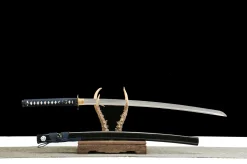


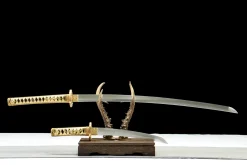
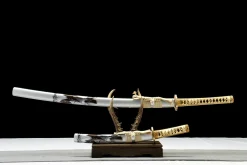







Shadow Bloom – Hand Forged Damascus Steel Katana Sword
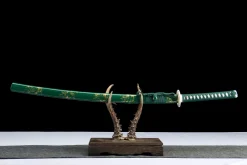
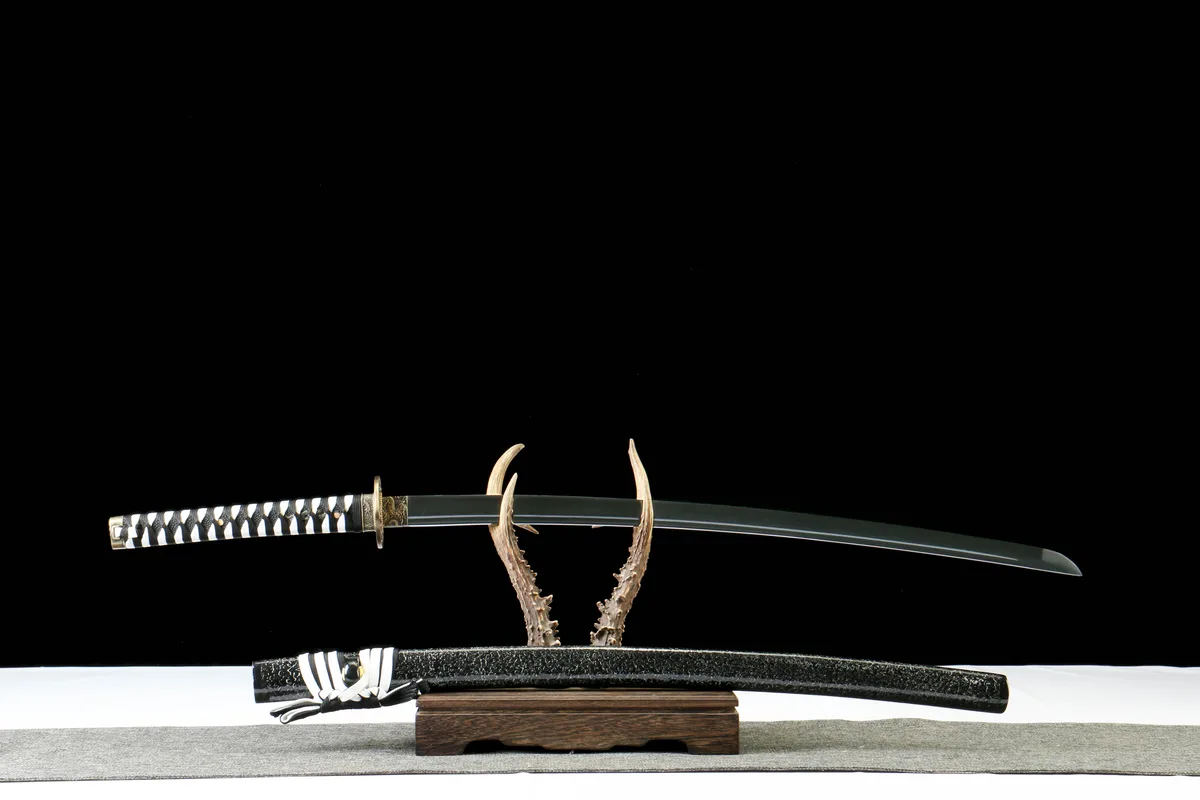
Hand-forged Damascus Steel katana (103cm total / 72cm blade), crafted in Longquan. Hand-folded Damascus pattern steel — each blade carries a unique layered grain from forge to tip.
$369.99
Shadow Bloom – Hand Forged Damascus Steel Katana Sword
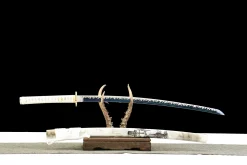
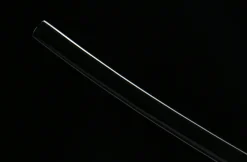
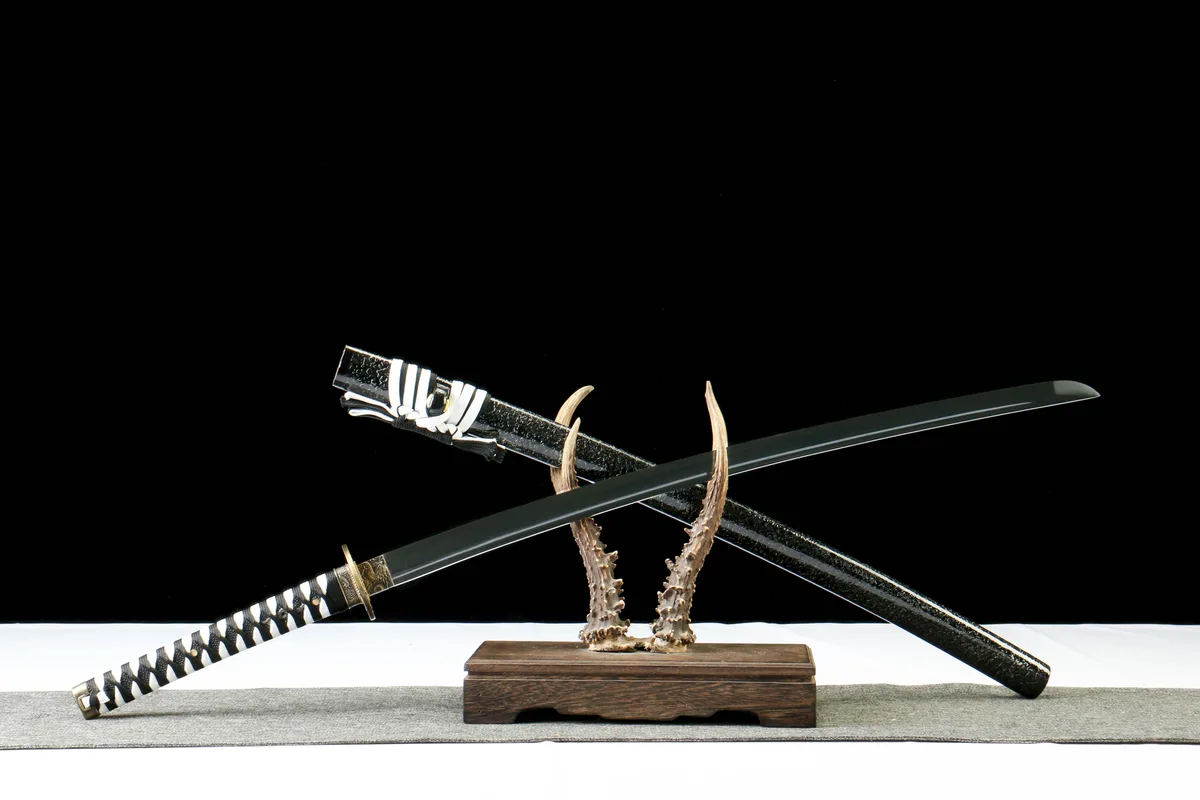
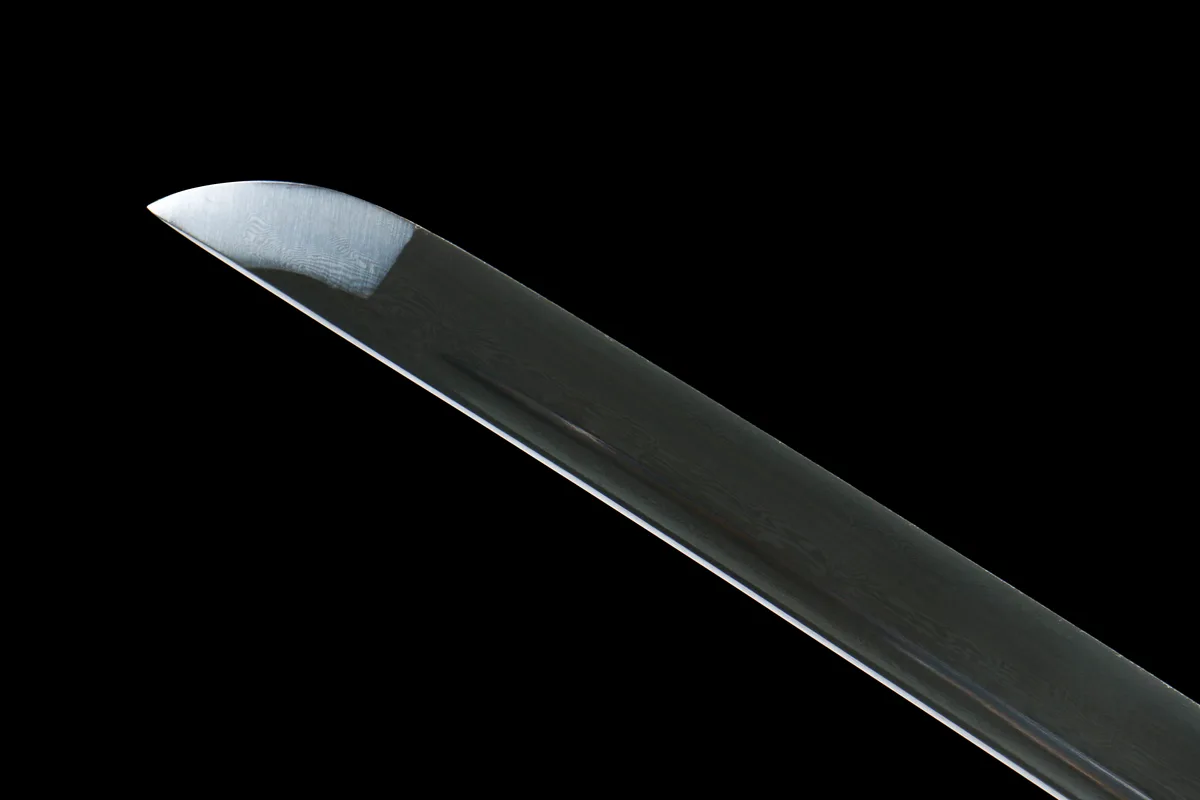
Shadow Bloom carries a specification that places it apart from standard Damascus production: the blade has been subjected to a 烤黑 – kaohei, or heat-blackening – process after grinding and before final acid etch. The result is a Damascus surface in which the base tone is a deep, matte charcoal rather than the silver-grey that most Damascus blades present. Against that darkened ground, the brighter high-carbon layers in the fold pattern emerge as bright filaments – pale lines threading through black, the contrast sharper and more graphic than an un-blackened Damascus blade would produce.
Specifications
| Blade Steel | Damascus / Pattern-Welded Steel (烤黑 – Heat-Blackened) |
| Total Length | 103.0 cm / 40.6 in |
| Blade Length | 72.0 cm / 28.3 in |
| Blade Width | 3.2 cm |
| Weight | 950 g / 33.5 oz |
| Heat Treatment | Oil Quench & Temper |
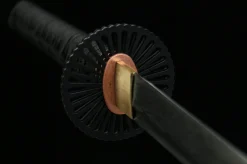
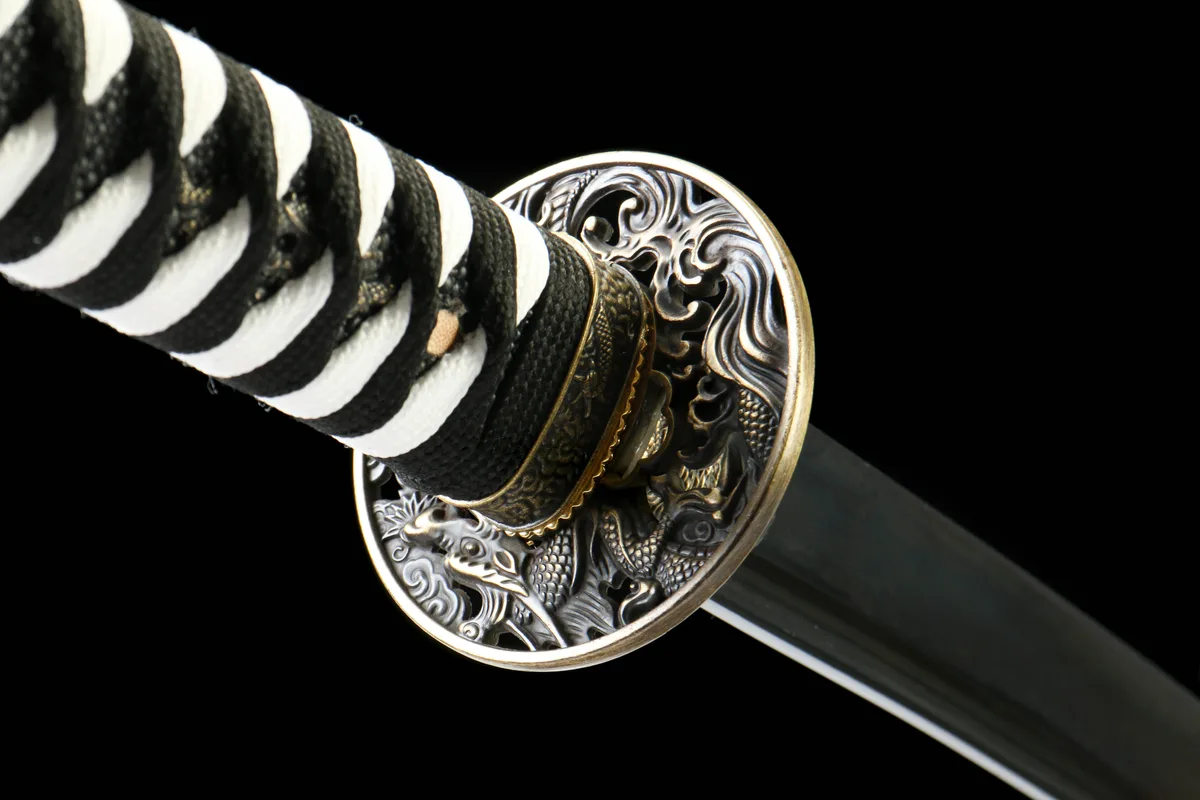
| Fittings | Copper (装) |
| Handle | Cotton Ito Wrap |
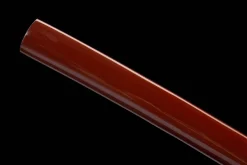
| Sheath | Green Bark Wood – Aohada (青肌) |
What the Steel Does
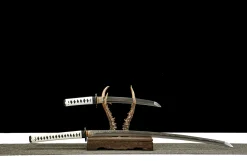
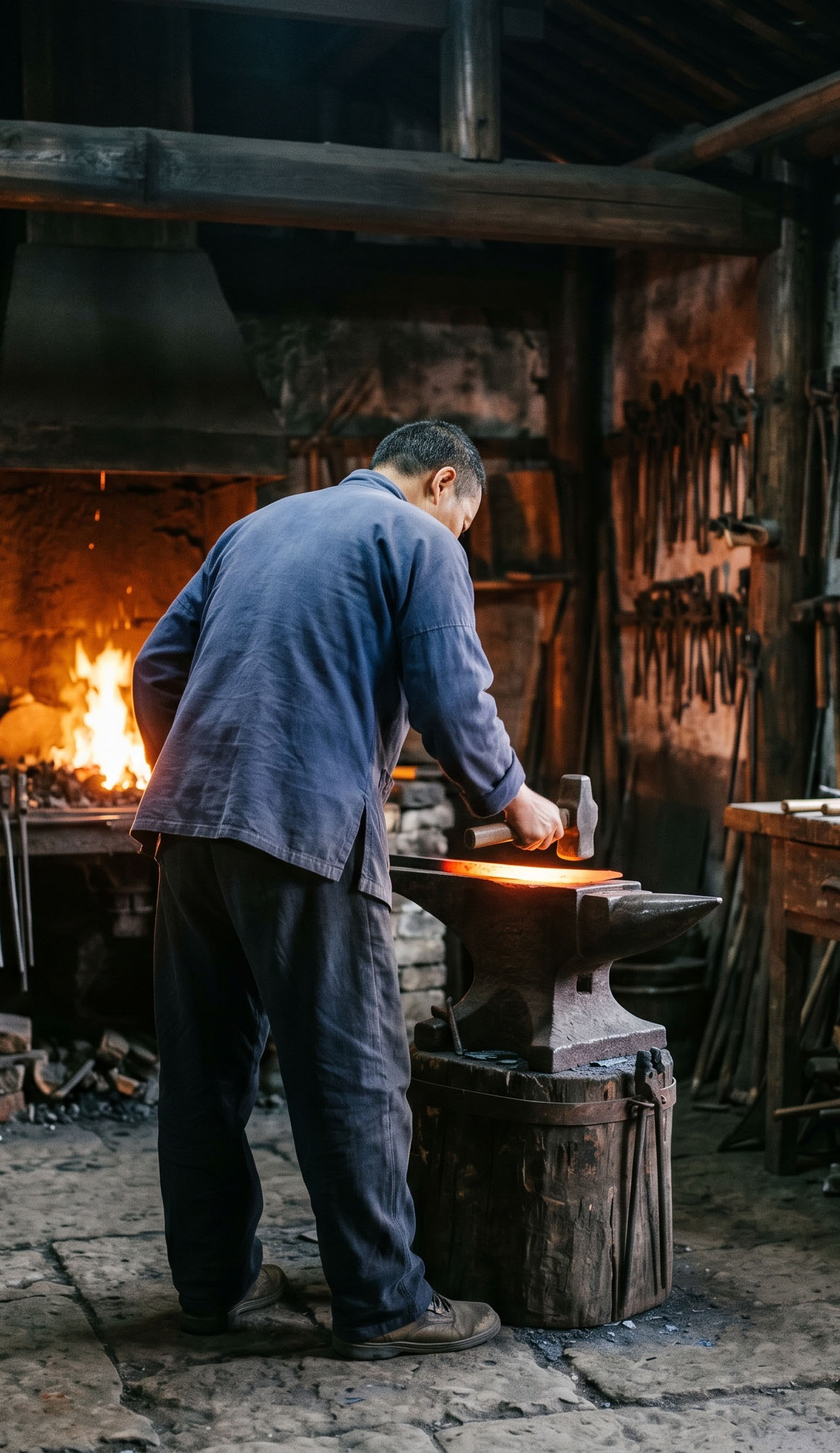
The pattern-welded construction underlying the 影華 – Shadow Bloom – uses the same forge-welding and folding method common to this tier of Damascus production from Longquan: alternating steel compositions drawn out, folded, and re-welded through multiple cycles until the layer count reaches a point where the grain structure becomes fine and continuous. What distinguishes this blade is the post-grind treatment. The 烤黑 heat-blackening process oxidizes the steel surface in a controlled manner – not a chemical black applied on top of the metal, but a conversion of the surface layer itself. The darker steel compositions in the Damascus absorb and hold this oxidation more completely than the bright layers, which resist it. The differential response is what creates the pattern’s high-contrast appearance: the fold lines do not just show as tone variations, they show as clear separation between dark and bright within the same surface plane.
Because the blackening is a surface oxidation rather than a coating, the pattern reads differently under different light than a standard etched Damascus would. In low light or against a dark background, the blade’s surface can appear almost entirely black with only faint bright grain lines visible. In direct light, the bright layers catch and the pattern opens up fully. This range is built into the material, not added to it.
The Feel of It
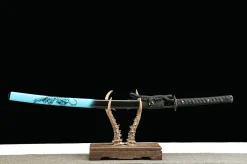
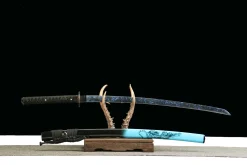
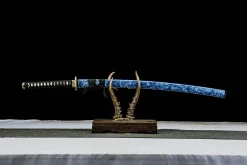
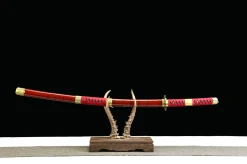
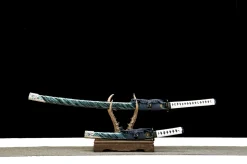
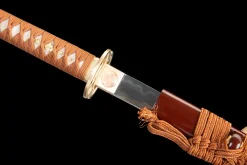
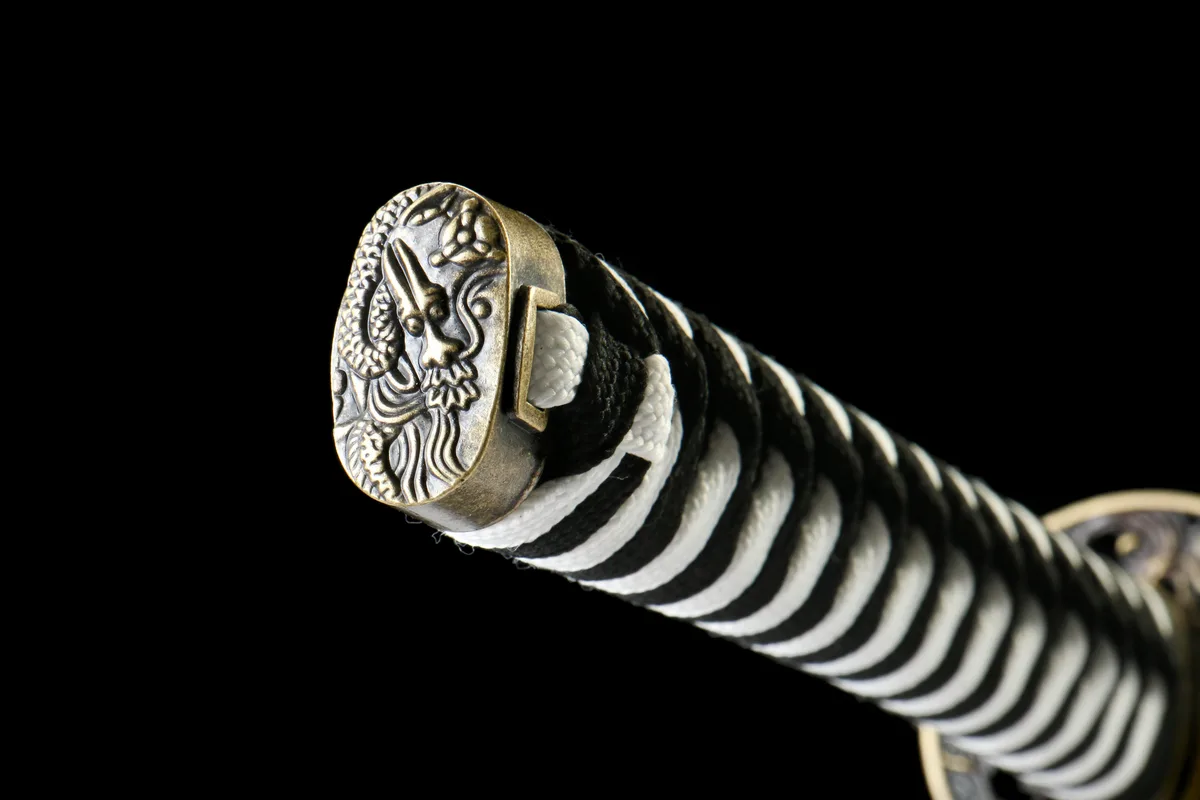
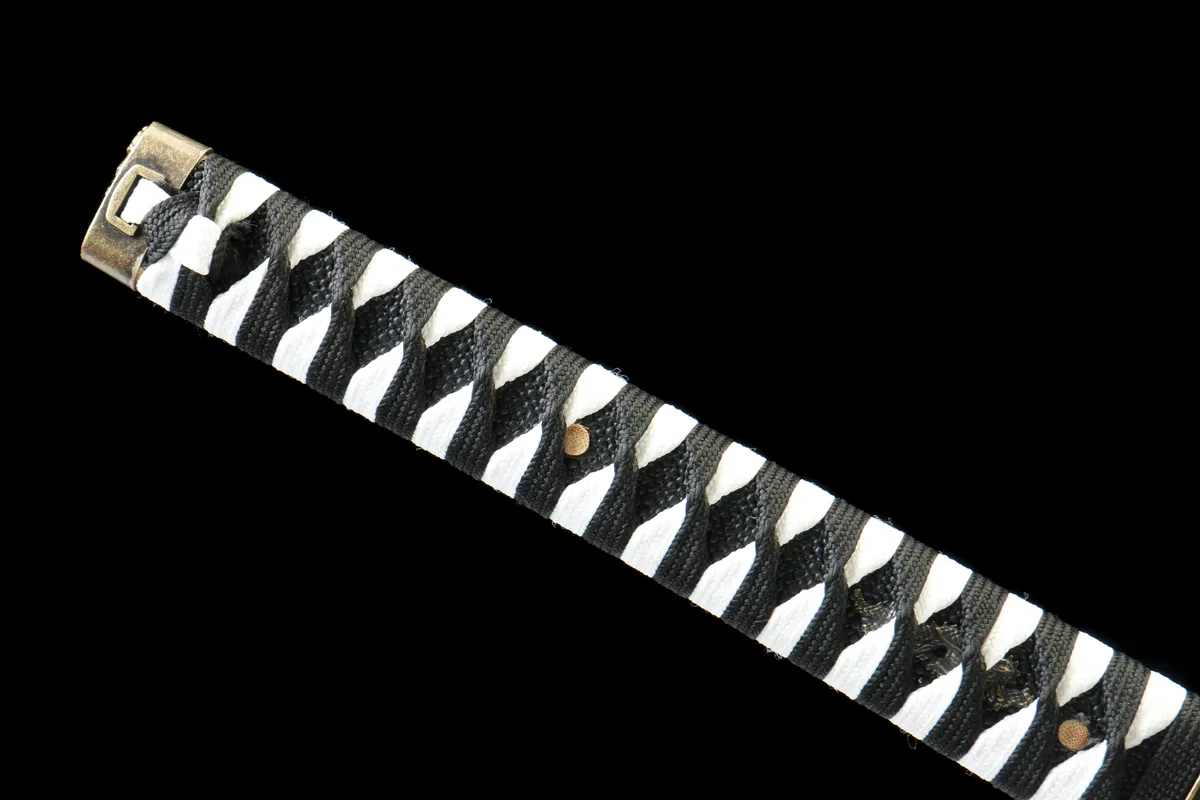
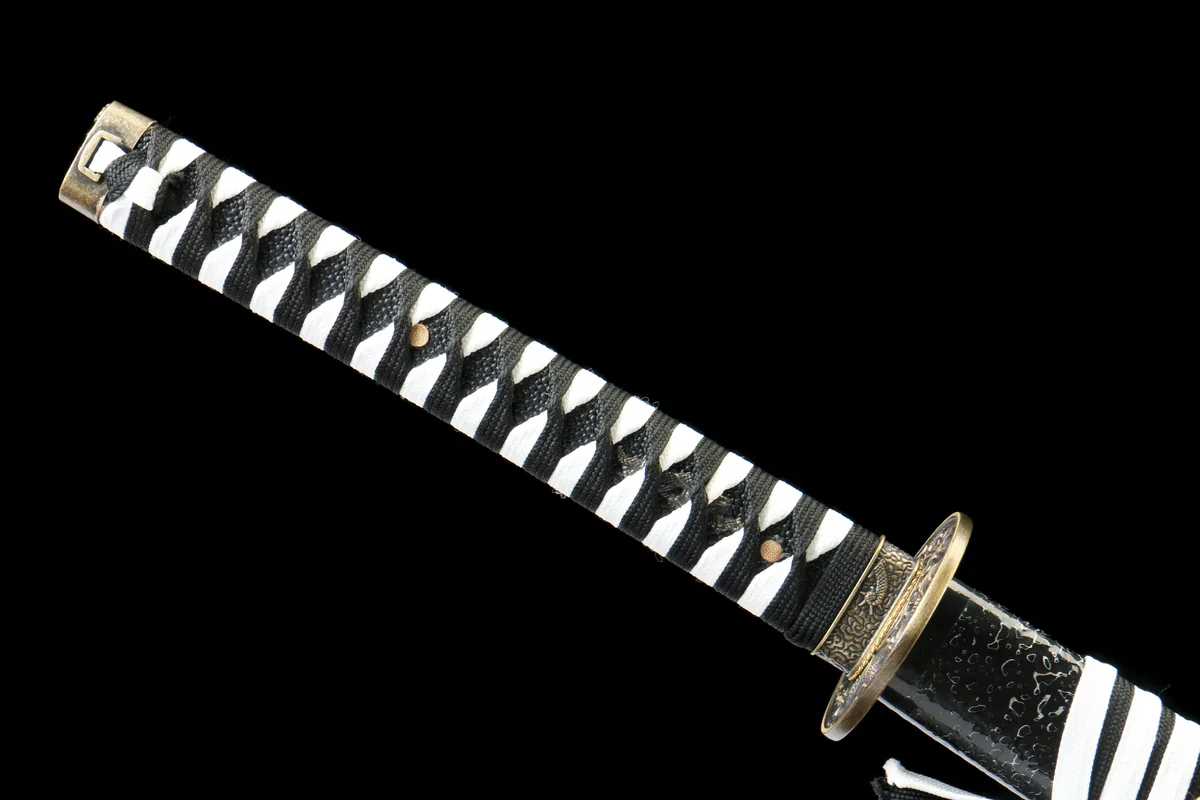
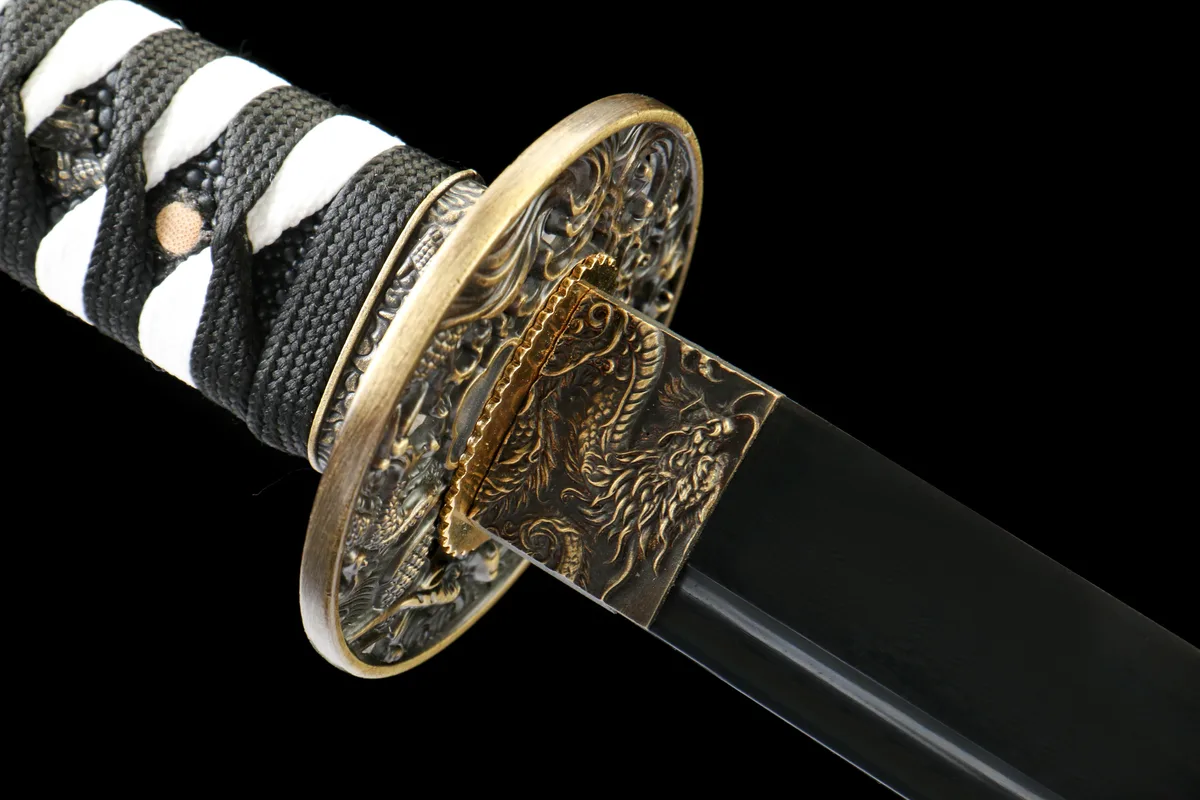
At a 72.0 cm blade length and a 27.0 cm handle, Shadow Bloom is a full-length katana geometry – the cotton ito wrap over the tsuka (handle) is wound with the traditional lozenge-window pattern, the same (rayskin) nodes registering as distinct tactile points through the wrap under the thumb and forefinger of the strong hand. The draw from the aohada saya – green bark wood sheath – presents a specific visual moment: the dark heat-blackened blade emerging from the pale matte surface of the natural bark wood, the contrast between them immediate and deliberate. The koiguchi (sheath mouth) is fitted to the habaki (blade collar) with precision, and the blade seats without rattle. Mounted horizontally against a neutral wall, the 影華 reads as a dark line that resolves into complex grain only on closer inspection – a quality that rewards sustained looking over the kind of blade that announces everything at first glance.
Maintenance Notes
The heat-blackened surface requires the same oil maintenance as any carbon steel Damascus – choji oil or light mineral oil applied after handling to prevent uneven oxidation developing over the blackened ground. Avoid abrasive polishing compounds entirely, as mechanical abrasion will cut through the converted surface layer and expose raw steel beneath, creating irreversible bright patches in the pattern. Store in the saya in a stable environment, and inspect the blade surface for any reddish surface rust forming in the grain lines – if caught early, this can be removed with a soft cloth and oil without affecting the blackened finish.
| Weight | 1.2 lbs |
|---|---|
| Dimensions | 103.0 × 3.2 × 0.7 in |
| Hamon | Damascus Pattern (No Hamon) |
| Blade Steel | Damascus Steel |
| Total Length | 103.0 cm |
| Blade Length | 72.0 cm |
| Heat Treatment | Oil Quench & Temper |
| Handle Wrap | Cotton Ito Wrap |
| Sheath Material | Green Bark Wood (Aohada) |
| Fittings | Copper, (装) |
| Forging Style | Folded Steel (Pattern Welded) |
Related products