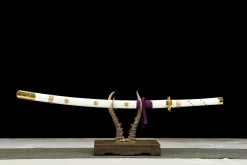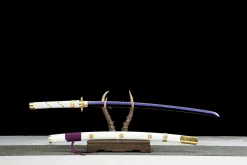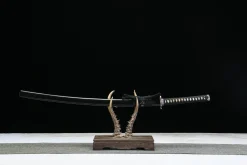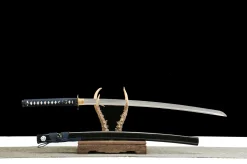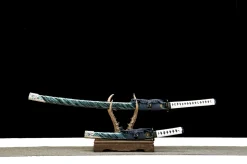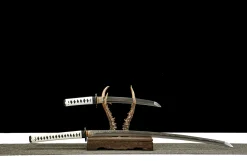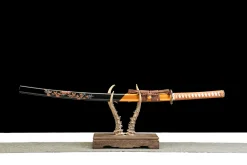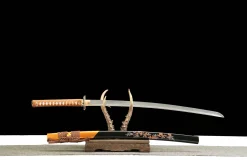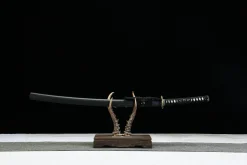

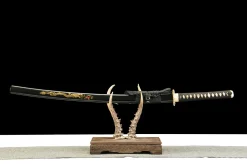

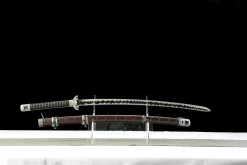


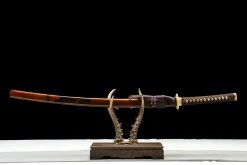








Shadow Warrior – Hand Forged Damascus Steel Katana Sword
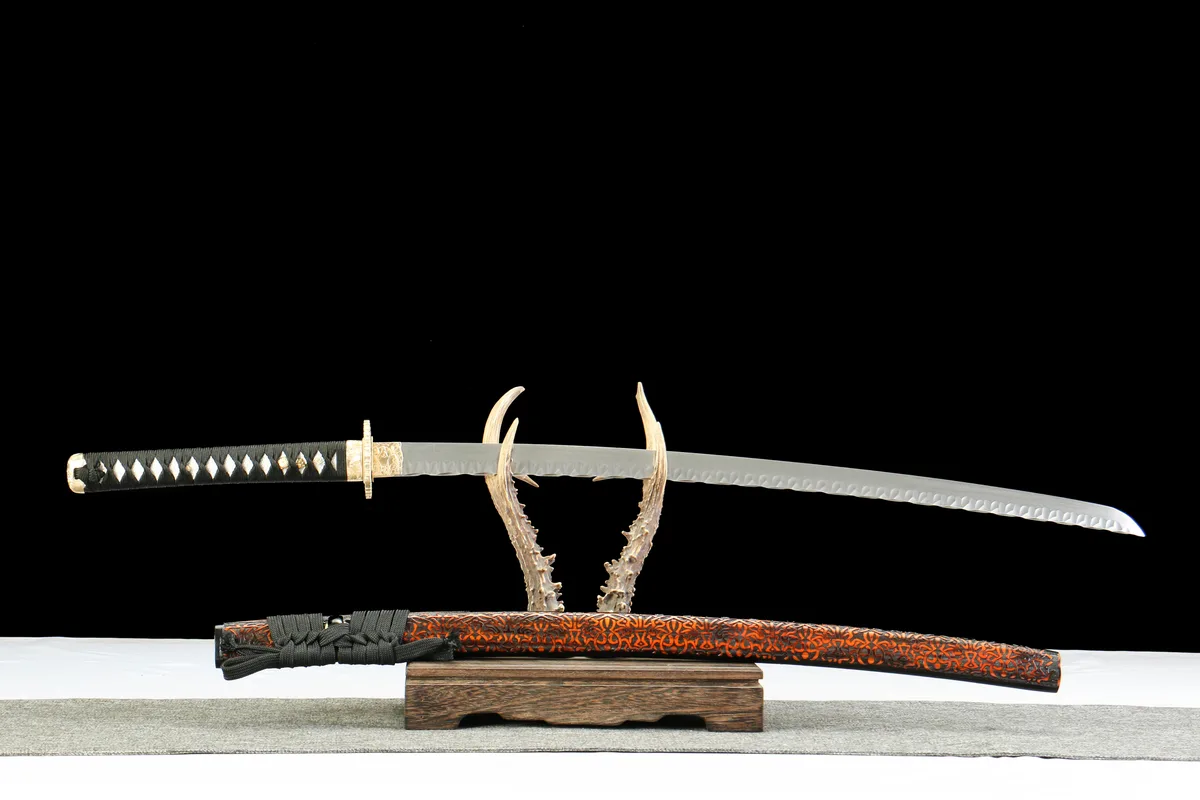
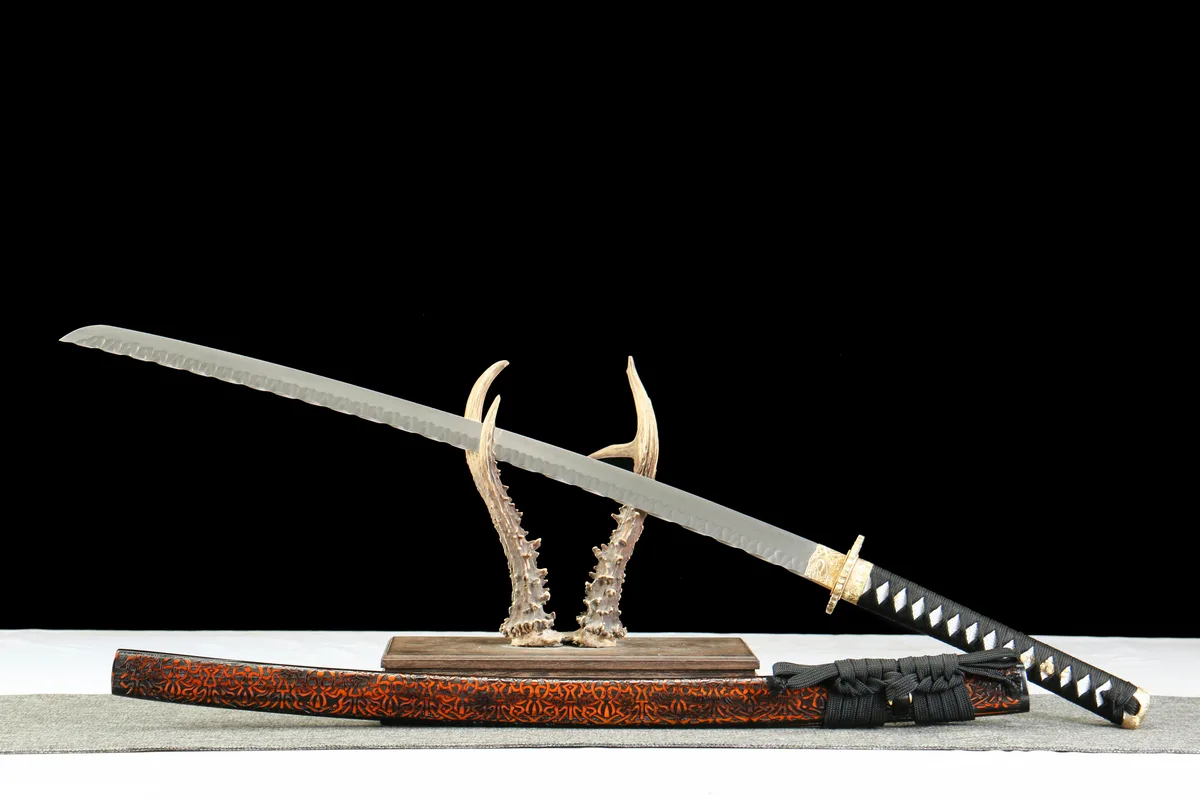
Hand-forged Damascus Steel katana (103cm total / 72cm blade), crafted in Longquan. Hand-folded Damascus pattern steel — each blade carries a unique layered grain from forge to tip.
$974.99
Shadow Warrior – Hand Forged Damascus Steel Katana Sword
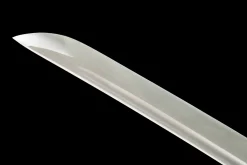
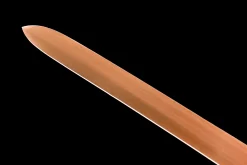
手工石纹 – hand-forged stone grain – is one of the older pattern-welded traditions in Chinese bladesmithing, and what it produces on the Shadow Warrior, 影武, is not the tight, repeating ladder pattern common to mass-produced Damascus. It is irregular, organic, and specific to this blade. No two 手工石纹 surfaces are alike, which means the sword you receive is categorically different from any photograph you will see of it.
Specifications
| Blade Steel | Damascus / Pattern-Welded Steel (手工石纹) |
| Total Length | 103.0 cm / 40.6 in |
| Blade Length | 72.0 cm / 28.3 in |
| Blade Width | 3.2 cm |
| Weight | 950 g / 33.5 oz |
| Heat Treatment | Oil Quench & Temper |
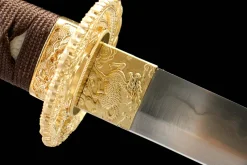
| Fittings | Copper |
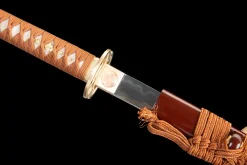
| Handle | Cotton Ito Wrap |
| Sheath | Green Bark Wood (Aohada) |
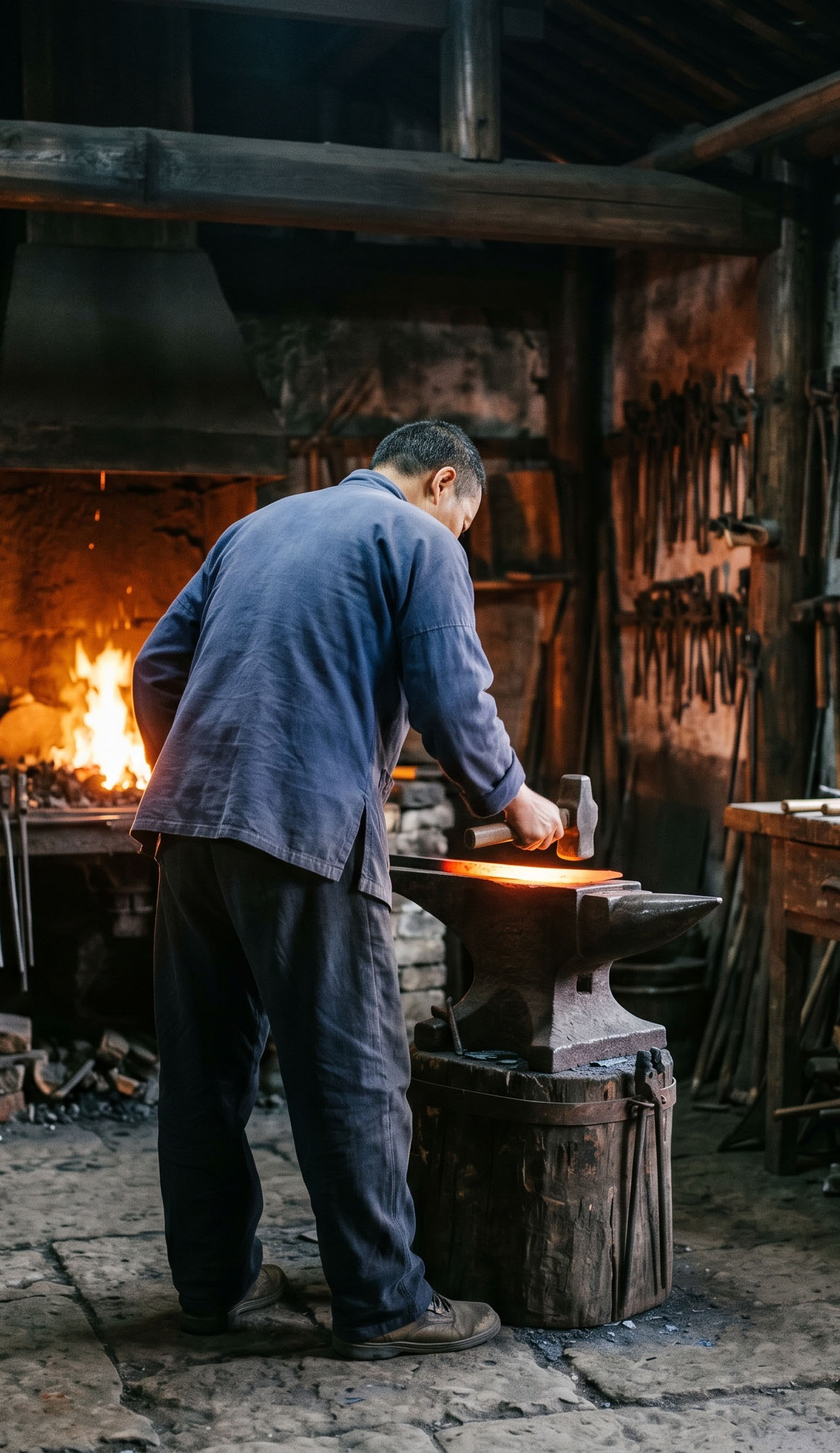
Forged in Longquan
Pattern-welded Damascus at this level begins with the selection and layering of high and low carbon steel billets, which are forge-welded under controlled heat, drawn out, folded, and welded again – repeatedly, until the smith is satisfied with the grain density and distribution. The stone grain (石纹) technique allows the pattern to remain fluid rather than constrained into geometric regularity. As the steel is worked, the layers migrate and compress in ways that reflect the smith’s hand pressure, hammer angle, and timing. The result reads on the finished blade as a surface that shifts from fine-grained shadow to broad, lighter flow depending on where the light meets it.
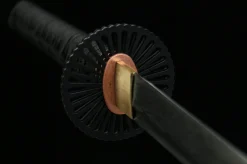
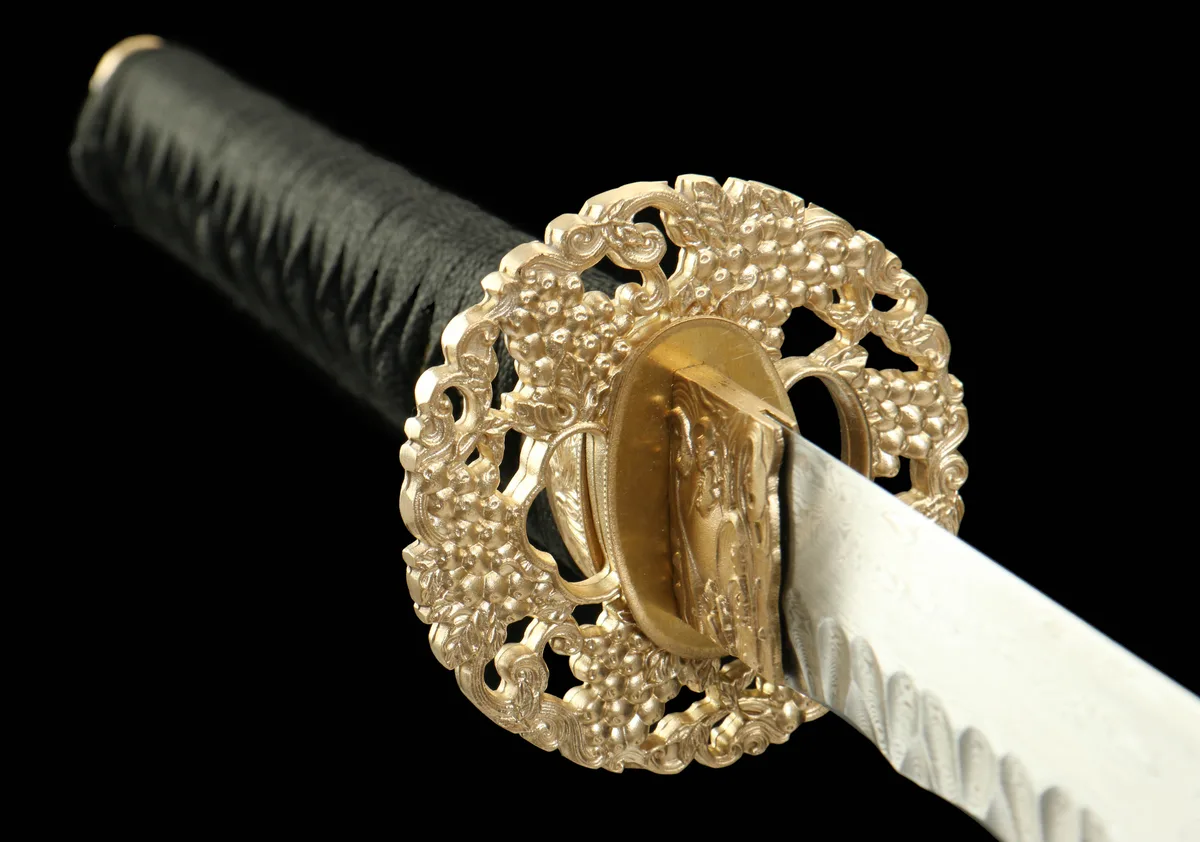
Oil quench and temper stabilizes the finished billet, bringing the multi-layer steel to working hardness without the catastrophic risk that the differential carbon content can introduce under more aggressive quench methods. The copper fittings – tsuba (hand guard), fuchi (handle collar), and kashira (pommel cap) – are chosen deliberately here. Copper’s warm tone pulls against the cool grey of the Damascus surface in a way that zinc alloy simply cannot replicate, and it develops a patina over time that deepens rather than degrades.
Weight, Balance, Draw
The handle runs 27.0 cm – long enough for a committed two-hand grip that does not crowd the upper hand toward the tsuba. The cotton ito wrap has enough texture to keep the hand anchored through a full draw without relying on grip strength. The aohada (green bark wood) saya draws cleanly against the copper fittings; the koiguchi (sheath mouth) fit on a blade of this construction is tight by necessity, because the Damascus surface is hand-finished and the tolerances are held close. At 103.0 cm total, the blade sits in a proportion that keeps the draw arc controlled.
Keeping It Sharp
Pattern-welded steel requires the same core maintenance as any carbon steel blade – clean immediately after use, oil with choji or mineral oil before sheathing, and store with the blade removed from the saya in humid conditions. The surface grain is a product of the steel itself and does not require special treatment, though it will show fingerprints readily and benefits from a light pass with a clean cloth before storage. Avoid abrasive polishing compounds on the flat; if re-finishing is needed, consult a smith familiar with Damascus surfaces.
| Weight | 1.2 lbs |
|---|---|
| Dimensions | 103.0 × 3.2 × 0.7 in |
| Hamon | Damascus Pattern (No Hamon) |
| Blade Steel | Damascus Steel |
| Total Length | 103.0 cm |
| Blade Length | 72.0 cm |
| Heat Treatment | Oil Quench & Temper |
| Handle Wrap | Cotton Ito Wrap |
| Sheath Material | Green Bark Wood (Aohada) |
| Fittings | Copper, (装) |
| Forging Style | Folded Steel (Pattern Welded) |
Related products