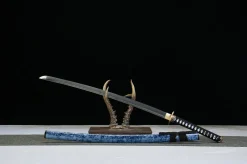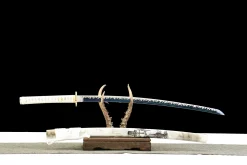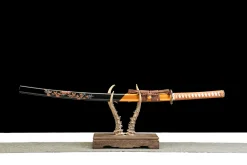











Shattered Peak – Hand Forged 1045 Carbon Steel Katana Sword
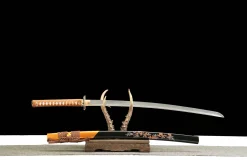
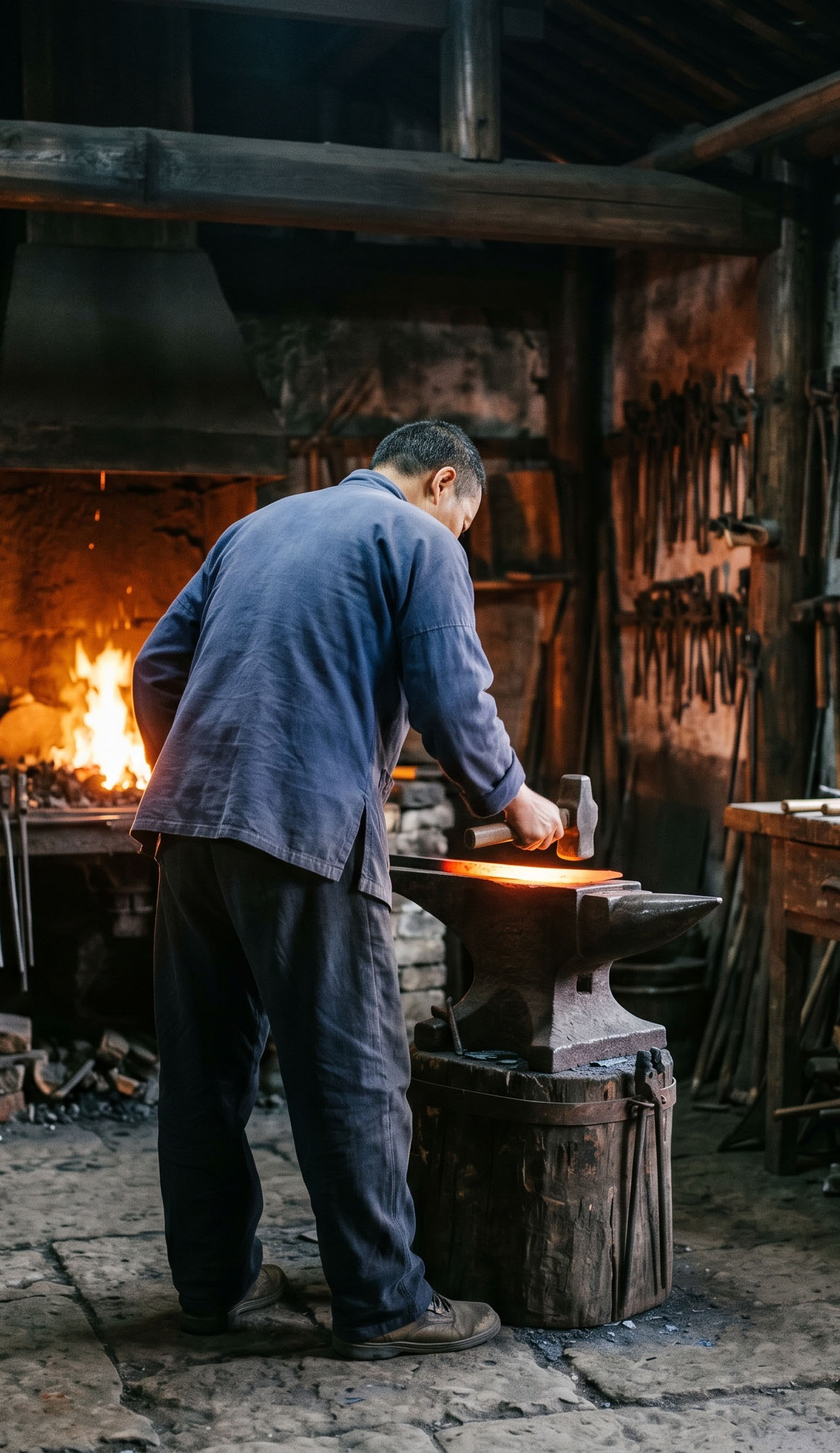
Hand-forged 1045 Carbon Steel katana (102cm total / 72cm blade), crafted in Longquan. Full-tang 1045 carbon steel, hand-fitted koshirae, ready for practice cutting or display.
$179.99
Shattered Peak – Hand Forged 1045 Carbon Steel Katana Sword
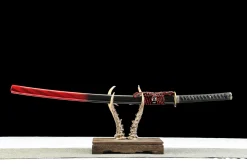
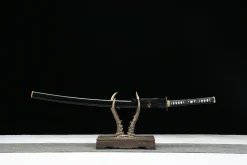
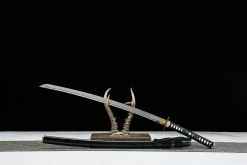
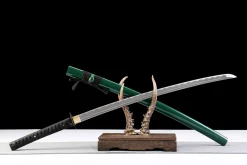
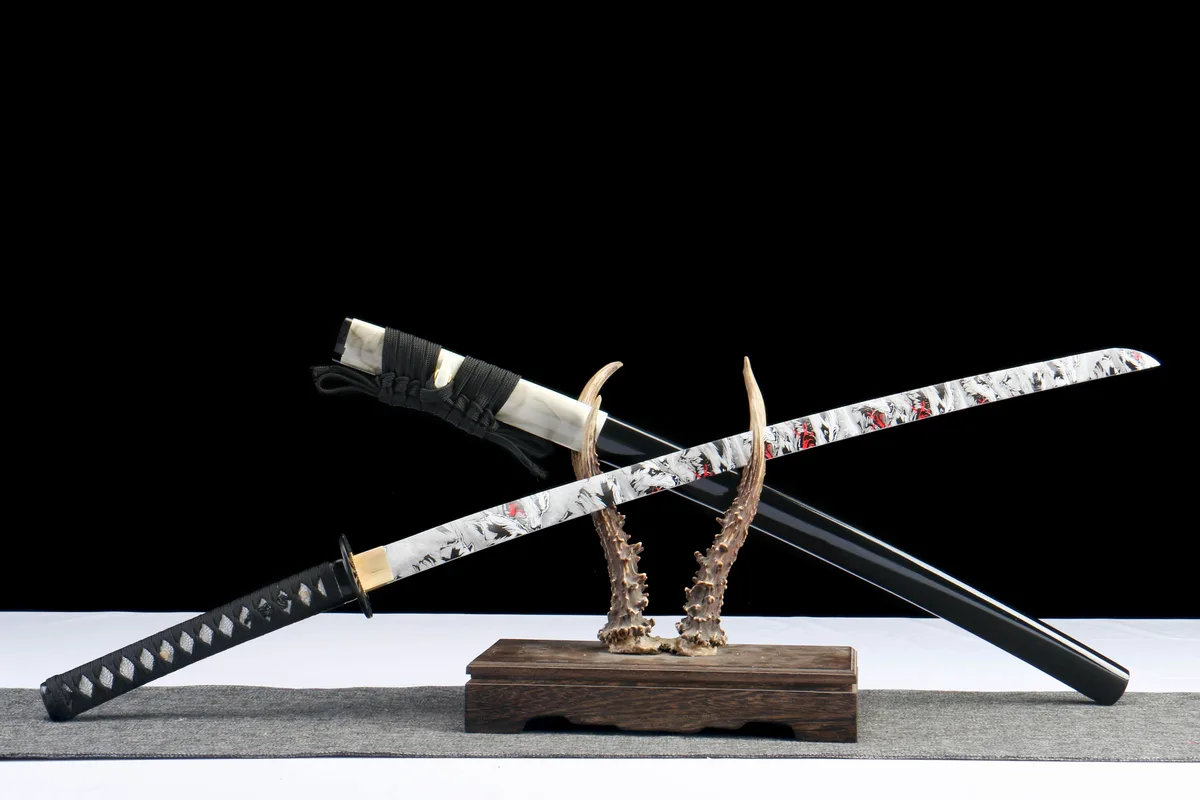
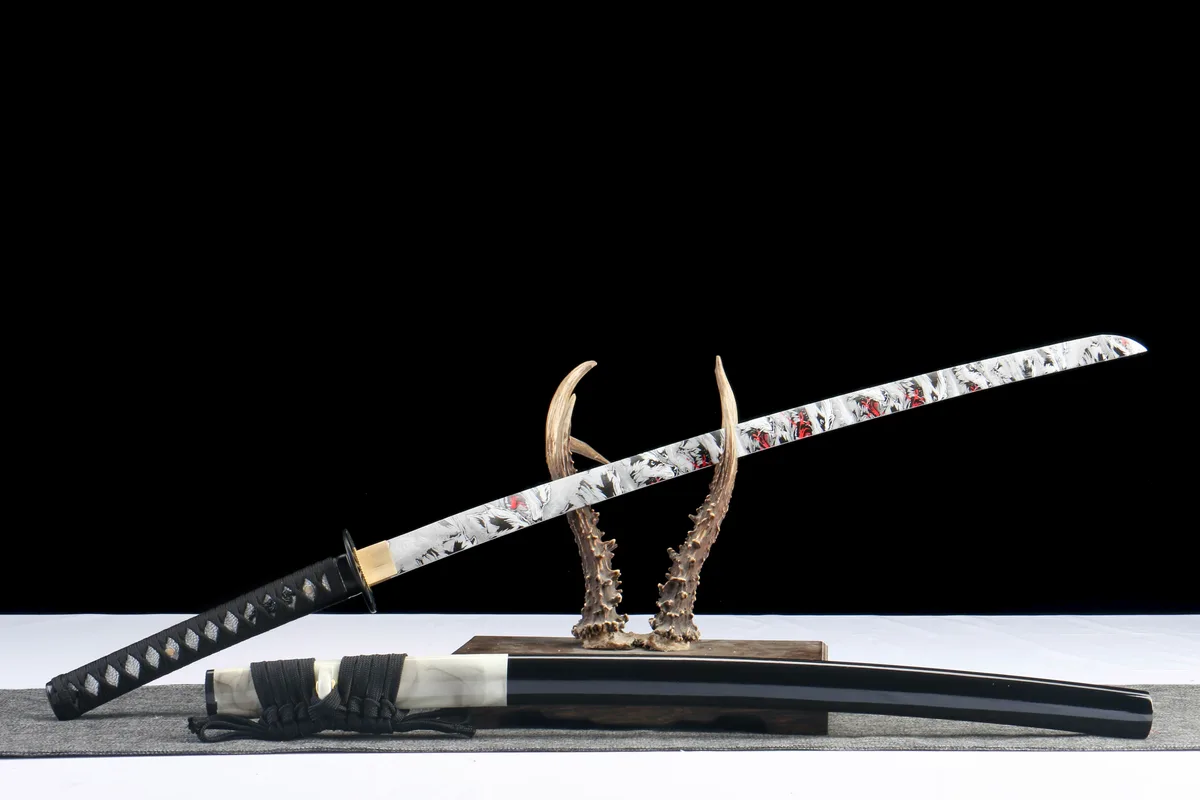
Most katana fittings run toward brass tones or polished alloy. The iron fittings on 碎岳 – Shattered Peak – do something different: they pull the whole piece toward the color of storm clouds and old stone, and the visual effect is cohesive in a way that softer metal fittings cannot replicate. This is a wall piece with a distinct, deliberate mood.
Specifications
| Blade Steel | 1045 Carbon Steel, Special Process |
| Total Length | 102.0 cm / 40.2 in |
| Blade Length | 72.0 cm / 28.3 in |
| Blade Width | 3.2 cm |
| Weight | 1040 g / 36.7 oz |
| Heat Treatment | Temper |
| Fittings | Iron |
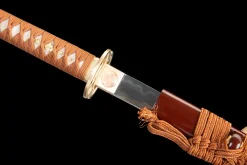
| Handle | Cotton ito wrap |
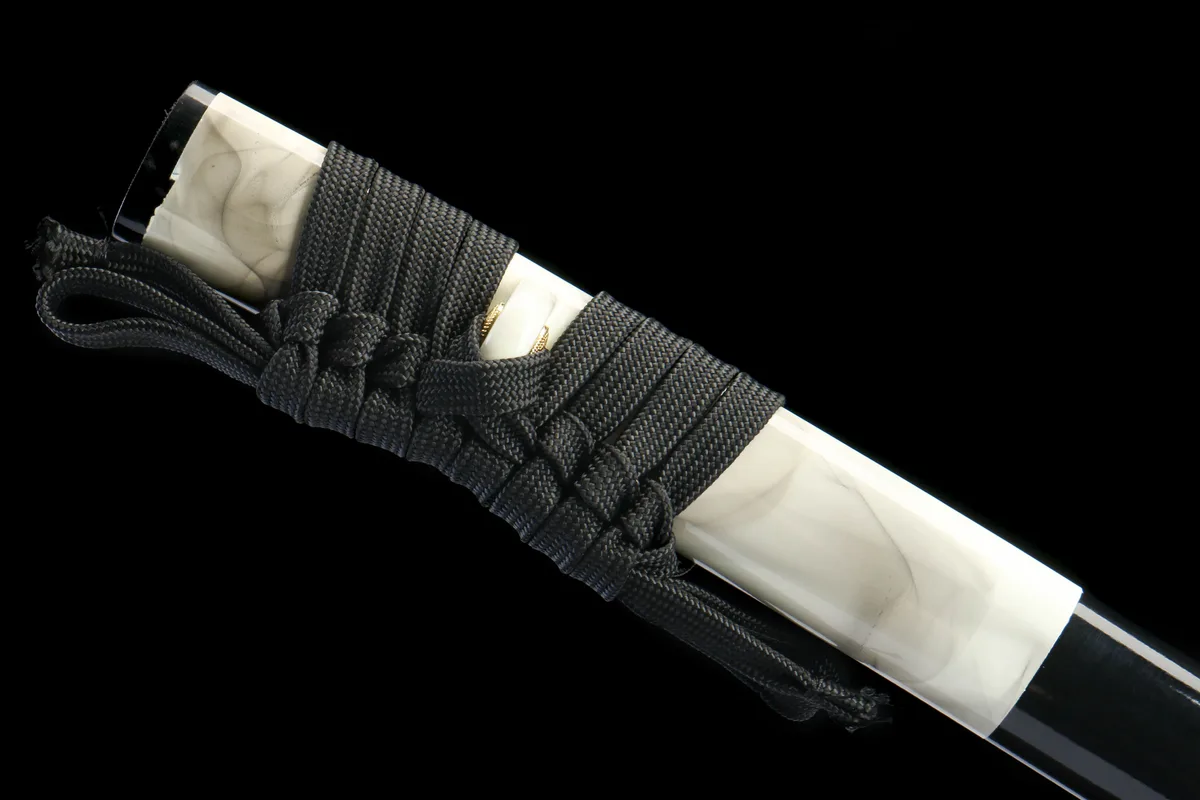
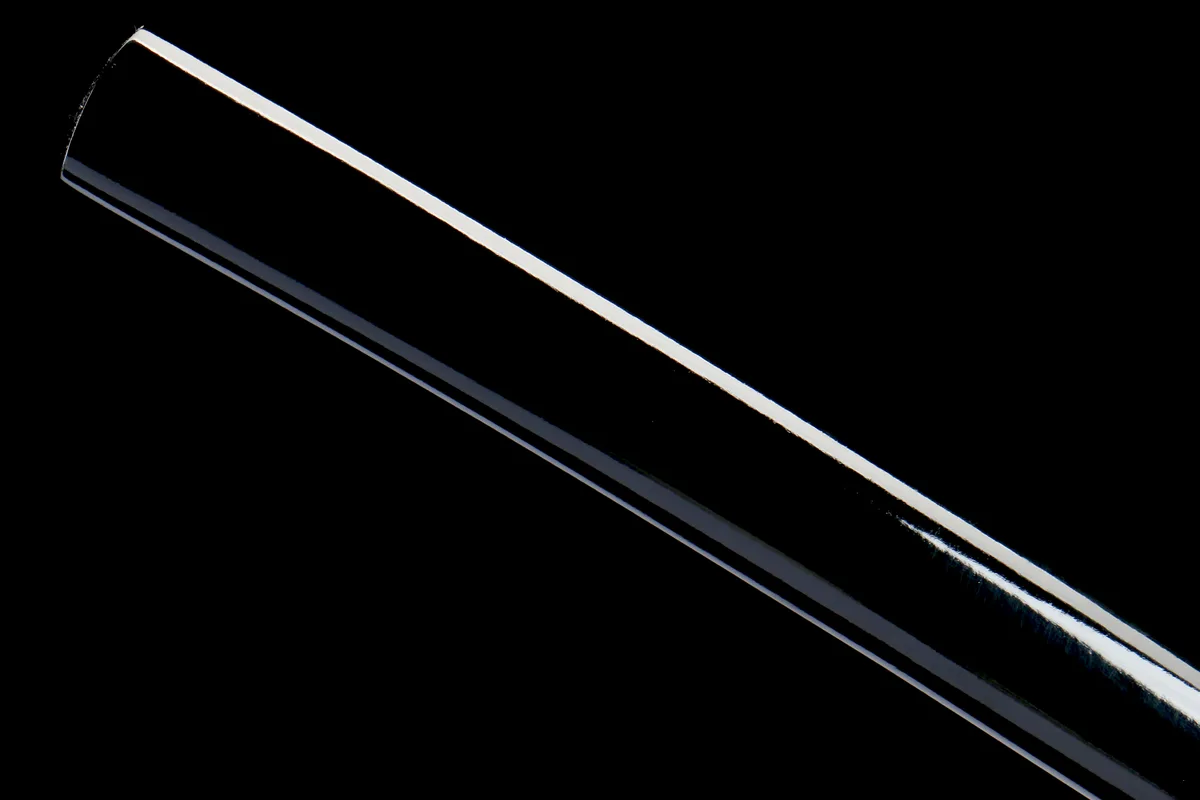
| Sheath | Solid wood, piano lacquer finish (实木钢琴烤漆鞘) |
What the Steel Does
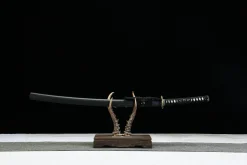
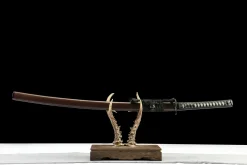
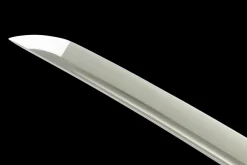
The blade is ground to shinogi-zukuri (鎬造) geometry – the ridgeline profile that defines classical katana form – and finished through a special surface process that suppresses the brightness typical of bare polished steel. The result is a blade that reads matte and cool, closer in tone to the iron tsuba (hand guard) and iron fittings than to a conventionally polished blade. That tonal unity is not accidental. The name 碎岳, Shattered Peak, evokes fractured granite, exposed rock faces, the grey-blue of high elevation – and the surface treatments here build that palette deliberately. The solid wood saya in piano lacquer provides the one high-gloss note in the piece, the deep black lacquer grounding the iron and matte-steel tones above it.
The Feel of It
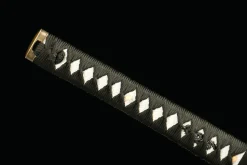
The cotton ito wrap runs in the standard diamond pattern along the 27 cm handle, the crossings firm and close. Iron fittings sit heavier in appearance than alloy, and that visual weight carries through to how the piece reads on a wall mount – the tsuba in particular anchors the transition between blade and handle with a presence that lighter metals do not provide. The piano lacquer saya is smooth along the full length, the gloss surface showing the reflected curve of the blade’s spine even when the sword is sheathed. On a horizontal display stand, the iron, matte blade surface, and black lacquer read as a single unified composition – cool, spare, and visually specific in a way that decorative swords in brighter finishes are not.
Maintenance Notes
Wipe the blade with a clean, dry cloth after handling to remove fingerprints, then apply a thin coat of camellia oil to protect the special-process surface finish. Iron fittings benefit from an occasional light oiling as well, particularly in humid environments, to prevent surface rust. The piano lacquer saya should be dusted gently with a soft cloth – avoid any solvent-based cleaners that could affect the lacquer depth.
| Weight | 1.32 lbs |
|---|---|
| Dimensions | 102.0 × 3.2 × 0.7 in |
| Hamon | Decorative / Acid-Etched |
| Blade Steel | 1045 Carbon Steel |
| Total Length | 102.0 cm |
| Blade Length | 72.0 cm |
| Heat Treatment | Temper |
| Handle Wrap | Cotton Ito Wrap |
| Sheath Material | 实木钢琴烤漆鞘 |
| Fittings | Iron |
| Forging Style | 鎬造 |
Related products