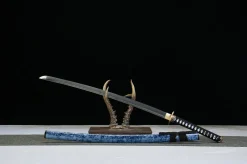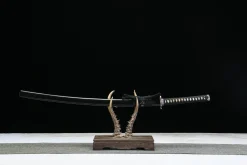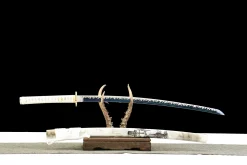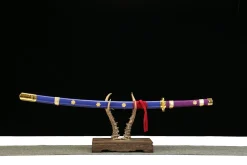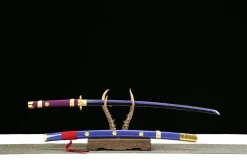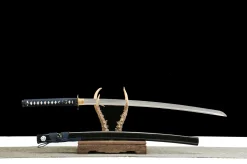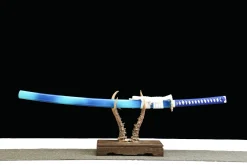

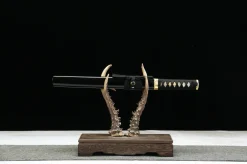


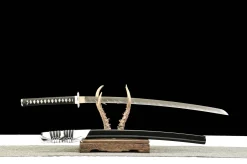

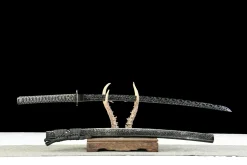





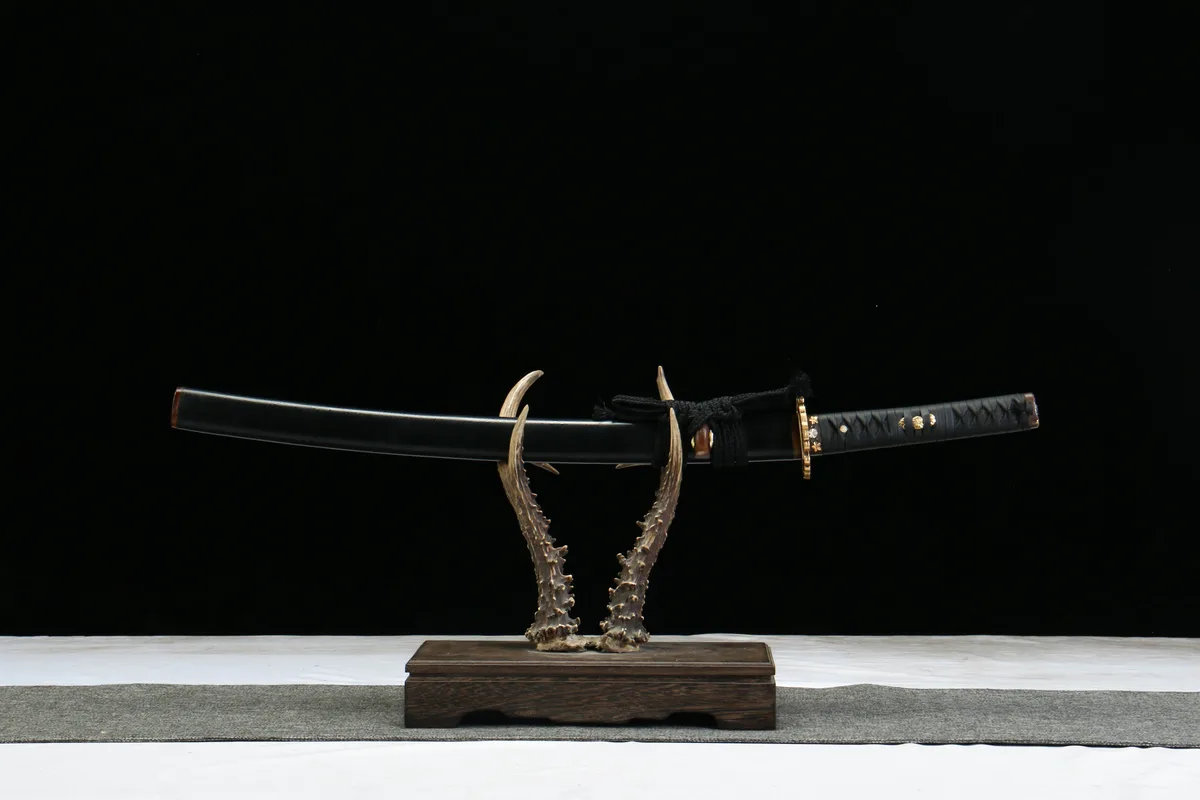


Silent Orchid – Hand Forged Artisan Hand-Forged Steel Wakizashi Sword
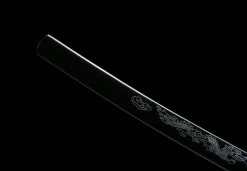
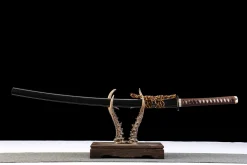
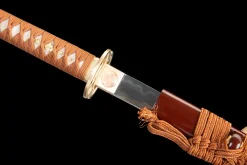
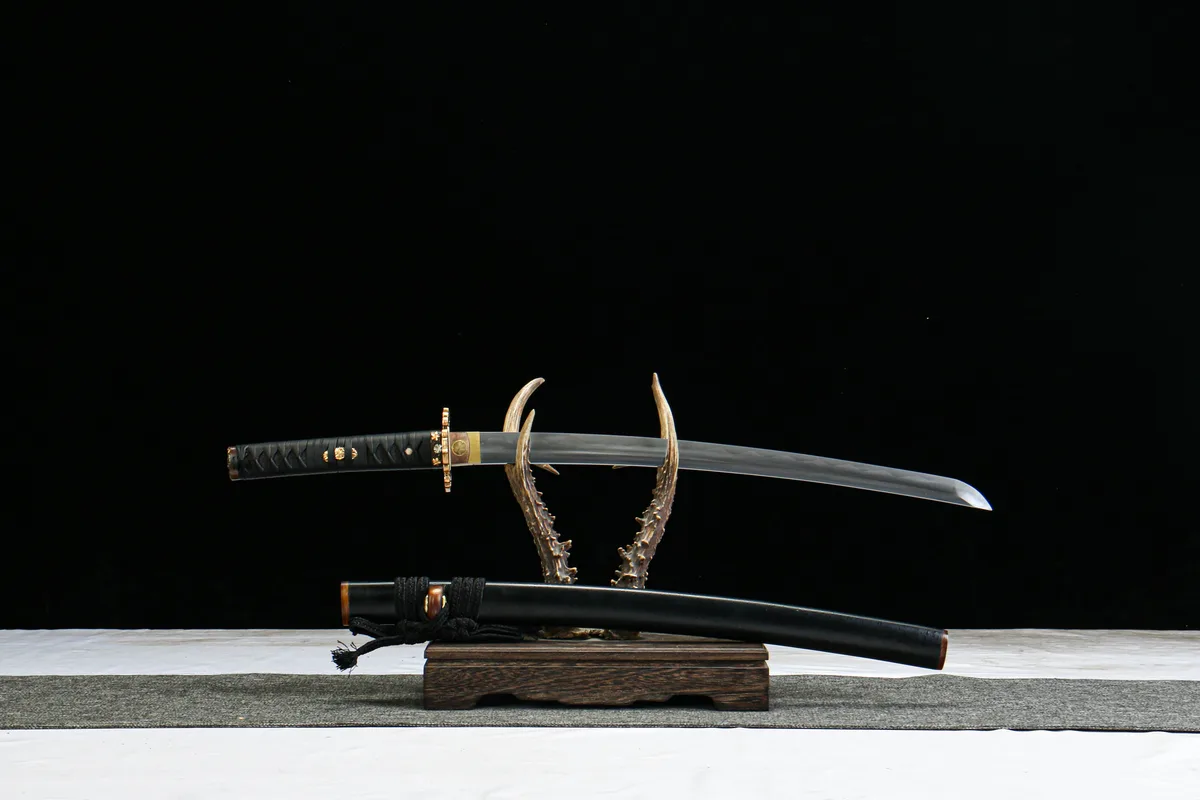
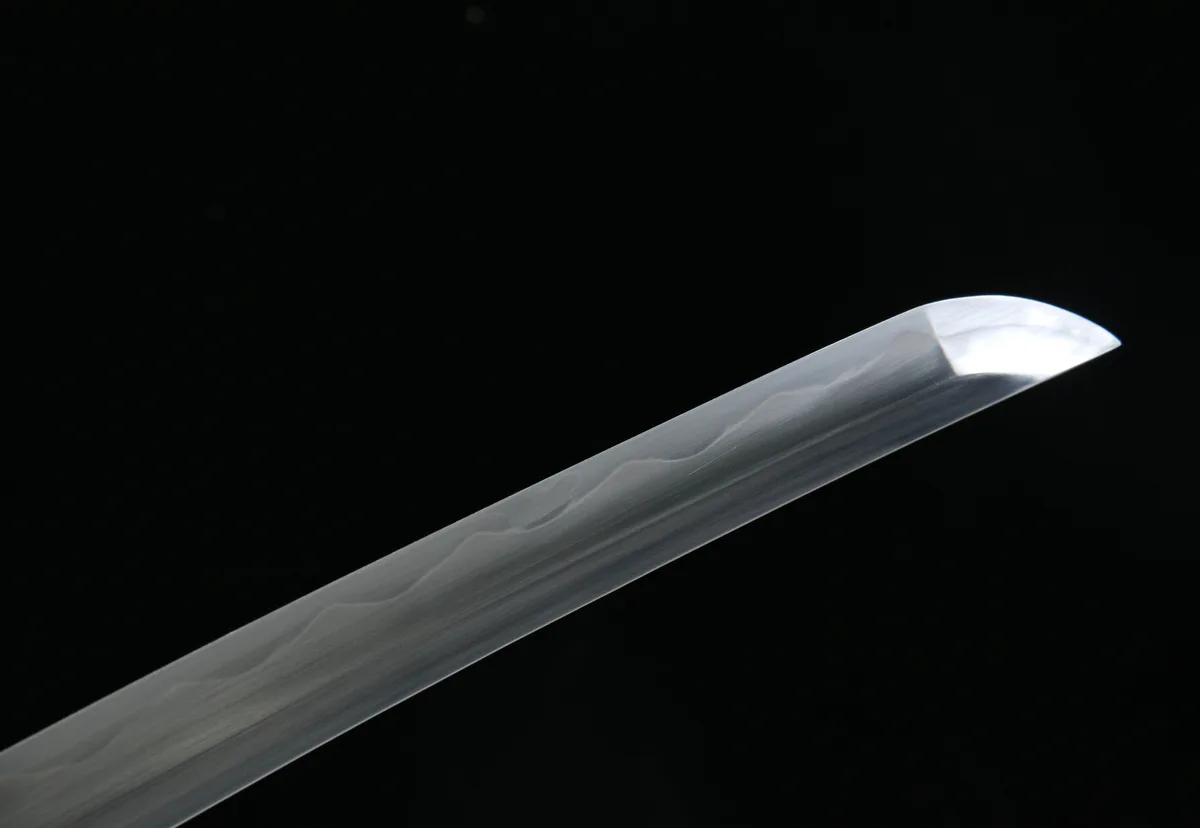
Hand-forged Artisan Hand-Forged Steel wakizashi (80cm total / 56cm blade), crafted in Longquan. Clay-tempered blade with a genuine hamon line — visible contrast between hardened edge and soft spine.
$2,974.99
Silent Orchid – Hand Forged Artisan Hand-Forged Steel Wakizashi Sword
There is a category of blade that exists outside the standard production ladder – where the steel itself was made in-house, where the smith controls the carbon content from the melt forward, and where the hamon (the visible temper line produced by clay tempering) is not a predictable commodity pattern but a live record of how that specific piece of steel moved through heat and quench. The Silent Orchid (幽兰) is that kind of blade. Forged from 自炼钢 – self-smelted steel, prepared and refined at the forge – it carries a character that mill-rolled steel cannot replicate.
Specifications
| Blade Steel | 自炼钢 (Self-Smelted Steel), Clay Tempered (Differential Hardening) |
| Total Length | 80.0 cm / 31.5 in |
| Blade Length | 56.0 cm / 22.0 in |
| Blade Width | 3.2 cm |
| Weight | 500 g / 17.6 oz |
| Heat Treatment | Oil Quench & Temper |
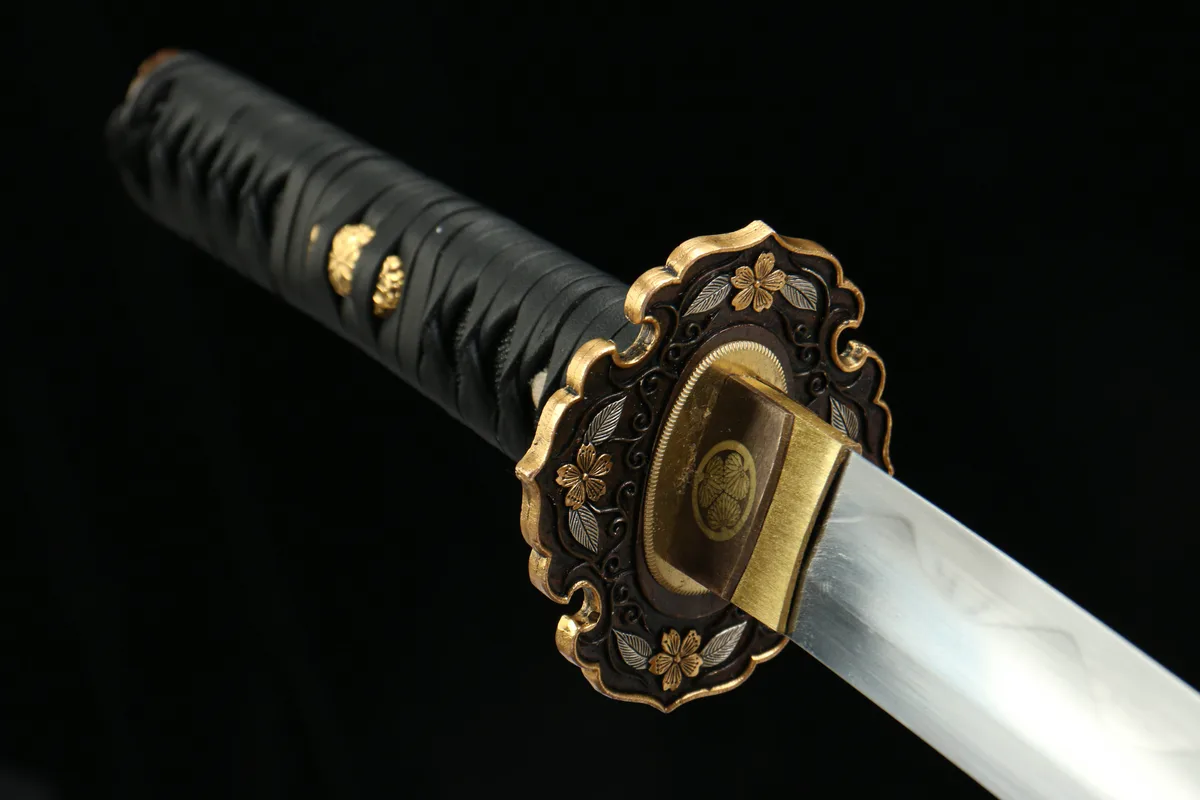
| Fittings | Gold & Silver Gilded Fittings, Copper |
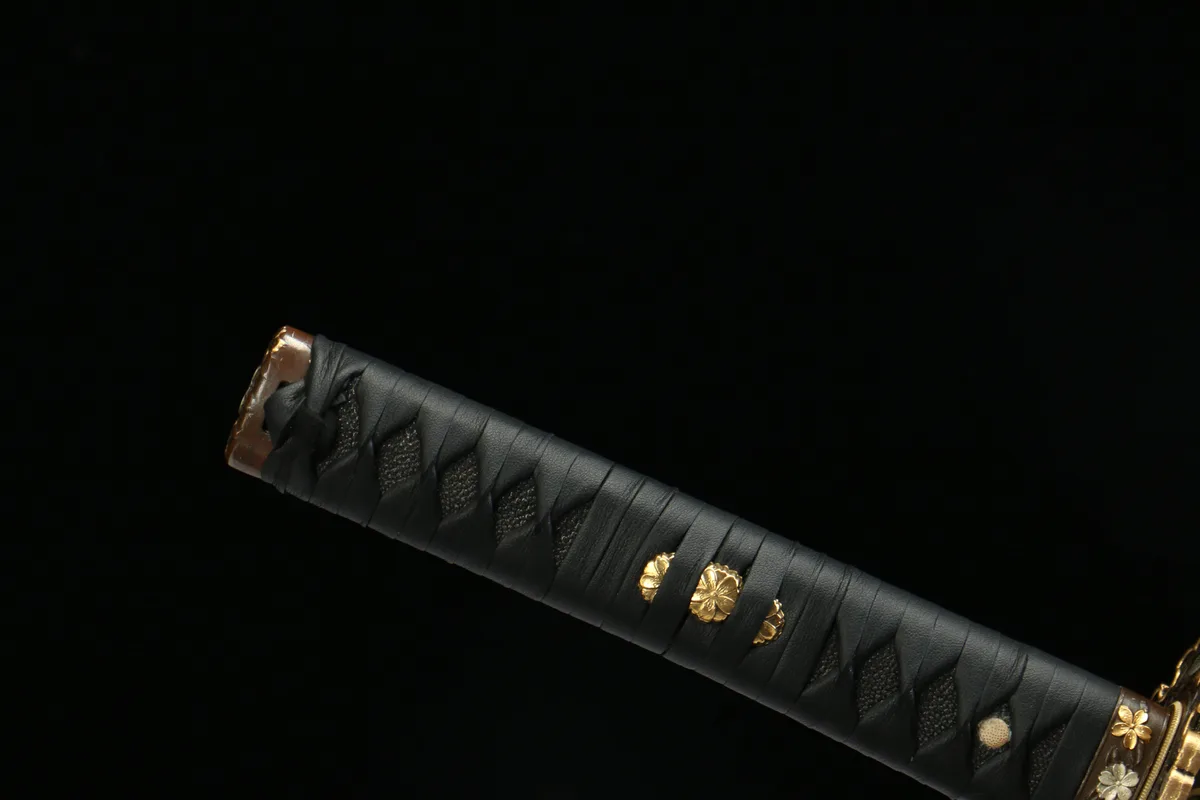
| Handle | Cotton Ito Wrap |
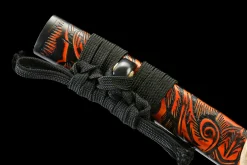
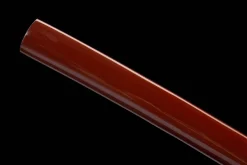
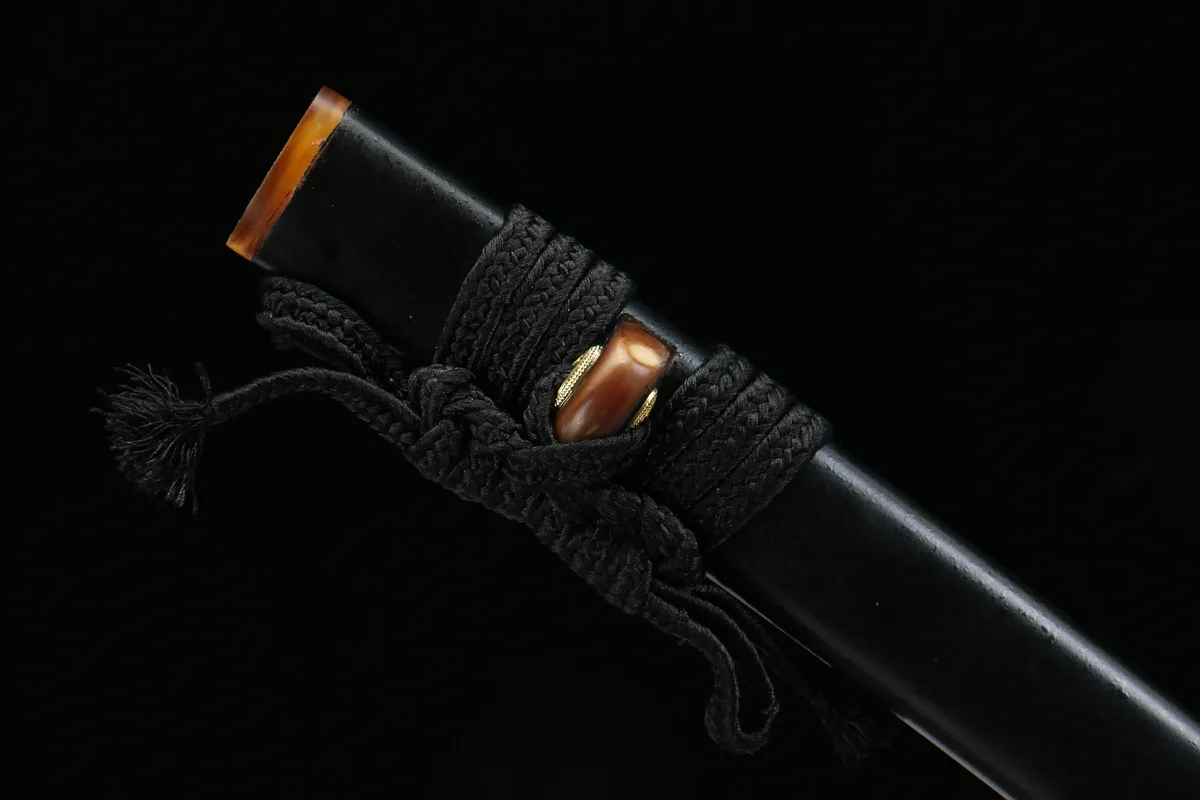
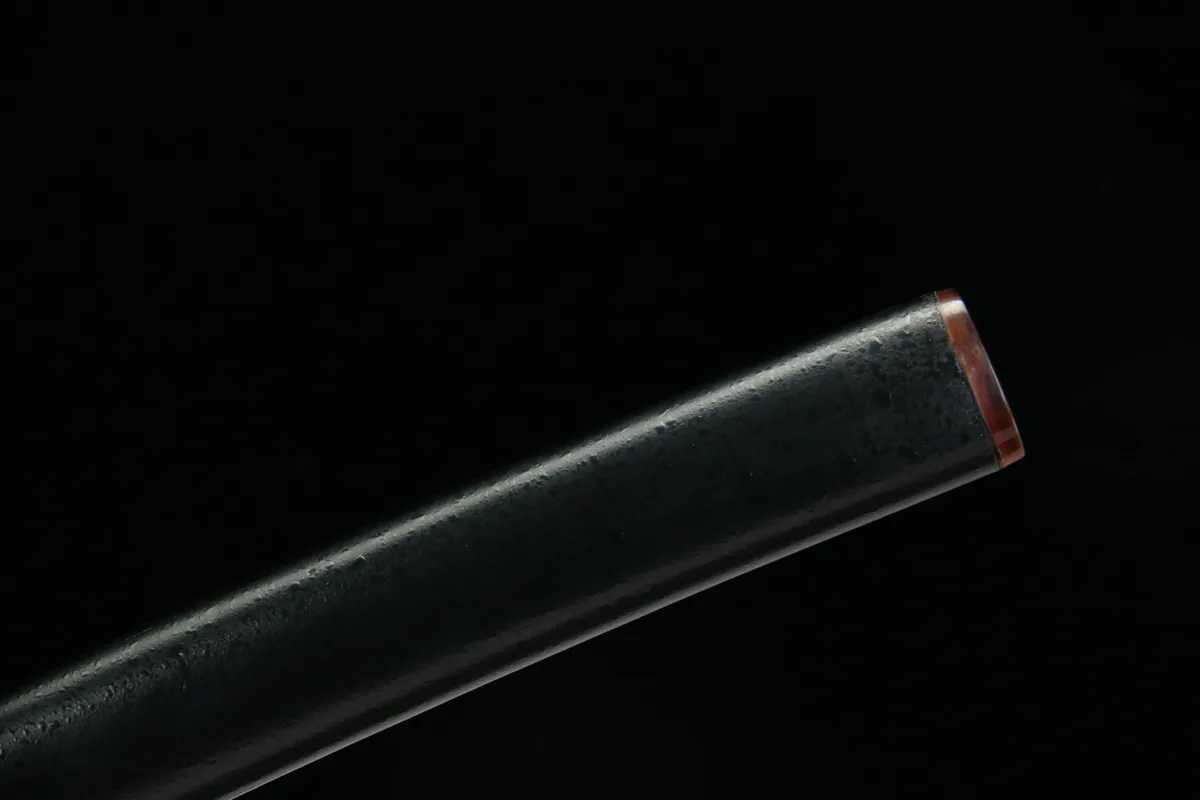
| Sheath | Green Bark Wood (Aohada) |
Forged in Longquan
Self-smelted steel is not a romantic abstraction – it is a technical commitment. The smith begins upstream of the blade itself, controlling the alloy composition rather than accepting the variance built into commercially distributed steel stock. This matters for clay tempering in particular. The differential hardening process – applying a clay resist to the spine, then quenching – depends on precise carbon content at the edge for reliable martensitic formation. When the smith knows the steel from the furnace forward, that precision is achievable in a way it simply is not with anonymous mill stock. The hamon on this blade emerged from that control. It is not decorative. It is the physical signature of the quench, readable along the entire length of the 56 cm blade.
The nie – the granular crystalline activity visible within and near the hamon boundary under raking light – will be present and visible on this piece. The habuchi (the hamon boundary line itself) will show character consistent with oil-quenched self-smelted steel: generally active, neither robotically straight nor artificially wild. This is what a real hamon looks like when the smith earns it rather than engineers it for appearance.
Weight, Balance, Draw
The wakizashi format – 56 cm blade, 24 cm handle – places this blade in a compact handling envelope that rewards close attention. The handle length relative to blade length gives the grip a commanding proportion; this does not feel like a shortened katana, it feels like a blade designed for this scale. The cotton ito wrap is wound firm over the handle core, giving a surface that seats in the palm without slipping during changes of angle. The aohada (green bark wood) saya draws cleanly, and the fit at the koiguchi (sheath mouth) is snug without being resistant – the blade comes free with intention, not effort.
Keeping It Sharp
Self-smelted high carbon steel will respond to moisture faster than stainless – wipe the blade dry after handling and apply a thin coat of choji oil (clove-infused mineral oil, traditional for Japanese blade maintenance) or a neutral mineral oil after each session. Store horizontally in the saya in a low-humidity environment. The gilded fittings should be kept dry; avoid contact with oils or cleaning agents on the metal surfaces.
| Weight | 0.7 lbs |
|---|---|
| Dimensions | 80.0 × 3.2 × 0.7 in |
| Hamon | Real Hamon (Clay Tempered) |
| Blade Steel | Artisan Hand-Forged Steel |
| Total Length | 80.0 cm |
| Blade Length | 56.0 cm |
| Heat Treatment | Oil Quench & Temper |
| Handle Wrap | Cotton Ito Wrap |
| Sheath Material | Green Bark Wood (Aohada) |
| Fittings | Gold & Silver Gilded Fittings, Copper |
| Forging Style | Differential Hardening (Clay Tempered) |
Related products