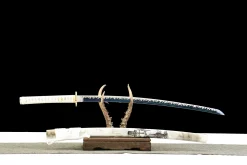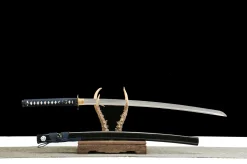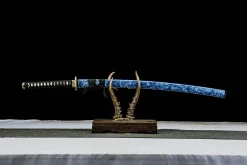


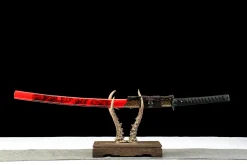


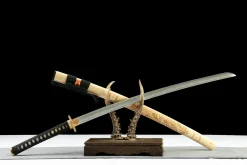
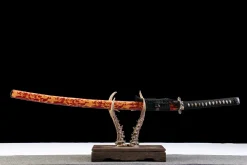








Silver Tide – Hand Forged T10 Tool Steel Katana Sword
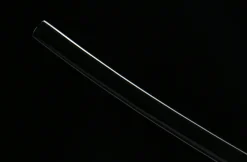
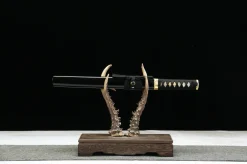
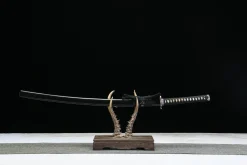
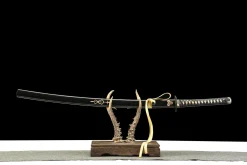
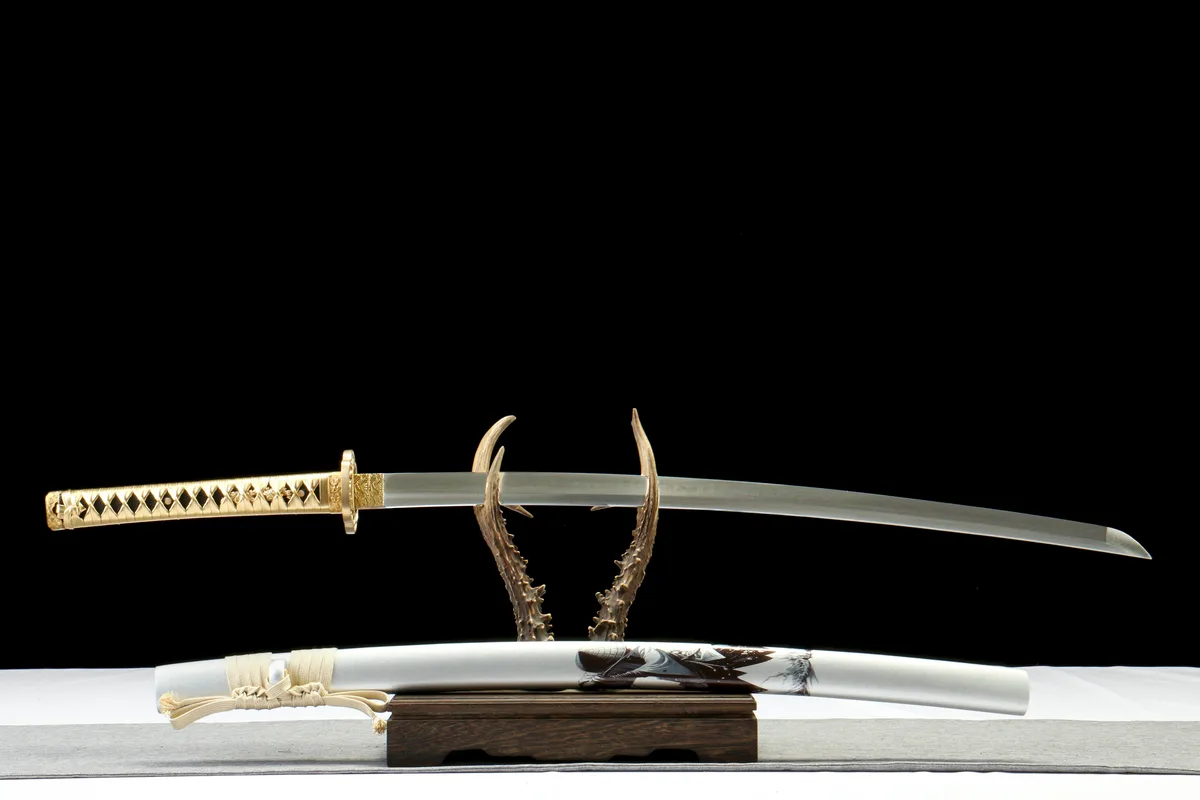
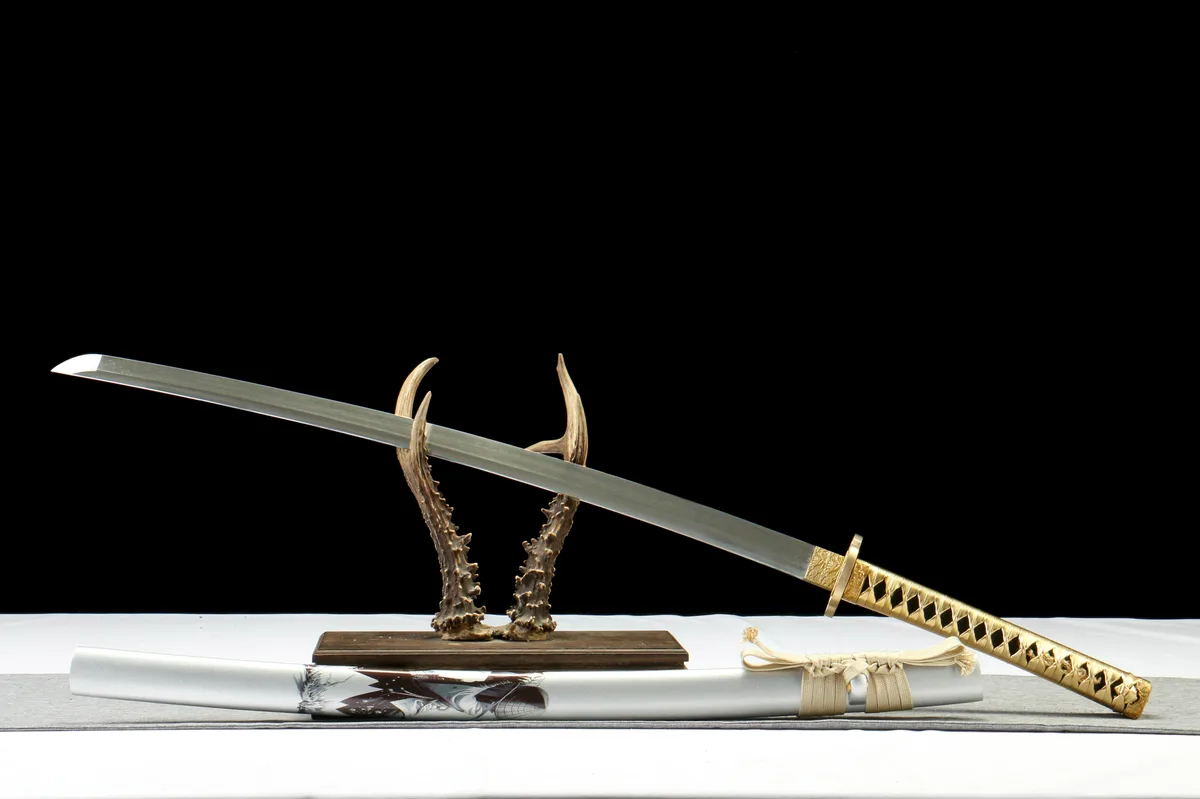
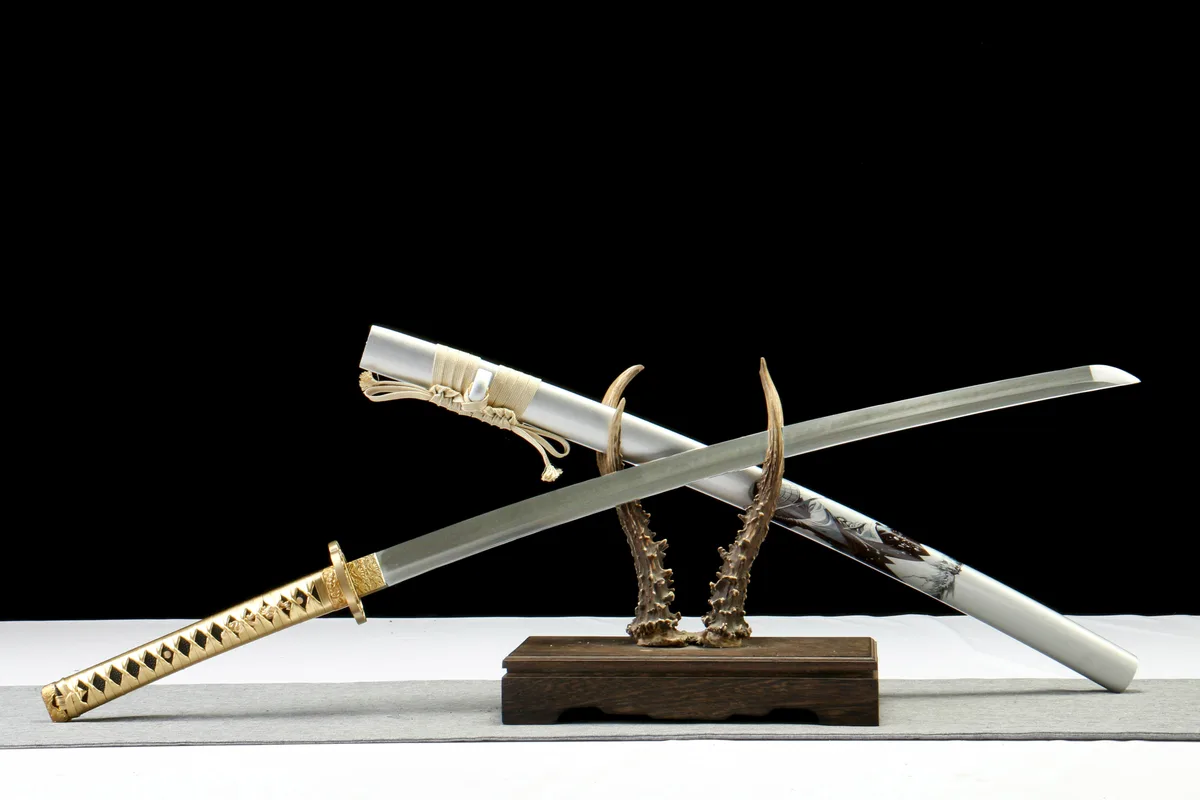
Hand-forged T10 Tool Steel katana (102cm total / 72cm blade), crafted in Longquan. Clay-tempered blade with a genuine hamon line — visible contrast between hardened edge and soft spine.
$479.99
Silver Tide – Hand Forged T10 Tool Steel Katana Sword
Most clay-tempered T10 katana arrive with a hamon pattern that follows convention. The Silver Tide does not. The proprietary blade geometry designated in its Chinese name – 独家刀镞 – produces a kissaki (tip section) and overall profile that distinguishes this blade visually before you have even looked at the temper line. Then you look at the temper line, and the wave pattern becomes the point of the entire sword.
Specifications
| Blade Steel | T10 High Speed Tool Steel |
| Total Length | 102.0 cm / 40.2 in |
| Blade Length | 72.0 cm / 28.3 in |
| Blade Width | 3.2 cm |
| Weight | 1040 g / 36.7 oz |
| Heat Treatment | Clay Tempering (Differential Hardening) |
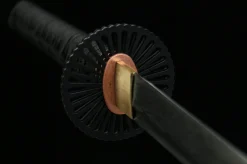
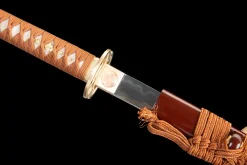
| Fittings | Brass |
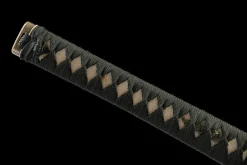
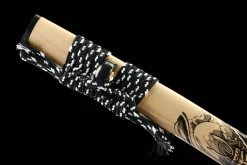
| Handle | Cotton Ito + Genuine Rayskin |
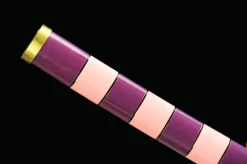
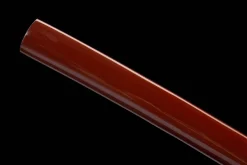
| Sheath | Hardwood (High-Gloss Lacquer) |
What the Steel Does
T10 tool steel derives its designation from its tungsten alloying element – an addition that is absent in the more common high carbon steels used in production sword work. Tungsten increases wear resistance at the molecular level, allowing the edge of this blade to hold a keener geometry for longer under repeated stress than 1095 or 1060 of comparable hardness. The tungsten does not make the steel brittle; properly heat treated, T10 achieves a hardness in the upper 58 to 62 HRC range at the ha (cutting edge) while the spine – protected during quench by the applied clay jacket – remains in the 40 to 45 HRC range. That 15-plus point differential between edge and spine is what gives a clay-tempered blade its mechanical logic: hard where it must cut, tough where it must flex.
The silver wave hamon on this blade is not a painted or acid-etched line. It is the actual boundary between the two hardness zones, made visible by the polishing process. The wave character – undulating, with cresting activity along the habuchi (temper line boundary) – is a product of how the clay was applied and how this particular billet responded to the quench. The nie (individual martensite crystals visible in raking light) along the habuchi are the finest-scale evidence that the differential hardening is real and complete. Brass fittings bring a warmth to the overall presentation that iron cannot, and against the polished blade they read with clarity.
The Feel of It
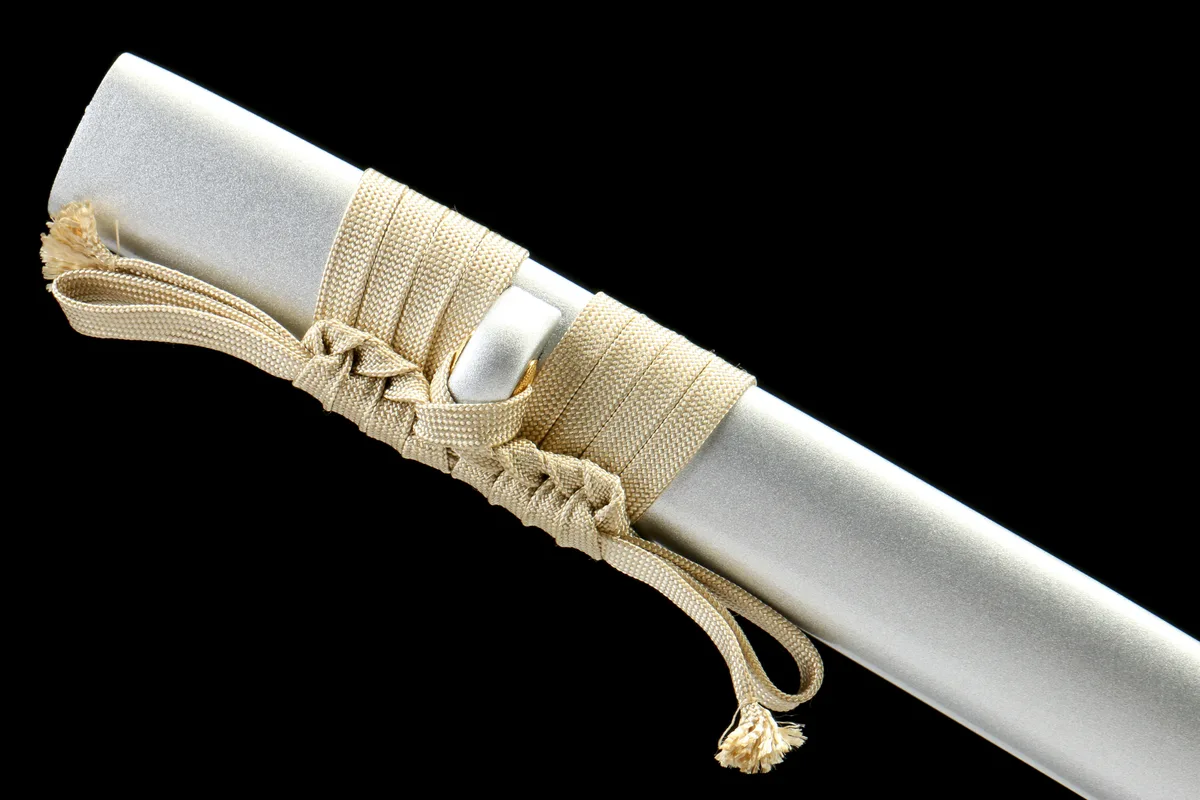
Shinogi-zukuri (ridgeline) construction gives the Silver Tide a raised central ridge along the flat that runs from the habaki (blade collar) toward the kissaki – this ridge stiffens the cross-section without adding material through the full flat, and you feel it as a rigidity in the blade that flat-ground geometries lack. The 26-centimeter handle, wrapped over genuine rayskin in cotton ito, gives a full bilateral grip with the nodular texture of the same (ray hide) legible through the wrap on the outside of the palm. The draw from the high-gloss lacquered hardwood saya is smooth and deliberate – the koiguchi (sheath mouth) fitted to this specific blade, not to a production average.
Maintenance Notes
Wipe the blade clean of moisture and fingerprint oils after every session, then apply a light coat of choji oil (clove-based mineral oil, the traditional Japanese blade preservative) from the habaki to the tip using a soft cloth or uchiko ball. Store in the saya in a stable, low-humidity environment – the lacquered hardwood sheath does not require treatment but should never be left damp. Re-oil every three to four months if the blade is in static display.
| Weight | 1.32 lbs |
|---|---|
| Dimensions | 102.0 × 3.2 × 0.7 in |
| Hamon | Real Hamon (Clay Tempered) |
| Blade Steel | T10 Tool Steel |
| Total Length | 102.0 cm |
| Blade Length | 72.0 cm |
| Heat Treatment | Clay Tempering (Differential Hardening) |
| Handle Wrap | Cotton Ito + Genuine Rayskin |
| Sheath Material | Hardwood (High-Gloss Lacquer) |
| Fittings | Brass |
| Forging Style | Shinogi-Zukuri (Ridgeline) |
Related products