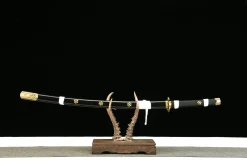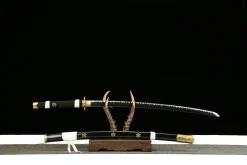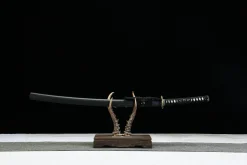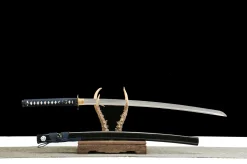

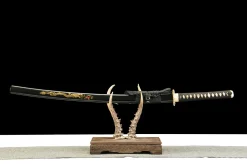

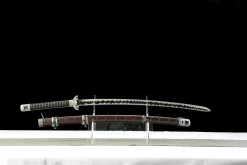


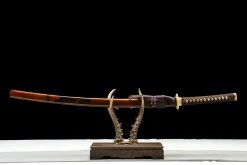






Steel Claw – Hand Forged 1065 Carbon Steel Katana Sword
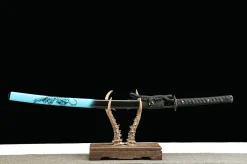
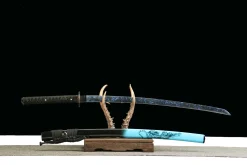
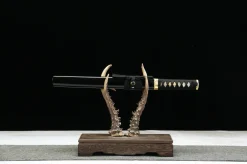
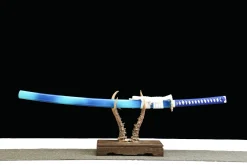
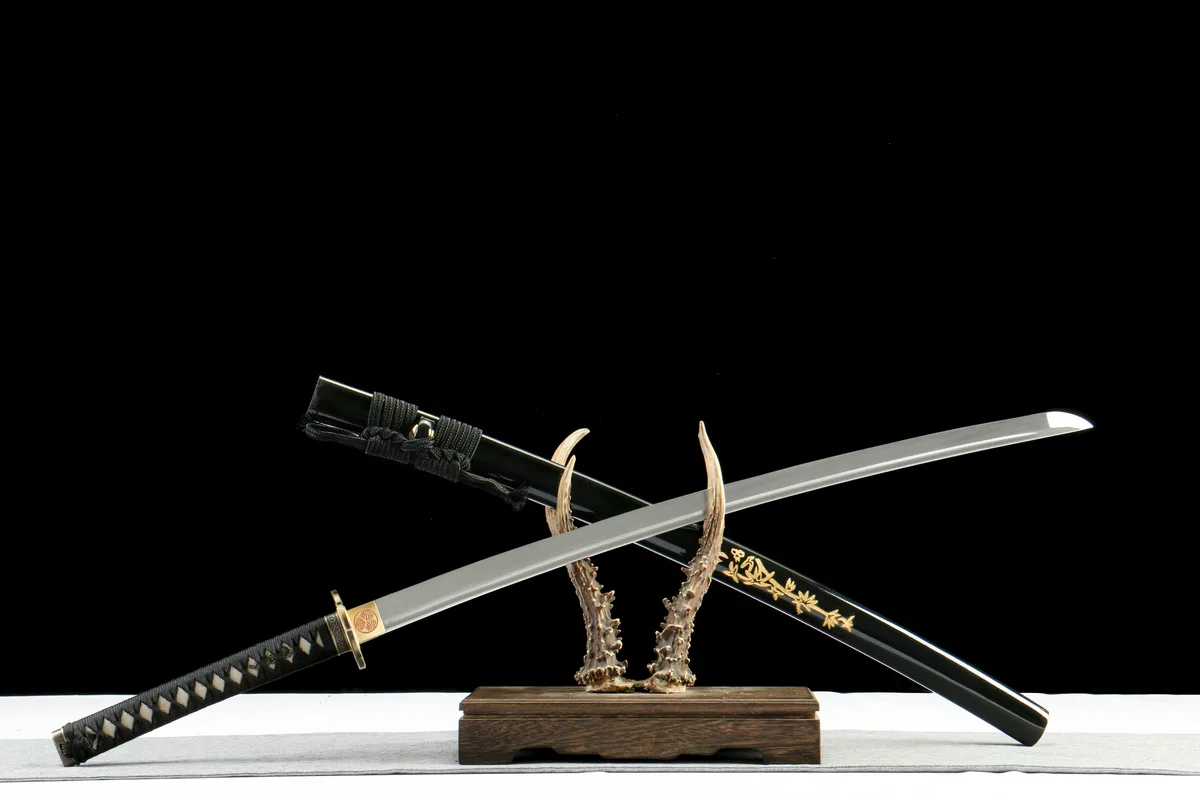
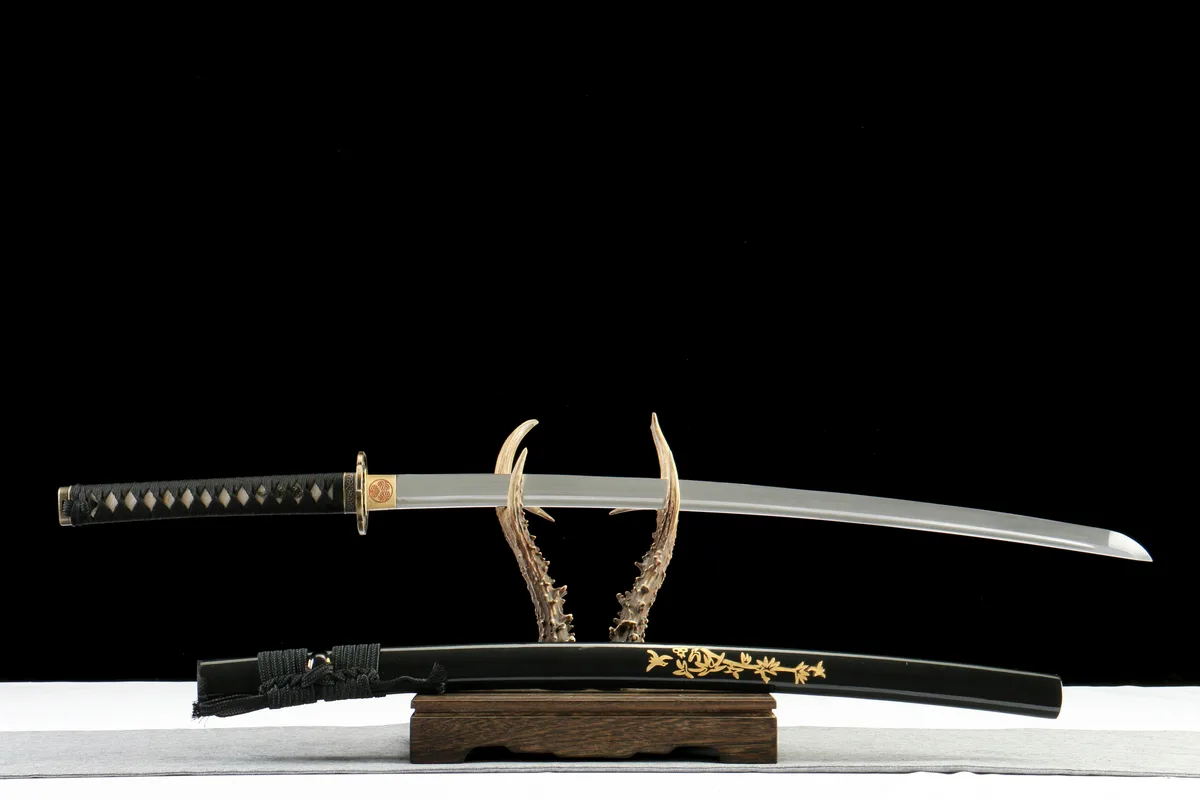
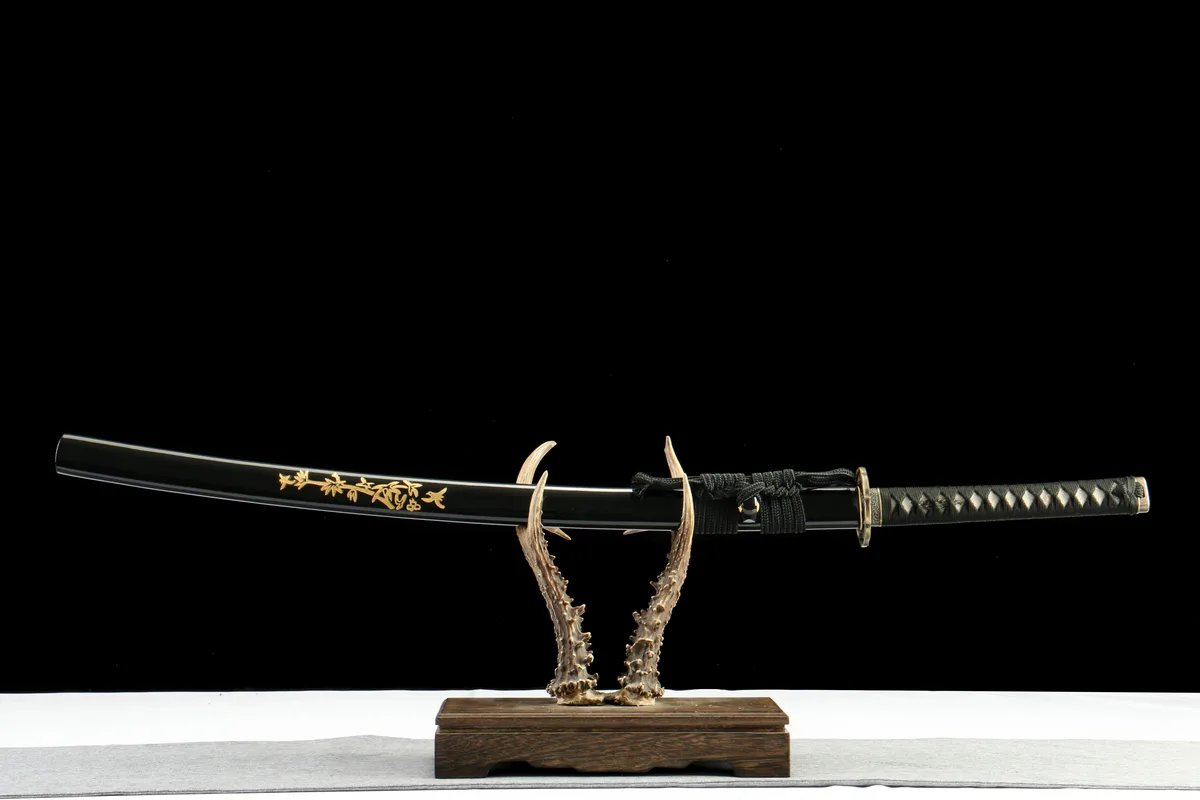
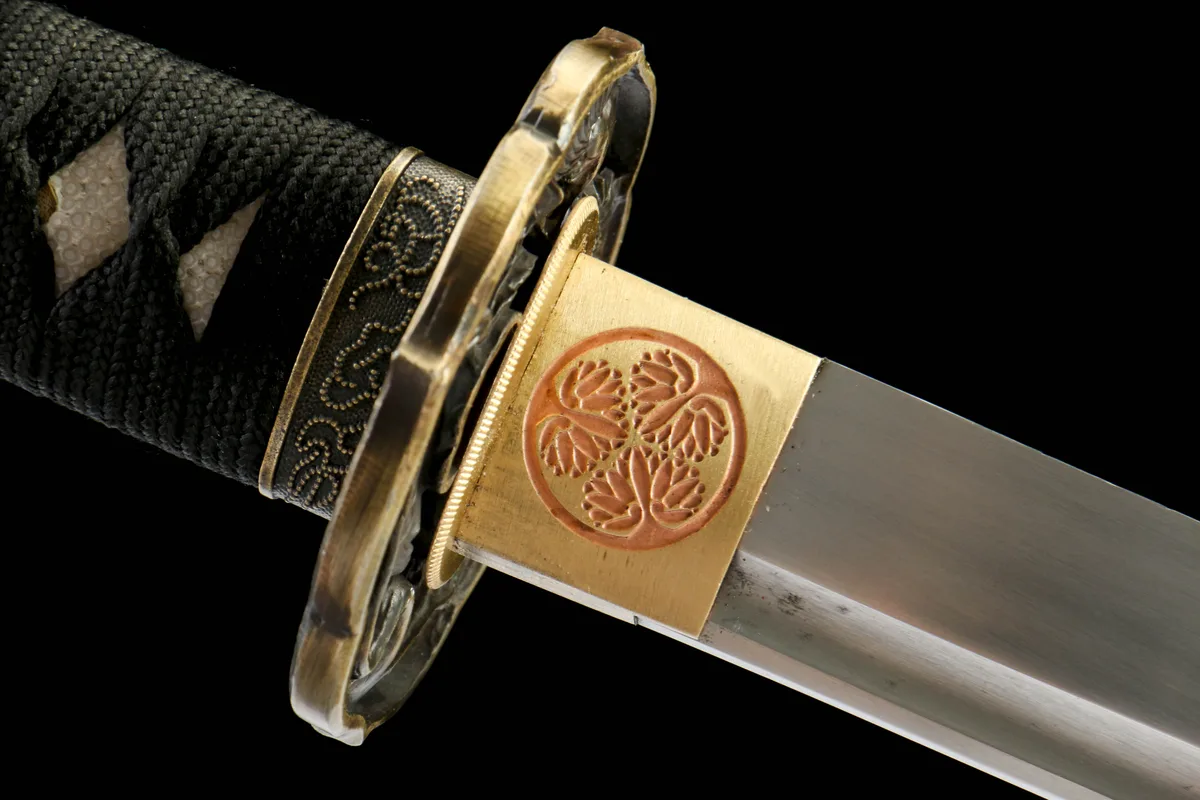
Hand-forged 1065 Carbon Steel katana (72cm blade), crafted in Longquan. Full-tang construction with traditional fittings and hand-lacquered saya.
$199.99
Steel Claw – Hand Forged 1065 Carbon Steel Katana Sword
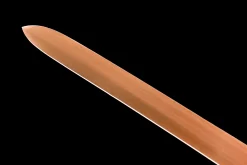
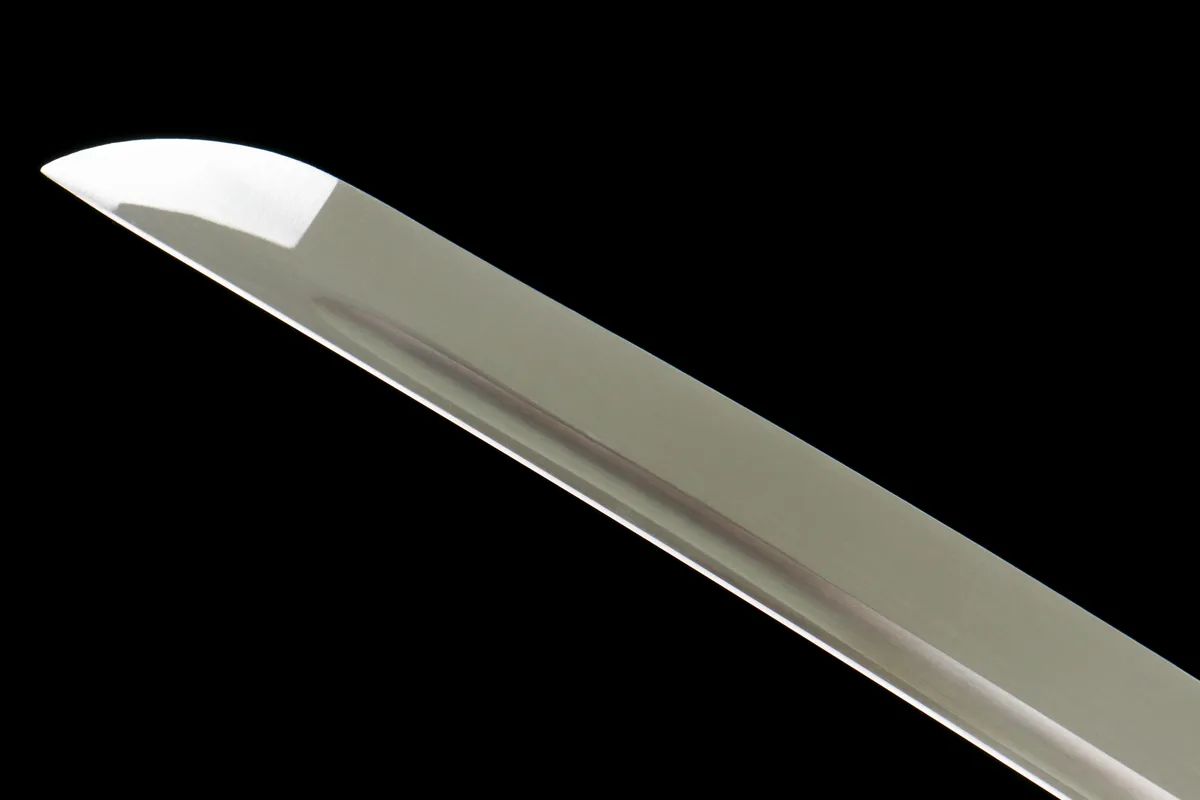
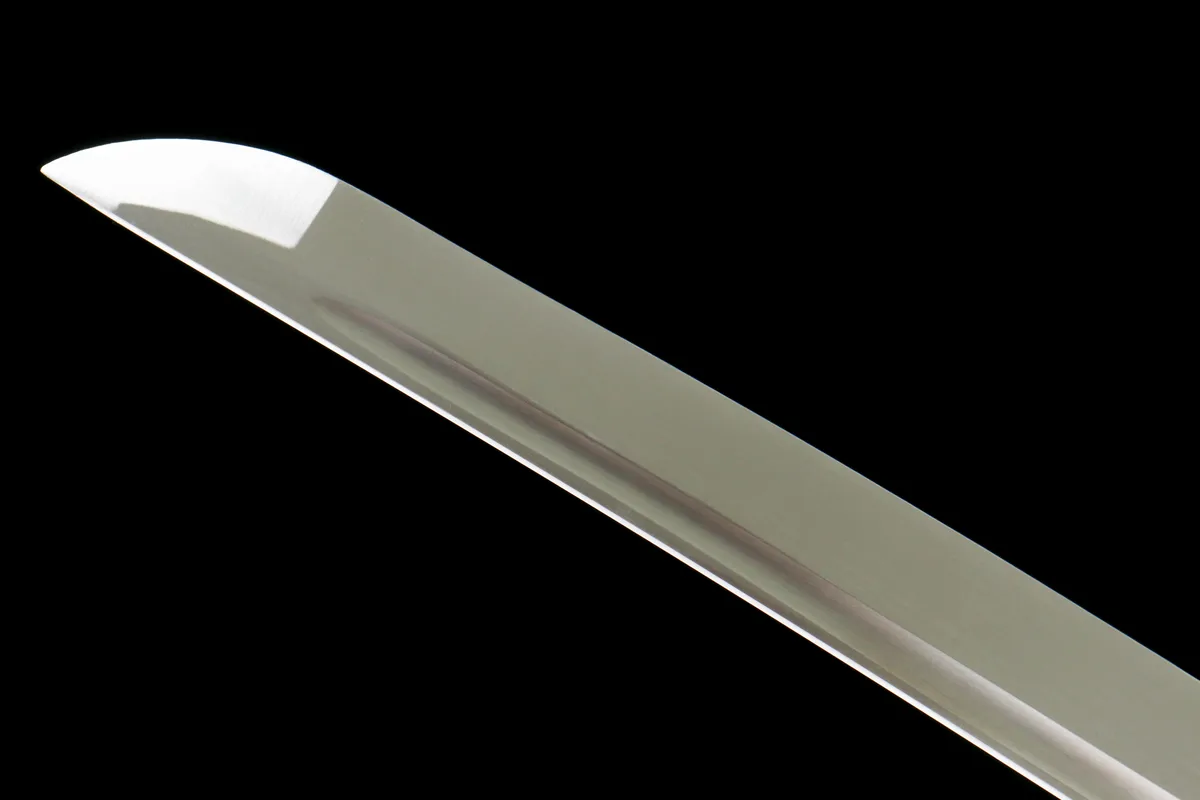
A 72 cm blade ground to shinogi-zukuri (ridgeline) geometry and quenched in oil – the Steel Claw starts with the fundamentals correct and builds from there. The ridgeline profile is one of the most field-tested blade geometries in the history of Japanese swordmaking, and 1065 high carbon steel is the steel that makes it work in a practical, everyday-use katana.
Specifications
| Blade Steel | 1065 High Carbon Steel |
| Blade Length | 72.0 cm / 28.3 in |
| Blade Width | 3.2 cm |
| Blade Thickness | 0.7 cm |
| Weight | 1040 g / 36.7 oz |
| Heat Treatment | Oil Quench |
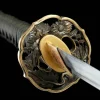
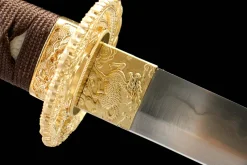
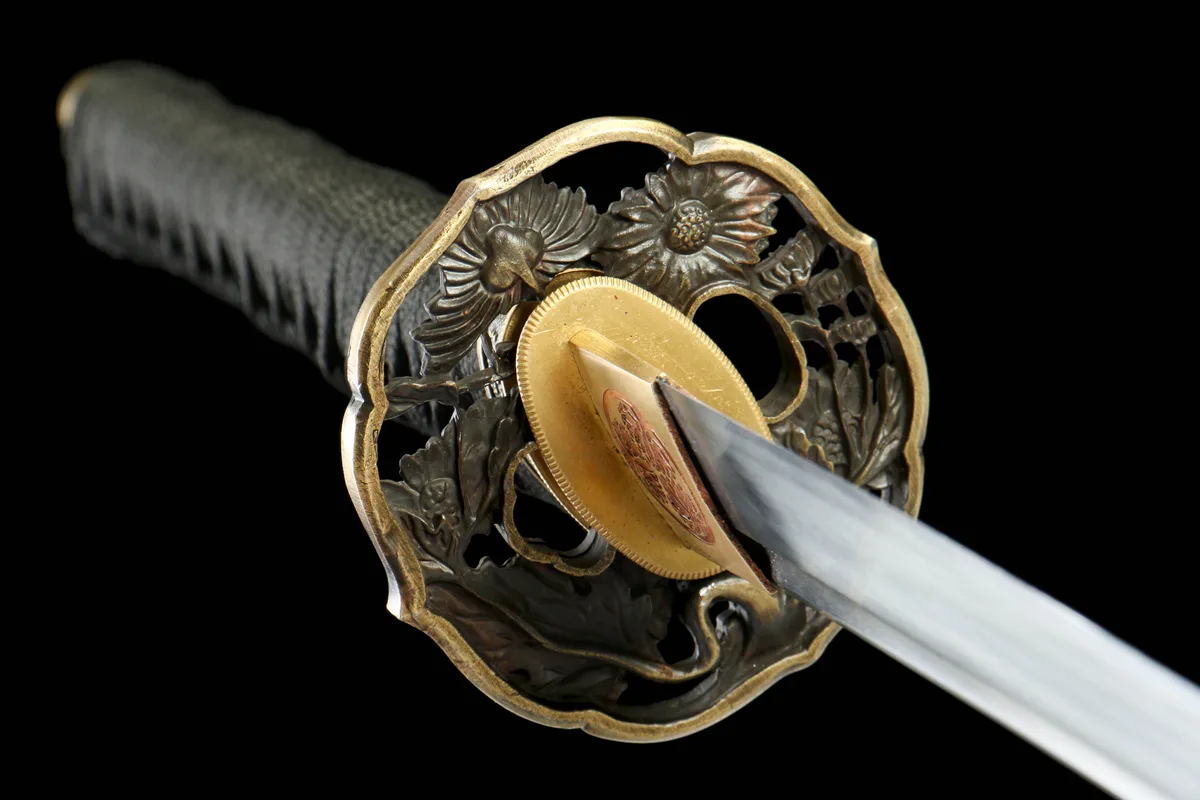
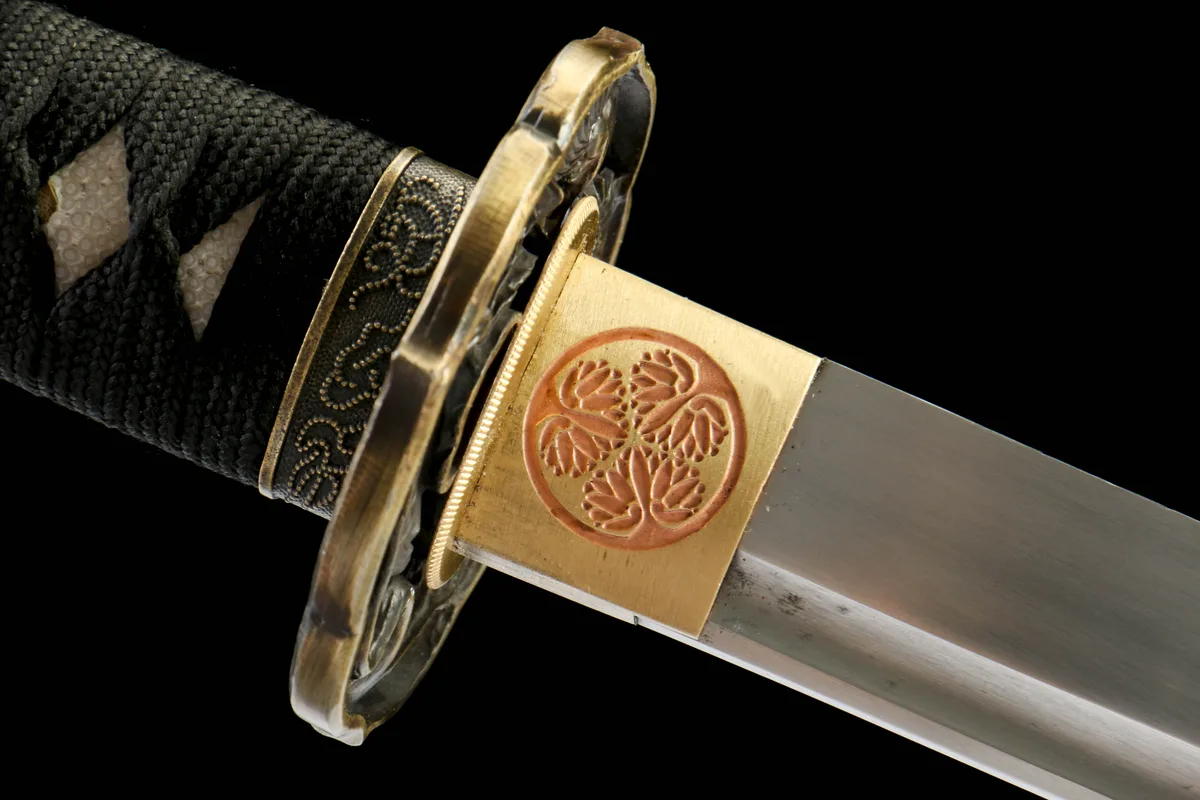
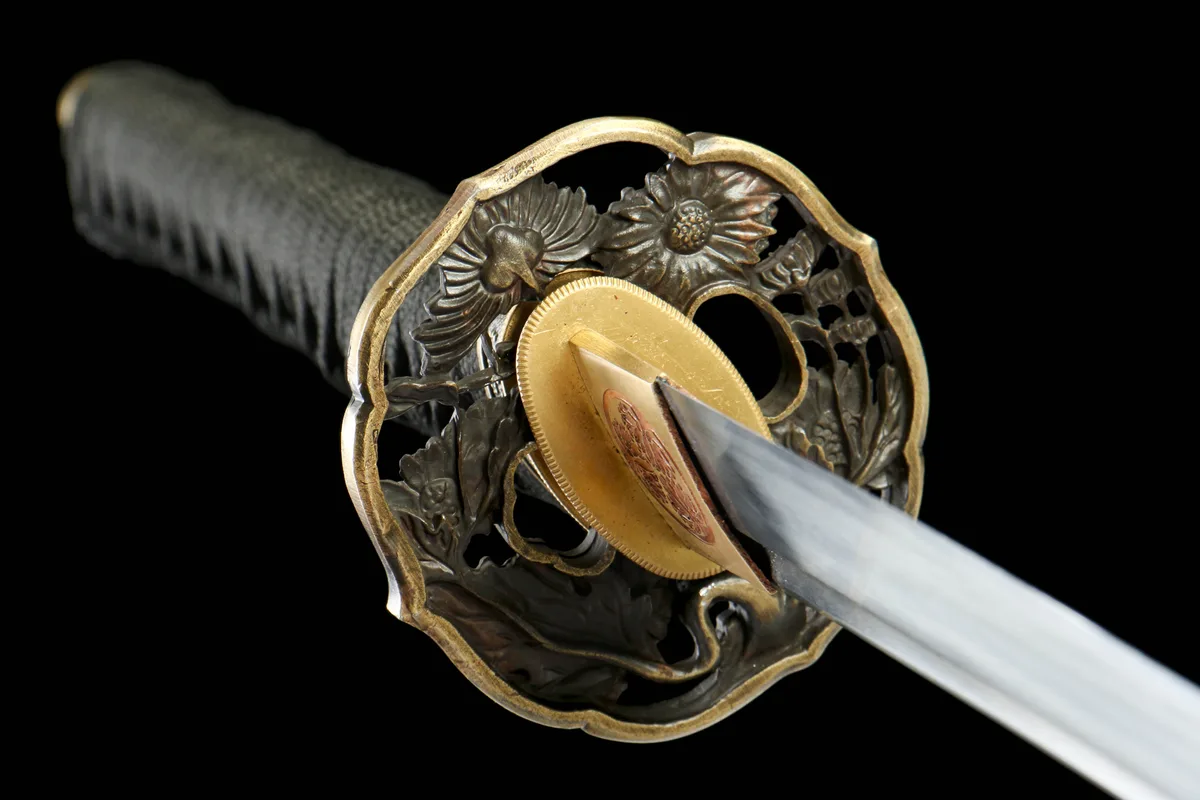
| Fittings | Zinc Alloy |
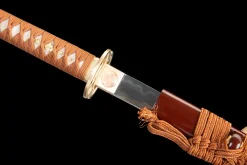
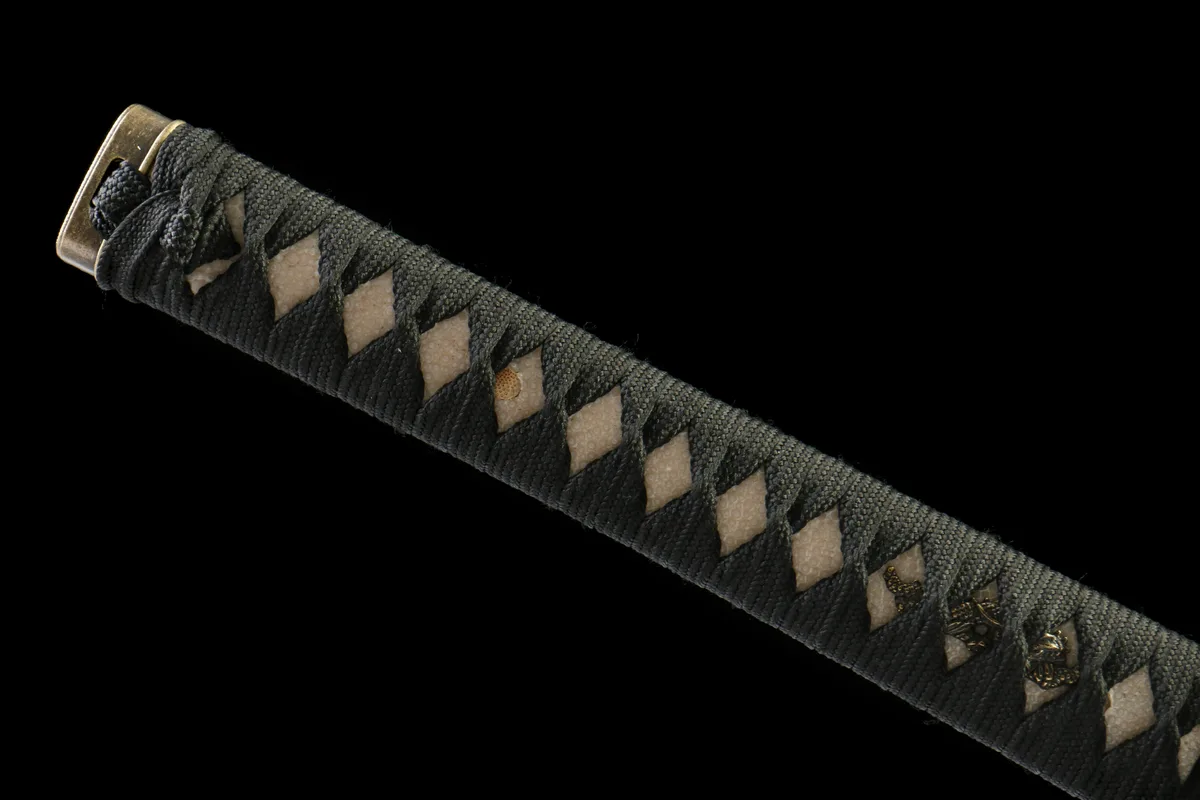
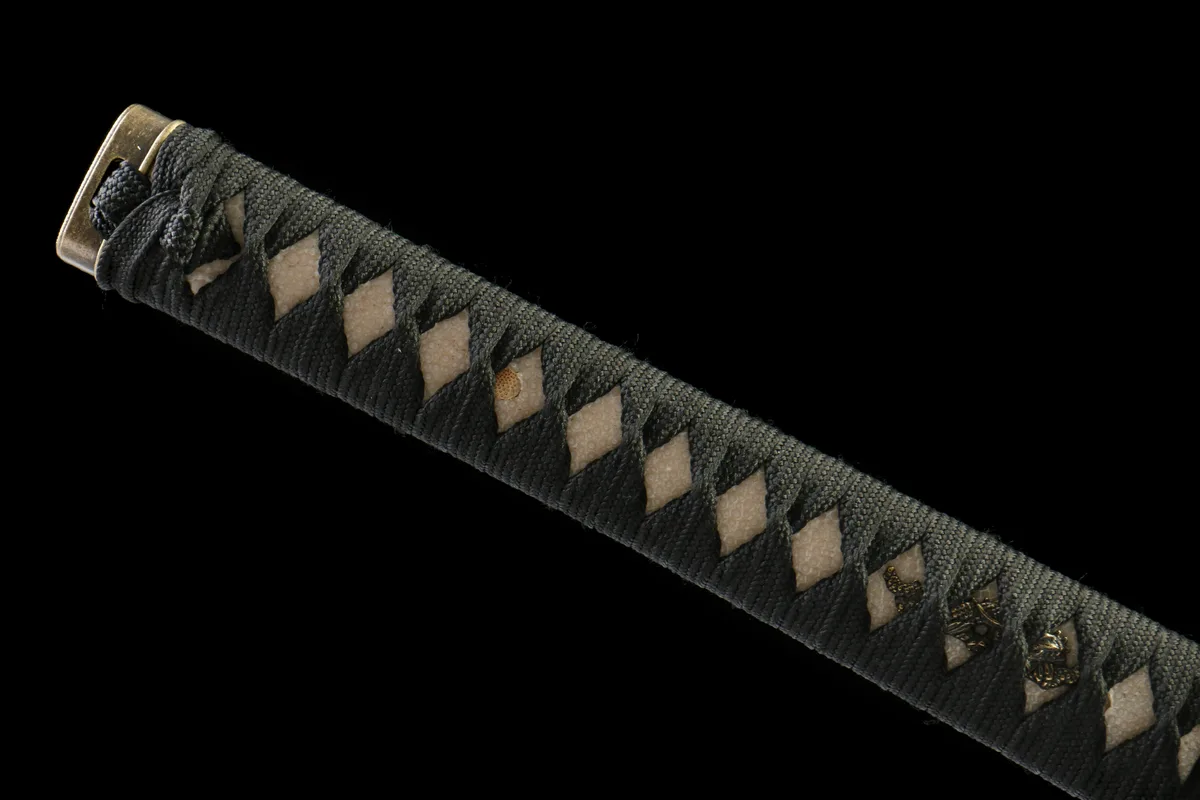
| Handle | Cotton Ito Wrap |
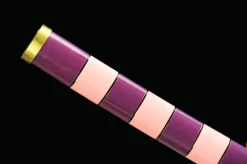
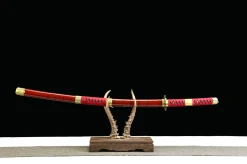
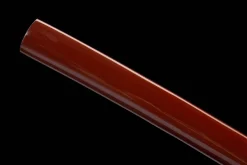
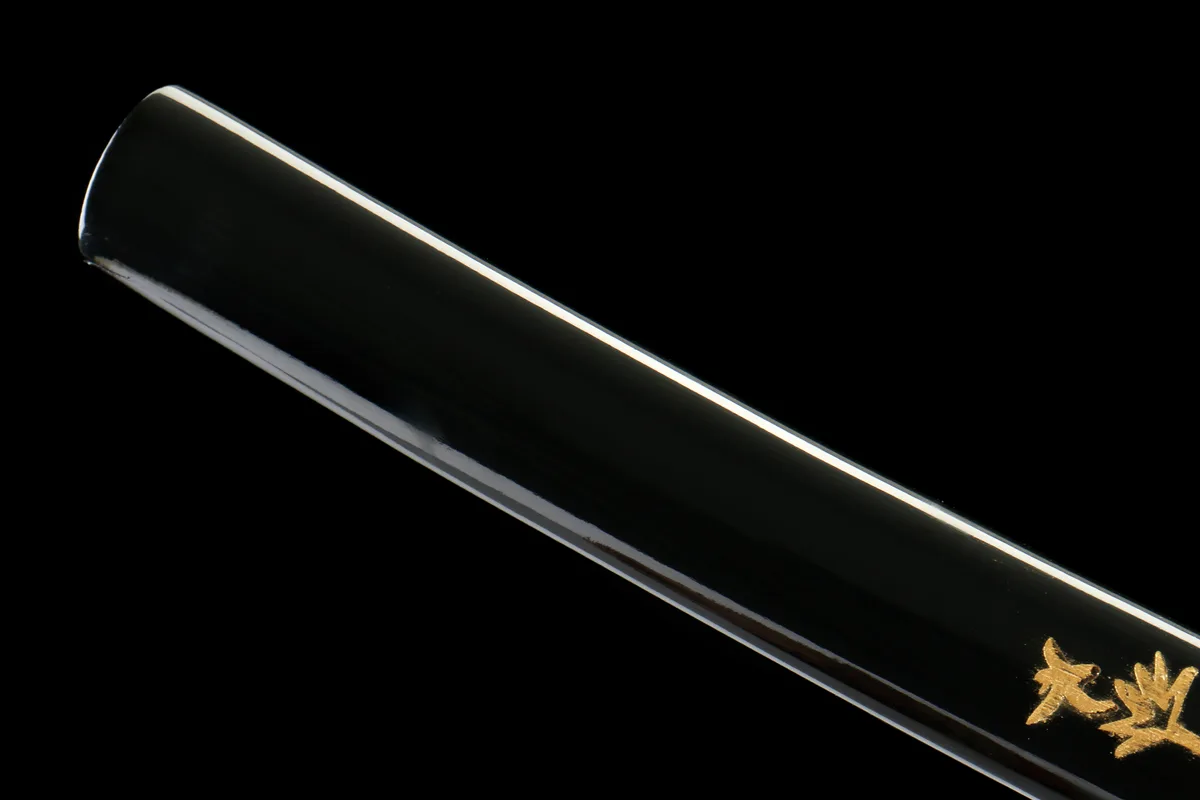
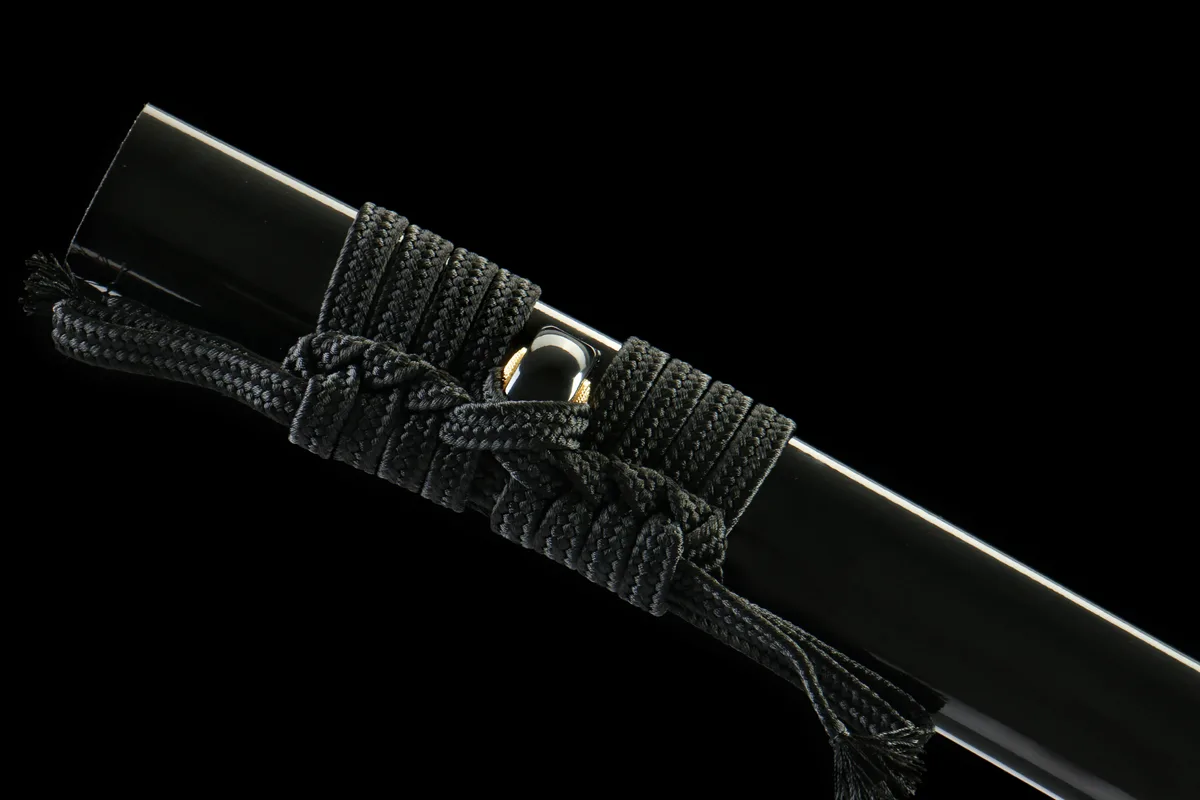
| Sheath | Hardwood, High-Gloss Lacquer |
Forged in Longquan
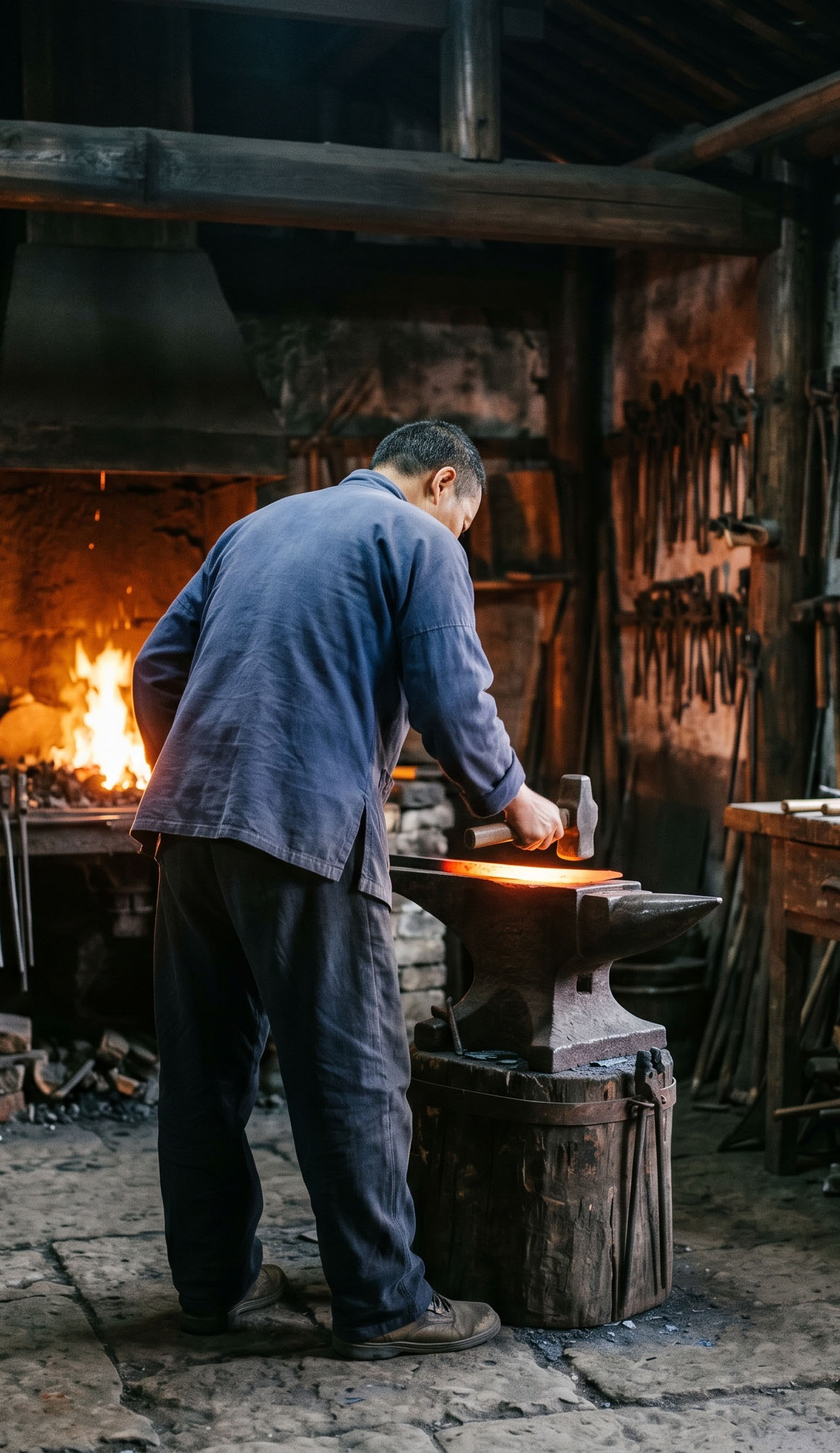
Longquan has produced blades for over two thousand years. The Steel Claw comes out of that same city, from smiths who treat the oil-quench process as a craft variable rather than a checkbox. Oil quenching cools 1065 at a rate that allows martensite formation in the edge – the crystalline structure responsible for hardness – while the slower relative cooling at the spine preserves the body toughness the blade needs to handle dynamic stress without folding or snapping.
At 0.65% carbon, 1065 is forgiving in a way that very high carbon steels are not. It sharpens readily on a whetstone, holds that edge through extended work, and resists the micro-chipping that plagues more brittle alloys. The 3.2 cm blade width and 0.7 cm spine thickness give the cross-section real rigidity – this is not a blade that flexes where it shouldn’t.
Weight, Balance, Draw
The 26 cm handle is wound in cotton ito (handle wrap) over the underlying structure, giving your hands a secure two-handed grip along the full length of the tsuka (handle). The high-gloss lacquered hardwood saya (scabbard) has a firm koiguchi (scabbard mouth) that holds the blade securely when stored and releases cleanly on the draw. The 72 cm blade length is a standard tachi-length nagasa (blade length) that accommodates both kihon (basic) and advanced technique without being unwieldy in tight practice spaces.
Keeping It Sharp
Clean and lightly oil the blade after every session – camellia oil or choji oil applied with a soft cloth is standard. Keep the saya dry; moisture trapped in a lacquered hardwood sheath will cause rust at the koiguchi faster than anywhere else on the blade. Sharpen on a progression of Japanese waterstones if you want to maintain the original edge geometry; a coarse stone followed by a finishing stone will restore a working edge without removing more metal than necessary.
| Weight | 1.32 lbs |
|---|---|
| Dimensions | 3.2 × 0.7 in |
| Hamon | Decorative / Acid-Etched |
| Blade Steel | 1065 Carbon Steel |
| Total Length | None cm |
| Blade Length | 72.0 cm |
| Heat Treatment | Oil Quench |
| Handle Wrap | Cotton Ito Wrap |
| Sheath Material | Hardwood (High-Gloss Lacquer) |
| Fittings | Zinc Alloy |
| Forging Style | Shinogi-Zukuri (Ridgeline) |
Related products