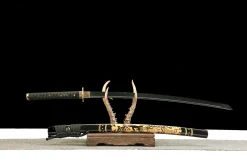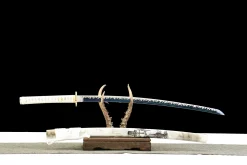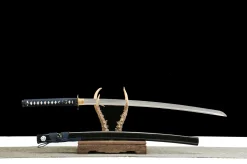















Steel Edge – Hand Forged 1065 Carbon Steel Katana Sword
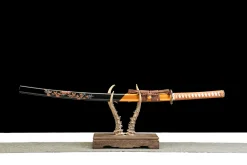
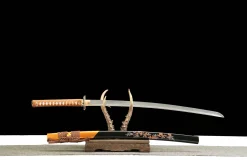
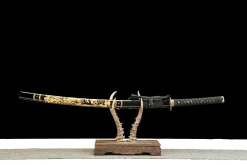
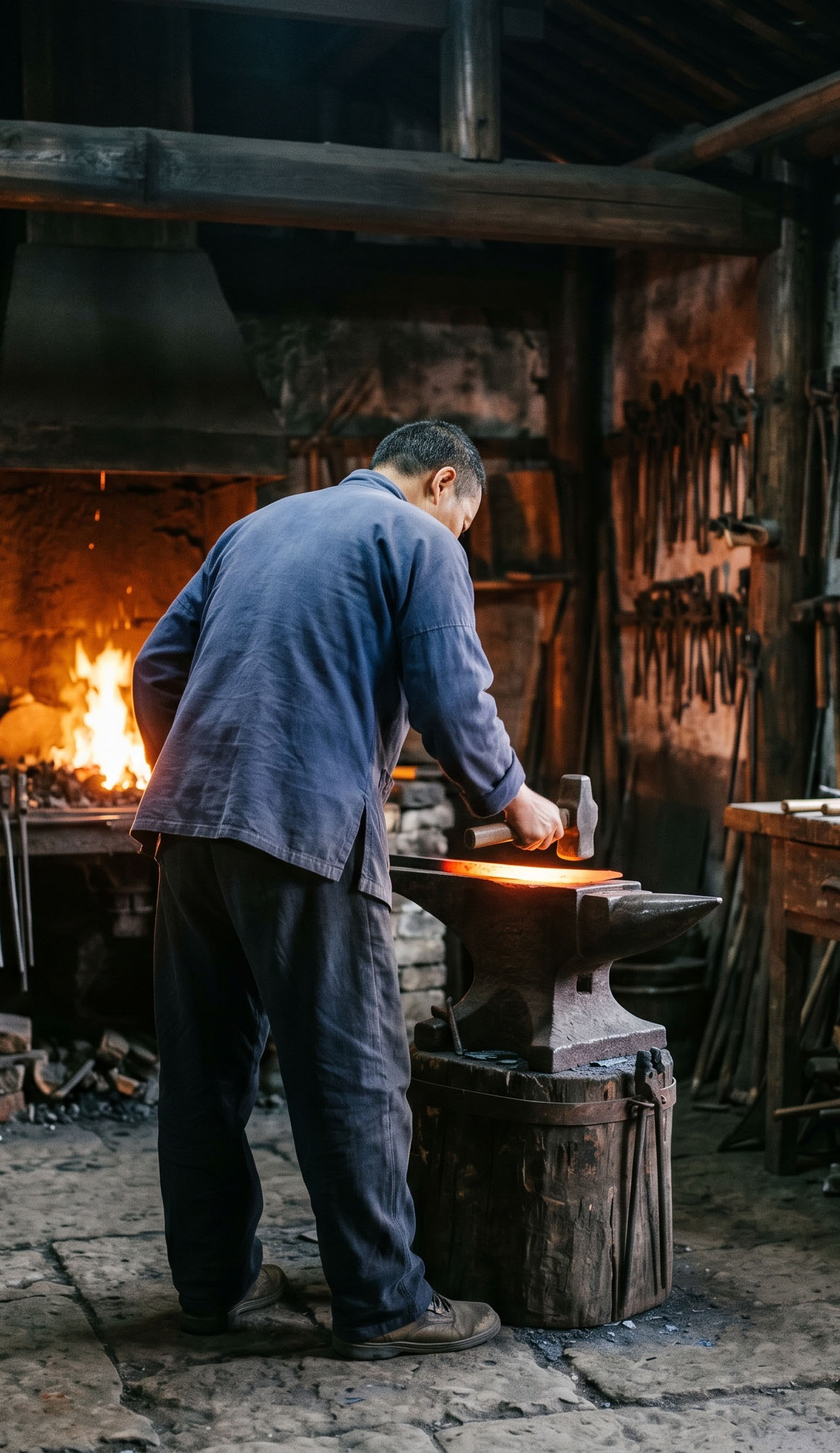
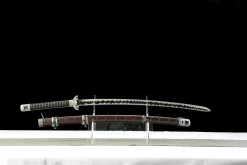
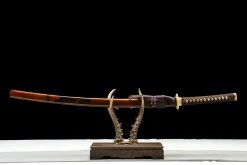
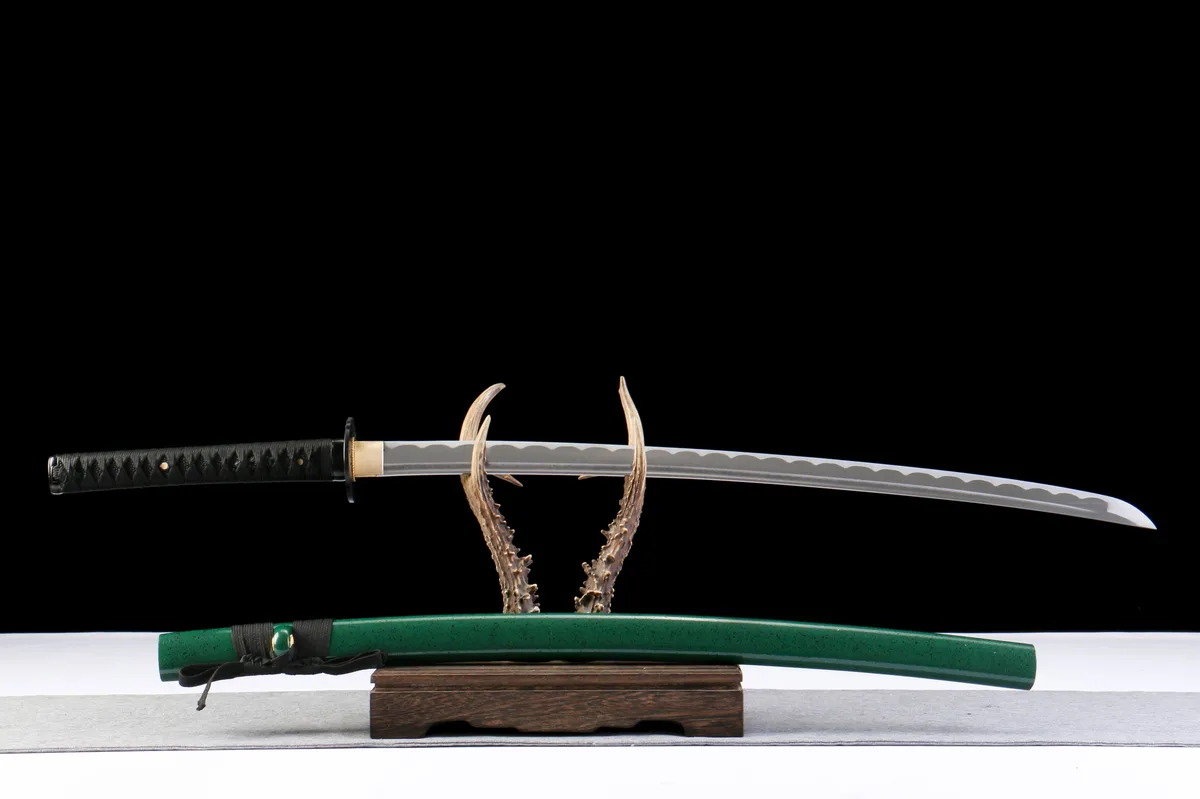
Hand-forged 1065 Carbon Steel katana (102cm total / 72cm blade), crafted in Longquan. Full-tang construction with traditional fittings and hand-lacquered saya.
$219.99
Steel Edge – Hand Forged 1065 Carbon Steel Katana Sword
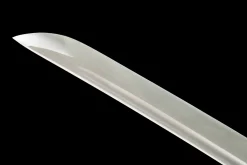
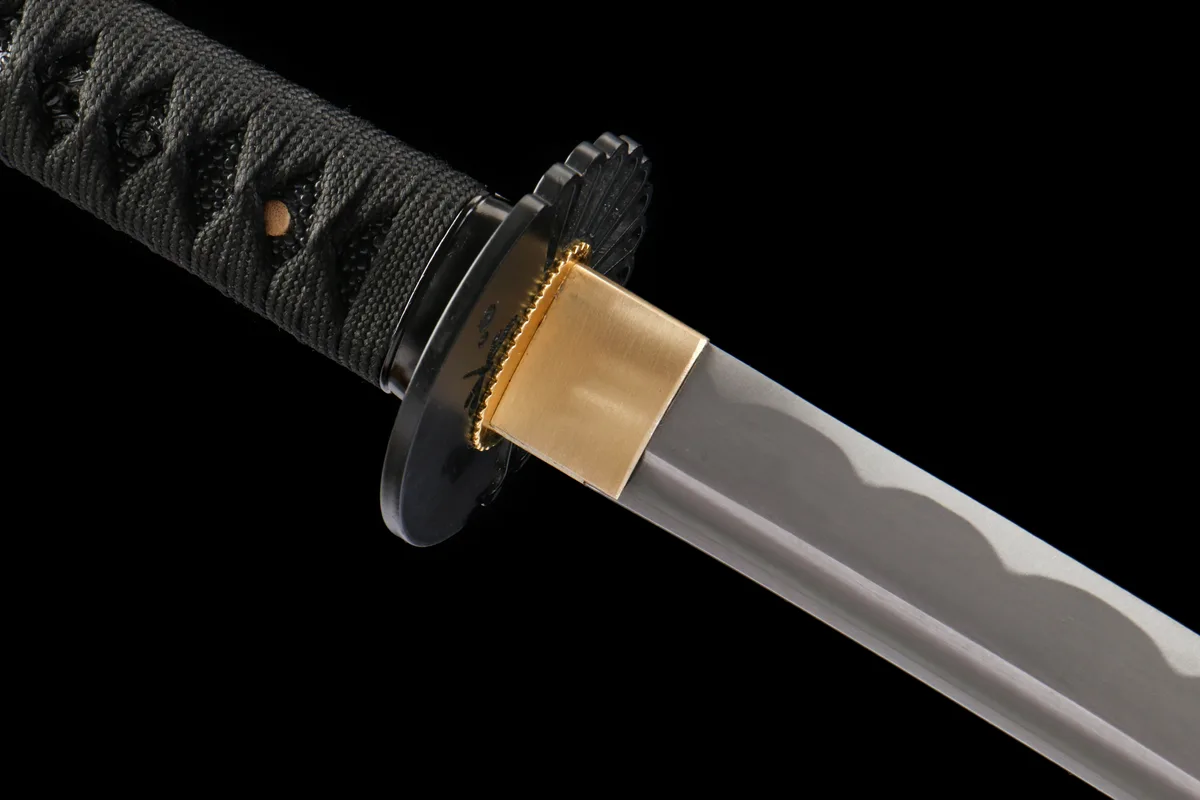
The Steel Edge is built around one premise: a 1065 high carbon blade that holds its edge through sustained work and does not ask you to treat it carefully. The shinogi-zukuri (ridgeline) geometry – the same profile carried by functional Japanese blades for centuries – gives this katana a defined central ridge that stiffens the blade along its length and focuses the edge geometry where it matters most. This is a working katana, forged in Longquan and heat-treated to perform, not to sit.
Specifications
| Blade Steel | 1065 High Carbon Steel |
| Total Length | 102.0 cm / 40.2 in |
| Blade Length | 72.0 cm / 28.3 in |
| Blade Width | 3.2 cm |
| Blade Thickness | 0.7 cm |
| Weight | 1040 g / 36.7 oz |
| Heat Treatment | Muffle furnace constant-temperature heat treatment |
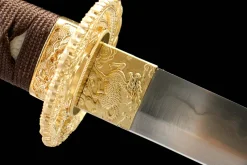
| Fittings | Iron |
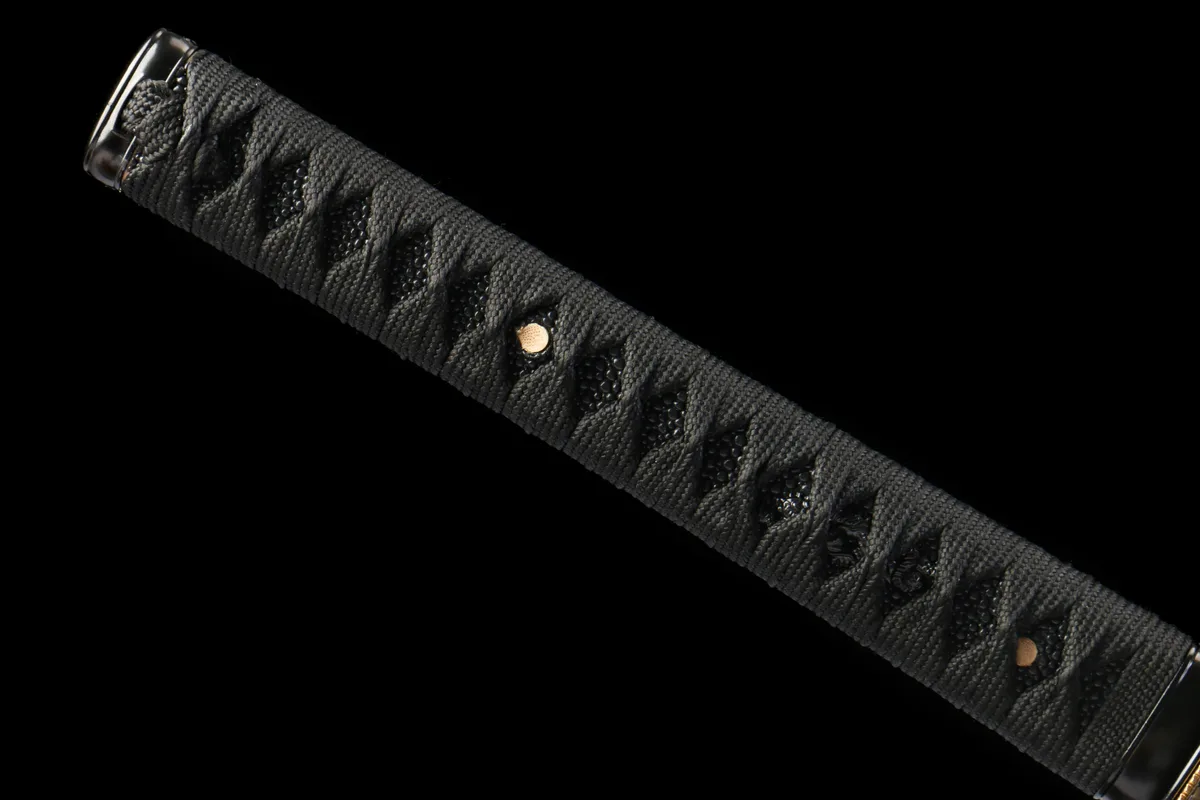
| Handle | Cotton ito wrap over genuine rayskin (same) |
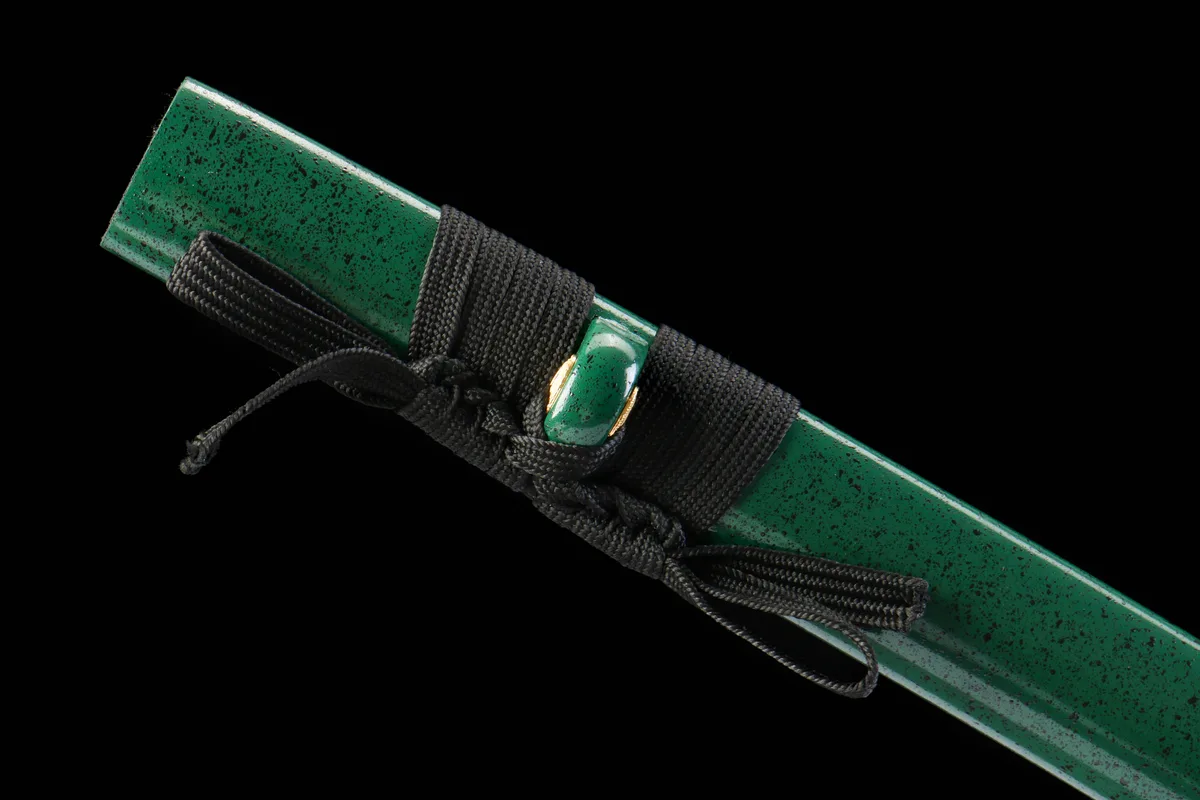
| Sheath | Hardwood, high-gloss lacquer |
The Steel
1065 is a mid-range high carbon steel that sits in the practical sweet spot for a functional katana. With a carbon content near 0.65%, it hardens to a range that holds a sharp working edge without becoming brittle under lateral stress. The muffle furnace constant-temperature heat treatment – referred to in Chinese production as 马沸炉 恒温热处理 – ensures the blade reaches and holds a precise, controlled temperature throughout the hardening cycle, eliminating the hot spots and inconsistent hardness that plague blades heat-treated in open-flame forges. The result is a blade with uniform hardness from tip to base.
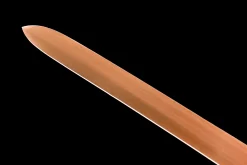
The shinogi-zukuri profile adds mechanical advantage that the steel alone cannot provide. The raised ridgeline creates two distinct surface planes: a flat shinogi-ji above and a narrowing ha-machi bevel below, channeling force efficiently through the cut and reducing drag. At 0.7 cm thick at the spine, this blade has enough mass behind the edge to drive through resistance without flexing out of line.
In Your Hands
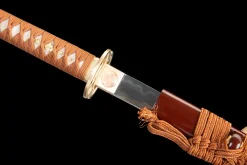
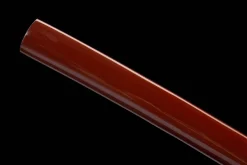
The 26 cm handle is wrapped in cotton ito over genuine rayskin – the same (rayskin) providing a textured base layer that prevents the wrap from shifting under pressure, and the cotton ito diamonds locking your grip in position through fast or repetitive cutting sequences. The draw from the high-gloss lacquer hardwood saya is smooth and consistent, with no binding along the 72 cm blade length. At 102 cm overall, this katana sits in a standard handling range that accommodates both solo kata and structured cutting work.
Care
Wipe the blade dry after every session and apply a light coat of choji oil (clove-based mineral oil, traditional for Japanese-style blades) before storage. Keep the blade seated fully in the saya and store horizontally in a low-humidity environment. Inspect the ito wrap and handle fittings periodically and retighten the mekugi (handle peg) if any movement develops.
| Weight | 1.32 lbs |
|---|---|
| Dimensions | 102.0 × 3.2 × 0.7 in |
| Hamon | Decorative / Acid-Etched |
| Blade Steel | 1065 Carbon Steel |
| Total Length | 102.0 cm |
| Blade Length | 72.0 cm |
| Heat Treatment | 马沸炉 恒温热处理 |
| Handle Wrap | Cotton Ito + Genuine Rayskin |
| Sheath Material | Hardwood (High-Gloss Lacquer) |
| Fittings | Iron |
| Forging Style | Shinogi-Zukuri (Ridgeline) |
Related products