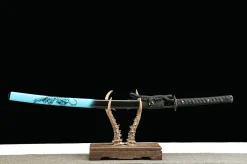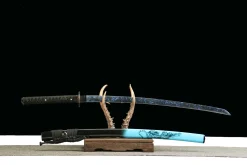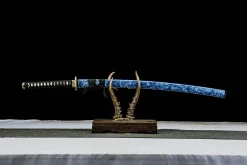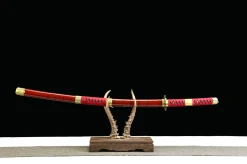


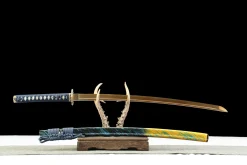
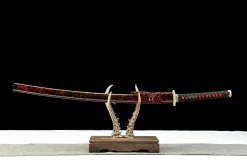

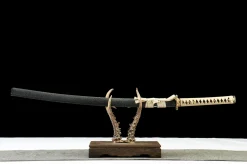


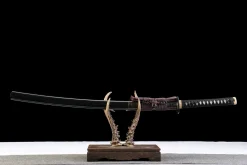








Steel Fire – Hand Forged 1065 Carbon Steel Katana Sword
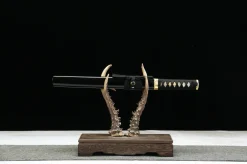
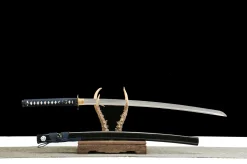
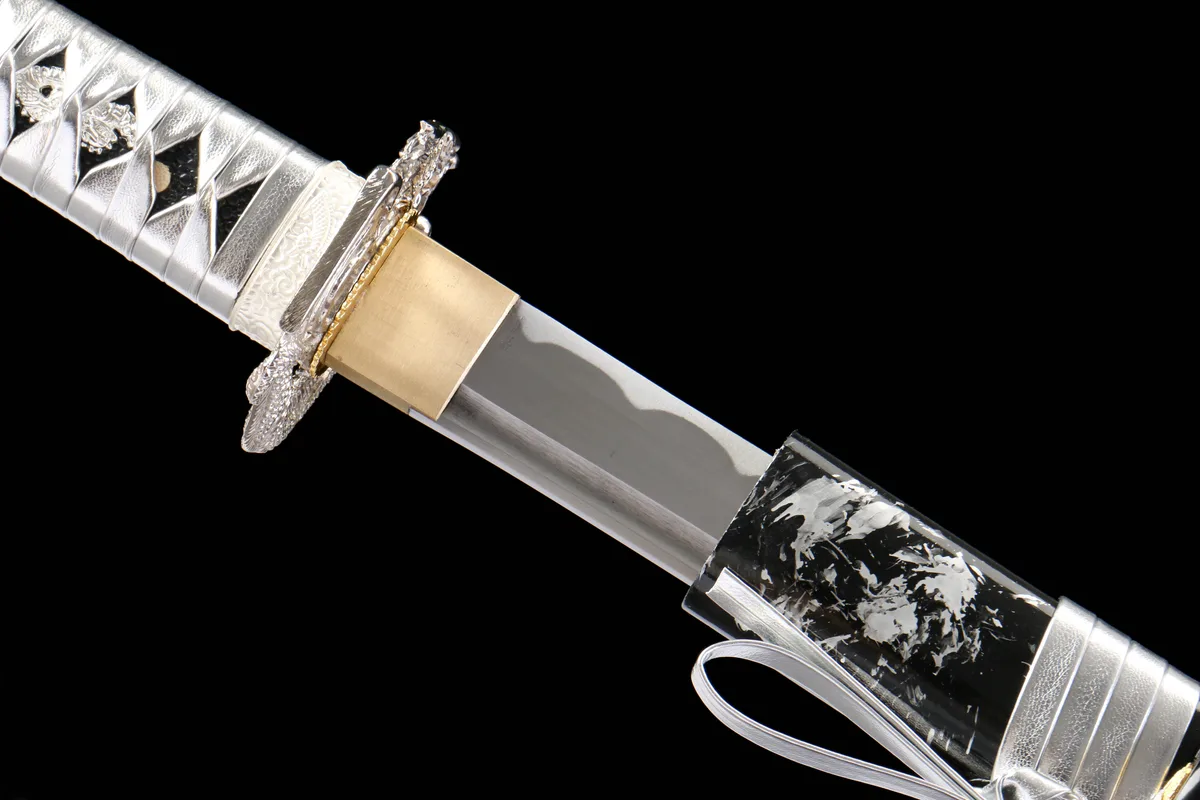
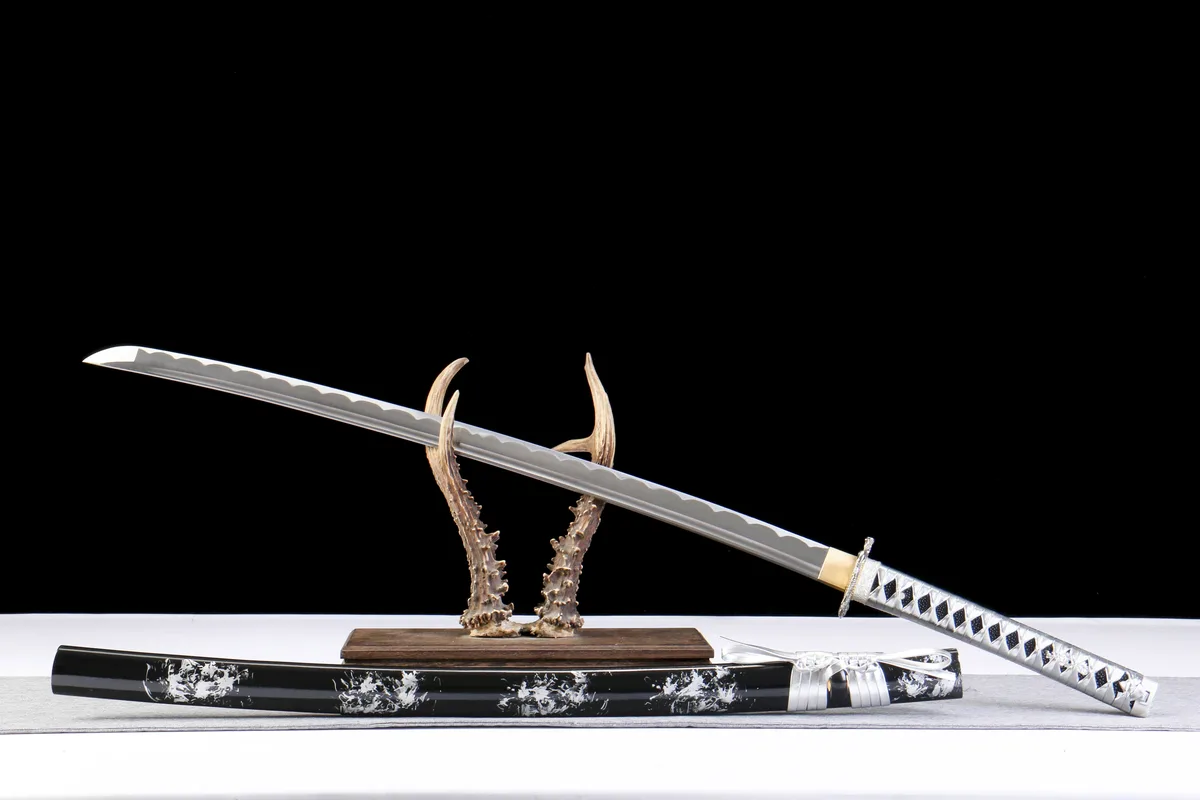
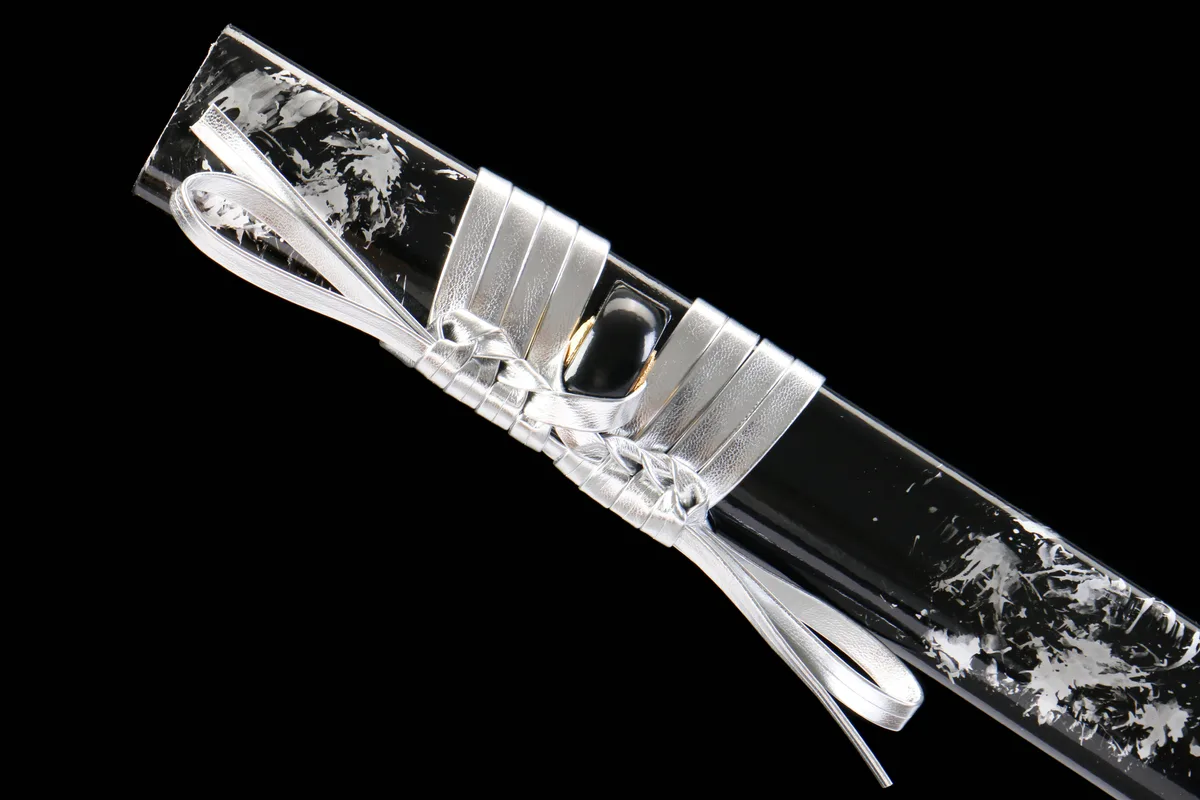
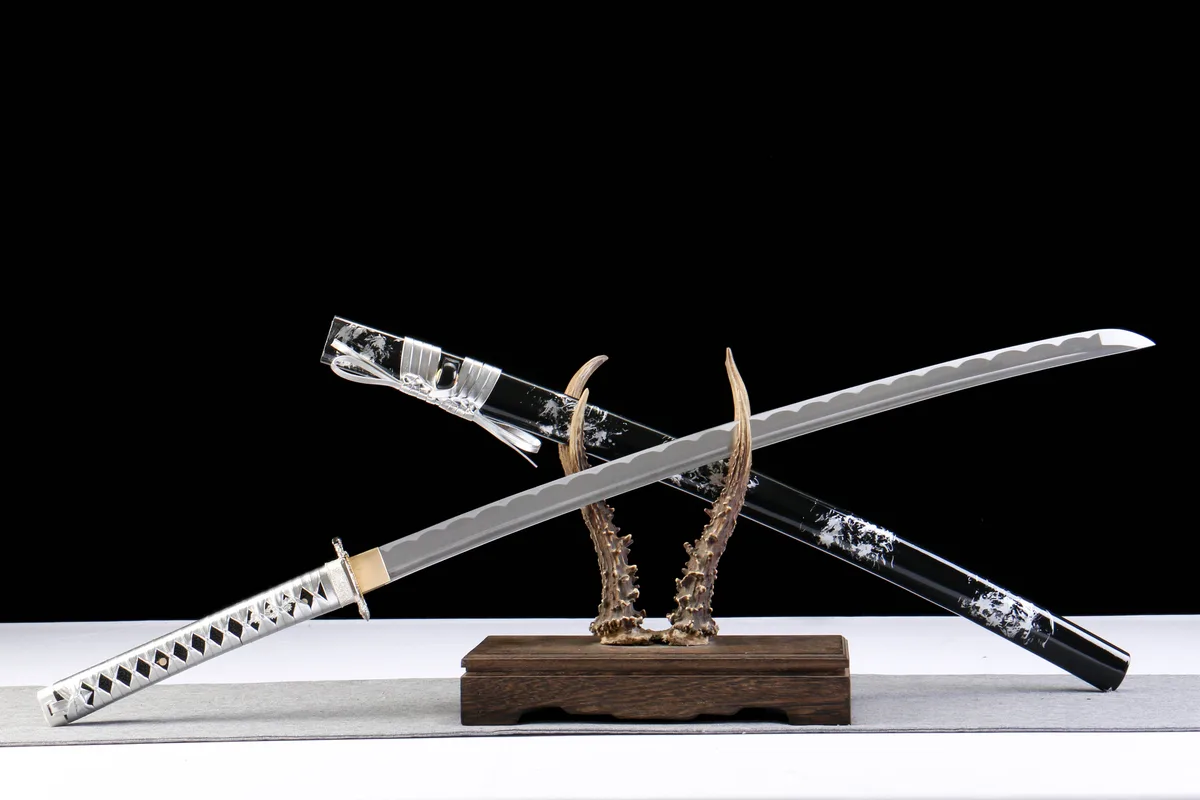
Hand-forged 1065 Carbon Steel katana (102cm total / 72cm blade), crafted in Longquan. Full-tang construction with traditional fittings and hand-lacquered saya.
$219.99
Steel Fire – Hand Forged 1065 Carbon Steel Katana Sword
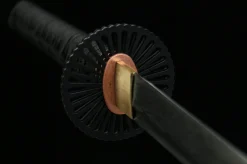
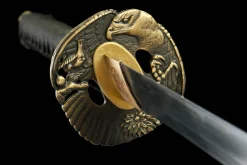
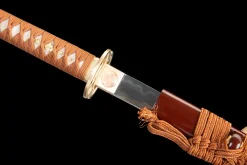
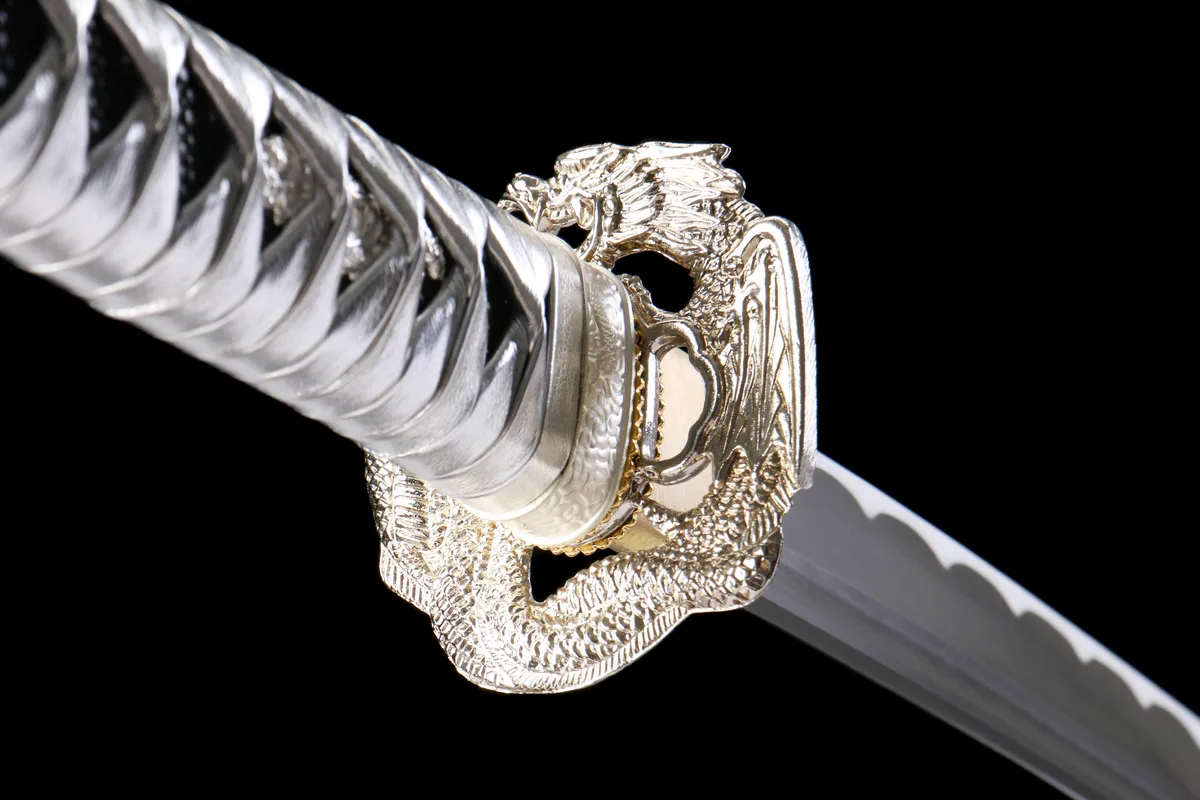
Iron fittings on a 1065 blade tell you something immediately: this is a working configuration, undecorated and direct. The Steel Fire shares its steel and heat treatment with the broader line, but the specific combination of iron hardware and cotton ito wrap is a practitioner’s choice – nothing to tarnish dramatically, nothing to distract.
Specifications
| Blade Steel | 1065 High Carbon Steel |
| Total Length | 102.0 cm / 40.2 in |
| Blade Length | 72.0 cm / 28.3 in |
| Blade Width | 3.2 cm |
| Weight | 1040 g / 36.7 oz |
| Heat Treatment | Salt-Bath Constant-Temperature Hardening (马沸炉 恒温热处理) |
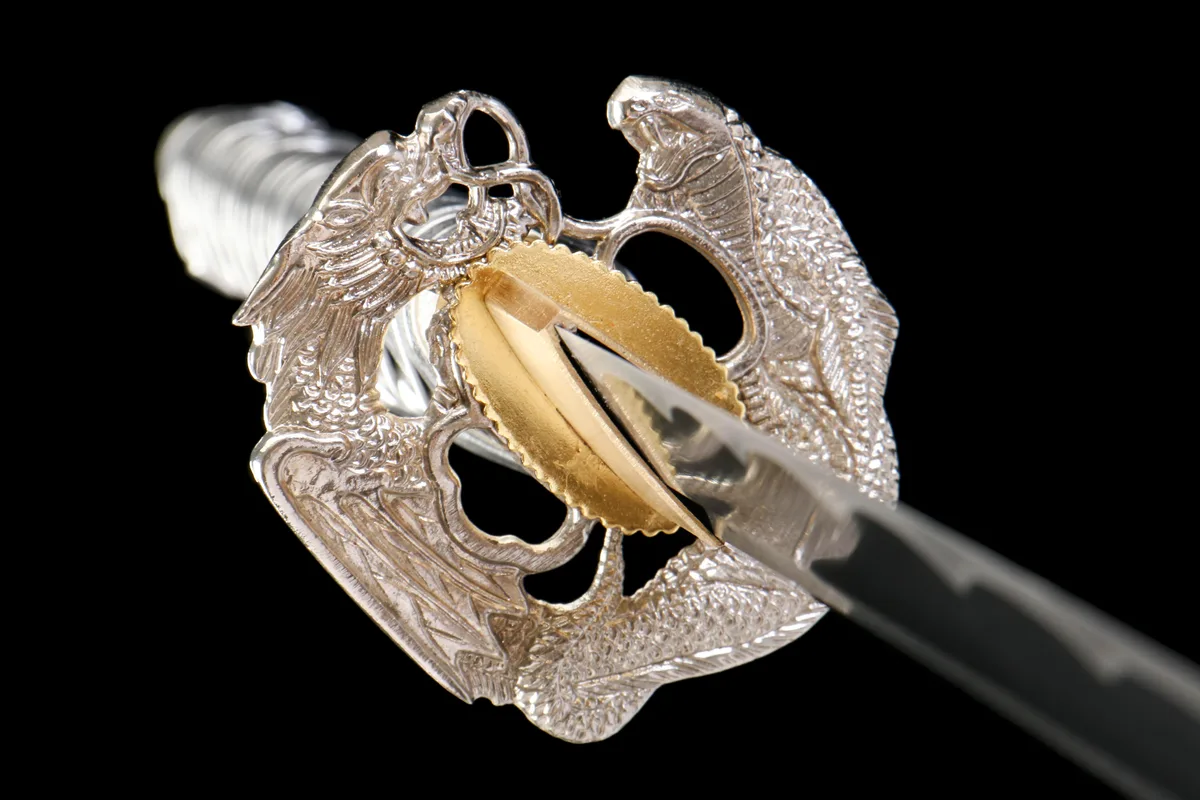
| Fittings | Iron |
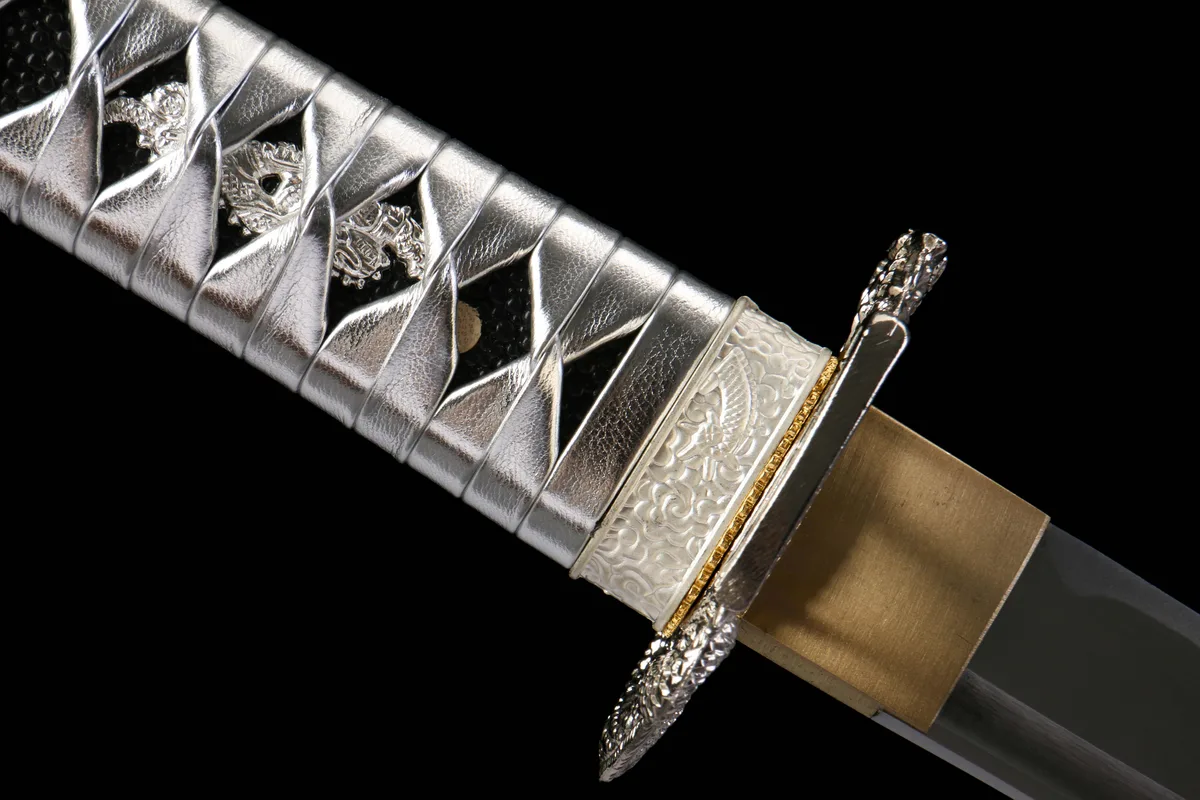
| Handle | Cotton Ito + Genuine Rayskin |
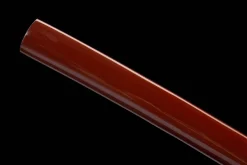
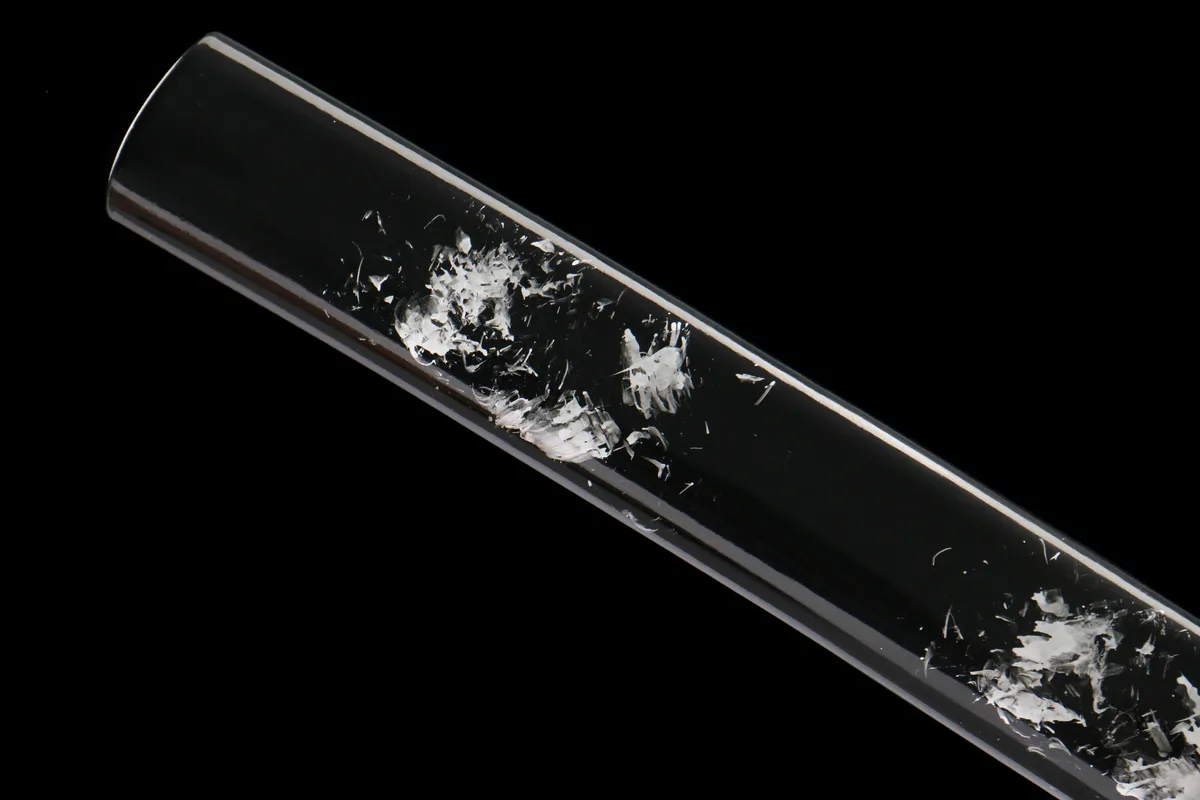
| Sheath | Hardwood, High-Gloss Lacquer |
Forged in Longquan
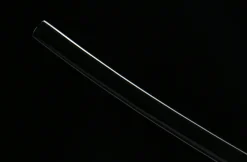
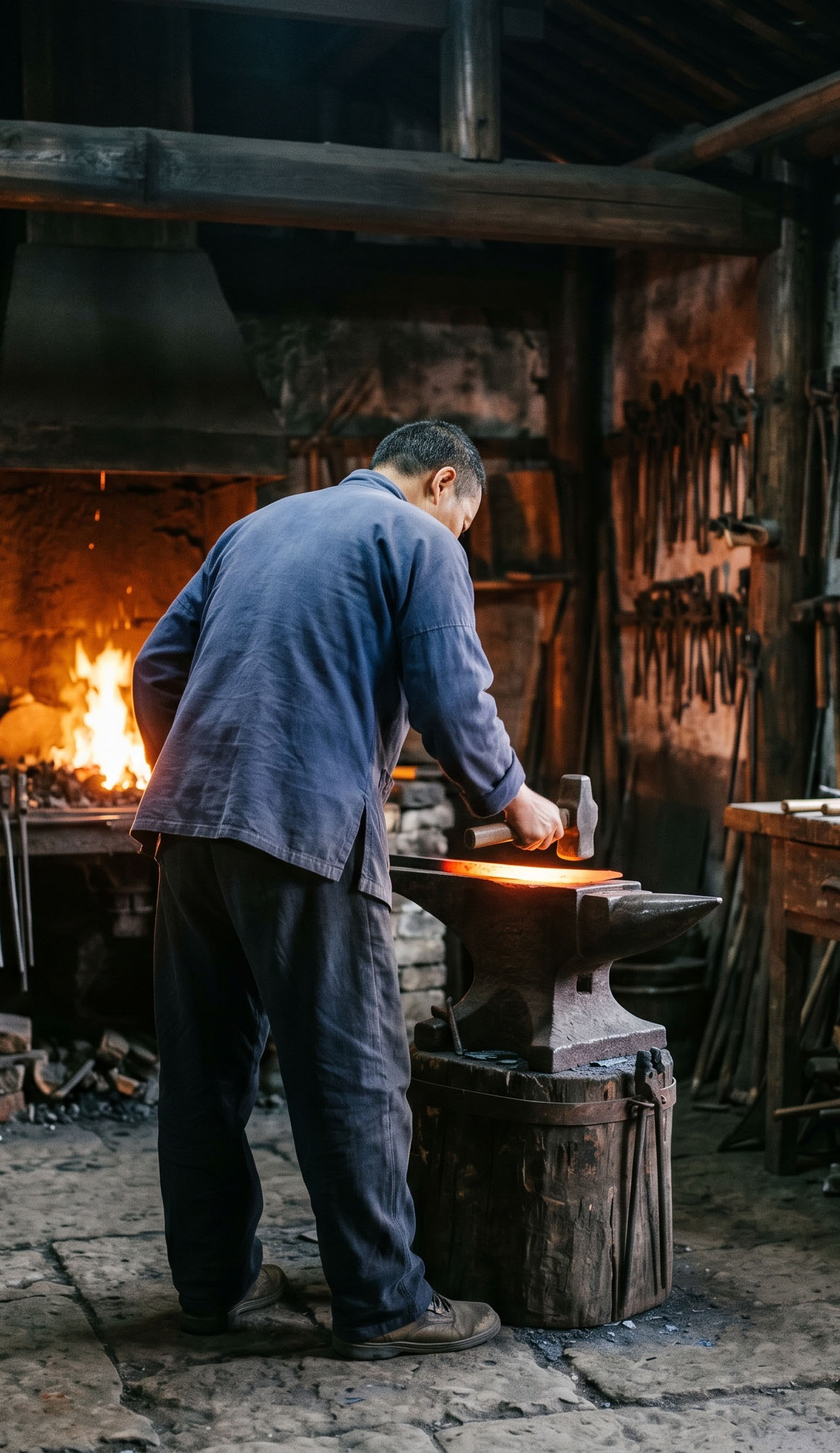
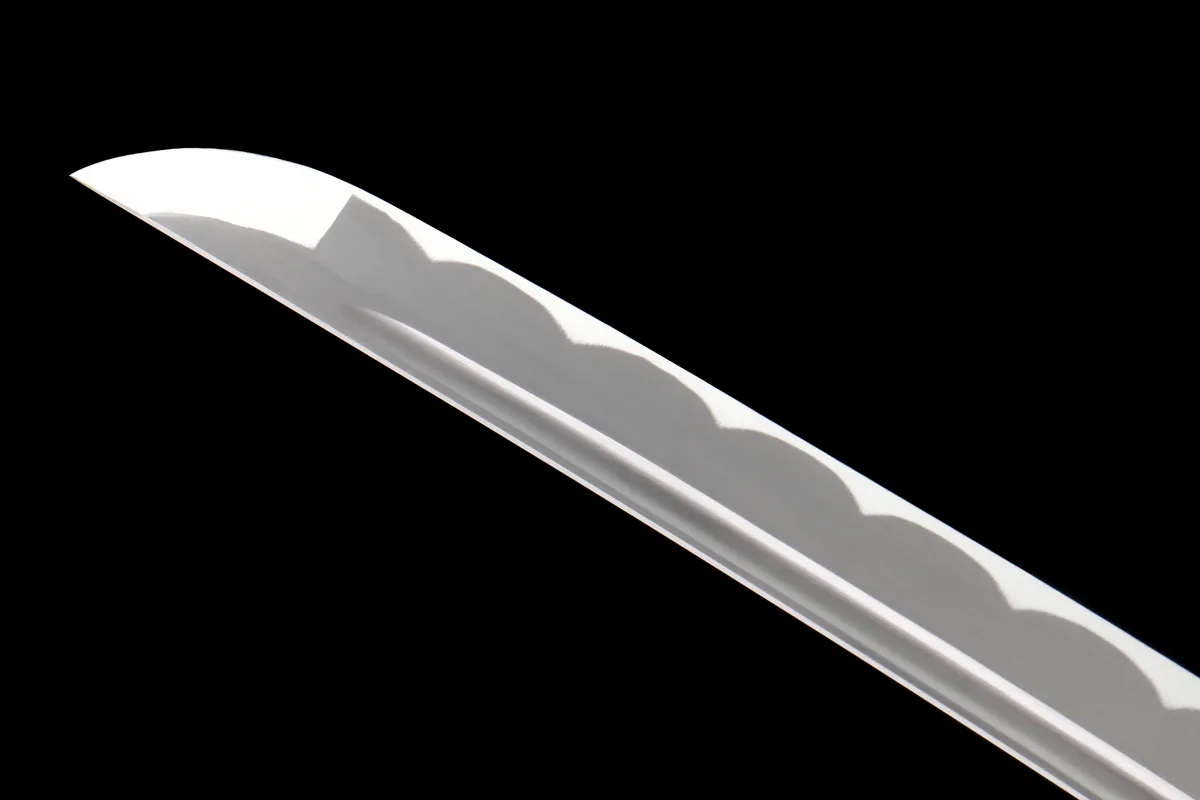
Longquan has been producing bladed tools and weapons for over 2,600 years. The forge processes refined here over four decades at Dragon Blade Forge apply directly to a blade like the Steel Fire. The 1065 high carbon steel billet is heated and shaped into a shinogi-zukuri (ridgeline) profile – the classical Japanese blade geometry with a defined ridge running parallel to the spine. This ridge is structural. It creates a triangular cross-section between spine and edge that resists torsional and lateral force, keeping the geometry stable under load.
Heat treatment uses the 马沸炉 恒温热处理 process: a salt-bath furnace held at constant temperature, delivering even thermal saturation before quench. This method eliminates the temperature gradient inconsistencies that open-flame or air-furnace methods produce, and the result is a blade with predictable, uniform hardness along its full length. At 1065 carbon content, the steel responds to this treatment with hardness sufficient for edge retention and enough residual toughness to resist chipping.
Weight, Balance, Draw
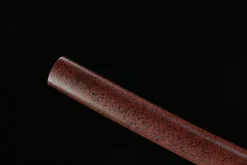
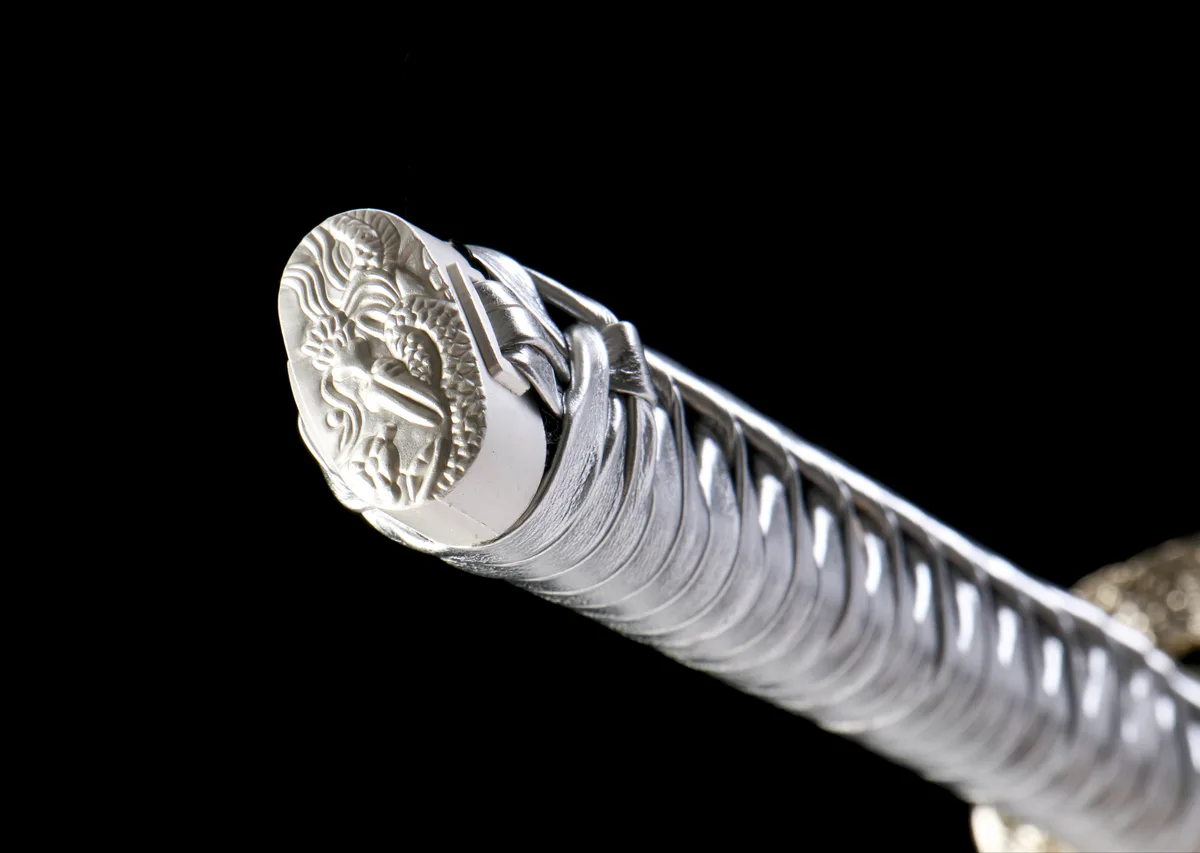
The 72 cm blade and 26 cm handle proportion is a classical katana ratio – the handle is long enough for confident two-hand technique without over-extending the rear hand’s leverage. The genuine rayskin (same) under the cotton ito is not cosmetic; the nodular texture of the rayskin locks the wrap from rotating on the tang even under a forceful grip. Iron fittings keep everything seated firmly, and the draw from the lacquered hardwood saya (scabbard) is clean and repeatable – no binding, no excessive looseness.
Keeping It Sharp
After use, remove all moisture from the blade surface with a soft cloth and apply a thin, even coat of choji oil (clove-based maintenance oil traditional to Japanese swordcraft). Store horizontally or edge-up in the saya in a dry environment. Iron fittings should be checked periodically for surface oxidation and treated with a light oil wipe if needed.
| Weight | 1.32 lbs |
|---|---|
| Dimensions | 102.0 × 3.2 × 0.7 in |
| Hamon | Decorative / Acid-Etched |
| Blade Steel | 1065 Carbon Steel |
| Total Length | 102.0 cm |
| Blade Length | 72.0 cm |
| Heat Treatment | 马沸炉 恒温热处理 |
| Handle Wrap | Cotton Ito + Genuine Rayskin |
| Sheath Material | Hardwood (High-Gloss Lacquer) |
| Fittings | Iron |
| Forging Style | Shinogi-Zukuri (Ridgeline) |
Related products