

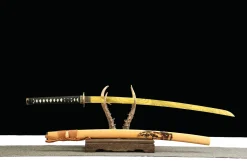




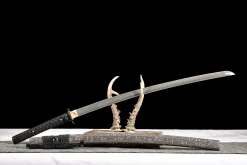






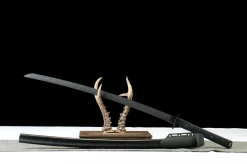


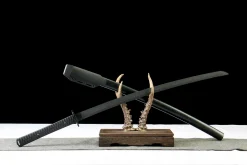


The Reaper – Hand Forged Ceramic Coated Steel Katana Sword
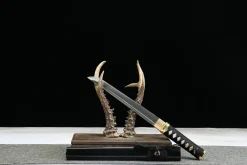
The Reaper katana — 収割者-打刀, the harvester — is unlike any other sword in this collection: a hand-forged carbon steel katana finished with a ceramic coating that delivers rust resistance and wear resistance that no bare carbon steel blade can match, wrapped in the industrial severity of iron fittings and a lacquered solid wood saya that projects pure, uncompromising intent. At $340, the Reaper occupies the premium mid-tier with a proposition no other sword here makes — a blade that is as close to maintenance-free as a hand-forged katana can get, without sacrificing a single gram of functional performance. This is the sword for practitioners who want to cut, not polish.
Specifications
| Blade Steel | Ceramic Coated, Rust-Resistant & Wear-Resistant Carbon Steel |
| Total Length | 103.0 cm / 40.6 inches |
| Blade Length | 72.0 cm / 28.3 inches |
| Blade Width | 3.2 cm |
| Weight | 950 g / 33.5 oz (net) |
| Heat Treatment | Oil Quench & Temper |
| Fittings | Iron (装) |
| Handle | Cotton Ito Wrap |
| Sheath | Solid Wood, Lacquered (烤漆+半K鞘) |
Craftsmanship & Materials
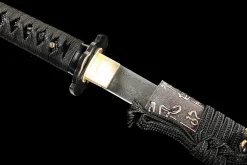
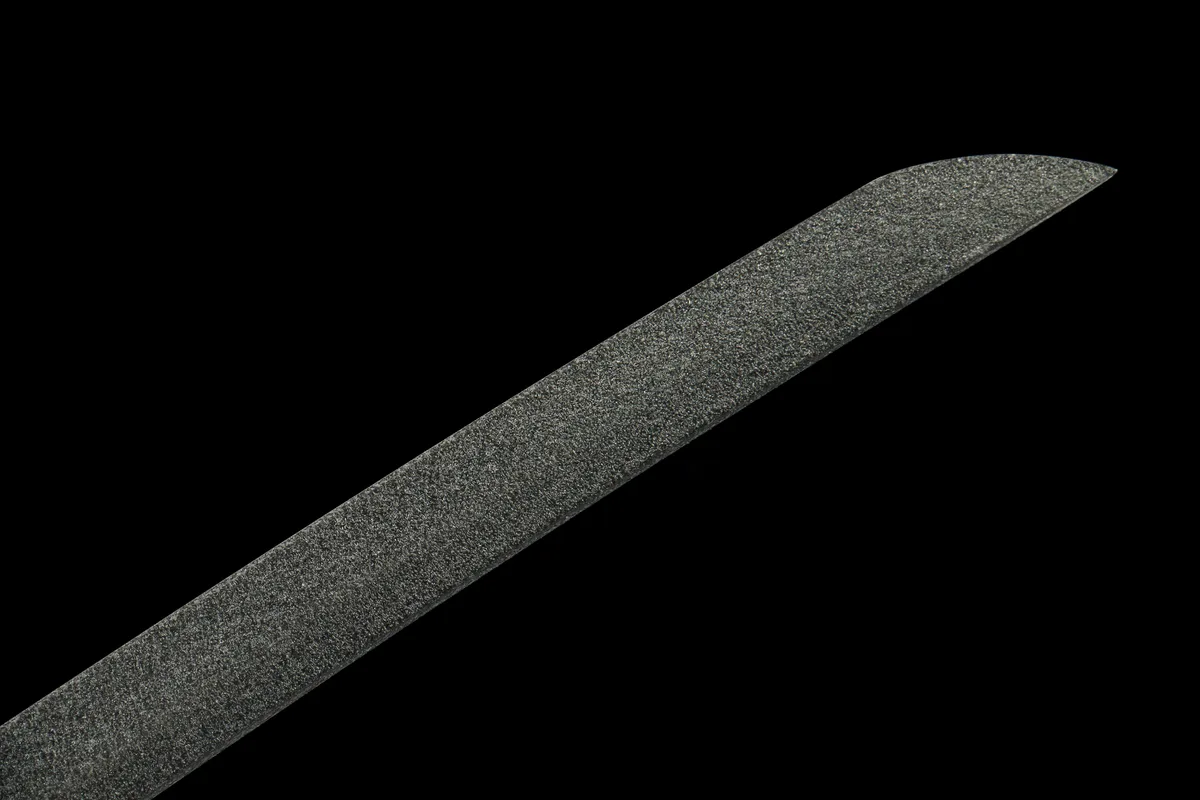
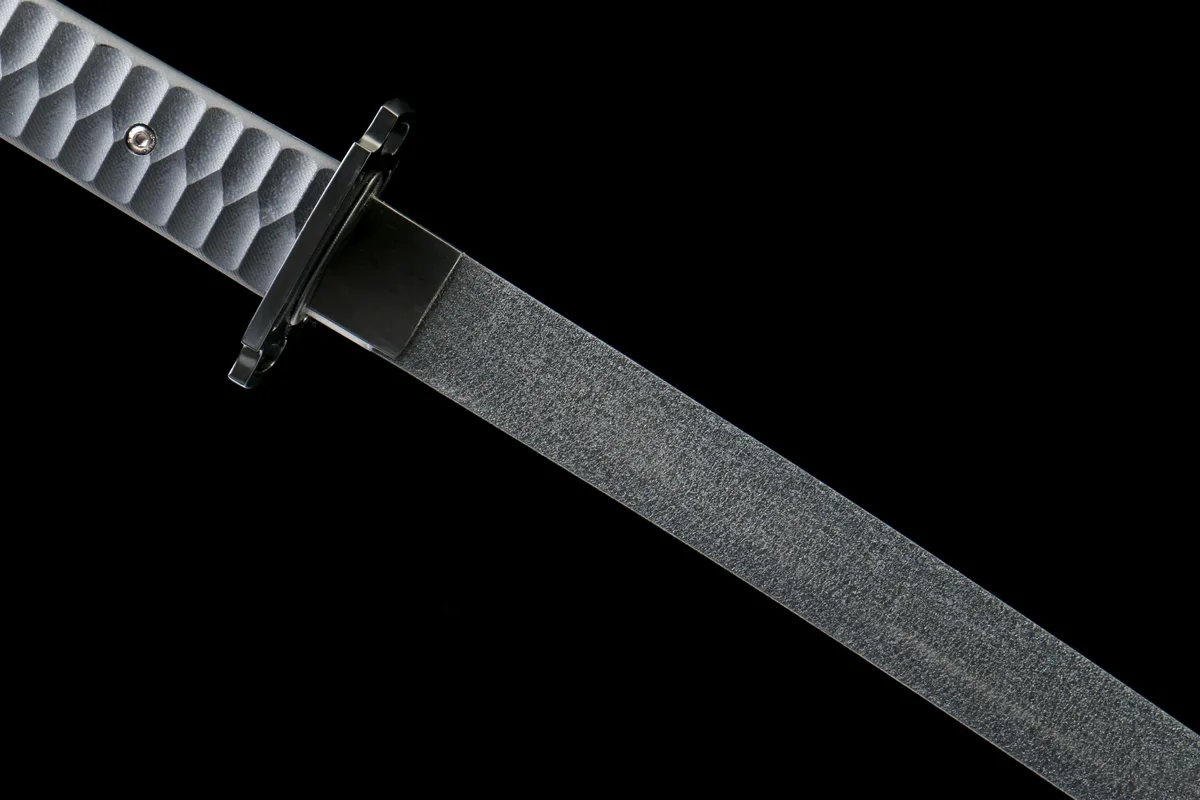
The Reaper’s defining innovation is its ceramic coating — a technology borrowed from industrial tooling and applied to the tradition of hand-forged sword making in a combination that would have been unimaginable to historical smiths. The carbon steel core is forged and ground in Longquan using the shinogi-zukuri ridgeline method, then oil-quenched and tempered to achieve the hardness profile appropriate for serious cutting work. After this traditional process is complete, the blade receives a precision ceramic coating that bonds to the steel surface and creates a micro-hardness layer that resists oxidation, abrasion, and the everyday wear marks that bare-steel blades accumulate with use. The result is a blade that looks aggressive and purposeful on day one — and still looks that way on day five hundred.
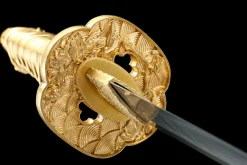
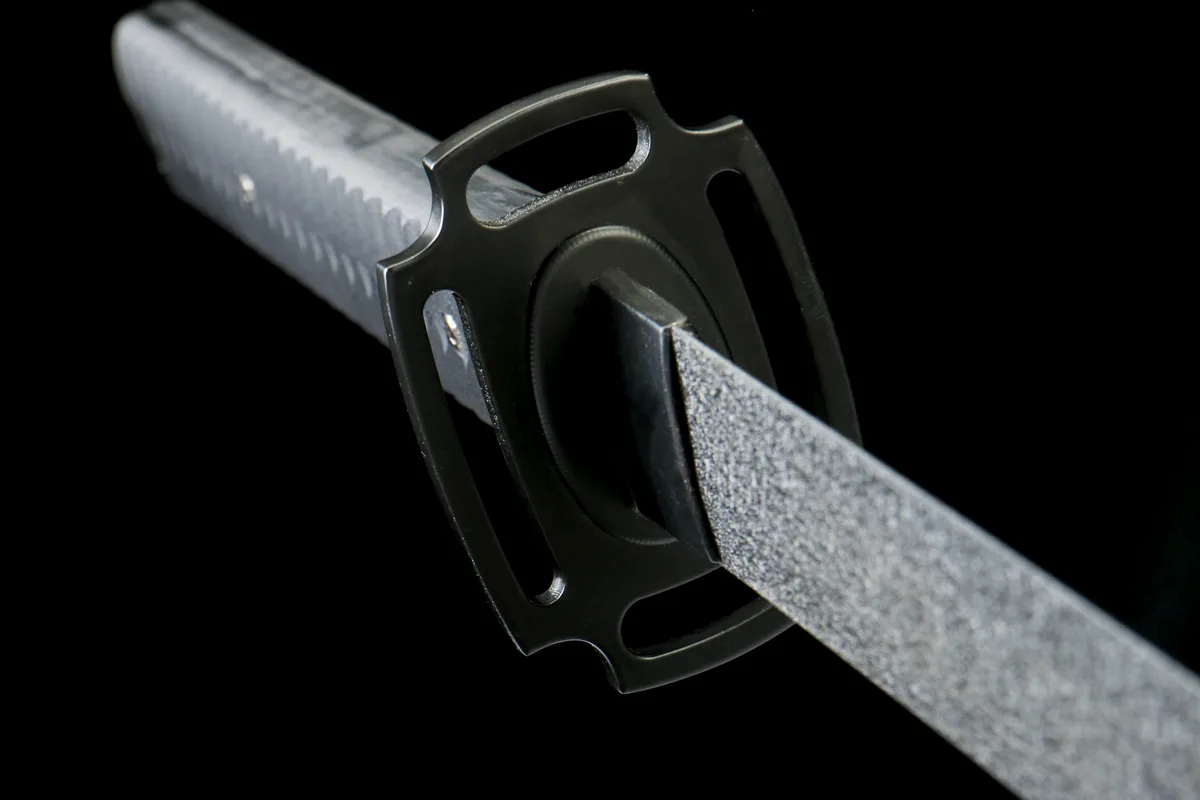
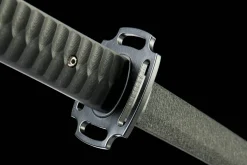
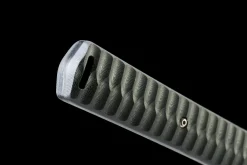
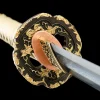
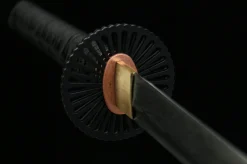
The iron fittings — tsuba, fuchi, and kashira in unadorned iron — are the perfect material choice for a sword named the Reaper. Iron has a raw, ungilded honesty to it; it does not shine, it does not perform, it simply holds its position with immovable solidity. Iron fittings were historically associated with battlefield swords worn by warriors who prioritised function over ceremony — the buke (military class) equivalent of a working knife versus a ceremonial blade. The Reaper’s iron tsuba in particular gives the sword a matte, tactical character that stands apart from the brass and alloy fittings found on most swords in this price range.
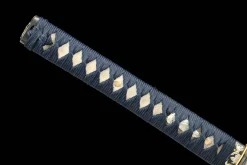
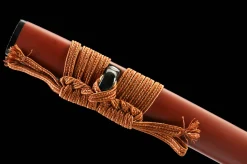
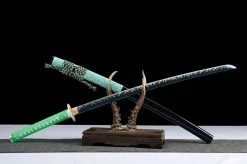
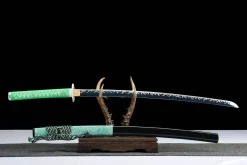
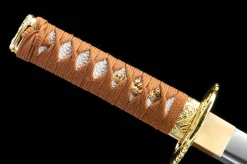
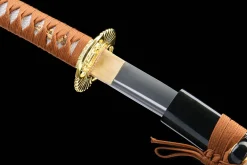
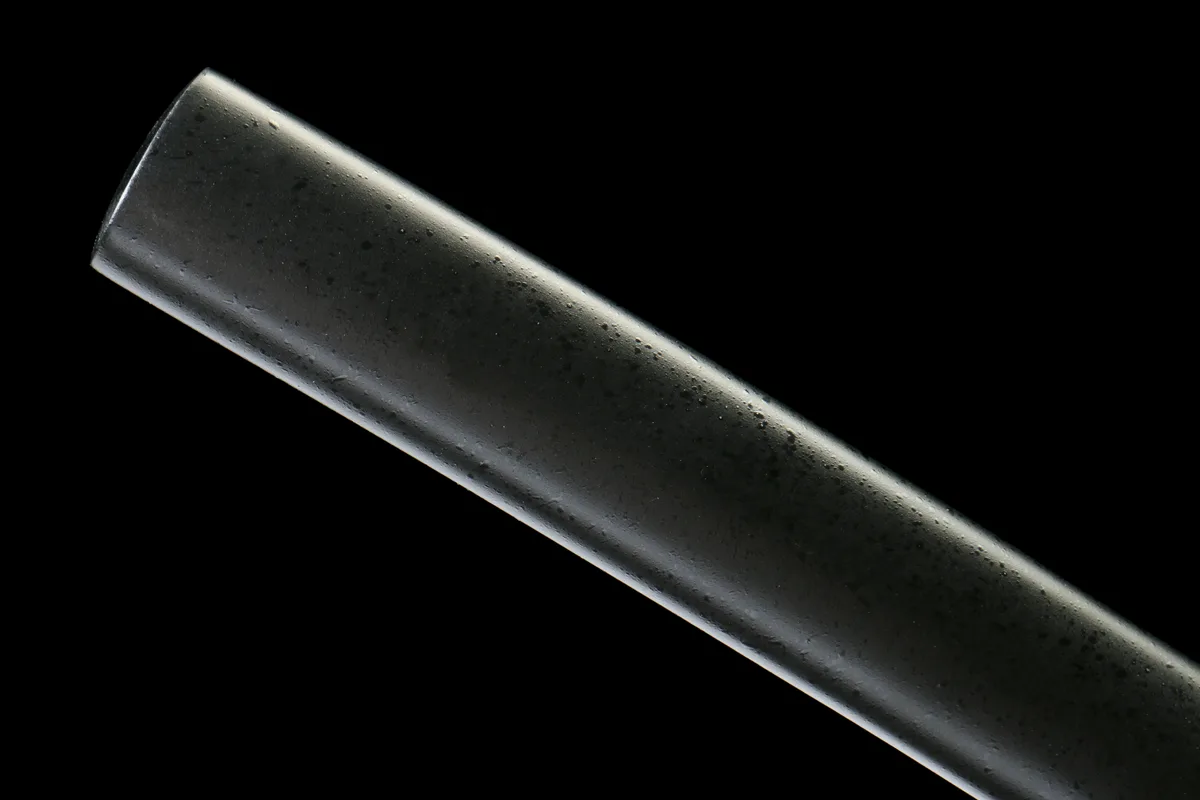
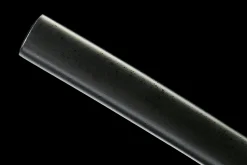
The lacquered solid wood saya (烤漆+半K鞘) presents another deliberate design choice: a high-gloss, jet-black finish that creates a sharp visual contrast with the ceramic-coated blade’s matte grey-black surface when the sword is drawn. This push-pull between gloss and matte, between the sheath’s formality and the blade’s industrial character, gives the Reaper a visual tension that makes it one of the most distinctive swords in the Longquan catalogue at any price point. The cotton ito handle wrap, applied in the traditional diamond pattern, softens the sword’s severity just enough to remind you that it was made by human hands.
Perfect For
- Active tameshigiri practitioners who cut frequently and want a blade that requires minimal maintenance between sessions — the ceramic coating dramatically reduces the oiling regimen that bare carbon steel demands
- Practitioners in humid climates — coastal environments, tropical regions, or damp dojos — where carbon steel oxidation is a persistent and frustrating problem that the Reaper’s coating directly solves
- Aesthetic collectors drawn to industrial, tactical, or dark-themed sword aesthetics who want a sword that looks as serious as it performs, with iron fittings and a lacquered black saya that make no concessions to ornamentation
Care & Maintenance
The ceramic coating on the Reaper’s blade significantly reduces the maintenance demands of conventional carbon steel — you will not need to oil the blade after every session, and occasional light oiling every few weeks is sufficient under normal conditions. However, the coating is not impervious: avoid striking the blade against hard surfaces such as metal stands or stone, as impact can chip the ceramic layer and expose the underlying steel to moisture. The lacquered saya requires no special treatment beyond keeping it dry — do not use oil or conditioning products on the saya surface, as these can soften the lacquer finish over time.
Frequently Asked Questions
What is a ceramic coated blade and what are the benefits on The Reaper katana?
The Reaper’s blade features a ceramic coating applied over its carbon steel core, providing enhanced rust resistance and wear resistance without the need for constant oiling. Ceramic coatings create a hard, low-friction surface that protects against corrosion in humid environments and reduces surface wear from repeated use. For a katana styled as a practical, low-maintenance cutter, this coating adds long-term durability that bare carbon steel blades cannot match.
What are iron fittings on The Reaper and how do they affect the sword’s character?
The Reaper uses iron fittings (tsuba, fuchi, kashira), giving it a darker, more austere aesthetic compared to brass, copper, or gilded alternatives. Iron fittings are historically accurate for functional Japanese swords prioritizing practicality over ornament, fitting The Reaper’s aggressive name and design intent. They are robust and durable, though they require more attention to prevent surface oxidation compared to non-ferrous metals.
Is The Reaper katana battle ready and good for cutting?
Yes, The Reaper is a fully functional, battle-ready katana. Its carbon steel blade with ceramic coating and oil quench and temper heat treatment is built to cut. At 72 cm blade length, 950 g net weight, and Shinogi-Zukuri geometry, it meets all physical requirements for tameshigiri and practice cutting. The ceramic coating also makes it more forgiving in terms of maintenance, which suits practitioners who want a reliable cutter with less upkeep.
What is a lacquered solid wood sheath (烤漆+半K鞘) on The Reaper?
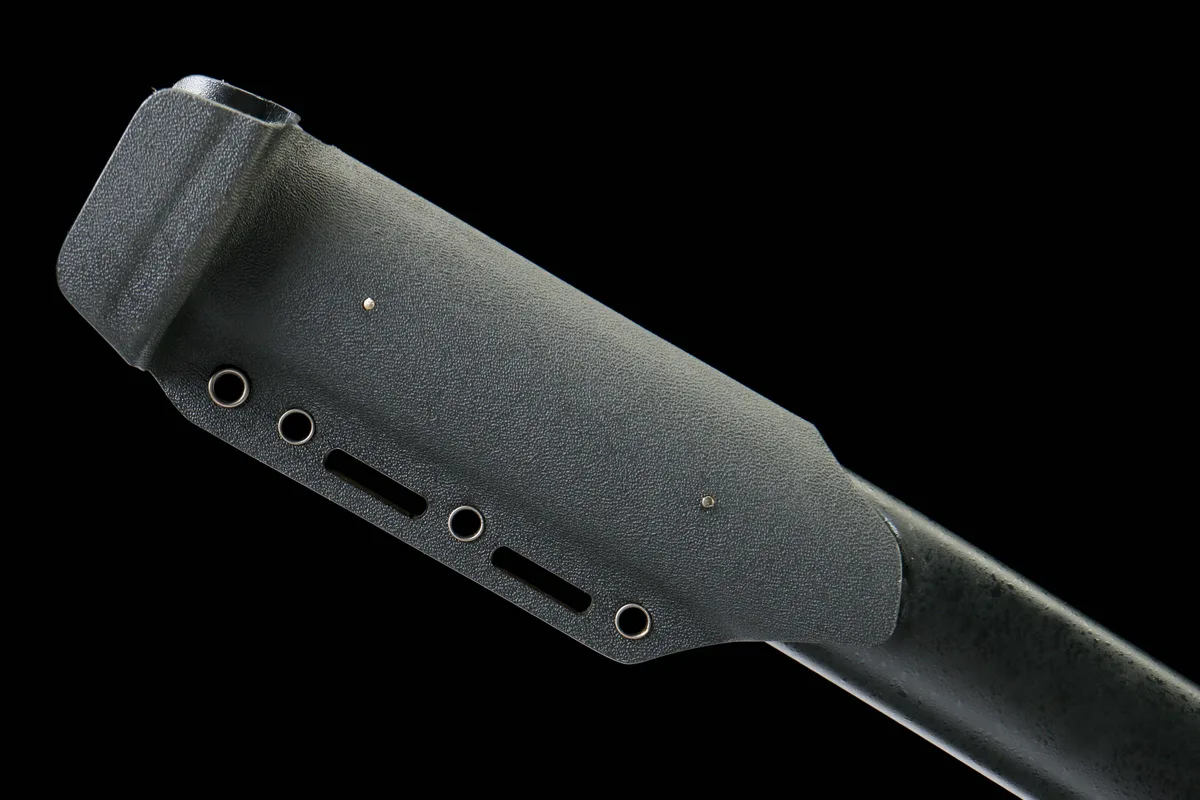
The Reaper’s sheath is constructed from solid wood with a baked lacquer finish (烤漆), producing a hard, glossy, and weather-resistant surface. The half-K style (半K鞘) refers to a specific construction method that reinforces the sheath opening for improved durability and a more secure blade fit. Compared to basic wood or synthetic sheaths, this lacquered solid wood construction offers better longevity and a premium visual finish consistent with The Reaper’s overall aesthetic.
Is The Reaper katana worth $340 at the premium price tier?
At $340, The Reaper offers features uncommon at this price point — specifically its ceramic-coated rust and wear-resistant blade, lacquered solid wood sheath, and iron fittings. The ceramic coating alone reduces long-term maintenance costs and extends blade life, offering practical value beyond aesthetics. Compared to similarly priced 1065 or T10 steel katana without surface treatments, The Reaper is a compelling choice for buyers who prioritize durability and a distinctive, battle-worn visual identity.
| Weight | 1.2 lbs |
|---|---|
| Dimensions | 103.0 × 3.2 × 0.7 in |
| Sword Type | Katana |
| Blade Steel | Ceramic Coated Steel |
| Total Length | 103.0 cm |
| Blade Length | 72.0 cm |
| Heat Treatment | Oil Quench & Temper |
| Handle Wrap | Cotton Ito Wrap |
| Sheath Material | Solid Wood, (烤漆+半K鞘) |
| Fittings | Iron, (装) |
| Forging Style | Shinogi-Zukuri (Ridgeline) |
Related products

High Carbon Steel

1045 Carbon Steel


1065 Carbon Steel


Damascus Steel
Crimson Flame (之烽) – Hand Forged Damascus Steel Katana Sword


1065 Carbon Steel

1065 Carbon Steel

Damascus Steel
1065 Carbon Steel