


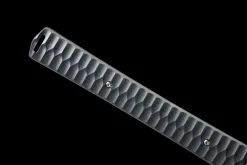
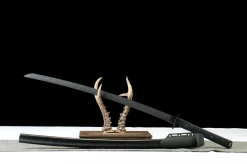


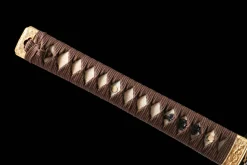

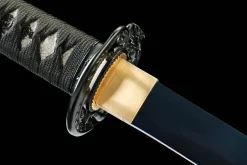







Tsukuyomi – Hand Forged Damascus Steel Katana Sword
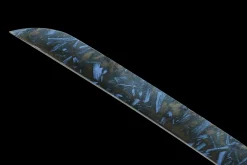
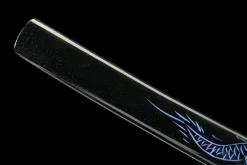
Named for the Japanese god of the moon, the Tsukuyomi (月読) is a Damascus pattern-welded katana whose烤红 (roasted red) acid-etched blade surface shimmers with the amber and crimson tones of a lunar eclipse — a visual identity unlike any other Damascus katana in our collection. Fitted with iron hardware and priced at $200, the Tsukuyomi occupies a rare position: genuine pattern-welded Damascus craftsmanship at a mid-range price, delivering the layered steel aesthetics of a collector’s blade to practitioners who want substance with their beauty. The contrast between its dark, flame-kissed blade and the Aohada green saya is nothing short of theatrical.
Specifications
| Blade Steel | Damascus / Pattern-Welded Steel (烤红) |
| Total Length | 103.0 cm / 40.6 inches |
| Blade Length | 72.0 cm / 28.3 inches |
| Blade Width | 3.2 cm |
| Weight | 950 g / 33.5 oz (net) |
| Heat Treatment | Oil Quench & Temper |
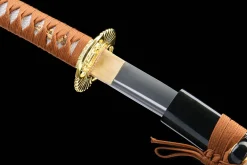
| Fittings | Iron |
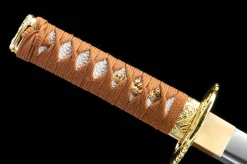
| Handle | Cotton Ito Wrap |
| Sheath | Green Bark Wood (Aohada) |
Craftsmanship & Materials
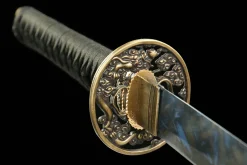
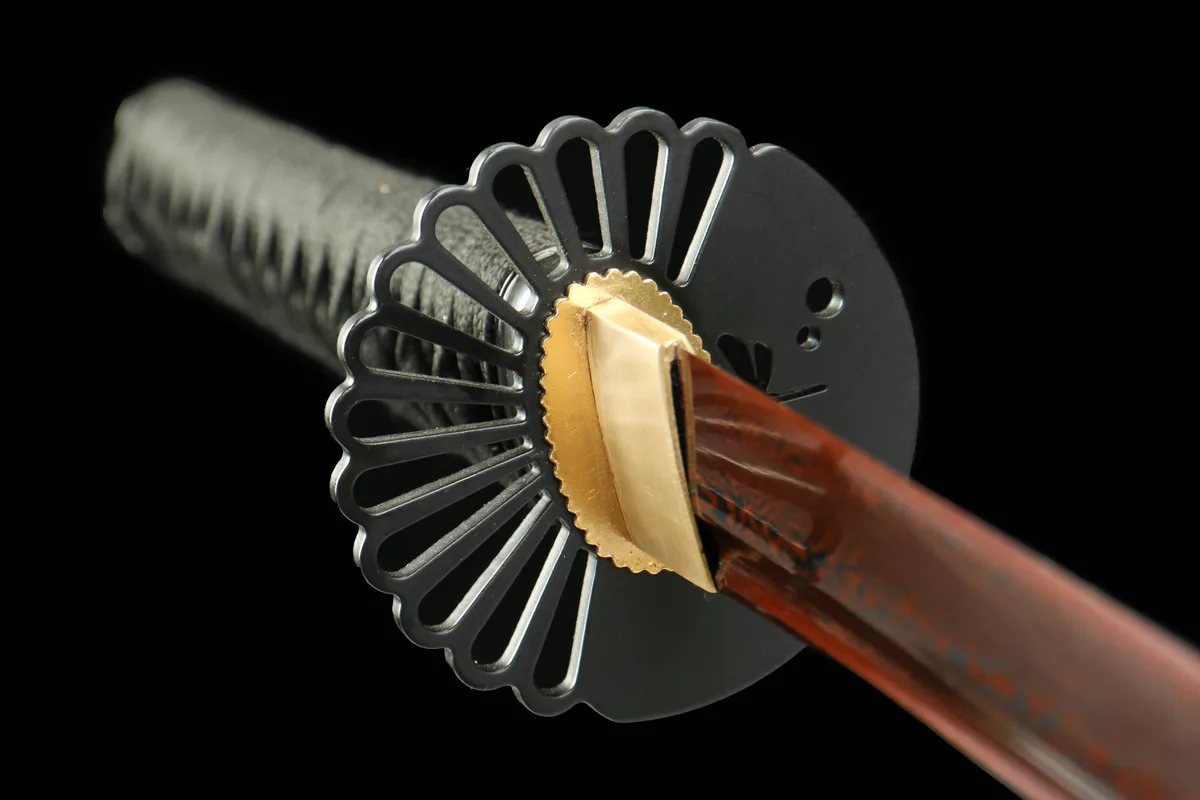
The Tsukuyomi’s blade is forged from pattern-welded Damascus steel and finished using the 烤红 (kǎo hóng — roasted red) surface treatment, a process in which the etched Damascus surface is exposed to controlled heat that oxidises the steel layers at different rates, producing a spectrum of warm reds, deep ambers, and burnished bronzes locked into the flowing pattern of the weld lines. This is not a paint or coating — it is a transformation of the steel’s own surface chemistry, revealing colour from within the material itself. The effect evokes the surface of the moon during a total eclipse: simultaneously ancient and otherworldly.
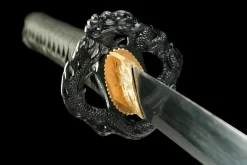
The iron fittings of the Tsukuyomi are a deliberate aesthetic and historical choice. Iron tsuba and iron furniture were common among working swords of the Edo period — less ornate than shakudo or shibuichi alloy work, but possessed of a raw, martial gravitas that suits a sword named for a deity. Iron develops a natural charcoal-grey patina over time that deepens the sword’s overall colour story: the dark fittings, the roasted-red Damascus blade, and the green Aohada saya create a palette that feels pulled from myth rather than a product catalogue.
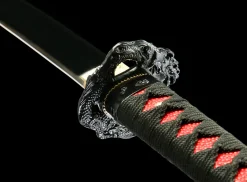
At $200, the Tsukuyomi represents extraordinary value for a hand-forged Damascus katana. The pattern-welded construction provides the inherent toughness that comes from the interlocking hard-and-soft steel matrix, and the 72 cm shinogi-zukuri blade geometry delivers the proven cutting geometry of a classical katana. The cotton ito wrap is applied over the tsuka with consistent tension, providing a handle that is both aesthetically correct and practically secure during two-handed use. This is a moon god’s weapon, priced for mortal hands.
Perfect For
- Damascus collectors on a mid-range budget who want genuine pattern-welded steel with a dramatic, unique surface finish rather than a plain monosteel blade
- Martial artists and iaido practitioners who appreciate the aesthetic dimension of their training weapon and want a blade with visual character that motivates daily practice
- Mythology enthusiasts and anime/manga-influenced collectors drawn to the Tsukuyomi’s moon deity namesake and its otherworldly roasted-red blade appearance
Care & Maintenance
The 烤红 surface treatment on the Tsukuyomi’s Damascus blade is durable but not impervious — protect it by applying a thin layer of choji oil after every use, paying particular attention to the etched valleys in the pattern where moisture can accumulate. The iron fittings are more rust-prone than copper or brass alternatives; dry them thoroughly after any humidity exposure and apply a micro-thin coat of oil to the iron surfaces every few months to maintain the natural patina without allowing red rust to develop. If surface rust appears on the fittings, remove it gently with 0000 steel wool and immediately re-oil to prevent progression.
Frequently Asked Questions
What type of Damascus steel is used in the Tsukuyomi katana?
The Tsukuyomi (LQS-0063) features a pattern-welded Damascus blade with a distinctive ‘baked red’ finish (烤红), achieved through a heat-coloring process applied to the folded steel surface. This technique enhances the visibility of the layered Damascus patterns by bringing out warm red and brown tonal variations. The folded steel construction involves forge-welding multiple steel layers together, creating both the signature visual pattern and a structurally sound blade.
What does the ‘baked red’ (烤红) finish on the Tsukuyomi blade mean?
The ‘baked red’ (烤红) finish on the Tsukuyomi refers to a controlled heat-oxidation process applied to the Damascus blade surface after grinding and polishing. Heating the steel to specific temperatures causes oxidation that produces deep red, amber, and brown hues — highlighting the folded layer patterns dramatically. This finish is primarily aesthetic, giving the Tsukuyomi a visually striking appearance distinct from standard polished or acid-etched blades, and is a key reason buyers choose this model.
Is the Tsukuyomi katana battle ready for cutting practice?
The Tsukuyomi is a functional katana built on a pattern-welded Damascus blade with oil quench and temper heat treatment, making it capable of real cutting practice. At 72 cm blade length and 950 g net weight, its dimensions are standard for a full-size katana. However, the decorative ‘baked red’ finish may show wear with heavy cutting use, so many owners reserve the Tsukuyomi primarily for display, light practice, or as a collector piece alongside the functional benefit.
Why does the Tsukuyomi use iron fittings instead of copper or brass?
The Tsukuyomi (LQS-0063) features iron fittings (装), which lend the sword a darker, more austere aesthetic that complements its dramatic baked-red Damascus blade. Iron fittings are historically accurate to many traditional Japanese sword styles and develop a natural rust patina over time if not maintained. While iron is heavier and requires more care than copper or brass, it adds a raw, martial character that enhances the Tsukuyomi’s overall visual identity.
How does the Tsukuyomi compare to other Damascus katanas at $200?
At $200, the Tsukuyomi is exceptional value for a Damascus katana. Most pattern-welded swords at this price point offer minimal finishing detail, but the Tsukuyomi adds a distinctive ‘baked red’ heat-oxidized finish and iron fittings that elevate its visual presentation significantly. Compared to the Shadow Warrior at $420, the Tsukuyomi trades handmade stone-pattern Damascus and copper fittings for affordability. For collectors wanting a Damascus katana under $200 with strong visual impact, the Tsukuyomi is a standout choice.
| Weight | 1.2 lbs |
|---|---|
| Dimensions | 103.0 × 3.2 × 0.7 in |
| Sword Type | Katana |
| Blade Steel | Damascus Steel |
| Total Length | 103.0 cm |
| Blade Length | 72.0 cm |
| Heat Treatment | Oil Quench & Temper |
| Handle Wrap | Cotton Ito Wrap |
| Sheath Material | Green Bark Wood (Aohada) |
| Fittings | Iron, (装) |
| Forging Style | Folded Steel (Pattern Welded) |
Related products

1045 Carbon Steel
Black Heaven Feather – Hand Forged 1045 Carbon Steel Katana Sword

1045 Carbon Steel

1045 Carbon Steel

1065 Carbon Steel

Anime & Pop Culture
Ghost of Tsushima – Hand Forged T10 Tool Steel Wakizashi Sword


Damascus Steel
Crimson Flame (之烽) – Hand Forged Damascus Steel Katana Sword