







Ward Evil – Hand Forged 1045 Carbon Steel Katana Sword
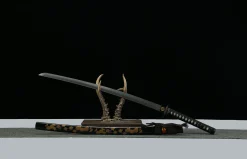
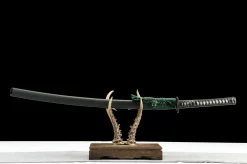
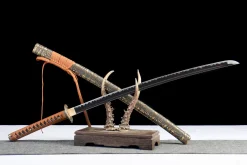
Hand-forged 1045 Carbon Steel katana (102cm total / 72cm blade), crafted in Longquan. Full-tang 1045 carbon steel, hand-fitted koshirae, ready for practice cutting or display.
$179.99
Ward Evil – Hand Forged 1045 Carbon Steel Katana Sword
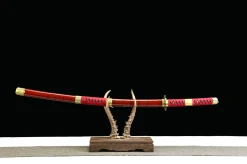
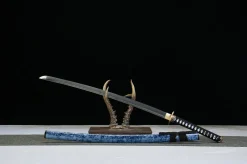
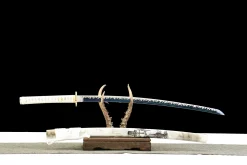
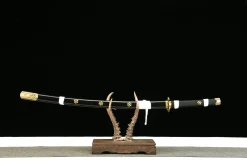
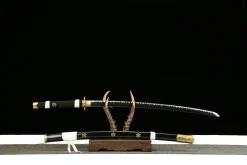
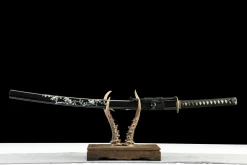
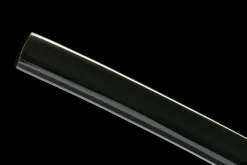
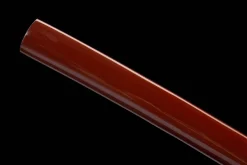
却邪 – “Ward Evil” – carries one of the oldest functions a sword could claim: not to wound, but to repel. This piece brings that history to a wall with clean, deliberate visual restraint. The piano-lacquered solid wood saya is the first thing a visitor sees. The blade and fittings answer it.
Specifications
| Blade Steel | 1045 Carbon Steel |
| Total Length | 102.0 cm / 40.2 in |
| Blade Length | 72.0 cm / 28.3 in |
| Blade Width | 3.2 cm |
| Weight | 1040 g / 36.7 oz |
| Heat Treatment | Temper |
| Fittings | Alloy |
| Handle | Cotton Ito Wrap |
| Sheath | Solid wood, piano lacquer finish (实木钢琴烤漆) |
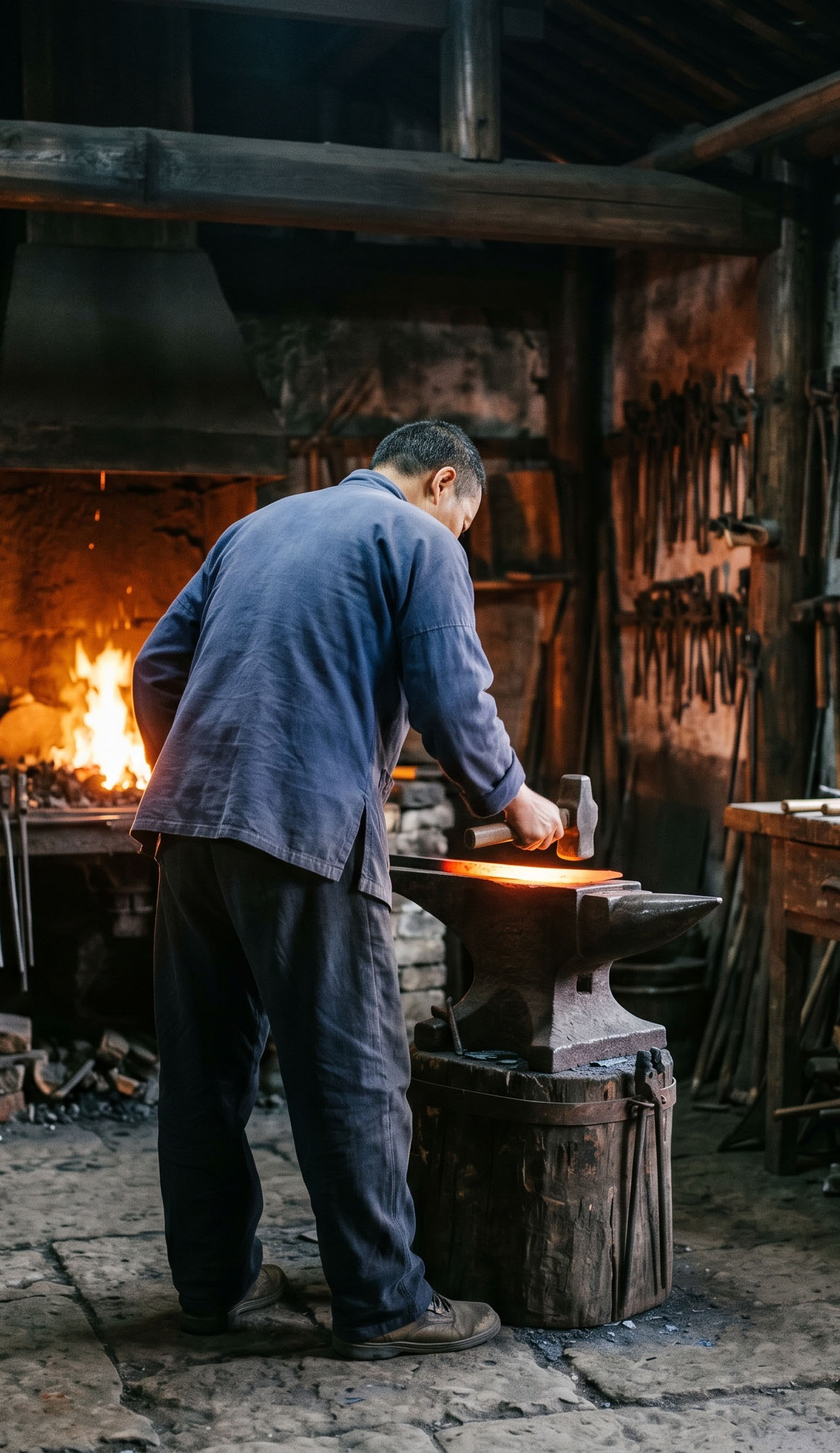
Forged in Longquan
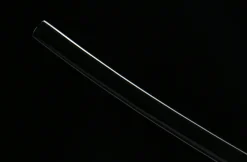
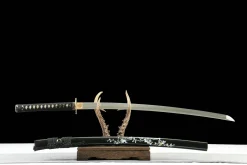
Longquan has been producing blades for over 2,600 years, and the shinogi-zukuri (鎬造) geometry – the ridged profile that gives the katana its distinctive cross-section – remains as precise here as it has always been. The 1045 carbon steel blade is tempered to a consistent hardness and surface-finished to present a clean, reflective line along the full 72 cm of its length. At 3.2 cm wide, the blade has the authoritative proportion of a traditional tachi-influenced katana rather than the slimmer profiles of some modern reproductions.
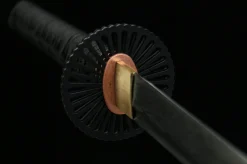
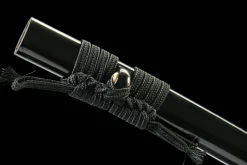
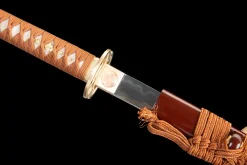
The alloy fittings are cast and finished to a consistent tone across the tsuba (hand guard), fuchi (handle collar), and kashira (end cap). Against the lacquered black or deep-toned saya, they present a unified palette – nothing competing, everything cohesive. Ward Evil is designed to be seen as a complete object, not a collection of parts.
Weight, Balance, Draw
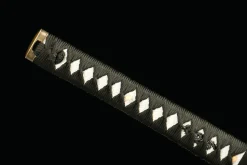
The 27 cm cotton ito wrap is wound in the traditional diagonal lozenge pattern – firm, close, with the characteristic raised texture that makes the grip instantly readable at a glance from across a room. The saya’s piano lacquer finish is glassy and deep, the kind of surface that reflects a room back at you in a slight curve. Drawing the blade reveals the shinogi ridge line running clean and uninterrupted from habaki (the brass blade collar) to kissaki (the blade tip) – a line that photographs as a sharp division of light and shadow under directional lighting.
Keeping It Sharp
Wipe the blade periodically with a soft, dry cloth to remove any fingerprint oils that will dull the reflective surface over time. Apply a light coat of choji oil – a traditional mineral-clove blend used for Japanese blade preservation – every few months to maintain the finish. Store horizontally on a wall mount or in the saya on a sword stand, away from direct sunlight, which will degrade the lacquer on the sheath.
| Weight | 1.32 lbs |
|---|---|
| Dimensions | 102.0 × 3.2 × 0.7 in |
| Hamon | Decorative / Acid-Etched |
| Blade Steel | 1045 Carbon Steel |
| Total Length | 102.0 cm |
| Blade Length | 72.0 cm |
| Heat Treatment | Temper |
| Handle Wrap | Cotton Ito Wrap |
| Sheath Material | 实木钢琴烤漆 |
| Fittings | Alloy |
| Forging Style | 鎬造 |
Related products