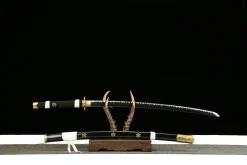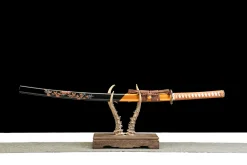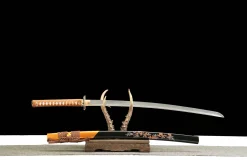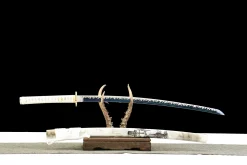






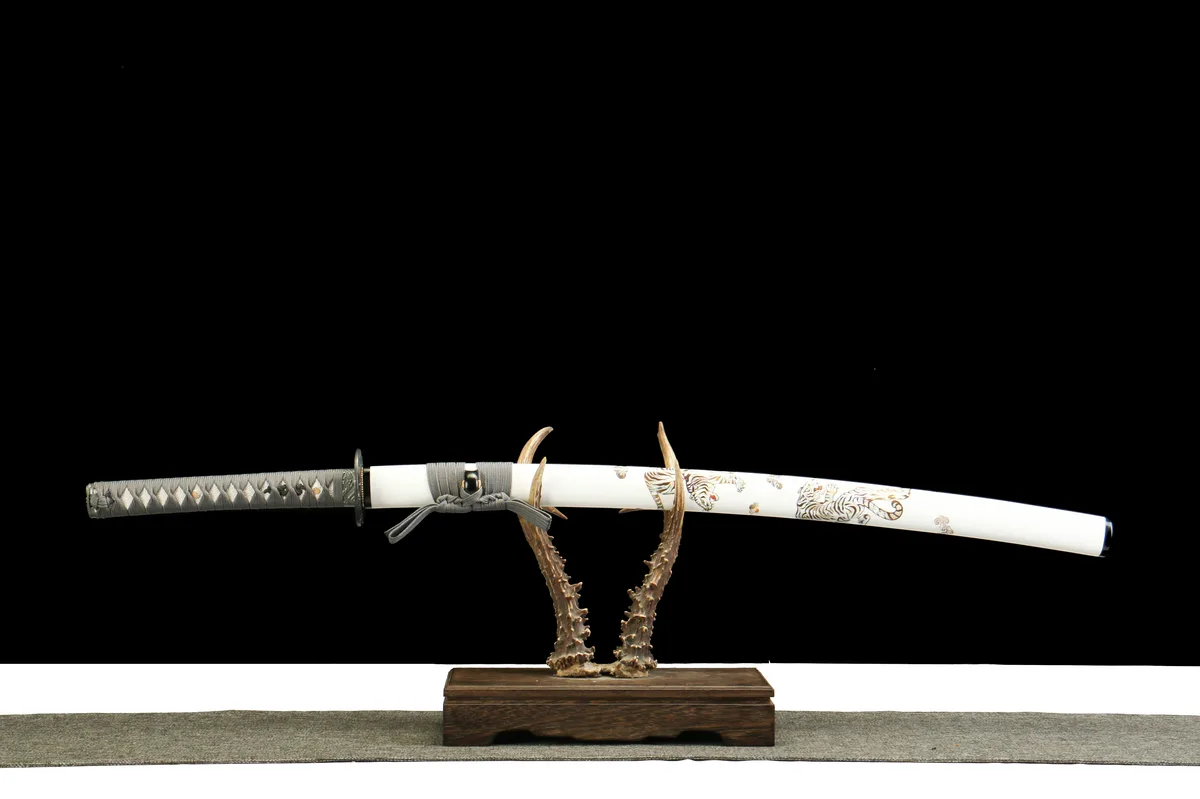

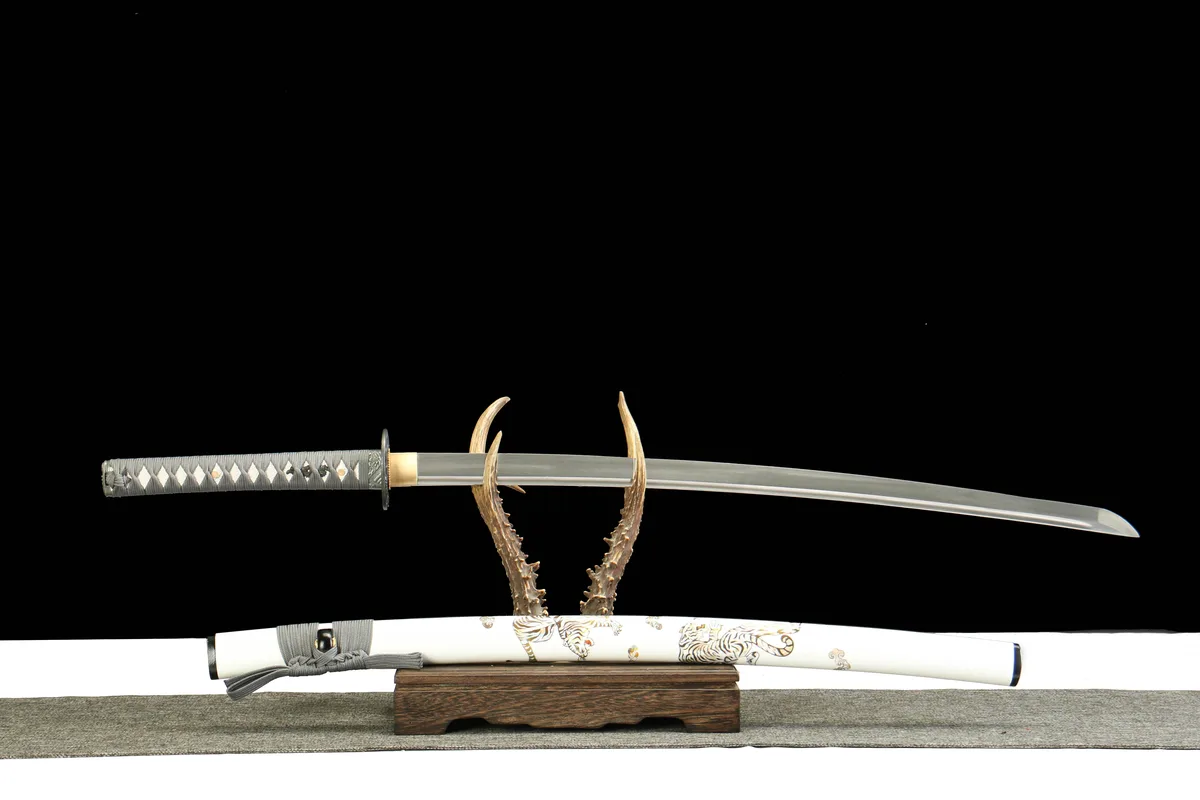


White Tiger (啸) – Hand Forged 1065 Carbon Steel Katana Sword
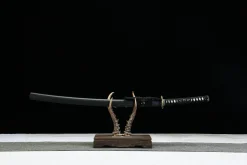
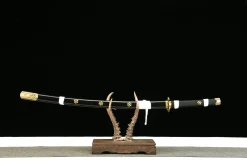
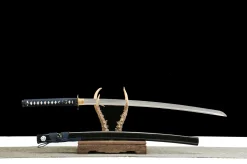
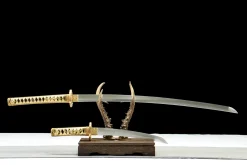
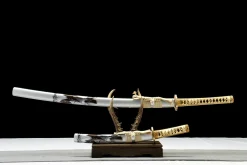
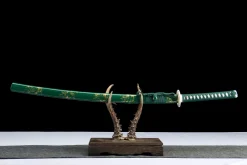
Hand-forged 1065 Carbon Steel katana (103cm total / 72cm blade), crafted in Longquan. Full-tang construction with traditional fittings and hand-lacquered saya.
$199.99
White Tiger (啸) – Hand Forged 1065 Carbon Steel Katana Sword
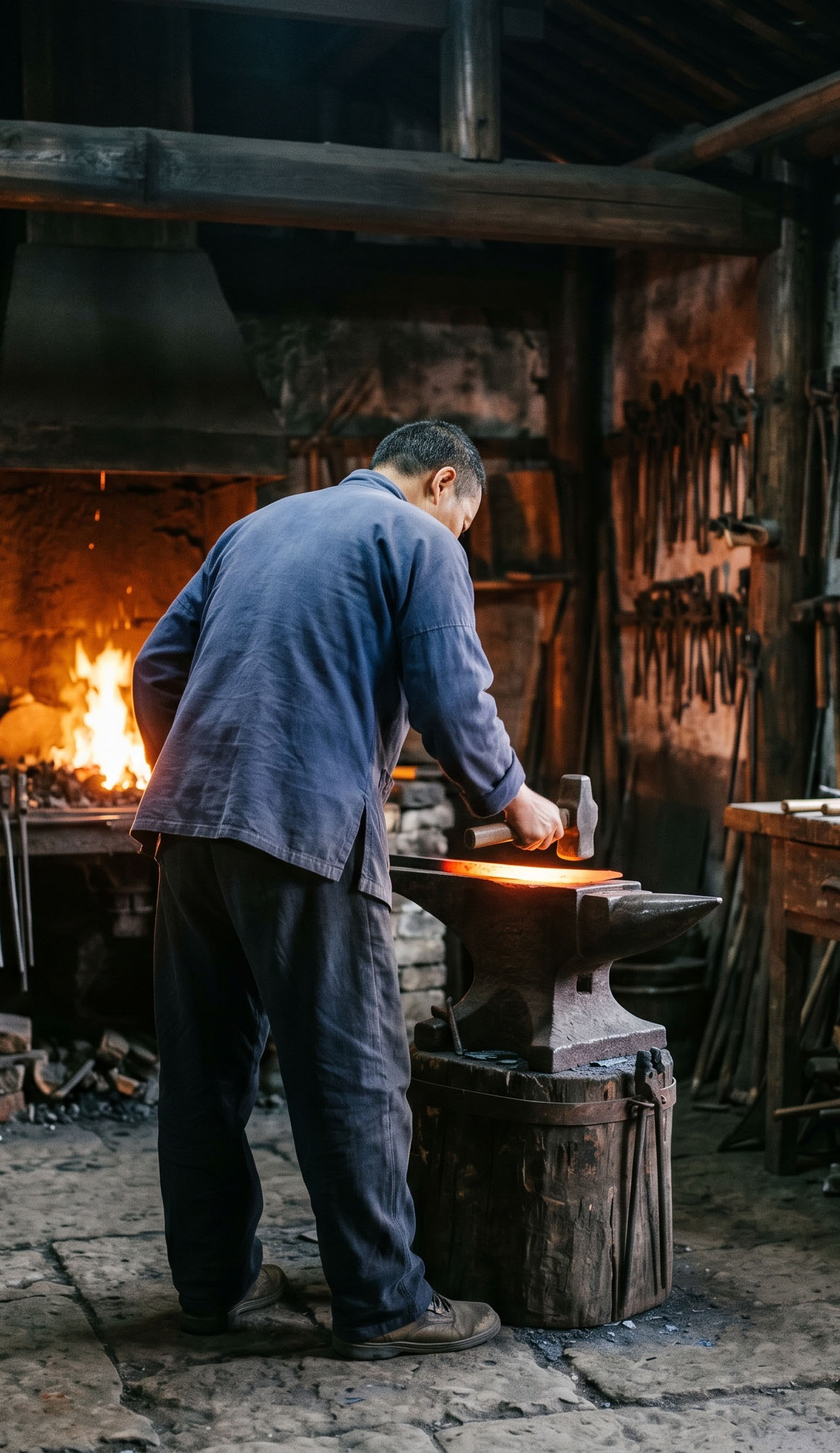
白虎啸 – Báihǔ Xiào – translates as the cry of the white tiger, and the name carries the intention of the blade: direct, aggressive, built to perform under pressure. The White Tiger is 1065 high carbon steel in its most practical form – oil quenched, tempered, and ground to a shinogi-zukuri (ridgeline) profile that prioritizes cutting geometry over decorative finish. This is a katana you train with, not around.
Specifications
| Blade Steel | 1065 High Carbon Steel |
| Total Length | 103.0 cm / 40.6 in |
| Blade Length | 72.0 cm / 28.3 in |
| Blade Width | 3.2 cm |
| Blade Thickness | 0.7 cm |
| Weight | 950 g / 33.5 oz |
| Heat Treatment | Oil Quench & Temper |
| Fittings | Zinc Alloy |
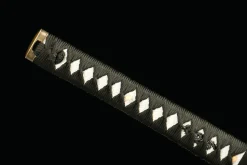
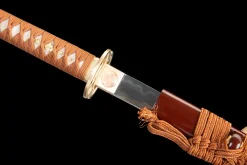
| Handle | Cotton Ito Wrap |
| Sheath | Green Bark Wood (Aohada) |
Steel & Construction
The 1065 high carbon steel specification puts this blade in the range where carbon content is high enough to produce a genuinely hard, edge-retaining blade through oil quench and temper, while remaining below the threshold where brittleness becomes a practical concern under the lateral and torsional forces that cutting generates. Oil quenching – versus the more aggressive water quench – gives the smith control over the hardening rate, reducing thermal shock across the blade’s cross-section and lowering the incidence of warping or micro-fracture during the critical cooling phase. The temper that follows is not a remediation step; it is a precision calibration of the hardness-toughness ratio that determines how the blade performs at the edge versus how it absorbs shock at the spine.
The shinogi-zukuri forging style – defined by the raised shinogi (ridge) running the blade’s length – is the structural profile that has made the katana form effective for centuries. The ridge creates a thicker cross-section along the blade’s center axis, adding rigidity without equivalent mass increase. At 0.7 cm spine thickness and 3.2 cm width, the White Tiger’s geometry is within the range that balances cutting entry with structural integrity through the full cutting arc.
Handling
The 27 cm tsuka (handle) on the White Tiger is long relative to some production katana in this class, and that length matters for two-hand technique – the rear hand at the kashira (pommel end) has full purchase, and the lead hand can position above the tsuba (hand guard) without crowding. The cotton ito wrap is wound tightly enough that it does not shift under repeated strong-grip technique, and the texture of the cotton registers clearly through the skin without abrasion. Drawing from the green aohada (bark wood) saya, the fit is intentional – firm koiguchi (saya mouth) retention that releases cleanly on controlled draw rather than spilling the blade on incline. The 72 cm blade clears the saya with no catch and enters the ready position without correction.
Care Instructions
After every session, clean the blade thoroughly with a soft cloth to remove cutting residue, moisture, and fingerprint oils before applying a light coat of choji or mineral oil along the full length from habaki to kissaki (tip). Store in the saya, edge-up, in a stable low-humidity environment – 1065 steel is not corrosion-resistant and will show surface rust within days if left un-oiled in a humid space. Inspect the habaki (blade collar) fit periodically; a loose habaki allows blade movement in the saya that will accelerate finish wear on both surfaces.
| Weight | 1.2 lbs |
|---|---|
| Dimensions | 103.0 × 3.2 × 0.7 in |
| Hamon | Decorative / Acid-Etched |
| Blade Steel | 1065 Carbon Steel |
| Total Length | 103.0 cm |
| Blade Length | 72.0 cm |
| Heat Treatment | Oil Quench & Temper |
| Handle Wrap | Cotton Ito Wrap |
| Sheath Material | Green Bark Wood (Aohada) |
| Fittings | Zinc Alloy |
| Forging Style | Shinogi-Zukuri (Ridgeline) |
Related products