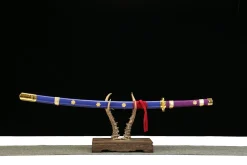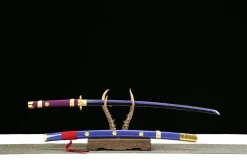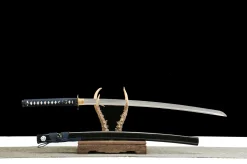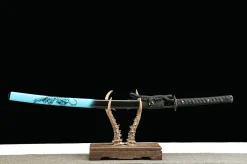
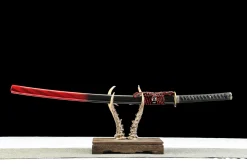
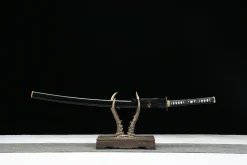
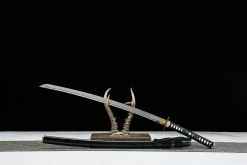
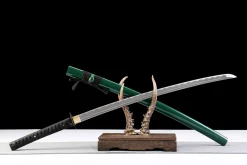
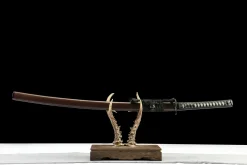
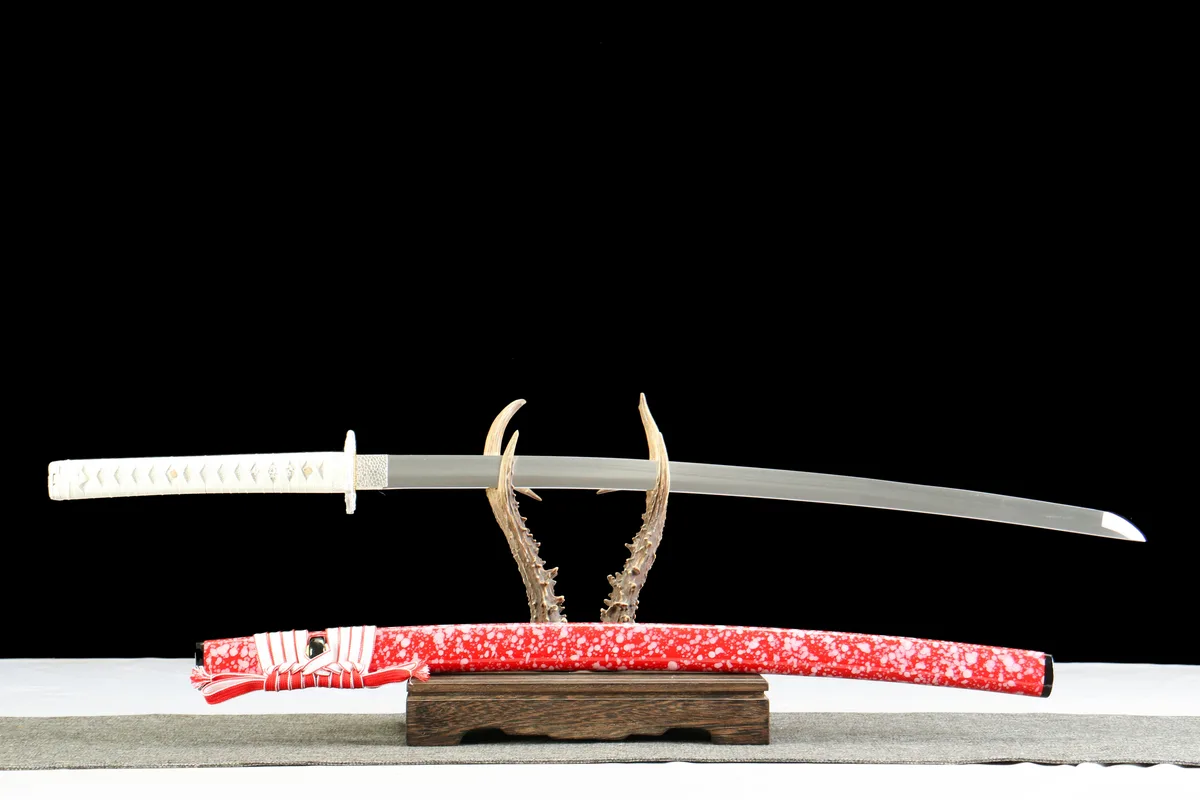
Wrathful Flame – Hand Forged 1065 Carbon Steel Katana Sword
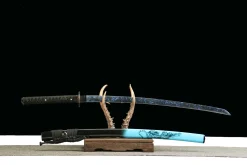
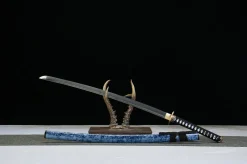
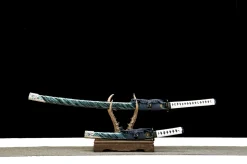
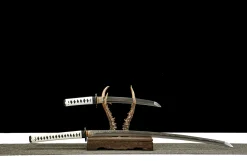
The Wrathful Flame katana — 怒焰 — is forged from 1065 high carbon steel, a steel grade widely regarded as the benchmark for functional, entry-level Japanese swords that can genuinely cut. Where its name conjures violent heat and kinetic energy, the blade itself is a study in disciplined geometry: a full Shinogi-Zukuri ridgeline profile, 72 cm of forged high carbon steel, housed in a vivid Green Bark Wood (Aohada) sheath that smolders with understated color. At $150, the Wrathful Flame steps confidently above the beginner tier and into territory where genuine cutting performance becomes part of the conversation.
Specifications
| Blade Steel | 1065 High Carbon Steel |
| Total Length | 103.0 cm / 40.6 inches |
| Blade Length | 72.0 cm / 28.3 inches |
| Blade Width | 3.2 cm |
| Weight | 950 g / 33.5 oz (net) |
| Heat Treatment | Oil Quench & Temper |
| Fittings | Zinc Alloy |
| Handle | Cotton Ito Wrap |
| Sheath | Green Bark Wood (Aohada) |
Craftsmanship & Materials
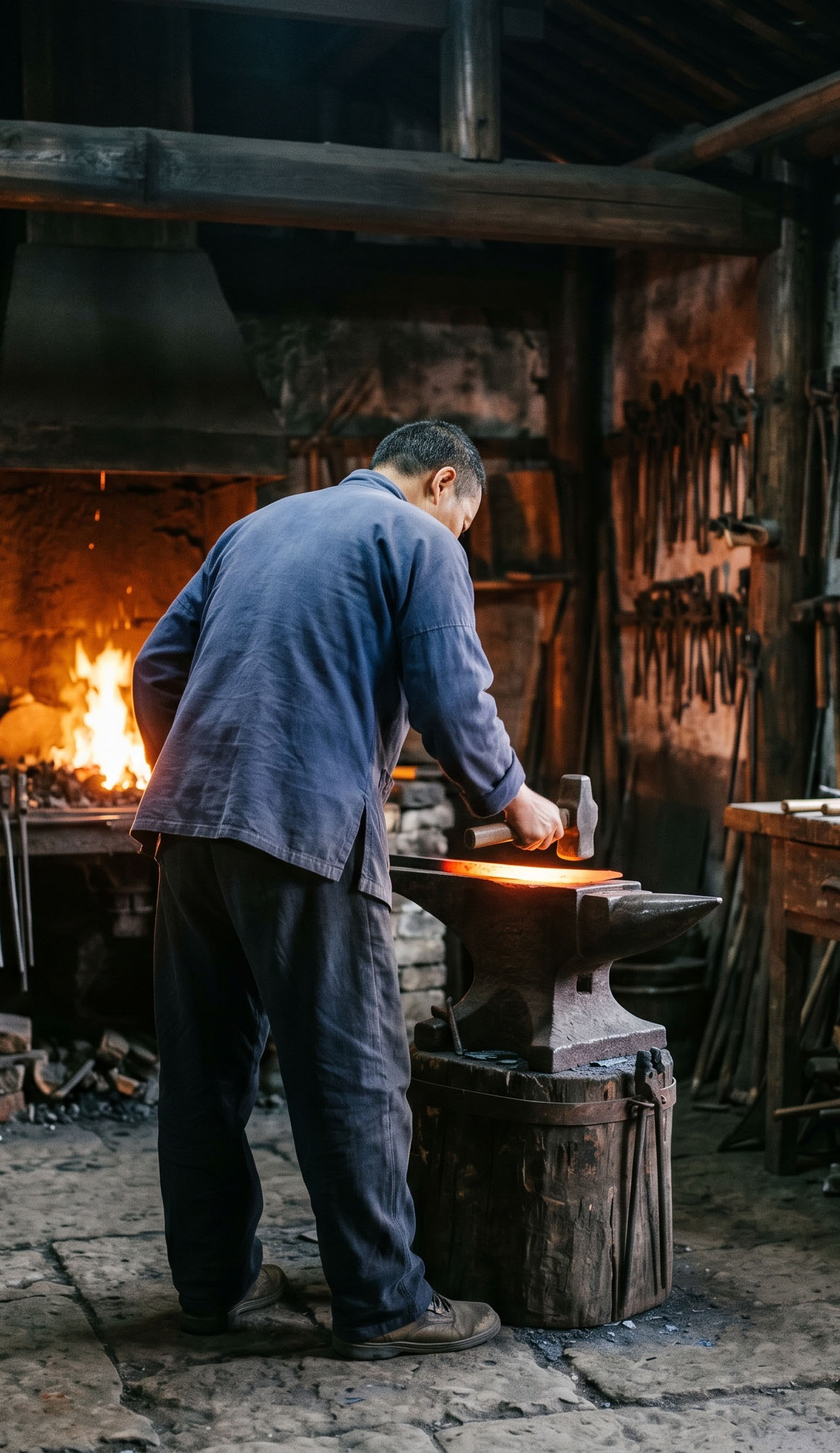
1065 high carbon steel is a sword-maker’s workhorse — and that is meant as the highest compliment. With 0.65% carbon content, it sits at the sweet spot where the steel hardens meaningfully through heat treatment while retaining enough toughness to resist fracture under the stress of cutting. The Longquan smiths who forge the Wrathful Flame subject this steel to an oil quench and temper cycle: heated to critical temperature, plunged into oil to rapidly set the martensite structure, then drawn back in temperature through tempering to relieve internal stresses. The result is a blade that holds its edge through repeated cutting exercises without becoming fragile.
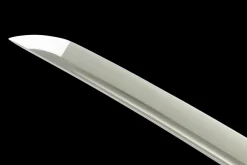
The Shinogi-Zukuri forging style gives Wrathful Flame its authoritative cross-section — a raised shinogi ridge running the length of the blade creates the characteristic double-bevel geometry that samurai swordsmiths refined over centuries. This geometry is not merely aesthetic: the ridge stiffens the blade laterally while allowing the ha (edge) to be ground thin and sharp. The 3.2 cm blade width and 0.7 cm spine thickness are proportions that feel immediately right in the hand — substantial without being sluggish, at 950 g net weight.
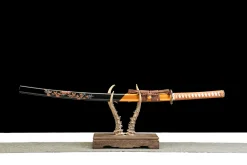
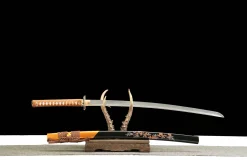
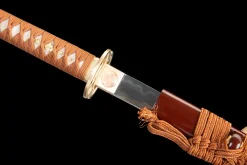
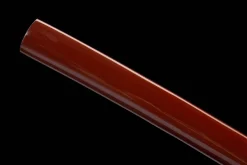
The Aohada saya (sheath) presents the sword in muted forest green, its natural bark texture giving each sheath a slightly individual character. The cotton ito wrap is wound tightly in the traditional criss-cross diamond pattern over the tsuka, providing a non-slip grip surface that performs during practice rather than merely looking the part. At this price tier, zinc alloy fittings are expected and finished cleanly — allowing the 1065 blade itself to remain the undisputed centerpiece of the package.
Perfect For
- Martial artists and sword enthusiasts ready to move beyond display-only blades into genuine cutting practice (tameshigiri)
- Buyers who want the entry point of the 1065 steel tier — a significant step up in performance over 1045 — without premium pricing
- Dojo training environments where a durable, reliable, mid-range katana is needed for regular supervised use
Care & Maintenance
1065 high carbon steel responds well to consistent care: after cutting practice, remove all moisture and debris immediately with a soft cloth, then apply a thin, even coat of choji oil to prevent oxidation. Because this steel is fully hardened through the heat treatment, the edge can be sharpened with whetstones — work through progressively finer grits to restore the factory edge geometry. Store horizontally in the saya in a stable, low-humidity environment, and re-oil the blade every 3–4 months if kept in long-term storage.
Frequently Asked Questions
What is 1065 high carbon steel and why is it recommended for katanas?
1065 high carbon steel contains approximately 0.65% carbon, placing it firmly in the high-carbon range ideal for functional sword blades. It achieves a strong balance between hardness (for edge retention) and toughness (for impact resistance), making it less brittle than ultra-high-carbon steels while still holding a sharp, durable edge. It is widely regarded as the benchmark steel for entry-to-intermediate functional katanas, and it is the core material of the Wrathful Flame.
How does oil quenching affect the performance of the Wrathful Flame katana?
Oil quenching involves plunging the heated blade into oil rather than water to rapidly cool and harden the steel. Compared to water quenching, oil quenching produces a slightly less hard but significantly tougher blade, reducing the risk of warping or cracking during heat treatment. For the Wrathful Flame’s 1065 steel, this results in a reliable, resilient blade well-suited for cutting practice, with good edge retention and reduced brittleness — an ideal combination for functional use.
Is the Wrathful Flame katana battle ready?
Yes, the Wrathful Flame is a battle-ready functional katana. The 1065 high carbon steel blade is oil-quenched and tempered to a hardness suitable for real cutting, and the shinogi-zukuri blade geometry enhances slicing performance. At 72 cm blade length and 950 g net weight, it is properly proportioned for tameshigiri and martial arts practice. As with any functional blade, regular oiling, proper storage, and safe handling are necessary to maintain performance.
What are the fittings on the Wrathful Flame, and does it matter that they are zinc alloy?
The Wrathful Flame uses zinc alloy (zamak) fittings for its tsuba, fuchi, and kashira. Zinc alloy fittings are common in the mid-range katana market — they are cast to detailed shapes and are serviceable for practice and display. However, they are softer and less durable over time compared to iron, brass, or copper fittings found on higher-end swords. For a $150 functional katana, zinc alloy fittings are an acceptable trade-off, but buyers seeking premium longevity should look at higher-tier options.
How does the Wrathful Flame compare to other $150 katanas on the market?
The Wrathful Flame stands out in the $150 mid-range tier primarily due to its 1065 high carbon steel — a meaningful upgrade over the 1045 steel common at this price. The combination of proper shinogi-zukuri geometry, cotton ito wrap, and Aohada sheath reflects genuine craftsmanship. The zinc alloy fittings are a typical concession at this price point. Overall, the Wrathful Flame offers above-average cutting performance and build quality, making it a strong pick for intermediate practitioners or dedicated beginners.