

Shipping, Customs, and Sword Legality by Country

Every sword we ship leaves Longquan wrapped by hand, documented by serial number, and packed to survive the journey intact. Before it gets to you, though, it has to clear customs and comply with the laws of wherever you live. This page covers both: how we get your sword to your door, and what the law says about owning one where you are.

Read your country’s section carefully. We are not lawyers, and this is not legal advice. It is a working summary based on the regulations we deal with every week.

, –

How We Ship

Packaging and Protection

Each sword ships in a dual-layer box: a fitted inner sleeve holds the sword stationary, and an outer carton with foam padding absorbs impact. The blade never touches the cardboard. We have shipped to 47 countries from this workshop. A blade damaged in transit is a blade we failed to protect.

A certificate of authenticity is available upon request for customs purposes. Note: We do not currently ship to the United Kingdom.

Timelines

Standard international shipping runs 10-18 business days via China Post EMS or DHL, depending on destination. Express DHL service is available at checkout and typically delivers in 5-8 business days. In-stock blades ship within 2 business days of order confirmation.

Custom orders, including blades with specific geometry, steel selection, or handle fittings, require 4-8 weeks at the forge before shipping. You will receive photos of your blade before we pack it.

Customs and Duties

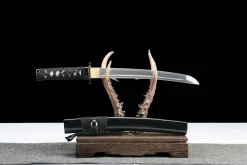
Swords attract attention from customs inspectors. That is simply the reality. We declare every shipment accurately, mark the goods as “hand-forged decorative sword” or “martial arts training sword” as appropriate, and include all required documentation inside the box.

Import duties and taxes are the buyer’s responsibility and vary by country. The EU charges approximately 2.7% import duty on edged tools from China. Australia typically applies a 5% customs duty plus GST. We will not falsify customs declarations under any circumstances, so please do not ask.

If a shipment is held by customs, contact us immediately. We have navigated this before and can provide additional documentation to help release it.

, –

Legality by Country

United States

At the federal level, there is no law prohibiting the purchase, ownership, or import of swords. Customs may inspect the package, but legal ownership is not in question. Our swords arrive as legal goods.

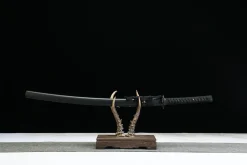
State law is where it gets more specific. The majority of states permit both ownership and open carry of bladed weapons. Concealed carry of any blade over a certain length, usually 3-4 inches, is where restrictions typically begin. A 73cm katana is not a concealed weapon by any reasonable definition, but check your state’s specific language on “dangerous weapons.”

States Worth Reading Carefully

  • California: Legal to own. Concealed carry of any sword is prohibited. Open carry in public is a grey area that varies by municipality.
  • New York: Legal to own statewide. New York City has stricter local ordinances on carrying bladed weapons in public, even unsheathed.
  • Texas: Legal to own and carry openly since 2017. Texas repealed its “illegal knife” statute for blades over 5.5 inches, making katana carry legal in most public spaces with specific exceptions like schools and bars.
  • Massachusetts: Legal to own. Carrying in public is restricted. Store your sword at home.

Transport your sword unloaded, so to speak: blade in the saya, saya in the box, box in the trunk. That posture eliminates most legal ambiguity in any state.

United Kingdom

Important: We do not currently ship to the United Kingdom. The information below is provided for educational purposes only.

The Criminal Justice Act 2008 banned the sale of curved swords with a blade longer than 50cm. That covers nearly every katana sold as a mass-produced piece. The law exists because cheap, machine-made blades were showing up in violent crimes.

There is a clear exemption, and our swords qualify for it without adjustment.

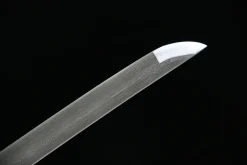
A sword is exempt from the 2008 ban if it is hand-forged using traditional methods. Every sword we make is individually forged by a named blacksmith in Longquan, heat-treated in a traditional clay-tempered process, and finished by hand. Not one of our blades comes off an automated production line. A certificate of authenticity can be provided upon request that documents the forging method, the smith, and the materials used.

Additional grounds for exemption include martial arts training, historical re-enactment, and religious ceremony. If any of those apply to your purchase, note it on your order so we can reflect it accurately in the documentation.

UK buyers: declare the import as a hand-forged traditional sword. Keep the certificate we send you. That combination has cleared UK customs consistently for our customers.

Canada

Canadian law does not classify swords as prohibited weapons under the Criminal Code. You can legally purchase, own, and import a katana in Canada without a license or registration. Customs will not seize a properly declared sword shipment.

The restriction is straightforward: you cannot carry a sword in public. A katana transported to and from a dojo, a martial arts event, or a display should be in its case, in a bag, and not on your person in a way that could alarm people. Common sense applies here more than statute.

There are no provincial-level bans that contradict federal law on sword ownership. Store it properly, and you have no legal exposure.

Australia

Australia has no federal ban on swords, but the states handle this themselves, and they do not agree with each other. Check your state before ordering.

State Notes

  • Victoria: Swords are classified as prohibited weapons. Ownership requires an exemption through the Victoria Police Licensing and Regulation Division. Collectors and martial arts practitioners can qualify. Do not order for Victoria without securing that exemption first.
  • New South Wales: Legal to own. Carrying in public is prohibited. Secure storage is expected.
  • Queensland: Legal to own with proper storage. A genuine reason for ownership, such as collection or martial arts practice, is good practice to document even if not always required.

All Australian states expect swords to be stored securely, meaning out of reach of children and not accessible as a casual weapon. A sword rack or lockable display case satisfies this in practice.

European Union

Sword ownership is legal across the EU without a blanket restriction, but individual countries regulate carrying in public and, in some cases, require documentation of purpose.

Germany

Legal to own. Carrying a blade longer than 12cm in public requires a verifiable reason. Transport to and from martial arts training or a collecting event qualifies. Keep the sword cased and documented when transporting it.

France

Classified as a Category D2 weapon. Legal to own without a license. Carrying in public is prohibited. For collection purposes, France is a straightforward destination with no import complications beyond standard customs.

Other EU countries follow similar patterns: ownership is generally permitted, public carry is restricted, and martial arts or collecting purposes provide reasonable grounds for transport. If your country is not listed here, contact us before ordering and we will tell you what our experience has been with shipments to your region.

, –

Frequently Asked Questions

In the countries listed on this page, a properly declared, hand-forged sword shipped with complete documentation has a strong record of clearing customs without issue. The risk of seizure is highest when shipments are misdeclared or arrive without supporting paperwork. We handle both: accurate declaration and a certificate of authenticity inside every box. Victoria, Australia is the one jurisdiction where we strongly advise confirming your exemption status before ordering, because ownership itself requires prior approval there.

Photograph the packaging and the damage before you move anything. Send those photos to us within 48 hours of delivery. We will assess whether the damage occurred in transit or during packing. A blade damaged in transit due to our packaging failure is our problem to fix, either through repair or replacement. Damage caused by post-delivery handling is a separate conversation. We have made this process straightforward because a damaged sword reflects on our work, not just our logistics.

DHL Express to the UK typically runs 5-7 business days from our workshop in Longquan. Standard EMS runs 12-16 business days. On the exemption: every sword we make qualifies under the Criminal Justice Act 2008’s hand-forged provision because every sword we make is, in fact, hand-forged by a named smith using traditional methods. A certificate documenting this can be provided upon request. The exemption has applied to every UK order we have shipped. That said, customs officers make individual decisions, and we cannot guarantee an outcome in any single inspection.

In the United Kingdom, martial arts training is one of the four named grounds for exemption under the 2008 act. In Australia, it is commonly cited as a genuine reason for ownership, which helps in states like Victoria where an exemption must be applied for. In Germany, transport to and from training is one of the accepted reasons for carrying a blade in public. Note the intended use on your order and we will reflect it in the documentation. A sword selected for actual training use should also match your practice, and our team can advise on geometry and steel spec for your specific discipline.