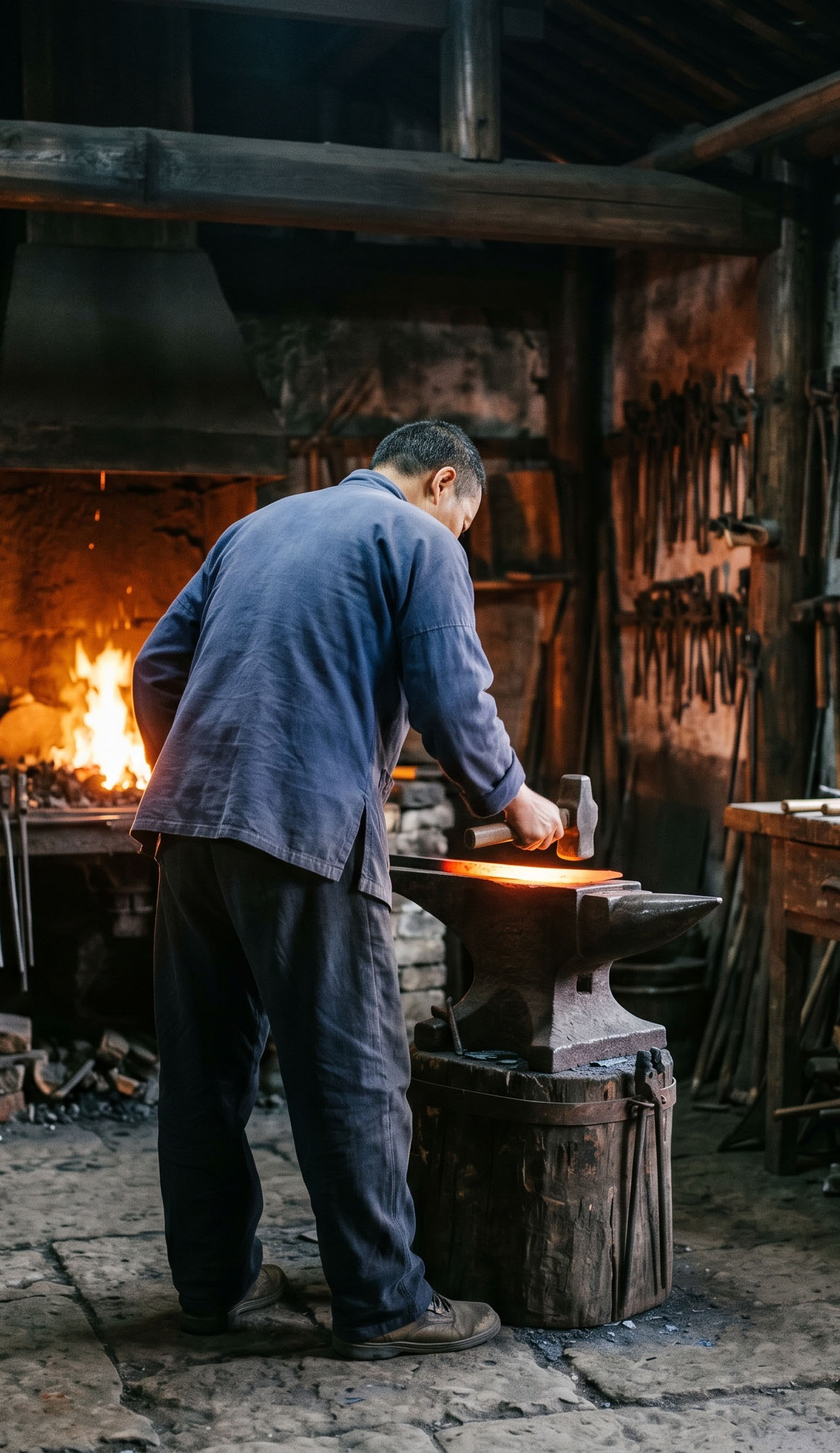
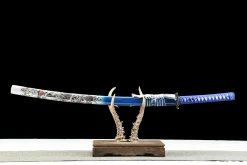
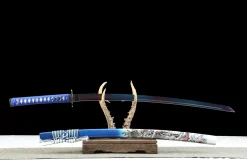
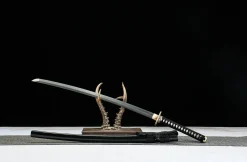

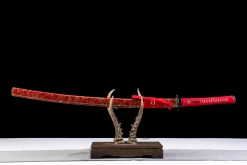




Spring steel katana are built around one priority: surviving impact. Our 65Mn spring steel swords hold a working edge at HRC 50-55 while absorbing the kind of lateral stress that would chip or snap a harder blade outright. Five models in stock, all forged in Longquan, priced from $150 to $220.
Why Choose Spring Steel
65Mn is a manganese spring steel with 0.56-0.65% carbon content. That carbon level sits below what you find in high-carbon steels like 1095 or T10, and that gap is the whole point. Less carbon means more ductility. A 65Mn blade can flex well past what you would ever encounter in a cut and return to true without taking a permanent set.
Put that in practical terms: if your swing clips a hard surface off-angle, the blade absorbs the shock and keeps its geometry. A harder, more brittle steel might hold a sharper edge day-to-day, but one bad contact can end it. Spring steel trades some edge retention for the kind of structural reliability that matters in tameshigiri, heavy cutting practice, and dojo use where blades take real punishment.
One thing buyers sometimes miss: 65Mn develops a surface patina faster than stainless or high-polish tool steels. Wipe the blade down with choji oil after every session. That is not optional maintenance, it is what keeps the steel stable for years. Our sword care guide covers the full routine.
How to Choose the Right Spring Steel Katana
Intended use first. If you are cutting tatami mats twice a week, a spring steel blade at HRC 50-55 will outlast a harder blade in your hands because it handles the lateral forces on follow-through cuts without micro-chipping. For display or occasional light cutting, other steels may suit you better. Check our buying guide for a full steel comparison.
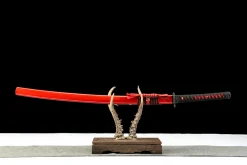
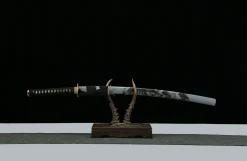
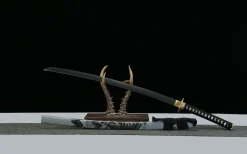
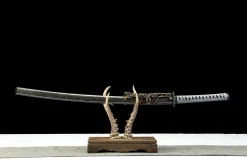
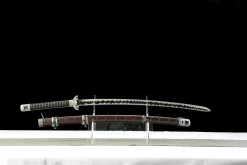
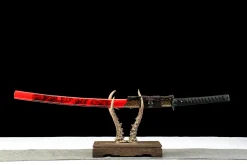
Budget range. Our spring steel katana run $150 to $220. At $150, the Crimson Eclipse gives you a functional, full-tang 65Mn blade. At $220, the Frost Moon Blade and Scarlet Phantom add more refined fittings and finishing work.
Do not expect a hamon. Spring steel does not produce the visible temper line you get from clay-tempered T10 or 1095. The heat treatment is through-hardened, uniform across the blade. If a visible hamon matters to you aesthetically, look at our high-carbon steel options instead.
Edge geometry matters more than hardness here. At HRC 50-55, the blade will take a good edge but will need more frequent touching up than a harder steel. A consistent sharpening angle, around 20-25 degrees per side on a 65Mn katana, gives you the best balance of sharpness and edge durability for cutting practice.
Frequently Asked Questions
What is 65Mn spring steel and how does it compare to 1095 or T10?
65Mn is a manganese-alloyed spring steel with 0.56-0.65% carbon. Compared to 1095 (0.95% carbon) or T10 (high-carbon with tungsten), 65Mn sits at lower hardness, typically HRC 50-55 versus HRC 58-62 for those steels. That lower hardness means less edge retention per sharpening session, but significantly higher toughness. A 65Mn blade flexes under lateral load and returns straight. A 1095 or T10 blade at full hardness can chip or crack under the same stress. For heavy cutting and martial arts training, the toughness advantage of spring steel is worth the trade-off. For light cutting or display, the higher edge retention of 1095 or T10 may suit you better.
Can a spring steel katana be used for tameshigiri?
Yes, and it is one of the better steel choices for it. Tameshigiri involves repeated cuts through rolled tatami or similar targets, and the forces involved, especially on off-center strikes, put real stress on a blade. Spring steel at HRC 50-55 handles those impacts without the brittleness risk you get from harder steels. You will need to sharpen more often than with a harder blade, but the blade geometry will stay intact through heavy use. All five spring steel katana in this category are full-tang construction, which is the other requirement for any serious cutting work.
How do I maintain a 65Mn spring steel katana?
65Mn oxidizes faster than stainless steel, so consistent maintenance is non-negotiable. After every use, wipe the blade clean with a soft cloth, apply a thin coat of choji oil or mineral oil along the entire surface, and store the sword horizontally or edge-up in its saya. Do not store it in a leather scabbard long-term as leather retains moisture. If you see early rust spots, a light pass with 1000-grit wet sandpaper along the grain direction followed by re-oiling handles it at that stage. Waiting makes it harder. Our full sword care guide walks through every step in detail.
Will a spring steel blade hold a sharp edge?
It will hold a functional cutting edge. At HRC 50-55, a 65Mn blade sharpens easily and cuts well but will dull faster than a blade at HRC 58-62. In practice, if you are cutting three to four sessions per week, plan to touch up the edge every few sessions with a leather strop and do a full sharpening on a water stone monthly. The softer steel is actually easier to sharpen than high-hardness blades, which is a genuine advantage for practitioners who maintain their own edges rather than sending blades out.
Is spring steel good for beginners?
It is one of the more forgiving choices for a first functional sword. The toughness means the blade tolerates the technique errors that happen when you are learning, off-angle cuts, striking harder than intended, and similar situations. The lower price point of our spring steel range ($150-$220) also makes sense before committing to more expensive high-carbon or Damascus options. If you are still working out your cutting mechanics, start here and step up to T10 or folded steel once your form is consistent.

Grade 05 · 65Mn Spring Steel · HRC 50–55
Spring Steel 65Mn.
Silicon-manganese alloy, HRC 50–55. Engineered to flex under heavy contact and return to true geometry. The correct choice for high-impact tameshigiri, training, and blades that take hard use.
HRC 50–55
Flex range
10 / 10
Toughness rating
Contact cutting
Primary use
65Mn Spring Steel Blades.




Every grade. Every use case. All from Longquan.
Free worldwide shipping on orders over $500.