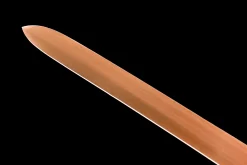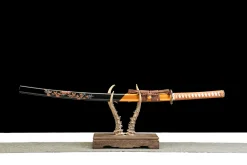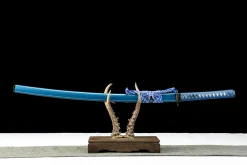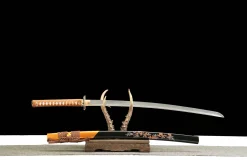

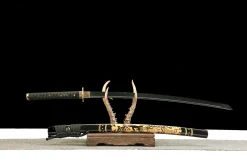
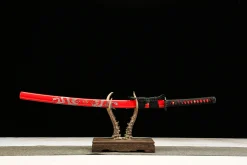


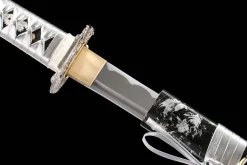


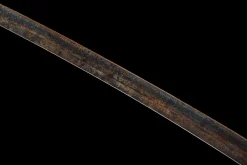



Carbon steel does not forgive neglect. A blade forged from 1095, T10, or any high-carbon steel will begin oxidizing the moment bare skin touches it. The salts and moisture in a single fingerprint can leave a rust spot within hours, not days. Oiling is not cosmetic maintenance. It is the barrier between your blade and the atmosphere. That thin film of oil on the surface blocks moisture from reaching the steel directly, and on a polished blade with a visible hamon, even light surface rust means re-polishing, which means material removal and money spent. One detail most new owners miss: the inside of the saya absorbs oil over time. A blade stored for two or three months in its scabbard without re-oiling is sitting in a dry wooden tube that is actively wicking the protective layer away. Check our full sword care guide for storage recommendations alongside this process. Traditional Japanese sword maintenance uses choji oil, which is camellia oil with a small percentage of clove oil added. The clove component gives it a faint, distinctive smell that sword collectors recognize immediately. More practically, camellia oil does not go rancid, does not polymerize into a sticky film, and spreads evenly across polished steel without leaving residue. Food-grade mineral oil works as a direct substitute. It is colorless, odorless, and stable at room temperature. You will find it at pharmacies and hardware stores for a fraction of the price of specialty choji oil. For a working blade that gets handled and re-oiled regularly, mineral oil is a perfectly sound choice. What you want to avoid is WD-40. It is a water displacer and light solvent, not a protectant. It leaves a residue that attracts dust and moisture over time, which is the opposite of what you need. Vegetable oils from the kitchen are also off the table. They oxidize and go rancid on the steel, creating a film that is difficult to remove without abrasives. For Damascus and pattern-welded blades specifically, the layered structure creates micro-channels between folds where moisture can hide. Choji oil’s viscosity makes it slightly better at working into those grooves than thin mineral oil. If you own a Damascus blade, that detail matters. Step 1: Draw the blade slowly. Hold the handle with your dominant hand and keep your other hand on the saya, not on the blade. Never grip the steel. Oil from your skin starts the oxidation process within hours, and the edge is sharp enough that any casual contact is dangerous. Step 2: Wipe the blade clean. Using a soft, lint-free cloth, wipe from the base of the blade toward the tip in a single direction, with the edge facing away from you. This removes old oil, dust, and any surface contamination. Do not scrub back and forth. One clean pass per side is enough. Step 3: Apply oil to a cloth, not directly to the blade. Put 2 to 3 drops of choji oil or mineral oil onto a fresh cloth. You want the cloth lightly dampened, not saturated. Applying oil directly to the steel makes it almost impossible to control the amount, and too much oil attracts airborne dust that acts as a mild abrasive over time. Step 4: Spread a thin, even coat across the entire blade. Work from base to tip, covering both flat sides and the spine. Pay attention to the area near the habaki and the tip, where moisture tends to concentrate. On a Damascus blade, work the oiled cloth slightly against the grain of the pattern to push oil into the layered structure. Step 5: Return the blade to the saya edge-up. This is not optional. Storing the blade edge-down lets the cutting edge press against the wooden scabbard, which will damage both the edge and the saya interior over time. Edge-up, with the spine resting in the channel, is the correct position. If your blade has a visible hamon and high polish, consider using an uchiko powder ball before oiling. Tap the ball gently along the blade to deposit a light dusting of fine polishing powder, then buff it off with rice paper. Follow immediately with oil. This step restores contrast on the hamon and removes micro-oxidation before it becomes visible rust. Do not skip the oil step after using uchiko. The short answer: after every time you handle the blade. That is not an exaggeration. Fingerprints from a single practice session are enough to leave marks if the blade goes back in the saya without being wiped and re-oiled. For display pieces and stored blades, a monthly inspection and re-oiling is the minimum. Take the blade out, wipe it, check for any spots or discoloration, re-oil, and return it. The whole process takes about five minutes once you have done it a few times. Humidity is the variable that changes everything. If you live in a coastal region, a humid climate, or store your blade anywhere near a bathroom or basement, increase frequency. A blade in a climate-controlled room with 40 to 50 percent relative humidity needs less attention than the same blade sitting in a garage in coastal conditions. See our steel comparison guide for notes on how different steel types respond to humidity. The most obvious sign is visible rust. Orange or reddish-brown spots, usually appearing near the habaki or at the tip first, mean the steel is already oxidizing. Light surface rust can often be addressed with uchiko and fresh oil. Deeper pitting needs professional attention. A blade that looks dry and slightly matte in areas that should be polished is telling you the oil has been fully absorbed or evaporated. Run a clean cloth over the surface. If the cloth comes away completely dry with no slight sheen, the blade needs oil now. Fingerprint ghosts, faint oval marks visible at certain angles in the light, are early-stage oxidation from skin contact. Catch them at this stage and uchiko followed by oil will clear them. Leave them for a few weeks and they become surface rust that requires polishing to remove. If you own any of the T10 carbon steel blades in our catalog, this is the stage you want to catch problems early. Finally, if you notice a faint musty or metallic smell when you draw the blade, that is a sign of moisture and early oxidation inside the saya. Do not put the blade back in that saya until both have been cleaned and dried. A damp saya will undo an oiling job within days. If you are new to sword maintenance, a T10 blade like the Silent Thunder or Dark Ravine is a good place to begin. T10 steel is straightforward to care for and the clay-tempered hamon gives you a visible reference point for the health of the surface polish. Our buying guide covers steel selection in detail if you are still deciding. For layered and pattern-welded blades, the maintenance process is the same but the margin for error is smaller. The Ink Meteor uses san-mai construction with a hard steel core and soft iron cladding. The interface between those layers is where moisture causes problems first. Oil more generously, and inspect more frequently.
Why Oiling Matters
Choji Oil vs Mineral Oil vs Others
Step-by-Step: How to Oil a Katana
What You Need
The Process
How Often to Oil Your Katana
Signs Your Blade Needs Oiling
Choosing the Right Blade to Start With
Damascus and Laminated Steel
Frequently Asked Questions
Hand-Forged Katana — Browse the Collection.
Clay-Tempered Damascus Steel Abyss Edge – Hand Forged Clay-Tempered Damascus Steel Katana Sword