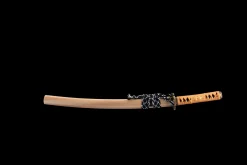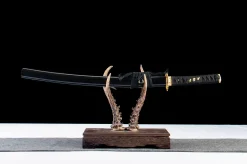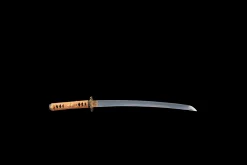
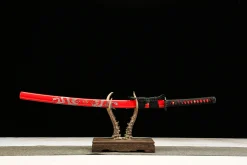


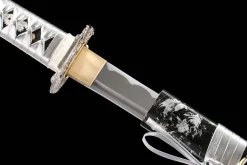


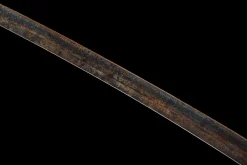
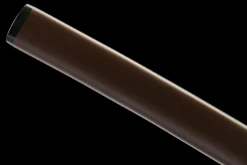
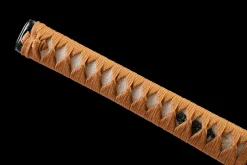


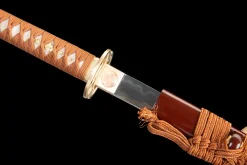
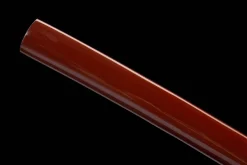

Two swords, one tradition. The katana and the wakizashi share the same curved geometry, the same differential hardening process, and in many workshops including ours, the same hands. But they are not interchangeable tools. Choosing the wrong one for your purpose means buying a blade that will spend most of its time in the wrong context. Here is a straightforward breakdown of how these two swords differ, where they came from, and which one deserves your money first. The clearest line between a katana and a wakizashi is blade length, measured in Japanese units called shaku. One shaku equals roughly 30.3 cm. A katana blade runs over two shaku, typically between 60 cm and 73 cm. A wakizashi blade falls between one and two shaku, generally 30 cm to 60 cm. Anything shorter than one shaku is a tanto, which is a different conversation entirely. In practical terms, most katana blades you will find today measure around 70-73 cm with an overall length including the tsuka (handle) of 100-105 cm. A standard wakizashi runs 45-55 cm of blade, with total length around 65-75 cm. Weight differs too: a katana typically weighs 900 g to 1,100 g, while a wakizashi comes in around 500 g to 700 g. That weight difference changes how each sword moves. A katana generates cutting power through its length and the forward momentum of a two-handed draw. A wakizashi, lighter and shorter, is far more responsive in tight spaces and for one-handed use. Handle the two back to back and the distinction is immediate. One thing many buyers overlook: the curvature, or sori, tends to be slightly less pronounced on a wakizashi. Less blade length means less need for dramatic curve to optimize the draw cut. Our forgers here in Longquan measure sori at multiple points along the spine before a blade passes inspection, because even a millimeter of inconsistency changes how the sword draws from the saya. The katana was the primary weapon of the samurai from roughly the Muromachi period onward. It replaced the earlier tachi as battlefield swords gave way to civilian carry, worn edge-up through the obi rather than suspended edge-down from a belt. The change in carry position shifted the geometry of the draw stroke, which is why katana geometry evolved the way it did. The wakizashi served a different function. Worn alongside the katana as the shorter blade of the daisho pair, it functioned as a backup weapon, a close-quarters tool in confined spaces like castle interiors, and the blade used for seppuku, the ritual suicide that samurai were permitted in certain circumstances. Commoners in Edo-period Japan were often prohibited from carrying a katana but could carry a wakizashi, which gave the shorter blade a social significance beyond pure utility. Indoors, where a full katana draw was impractical, the wakizashi was the primary fighting tool. Tatami rooms, narrow corridors, and crowded streets all favored the shorter blade. A samurai trained with both precisely because no single length solved every problem. Practitioners of iaido, the art of drawing and cutting in a single motion, almost exclusively use katana-length blades. The entire curriculum is built around the geometry and timing of a 70+ cm draw. If you are joining a dojo or studying any Japanese sword art formally, your instructor will almost certainly require a katana. Start there and do not second-guess it. Wakizashi sees more use in koryu, the older classical schools that predate the standardization of modern budo. Some curricula include specific wakizashi kata, particularly for close-range and defensive scenarios. For cutting practice on tatami mats or water-soaked bamboo, the katana’s length and weight give you more margin for error in your technique. A clean cut with a wakizashi on a thick target demands more precise body mechanics because you have less blade arc working for you. Beginners consistently get better feedback from katana-length blades when learning cutting fundamentals. Here is where the wakizashi earns serious consideration. A well-made wakizashi displayed on a stand shows every detail of the hamon, the grain of the steel, and the fittings in a smaller, more manageable profile. For collectors with limited wall or shelf space, a wakizashi presents the full craft at roughly two-thirds the footprint. Our Dark Ravine in T10 tool steel is a strong example: the clay tempering produces a hamon that runs the full blade length, and at 340 mm of display blade you see every inch of it clearly. If you live somewhere with limited space or plan to practice in a small room, a wakizashi is genuinely more practical day to day. Drawing a 105 cm total-length katana in a standard bedroom without hitting furniture takes more awareness than most beginners expect. Read our buying guide for a full breakdown of space requirements before committing to either length. The daisho pairing of katana and wakizashi is more than aesthetic. Historically, wearing both blades was a privilege and a marker of samurai status. For collectors today, a matched set with consistent fittings, the same tsuba design, same handle wrap color, same lacquer on the saya, presents as a complete historical statement rather than two separate purchases. From a practical standpoint, matched sets often cost less than buying two blades separately if you source them together. More importantly, you get consistent quality control across both blades. Mixing a high-end katana with a budget wakizashi produces a visually incoherent pair that will bother you every time you look at it. For those interested in Damascus steel fittings or blades, a matched daisho in folded steel is genuinely striking as a display piece. The grain pattern, while never identical between two blades, shares the same visual character when produced in the same forging session. Our smiths in Longquan can discuss matched sets on request. Our Ink Meteor, built with San Mai (三枚合) construction featuring a hard high-carbon core steel edge layer, gives you an idea of the complexity possible when you decide a single blade is not enough. Before committing to a daisho, check your steel comparison guide to understand how different core and jacket materials affect the visual and functional match between paired blades. Buy the katana first. Almost every structured practice discipline is built around katana length. Martial arts instruction, cutting seminars, most online tutorials, all assume you are working with a blade over 60 cm. Starting with a wakizashi means developing habits around a shorter draw, a lighter weight, and tighter mechanics, and then having to unlearn all of that if you later transition to katana work. The one exception: if you have specific space constraints, a confirmed interest in close-range forms, or you are buying purely for display and the wakizashi’s proportions suit your room better, then go with the shorter blade deliberately and without apology. A focused purchase beats an unfocused one every time. For first-time buyers looking at katana, the Silent Thunder in T10 high speed tool steel at $280 is a serious starting point. T10 reaches HRC 60-62 after clay tempering, which gives you a hard edge that holds up through repeated cutting practice without being brittle at the spine. The Dark Ravine at $340 offers the same steel with a distinctive blade finish if the aesthetics matter to you, which they should. For care instructions once your blade arrives, our sword care guide covers the full maintenance routine. Browse our full range of katanas to compare specifications side by side. Blade geometry, steel type, HRC rating, and fittings material are all listed per product. Pick based on numbers, not names.
Size Comparison: Numbers That Actually Matter
Historical Roles: Why Each Blade Existed
Modern Uses: What People Actually Do With These Swords
Iaido and Iaijutsu Practice
Tameshigiri (Test Cutting)
Display and Collection
Handling and Storage
Daisho Sets: The Case for Owning Both
Which to Buy First

Frequently Asked Questions
Wakizashi Collection — Browse the Collection.
Artisan Hand-Forged Steel Golden Kirin – Hand Forged Artisan Hand-Forged Steel Wakizashi Sword