











Azure Brown Radiance – Hand Forged T10 Tool Steel Katana Sword
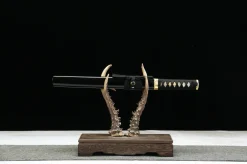
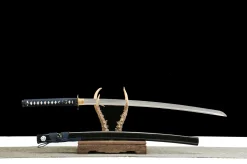
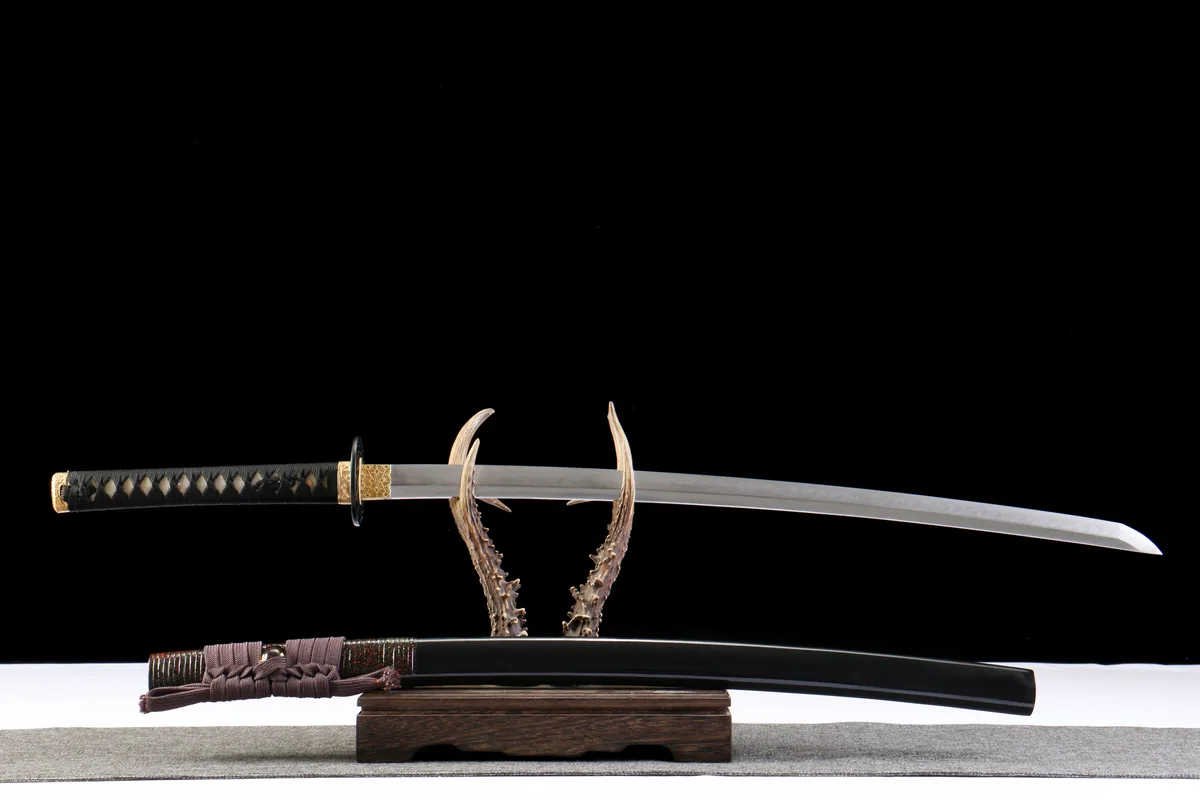
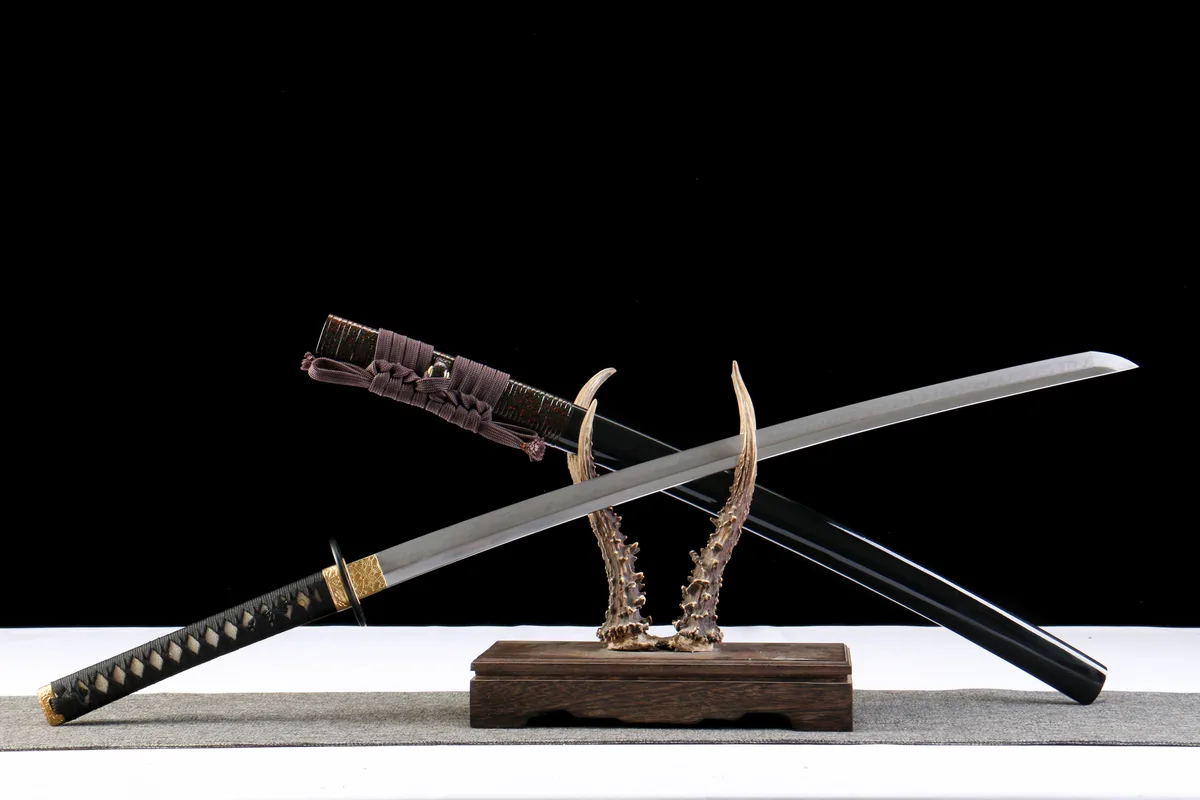
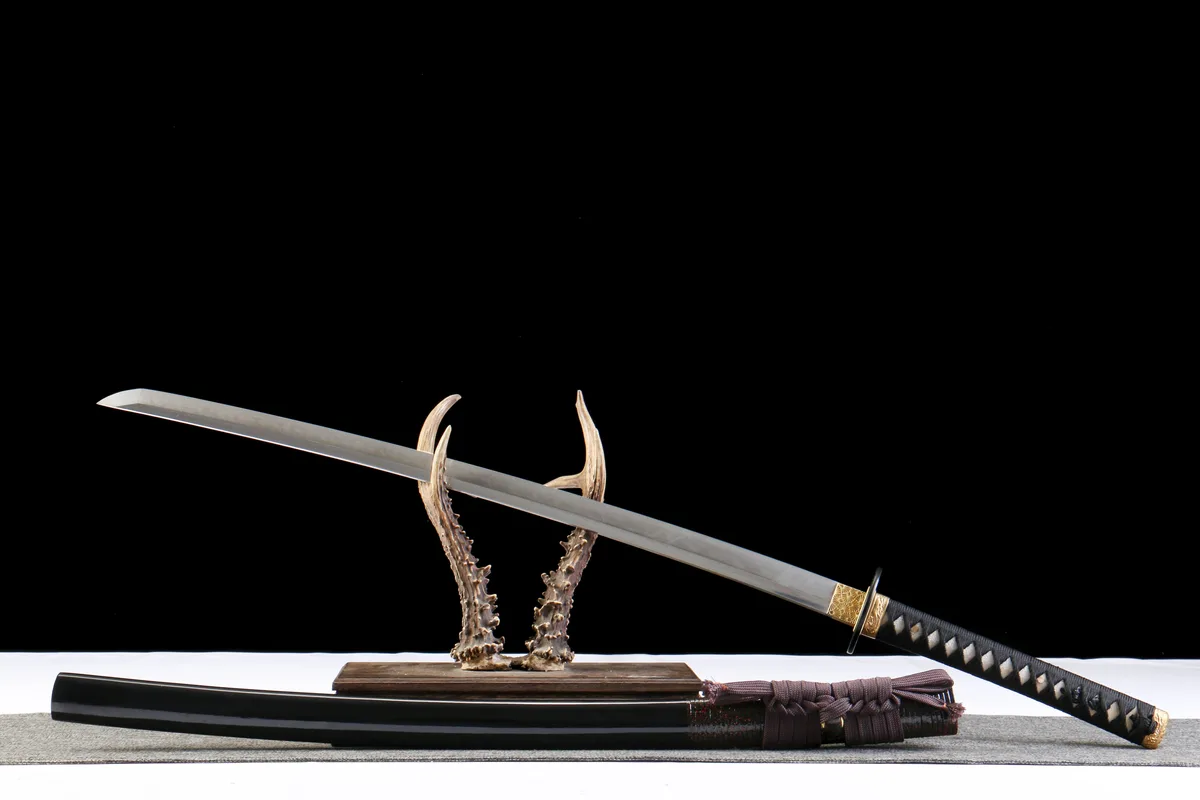
Hand-forged T10 Tool Steel katana (102cm total / 72cm blade), crafted in Longquan. Clay-tempered blade with a genuine hamon line — visible contrast between hardened edge and soft spine.
$549.99
Azure Brown Radiance – Hand Forged T10 Tool Steel Katana Sword
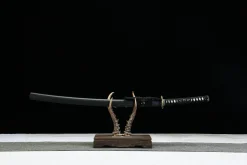
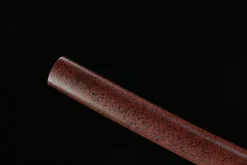
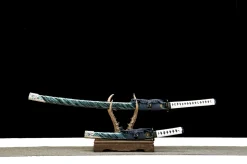
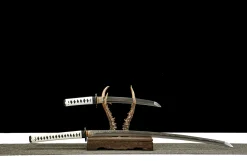
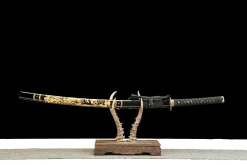
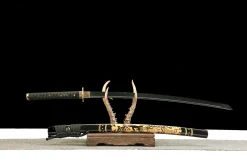
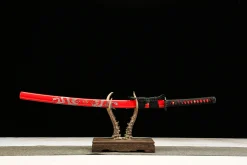
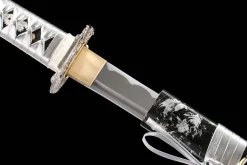
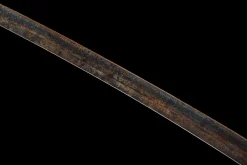
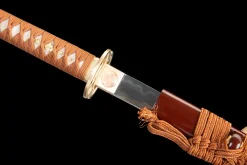
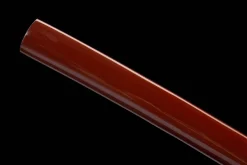
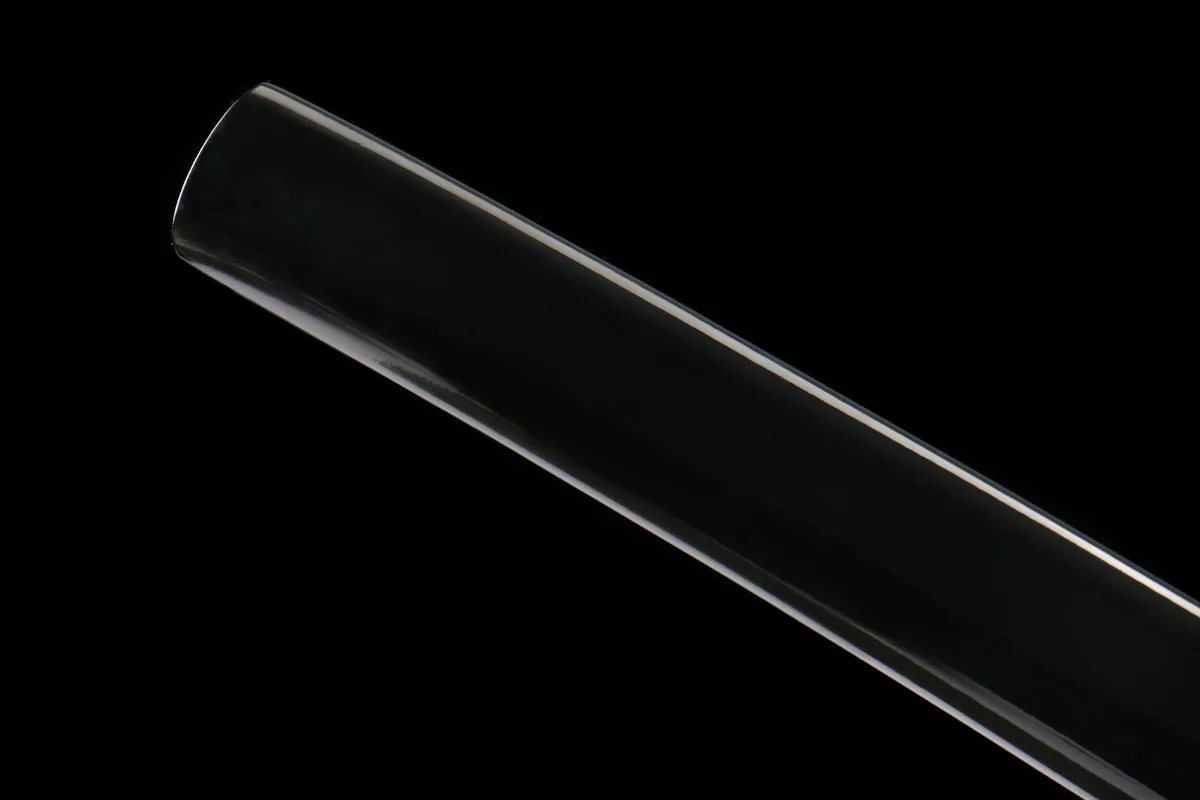
Most katana are presented in lacquered hardwood saya finished in solid color. The Azure Brown Radiance takes a different approach. The Chinese name specifies a wisteria-vine saya (fuji-zaya) – hardwood wrapped or finished to evoke the texture and color of the fujizuru vine used in classical Japanese scabbard work, producing a sheath surface that reads as organic and variable rather than the uniform gloss of standard lacquer. Against this sheath, the three-color polished T10 blade and its live hamon perform visually in a way that a conventional saya cannot frame. The fuchi and kashira (handle collar and pommel fittings) in dark iron close the composition with restraint.
Specifications
| Blade Steel | T10 High Speed Tool Steel |
| Total Length | 102.0 cm / 40.2 in |
| Blade Length | 72.0 cm / 28.3 in |
| Blade Width | 3.2 cm |
| Blade Thickness | 0.7 cm |
| Weight | 1040 g / 36.7 oz |
| Heat Treatment | Clay Tempering (Differential Hardening) |
| Fittings | Iron |
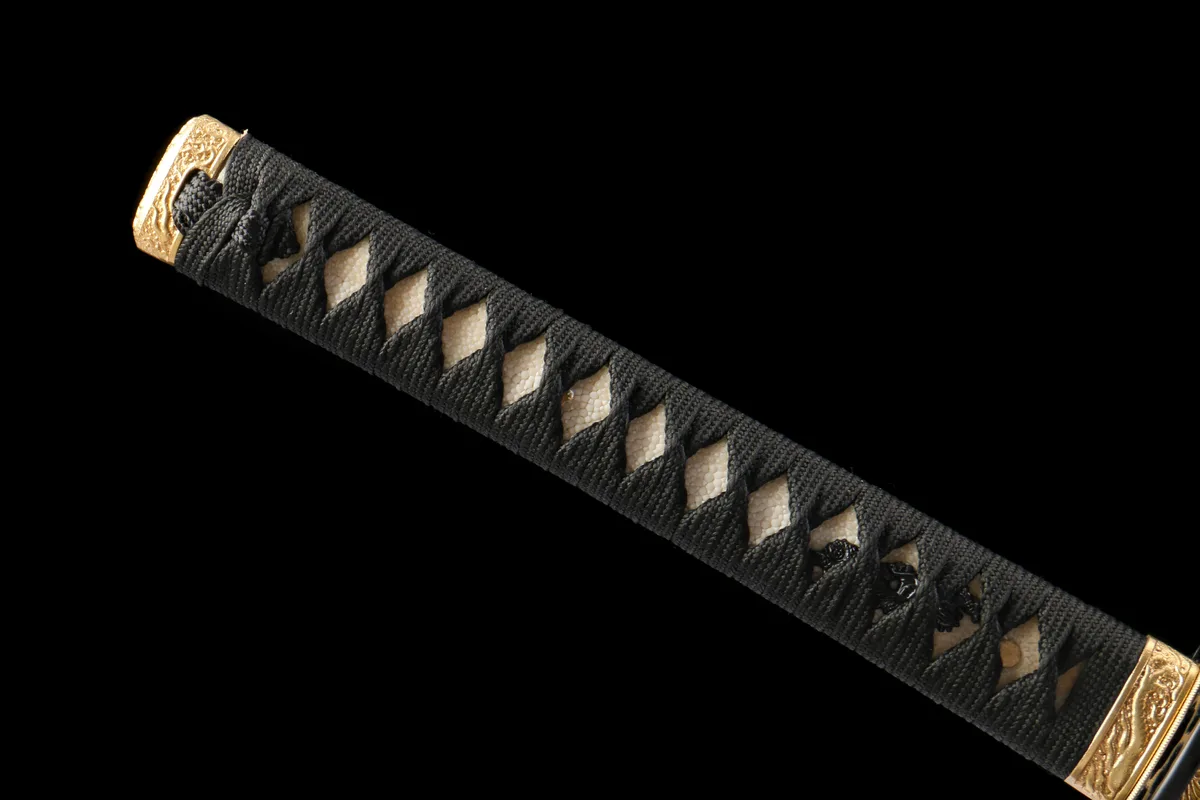
| Handle | Cotton Ito + Genuine Rayskin |
| Sheath | Hardwood, High-Gloss Lacquer |
Steel & Construction
T10 tool steel’s tungsten content is not a marketing distinction. Tungsten inhibits grain coarsening at elevated temperatures, which means the steel remains fine-grained through the forging and heat treatment cycles that would cause standard high-carbon steel to lose some of its structural consistency. When clay is applied to the spine before the quench – the tsuchioki step of differential hardening – the slow-cooled mune (spine) ends up in a pearlitic microstructure that is impact-resistant and flexible. The fast-cooled ha (edge) transforms to martensite: hard, wear-resistant, capable of holding a geometry that performs. The boundary between these zones – the hamon – is where T10 shows its character most clearly. The nie activity (martensitic crystalline granules visible at the transition boundary) is dense and well-defined, and on this blade the san-shoku togi (three-color polishing technique) is applied specifically to make that activity legible. Each of the blade’s three visual zones receives a different polishing stage: the shinogi-ji (flat above the ridge line), the ji (surface between shinogi and hamon), and the ha (the edge region near the hamon) are finished to different levels of refinement, creating distinct reflective responses that make the hamon appear to exist at depth within the blade rather than simply on its surface.
The shinogi-zukuri (ridge-line) forging geometry is the standard for serious Japanese-style swords because it is structurally efficient and produces a cross-section that moves through a draw cleanly. The 3.2 cm width is maintained across a 0.7 cm thickness at the spine – a robust profile that does not sacrifice blade integrity for the sake of a dramatic taper.
Handling
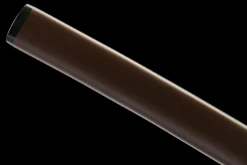
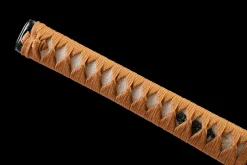
The 26 cm tsuka (handle) is wrapped in cotton ito over genuine rayskin (same), the traditional rayskin substrate that has been used in Japanese sword construction because its raised nodule texture – pressed through the ito at each diamond opening – creates a grip that remains readable under any hand condition. At 102 cm overall, this is a full-length daito (long sword), and the 72 cm blade requires a committed grip and a deliberate stance to manage correctly. The saya, with its distinctive wisteria-influenced surface texture and high-gloss lacquer finish, presents the draw as a tactile experience distinct from a plain lacquer saya – the hand reads the difference immediately as it travels along the scabbard during draw preparation. The koiguchi (sheath mouth) is fitted to hold the blade without play and release without hesitation.
Care Instructions
Wipe the blade with a clean, dry cloth after every handling session, then apply a thin film of choji oil (traditional clove-mineral preservation oil) to prevent surface oxidation on the high-carbon steel. The saya’s lacquered surface can be wiped clean with a dry cloth; avoid solvents, which will damage the lacquer finish and potentially compromise the tight tolerances at the koiguchi. Store the sword horizontally in low humidity – if storing long-term, remove the blade from the saya every few months to inspect and re-oil both the blade and the inside of the saya throat.
| Weight | 1.32 lbs |
|---|---|
| Dimensions | 102.0 × 3.2 × 0.7 in |
| Hamon | Real Hamon (Clay Tempered) |
| Blade Steel | T10 Tool Steel |
| Total Length | 102.0 cm |
| Blade Length | 72.0 cm |
| Heat Treatment | Clay Tempering (Differential Hardening) |
| Handle Wrap | Cotton Ito + Genuine Rayskin |
| Sheath Material | Hardwood (High-Gloss Lacquer) |
| Fittings | Iron |
| Forging Style | 鎬造 |
Related products