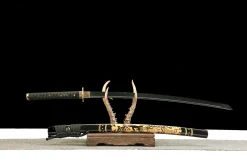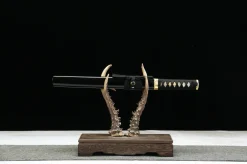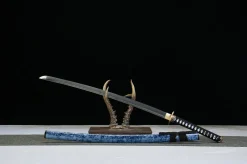



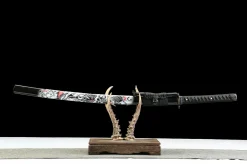
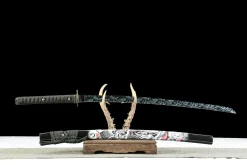




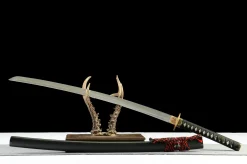
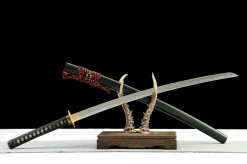
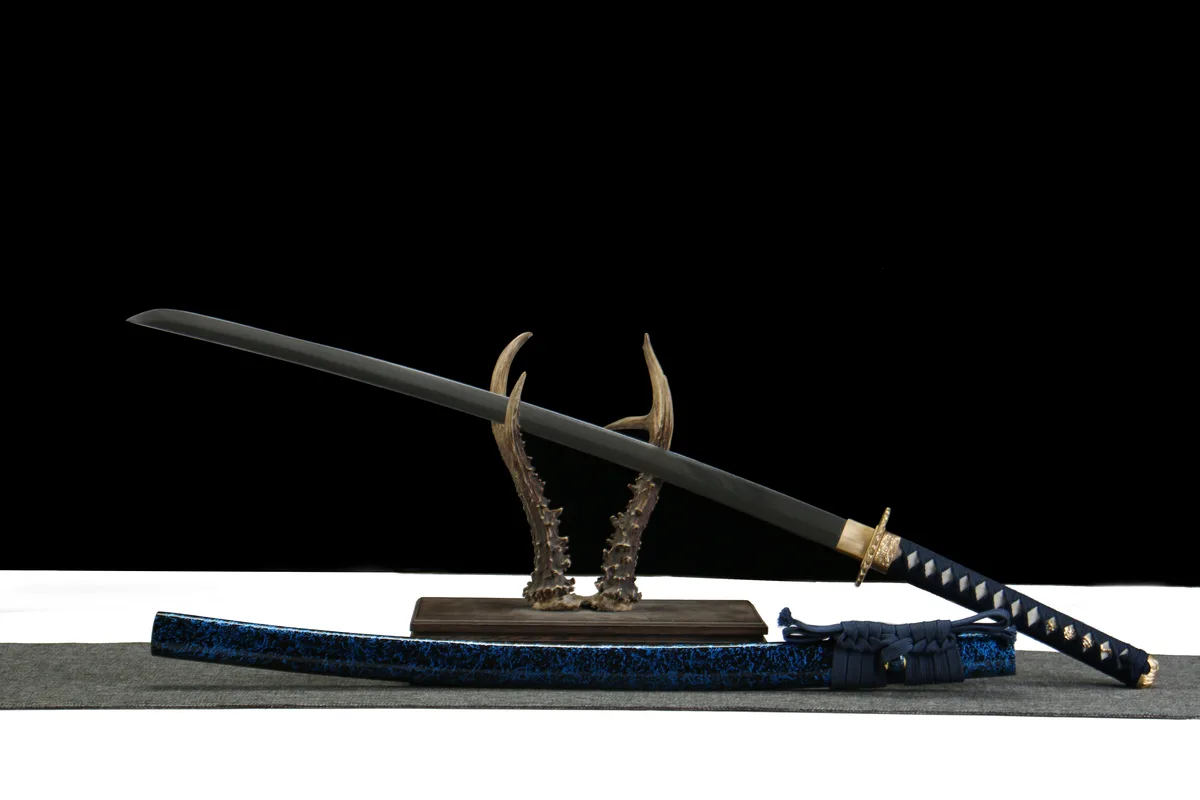



Black Dragon – Hand Forged 1065 Carbon Steel Katana Sword
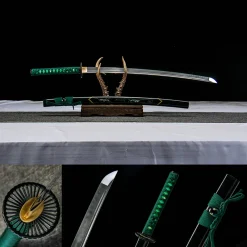
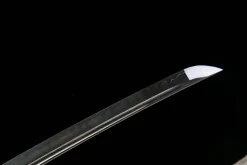
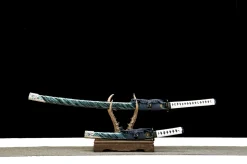
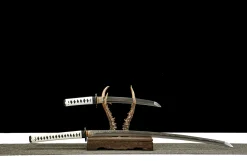
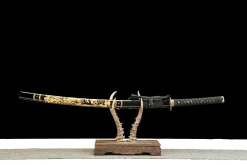
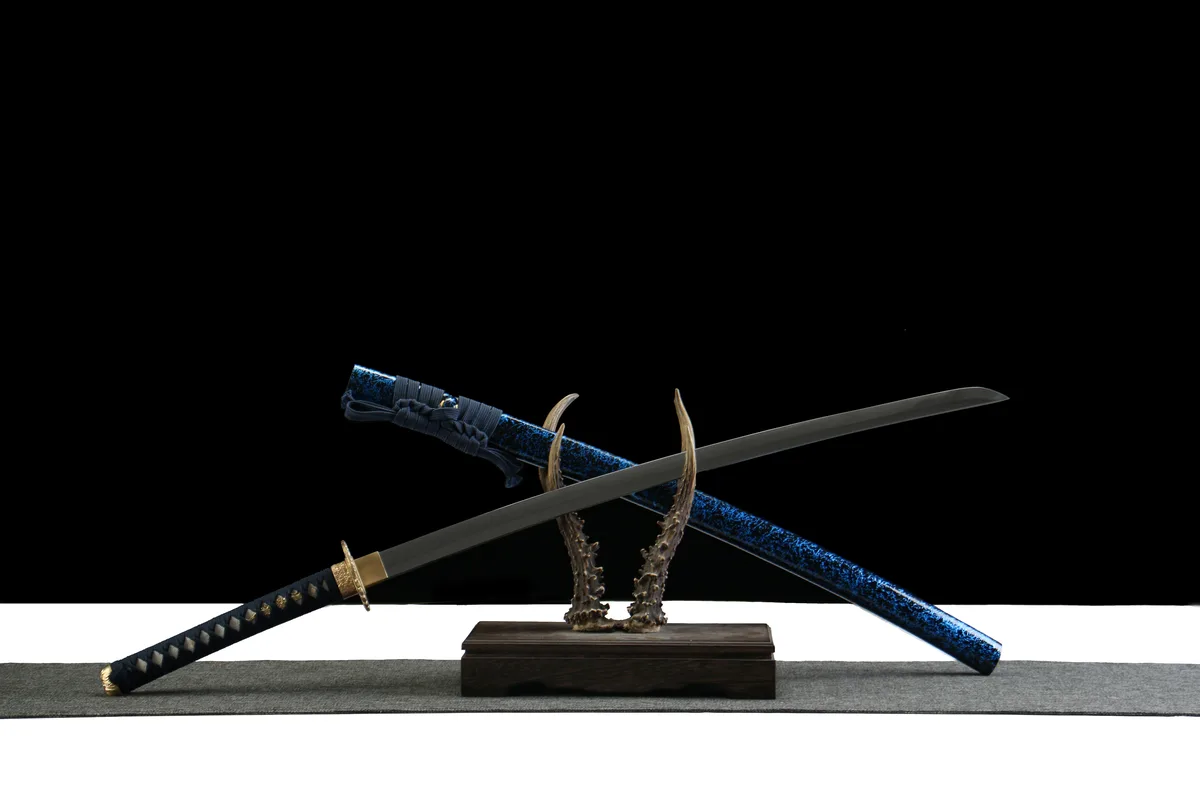
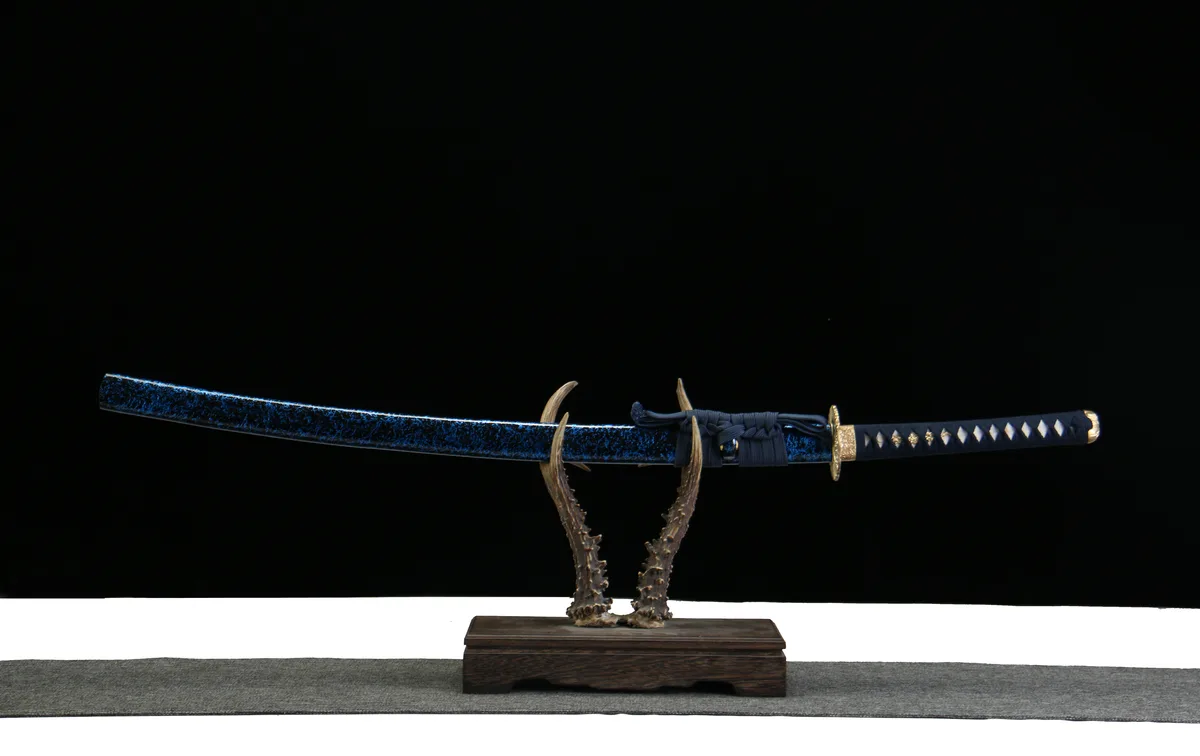
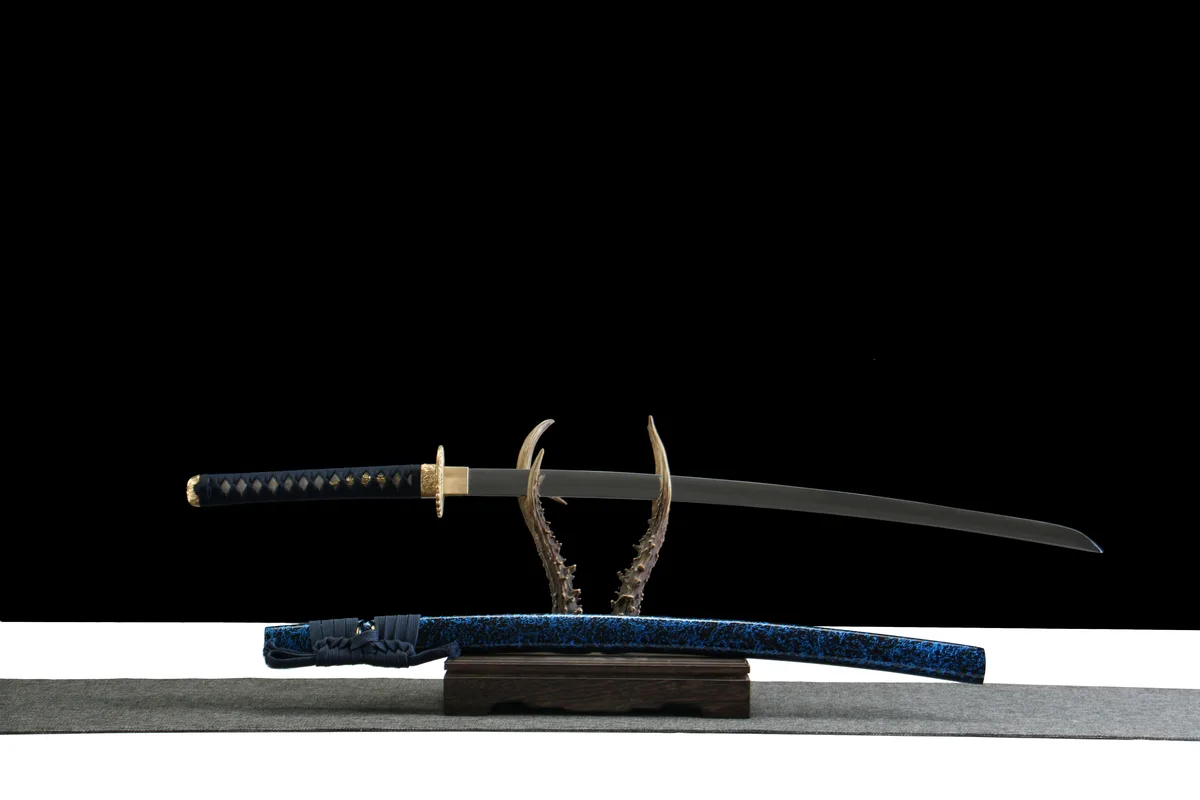
Hand-forged 1065 Carbon Steel katana (103cm total / 72cm blade), crafted in Longquan. Full-tang construction with traditional fittings and hand-lacquered saya.
$259.99
Black Dragon – Hand Forged 1065 Carbon Steel Katana Sword
1065 high carbon steel has a specific reputation among practitioners who have worked through enough blades to know what matters: it hits the hardness range where an edge holds across extended sessions, and it carries enough ductility that the steel bends before it fractures. The Black Dragon (黑龙, Hēi Lóng) is built on that reputation.
Specifications
| Blade Steel | 1065 High Carbon Steel |
| Total Length | 103.0 cm / 40.6 in |
| Blade Length | 72.0 cm / 28.3 in |
| Blade Width | 3.2 cm |
| Weight | 950 g / 33.5 oz |
| Heat Treatment | Oil Quench & Temper |
| Fittings | Copper |
| Handle | Cotton Ito Wrap |
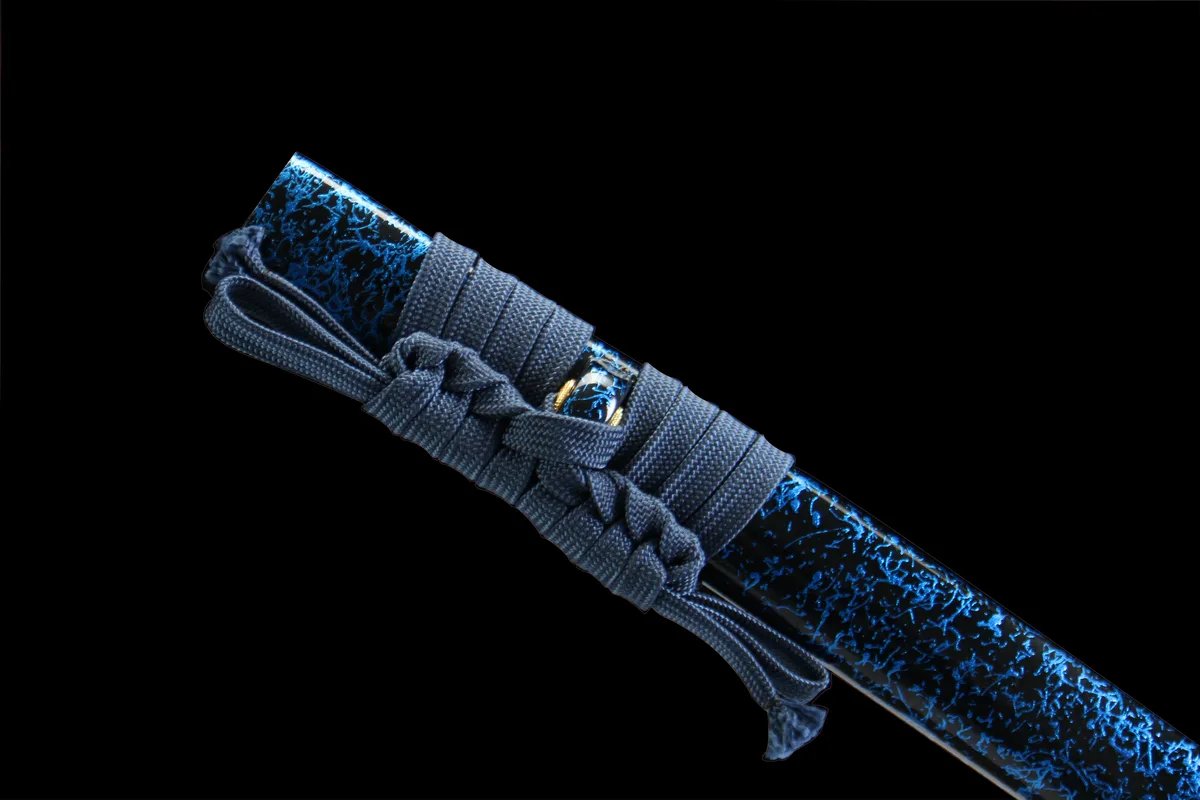
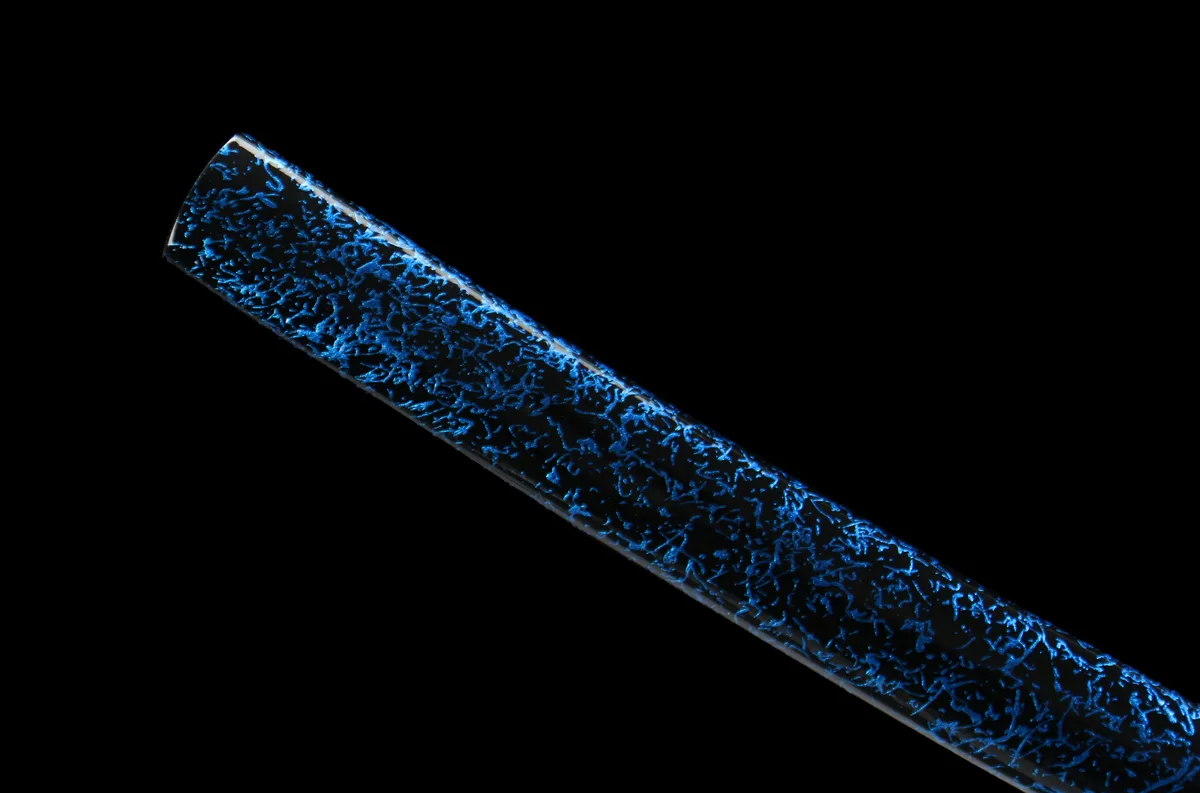
| Sheath | Green Bark Wood – Aohada |
What the Steel Does
At 0.65% carbon, 1065 sits above the midpoint on the carbon spectrum – higher than 1060 but below the territory where brittleness becomes a management concern. The practical result is a steel that oil quenches to a hardness range well-suited to a working katana edge: hard enough to hold a fine bevel through repeated contact, tough enough that the body of the blade absorbs stress rather than transmitting it straight to the edge. Oil quench and temper is the correct treatment here – the controlled quench rate allows the full cross-section to harden without creating the steep hardness gradient between edge and spine that water quenching produces in longer blades, and the subsequent temper draw relieves the internal stress that would otherwise make the blade unpredictable under load.
The shinogi-zukuri (ridgeline) geometry ground into this blade is the standard bearer for a reason. The shinogi – the raised longitudinal ridge dividing the flat from the bevel – adds stiffness along the blade’s long axis. On a 72 cm blade this matters: a flat-ground blade of the same length would flex more under lateral load. The shinogi geometry transfers that load into the blade’s structure rather than the edge, and the bevel behind the edge can be kept at the geometry that actually cuts, rather than being thickened as compensation for a flexible blank.
In Your Hands
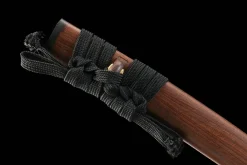
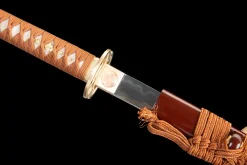
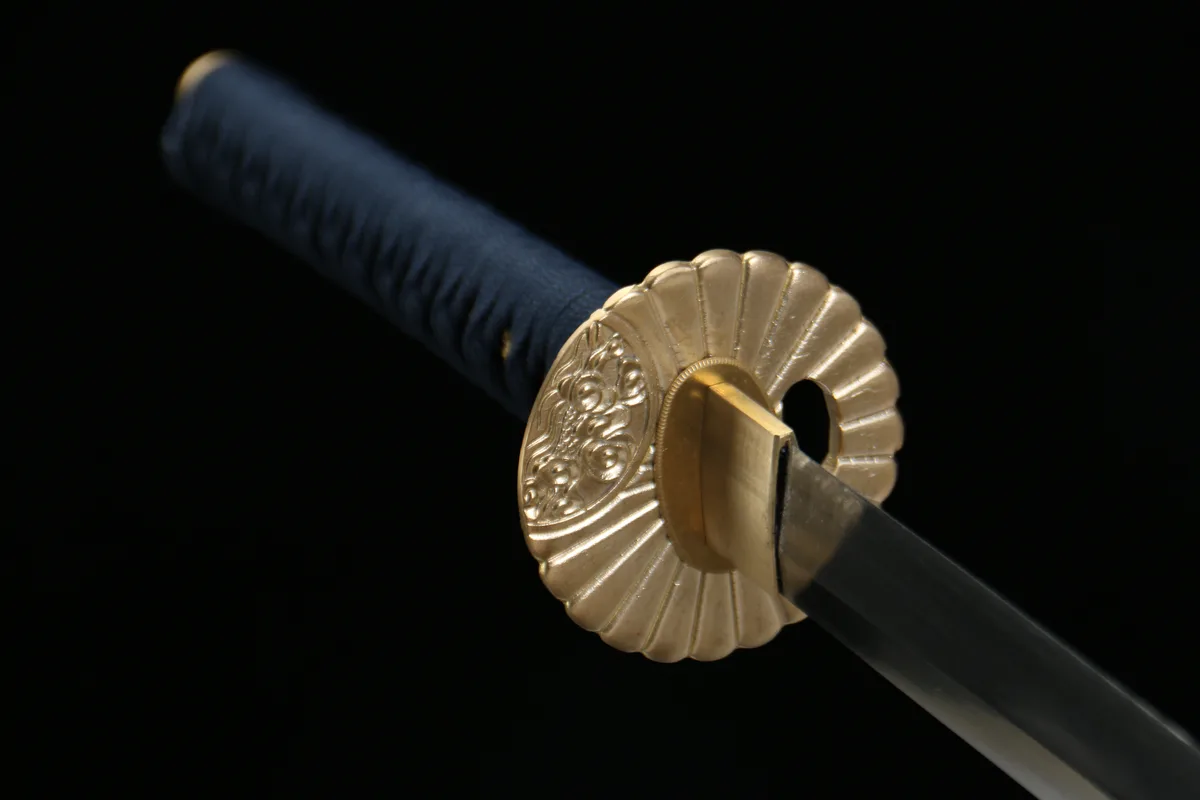
The 27 cm tsuka (handle) wrapped in cotton ito gives a firm, textured grip that does not require a tight squeeze to feel secure – the diagonal wrap nodes lock your palm position without demanding it. Copper fittings at the tsuba (guard) and habaki (blade collar) are more corrosion-resistant than zinc alloy and add warmth against the blade’s surface finish. The green Aohada (bark wood) saya draws cleanly – the bark interior holds the blade without rattling loose, and the draw resistance is consistent from the koiguchi (mouth of the sheath) to full clearance. At 103 cm total, the draw is committed and complete.
Care
After each session, wipe the blade with a clean cloth to remove moisture and any residue, then apply a thin, even coat of choji oil or food-grade mineral oil along the full blade length. 1065 will surface-rust if left uncoated in humid conditions – the oil layer is the only barrier required, but it needs to be there consistently. Sharpen on a whetstone working from coarser to finer grit, maintaining the existing bevel angle.
| Weight | 1.2 lbs |
|---|---|
| Dimensions | 103.0 × 3.2 × 0.7 in |
| Hamon | Decorative / Acid-Etched |
| Blade Steel | 1065 Carbon Steel |
| Total Length | 103.0 cm |
| Blade Length | 72.0 cm |
| Heat Treatment | Oil Quench & Temper |
| Handle Wrap | Cotton Ito Wrap |
| Sheath Material | Green Bark Wood (Aohada) |
| Fittings | Copper |
| Forging Style | Shinogi-Zukuri (Ridgeline) |
Related products