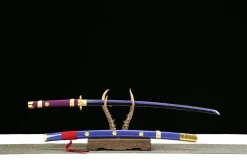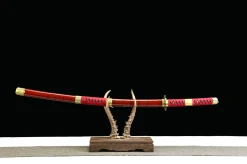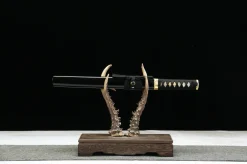
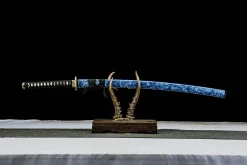


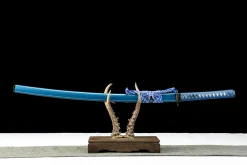









Black Gold Blue Silk – Hand Forged T10 Tool Steel Katana Sword
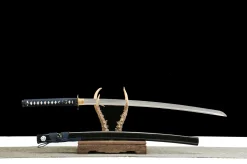
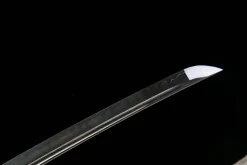
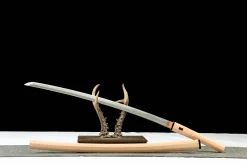
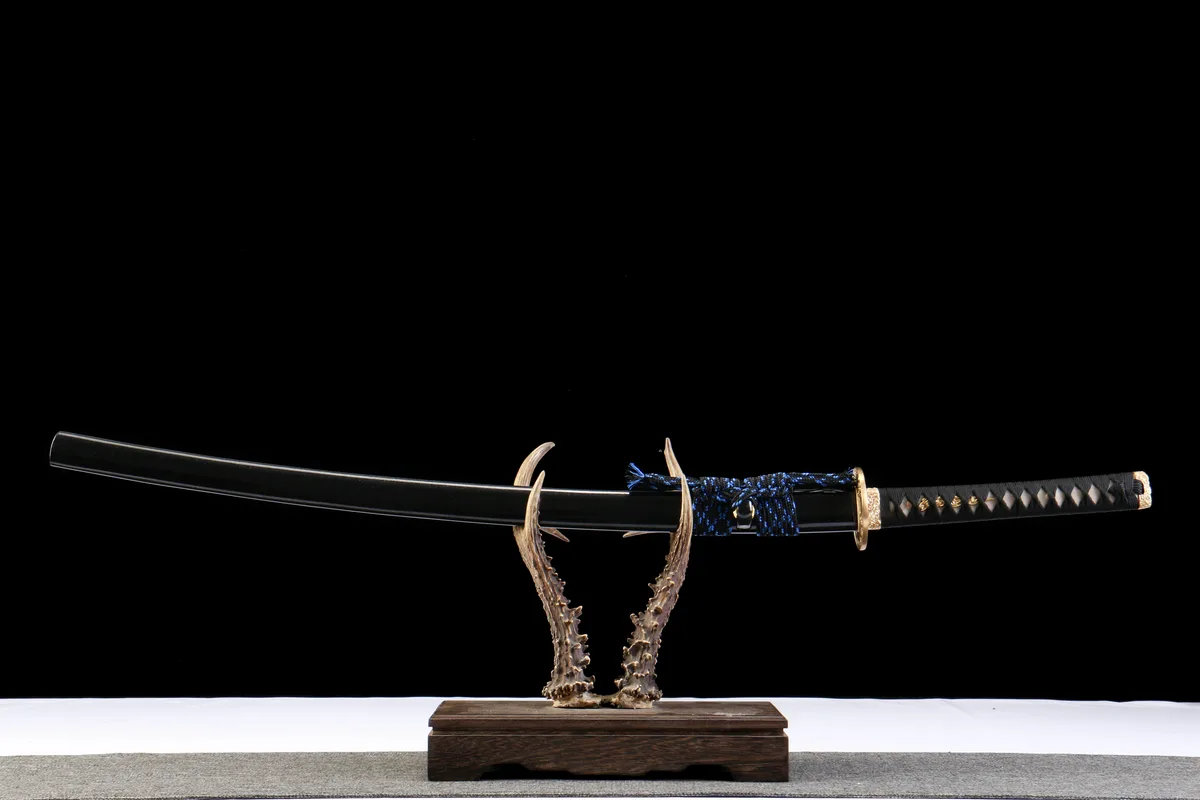
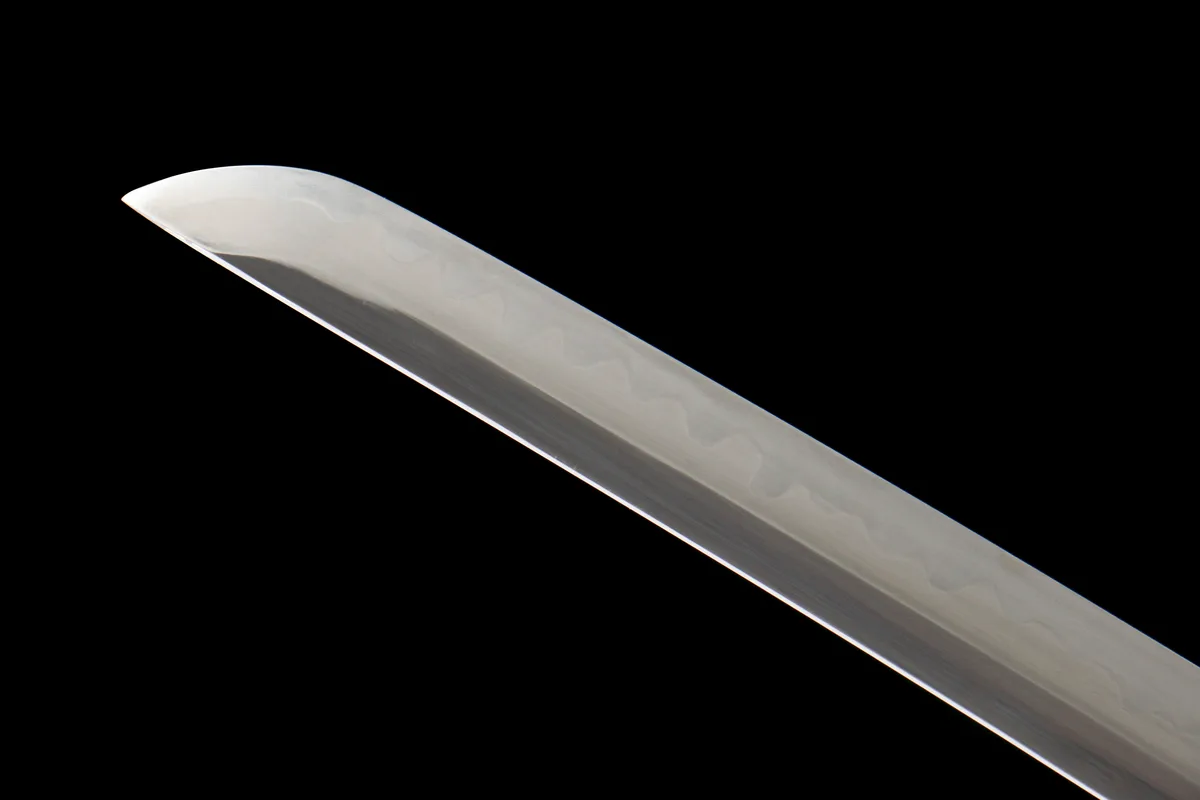
Hand-forged T10 Tool Steel katana (102cm total / 72cm blade), crafted in Longquan. Clay-tempered blade with a genuine hamon line — visible contrast between hardened edge and soft spine.
$524.99
Black Gold Blue Silk – Hand Forged T10 Tool Steel Katana Sword
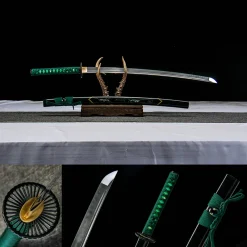
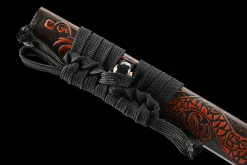
There are clay-tempered blades, and then there are clay-tempered blades where the smith understood that a narrow saya demands a blade that has been fitted – not approximated. The Black Gold Blue Silk is built around the koshirae (complete mounting) as a unified object: a slender, high-gloss lacquer hardwood sheath paired to a shinogi-zukuri (ridgeline) blade in T10 tool steel, copper fittings with a finish that earns its color, and a hamon that arrived where it is because the clay said so.
Specifications
| Blade Steel | T10 High Speed Tool Steel |
| Total Length | 102.0 cm / 40.2 in |
| Blade Length | 72.0 cm / 28.3 in |
| Handle Length | 26.0 cm / 10.2 in |
| Blade Width | 3.2 cm |
| Blade Thickness | 0.7 cm |
| Weight | 1040 g / 36.7 oz |
| Heat Treatment | Clay Tempering (Differential Hardening) |
| Fittings | Copper |
| Handle | Cotton Ito wrap over genuine rayskin (same) |
| Sheath | Hardwood, high-gloss lacquer |
Steel & Construction
T10 high speed tool steel begins with a carbon content near 1.0% and a trace tungsten addition that stabilizes the carbide network through repeated heating cycles during forging. The result is a steel that responds to careful differential hardening with unusual precision – the martensite formed at the edge during quench is fine-grained and stable, producing a cutting edge that holds geometry under sustained use rather than rolling or developing a wire edge that folds back. The spine, insulated by the thick tsuchioki (clay coat) during quench, retains pearlitic toughness and absorbs lateral flex without transmitting crack propagation toward the edge face.
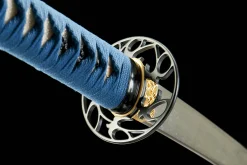
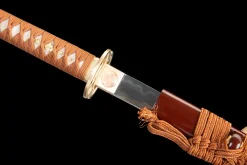
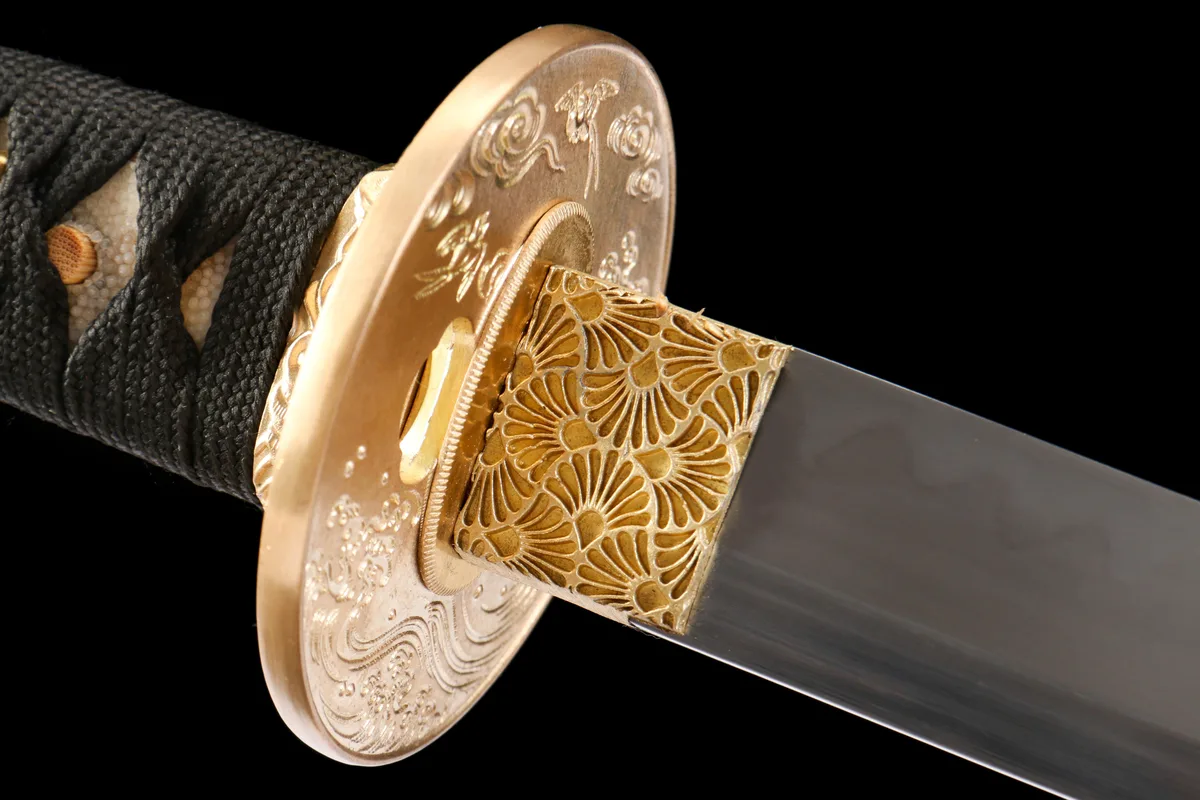
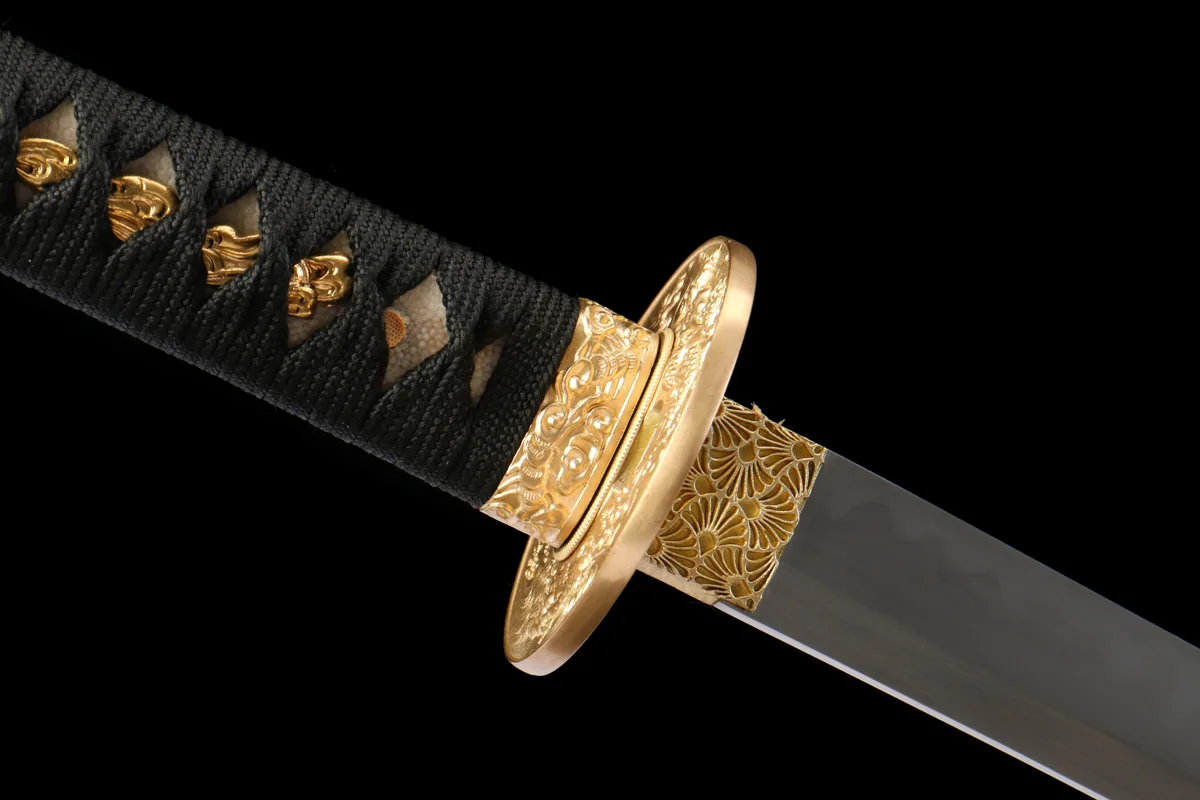
The hamon on this blade – the visible record of that differential boundary – runs as a living, irregular line between two metallurgically distinct zones. At the habuchi (hamon transition boundary), nie (individual martensite crystals resolving as visible bright grain) scatter in raking light. The shinogi-zukuri (ridgeline) profile reinforces the cross-section laterally, and the 3.2 cm blade width at the base gives the geometry room to taper correctly to the kissaki (point) without the ridge becoming abrupt. The copper fittings – tsuba (handguard), fuchi (collar), and kashira (pommel cap) – are fitted and finished to a clearance that does not rattle, compress, or introduce play into the mounting.
Handling
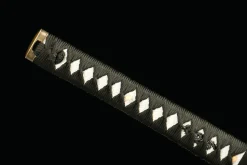
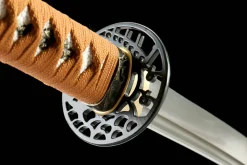
At 26 cm, the handle is genuine rayskin same under a cotton ito diagonal wrap – the cross-over points seated firmly against the raised nodes of the rayskin, each rhombus of exposed same providing a tactile anchor that keeps the grip stable through any hand position. The shinogi-zukuri profile gives the blade a specific feedback character: responsive to wrist rotation at the handle, stable on the longitudinal axis where the ridgeline stiffens it. The slender saya draws cleanly at the koiguchi (sheath mouth), the high-gloss lacquer interior releasing the habaki (blade collar) without drag or hesitation when pressure is applied correctly at the koiguchi with the thumb.
Care Instructions
After handling, remove all fingerprints from the blade immediately using a clean cotton cloth – T10’s elevated carbon content makes it reactive to the acids in skin oil, and surface rust can establish quickly in humid environments if the blade is stored uncoated. Apply a light coat of mineral oil or choji oil (traditional clove-infused mineral oil) before returning the blade to the saya. The copper fittings require no special treatment beyond keeping them dry; natural patina development on copper is normal and does not affect structural integrity.
| Weight | 1.32 lbs |
|---|---|
| Dimensions | 102.0 × 3.2 × 0.7 in |
| Hamon | Real Hamon (Clay Tempered) |
| Blade Steel | T10 Tool Steel |
| Total Length | 102.0 cm |
| Blade Length | 72.0 cm |
| Heat Treatment | Clay Tempering (Differential Hardening) |
| Handle Wrap | Cotton Ito + Genuine Rayskin |
| Sheath Material | Hardwood (High-Gloss Lacquer) |
| Fittings | Copper |
| Forging Style | 鎬造 |
Related products