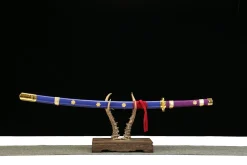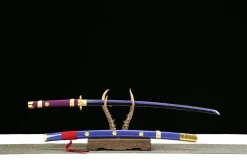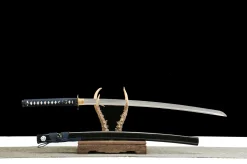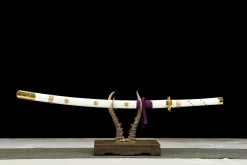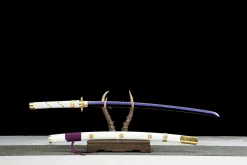
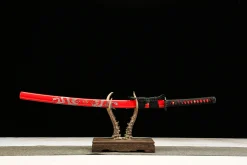












Burning Night – Hand Forged High Carbon Steel Tanto Sword
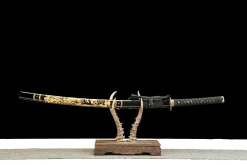
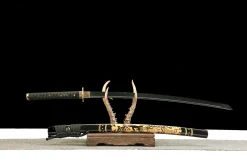
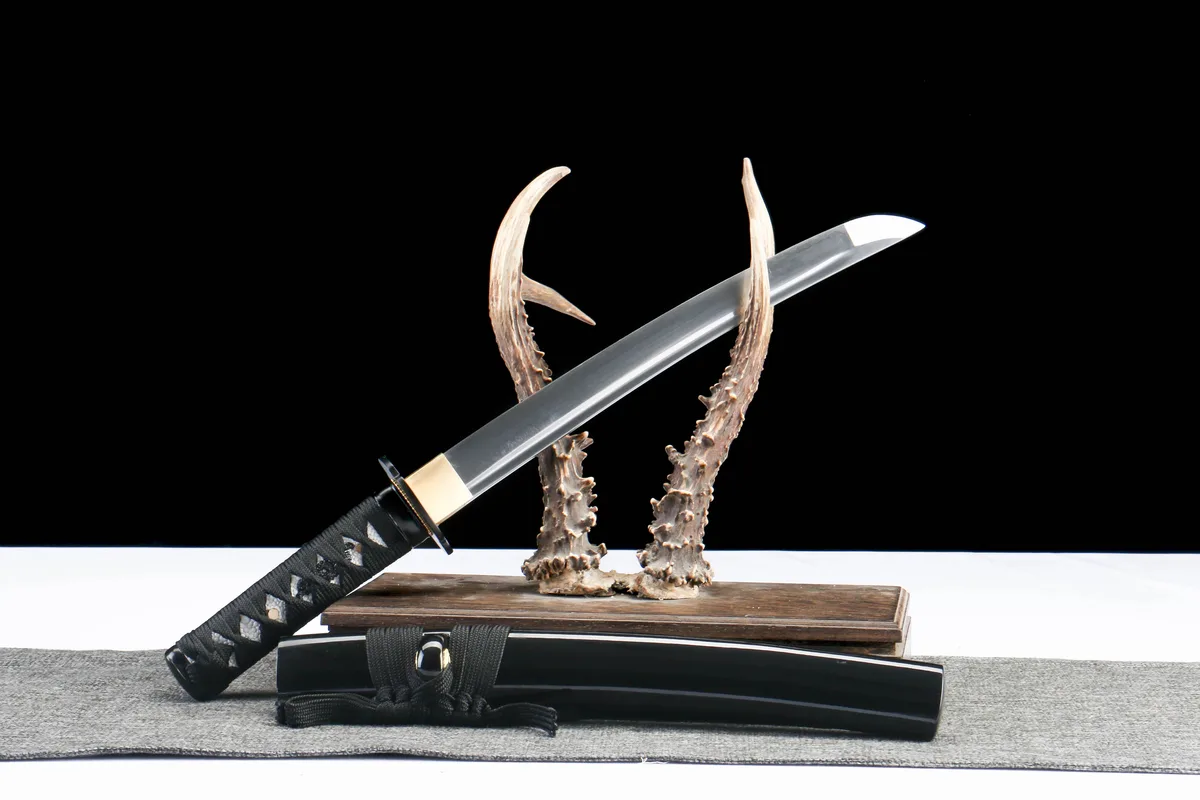
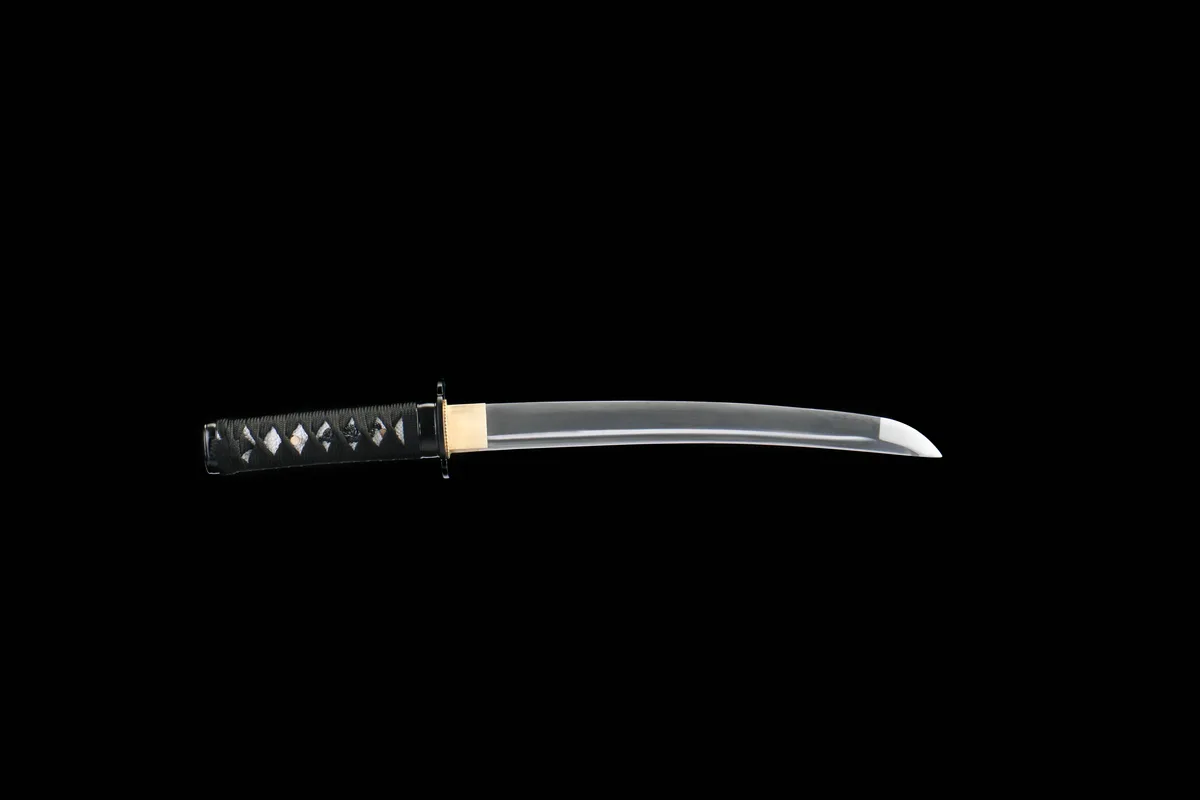
Hand-forged High Carbon Steel tanto (52cm total / 32cm blade), crafted in Longquan. Full-tang construction with traditional fittings and hand-lacquered saya.
$149.99
A tanto built for use does not need ceremony – it needs steel that holds an edge, geometry that does not fail under load, and a handle that stays put when your grip tightens. Burning Night (焚夜) delivers all three in a compact 32 cm blade of 1060 carbon steel, forged in the ridged 鎬造 (shinogi-zukuri) profile out of Longquan.
Specifications
| Blade Steel | 1060 Carbon Steel |
| Total Length | 52.0 cm / 20.5 in |
| Blade Length | 32.0 cm / 12.6 in |
| Blade Width | 3.2 cm |
| Heat Treatment | Temper |
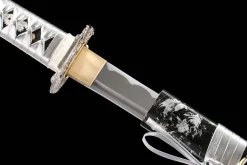
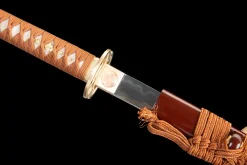
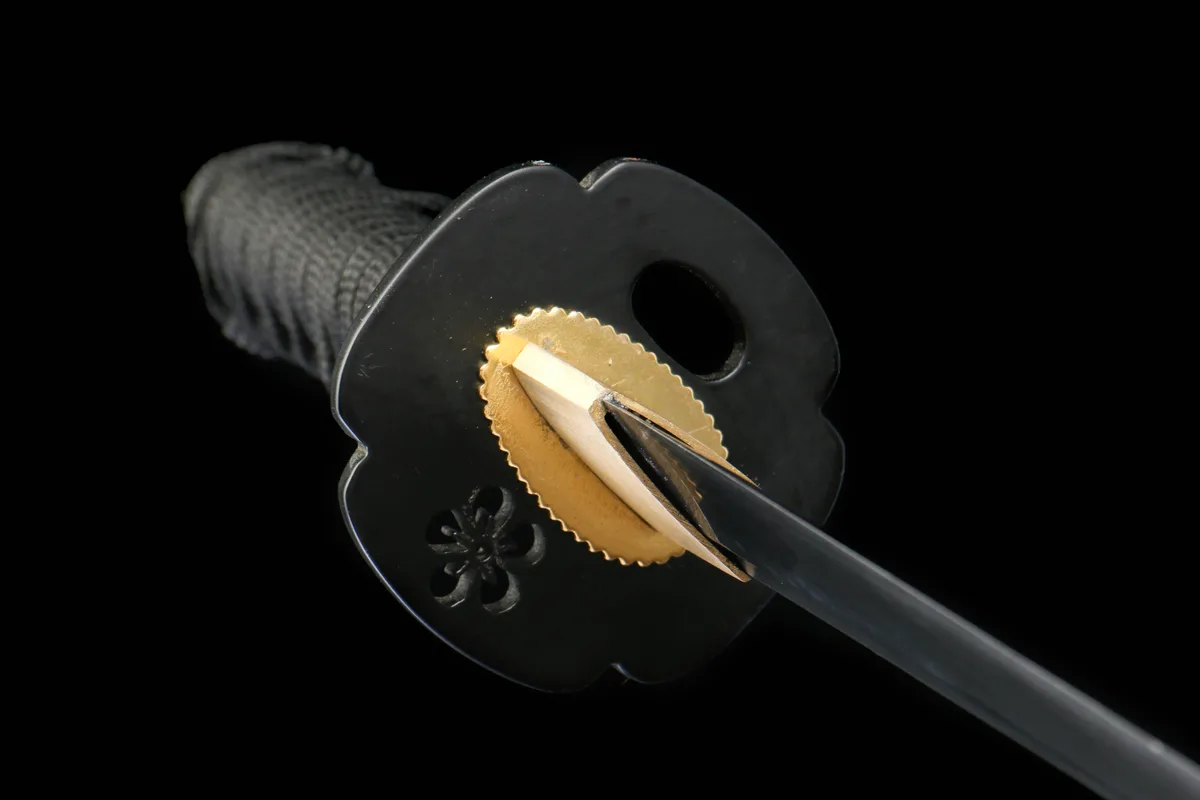
| Fittings | Iron |
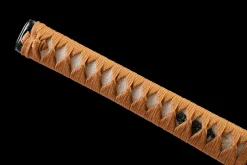
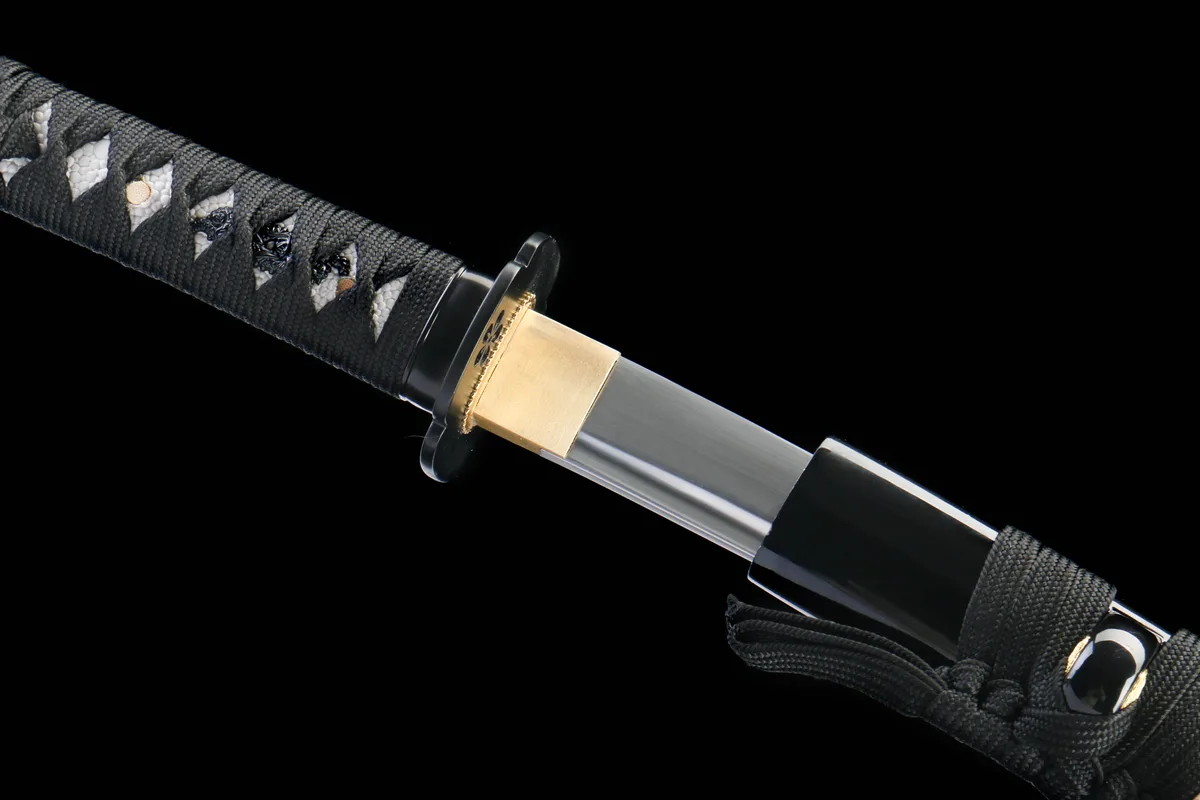
| Handle | Cotton ito wrap |
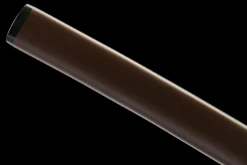
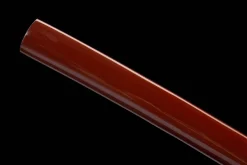
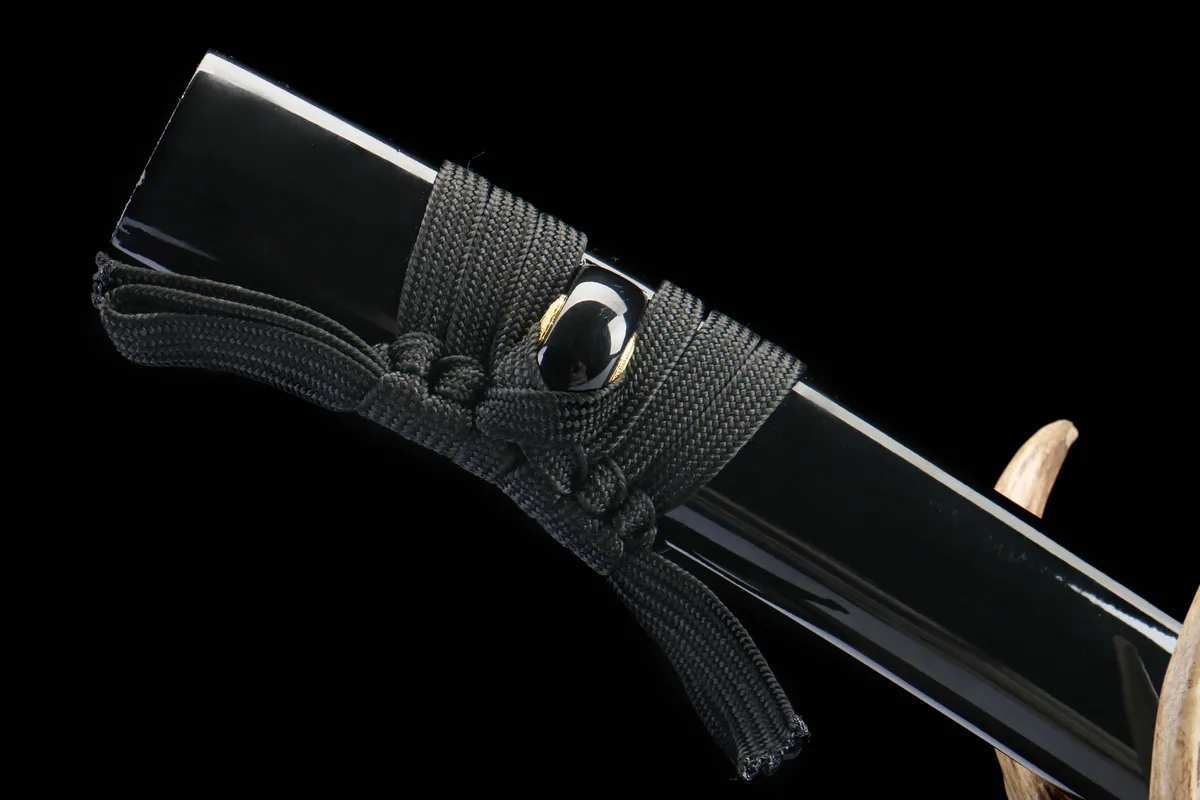
| Sheath | Solid wood with piano lacquer finish |
Forged in Longquan
1060 carbon steel sits at a practical midpoint in the carbon range – enough carbon content to reach a working hardness that holds a cutting edge through repeated use, with enough residual ductility to resist the kind of lateral stress that would chip or fracture a harder, more brittle steel. For a tanto, which sees close-work loads and is not always drawn with the same controlled geometry as a longer blade, that toughness margin matters. The temper on this blade is set to give you edge retention without brittleness at the point.
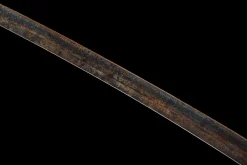
The 鎬造 profile – a blade form defined by a longitudinal ridge (the shinogi line) running between the flat and the bevel – creates a cross-section with real structural depth. That ridge distributes stress laterally rather than concentrating it at the edge, which is why this forging style has been standard in Japanese blade construction for centuries. At 3.2 cm wide and 0.7 cm thick at the spine, the geometry here is orthodox and well-proven. Iron fittings rather than alloy contribute to a more grounded, functional aesthetic that suits the blade’s intent.
Weight, Balance, Draw
The 17 cm cotton ito handle gives you a firm two-finger grip with the rear hand seated solidly against the kashira – adequate for the leverage a 32 cm blade requires. The cross-lace wrap texture bites into the hand without being abrasive, and the grip does not rotate under pressure. The draw from the piano-lacquered solid wood saya is smooth and consistent – the lacquer finish maintains a stable interior surface that does not swell or bind with humidity the way unfinished wood sometimes will.
Keeping It Sharp
After use, wipe the blade clean and apply a thin coat of camellia oil before sheathing. The 1060 steel will oxidize if left exposed to moisture, so do not store it in the saya long-term without oiling. Sharpen on a progression of whetstones, maintaining the existing bevel angle – the geometry is already well-set and does not need correction.
| Weight | 0.9 lbs |
|---|---|
| Dimensions | 52.0 × 3.2 × 0.7 in |
| Hamon | Decorative / Acid-Etched |
| Blade Steel | High Carbon Steel |
| Total Length | 52.0 cm |
| Blade Length | 32.0 cm |
| Heat Treatment | Temper |
| Handle Wrap | Cotton Ito Wrap |
| Sheath Material | 实木钢琴烤漆 |
| Fittings | Iron |
| Forging Style | 鎬造 |
Related products