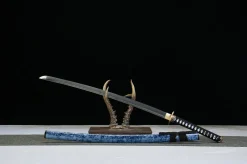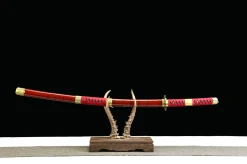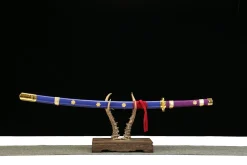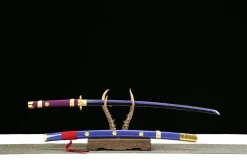





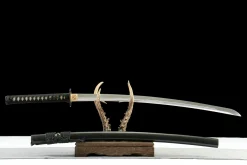






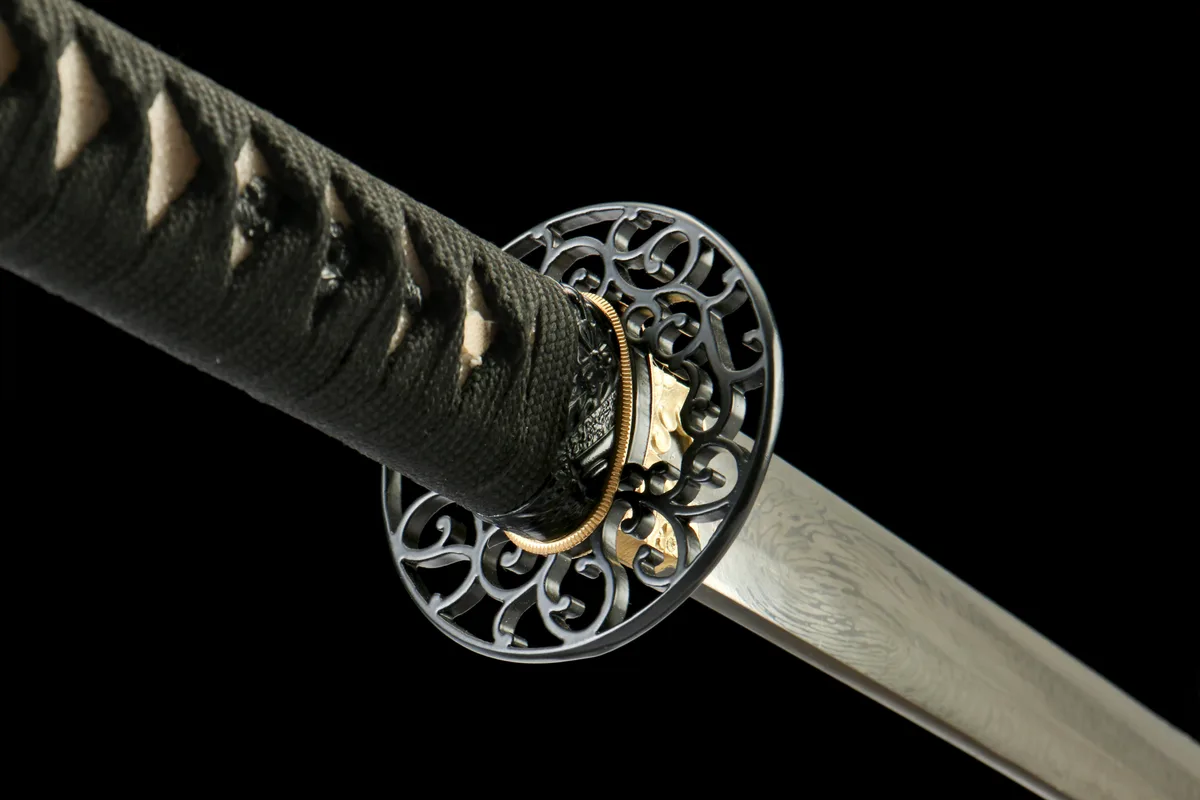


Cherry Blossom Shadow – Hand Forged Damascus Steel Katana Sword
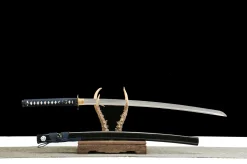
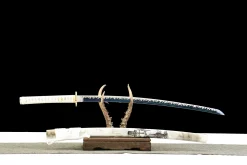
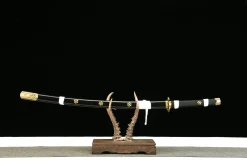
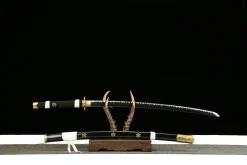
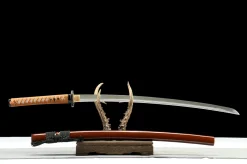
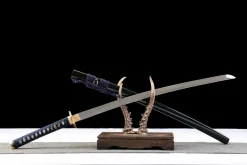
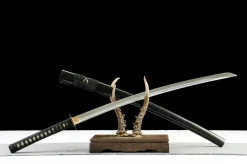
Hand-forged Damascus Steel katana (103cm total / 72cm blade), crafted in Longquan. Hand-folded Damascus pattern steel — each blade carries a unique layered grain from forge to tip.
$439.99
Cherry Blossom Shadow – Hand Forged Damascus Steel Katana Sword
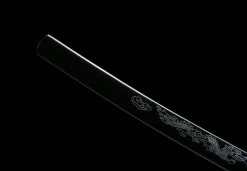
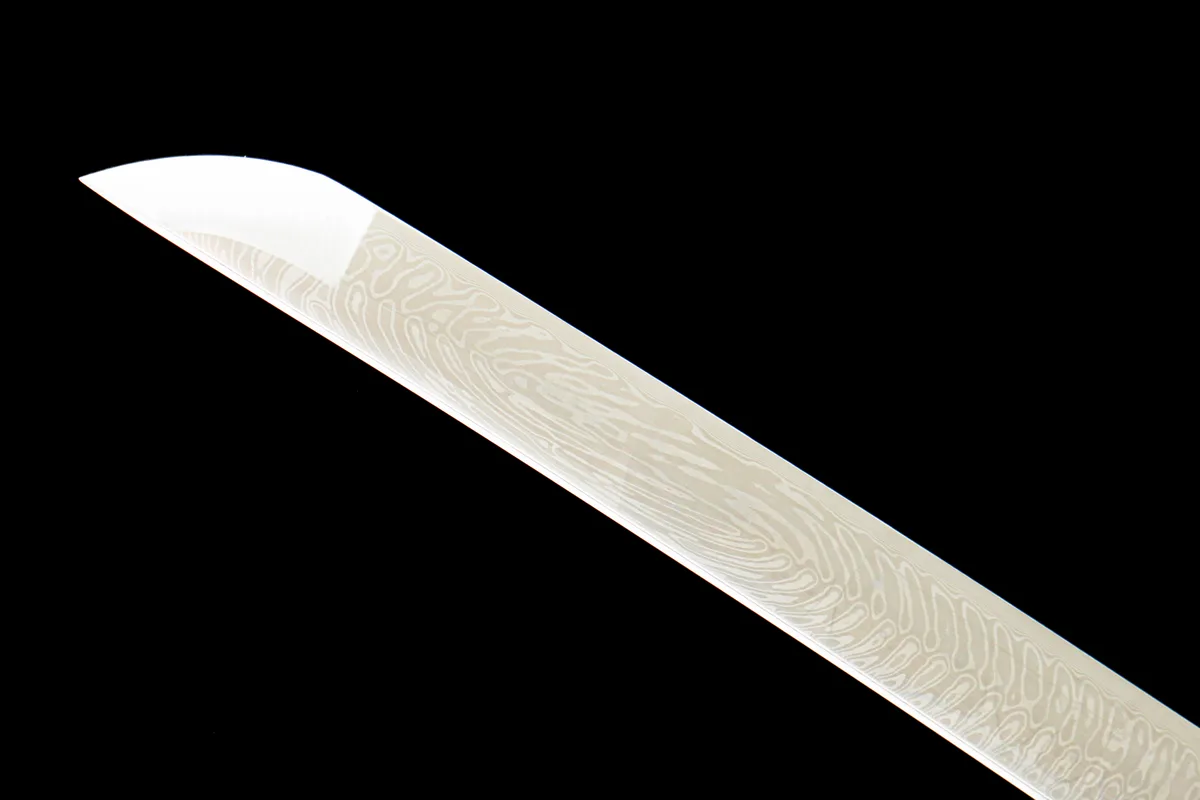
The 龙卷风 (tornado) Damascus pattern does not hold still. Depending on the angle you hold the blade to the light, the twisted grain either spirals toward the tip or appears to uncoil back toward the habaki (blade collar). This is pattern-welded Damascus – two or more steel alloys drawn, twisted, and forge-welded into a single billet – and the tornado variant is among the most visually active of all pattern types. Cherry Blossom Shadow / 桜影 was built to carry it.
Specifications
| Blade Steel | Damascus Steel (龙卷风 tornado pattern, folded/pattern-welded) |
| Total Length | 103.0 cm / 40.6 in |
| Blade Length | 72.0 cm / 28.3 in |
| Blade Width | 3.2 cm |
| Weight | 950 g / 33.5 oz |
| Heat Treatment | Oil Quench & Temper |
| Fittings | Iron (装 – full fitting set) |
| Handle | Cotton Ito Wrap |
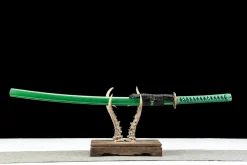
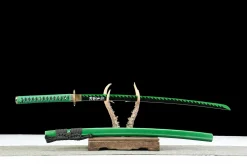
| Sheath | Green Bark Wood – Aohada |
Forged in Longquan
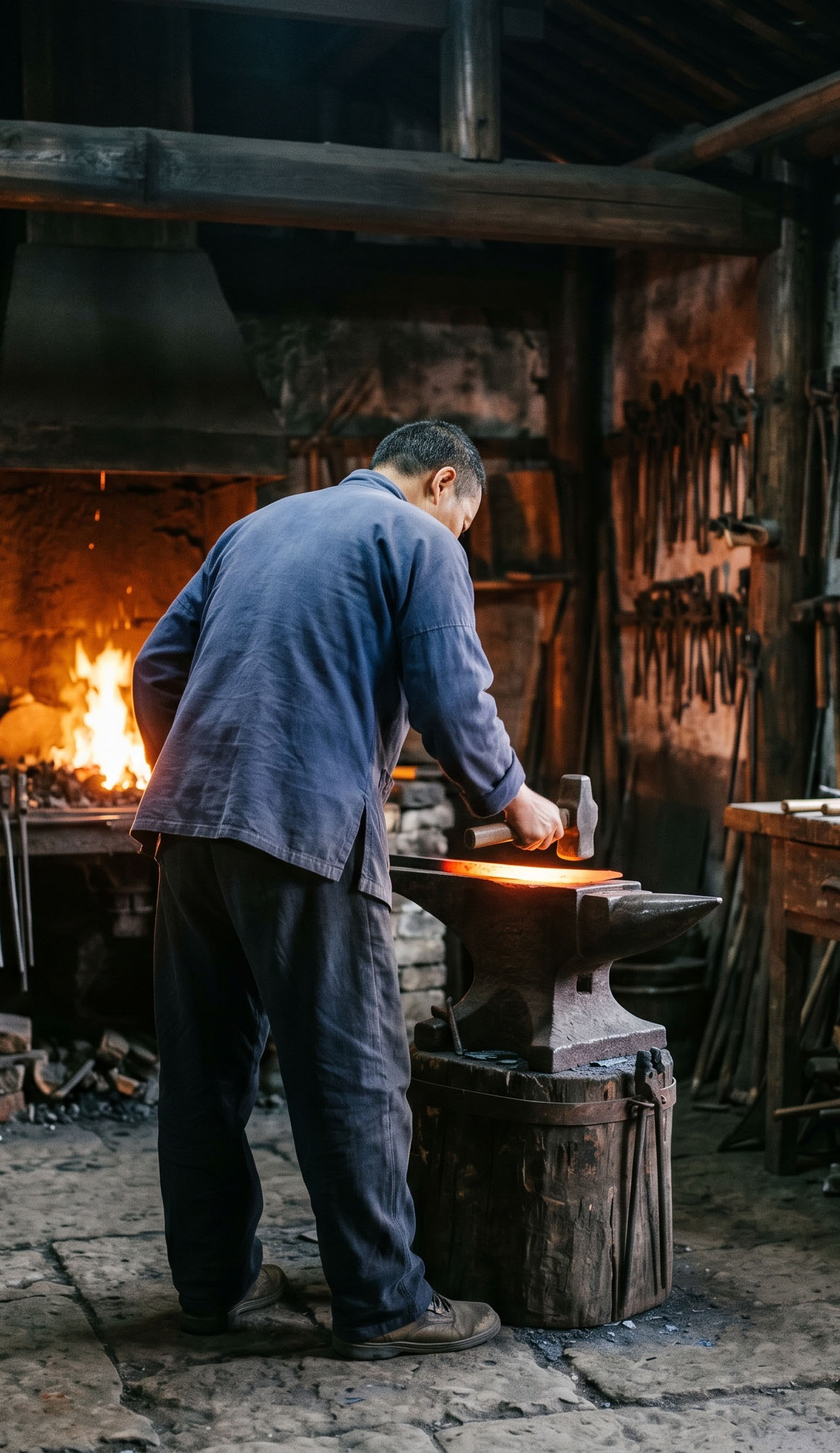
The tornado pattern originates at the billet stage. The smith takes a stacked and welded bar of two contrasting steels, twists it under heat, and then grinds the surface to reveal the layered cross-sections beneath. The result is a pattern that concentrates and radiates simultaneously – columns of tight spiraling grain running the length of the blade, interrupted where the grind opens into wider swirling nodes. On a 72 cm nagasa with a shinogi-zukuri ridgeline geometry, that pattern is bisected cleanly at the shinogi – you see it in full resolution on the ji (flat between ridge and edge) and the hi (fuller groove, if present), and it catches differently on each face.
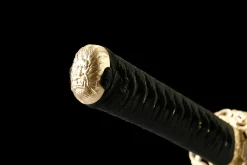
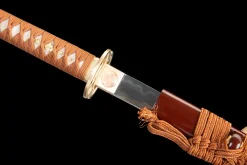
The iron 装 (full fitting set) – tsuba (hand guard), fuchi, kashira, and seppa (spacers) – is left in a deliberately dark, low-luster finish. Iron against Damascus is a considered pairing: the fittings do not compete with the blade’s surface activity. They frame it.
Weight, Balance, Draw
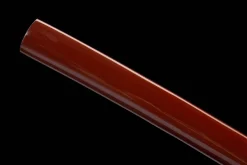
The Aohada saya (green bark wood sheath) has a quiet, almost matte surface that sets off the visual complexity of the Damascus the moment the blade is drawn. The 27 cm handle, wrapped in cotton ito in the traditional bishamon (diamond lozenge) pattern, sits firm in the hand without the glossy slippage of synthetic wraps. The draw clears cleanly – koiguchi (sheath mouth) fitted with enough resistance to hold the blade secure but not enough to interrupt a purposeful draw. In two hands, the grip is steady and the cotton wrap warms to your palms quickly.
Keeping It Sharp
Damascus blades benefit from the same care as any high-carbon steel – light oil after handling, stored away from humidity. The pattern on the flat is best maintained by avoiding abrasive cleaning; a soft cloth with a small amount of choji or mineral oil will preserve the etch that makes the grain visible. If the contrast between the two steel layers fades over time, a jeweler’s ferric chloride re-etch will restore it cleanly.
| Weight | 1.2 lbs |
|---|---|
| Dimensions | 103.0 × 3.2 × 0.7 in |
| Hamon | Damascus Pattern (No Hamon) |
| Blade Steel | Damascus Steel |
| Total Length | 103.0 cm |
| Blade Length | 72.0 cm |
| Heat Treatment | Oil Quench & Temper |
| Handle Wrap | Cotton Ito Wrap |
| Sheath Material | Green Bark Wood (Aohada) |
| Fittings | Iron, (装) |
| Forging Style | Folded Steel (Pattern Welded) |
Related products