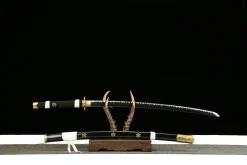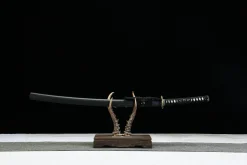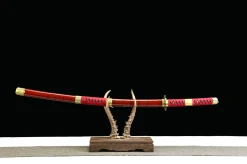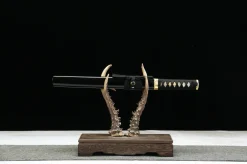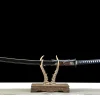




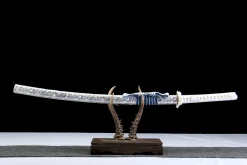




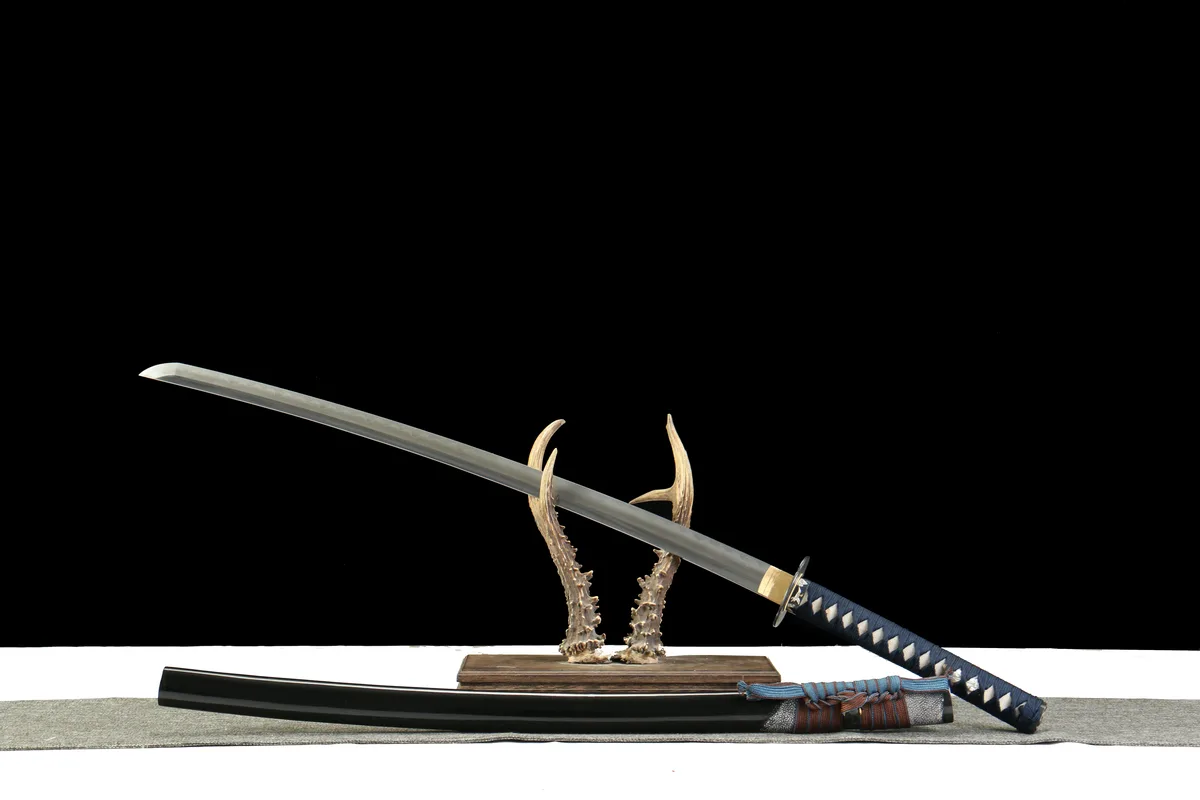

Crane Shadow – Hand Forged Artisan Hand-Forged Steel Katana Sword
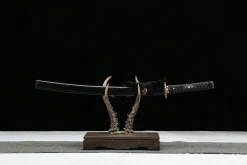
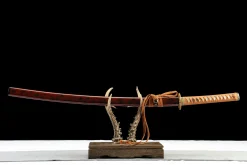
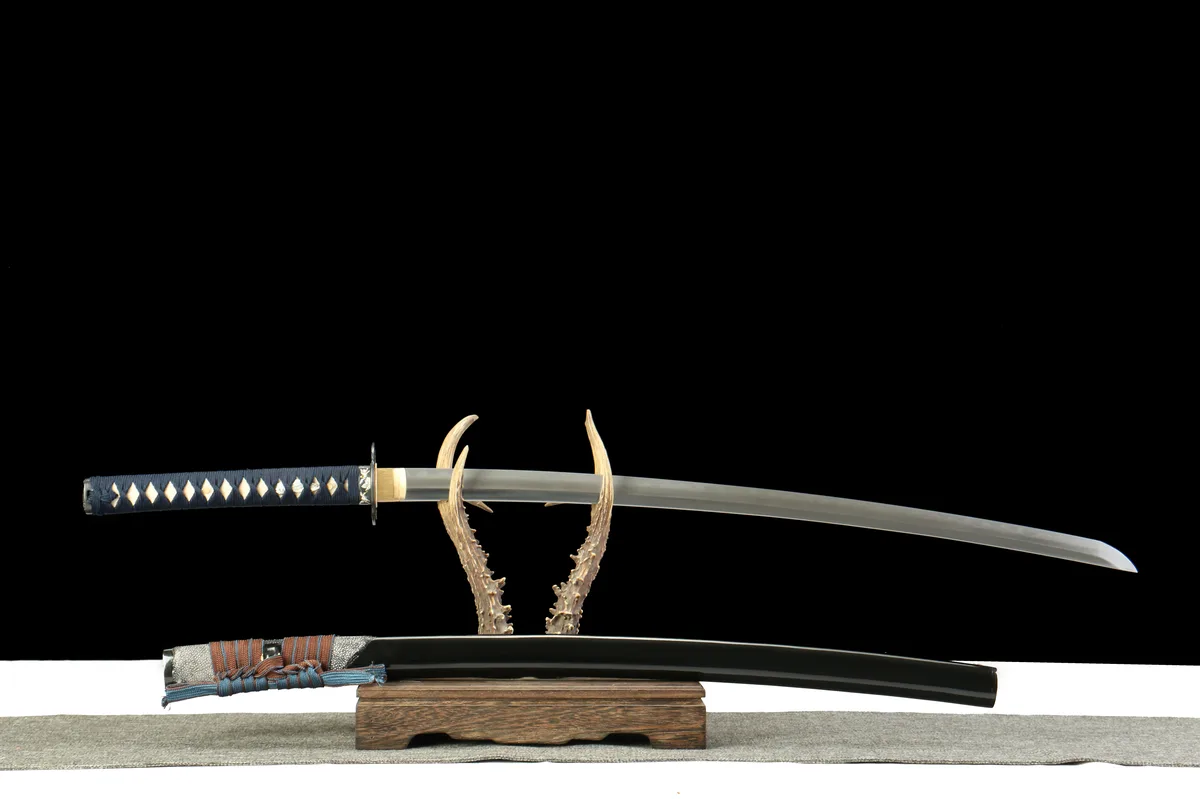
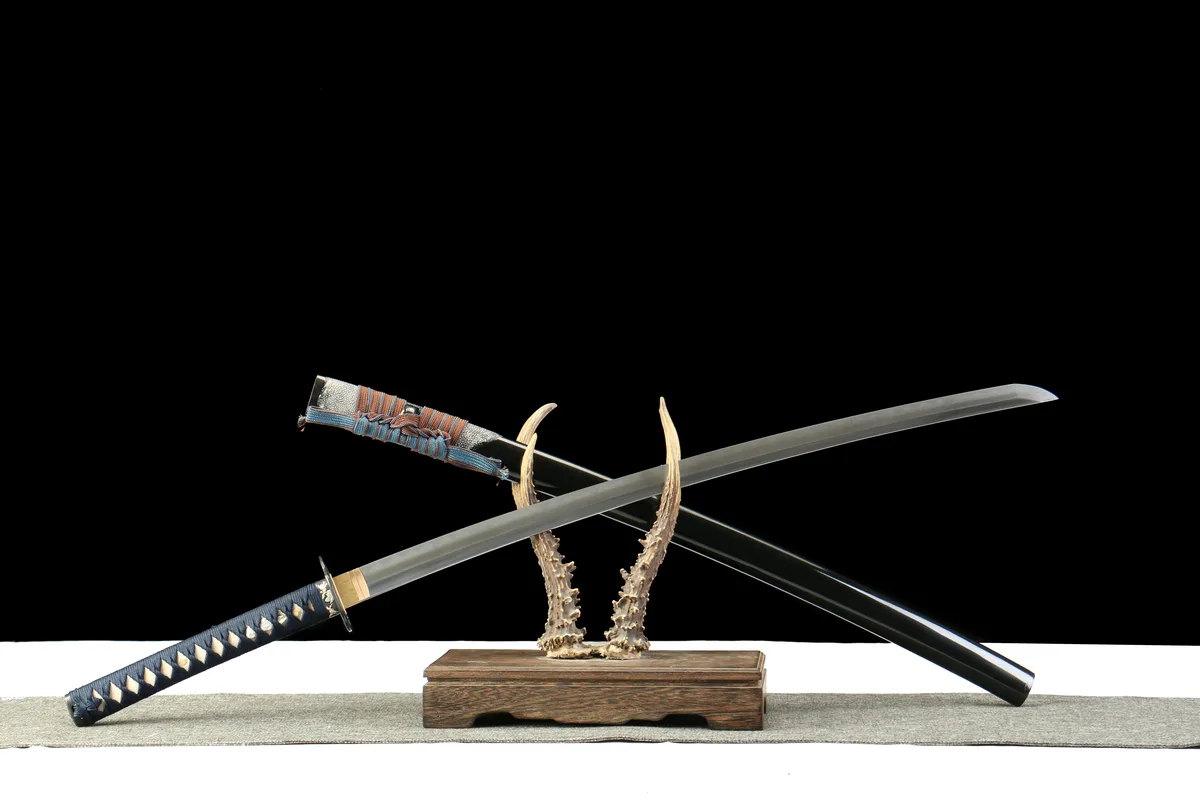
Hand-forged Artisan Hand-Forged Steel katana (103cm total / 72cm blade), crafted in Longquan. Full-tang construction with traditional fittings and hand-lacquered saya.
$3,349.99
Crane Shadow – Hand Forged Artisan Hand-Forged Steel Katana Sword
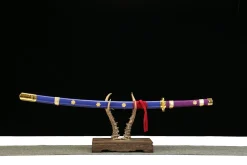
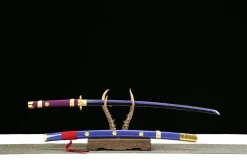
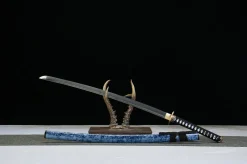
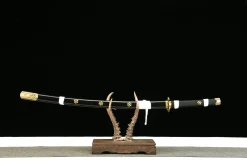
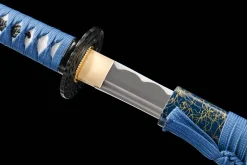
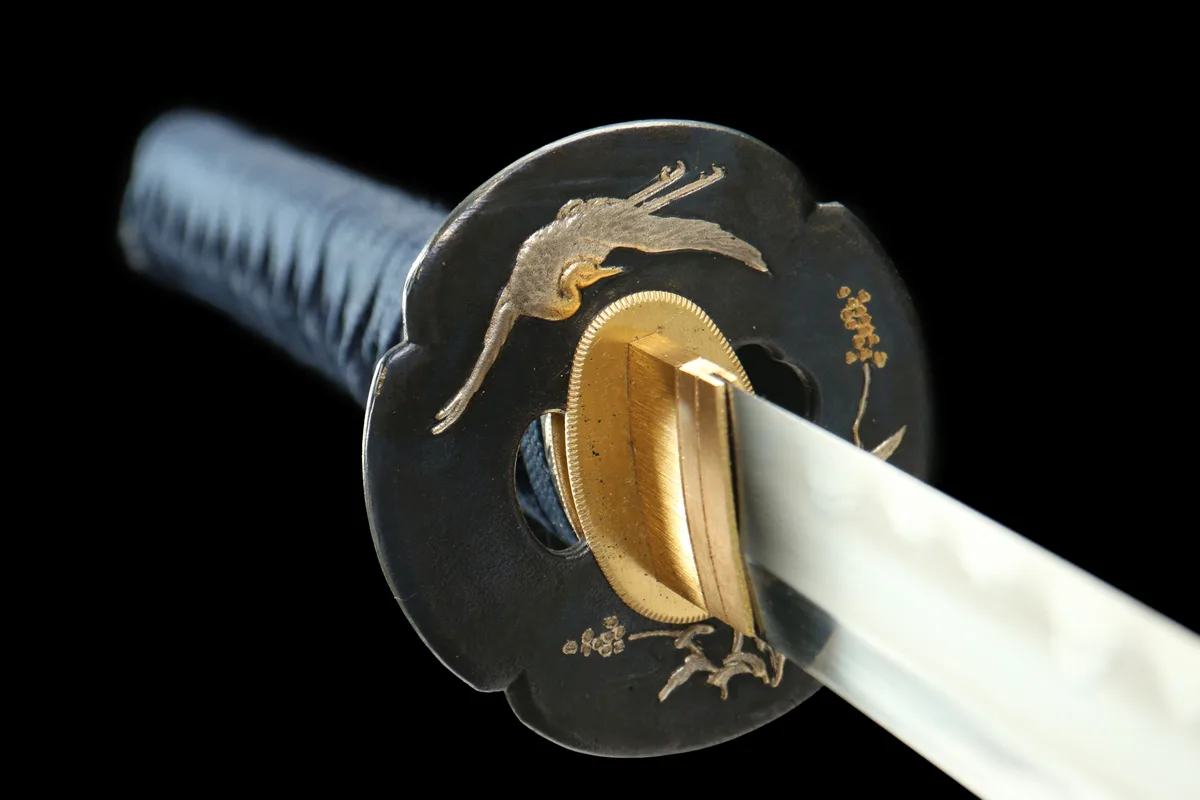
Gold and silver gilded fittings on a copper base, a half-wrap rayskin saya exposing the calcified grain of same, and a blade forged from 自炼钢 – forge-refined steel built to the smith’s own accumulated standard rather than a published mill specification. The Crane Shadow, 鹤影, is a piece where every material decision compounds the one before it, and the result is a sword that earns serious attention before it is even drawn.
Specifications
| Blade Steel | 自炼钢 (Forge-Refined Hand-Worked Steel) |
| Total Length | 103.0 cm / 40.6 in |
| Blade Length | 72.0 cm / 28.3 in |
| Blade Width | 3.2 cm |
| Blade Thickness | 0.7 cm |
| Weight | 950 g / 33.5 oz |
| Heat Treatment | Oil Quench & Temper |
| Fittings | Gold & Silver Gilded, Copper |
| Handle | Cotton Ito Wrap |
| Sheath | Rayskin (Same), Half-Wrap Saya (半包鞘) |
Steel & Construction
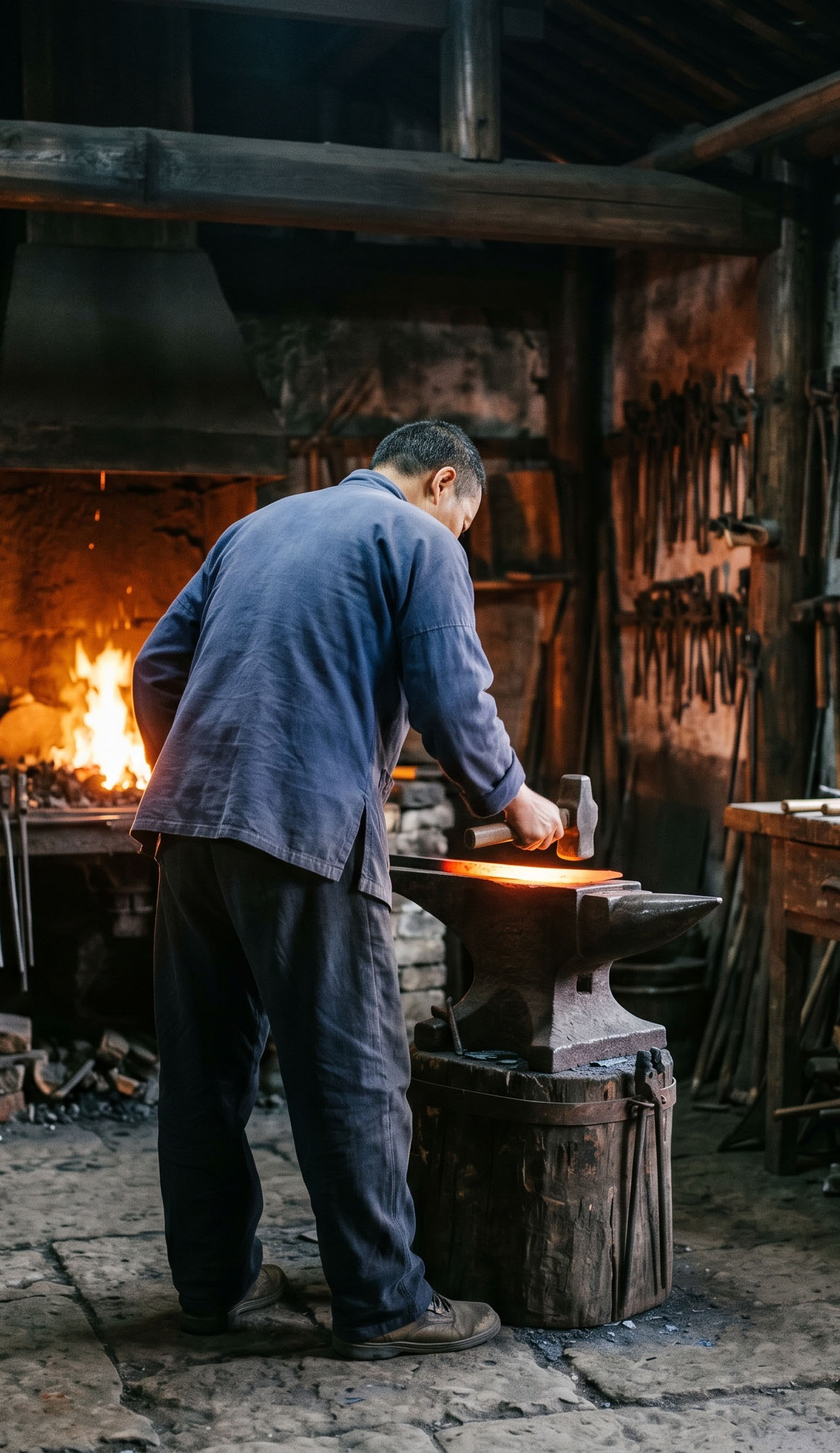
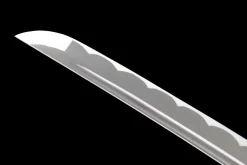
自炼钢 is not a steel grade you order from a catalogue. It is the product of a smith refining raw material through repeated cycles of heating and working until the carbon distribution and grain structure reach a standard he sets himself. That process produces a blade whose character is, in the most literal sense, handmade – the internal structure reflects accumulated decisions, not a standardized input. Oil quenching arrests the austenitizing transformation at a rate that produces a hard, stable martensite at the edge while leaving the spine with enough residual ductility to absorb stress without cracking. The shinogi-zukuri form – the ridgeline profile that has defined the katana for centuries – gives the 3.2 cm wide, 0.7 cm thick blade a cross-section that is mechanically sound from spine to edge, with the ridgeline itself acting as a structural reinforcement along the full 72 cm of the blade.
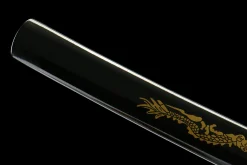
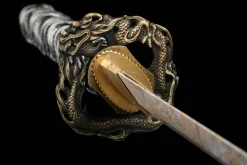
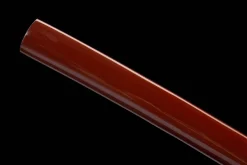
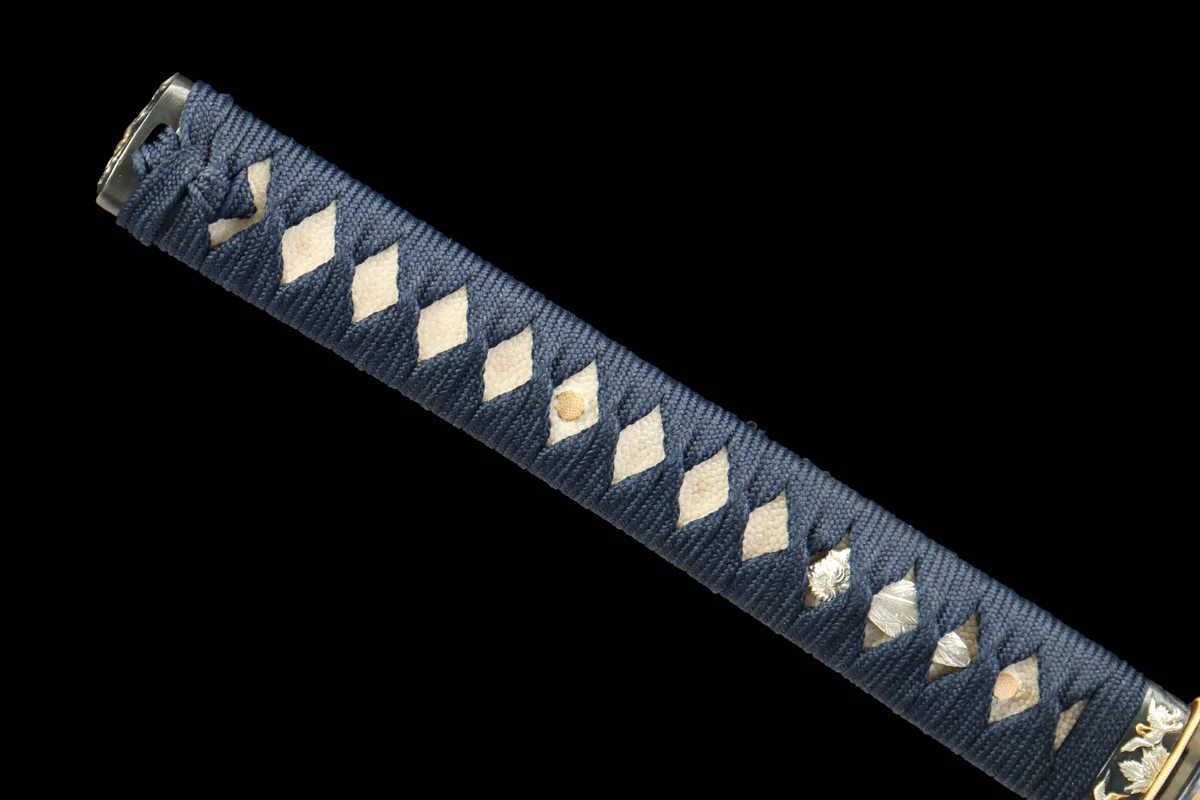
The gold and silver gilded fittings are applied over a copper substrate, which means the base material carries the warmth of copper even where the gilding is thickest. At the tsuba (handguard) and fuchi (handle collar), the gilded surface reads against the cotton ito wrap and the exposed rayskin of the half-wrap saya with a formality that is unusual at this construction level. The 半包鞘 – half-wrap saya – deliberately leaves the upper portion of the sheath unclad to show the same, the grainy, nodular skin of the ray that gives the saya its grip texture and its visual weight. That material contrast – gilded metal against raw rayskin against lacquered wood – is the visual architecture of this piece.
Handling
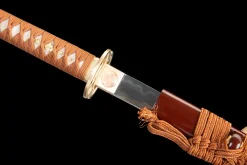
The draw from the half-wrap saya is tactile and deliberate: the thumb finds the edge of the same at the upper sheath and the tsuba simultaneously, and the release of the habaki (the blade collar that seats the blade in the saya) is clean and precise. The 27 cm handle is wrapped in cotton ito in the standard overlapping diamond pattern, firm enough that the hand does not need to grip aggressively to maintain control – the wrap does the work. The 72 cm blade length, combined with the shinogi-zukuri geometry, creates a blade that feels longer than its actual measure suggests because the ridgeline keeps the cross-section rigid from koMoto (base) to kissaki (tip) without adding unnecessary material mass to the flat.
Care Instructions
Apply camellia oil to the blade after every handling session using a soft cloth or nuguigami (oil paper) – the forge-refined steel of 自炼钢 responds to humidity and fingerprint acid more readily than normalized steel and should not be left uncoated. The gilded copper fittings should be kept dry and can be lightly buffed with a clean cloth to maintain their surface; avoid abrasive polishes that would cut through the gilding layer. Store the sword horizontally in its saya, edge upward, in a stable environment away from temperature extremes.
| Weight | 1.2 lbs |
|---|---|
| Dimensions | 103.0 × 3.2 × 0.7 in |
| Hamon | Decorative / Acid-Etched |
| Blade Steel | Artisan Hand-Forged Steel |
| Total Length | 103.0 cm |
| Blade Length | 72.0 cm |
| Heat Treatment | Oil Quench & Temper |
| Handle Wrap | Cotton Ito Wrap |
| Sheath Material | Rayskin (Same), (半包 鞘) |
| Fittings | Gold & Silver Gilded Fittings, Copper |
| Forging Style | Shinogi-Zukuri (Ridgeline) |
Related products