















Damascus Iron – Hand Forged Damascus Steel Chinese Dao Sword
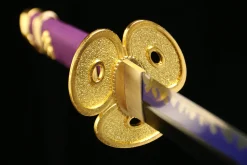
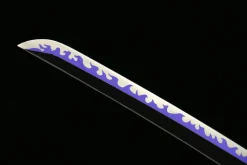
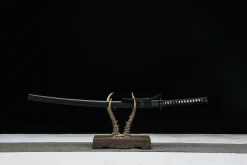
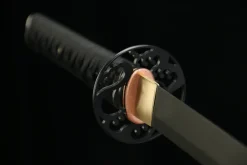
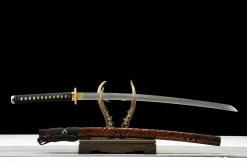
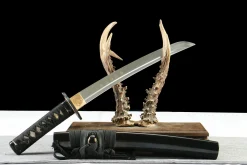
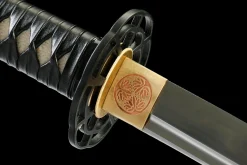
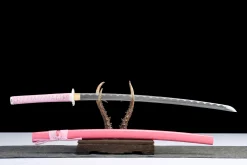
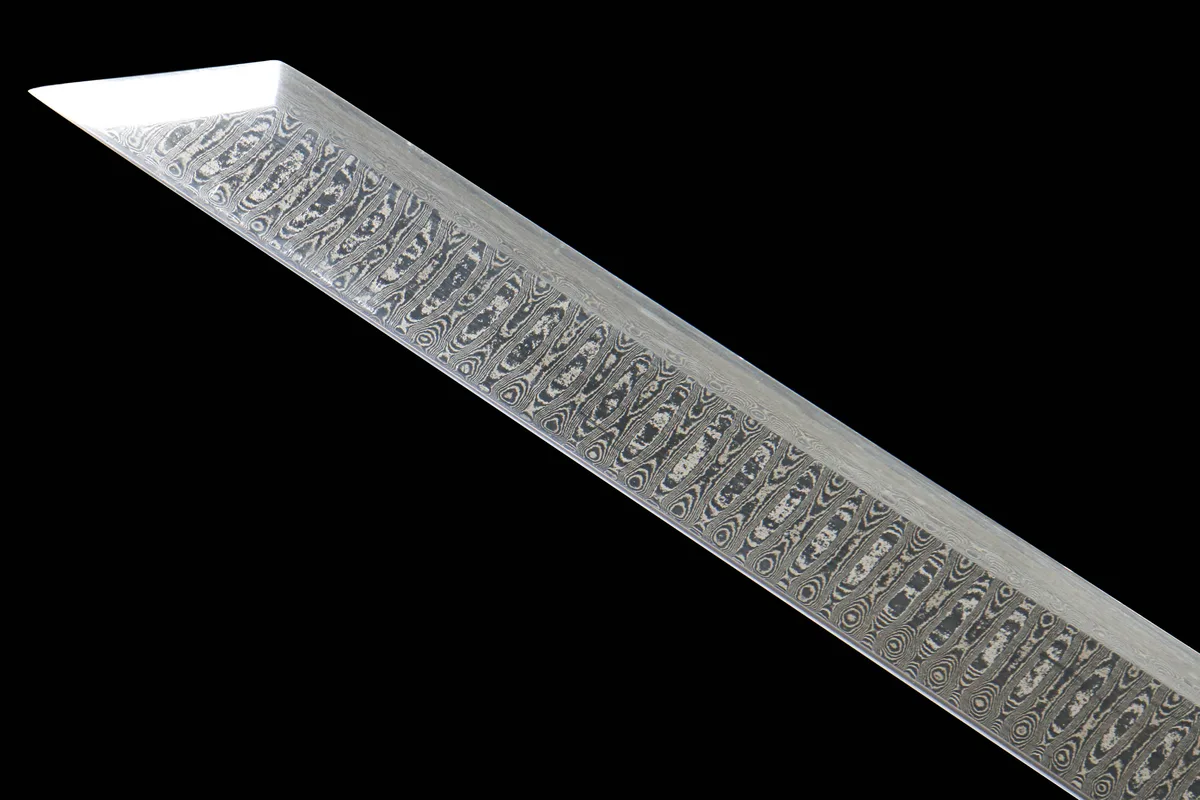
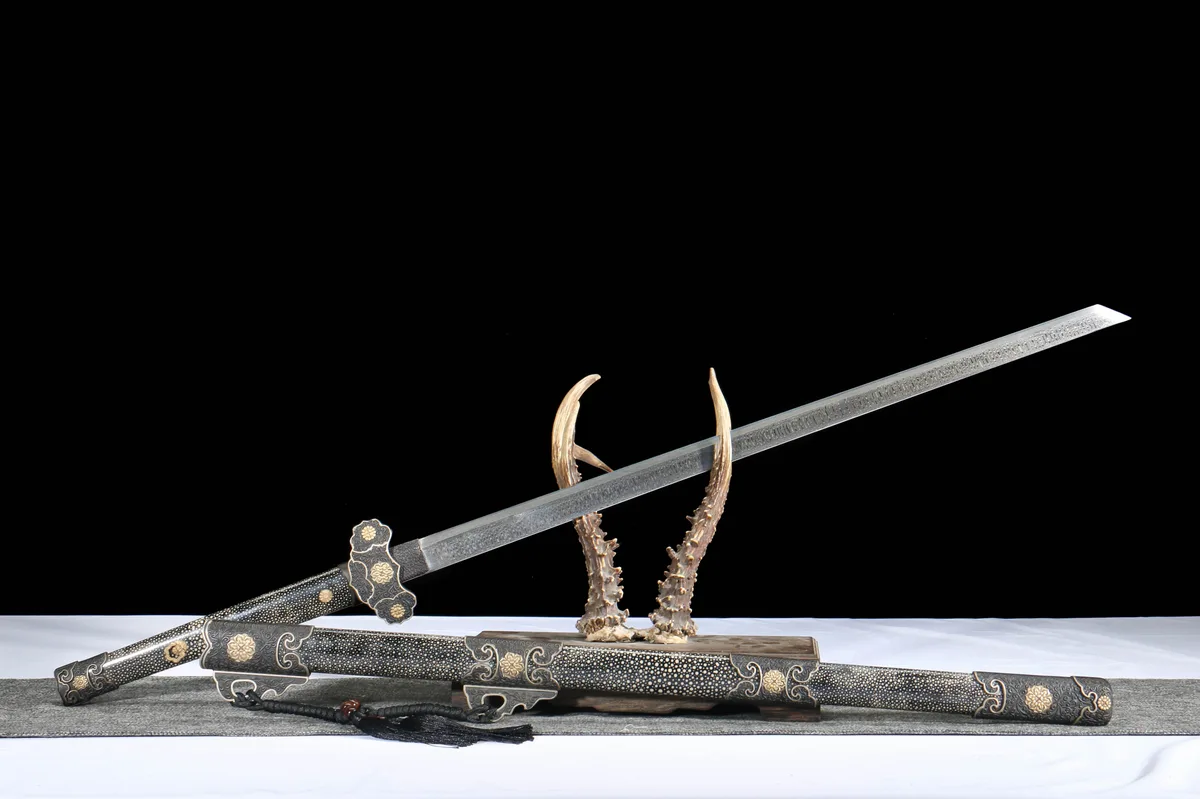
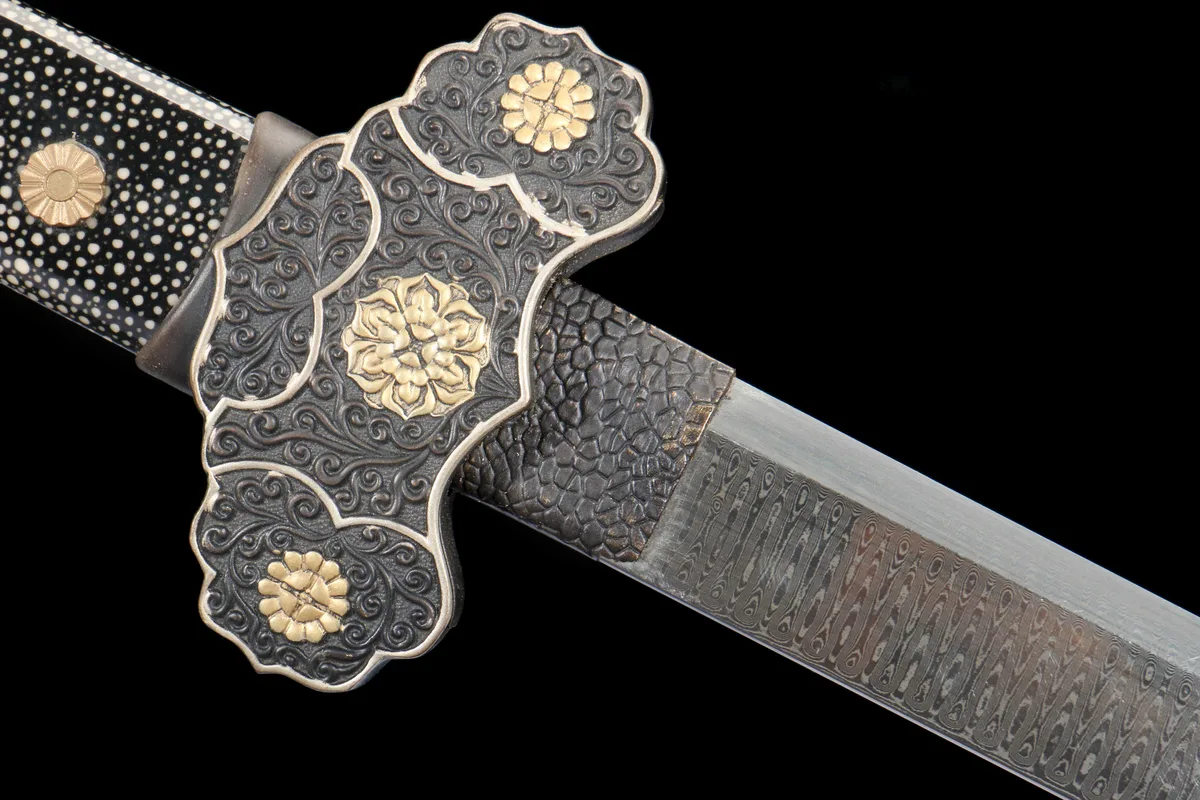
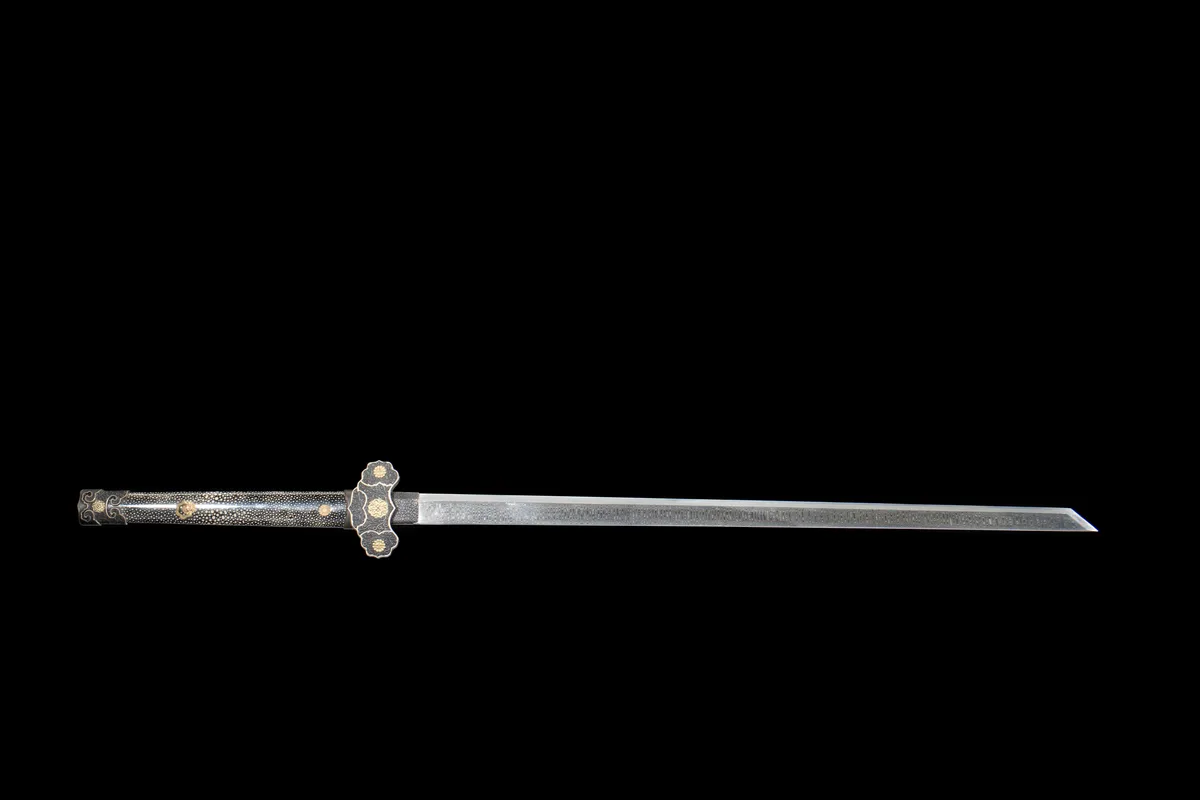
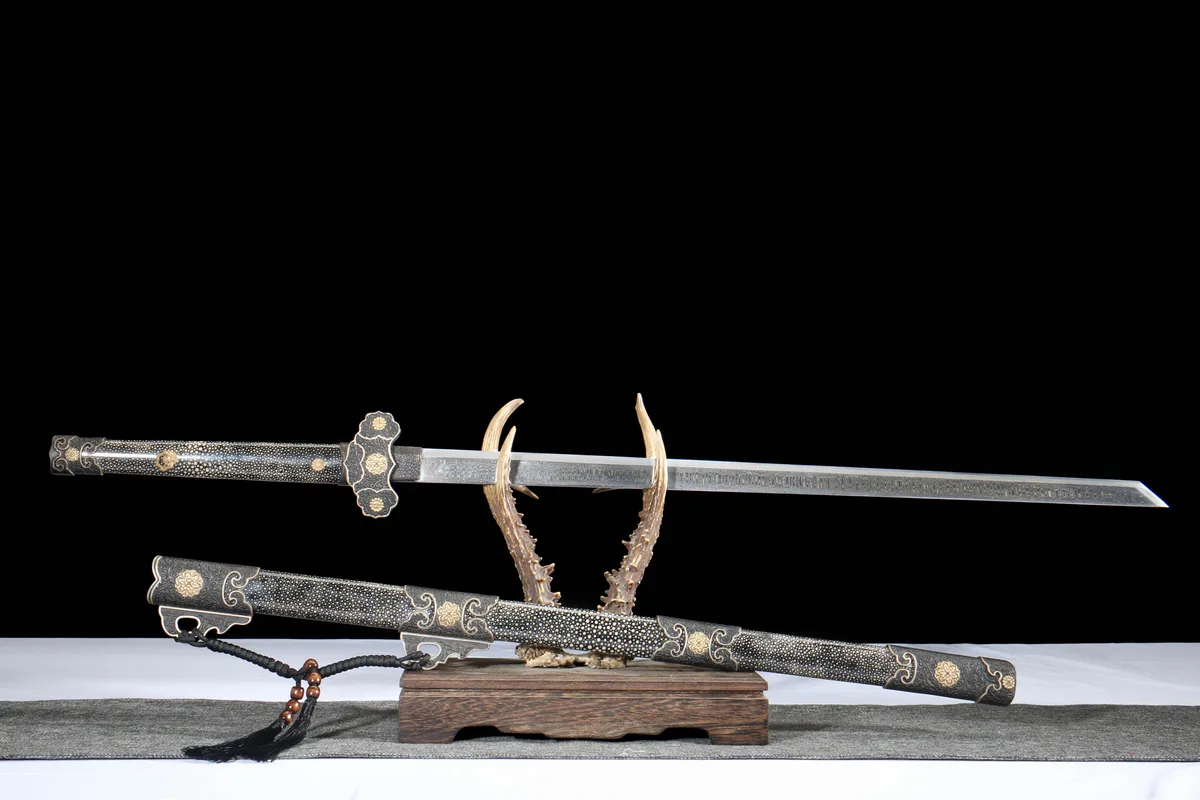
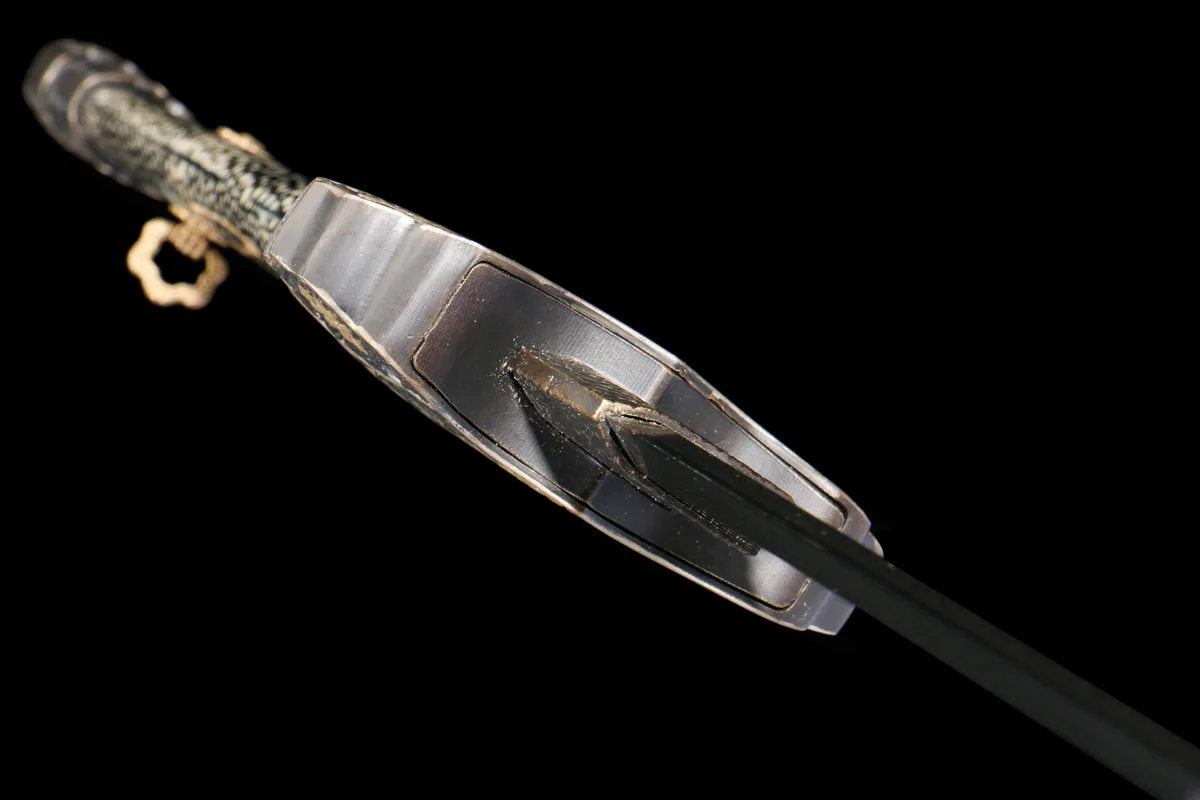
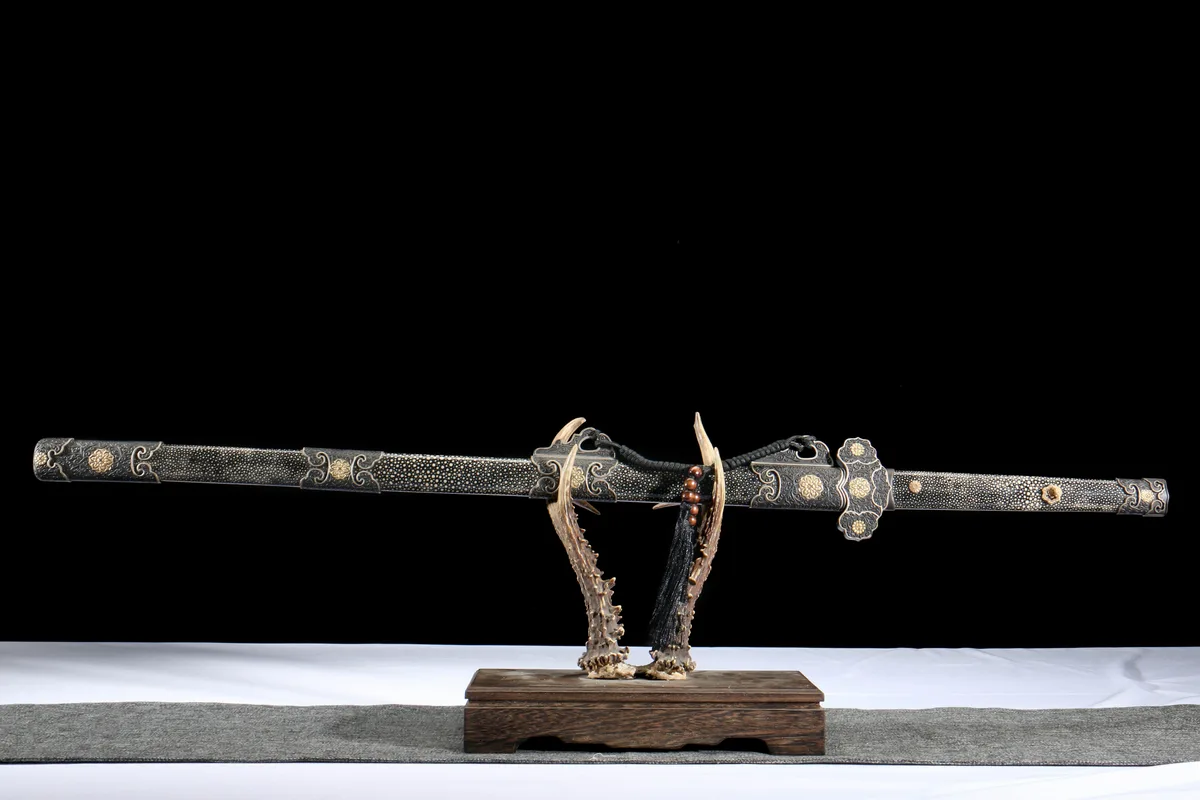
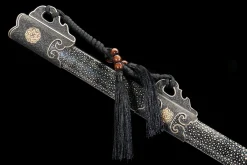
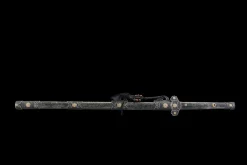
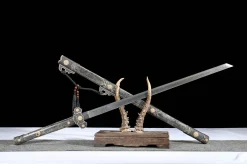
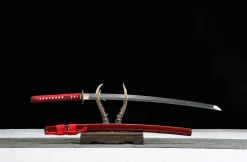
The Damascus Iron Tang Dao is a $1,275 statement of sovereign craftsmanship — a Chinese saber whose ladder-pattern (天梯纹) Damascus blade is sheathed in genuine rayskin, the same material used to grip the sword’s handle, creating an aesthetic unity rarely achieved at any price point. As a Tang Dao, it draws its lineage from the straight-spined sabers carried by Tang Dynasty cavalry, reinterpreted here with gold-and-silver gilded copper fittings that speak to imperial court metalwork traditions. This is the rarest configuration in our catalog: a pattern-welded Chinese saber finished to the standard of a Japanese tachi.
Specifications
| Blade Steel | Damascus Steel, Ladder Pattern (天梯纹), Folded/Pattern Welded |
| Weight | 950 g / 33.5 oz (net) |
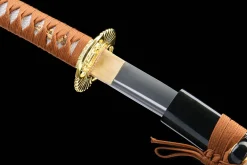
| Fittings | Gold & Silver Gilded, Copper |
| Handle | Genuine Rayskin (Same) |
| Sheath | Genuine Rayskin (真鱼皮) |
Craftsmanship & Materials
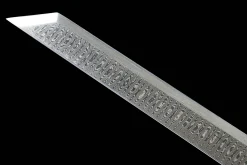
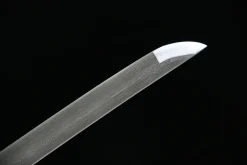
The 天梯纹 — “Heavenly Ladder” — Damascus pattern is among the most technically demanding of all pattern-welded configurations. The smith repeatedly forge-welds alternating layers of high and low carbon steel billets, then makes a precise series of horizontal cuts and reforges the mass, causing the layers to step across the blade’s surface in parallel horizontal bands that ascend the blade like rungs cut into a cliff face. The resulting pattern is not printed or etched after the fact; it is the structural DNA of the steel itself, revealed only after extensive hand-polishing. Each blade’s pattern is inherently unique — no mechanical process could replicate the micro-variations in layer thickness and fold geometry that accumulate across thousands of hammer strikes.
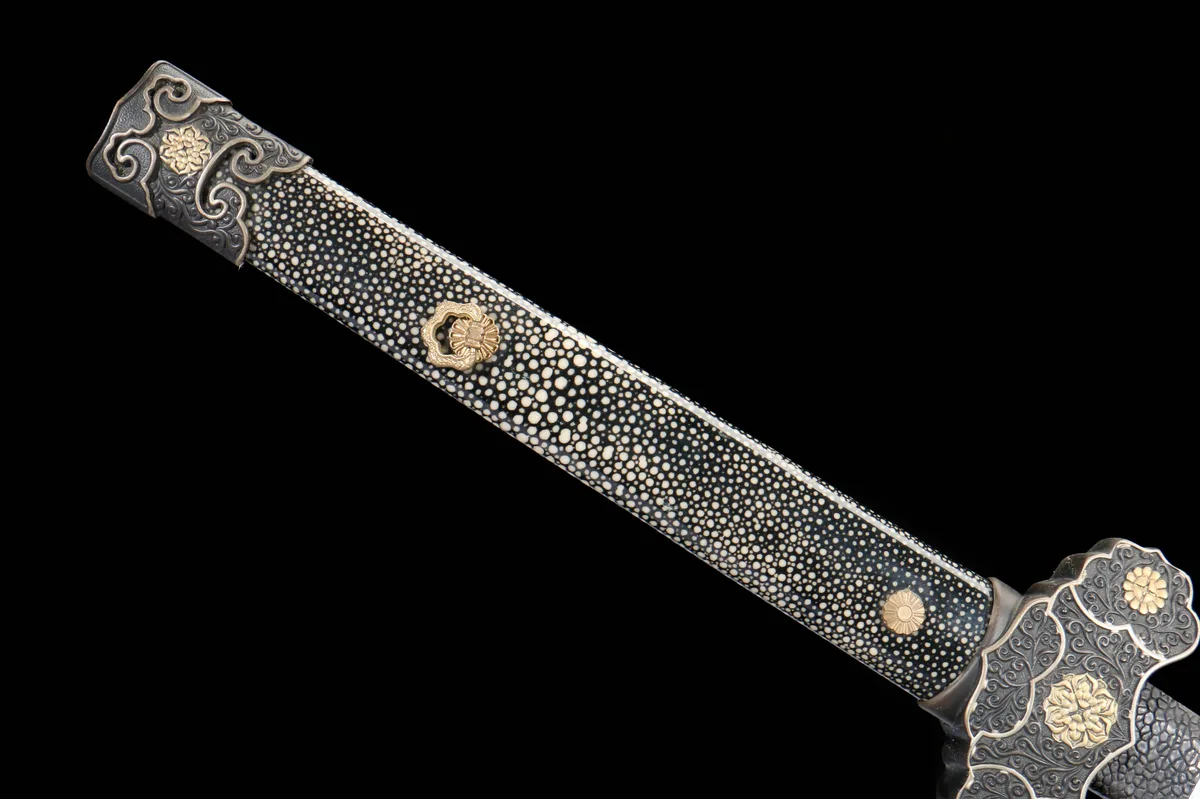
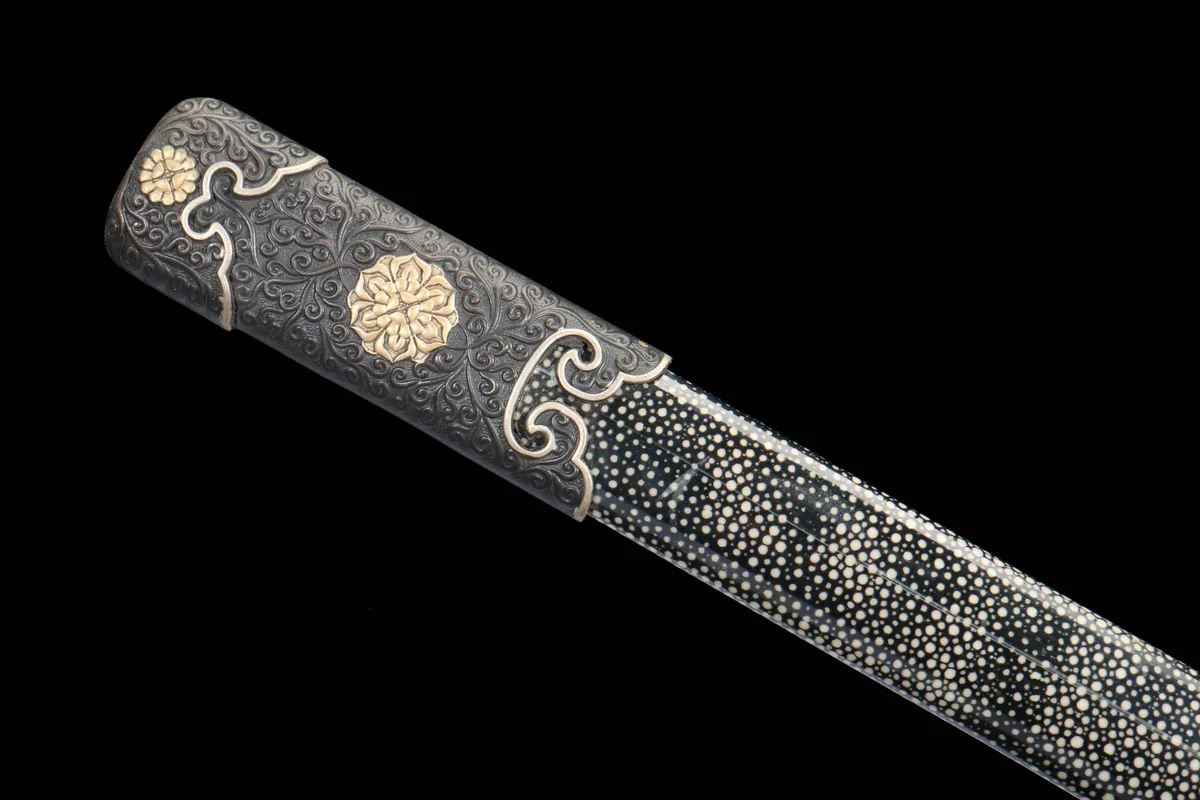
The Tang Dao form — broad of spine, with a geometry that favors powerful draw cuts — is an ideal canvas for Damascus work because the pattern flows continuously from the ricasso to the tip, uninterrupted by the complex geometry of a yokote line. The blade’s net weight of 950 grams sits at the balanced midpoint between a light dueling weapon and a heavy cavalry saber, giving the Damascus Iron a handling character that is assertive without being brutal. The copper fittings, finished in both gold and silver gilding, reference the bimetallic decorative traditions of Tang court armories, where rank was communicated through the complexity of a weapon’s metalwork rather than its size.
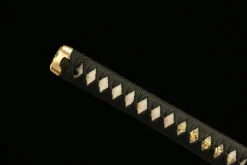
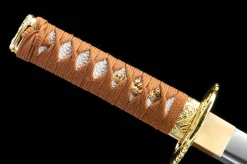
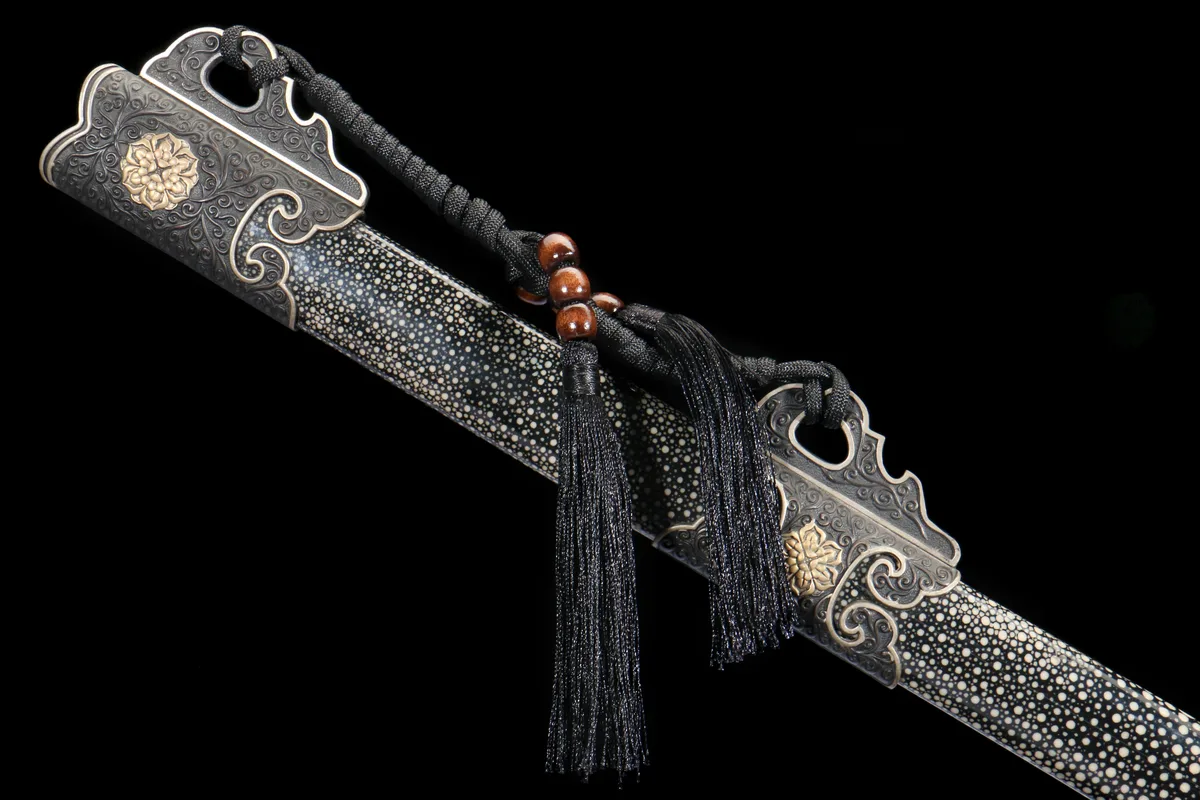
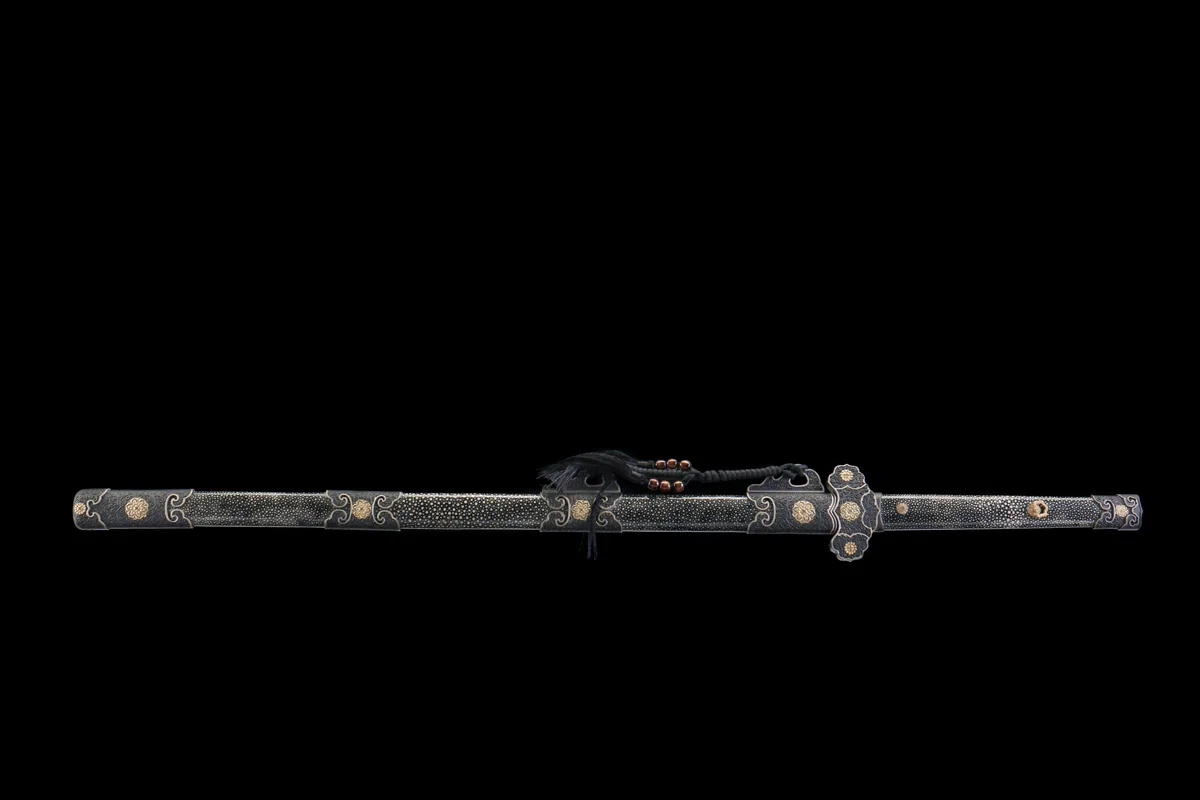
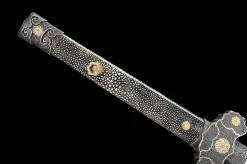
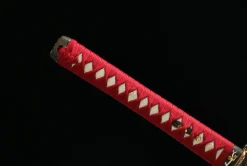
Most remarkably, both the tsuka (handle) and the saya of the Damascus Iron are wrapped and covered in genuine rayskin (same / 真鱼皮). On a Japanese katana, same is typically reserved for the handle alone, hidden beneath ito wrap and glimpsed only through the diamond-shaped windows of the braid. Here, the rayskin is the primary surface on both handle and sheath — unobscured, tactile, and boldly textured. The natural nodule pattern of the skin creates an all-weather grip on the handle and a saya surface of extraordinary visual depth, the white pearl-like bumps catching light at every angle.
Perfect For
- High-end collectors of Chinese edged weapons seeking a Tang Dao that combines historical form with the visual drama of ladder-pattern Damascus steel
- Connoisseurs of pattern-welded metalwork who appreciate the 天梯纹 technique as a demonstration of the smith’s highest-level compositional control
- Display and study collections focused on the Tang Dynasty martial aesthetic, where gold-silver fittings and all-rayskin construction signal an instrument of courtly significance
Care & Maintenance
Damascus (pattern-welded) steel is inherently reactive at the micro-etched layer boundaries that reveal its pattern — wipe the blade dry immediately after any contact with moisture and apply choji or camellia oil after every handling session to prevent rust from forming preferentially along the exposed layer edges. The genuine rayskin saya should never be submerged in water; a light wipe with a barely damp cloth followed by immediate drying is sufficient for cleaning, and an occasional conditioning with a small amount of leather or natural oil will maintain the skin’s flexibility and luminosity. Store the sword horizontally, edge up, away from direct sunlight to preserve both the Damascus pattern’s etched contrast and the natural color of the rayskin.
Frequently Asked Questions
What is Damascus steel and what pattern does the Damascus Iron Tang Dao blade use?
Damascus steel — also called pattern-welded steel — is created by forge-welding multiple layers of steel together and manipulating them through folding and twisting to produce distinctive surface patterns. The Damascus Iron Tang Dao features a ‘Tianti’ (天梯纹) ladder pattern, formed by grinding grooves across the folded billet before final shaping. This produces a striking, ladder-like visual on the blade while retaining the toughness of layered steel construction.
What is a Tang Dao and how does it differ from a katana?
The Tang Dao is a classical Chinese saber originating from the Tang Dynasty (618–907 AD), characterized by a single-edged curved blade, often with a ring pommel. Unlike the Japanese katana — which evolved partly from Tang Dao designs — the Tang Dao typically features broader blades, distinct Chinese fittings, and is worn edge-down. The Damascus Iron Tang Dao represents this proud Chinese sword-making tradition with luxury-grade Damascus steel and gilded copper fittings.
Is the Damascus Iron Tang Dao functional or primarily a collector’s piece?
The Damascus Iron Tang Dao is built as a premium functional sword. Its pattern-welded Damascus blade, genuine rayskin handle wrap, and copper fittings with gold and silver gilding meet the standards expected of a serious collector’s weapon. At 950 g net weight, it is well-balanced for handling and display. While its $1,275 price and exceptional aesthetics make it a standout display piece, the Damascus construction ensures it is fully capable as a functional sword.
Why do the gold and silver gilded copper fittings matter on the Damascus Iron Tang Dao?
The gold and silver gilded copper fittings on the Damascus Iron Tang Dao reflect traditional Chinese imperial sword-making, where precious metal inlays signified rank and craftsmanship. Copper-based fittings are superior to zinc alloy alternatives, offering better durability, finer engraving detail, and authentic aging patina over time. At $1,275, these fittings are a key differentiator that elevates the Damascus Iron from a functional sword to a true collector’s heirloom.
Is a $1,275 Damascus Tang Dao worth the investment compared to less expensive options?
For collectors and enthusiasts, the Damascus Iron Tang Dao at $1,275 justifies its price through the labor-intensive Tianti-pattern Damascus blade, gold and silver gilded copper fittings, genuine rayskin wrap, and the relative rarity of high-quality Tang Dao swords in the market. Budget Damascus swords under $300 often use machine-stamped patterns on mono-steel blades. The Damascus Iron features true pattern-welded construction, making it a meaningful investment for serious collectors.
| Weight | 1.2 lbs |
|---|---|
| Sword Type | Chinese Dao |
| Blade Steel | Damascus Steel |
| Total Length | None cm |
| Blade Length | None cm |
| Handle Wrap | Genuine Rayskin (Same) |
| Sheath Material | 真鱼皮 |
| Fittings | Gold & Silver Gilded Fittings, Copper |
| Forging Style | Folded Steel (Pattern Welded) |
Related products

1065 Carbon Steel


Anime & Pop Culture

High Carbon Steel
Carbon Steel
Damascus Steel
1045 Carbon Steel
White Celestial – Hand Forged 1045 Carbon Steel Katana Sword

1045 Carbon Steel