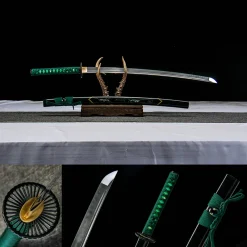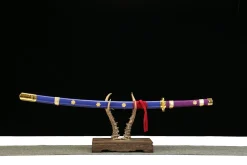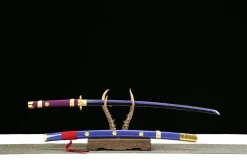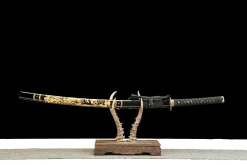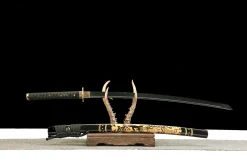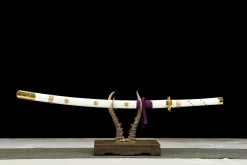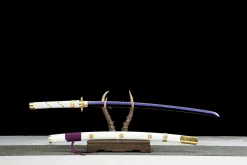


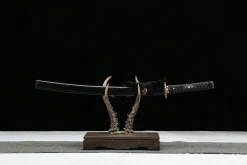

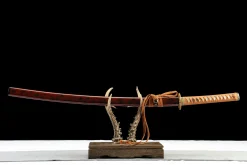

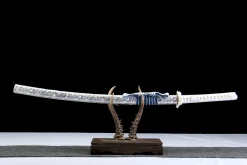








Dark Empyrean – Hand Forged Damascus Steel Katana Sword
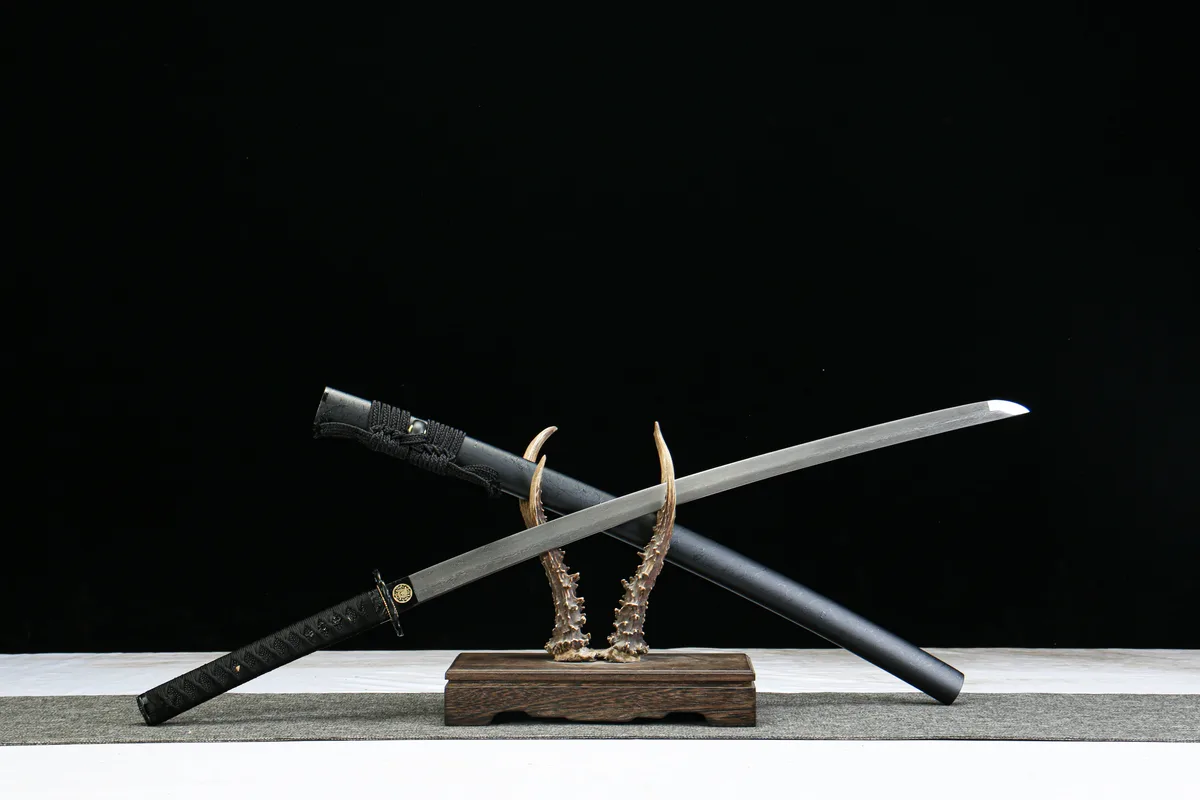
Hand-forged Damascus Steel katana (103cm total / 72cm blade), crafted in Longquan. Hand-folded Damascus pattern steel — each blade carries a unique layered grain from forge to tip.
$289.99
Dark Empyrean – Hand Forged Damascus Steel Katana Sword
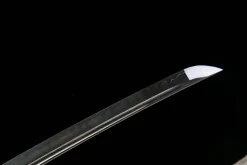
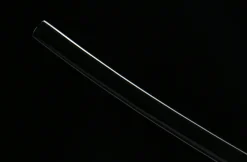
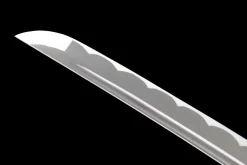
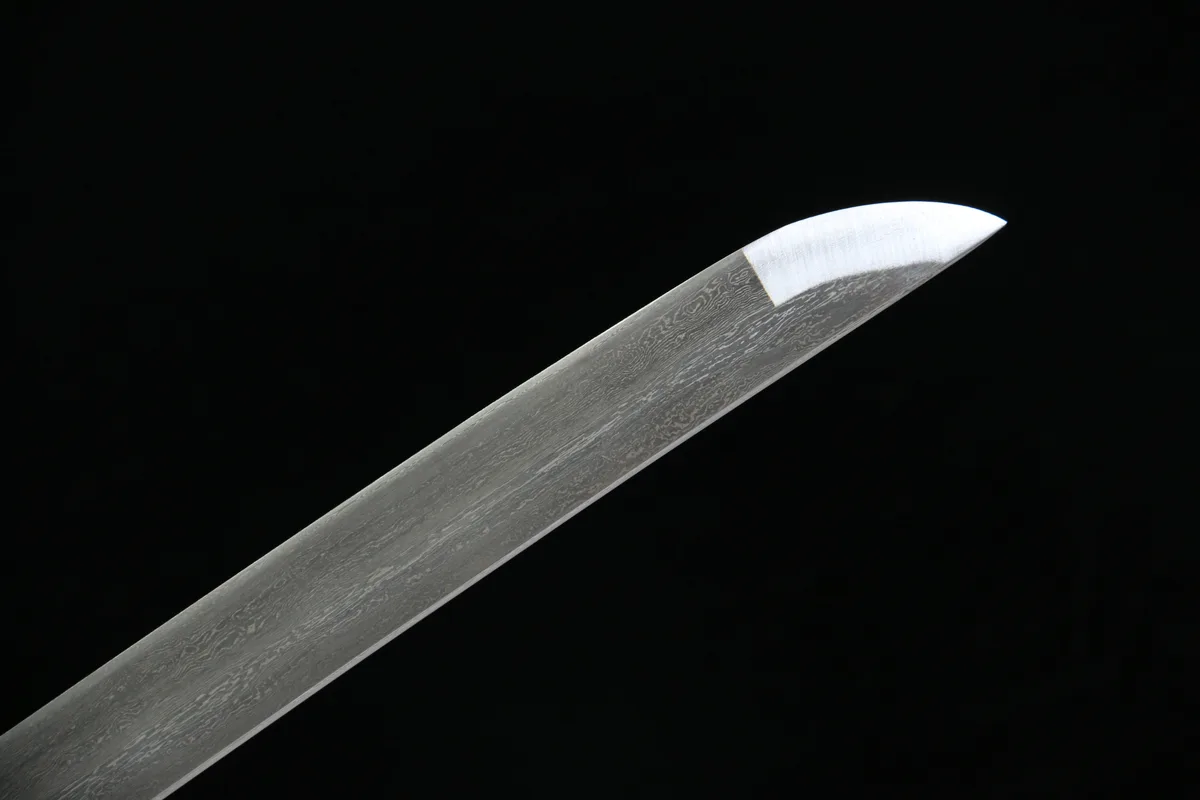
There is a class of Damascus blade that announces itself immediately and a class that reveals itself slowly. The Dark Empyrean (黑霄, Hēi Xiāo) is the second kind. Hold it at arm’s length and it reads as a single deep, near-black surface. Bring it into raking light and the layer pattern emerges – complex, layered, and continuous across the full 72 cm blade length in a way that only genuine pattern-welded construction produces.
Specifications
| Blade Steel | Damascus / Pattern-Welded Steel |
| Total Length | 103.0 cm / 40.6 in |
| Blade Length | 72.0 cm / 28.3 in |
| Blade Width | 3.2 cm |
| Weight | 950 g / 33.5 oz |
| Heat Treatment | Oil Quench & Temper |
| Fittings | Iron (装) |
| Handle | Cotton Ito Wrap |
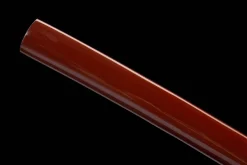
| Sheath | Green Bark Wood – Aohada |
What the Steel Does
Pattern-welding – the modern term for the technique historically described as Damascus – involves repeatedly forge-welding and folding dissimilar steel billets until the layer count reaches a point where the grain becomes fine, dense, and deeply integrated. The visual result is not applied to the surface; it is the surface, the natural consequence of differential oxidation across layers of varying carbon content revealed by hand polishing. The Dark Empyrean’s pattern reads in the dark register its name describes: the contrast between layers is present but close-valued, the grain moving across the blade surface like the depth-variation in dark water rather than the high-contrast fire-and-smoke of lighter Damascus work.
Oil quench and temper suits this construction. The quench medium controls the rate at which the billet transitions through the critical temperature range, and for a pattern-welded blade – where the carbon content varies layer to layer across the cross-section – this controlled rate produces consistent hardness across the blade without the stress concentration that faster quenching methods can introduce at layer boundaries.
The Feel of It
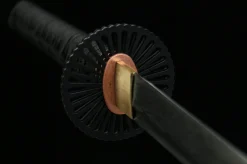
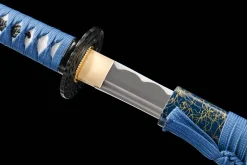
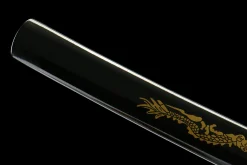
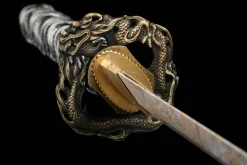
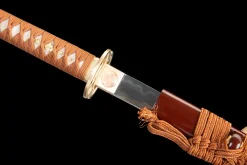
At 103 cm overall with a 27 cm tsuka (handle), the Dark Empyrean sits in the classical katana proportion. The cotton ito wrap runs in a tight diagonal crossing, each lozenge node raised enough to register distinctly under your fingers – this is not a decorative wrap finished to look good in photographs, it is the functional grip geometry that every properly wrapped katana tsuka should have. The iron fittings at the tsuba (guard) maintain the blade’s dark, unified appearance through the transition from blade to handle. The Aohada (green bark wood) saya provides a muted draw – the bark interior contacts the blade softly along its length, and the resistance on the draw is even and controlled rather than stiff at the mouth and loose further in.
Care Instructions
Pattern-welded blades require more consistent maintenance than mono-steel equivalents because the layer boundaries exposed at the blade surface offer more surface area for oxidation to begin. Wipe the blade with a clean cloth after every handling session and apply a light coat of choji oil (clove-infused mineral oil) to the full blade surface. In humid environments, inspect the blade monthly and re-oil as needed before any surface rust has the opportunity to establish itself.
| Weight | 1.2 lbs |
|---|---|
| Dimensions | 103.0 × 3.2 × 0.7 in |
| Hamon | Damascus Pattern (No Hamon) |
| Blade Steel | Damascus Steel |
| Total Length | 103.0 cm |
| Blade Length | 72.0 cm |
| Heat Treatment | Oil Quench & Temper |
| Handle Wrap | Cotton Ito Wrap |
| Sheath Material | Green Bark Wood (Aohada) |
| Fittings | Iron, (装) |
| Forging Style | Folded Steel (Pattern Welded) |
Related products