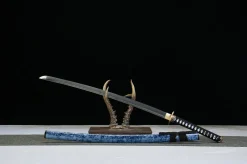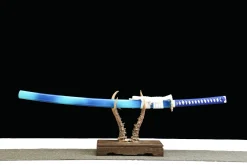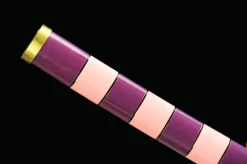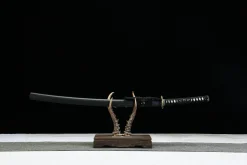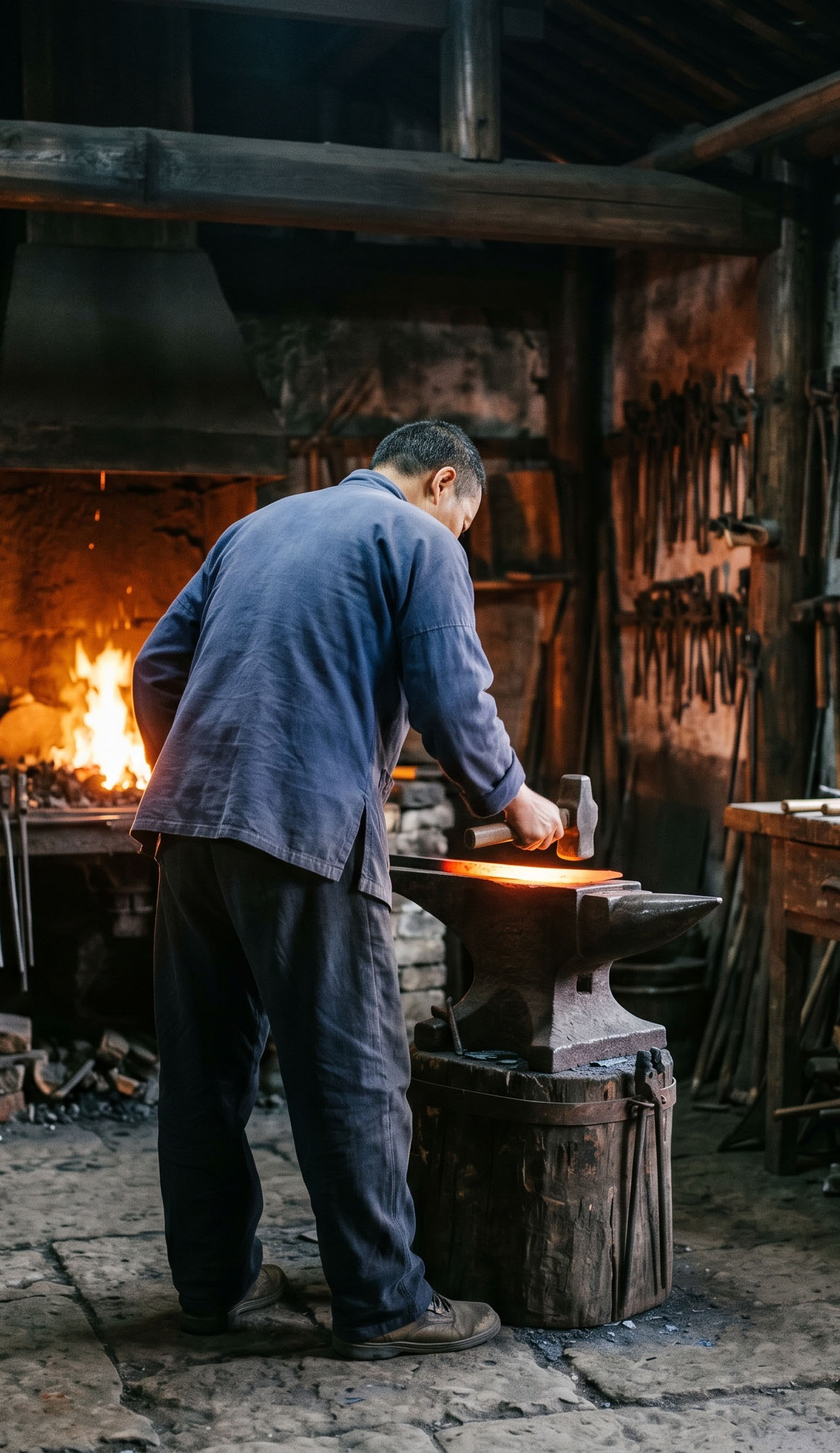

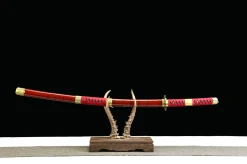

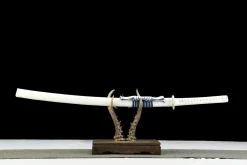

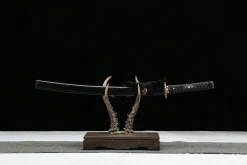







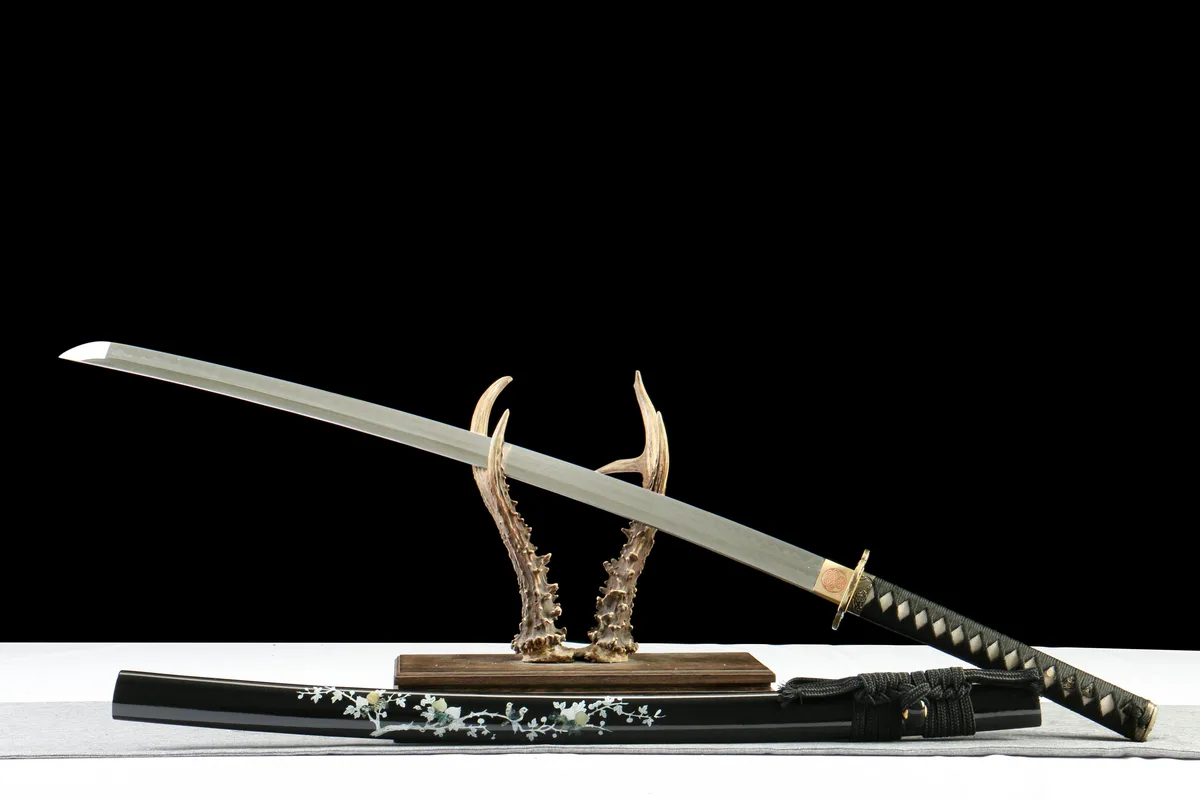


Dark Gleam – Hand Forged T10 Tool Steel Katana Sword
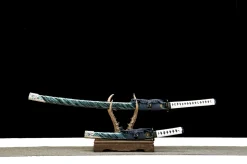
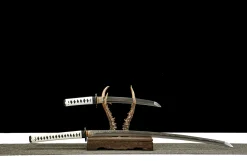
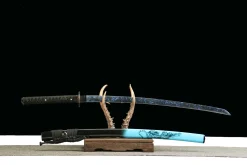
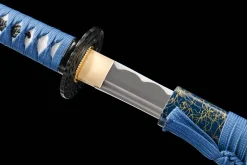
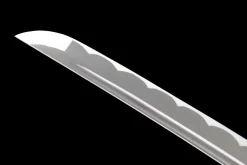
Hand-forged T10 Tool Steel katana (102cm total / 72cm blade), crafted in Longquan. Clay-tempered blade with a genuine hamon line — visible contrast between hardened edge and soft spine.
$429.99
Dark Gleam – Hand Forged T10 Tool Steel Katana Sword
The Dark Gleam is a T10 high speed tool steel katana clay-tempered using differential hardening — the same ancient technique that produces the authentic hamon activity line prized by serious collectors and practitioners the world over. This is a sword that carries within its steel a visible record of the fire and clay it passed through: the undulating temper line along the blade is not printed, etched, or simulated, but a genuine metallurgical phenomenon born in the forge. At $290, the Dark Gleam represents extraordinary value for a properly clay-tempered katana from Longquan’s most respected craftsmen.
Specifications
| Blade Steel | T10 High Speed Tool Steel |
| Total Length | 102.0 cm / 40.2 inches |
| Blade Length | 72.0 cm / 28.3 inches |
| Weight | 1040 g / 36.7 oz (net) |
| Heat Treatment | Clay Tempering (Differential Hardening) |
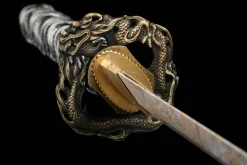
| Fittings | Iron |
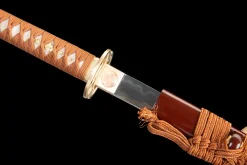
| Handle | Cotton Ito + Genuine Rayskin |
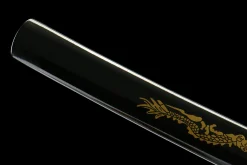
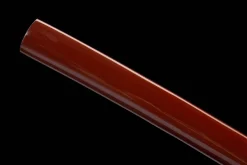
| Sheath | Hardwood (High-Gloss Lacquer) |
Craftsmanship & Materials
T10 tool steel is one of the most technically demanding materials used in katana production — and one of the most rewarding. Its high carbon content (approximately 0.95–1.05%) combined with trace tungsten makes it significantly harder than common 1060 or 1065 steels, capable of taking and holding an edge of exceptional sharpness. However, T10’s very hardness makes it less forgiving to work with; the smith must control temperature with precision throughout forging, or risk internal stresses that can crack the blade. That Longquan’s craftsmen routinely work T10 into elegant, functional swords is itself a testament to the depth of skill accumulated across generations in this city.
The clay tempering process (烧刃, tsuchioki) applied to the Dark Gleam transforms T10 steel from impressive to extraordinary. Before quenching, the smith applies a carefully formulated clay mixture to the spine of the blade, leaving the edge exposed. When the blade is plunged into the quench, the edge — uninsulated by clay — cools rapidly, hardening to a high Rockwell value ideal for cutting. The spine, insulated by the clay, cools slowly and remains tough and flexible, able to absorb impacts without snapping. The boundary between these two zones of hardness crystallises as the hamon: a flowing, organic line of activity that is as unique to each blade as a fingerprint, visible as a misty, luminous band when the sword is polished and held to angled light.
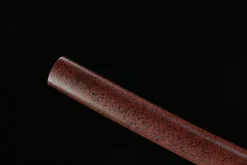
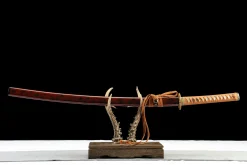
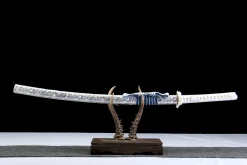
The iron fittings of the Dark Gleam are deliberately understated — the sword’s primary visual drama belongs to the blade itself, and heavy decorative fittings would compete with rather than complement the hamon‘s natural elegance. The hardwood saya in high-gloss lacquer provides a deep, reflective contrast to the blade’s complex temper pattern when the sword is drawn for inspection. The genuine same rayskin and cotton ito handle wrap in the traditional 鎬造 (shinogi-zukuri) tradition ensures the sword sits as comfortably in the practitioner’s hand as it does in a collector’s display cabinet. This is, in every meaningful sense, the complete katana.
Perfect For
- Intermediate to advanced collectors who understand the significance of a genuine clay-tempered hamon and want one at an accessible price
- Martial arts practitioners who demand the superior edge retention of T10 tool steel for serious tameshigiri and cutting work
- Enthusiasts transitioning from beginner 1065 swords who are ready to experience authentic differential hardening for the first time
Care & Maintenance
T10 high carbon steel with clay tempering requires attentive care — its high carbon content makes it more reactive to moisture than lower-carbon steels, and the differential hardness zones along the blade can oxidise unevenly if neglected. After every use, clean the blade thoroughly with a soft cloth and apply traditional choji oil or high-grade mineral oil along the entire blade length, ensuring coverage reaches the hamon boundary zone where the two hardness zones meet. Inspect the blade surface under good light periodically for early signs of rust or pitting, address any spots immediately with a fine polishing cloth, and store in a dry, temperature-stable environment — the integrity of the clay-tempered structure is worth protecting.
| Weight | 1.32 lbs |
|---|---|
| Dimensions | 102.0 in |
| Hamon | Real Hamon (Clay Tempered) |
| Blade Steel | T10 Tool Steel |
| Total Length | 102.0 cm |
| Blade Length | 72.0 cm |
| Heat Treatment | Clay Tempering (Differential Hardening) |
| Handle Wrap | Cotton Ito + Genuine Rayskin |
| Sheath Material | Hardwood (High-Gloss Lacquer) |
| Fittings | Iron |
| Forging Style | 鎬造 |
Related products