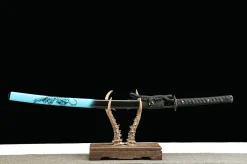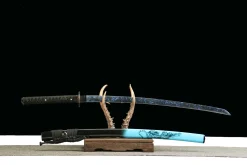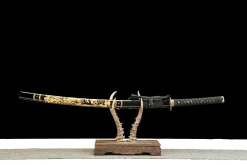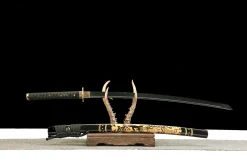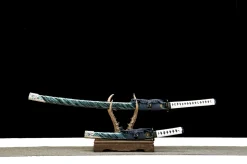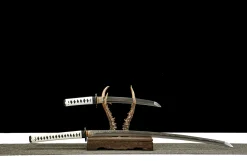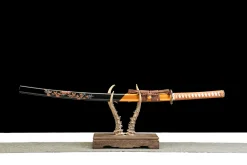

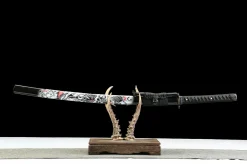
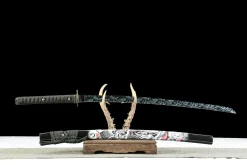




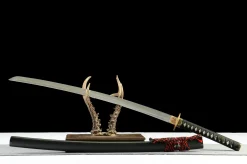
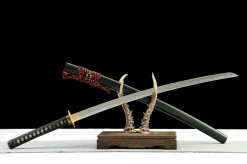


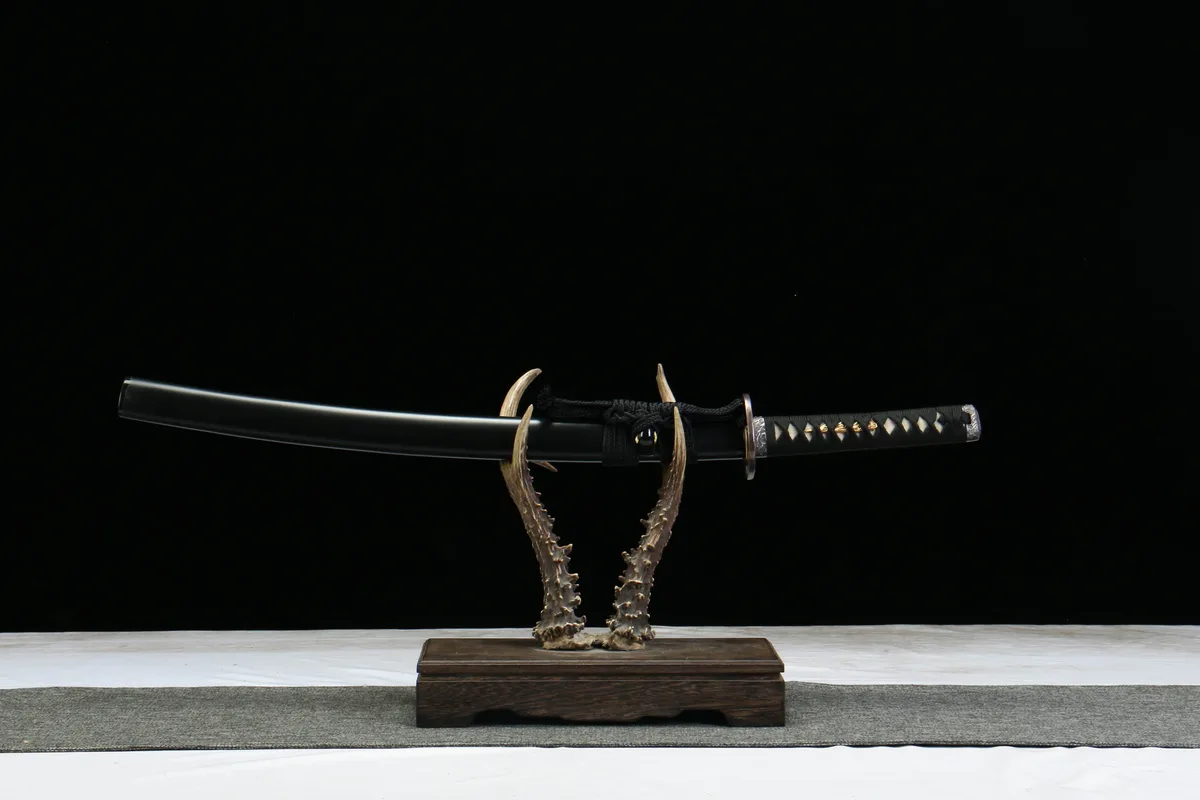


Dragon Ascendant – Hand Forged T10 Tool Steel Wakizashi Sword
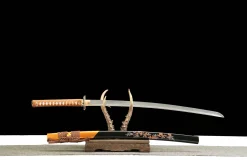
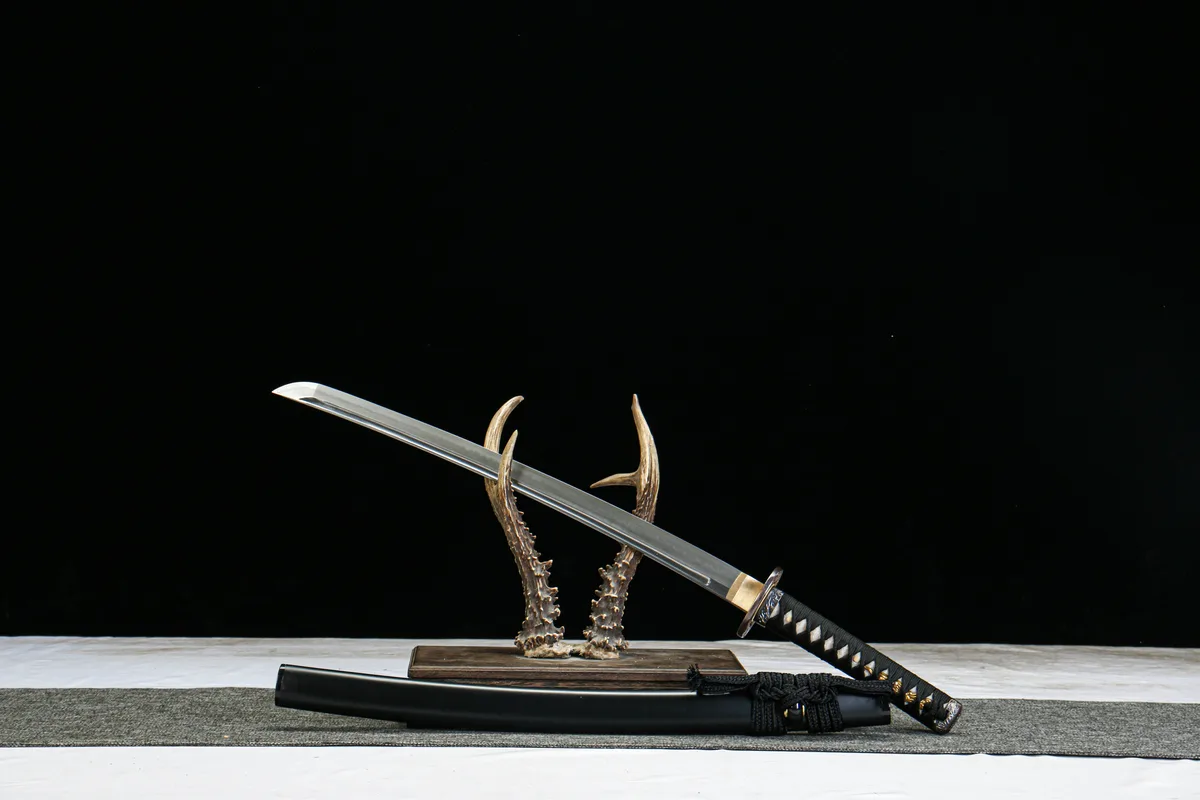
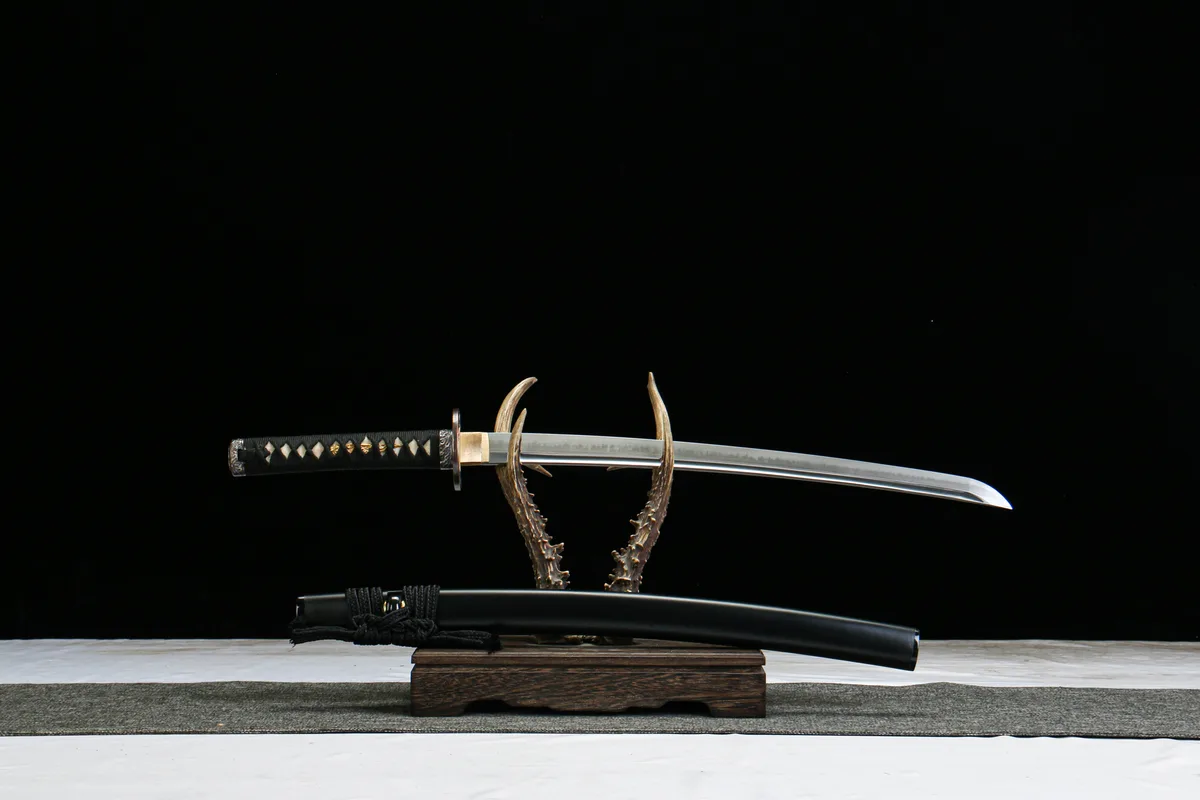
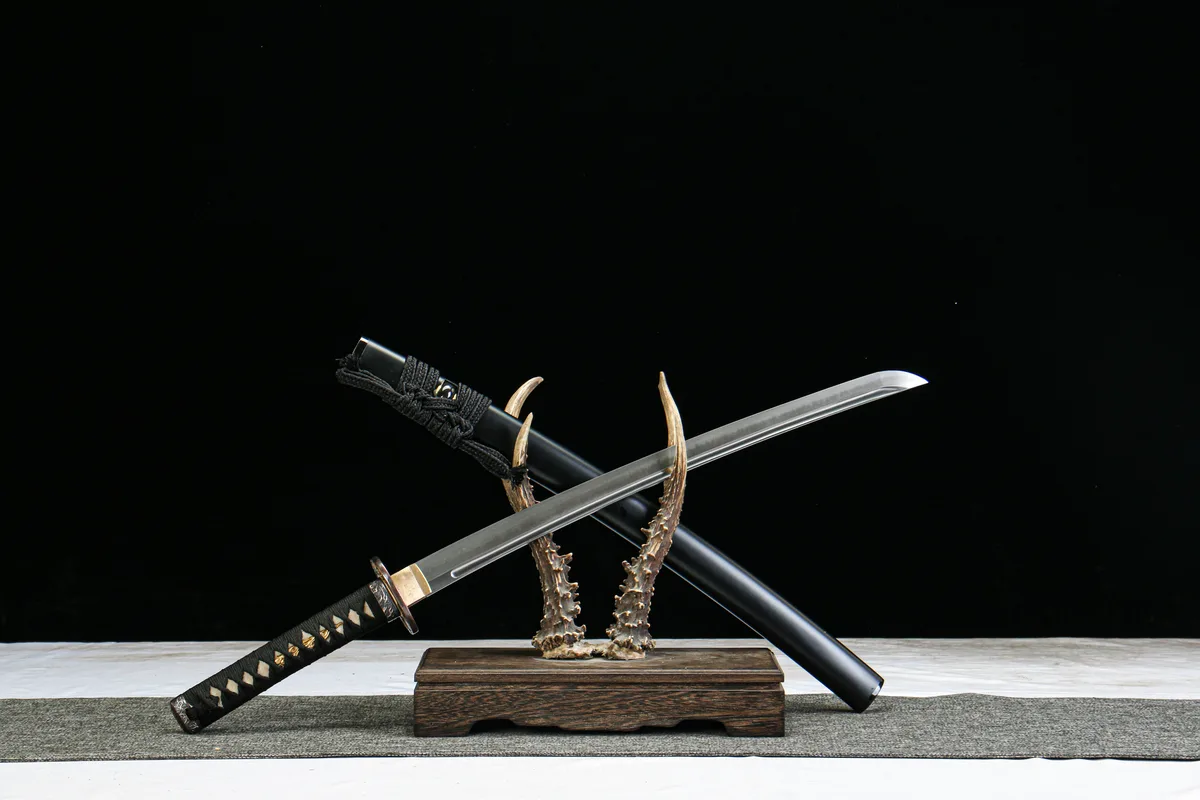
Hand-forged T10 Tool Steel wakizashi (80cm total / 56cm blade), crafted in Longquan. Full-tang construction with traditional fittings and hand-lacquered saya.
$1,599.99
Dragon Ascendant – Hand Forged T10 Tool Steel Wakizashi Sword
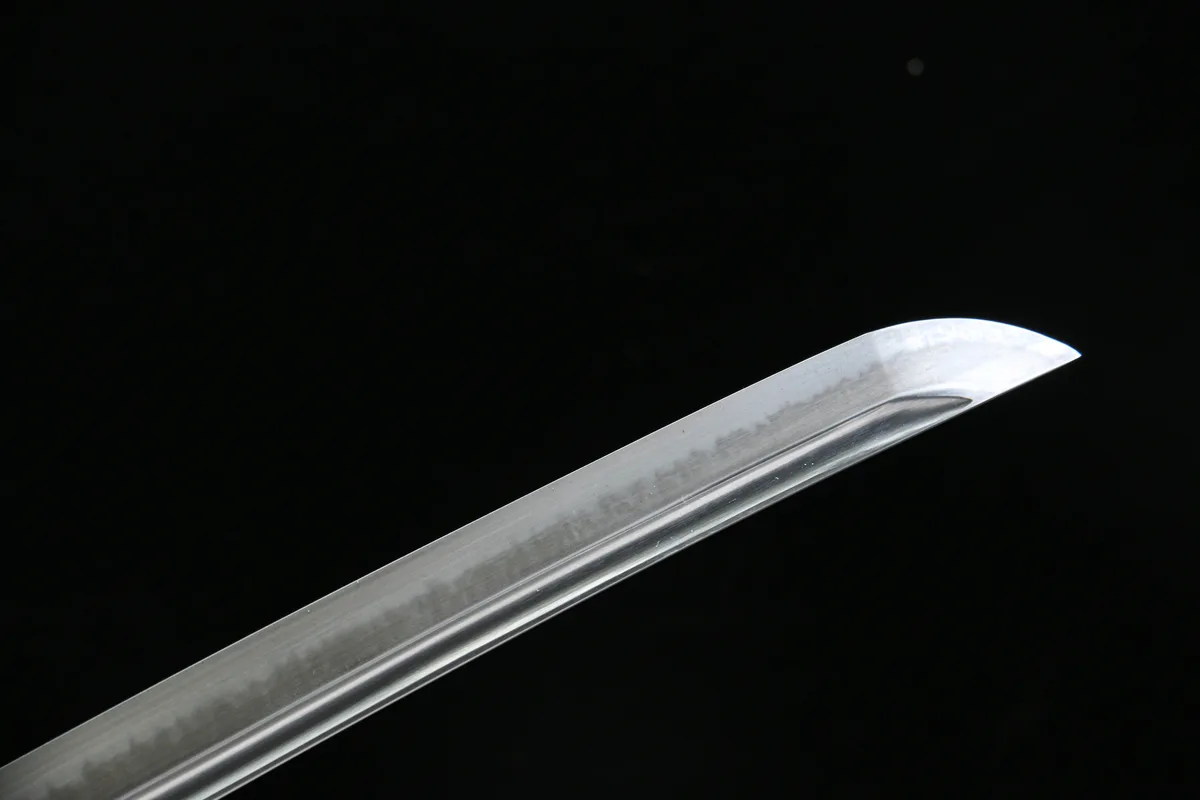
The Dragon Ascendant – 龙腾之刃 – arrives as a wakizashi unlike any other in its class. The treatment named 独家钉子烧, a proprietary nail-burn quench technique exclusive to our Longquan forge, produces a hamon that does not simply trace the edge: it erupts from it. What you see in the ji (the surface between the shinogi ridge and the hamon line) is nie activity so dense it reads as a scattered constellation rather than a settled boundary – points of hard martensite suspended in a softer pearlite ground, each one visible under oblique light. This is the blade that earns the longest look every time it leaves the saya.
Specifications
| Blade Steel | T10 High Speed Tool Steel (独家钉子烧 – proprietary nail-burn quench) |
| Total Length | 80.0 cm / 31.5 in |
| Blade Length | 56.0 cm / 22.0 in |
| Blade Width | 3.2 cm |
| Weight | 500 g / 17.6 oz |
| Heat Treatment | Oil Quench & Temper |
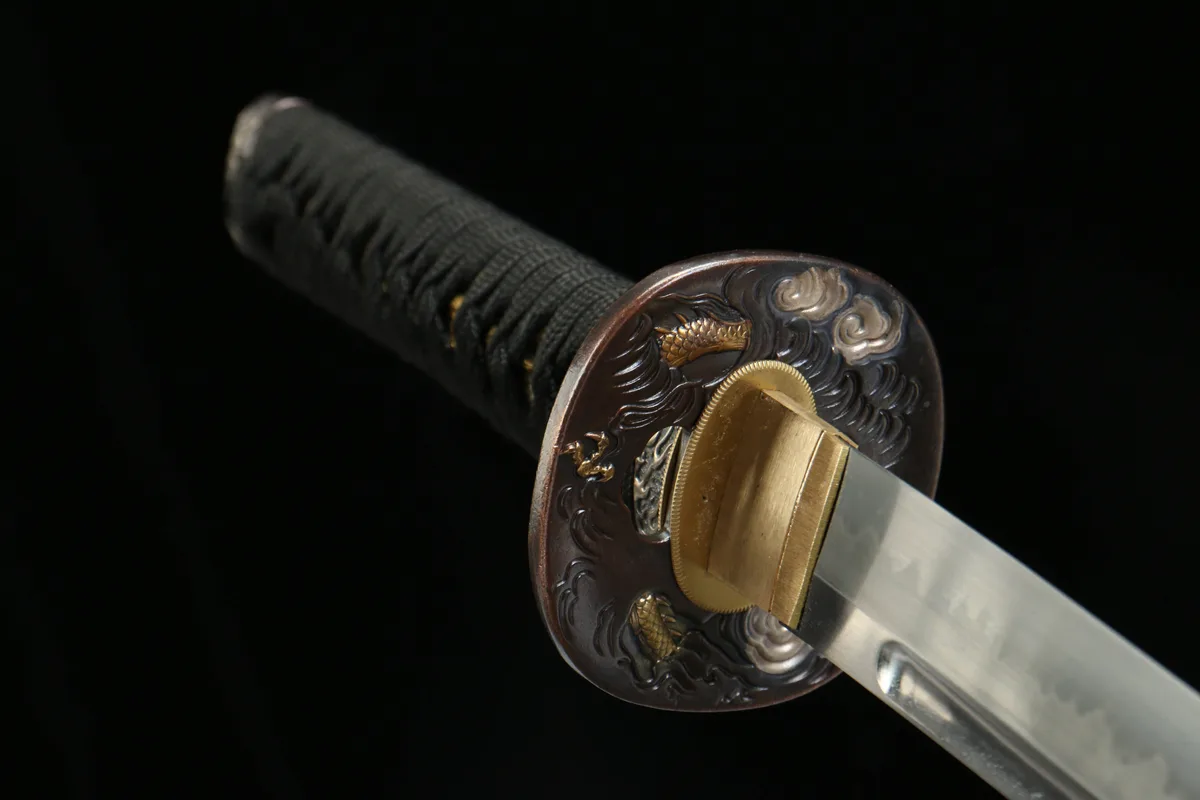
| Fittings | Gold & Silver Gilded Fittings, Copper |
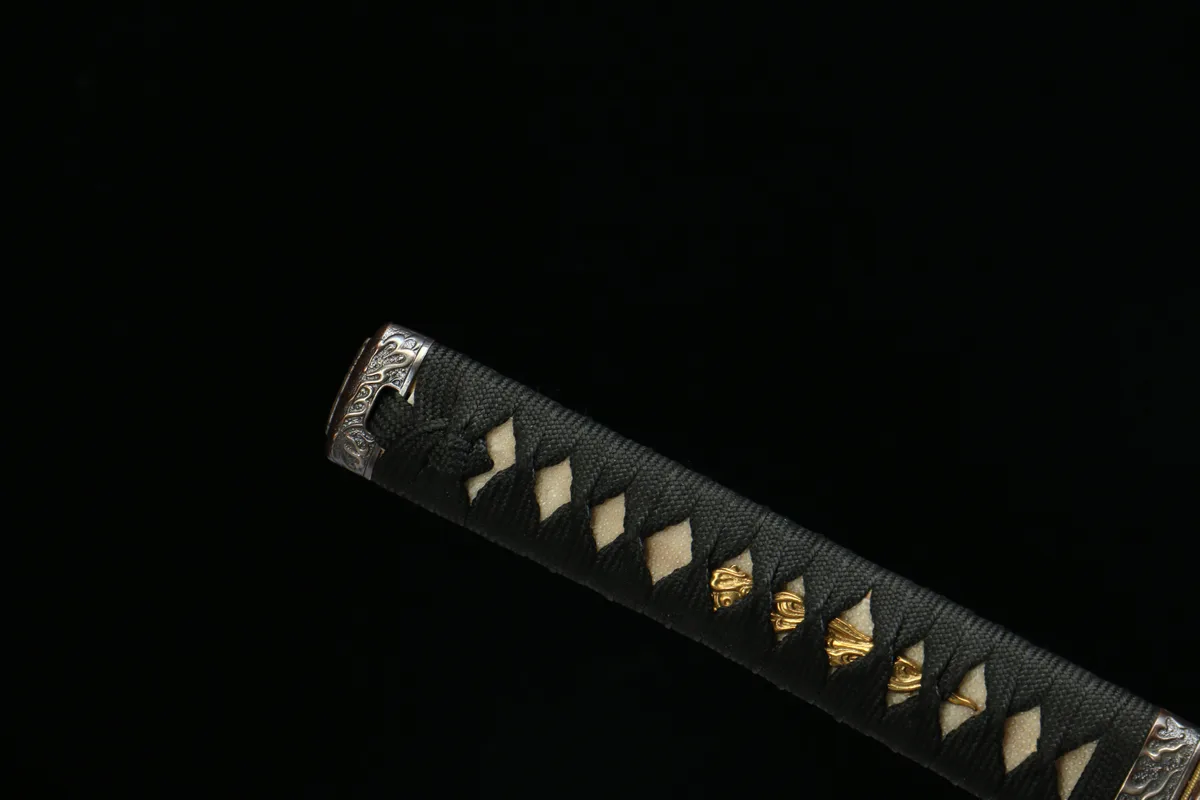
| Handle | Cotton Ito Wrap |
| Sheath | Green Bark Wood (Aohada) |
The Steel
T10 tool steel carries tungsten alongside its high carbon content – a combination that pushes hardness and wear resistance beyond what conventional high-carbon alloys can reliably sustain. The edge holds longer, the steel is less forgiving of poor technique, and it rewards the practitioner who brings discipline to every cut. Oil quenching rather than water quenching reduces the stress gradient at the moment of transformation, producing a blade that is harder than it looks and tougher than you might expect from steel this sharp.
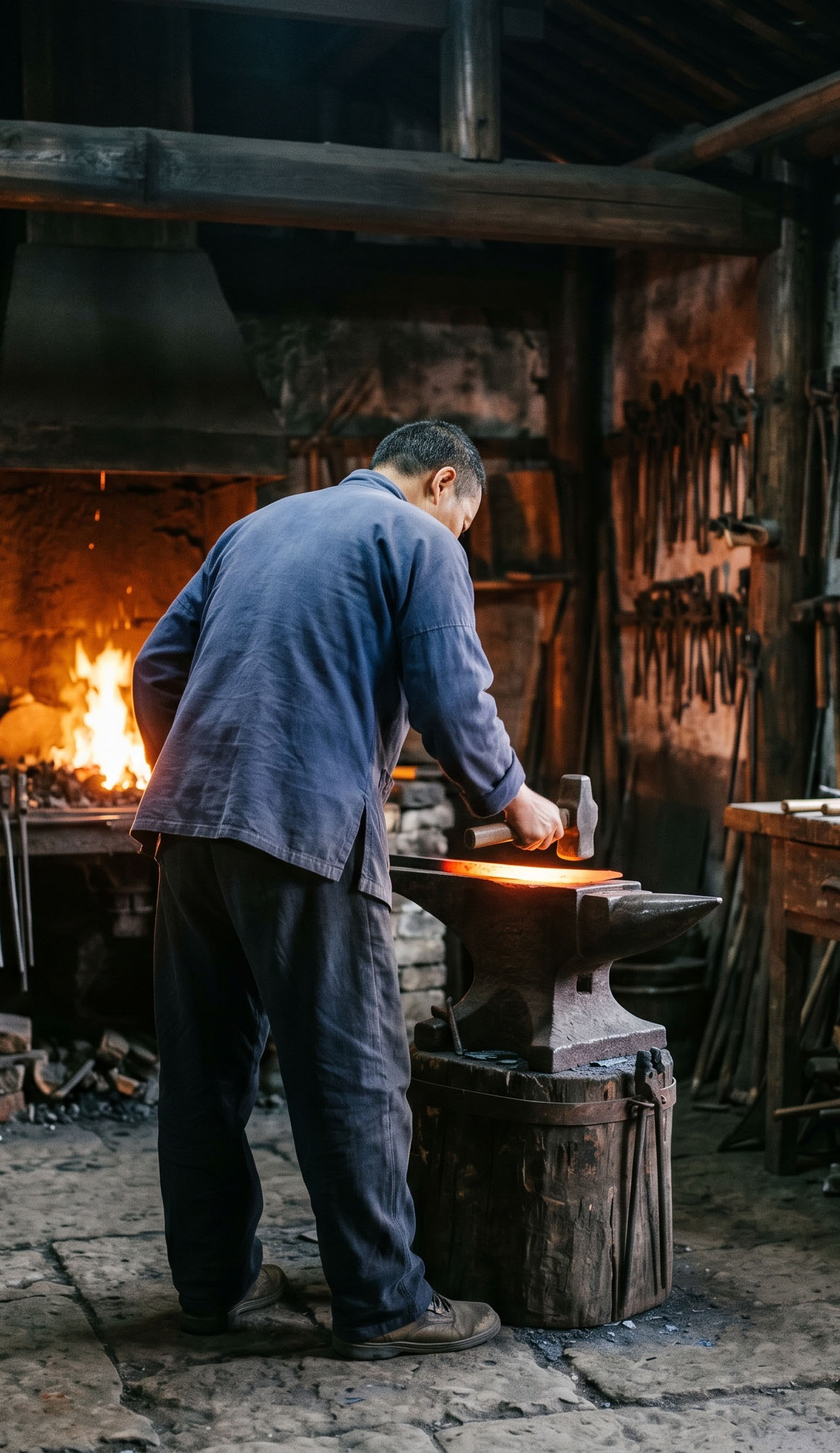
The 独家钉子烧 technique is the variable that separates this wakizashi from every other T10 blade leaving Longquan. The clay is applied in a pattern that concentrates nie formation along specific zones of the hamon, producing the punctuated, nail-scatter effect the technique is named for. The habuchi – the transition boundary between hard and soft – is not a clean line here. It is active, uneven, and alive. Under a loupe it reads like a coastline. Under strong raking light it glows. At the moment of draw it catches everything in the room.
In Your Hands
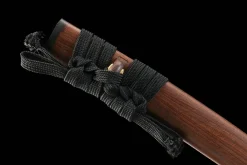
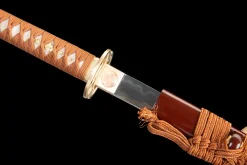
The shinogi-zukuri (ridgeline) geometry gives the blade a defined spine that seats the cut before the edge finishes it. The 56 cm blade length places the point of percussion at a distance well suited to the short, decisive work a wakizashi demands. The cotton ito wrap on the tsuka – the handle – is wound in the traditional diamond-hishi pattern, each lozenge of exposed same (ray skin) contributing grip texture that does not degrade under extended use. The draw from the aohada – green bark wood – saya is smooth against the throat of the opening, no bind, no friction swell, the blade clearing cleanly and without ceremony.
Care
Wipe the blade with a soft cloth after every handling session and apply a light coat of camellia oil before long-term storage – T10 is high-carbon and will develop surface rust if left bare in humid conditions. The aohada saya should be kept away from sustained moisture exposure; the bark surface finish is durable but not impervious. Never store the blade in the saya for extended periods without occasional air exposure.
| Weight | 0.7 lbs |
|---|---|
| Dimensions | 80.0 × 3.2 × 0.7 in |
| Hamon | Decorative / Acid-Etched |
| Blade Steel | T10 Tool Steel |
| Total Length | 80.0 cm |
| Blade Length | 56.0 cm |
| Heat Treatment | Oil Quench & Temper |
| Handle Wrap | Cotton Ito Wrap |
| Sheath Material | Green Bark Wood (Aohada) |
| Fittings | Gold & Silver Gilded Fittings, Copper |
| Forging Style | Shinogi-Zukuri (Ridgeline) |
Related products