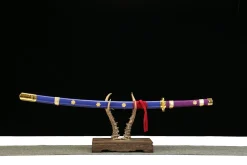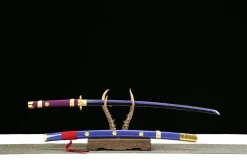





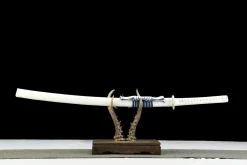

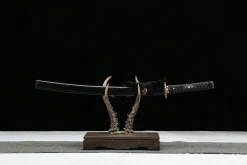


Ghost of Tsushima – Hand Forged T10 Tool Steel Katana Sword
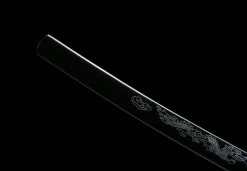
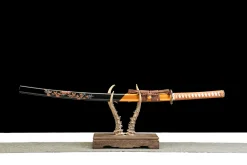
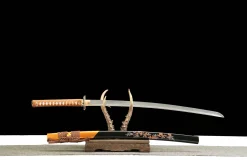
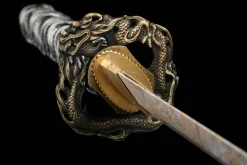
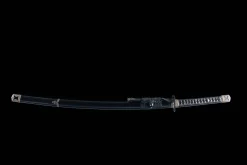
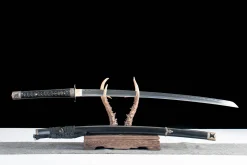
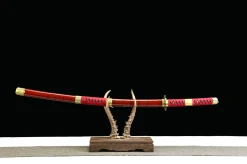
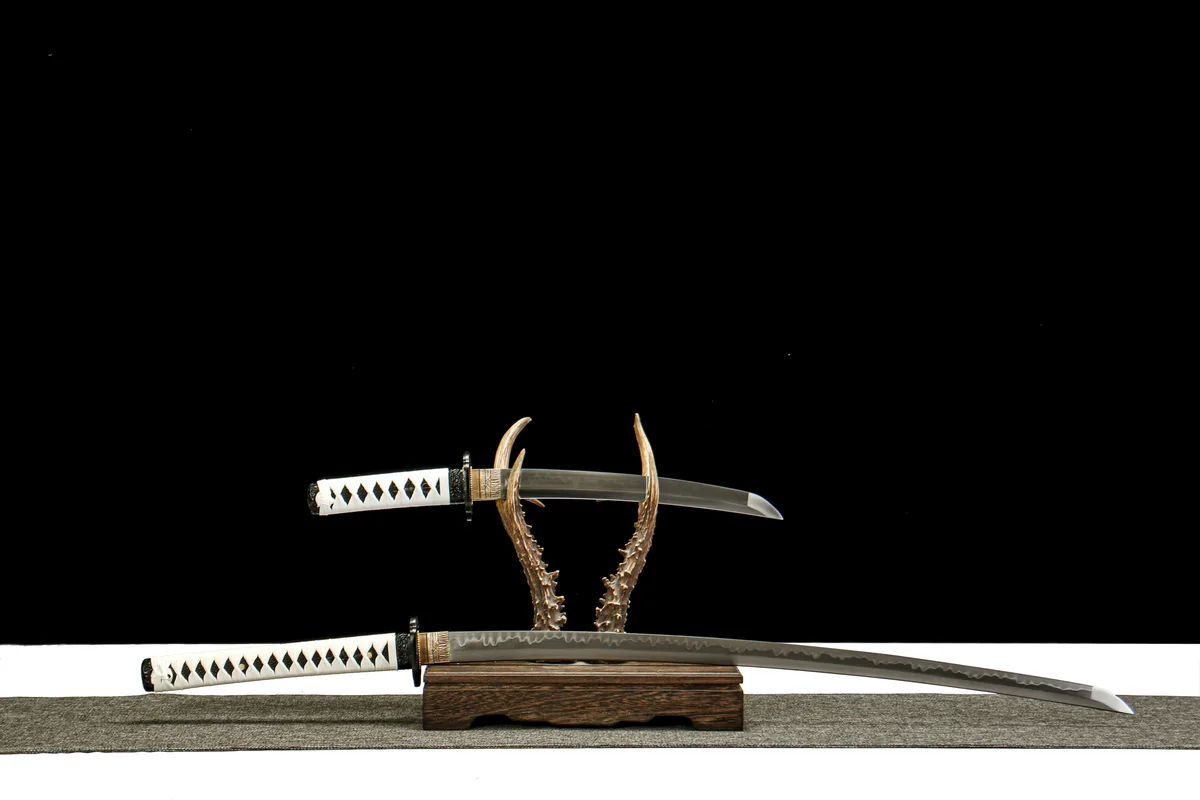
Hand-forged T10 Tool Steel katana (103cm total / 72cm blade), crafted in Longquan. Clay-tempered blade with a genuine hamon line — visible contrast between hardened edge and soft spine.
$1,049.99
Ghost of Tsushima – Hand Forged T10 Tool Steel Katana Sword
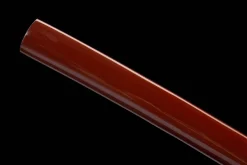
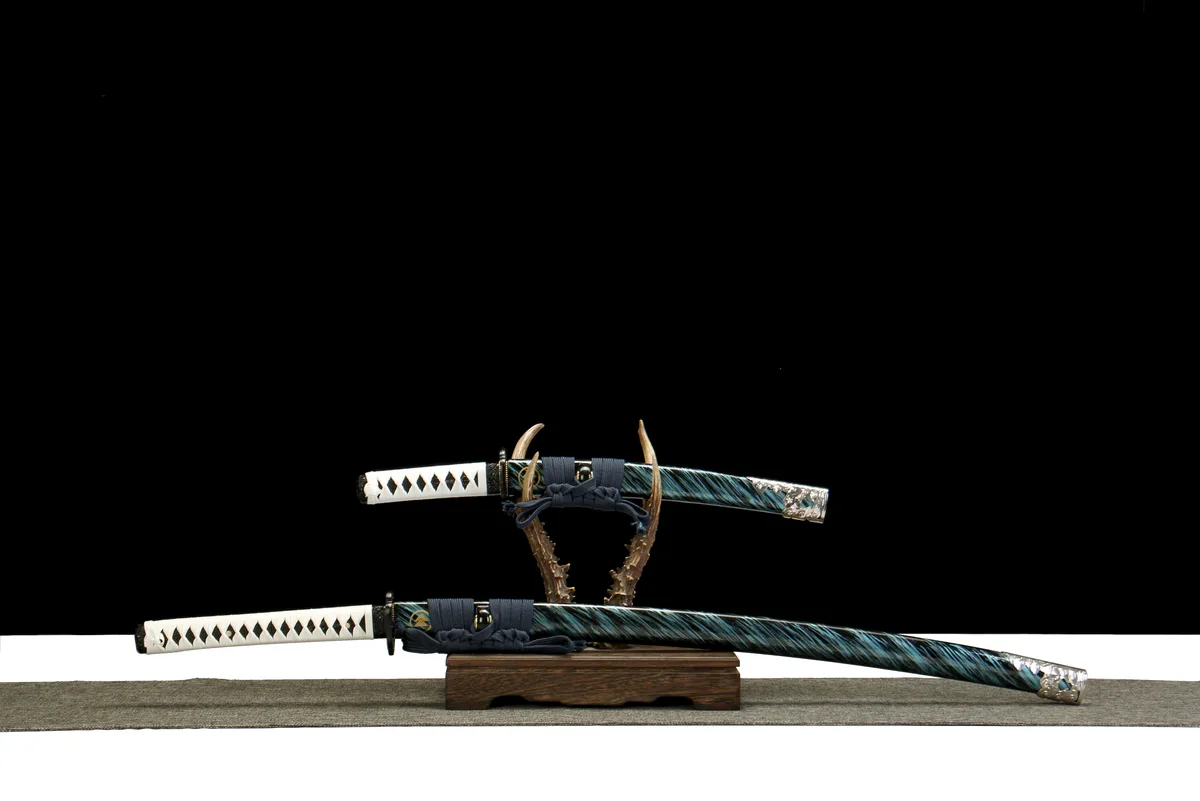
This is a matched set – katana and tanto – built on the same steel, the same clay, the same green bark wood saya, as a unified pair. The Ghost of Tsushima set draws its visual identity from the game’s iconic aesthetic, but the blades underneath that identity are real working tools: T10 high-speed tool steel, differentially hardened, with a genuine hamon running the full length of each blade. The detail that earns this set its place in a serious collector’s hands is the green aohada (bark-grain wood) saya, lacquered and fitted identically across both pieces – a coherence that is rare in matched sets at any level.
Specifications
| Blade Steel | T10 High-Speed Tool Steel |
| Heat Treatment | Clay Tempered – Differential Hardening, Oil Quench & Temper |
| Fittings | Zinc Alloy |
| Handle Wrap | Cotton Ito |
| Sheath | Green Bark Wood (Aohada) |
| Katana | |
| Total Length | 103.0 cm / 40.6 in |
| Blade Length | 72.0 cm / 28.3 in |
| Blade Width | 3.2 cm |
| Blade Thickness | 0.7 cm |
| Handle Length | 30.0 cm / 11.8 in |
| Weight | 950 g / 33.5 oz |
| Tanto | |
| Total Length | 45.0 cm / 17.7 in |
| Blade Length | 30.0 cm / 11.8 in |
| Handle Length | 15.0 cm / 5.9 in |
Steel & Construction
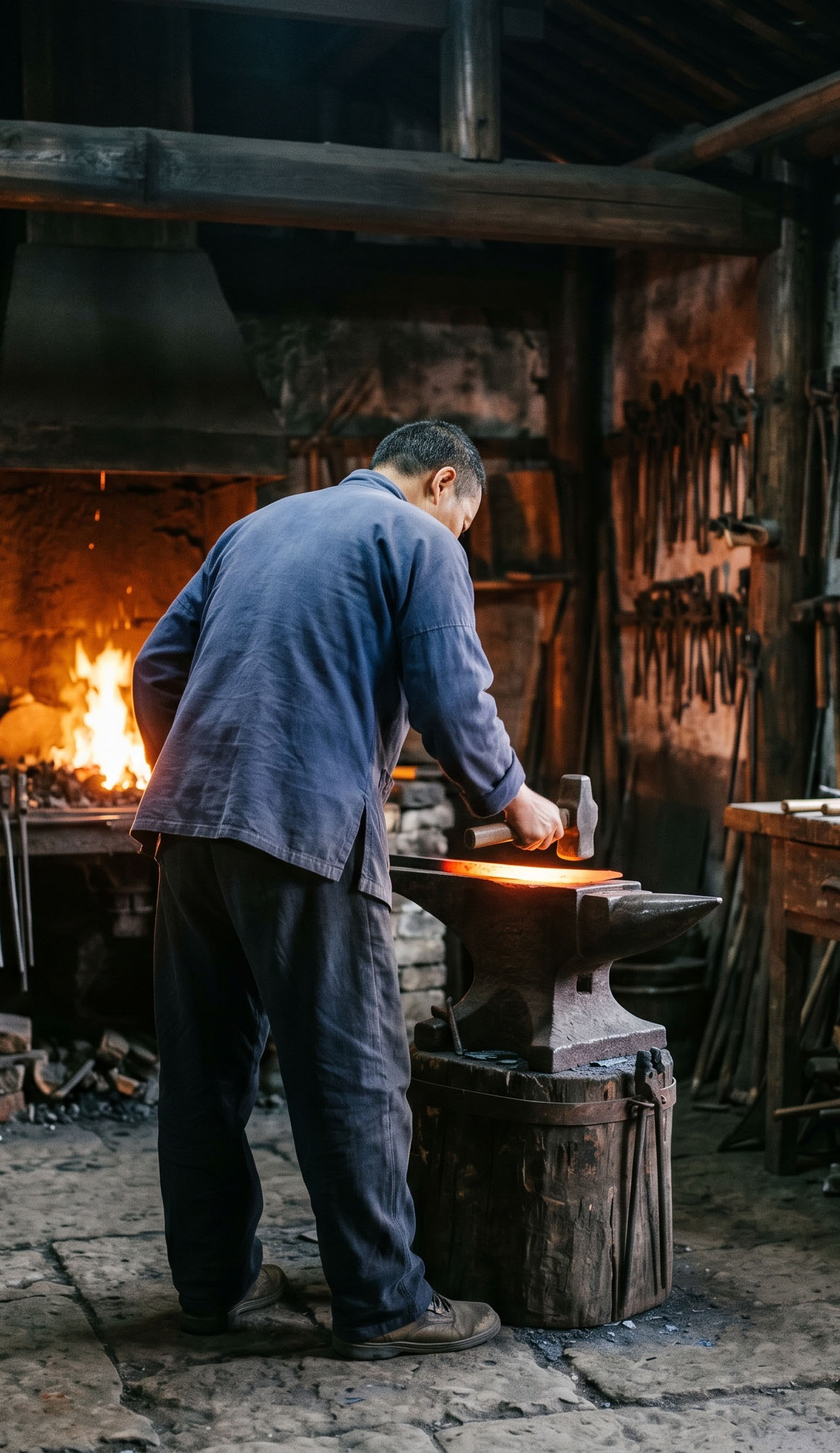
T10 tool steel earns its designation through a tungsten addition that raises hardness ceiling and wear resistance beyond what conventional high-carbon grades can reliably achieve. When the smith applies clay to the spine before the quench – leaving the edge exposed to rapid cooling and the body insulated for a slower transition – the result is a blade with a genuinely hard edge, a softer, more flexible spine, and a hamon (the visible temper line that marks the boundary between those two zones) that is not etched or cosmetic. On T10, the hamon character tends toward activity: nie (crystalline martensite granules visible in raking light) scatter through the habuchi (the hamon’s border), and the transition is not a clean ruled line but something with movement – tobiyaki islands, ashi activity, a boundary that repays close inspection under proper lighting. Both the katana and tanto were treated identically, so the hamon character across the pair reads as a matched conversation rather than two unrelated blades sharing a box.
The oil quench following clay application controls the cooling rate more gently than a water quench, reducing the stress fracture risk that T10’s hardness potential would otherwise introduce. The result is a blade that holds a fine edge under sustained cutting stress without the brittleness that chases high hardness in lesser steels. Both blades were forged and treated in Longquan, where the forge has been running this process for over forty years.
Handling
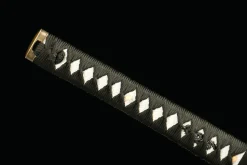
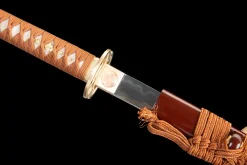
The katana’s 30.0 cm handle is longer than most production katana handles, which typically run 26-27 cm – that additional length translates directly to two-handed control, giving the rear hand a firmer purchase and widening the spread between grip points for leverage on cuts and transitions. The cotton ito wrap is firm underhand, the diamond pattern raised enough to index naturally in the palm without requiring conscious adjustment. Drawing from the green aohada saya, the koiguchi (mouth of the sheath) offers clean resistance that releases crisply rather than sluggishly – the bark-grain wood surface of the saya is smooth against the supporting hand during the draw. The tanto at 45.0 cm total sits naturally in the off hand or tucked at the obi (belt), and its 15.0 cm handle fills a single-hand grip without excess. Both pieces feel of one lineage.
Care Instructions
After any handling, wipe both blades with a lightly oiled cloth – choji oil (clove oil diluted in mineral oil) is traditional, though any high-quality mineral or camellia oil is appropriate. The cotton ito and zinc alloy fittings should be kept dry; do not store the swords sheathed in high-humidity conditions without periodic inspection of the habaki (blade collar) and blade surface for early oxidation. The aohada saya lacquer is durable but should be stored away from prolonged direct sunlight to preserve the green finish across both sheaths.
| Weight | 1.2 lbs |
|---|---|
| Dimensions | 80.0 × 3.2 × 0.7 in |
| Hamon | Real Hamon (Clay Tempered) |
| Blade Steel | T10 Tool Steel |
| Total Length | 103.0 cm |
| Blade Length | 72.0 cm |
| Heat Treatment | Oil Quench & Temper |
| Handle Wrap | Cotton Ito Wrap |
| Sheath Material | Green Bark Wood (Aohada) |
| Fittings | Zinc Alloy |
| Forging Style | Differential Hardening (Clay Tempered) |
Related products