





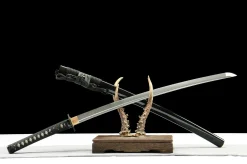

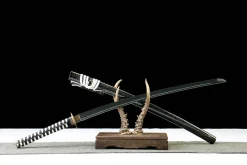





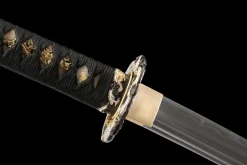



Golden Crimson Wave – Hand Forged Carbon Steel Katana Sword
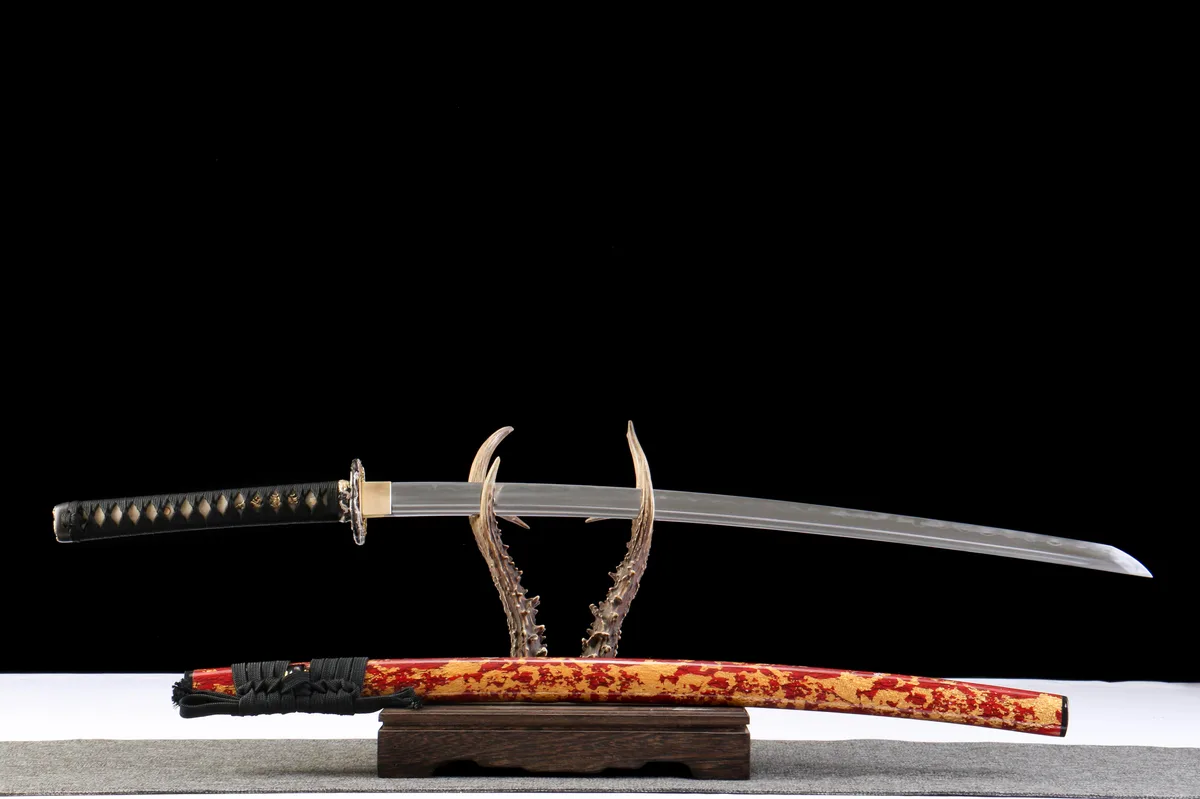
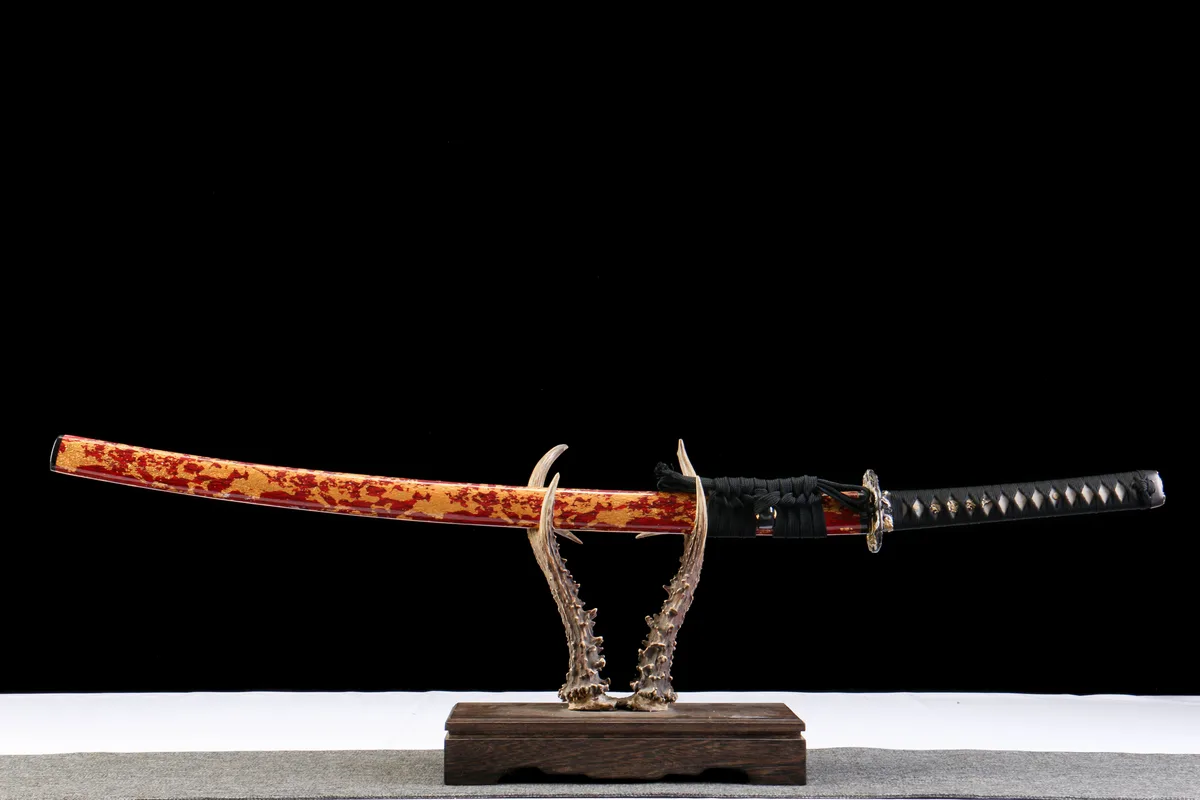
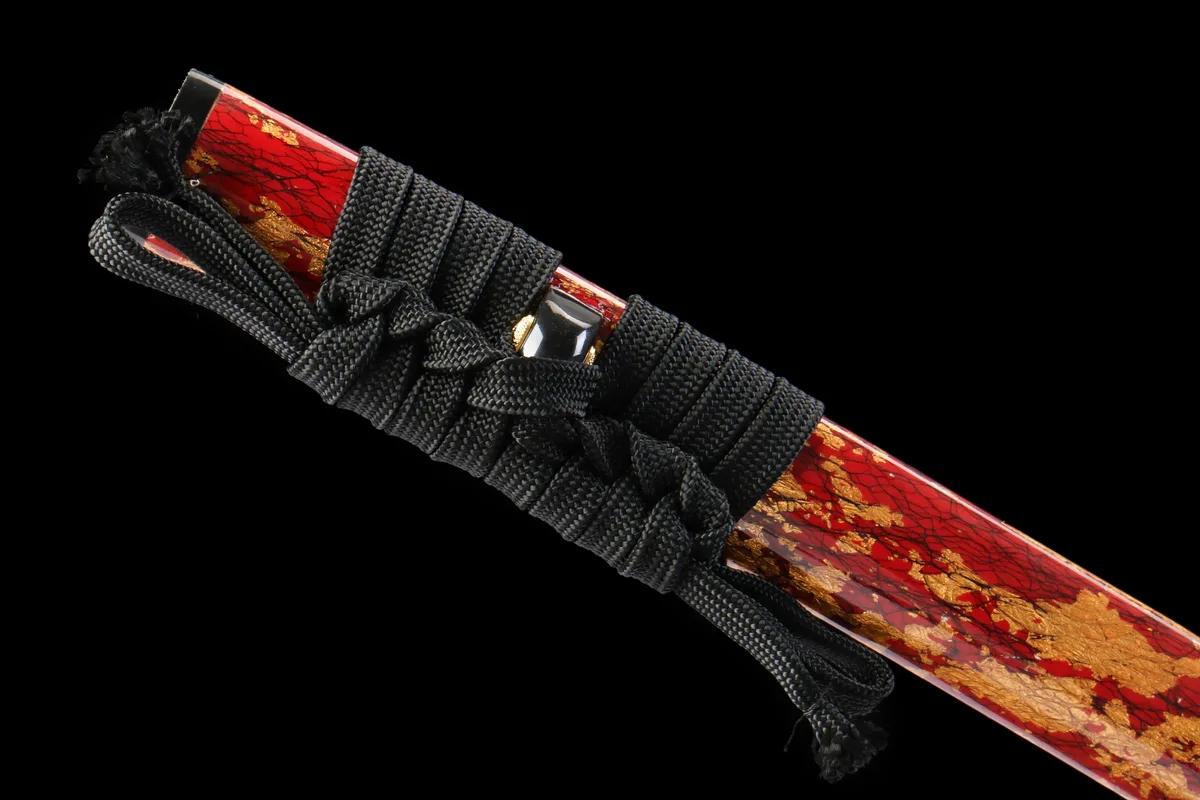
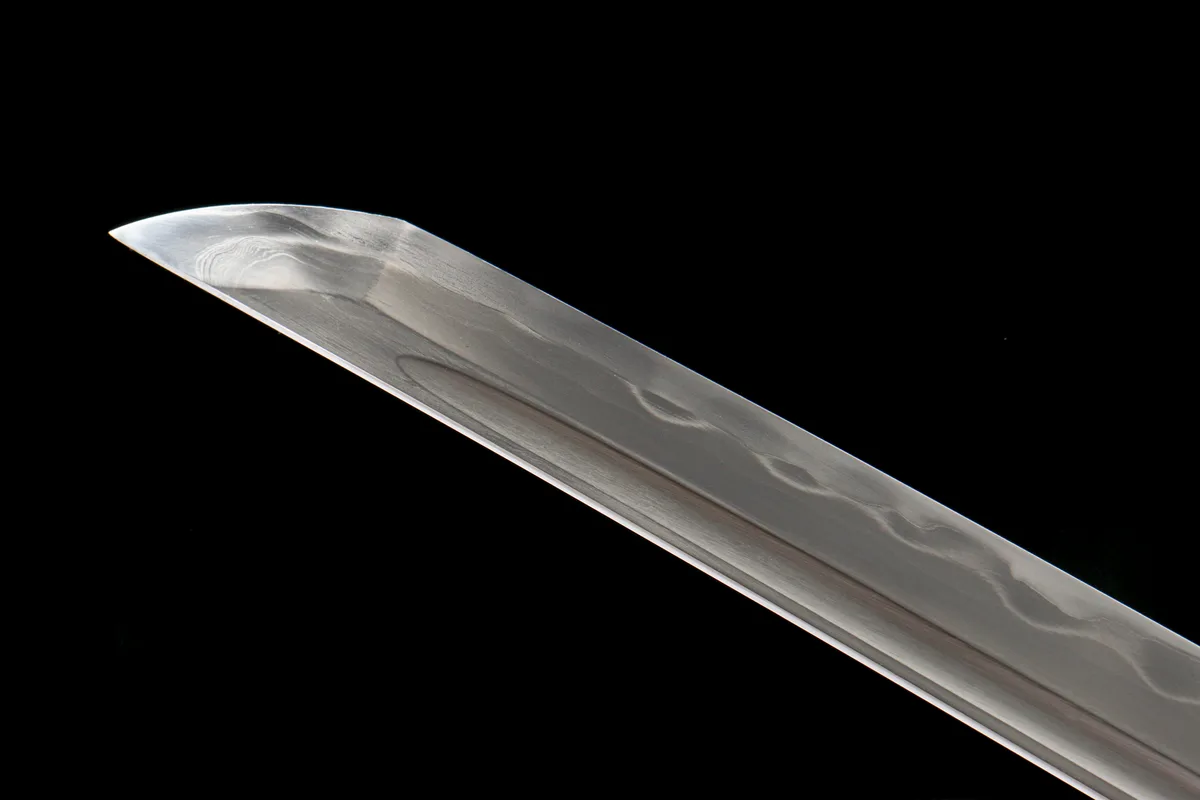
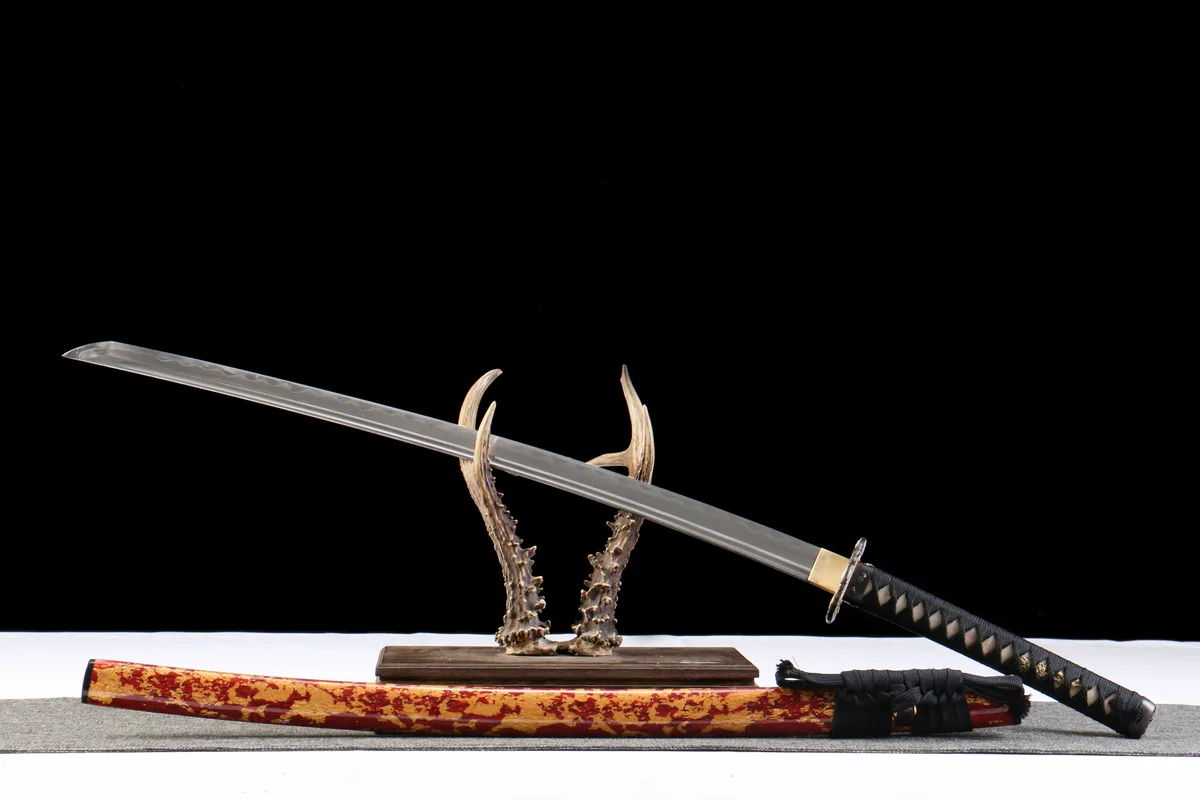
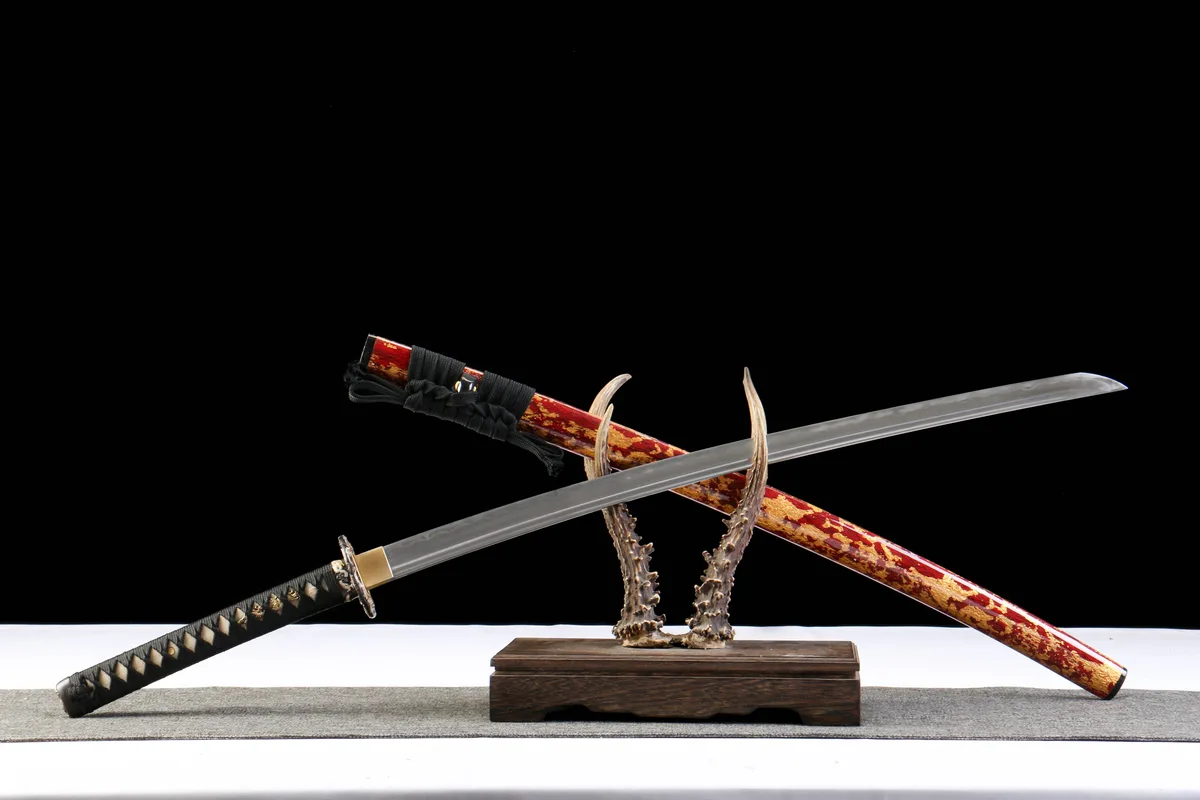
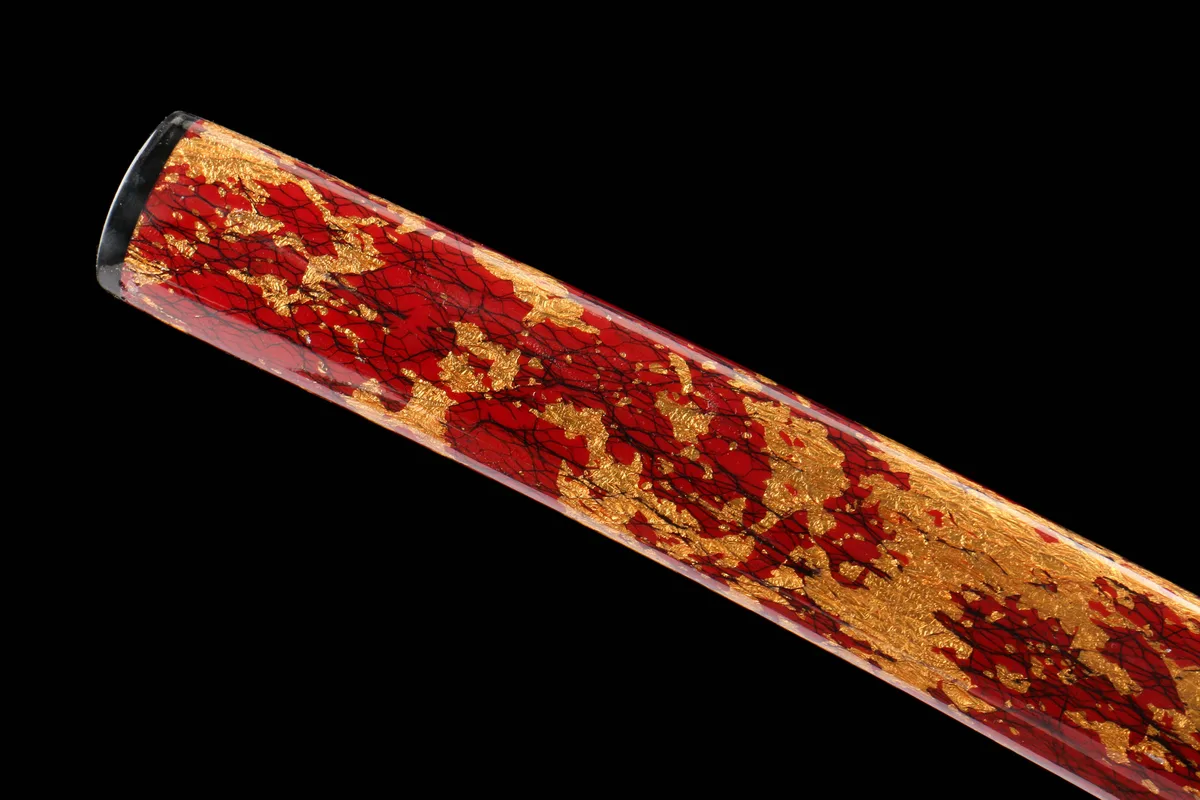
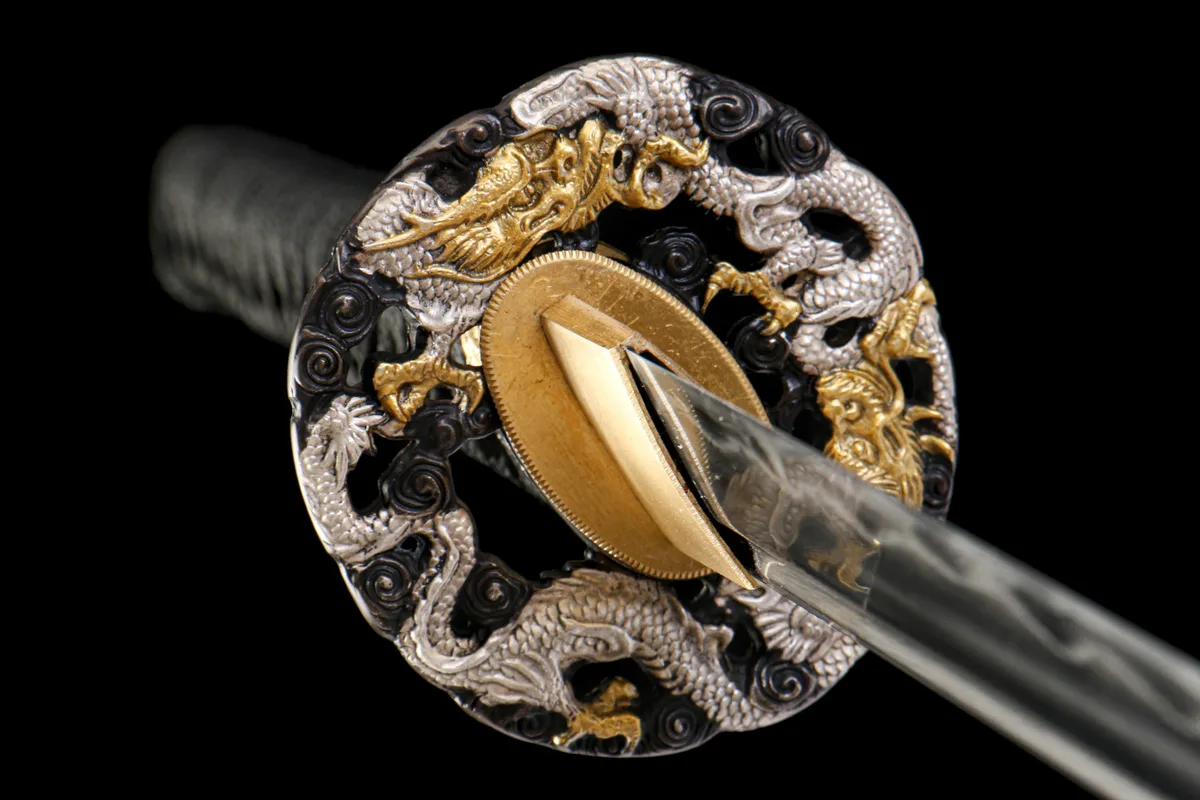
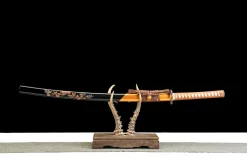
The Golden Crimson Wave is a luxury-tier katana forged from san-mai composite steel — a three-layer construction encasing a hard high-carbon core within tough outer steel — clay-tempered to a dramatic hamon and sheathed in a gold-foil baked lacquer saya that ranks among the most visually breathtaking scabbards produced in Longquan. At $1,025, this is a sword that occupies the rare intersection of genuine swordsmanship tradition and fine decorative art, finished with gilded and silvered copper fittings that transform every fitting into a small sculpture. The Golden Crimson Wave is not merely owned — it is inherited.
Specifications
| Blade Steel | San-Mai Composite (三枚合) — Hard Core / Soft Jacket Construction |
| Total Length | 102.0 cm / 40.2 inches |
| Blade Length | 72.0 cm / 28.3 inches |
| Blade Width | 3.2 cm |
| Weight | 1040 g / 36.7 oz (net) |
| Heat Treatment | Clay Tempering (Differential Hardening) |
| Fittings | Gilded & Silvered Copper (铜装鎏金银) |
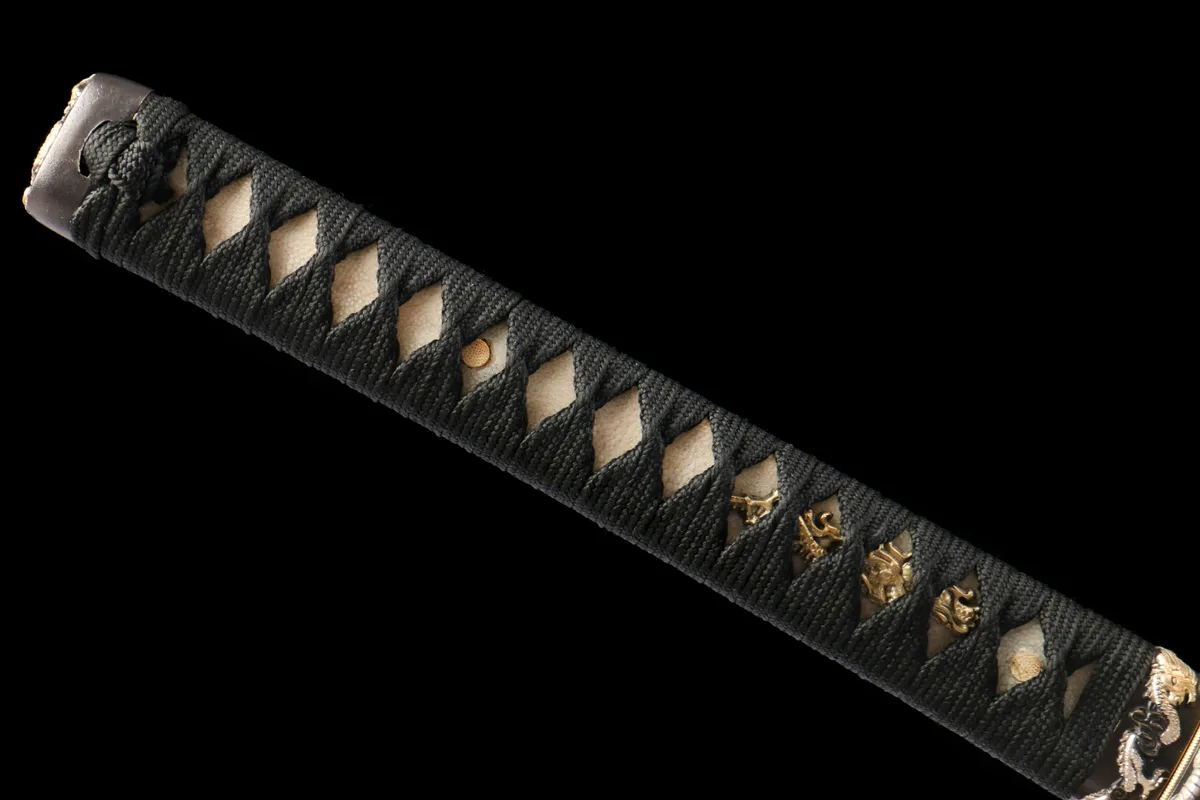
| Handle | Cotton Ito + Genuine Rayskin |
| Sheath | Hardwood with High-Hardness Gold Foil Baked Lacquer (高硬度金箔烤漆) |
Craftsmanship & Materials
San-mai (三枚合, literally “three-plate combination”) is the steel architecture of choice when a swordsmith wants to engineer, rather than simply forge, a blade’s performance characteristics. A core of hard, high-carbon steel — capable of taking and holding a razor-sharp edge — is forge-welded between two outer plates of tougher, more flexible steel. The hard core does the cutting; the tough jacket absorbs shock and prevents the brittleness that a mono-steel hard blade would exhibit. The result is a blade that simultaneously achieves what mono-steels must compromise between: a glass-sharp, long-lasting edge and a spine resilient enough to survive real use. This is the structural logic behind traditional Japanese tamahagane swords — the Golden Crimson Wave delivers that philosophy in a modern Longquan interpretation.
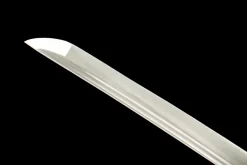
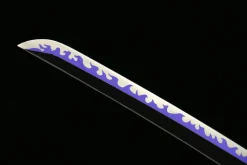
Clay tempering (土置き, tsuchioki) is applied to the san-mai billet before quenching, insulating the spine while the exposed edge experiences rapid cooling. The hamon that emerges on the Golden Crimson Wave is a product not just of the clay application pattern but of the san-mai’s layered steel composition — the tempering wave interacts with the jacket-to-core transition zones to produce an unusually complex, rich temper line. Each blade’s hamon is unique, an unrepeatable signature of the quench.
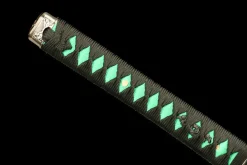
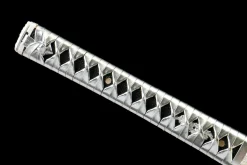
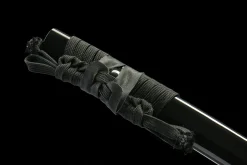
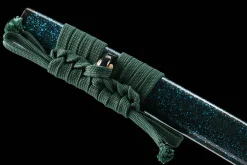
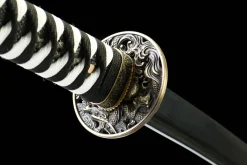
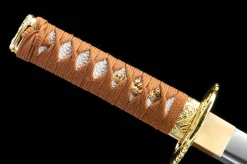
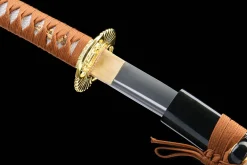
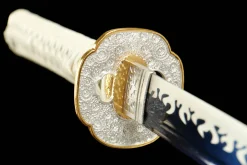
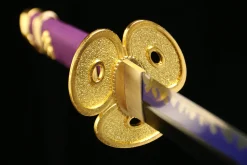
The saya of the Golden Crimson Wave is in a class entirely its own. Real gold foil is applied to the hardwood body and sealed beneath a high-hardness baked lacquer — a process requiring multiple kiln firings to achieve a surface that is simultaneously luminous and extraordinarily durable. The gilded and silvered copper fittings (鎏金银铜装) are electroplated over solid copper bases, creating a warm gold-and-silver contrast that catches candlelight with the richness of antique jewelry. The tsuka wraps genuine same beneath tight cotton ito — the rayskin’s natural nodules pressing through the ito wrap and providing grip security worthy of a blade this significant.
Perfect For
- Serious collectors acquiring a luxury-tier, technically superior san-mai katana as the defining centerpiece of a mature sword collection
- Discerning buyers seeking the finest possible heirloom gift — a sword that will be examined and admired by every generation that inherits it
- Advanced practitioners who demand both functional san-mai performance and the prestige aesthetics of gold-foil lacquer and gilded copper fittings
Care & Maintenance
San-mai blades require the same disciplined carbon steel care routine as mono-steel blades — monthly camellia oil application, dry storage, and avoidance of all moisture contact — but pay particular attention to the hamon line, where the hard edge steel meets the softer jacket material, as this boundary can collect moisture capillarily if the blade is stored improperly. The gold-foil saya should never be stored in direct sunlight or extreme temperature fluctuation, as thermal cycling can stress the lacquer bond over decades; store the sword horizontally on a sword stand at stable room temperature for a lifetime of flawless preservation.
Frequently Asked Questions
What is Sanmai (三枚合) construction in a katana blade?
Sanmai (三枚合) is a traditional Japanese composite blade construction where a hard high-carbon steel core (hagane) is sandwiched between two outer layers of softer, tougher steel. This design gives the Golden Crimson Wave a cutting edge with exceptional hardness while the outer layers absorb shock and resist lateral bending. Sanmai construction is historically authentic and technically demanding, representing a significant step up in craftsmanship from mono-steel blades and is rarely found outside the $800+ price tier.
What does clay tempering do to a Sanmai blade like the Golden Crimson Wave?
On the Golden Crimson Wave’s Sanmai blade, clay tempering creates differential hardness that is especially effective — the exposed hard steel core at the edge hardens dramatically during quenching while the clay-insulated spine retains flexibility. This produces a genuine, naturally formed hamon temper line and maximizes the inherent advantages of the Sanmai construction. The result is a blade with exceptional cutting sharpness, resilience under impact, and the visual authenticity of a traditional Japanese masterwork.
Is the Golden Crimson Wave worth $1,025 and what makes it a luxury katana?
The Golden Crimson Wave justifies its $1,025 price through a combination of rare features: Sanmai composite blade construction, authentic clay tempering with a genuine hamon, gold-lacquered hardwood sheath (高硬度金箔烤漆), and gold-silver gilt copper fittings (铜装鎏金银). Each element requires significantly more skilled labor and costlier materials than standard production swords. For collectors and serious practitioners seeking a museum-quality functional sword, the Golden Crimson Wave delivers craftsmanship that rivals custom work costing considerably more.
What are the gold-lacquered and gilt copper fittings on the Golden Crimson Wave?
The Golden Crimson Wave features a hardwood sheath finished with a high-durability gold-foil lacquer (金箔烤漆), giving it a brilliant, jewel-like appearance resistant to chipping. The fittings — tsuba, fuchi, kashira, and menuki — are crafted from copper with gold and silver gilt overlay (鎏金银), a traditional metalworking technique where precious metal is fused to the base metal surface. Together, these finishes create a cohesive, palatial aesthetic appropriate for ceremonial display or high-end collection.
How does the Golden Crimson Wave compare to other luxury katana over $800?
In the $800-$1,500 luxury tier, most competitors offer either clay tempered mono-steel or basic Sanmai construction — rarely both with premium fittings. The Golden Crimson Wave differentiates itself by combining Sanmai construction, clay tempering, gold-foil lacquered sheath, and gilt copper fittings in a single package at $1,025. Comparable swords from established custom smiths often exceed $1,500 for similar specifications. For collectors seeking maximum material value and craftsmanship at the entry luxury price point, it represents exceptional positioning.
| Weight | 1.32 lbs |
|---|---|
| Dimensions | 102.0 × 3.2 × 0.7 in |
| Sword Type | Katana |
| Blade Steel | Carbon Steel |
| Total Length | 102.0 cm |
| Blade Length | 72.0 cm |
| Heat Treatment | Clay Tempering (Differential Hardening) |
| Handle Wrap | Cotton Ito + Genuine Rayskin |
| Sheath Material | Hardwood(高硬度金箔烤漆) |
| Fittings | 铜装鎏金银 |
| Forging Style | 鎬造 |
Related products

High Carbon Steel


1065 Carbon Steel

1045 Carbon Steel
1065 Carbon Steel
1045 Carbon Steel
1065 Carbon Steel

1065 Carbon Steel