











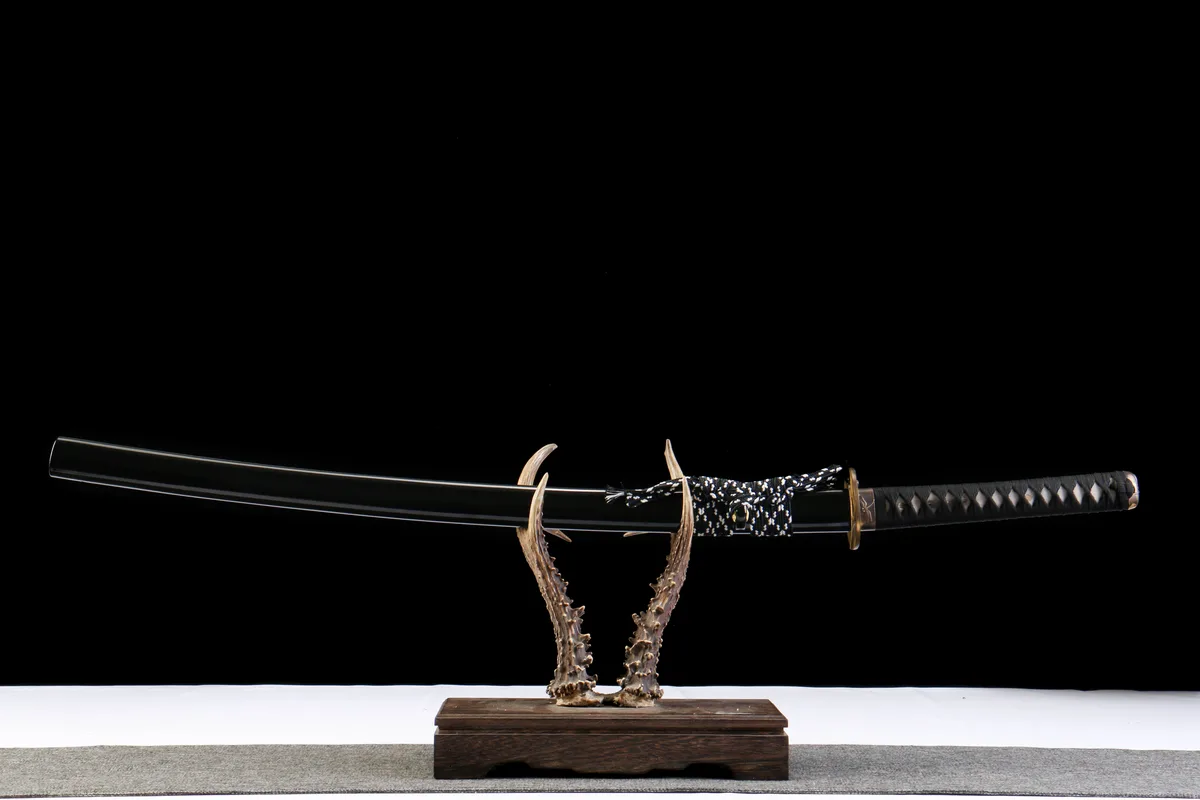



Golden Ink Feather – Hand Forged Damascus Steel Katana Sword
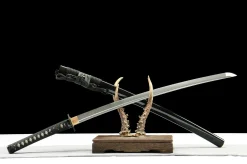
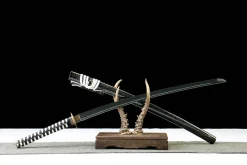
The Golden Ink Feather is a three-tone Damascus steel katana clay-tempered to a real, visible hamon — making it one of the most artistically expressive swords in Longquan’s entire premium range at $400. Its pattern-welded Damascus blade unfolds like brushstrokes of ink on silk, with flowing grain lines that shift and dance under changing light, while aged copper fittings and a tri-color polish finish give this sword the visual complexity of a museum piece you can actually hold. For the collector who refuses to choose between functional steel and extraordinary beauty, the Golden Ink Feather is the answer.
Specifications
| Blade Steel | Damascus / Pattern-Welded Steel |
| Total Length | 102.0 cm / 40.2 inches |
| Blade Length | 72.0 cm / 28.3 inches |
| Blade Width | 3.2 cm |
| Weight | 1040 g / 36.7 oz (net) |
| Heat Treatment | Clay Tempering (Differential Hardening) |
| Fittings | Copper (Antiqued) |
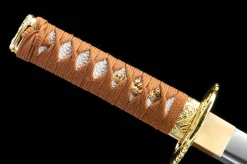
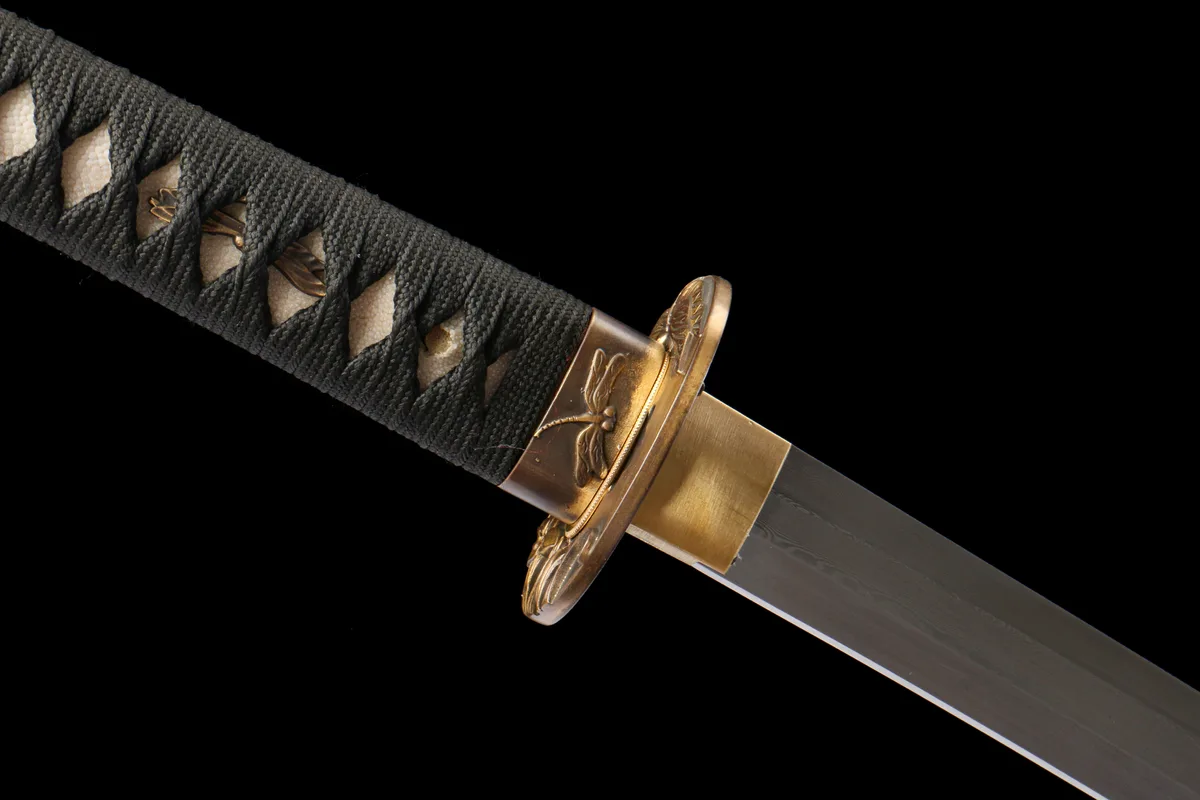
| Handle | Cotton Ito + Genuine Rayskin |
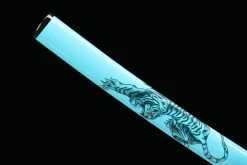
| Sheath | Hardwood (High-Gloss Lacquer) |
Craftsmanship & Materials
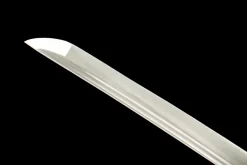
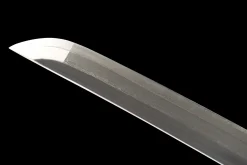
Damascus — or pattern-welded — steel is created by forge-welding multiple layers of steel together, folding and manipulating the billet until distinct flowing grain patterns emerge in the finished blade. This is not a surface treatment or acid-etched imitation; the pattern runs through the entire depth of the steel, meaning every polish, every sharpening, every generation of use reveals the same organic flow of the internal structure. The three-tone polish (三色研) applied to the Golden Ink Feather’s blade amplifies this drama — different zones of the blade are finished to different degrees of reflectivity, creating contrast between the bright edge, the layered flat, and the darker spine that makes the Damascus pattern appear almost three-dimensional.
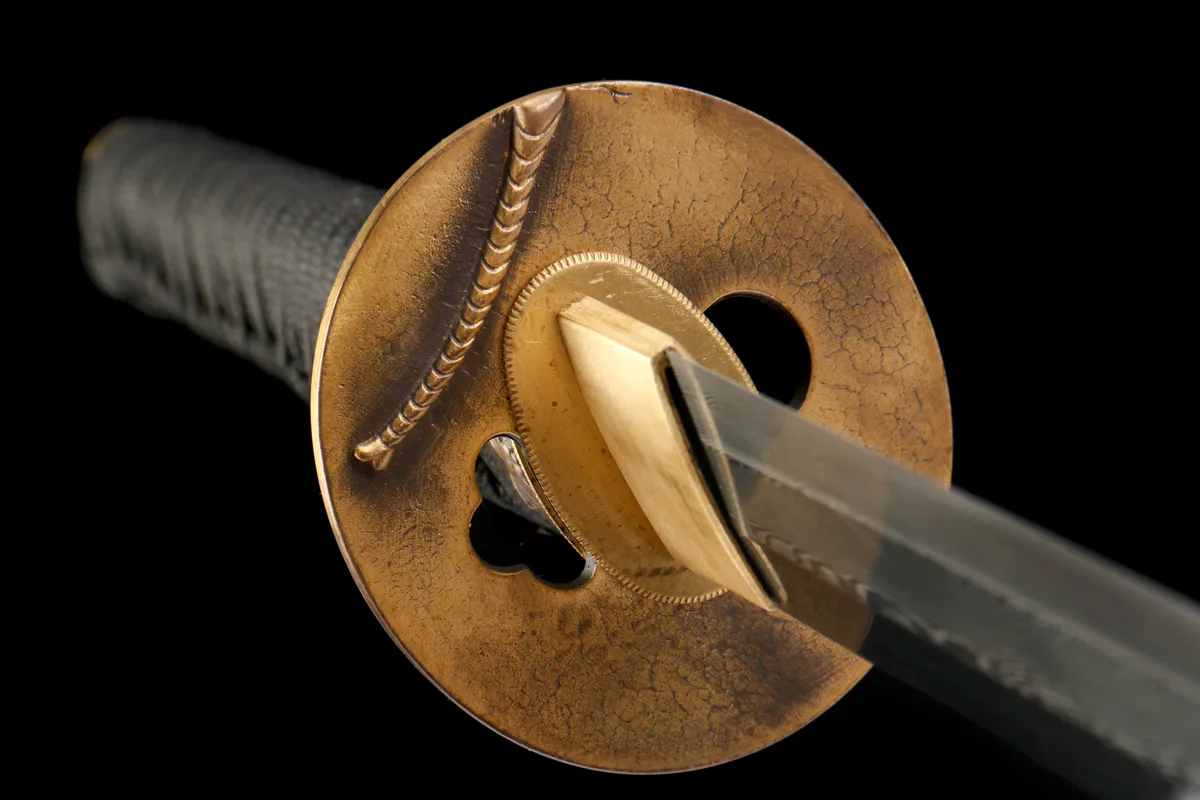
The clay tempering process applied here is the same differential hardening technique that defines traditional Japanese swordsmithing. Tsuchioki — the application of wet clay mixture to the blade’s spine before quenching — causes the spine to cool slowly (remaining tough and flexible) while the exposed edge cools rapidly (becoming hard and sharp). The boundary between these two zones emerges as the hamon: a visible, organic temper line running the blade’s length. On a Damascus blade, the hamon interacts with the layered grain pattern to create an effect of extraordinary visual richness.
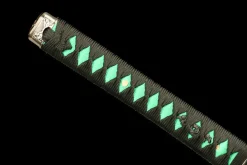
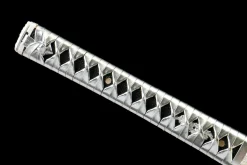
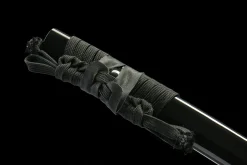
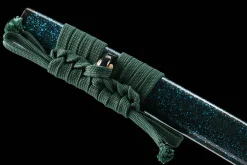
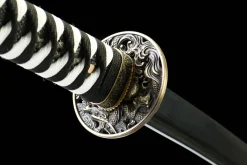
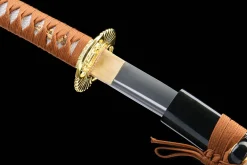
The antiqued copper (做旧铜装) fittings — tsuba, fuchi, and kashira — are treated to a deliberate patina that suggests age and heritage without being kitsch. Copper is a step above iron in visual warmth and workability, and its golden-amber tones complement the ink-and-gold patterning of the Damascus blade perfectly. The same and cotton ito handle wrap maintains the traditional feel, while the high-gloss lacquered hardwood saya completes a sword that belongs on a stand — but is fully capable of more.
Perfect For
- Advanced collectors seeking a clay-tempered Damascus katana with a genuine, visible hamon as the centerpiece of a serious sword collection
- Intermediate to advanced martial artists who want functional differential-hardened steel without sacrificing collector-grade aesthetics
- Gift buyers marking a significant occasion — milestone birthday, achievement, or wedding — for someone with a deep appreciation for blade artistry
Care & Maintenance
Damascus steel’s layered structure means the etched or polished pattern can be affected by harsh chemicals and prolonged moisture exposure — always wipe the blade dry immediately after handling and apply camellia oil with a soft cotton cloth, working with the grain direction. The hamon area where hard and soft steel meet is particularly sensitive to localized rust if moisture is trapped there; inspect this zone carefully during monthly oiling. Avoid petroleum-based oils, which can discolor the Damascus pattern over time.
Frequently Asked Questions
What is Damascus steel and how is it made for a katana?
Damascus steel — also called pattern-welded steel — is created by forge-welding multiple layers of high and low carbon steel together, then folding and twisting the billet repeatedly. This process creates distinctive flowing surface patterns visible after acid etching. The Golden Ink Feather uses a tri-color Damascus finish, where different steels produce contrasting light and dark layers. Beyond aesthetics, the layered construction can enhance toughness by distributing stress across multiple steel types.
What is clay tempering and does the Golden Ink Feather have a real hamon?
Clay tempering (土置き焼き入れ) involves coating the blade’s spine with an insulating clay mixture before quenching, causing the edge to cool faster and harden to a higher degree than the spine. This differential hardening creates a genuine hamon — the wavy temper line visible along the blade. The Golden Ink Feather undergoes authentic clay tempering, producing a real hamon rather than a cosmetic acid-etched imitation, making it one of the most technically accomplished swords at its price point.
Is the Golden Ink Feather battle ready, or is it primarily a display piece?
The Golden Ink Feather is both battle ready and display worthy. Its clay-tempered Damascus steel blade provides functional differential hardness — a hard cutting edge with a tougher spine — making it genuinely capable of tameshigiri and cutting practice. The copper fittings, genuine rayskin same, and cotton ito wrap meet the standards of a serious functional sword. However, its rare tri-color Damascus patterning and aged (做旧) aesthetic also make it a compelling collector’s display piece.
Why does the Golden Ink Feather use copper fittings instead of iron or brass?
The Golden Ink Feather features copper fittings — tsuba, fuchi, and kashira — which offer several advantages. Copper is softer than iron, allowing for finer decorative detail in casting, and it develops a warm natural patina that complements the aged (做旧) aesthetic of this sword. Copper fittings are also a step above zinc alloy in quality and authenticity. Combined with the Damascus blade and clay tempering, copper fittings signal that this is a premium, craft-oriented katana rather than a production piece.
Is $400 a fair price for a clay-tempered Damascus katana like the Golden Ink Feather?
Yes — $400 is competitive for a katana combining genuine clay tempering, pattern-welded Damascus steel with a tri-color finish, copper fittings, genuine rayskin wrap, and a hardwood lacquer sheath. Comparable swords from other reputable makers typically start at $350-$500 for clay tempered blades alone. The added Damascus patterning and aged artistic finish make the Golden Ink Feather exceptional value at the top of the premium tier, bridging the gap between production swords and entry-level custom work.
| Weight | 1.32 lbs |
|---|---|
| Dimensions | 102.0 × 3.2 × 0.7 in |
| Sword Type | Katana |
| Blade Steel | Damascus Steel |
| Total Length | 102.0 cm |
| Blade Length | 72.0 cm |
| Heat Treatment | Clay Tempering (Differential Hardening) |
| Handle Wrap | Cotton Ito + Genuine Rayskin |
| Sheath Material | Hardwood (High-Gloss Lacquer) |
| Fittings | Copper |
| Forging Style | 鎬造 |
Related products


Damascus Steel
1065 Carbon Steel

1045 Carbon Steel
1045 Carbon Steel
White Celestial – Hand Forged 1045 Carbon Steel Katana Sword
Carbon Steel


1065 Carbon Steel

1045 Carbon Steel