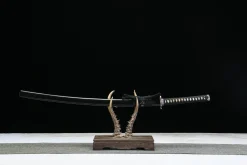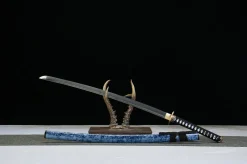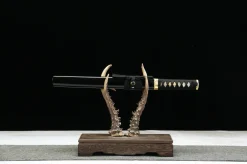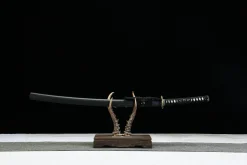




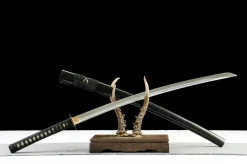
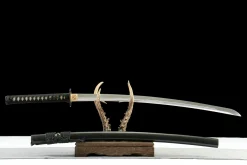


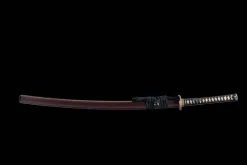
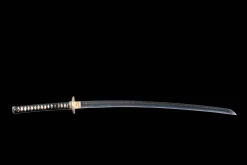







Golden Plume – Hand Forged T10 Tool Steel Wakizashi Sword
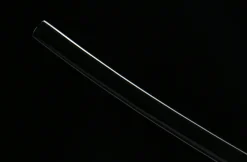
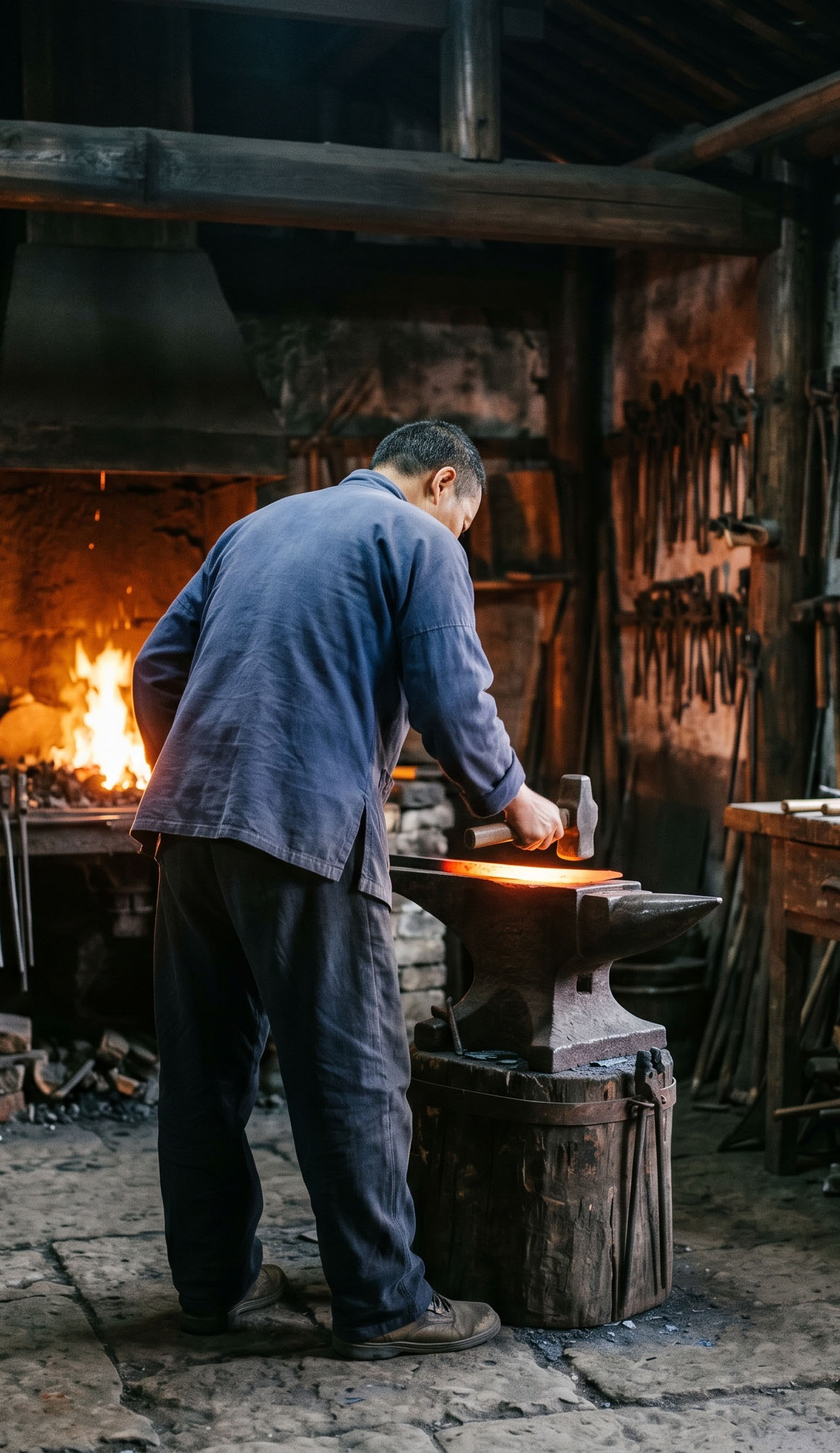
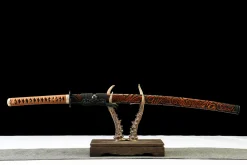
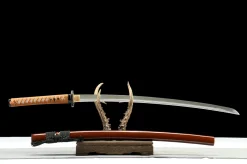
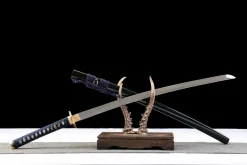
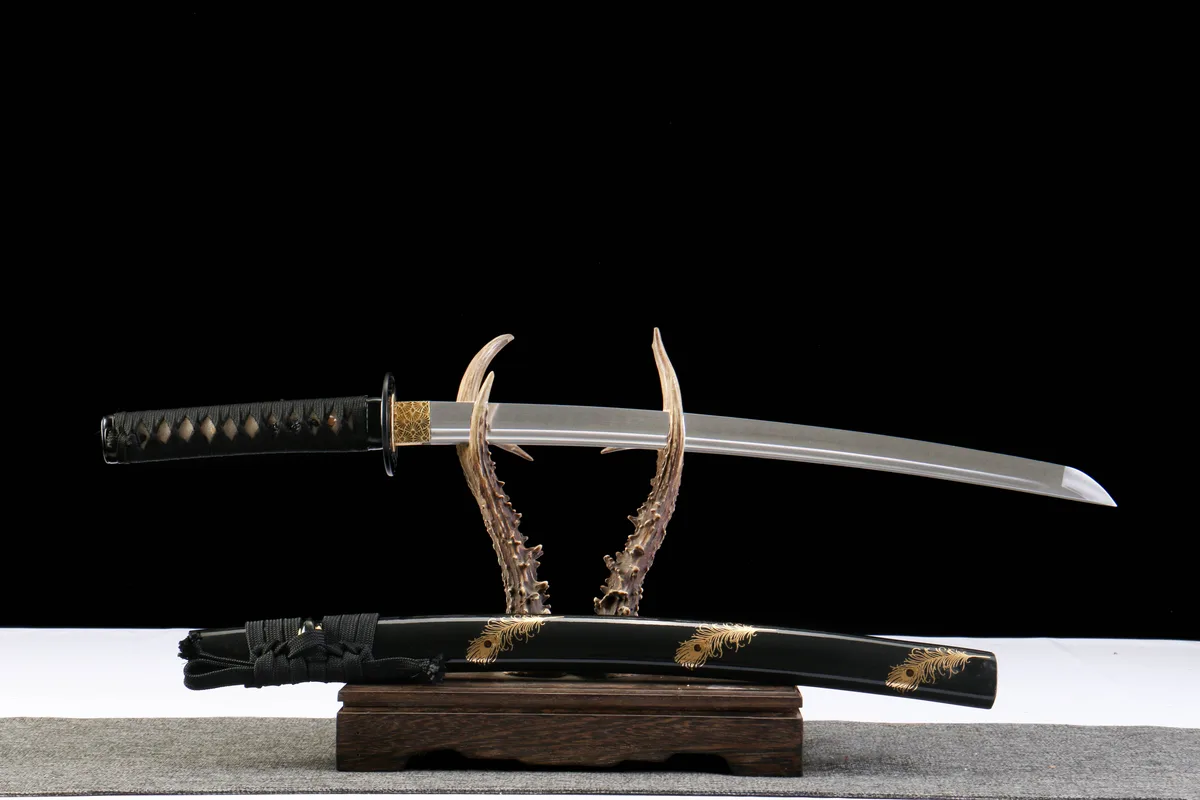
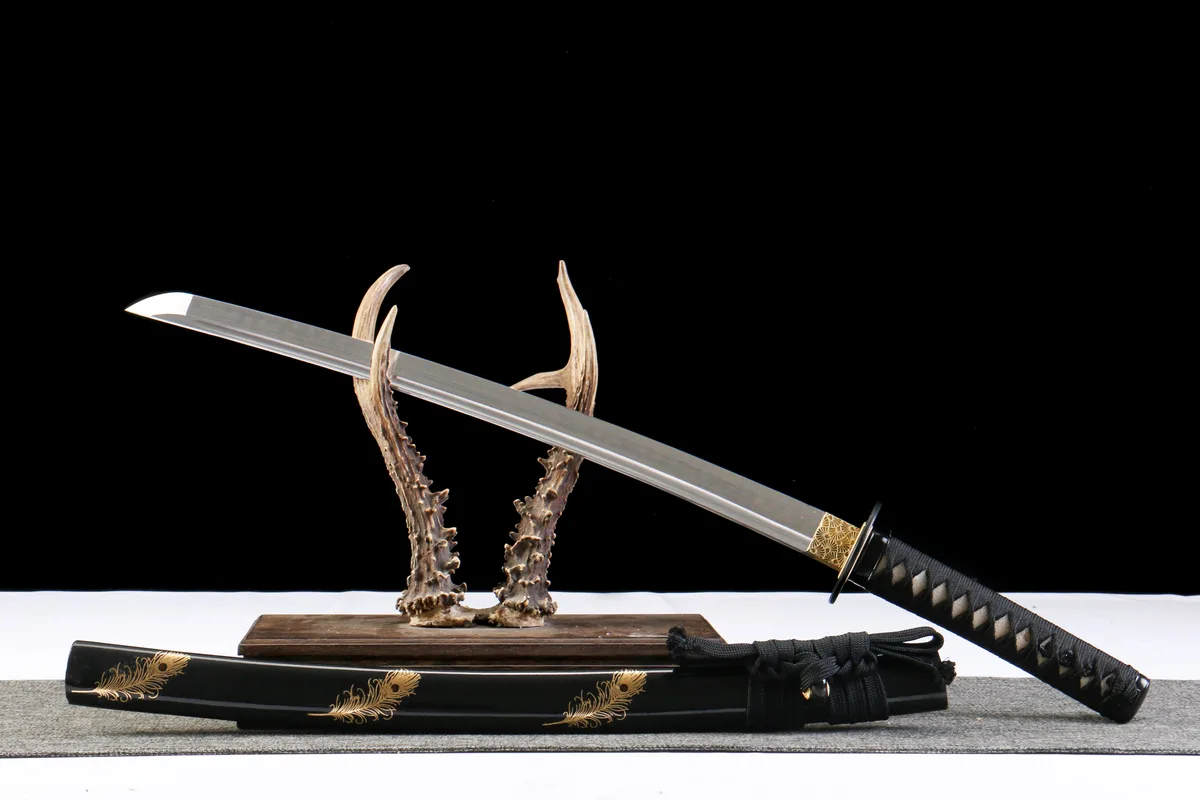
Hand-forged T10 Tool Steel wakizashi (78cm total / 52cm blade), crafted in Longquan. Clay-tempered blade with a genuine hamon line — visible contrast between hardened edge and soft spine.
$409.99
Golden Plume – Hand Forged T10 Tool Steel Wakizashi Sword
The wakizashi is the shorter companion sword of the traditional Japanese daisho (paired sword set), and it has always had its own distinct identity – faster in close quarters, more versatile in tight environments, and in the hands of a serious practitioner, every bit as demanding of quality as the katana it accompanies. The Golden Plume is a clay-tempered T10 wakizashi in shinogi-zukuri geometry, and what distinguishes it among blades of its class is the “kin-ha” (golden plume) hamon character – a particular pattern of nie and nioi activity that, in ideal lighting, appears to burn along the transition zone like a feathered flame suspended in the steel.
Specifications
| Blade Steel | T10 High Speed Tool Steel |
| Total Length | 78.0 cm / 30.7 in |
| Blade Length | 52.0 cm / 20.5 in |
| Blade Width | 3.2 cm |
| Blade Thickness | 0.7 cm |
| Weight | 840 g / 29.6 oz |
| Heat Treatment | Clay Tempering (Differential Hardening) |
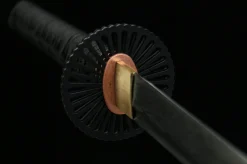
| Fittings | Iron |
| Handle | Cotton Ito + Genuine Rayskin |
| Sheath | Hardwood, High-Gloss Lacquer |
Steel & Construction
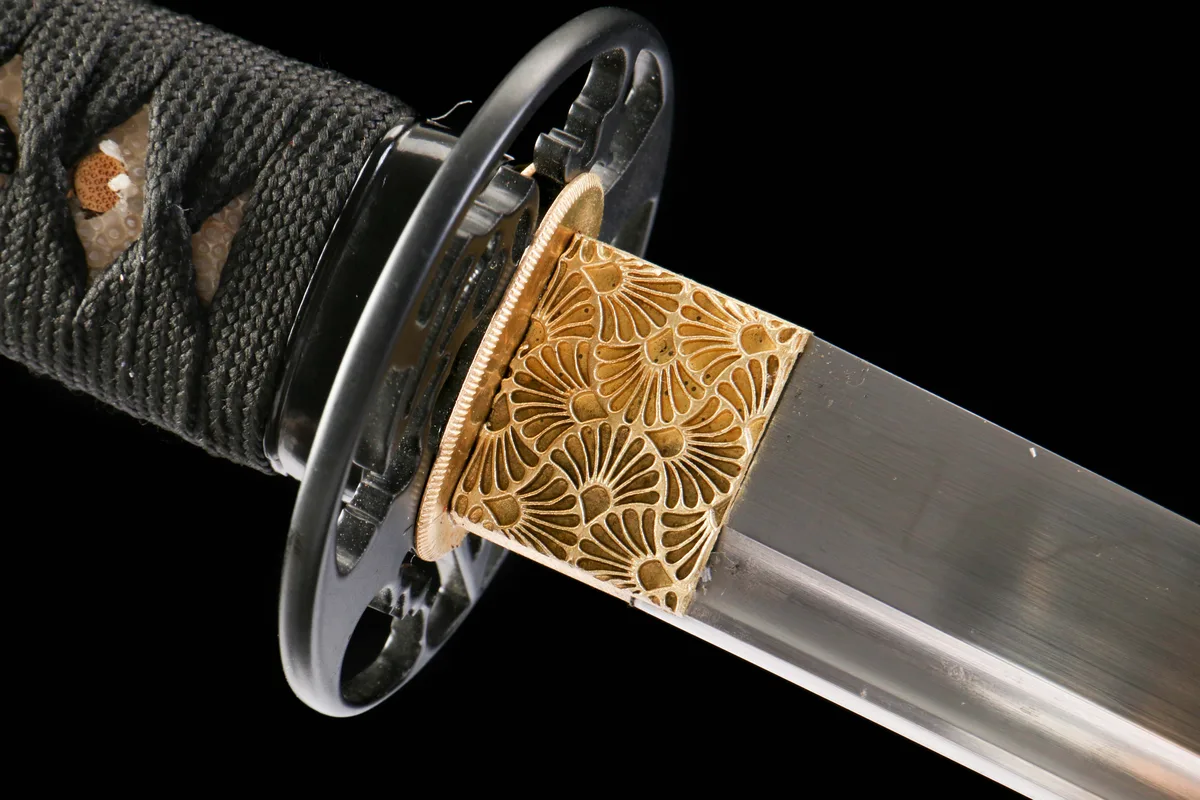
T10 tool steel carries a tungsten microaddition that standard high-carbon steels do not, and under clay tempering it behaves differently – producing nie (the fine crystalline martensite granules visible at the hamon border) with particular density and clarity. On a shorter blade like this wakizashi, the hamon occupies a proportionally more commanding visual presence than it would on a 72 cm katana blade. The transition zone between the hard ha (edge) and the tougher mune (spine) is compressed into 52 cm, which means the entire character of the hamon – its undulations, its ashi (short projections from the hamon line toward the edge), its areas of concentrated nie – can be read in a single glance from kissaki (tip) to habaki (blade collar). The golden character described in the name refers to the optical quality of the hamon under raking light: a particular density of nie activity that catches warm-spectrum illumination and appears to glow with a distinctly amber quality, unlike the cooler white of a less active temper line.
The shinogi-zukuri (ridge-line) profile is executed at full 3.2 cm width – broad for a wakizashi – giving this blade a presence that reads as authoritative rather than delicate. The iron fittings are kept dark and understated, which is the correct choice: anything that competed with the hamon here would be a distraction.
Handling
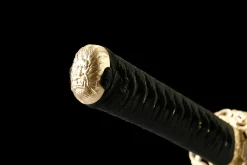
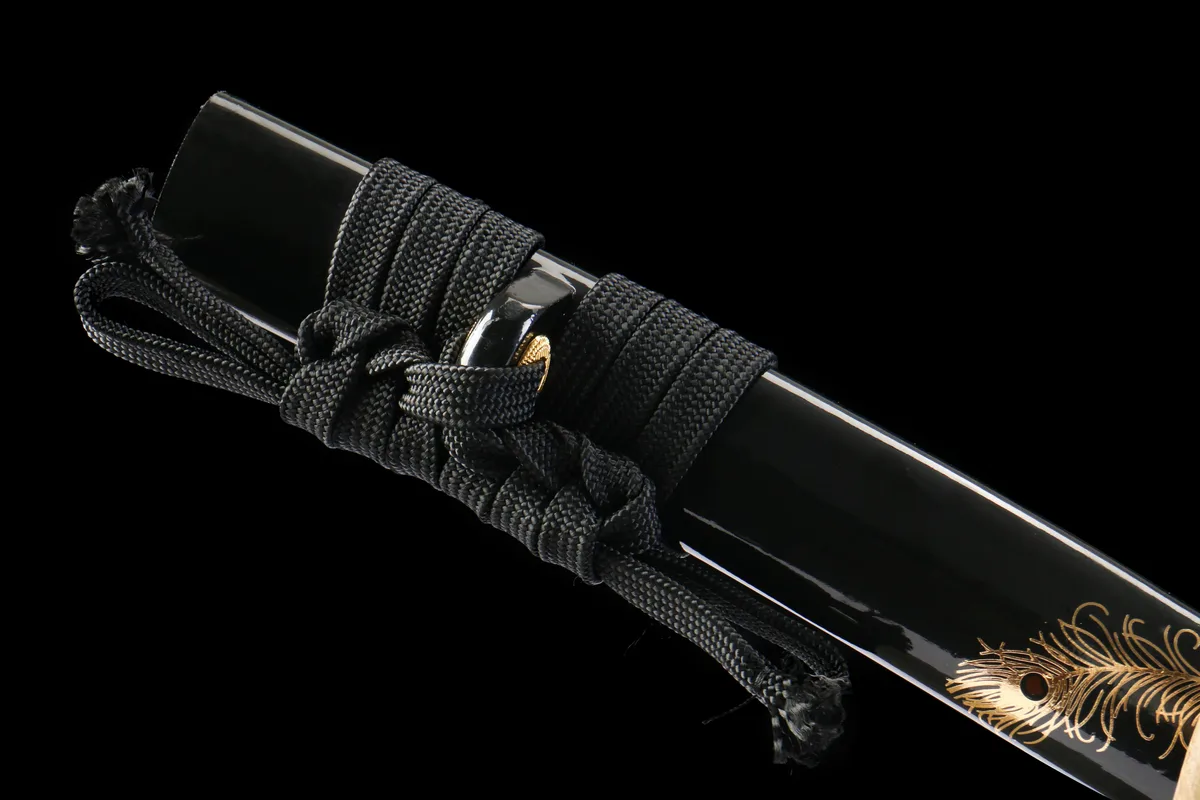
At 78 cm overall with a 22 cm tsuka (handle), the Golden Plume sits at the upper range of standard wakizashi sizing – long enough to require a deliberate two-handed draw, short enough to be completely responsive in single-hand use once cleared from the saya. The genuine rayskin (same) under the cotton ito wrap provides a tactile reference point at every diamond opening – you can reacquire your grip position by feel alone without looking down. The high-gloss lacquered hardwood saya presents the blade cleanly; the koiguchi (sheath mouth) is fitted to a precise tolerance that holds the blade secure in the horizontal position without requiring the habaki to be forced past it.
Care Instructions
After handling, remove fingerprint oils with a clean, soft cloth before they have time to initiate surface oxidation – T10’s high carbon content makes it more reactive to prolonged moisture contact than lower-carbon steels. Apply choji oil (traditional clove-mineral blade oil) in a thin, even layer using a nuguigami (rice paper wiping cloth) or equivalent lint-free material. Inspect the habaki and the area immediately below it periodically, as this zone is prone to moisture accumulation where the saya mouth contacts the blade.
| Weight | 1.12 lbs |
|---|---|
| Dimensions | 78.0 × 3.2 × 0.7 in |
| Hamon | Real Hamon (Clay Tempered) |
| Blade Steel | T10 Tool Steel |
| Total Length | 78.0 cm |
| Blade Length | 52.0 cm |
| Heat Treatment | Clay Tempering (Differential Hardening) |
| Handle Wrap | Cotton Ito + Genuine Rayskin |
| Sheath Material | Hardwood (High-Gloss Lacquer) |
| Fittings | Iron |
| Forging Style | 鎬造 |
Related products