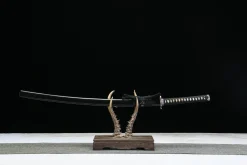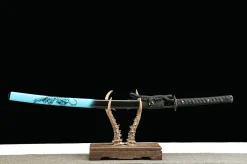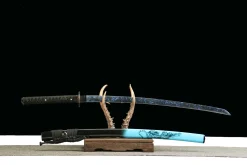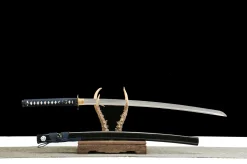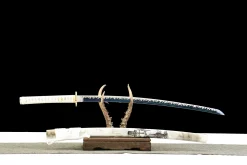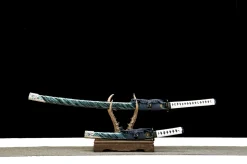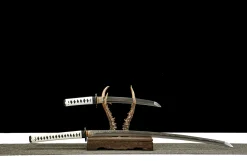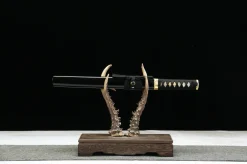

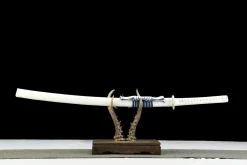

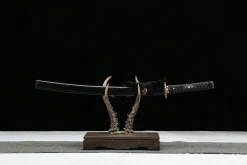

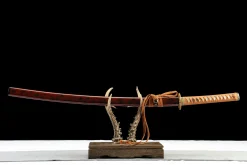

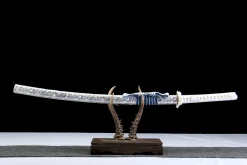





Golden Wind – Hand Forged 1065 Carbon Steel Katana Sword
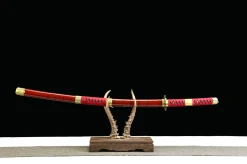
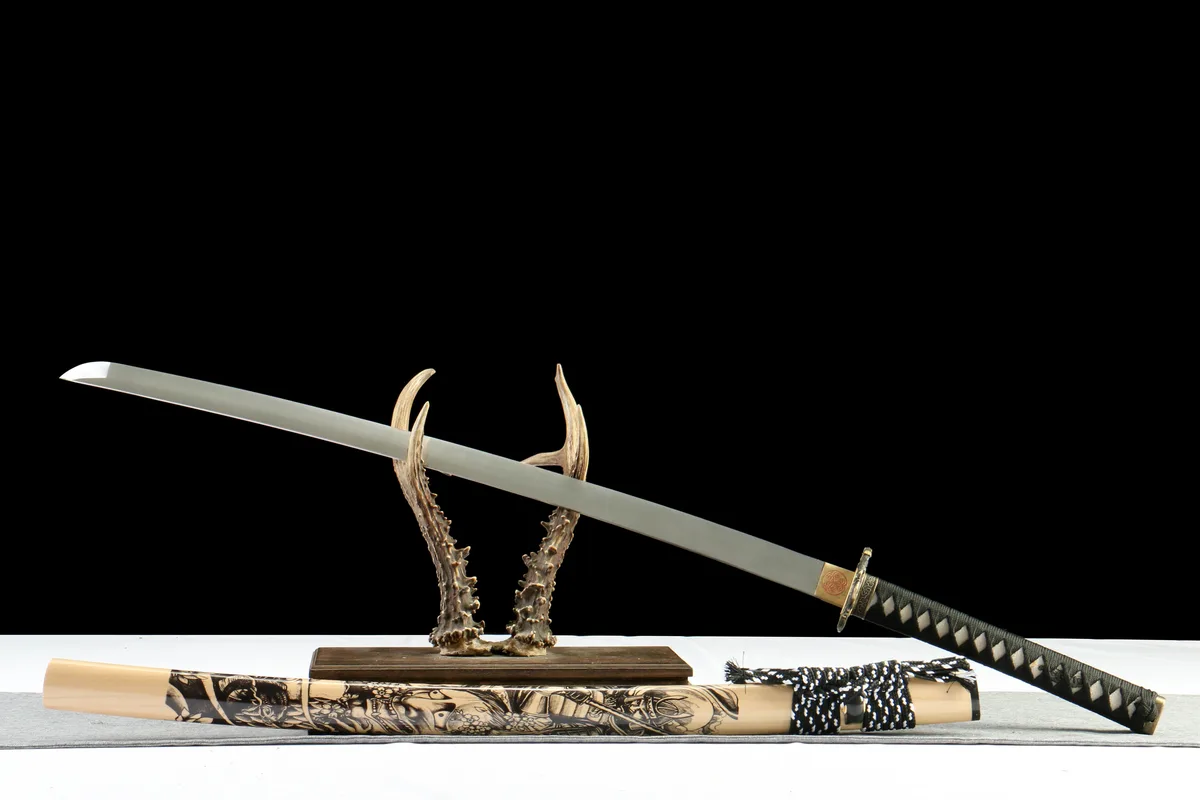
Hand-forged 1065 Carbon Steel katana (102cm total / 72cm blade), crafted in Longquan. Full-tang construction with traditional fittings and hand-lacquered saya.
$279.99
Golden Wind – Hand Forged 1065 Carbon Steel Katana Sword
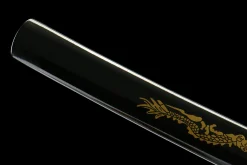
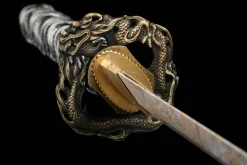
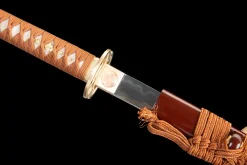
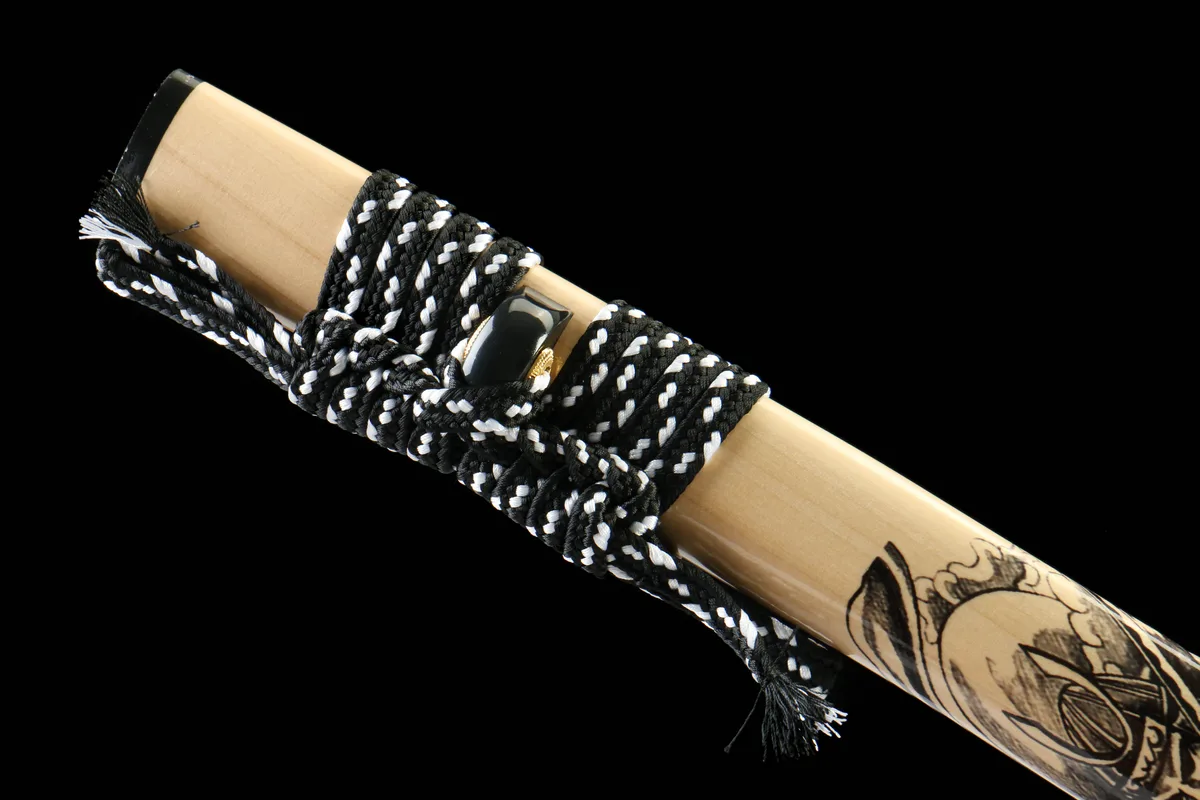
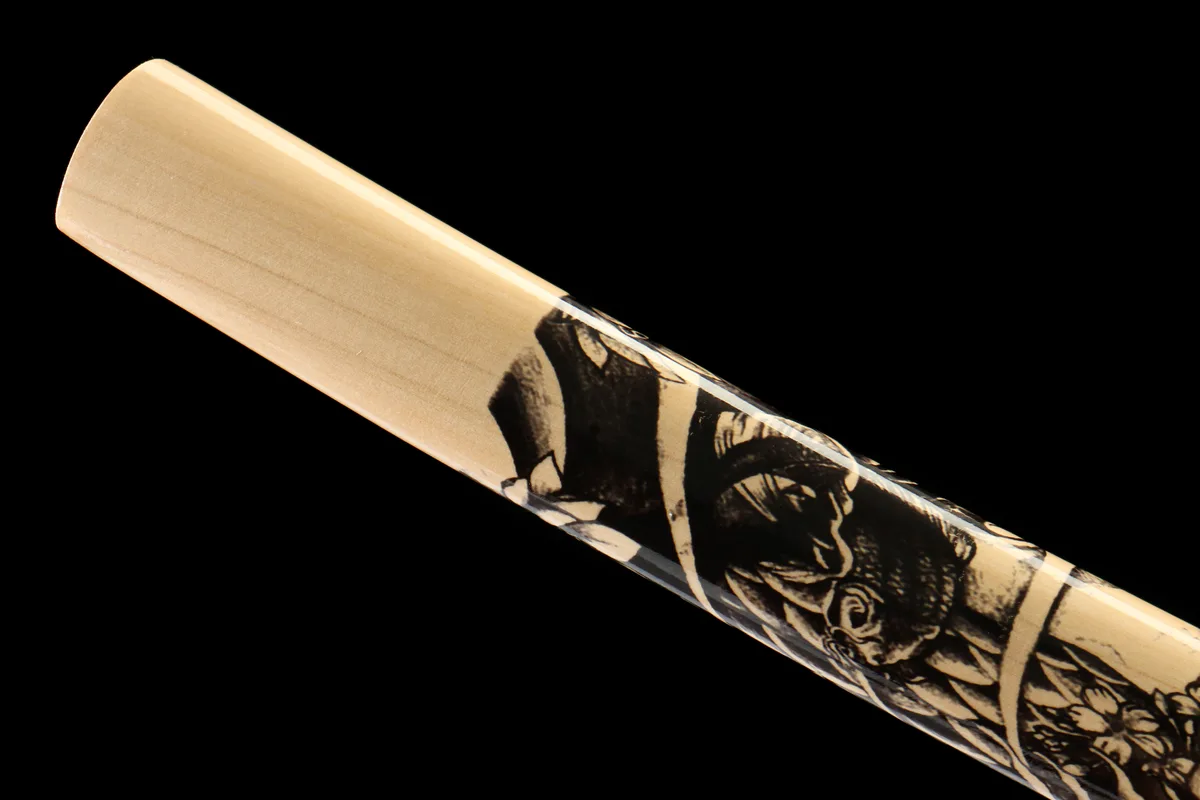
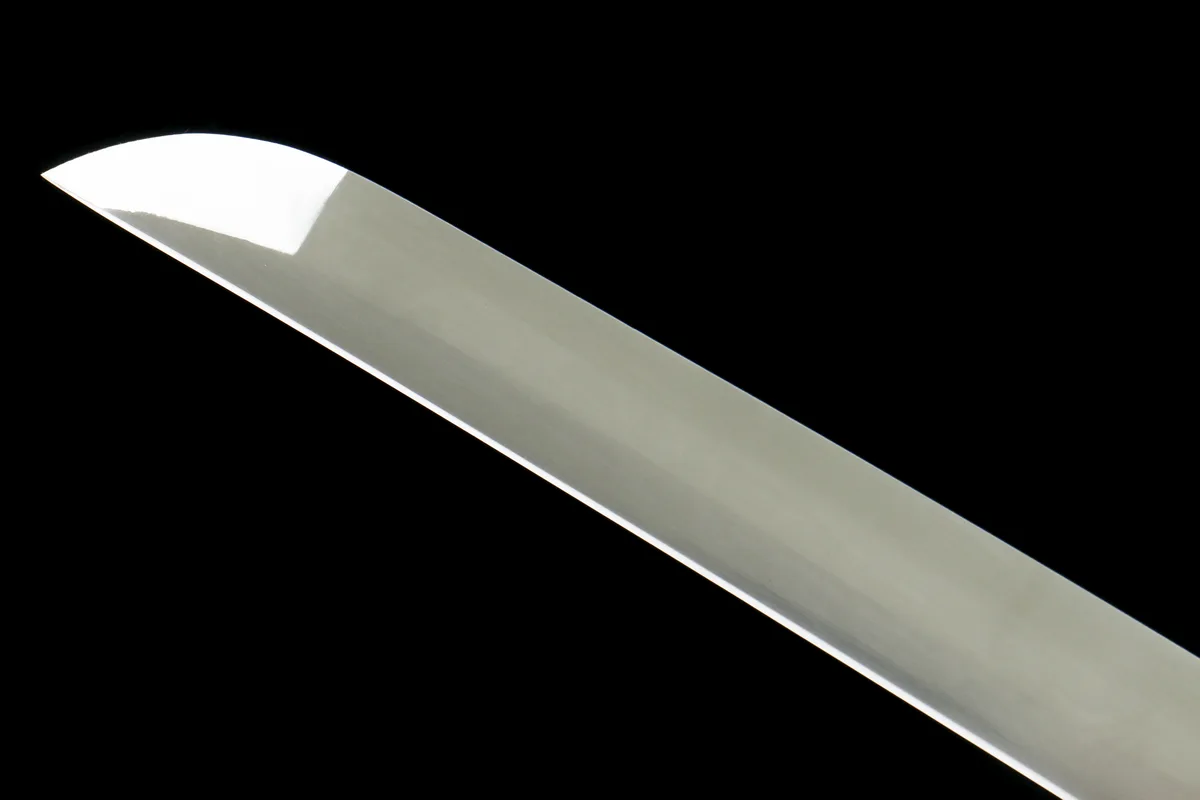
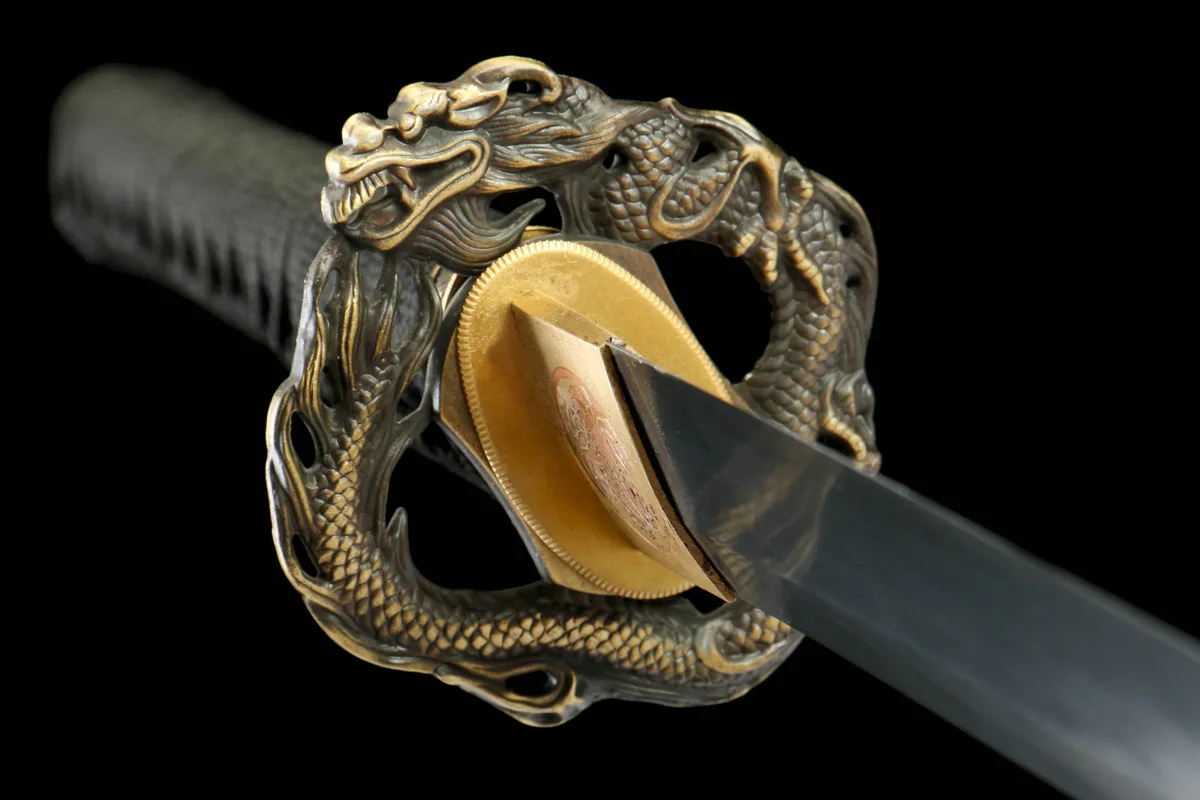
The copper fittings on Golden Wind are not a cosmetic upgrade – copper is harder than zinc alloy, resists corrosion more reliably, and ages differently: where zinc patinas gray and dull, copper develops a warm oxidized surface that deepens over years of handling. Combined with the natural hardwood saya and the dragon motif worked into the fittings, the Golden Wind presents a coherent material statement from tip to pommel. The blade behind those fittings is 72 cm of 1065 high carbon steel in shinogi-zukuri profile, isothermal heat-treated to perform without apology.
Specifications
| Blade Steel | 1065 High Carbon Steel |
| Total Length | 102.0 cm / 40.2 in |
| Blade Length | 72.0 cm / 28.3 in |
| Blade Width | 3.2 cm |
| Blade Thickness | 0.7 cm |
| Weight | 1040 g / 36.7 oz |
| Heat Treatment | Muffle Furnace Isothermal Heat Treatment |
| Fittings | Copper |
| Handle | Cotton Ito + Genuine Rayskin |
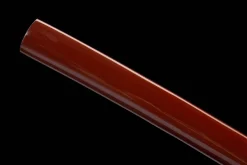
| Sheath | Hardwood (High-Gloss Lacquer) |
What the Steel Does
1065 high carbon steel is the steel of choice when reliability across a wide range of conditions matters more than chasing the upper edge of hardness. At approximately 0.65% carbon, it hardens to a range that sustains a sharp, working edge under repetitive use, while retaining the ductility to handle stress without microchipping. The muffle furnace isothermal heat treatment process treats every blade in a sealed, controlled atmosphere – no oxygen contact during the critical heating phase, no surface decarburization, no guesswork in the temperature or duration of the hold. The heat treatment on every Golden Wind blade hits the same target, not an approximation of it.
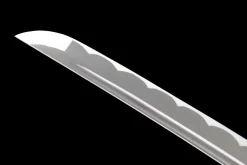
The shinogi-zukuri (ridgeline) forging profile is the structural backbone of the blade. The raised ridge running from the base toward the tip along the blade flat divides the cross-section into a thick, rigid spine section and a thin, acute edge geometry. This is not a modern engineering decision – it is the profile that Japanese bladesmiths refined over centuries precisely because it achieves the combination of edge sharpness and spine rigidity that a working katana requires. At 3.2 cm wide and 0.7 cm thick at the spine, Golden Wind sits within the proportions where that geometry performs at its intended specification.
The Feel of It
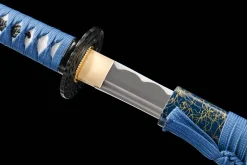
Copper fittings change the character of the sword in the hand in a way that is immediately tangible – the tsuba (hand guard) and habaki (blade collar) sit denser and more solid at the transition point between handle and blade than zinc alloy equivalents, and that solidity communicates through the grip during use. The 26 cm handle wrapped in cotton ito over genuine rayskin gives both hands firm, defined purchase, the rayskin’s nodular surface preventing any slip or rotation under load. The lacquered hardwood saya draws cleanly, the koiguchi (sheath mouth) seated tightly enough to hold the blade through movement but releasing immediately on an intentional draw without resistance that would compromise the motion.
Maintenance Notes
Wipe the blade with a clean cloth after each session to remove oils and moisture before they initiate surface oxidation on the carbon steel. Apply a thin coat of choji oil (traditional clove-based Japanese blade oil) before storage, particularly in humid environments or during months of infrequent use. The copper fittings will develop a natural patina over time – this is normal and does not require treatment, but if you prefer to maintain the original finish, a light application of copper polish followed by a clean wipe will restore the surface without affecting the underlying metal.
| Weight | 1.32 lbs |
|---|---|
| Dimensions | 102.0 × 3.2 × 0.7 in |
| Hamon | Decorative / Acid-Etched |
| Blade Steel | 1065 Carbon Steel |
| Total Length | 102.0 cm |
| Blade Length | 72.0 cm |
| Heat Treatment | 马沸炉 恒温热处理 |
| Handle Wrap | Cotton Ito + Genuine Rayskin |
| Sheath Material | Hardwood (High-Gloss Lacquer) |
| Fittings | Copper |
| Forging Style | Shinogi-Zukuri (Ridgeline) |
Related products