













Heavenly Fire – Hand Forged 1065 Carbon Steel Tanto Sword
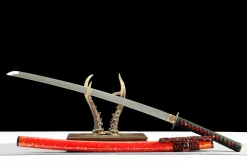
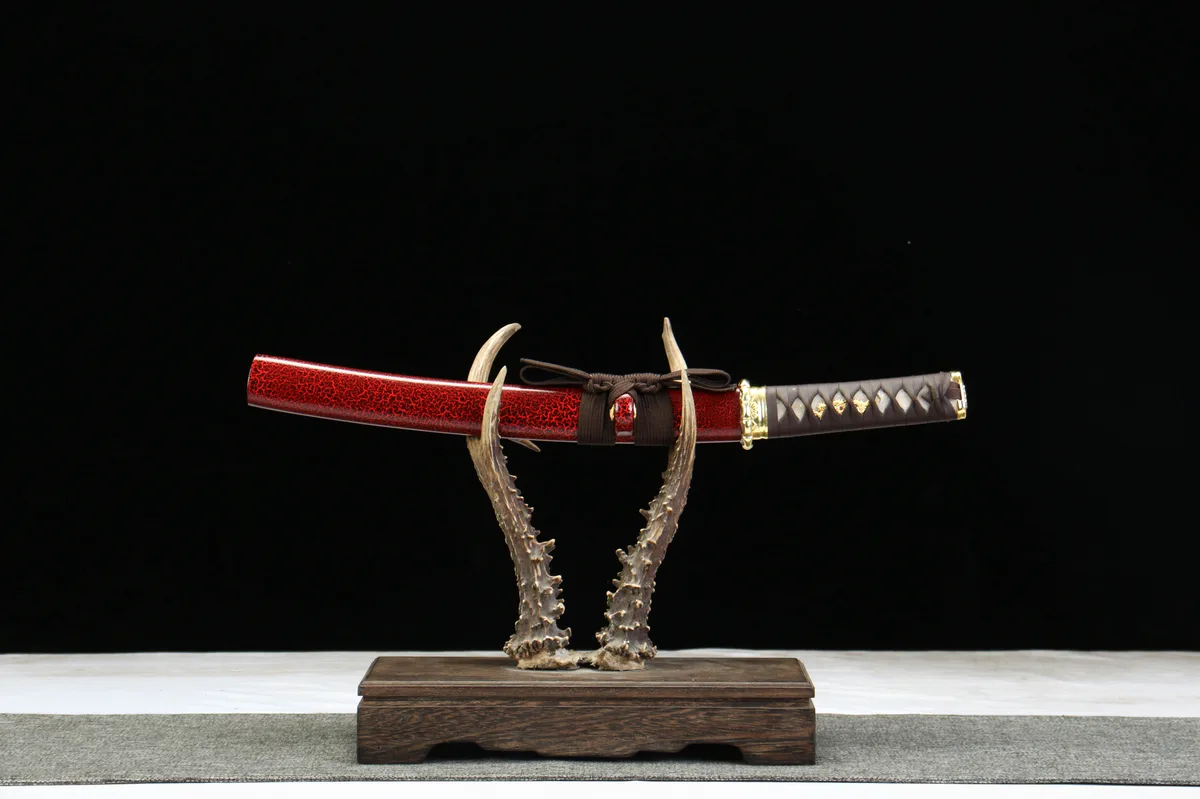
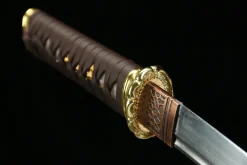
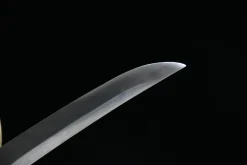
The Heavenly Fire (天火) is a handcrafted 1065 high carbon steel tanto — a compact, purpose-built blade whose 32 cm cutting edge and shinogi-zukuri ridgeline geometry make it one of the most capable short blades in the Longquan mid-range. At just $130, this tanto delivers the no-nonsense reliability of 1065 steel in a form factor historically carried as both a close-quarters weapon and a tool of ceremony by Japan’s warrior class. Small in size, absolute in intent.
Specifications
| Blade Steel | 1065 High Carbon Steel |
| Total Length | 52.5 cm / 20.7 inches |
| Blade Length | 32.0 cm / 12.6 inches |
| Blade Width | 3.2 cm |
| Weight | 500 g / 17.6 oz (net) |
| Heat Treatment | Oil Quench & Temper |
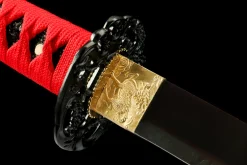
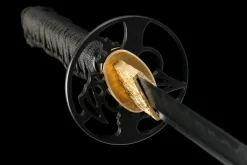
| Fittings | Zinc Alloy |
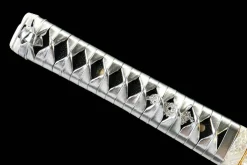
| Handle | Cotton Ito Wrap |
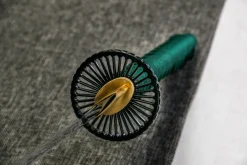
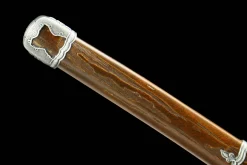
| Sheath | Green Bark Wood (Aohada) |
Craftsmanship & Materials
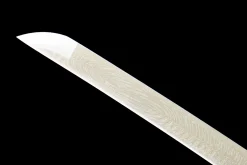
1065 high carbon steel sits at the practical, proven center of the sword-making carbon spectrum — with approximately 0.65% carbon content, it achieves a hardness after heat treatment that holds a keen working edge while retaining enough internal toughness to resist the shock loads that a tanto, used correctly, must absorb. The oil quench and temper process applied to the Heavenly Fire takes the blade from critical temperature into quenching oil rapidly, locking in the martensitic crystal structure that defines hardness, then draws back just enough brittleness through controlled reheating (tempering) to produce a blade that is hard, sharp, and durable rather than glass-hard and fragile.
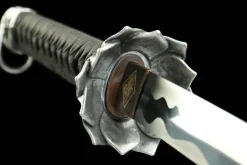
The shinogi-zukuri profile — the ridgeline geometry most associated with full-length katana — is less common on tanto but historically significant. A ridgeline tanto presents more blade geometry to a cut than a flat-ground hira-zukuri tanto, creating a blade that excels in both slicing and thrusting applications. At 3.2 cm wide and 0.7 cm thick at the spine, the Heavenly Fire is a substantial short blade — not a delicate display piece but a compact cutting instrument with real presence in the hand.
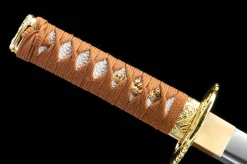
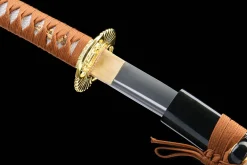
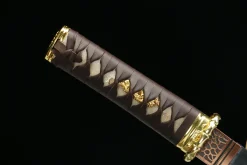
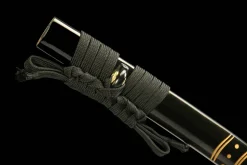
The green aohada bark wood saya provides a natural, textured grip surface that complements the cotton ito wrap on the tsuka. While the zinc alloy fittings are appropriately priced for this tier, they are well-finished and provide clean lines that give the Heavenly Fire a more composed visual profile than its modest price suggests. At 500 g net, this tanto is light enough for extended handling without fatigue.
Perfect For
- Beginners exploring Japanese blade forms who want to start with a tanto before investing in a full-length katana
- Iaido and ninjutsu practitioners who incorporate tanto kata into their training and need a functional, affordable practice blade
- Collectors building a complete daisho-adjacent set seeking a quality short blade companion to a katana or wakizashi
Care & Maintenance
1065 carbon steel is straightforward to maintain but responds quickly to neglect — wipe the blade clean and apply a light coat of camellia or mineral oil after every use or handling session to prevent surface rust. Because tanto are often handled more frequently than display katana, establish a consistent oiling habit from the first day of ownership. The cotton ito wrap can be tightened or re-wrapped if it loosens over time; a correctly tensioned wrap is essential for safe, controlled handling of this compact and potent blade.
Frequently Asked Questions
What is 1065 high carbon steel and is it good for a tanto?
1065 is a high-carbon steel containing approximately 0.65% carbon, placing it in the mid-to-high range for edge retention and hardness while retaining reasonable toughness. It is a well-established choice for functional Japanese-style blades, easier to sharpen than higher-carbon steels, and resistant to brittleness. In the Heavenly Fire tanto, 1065 provides a reliable, sharp, and durable blade that handles cutting tasks well and suits practitioners at beginner to intermediate levels.
What is a tanto and how is it different from a katana?
A tanto is a traditional Japanese short blade, historically worn by samurai as a close-quarters weapon and utility tool. Unlike a katana (typically 60–75 cm blade length), the tanto has a blade of approximately 15–30 cm. The Heavenly Fire tanto features a 32 cm blade with a shinogi-zukuri ridgeline profile — the same angular geometry used on full-sized katanas — giving it a strong spine and sharp cutting edge rather than the flat grind of utility knives.
Is the Heavenly Fire tanto battle ready and functional?
Yes. The Heavenly Fire is a fully functional tanto, not a display piece. Its 1065 high-carbon steel blade, oil quench heat treatment, and shinogi-zukuri construction produce a genuinely sharp, usable blade capable of real cutting. At 500g net weight, it is well-balanced for a short blade. Cotton ito handle wrap provides secure grip during use. The zinc alloy fittings are adequate for a $130 price point, though they are the component most likely to show wear under heavy repeated use.
What is shinogi-zukuri geometry on the Heavenly Fire tanto?
Shinogi-zukuri refers to a blade profile featuring a distinct longitudinal ridge (shinogi) running along the blade, creating a beveled flat (shinogi-ji) between the ridge and the spine. This geometry, more commonly associated with katanas, gives the Heavenly Fire tanto a stronger, more rigid cross-section than a flat-ground blade. It allows a thinner, sharper edge while maintaining spine thickness for durability — making the Heavenly Fire a more refined, performance-oriented tanto than simpler flat-ground alternatives.
Is $130 a good value for the Heavenly Fire tanto compared to buying a katana?
At $130, the Heavenly Fire tanto offers strong value for buyers specifically seeking a functional Japanese short blade. Compared to a similarly priced katana, you get equivalent construction quality — 1065 steel, oil quench, cotton ito — in a compact, easier-to-handle format. Tanto are ideal for smaller display spaces, collectors building a matched set, or practitioners studying short-blade techniques. If your priority is cutting practice or martial arts training, a katana offers more versatility, but the tanto excels for its specialized purpose.
| Weight | 0.7 lbs |
|---|---|
| Dimensions | 52.5 × 3.2 × 0.7 in |
| Sword Type | Tanto |
| Blade Steel | 1065 Carbon Steel |
| Total Length | 52.5 cm |
| Blade Length | 32.0 cm |
| Heat Treatment | Oil Quench & Temper |
| Handle Wrap | Cotton Ito Wrap |
| Sheath Material | Green Bark Wood (Aohada) |
| Fittings | Zinc Alloy |
| Forging Style | Shinogi-Zukuri (Ridgeline) |
Related products


Damascus Steel
Crimson Flame (之烽) – Hand Forged Damascus Steel Katana Sword


1065 Carbon Steel

1065 Carbon Steel

1045 Carbon Steel
Black Heaven Feather – Hand Forged 1045 Carbon Steel Katana Sword


1065 Carbon Steel
1065 Carbon Steel