





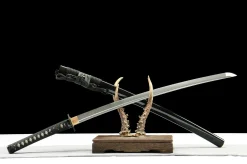

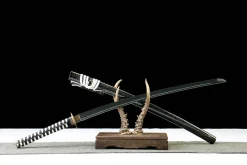















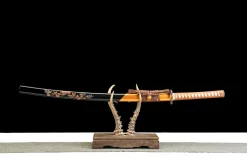
Hollow Blue – Hand Forged 65Mn Spring Steel Katana Sword
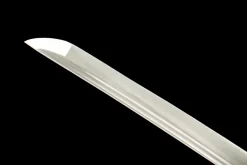
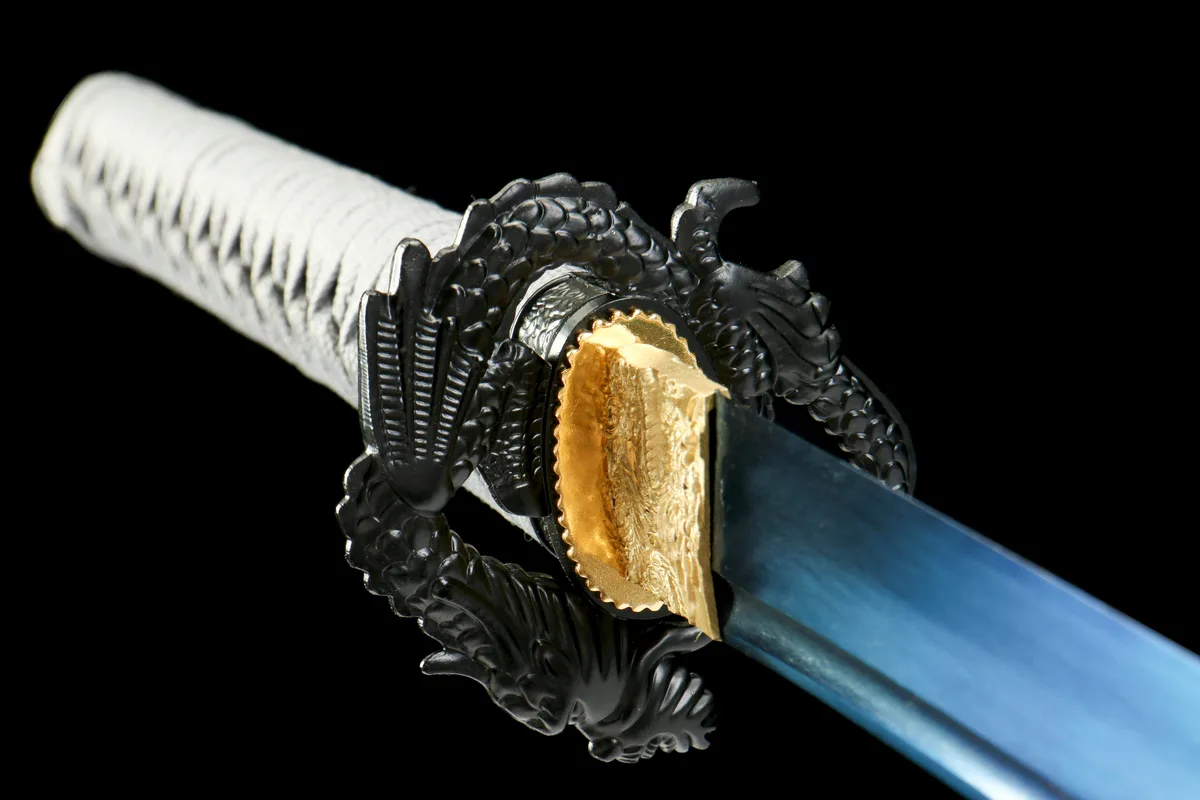
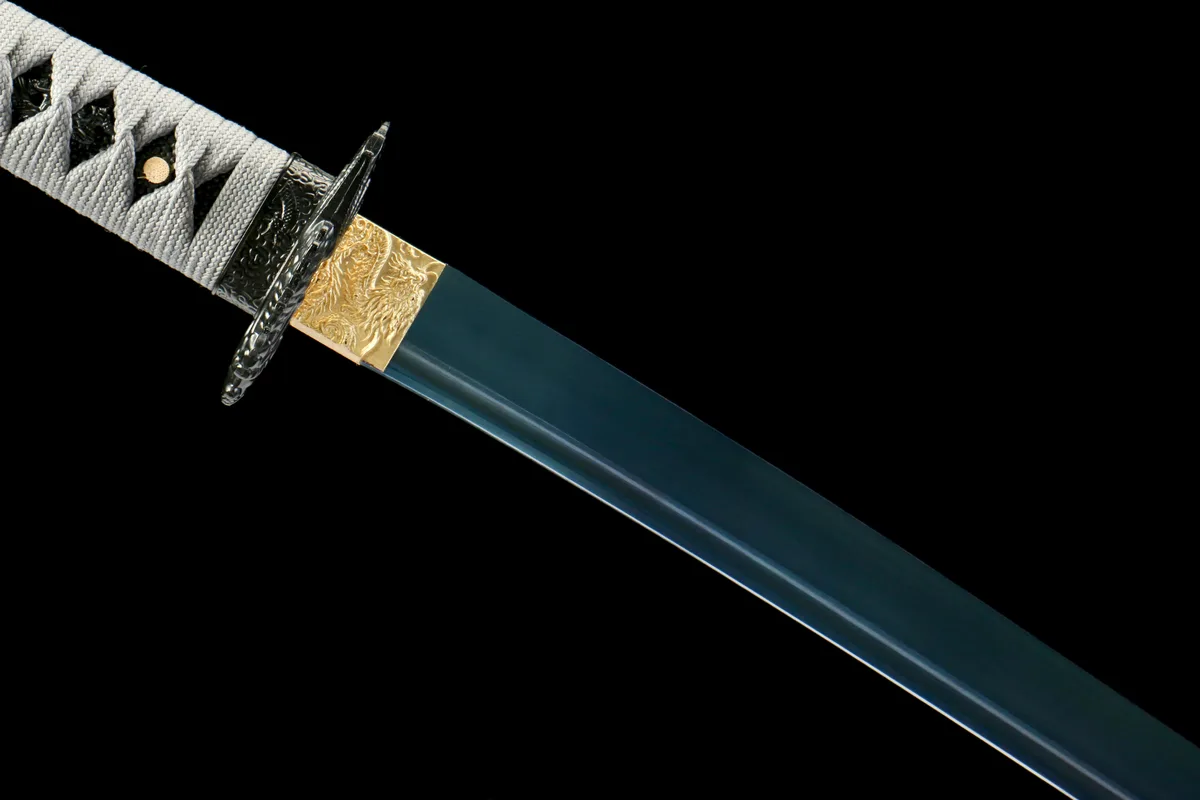
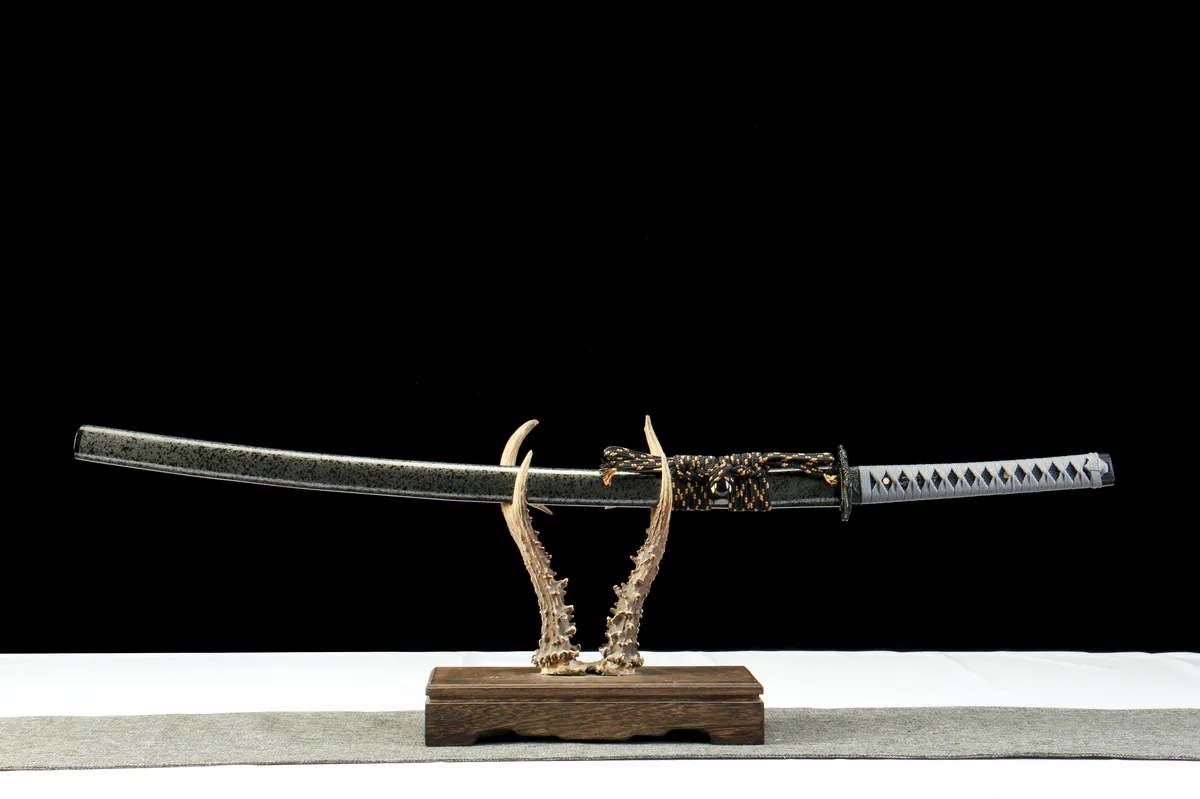
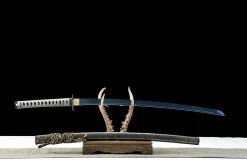
The Hollow Blue (虚蓝) katana takes its name from the quality of sky visible through thin cloud — that luminous, empty azure that feels simultaneously present and infinite — and its 65Mn spring steel blade, finished bright and ground to a clean Shinogi-Zukuri profile, carries exactly that quality of restrained, open beauty. Where its sibling the Crimson Eclipse leans into bold naming and dramatic color associations, the Hollow Blue is defined by stillness: a minimalist aesthetic built around the natural steel surface, a green Aohada saya, and the meditative discipline of daily Iaido practice. At $160, it is a handmade katana for practitioners who value presence over spectacle.
Specifications
| Blade Steel | 65Mn Spring Steel |
| Total Length | 103.0 cm / 40.6 inches |
| Blade Length | 72.0 cm / 28.3 inches |
| Blade Width | 3.2 cm |
| Weight | 950 g / 33.5 oz (net) |
| Heat Treatment | Oil Quench & Temper |
| Fittings | Zinc Alloy |
| Handle | Cotton Ito Wrap |
| Sheath | Green Bark Wood (Aohada) |
Craftsmanship & Materials
65Mn spring steel earns its place in functional swordsmithing through a property that no amount of hardness can substitute: elastic resilience. The high manganese content in this alloy creates a steel that deflects and recovers rather than yielding permanently — a blade that will absorb a misdirected cut or a lateral impact and return to true geometry. For a sword designed around daily Iaido practice, where the draw, cut, chiburi (blade-clearing), and noto (sheathing) cycle is repeated hundreds of times per session, this forgiveness in the material is what keeps a sword in service for years rather than months. The oil quench on the Hollow Blue produces a hardness in the HRC 50–54 range appropriate for functional cutting without turning the blade brittle.
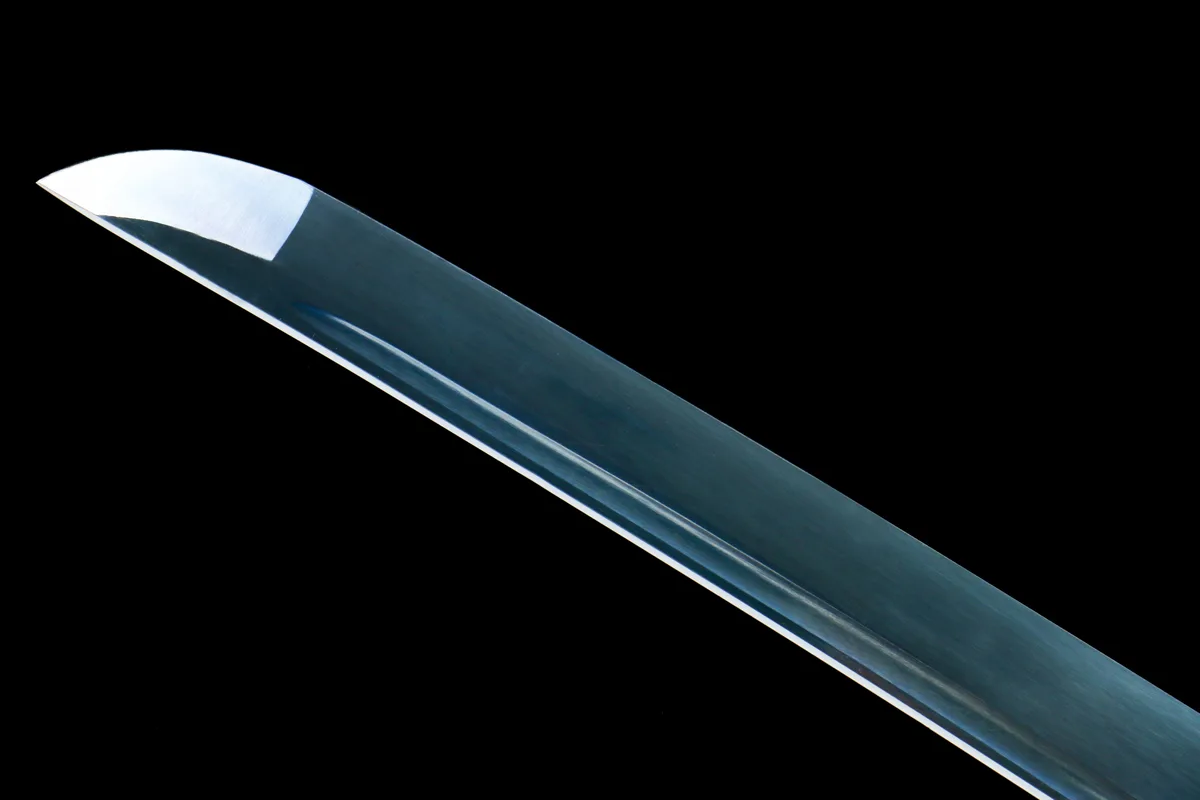
The Shinogi-Zukuri profile of the Hollow Blue has been executed with particular attention to the sword’s balance point. With a 72 cm blade and 27 cm handle in the classical proportions, the total weight distribution resolves to a point of balance that favors neither tip nor guard — the blade “floats” in the hand during extended kata, reducing fatigue during long training sessions. The shinogi ridge itself is crisply defined along the blade’s length, not rounded off by careless grinding, which preserves the structural rigidity the geometry is designed to provide. This attention to geometry over decoration is the Hollow Blue’s defining craftsmanship statement.
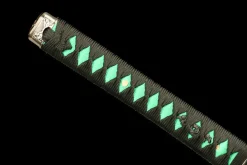
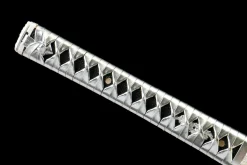
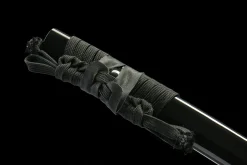
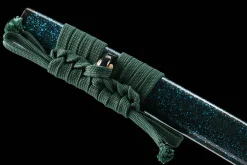
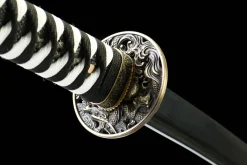
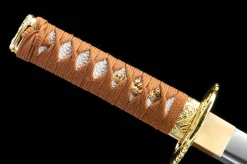
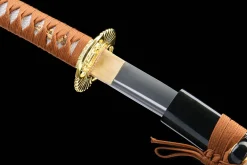
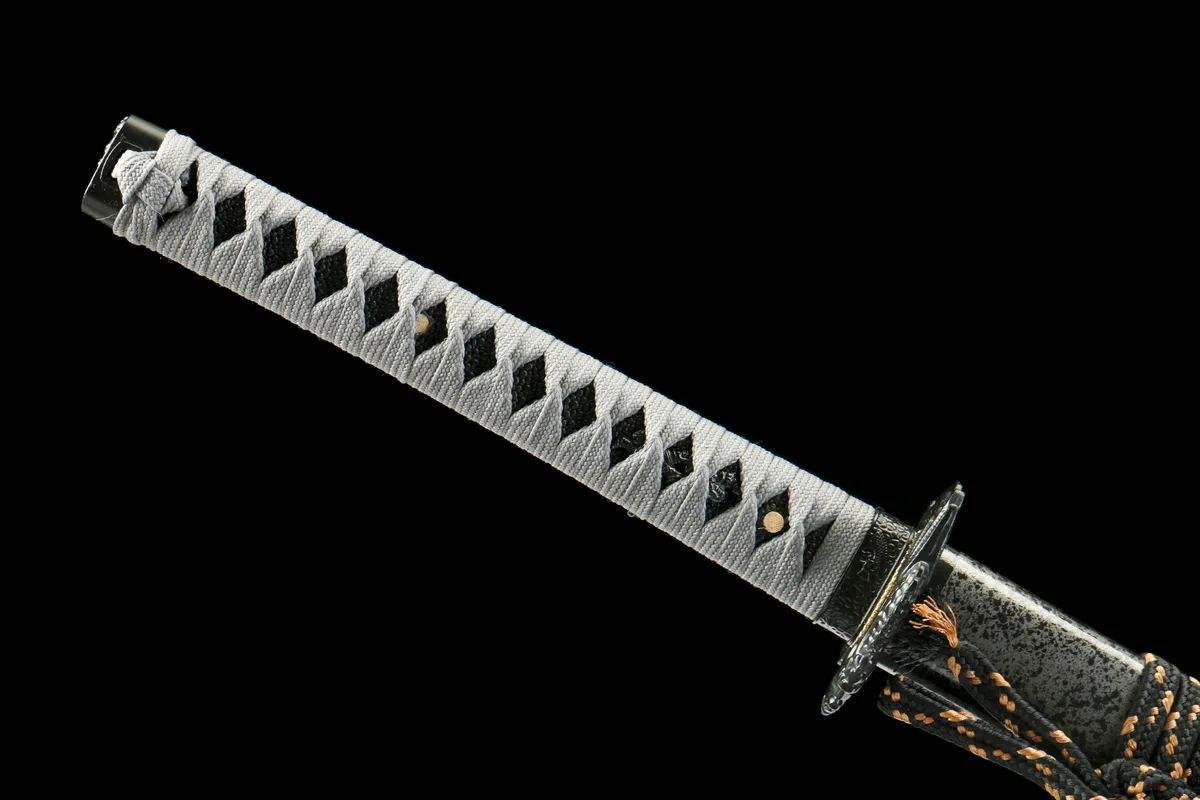
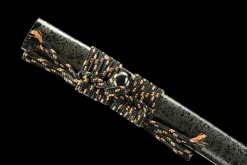
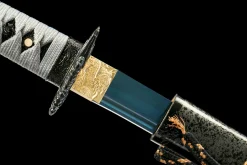
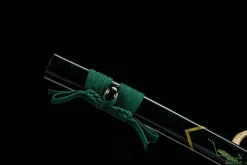
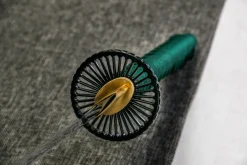
The green Aohada (bark wood) saya is smooth-lacquered inside and out. Aohada is selected for its dimensional stability — it does not swell or shrink dramatically with seasonal humidity changes — which means the Hollow Blue’s fit between blade and saya remains consistent across dojo environments. The cotton ito on the tsuka is wound in the traditional diagonal diamond pattern over a wrapped handle core, providing the purchase needed for both single and two-handed grips without the bulkiness that some synthetic wraps add. The overall presentation is clean, functional, and quietly intentional: a sword that disappears from your mind and becomes an extension of your movement.
Perfect For
- Iaido and Iaijutsu practitioners at all levels: The resilient 65Mn spring steel, balanced geometry, and consistent saya fit make the Hollow Blue an ideal daily practice sword for drawing arts where thousands of repetitions are the norm.
- Minimalist collectors: Those who prefer clean, unornamented aesthetics over elaborate fittings or surface treatments will find the Hollow Blue’s restraint deeply satisfying as a display and handling piece.
- Intermediate students upgrading from a beginner sword: At $160 — a modest step up from entry-level offerings — the Hollow Blue provides meaningfully better spring steel performance and Longquan provenance for the serious student ready to invest in their practice.
Care & Maintenance
65Mn spring steel will oxidize rapidly in humid conditions without a protective oil barrier — establish a habit of wiping the blade with a clean uchiko (powder ball) or soft cloth and applying a thin film of choji or camellia oil after every single training session, not just occasionally. Unlike higher-alloy steels, 65Mn does not benefit from elaborate polishing regimes; focus on edge maintenance through careful stropping and keep the surface protected rather than mirror-bright. Inspect the cotton ito wrap annually for fraying or loosening at the ends, re-tightening or re-wrapping as needed to maintain a safe, confident grip during practice.
Frequently Asked Questions
What is 65Mn spring steel and how does it perform in the Hollow Blue katana?
65Mn is a manganese-enhanced spring steel prized for its toughness and resistance to permanent bending or breaking under impact. In the Hollow Blue (虚蓝), this steel provides an ideal balance of flexibility and durability for training and beginner cutting practice. While it requires more frequent sharpening than T10 tool steel, 65Mn’s forgiving nature makes it the preferred choice for practitioners who subject their blades to heavy or repeated use without risk of catastrophic failure.
What does the Shinogi-Zukuri (ridgeline) forging style mean for the Hollow Blue?
Shinogi-Zukuri is the traditional ridgeline geometry defining the classic katana profile, featuring a pronounced shinogi ridge that adds structural strength and cutting geometry. On the Hollow Blue (虚蓝), this construction ensures the blade performs as a genuine functional katana rather than a decorative piece. The ridgeline concentrates mass for effective draw cuts, making the Hollow Blue suited for tameshigiri, iaido practice, and general martial arts training at its $160 mid-range price point.
Is the Hollow Blue katana a good handmade sword for the price?
Yes, the Hollow Blue is tagged as handmade and delivers strong value at $160. The forged 65Mn spring steel blade, traditional Shinogi-Zukuri geometry, genuine Aohada wooden sheath, and cotton ito-wrapped handle reflect craftsmanship above its price tier. The zinc alloy fittings are the primary cost-saving concession. For buyers seeking a handmade functional katana under $200 with strong aesthetic character — particularly those drawn to its 虚蓝 (Hollow Blue) visual theme — it is a compelling option.
Does the Hollow Blue have a visible hamon temper line?
The Hollow Blue uses oil quench and temper heat treatment without clay tempering, so it does not produce a genuine, naturally formed hamon (differential temper line) as seen on clay-tempered blades. Any hamon-like visual effect would be cosmetic. Collectors specifically seeking an authentic active hamon should consider clay-tempered T10 katanas. For the Hollow Blue’s target audience — practitioners and buyers prioritizing toughness and visual design at mid-range pricing — the oil-quenched 65Mn blade fully delivers on performance.
How does the Hollow Blue compare to the Crimson Eclipse at a similar price?
The Hollow Blue ($160) and Crimson Eclipse ($150) share nearly identical specifications — both feature 65Mn spring steel, Shinogi-Zukuri geometry, oil quench treatment, zinc alloy fittings, and Aohada sheaths. The $10 price difference is negligible; the primary distinguishing factor is aesthetic. The Crimson Eclipse carries a red-themed visual identity (绯红蚀日), while the Hollow Blue (虚蓝) offers a cooler, ethereal blue theme. Choice between them comes down entirely to personal aesthetic preference.
| Weight | 1.2 lbs |
|---|---|
| Dimensions | 103.0 × 3.2 × 0.7 in |
| Sword Type | Katana |
| Blade Steel | 65Mn Spring Steel |
| Total Length | 103.0 cm |
| Blade Length | 72.0 cm |
| Heat Treatment | Oil Quench & Temper |
| Handle Wrap | Cotton Ito Wrap |
| Sheath Material | Green Bark Wood (Aohada) |
| Fittings | Zinc Alloy |
| Forging Style | Shinogi-Zukuri (Ridgeline) |
Related products

1045 Carbon Steel

1045 Carbon Steel

High Carbon Steel
1045 Carbon Steel
White Celestial – Hand Forged 1045 Carbon Steel Katana Sword


Damascus Steel
1065 Carbon Steel

1065 Carbon Steel