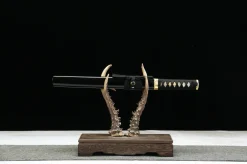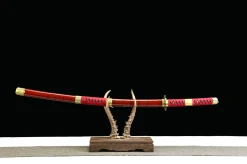
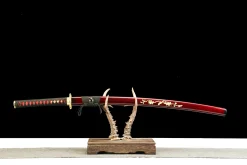

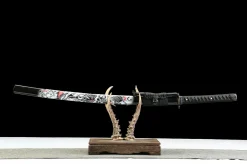
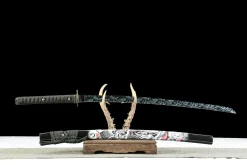













Imperial Flame – Hand Forged Damascus Steel Katana Sword
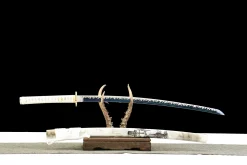
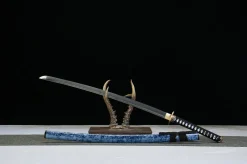
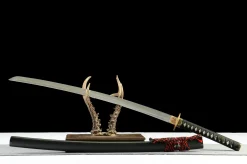
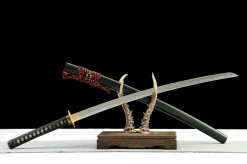
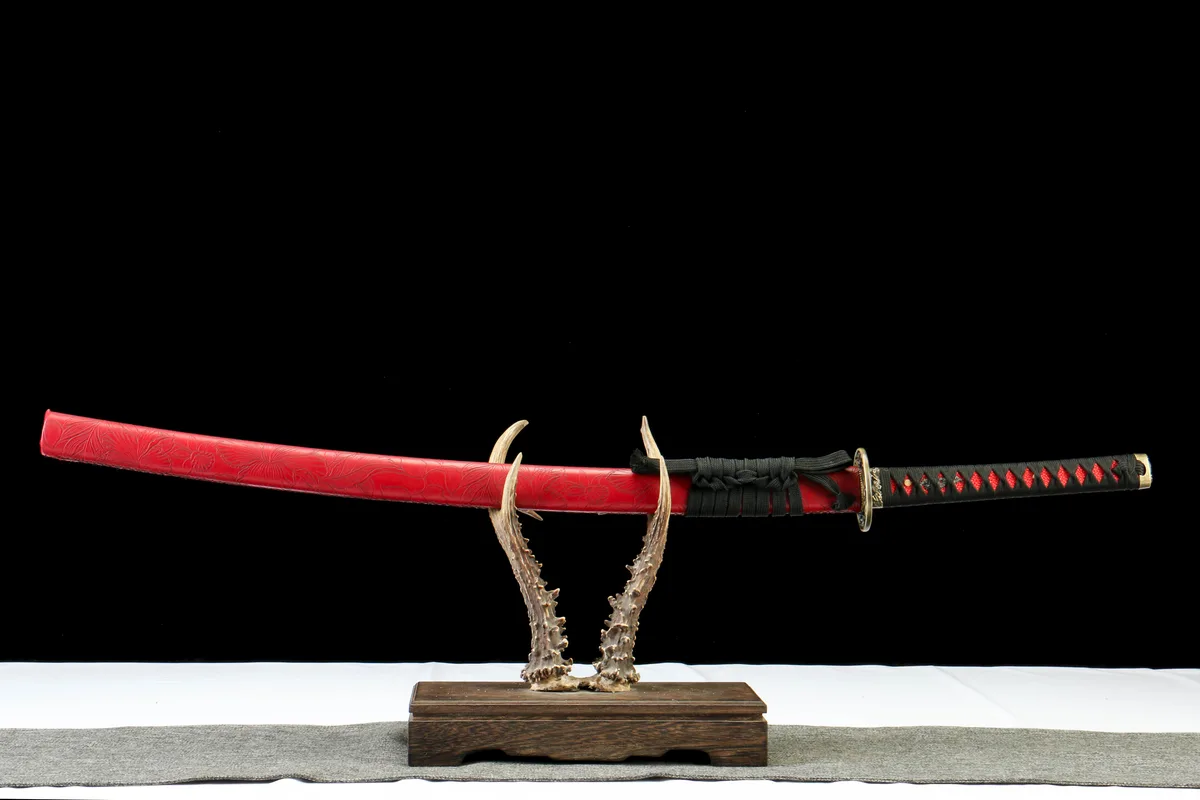
Hand-forged Damascus Steel katana (103cm total / 72cm blade), crafted in Longquan. Hand-folded Damascus pattern steel — each blade carries a unique layered grain from forge to tip.
$359.99
Imperial Flame – Hand Forged Damascus Steel Katana Sword
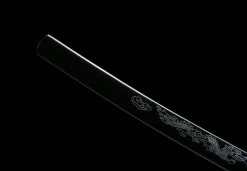
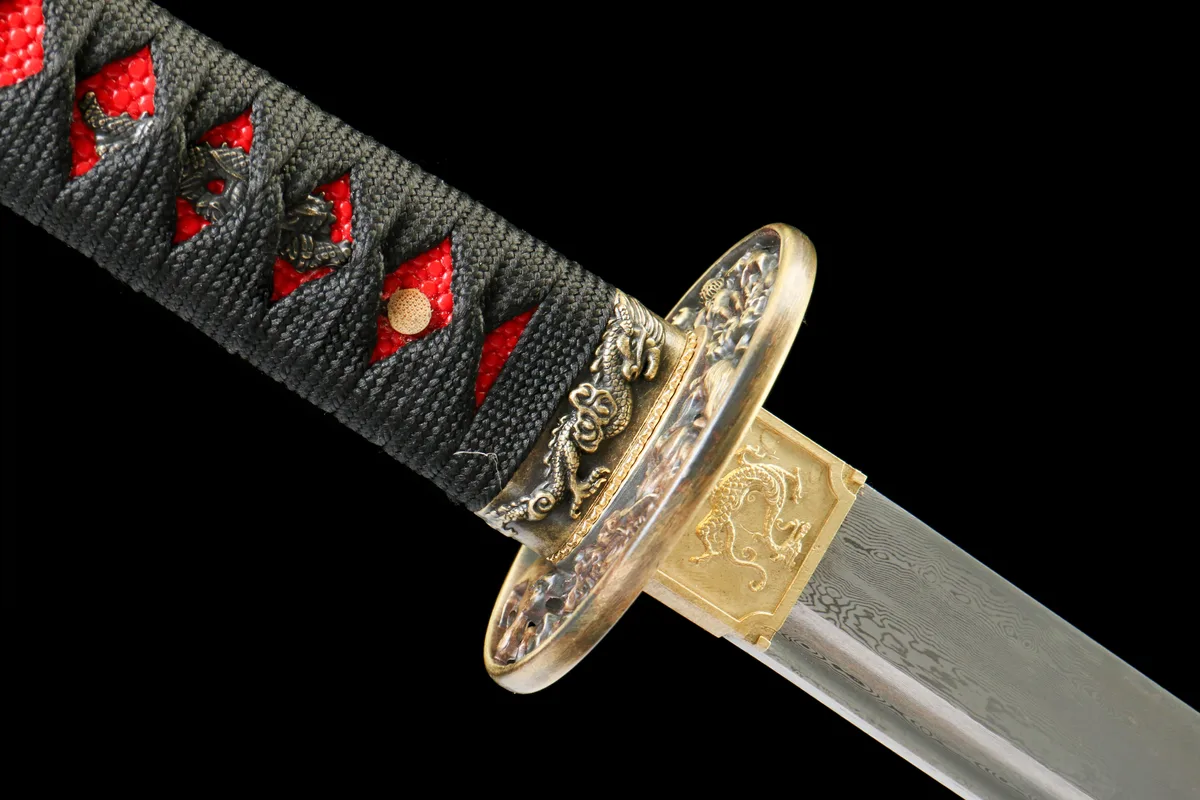
Most pattern-welded katana are built around a single dominant grain movement – a twist, a ladder, a straight multilayer. The 帝焰 (Dì Yàn – Imperial Flame) is built around disruption: the folded billet is manipulated so that the grain breaks and redirects, producing a surface pattern that reads as concentrated bursts of layered movement rather than a continuous flow. Light hits it differently depending on where the eye lands on the blade.
Specifications
| Blade Steel | Damascus / Pattern-Welded Steel |
| Total Length | 103.0 cm / 40.6 in |
| Blade Length | 72.0 cm / 28.3 in |
| Blade Width | 3.2 cm |
| Blade Thickness | 0.7 cm |
| Weight | 950 g / 33.5 oz |
| Heat Treatment | Oil Quench and Temper |
| Fittings | Copper (装) |
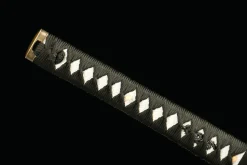
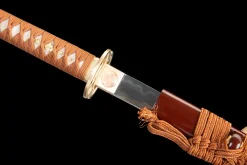
| Handle | Cotton ito wrap |
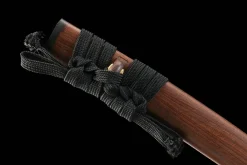
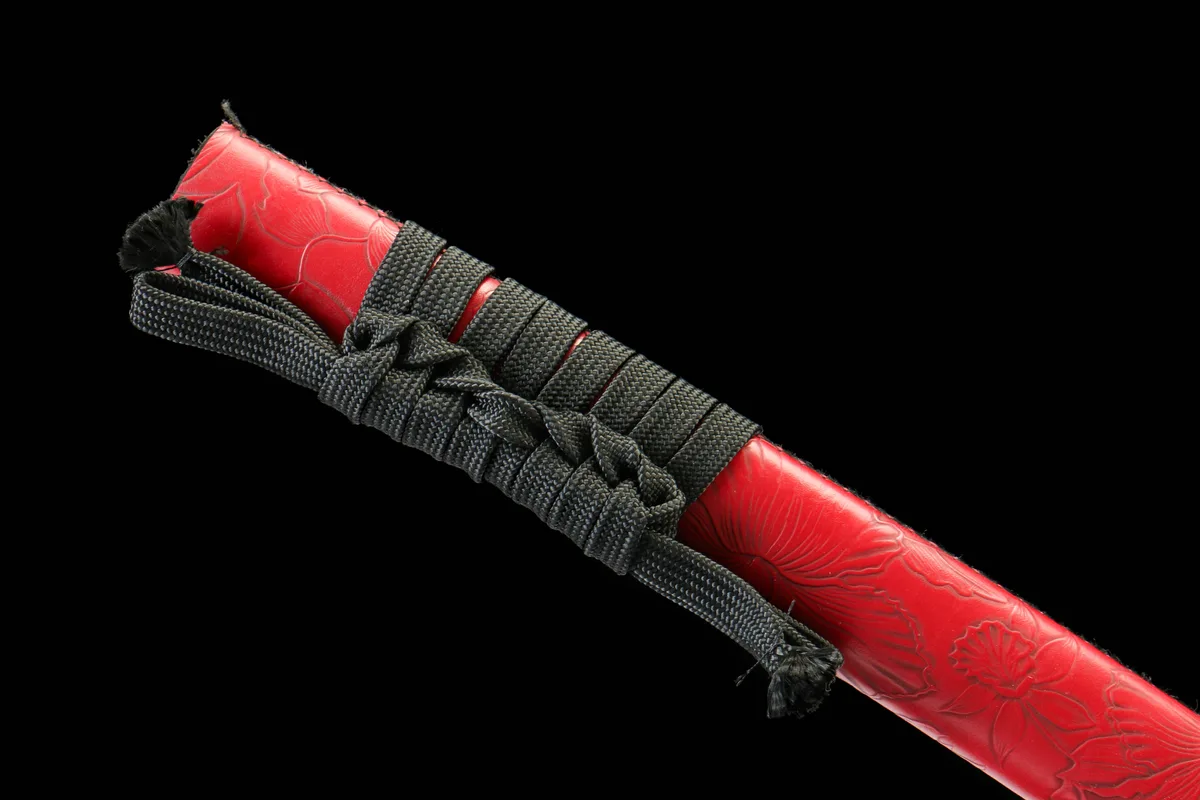
| Sheath | Green bark wood, Aohada (青肌木) |
Forged in Longquan
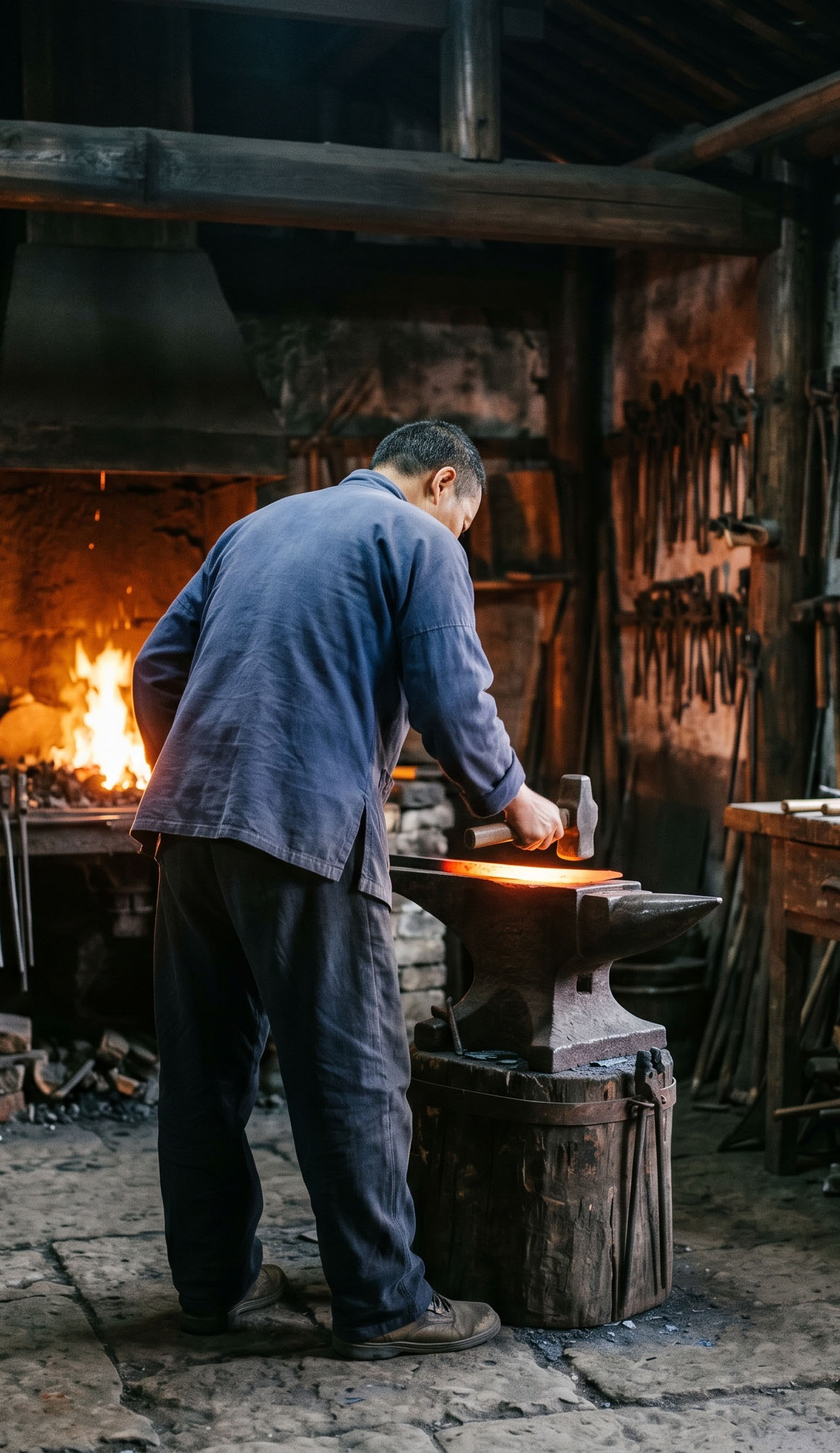
Pattern-welded steel (Damascus) is produced by forge-welding alternating billets of high and low carbon steel, then folding, drawing, and re-welding until the layer structure is established. Oil quench and temper is the appropriate heat treatment for a Damascus blade of this construction: the oil quench controls the cooling rate to develop hardness across the blade without the thermal shock risk that water quenching introduces to a multi-alloy billet. The result is a blade with consistent hardness from edge to edge, without the differential hardness of clay tempering – which means the blade’s performance character is driven primarily by the steel’s layered structure and the edge geometry rather than a two-zone hardness profile.
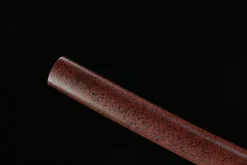
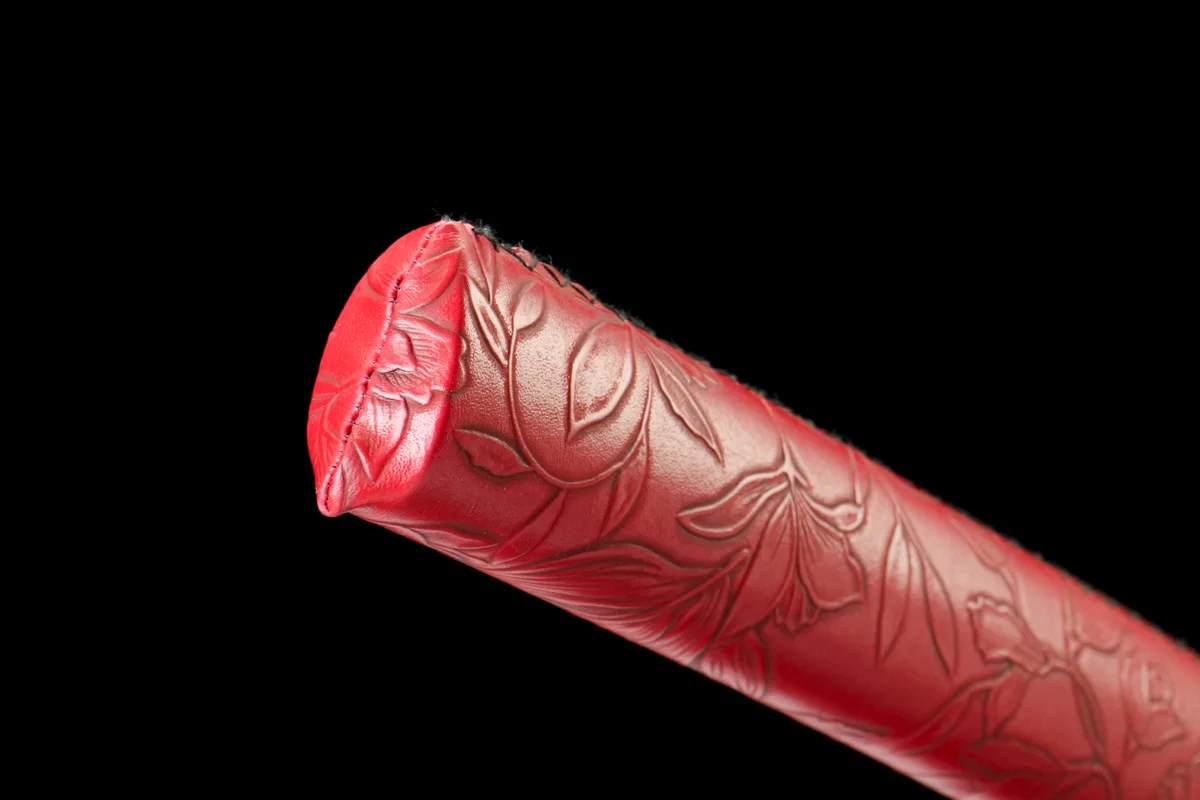
The shinogi-zukuri (ridge-line) geometry runs the full blade length, the raised spine ridge and flat hi (blood groove, if present) typical of this forging style giving the blade both visual definition and structural rigidity. The green Aohada (literally “green bark”) saya is one of the more distinctive sheath materials available in Longquan production: the bark retains its natural texture, and the green-to-grey coloration creates a direct visual contrast against the etched silver-grey tones of the Damascus blade surface.
The Feel of It
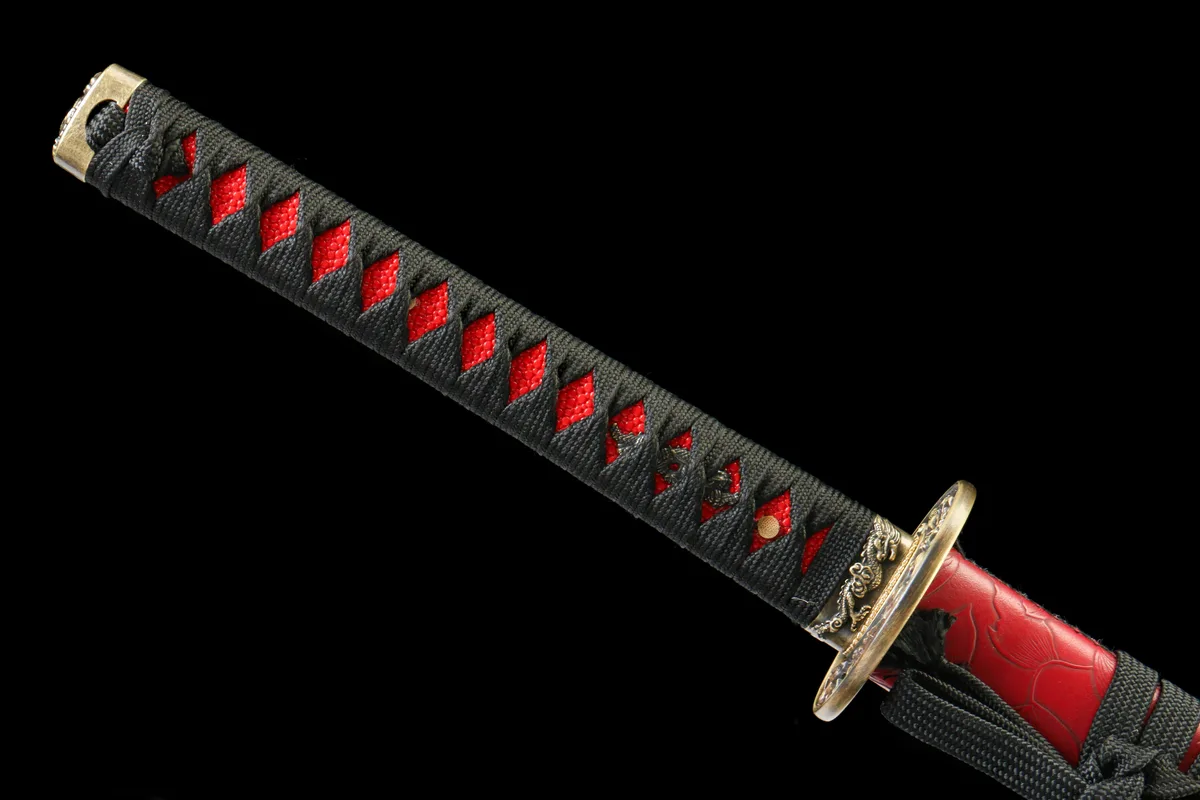
The 27 cm cotton ito wrap sits in the traditional diamond configuration over the handle core, the wrap tension firm and even without the raised surface texture of rayskin beneath. Cotton ito at this wrap density is a clean, controlled grip – it wicks moisture and does not become slick, and the geometric pattern under the palm is subtle enough to disappear in use. The Aohada saya draws with the natural slight resistance of a wood-fitted sheath, the koiguchi (sheath mouth) shaped to the habaki (blade collar) with enough precision that the retention is positive without requiring force to release. At 103 cm overall length with 72 cm of blade, the draw arc on the Imperial Flame is the full committed arc of a standard-length katana – the grip length and saya exit aligned for a clean single-motion draw from the hip.
Maintenance Notes
Apply a thin coat of choji oil or mineral oil to the blade after every handling to protect the etched Damascus surface from oxidation; high-carbon layers in pattern-welded steel are more reactive than the lower-carbon layers and will develop rust preferentially if left unprotected. The Aohada bark saya should be kept in stable humidity conditions – bark sheath material can contract and develop cracks in very low humidity environments. Inspect the cotton ito wrap at the handle ends periodically and re-tie if any loosening is observed at the knot points.
| Weight | 1.2 lbs |
|---|---|
| Dimensions | 103.0 × 3.2 × 0.7 in |
| Hamon | Damascus Pattern (No Hamon) |
| Blade Steel | Damascus Steel |
| Total Length | 103.0 cm |
| Blade Length | 72.0 cm |
| Heat Treatment | Oil Quench & Temper |
| Handle Wrap | Cotton Ito Wrap |
| Sheath Material | Green Bark Wood (Aohada) |
| Fittings | Copper, (装) |
| Forging Style | Folded Steel (Pattern Welded) |
Related products